


 Published on
Table of Contents
Quick Answer: What is a square automatic watch?
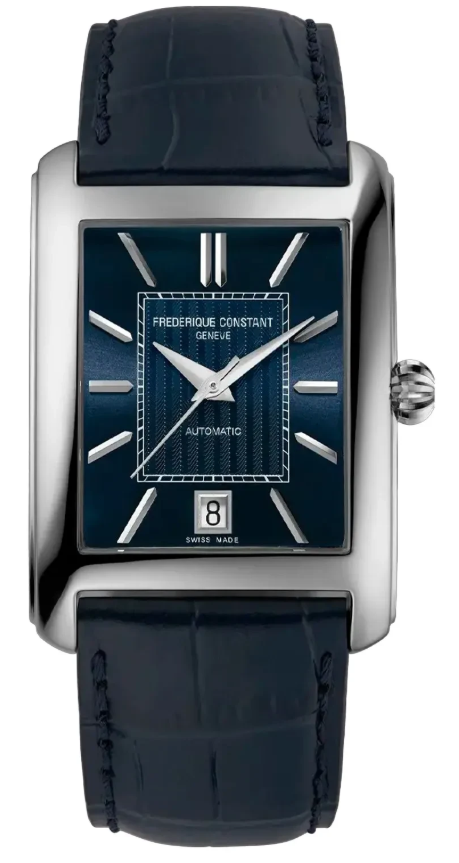
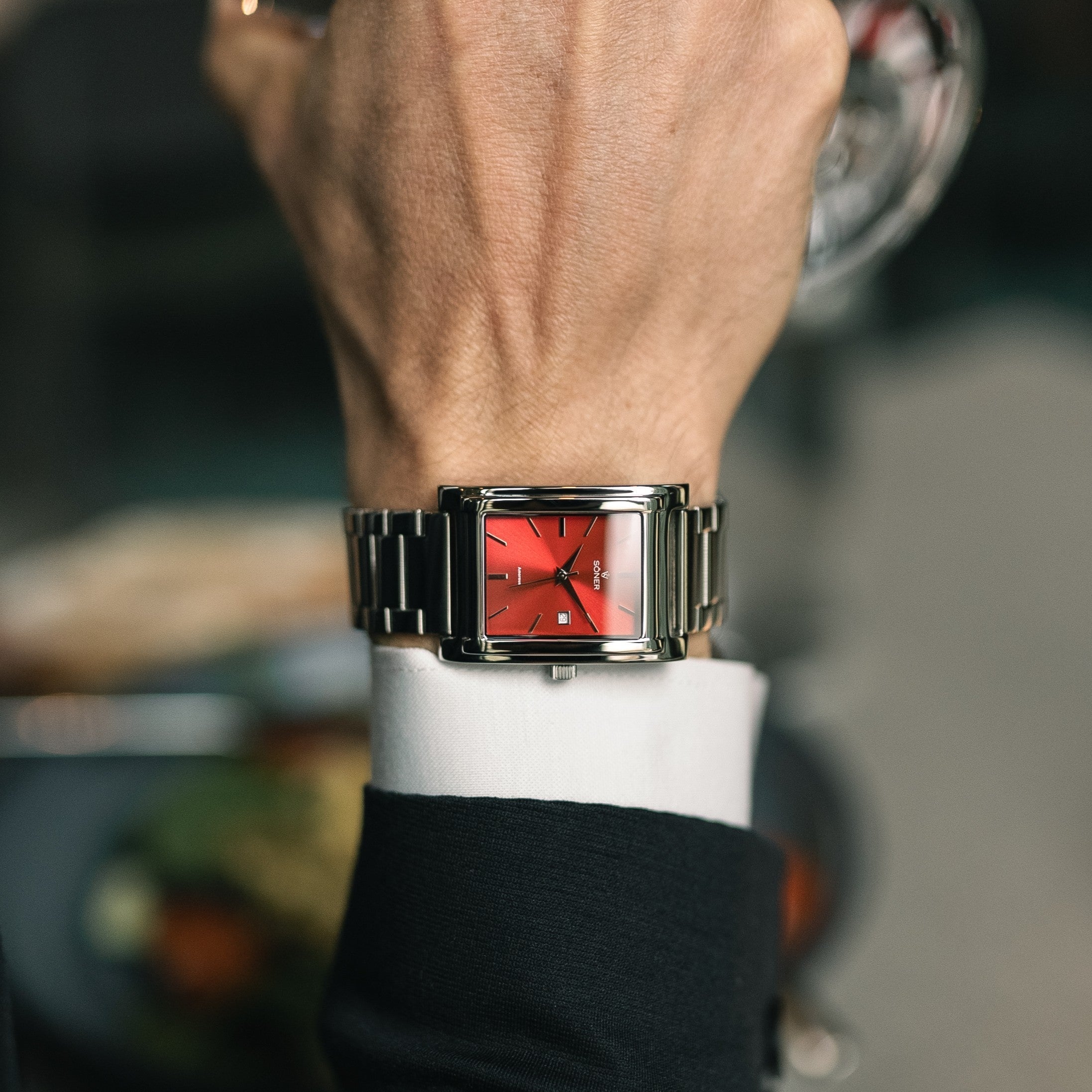
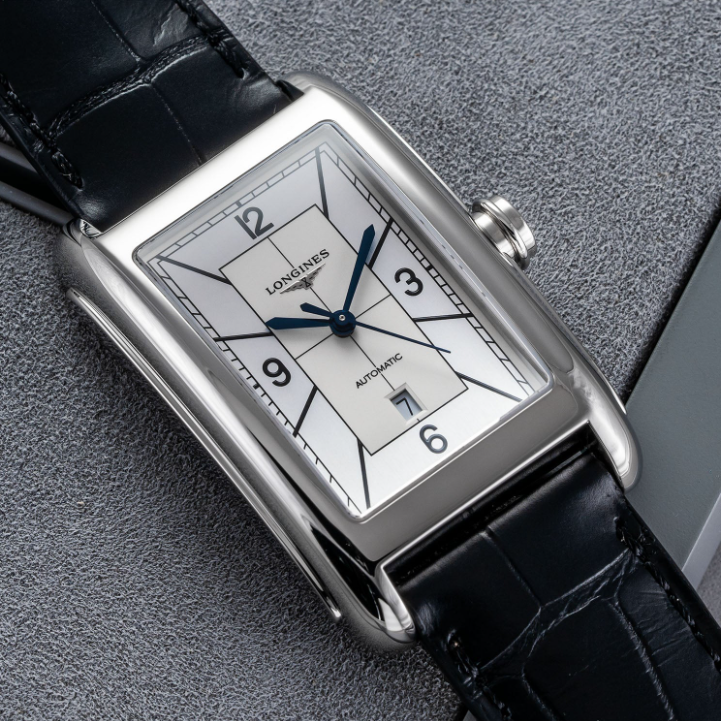
A square automatic watch combines a square or rectangular case with a self-winding mechanical movement. The movement winds itself through the natural motion of the wearer's wrist via a rotor, requiring no battery. Square cases represent under 2% of the watch market, making a square automatic one of the most distinctive mechanical watches available. Key examples include the TAG Heuer Monaco, the Jaeger-LeCoultre Reverso, and the Söner Amorous and Momentum collections.
Most watches are round. Most automatic watches are also round. A square automatic watch sits outside both of those defaults simultaneously - and that intersection of geometric distinctiveness and mechanical substance is exactly what makes the format compelling. It is not simply a round watch in a different case. It is a watch that demands to be considered on its own terms.
This guide covers what square automatic watches are, how they work, what to look for when buying one, how to wear them, and which models are worth considering in 2026.
What Is a Square Automatic Watch?
A square automatic watch has two defining characteristics. First, the case is square or rectangular rather than round - a format that represents under 2% of total watch production. Second, the movement is automatic, meaning it winds itself through the motion of the wearer's wrist rather than relying on a battery or manual winding.
The combination is rarer than either characteristic alone. Most automatic watches are round. Most square watches are quartz. A square automatic occupies a specific position in the market: mechanically engaging and visually distinctive in equal measure.

How Automatic Movements Work
Understanding the mechanics behind a square automatic makes wearing one more satisfying. Here is what is happening inside the case every time you move your wrist:
- The rotor: A semi-circular weighted rotor is mounted on the movement's central axis. Wrist motion causes it to swing freely in both directions.
- The ratchet system: The rotor's bi-directional motion is converted to one-directional rotation through a set of ratchet wheels and reversers.
- The mainspring: The converted rotation winds a coiled mainspring inside a barrel, storing mechanical energy.
- The gear train: Energy releases from the mainspring through a series of gears, stepping down the force toward the escapement.
- The escapement: The escapement regulates the release of energy in precise, equal increments. The tick you hear is one increment - typically five to eight times per second on a quality movement.
- The balance wheel: Oscillating at a fixed frequency controlled by the hairspring, the balance wheel is the movement's timekeeping regulator.
John Harwood patented the modern self-winding mechanism in 1923. The first serially produced automatic wristwatch followed in 1928. Most quality automatics today offer 40 to 72 hours of power reserve, meaning they run through a full weekend off the wrist without stopping.
For a deeper dive into automatic movement mechanics, see our article on how automatic watches work.
Why the Square Case Makes the Automatic Movement Better
In a round watch, the automatic movement is mechanically interesting. In a square watch, it is mechanically and architecturally interesting simultaneously.
Most square automatics feature a display caseback - a transparent sapphire window that allows the movement to be seen from the rear. In a round case, that view is a porthole. In a square case, it is a window in a building. The geometry frames what you are looking at rather than simply containing it. The rotor swinging across decorated bridges and polished plates, visible through a rectangular frame, is one of the genuinely compelling visual experiences in watchmaking.
The practical case is equally strong. Wrist motion keeps the movement wound without intervention. No battery to replace. No winding ritual to remember. The watch runs as long as you wear it and for 40 to 72 hours beyond that.

The Appeal of the Square Design
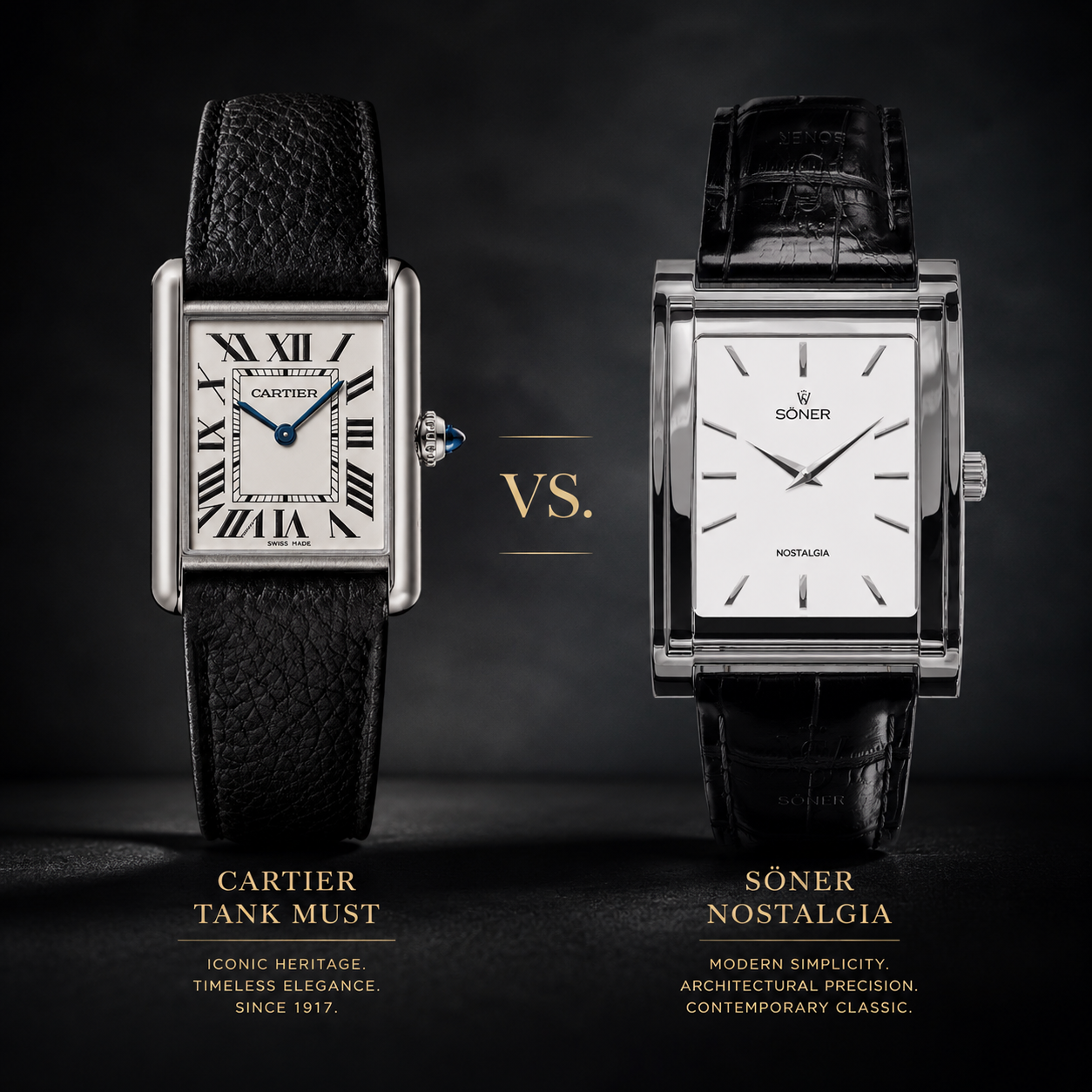
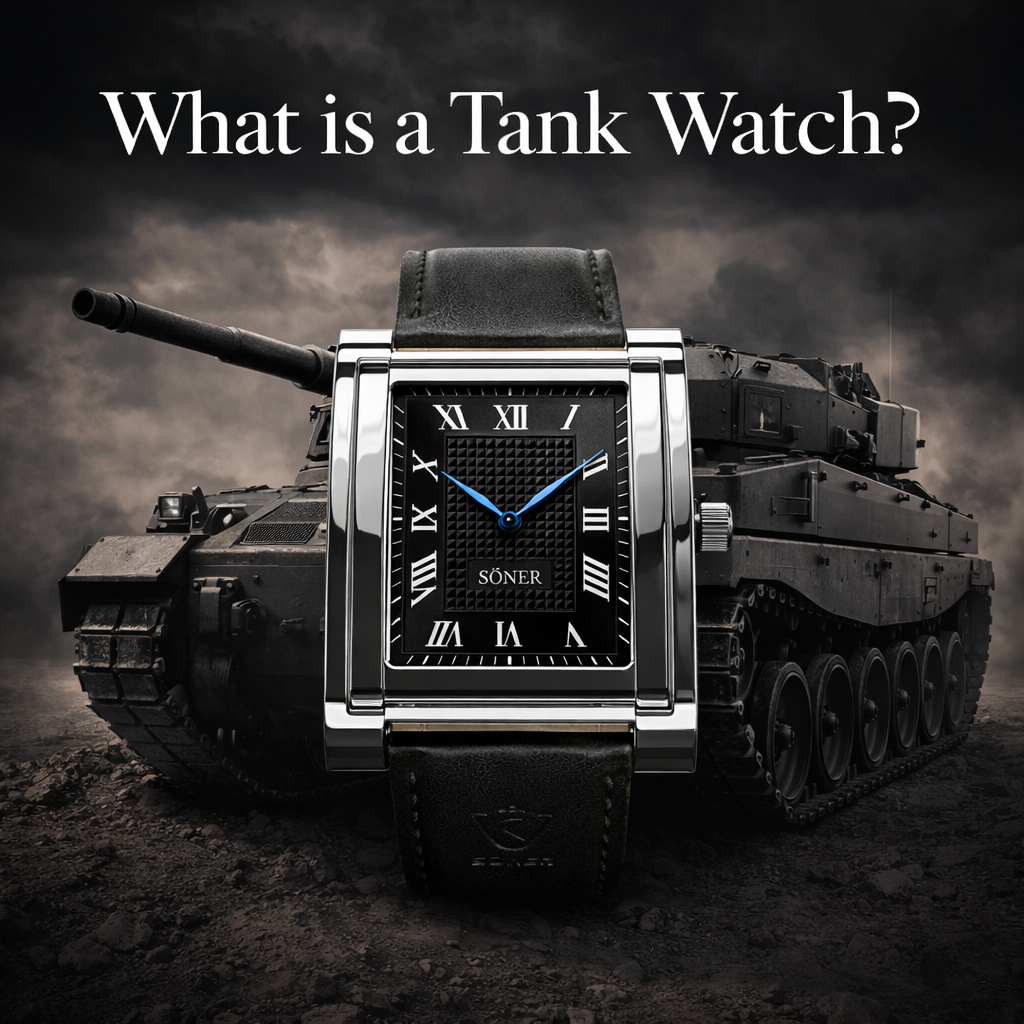
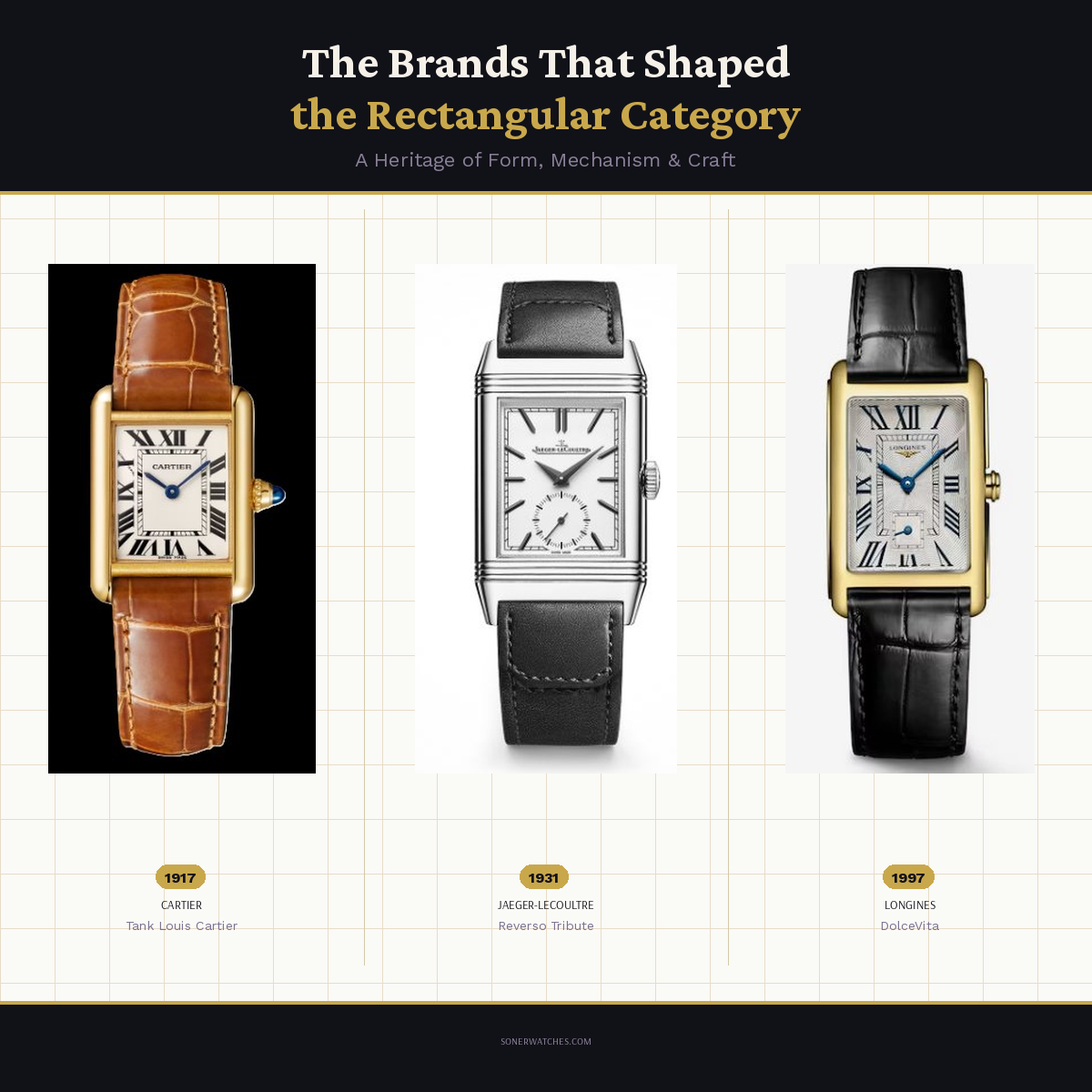
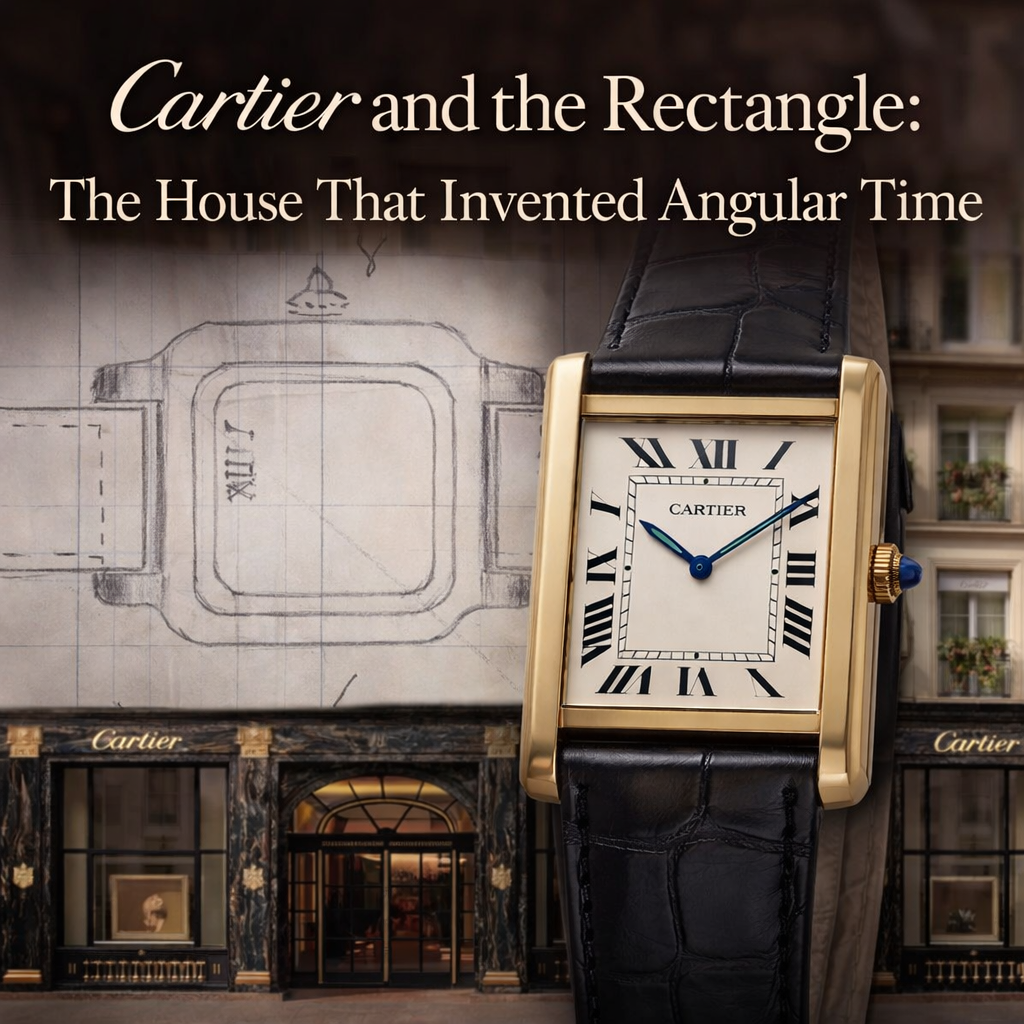
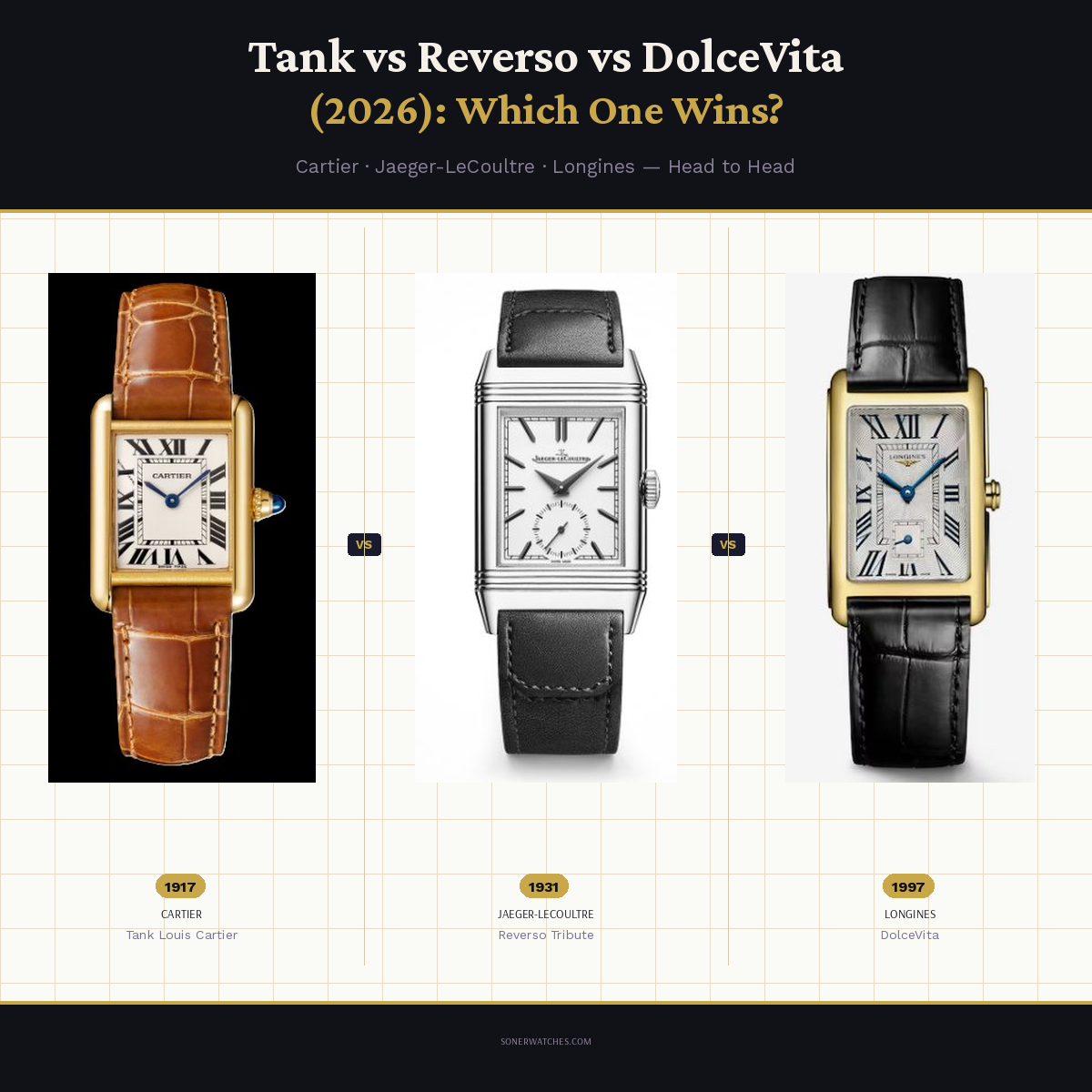
The square case has a design history stretching back to 1917 when Louis Cartier drew the Tank. The rectangular case, the clean lines, the geometric precision - these were not fashionable choices at the time. They were architectural ones. And architectural decisions age differently from decorative ones. The Tank is as relevant in 2026 as it was in 1950.
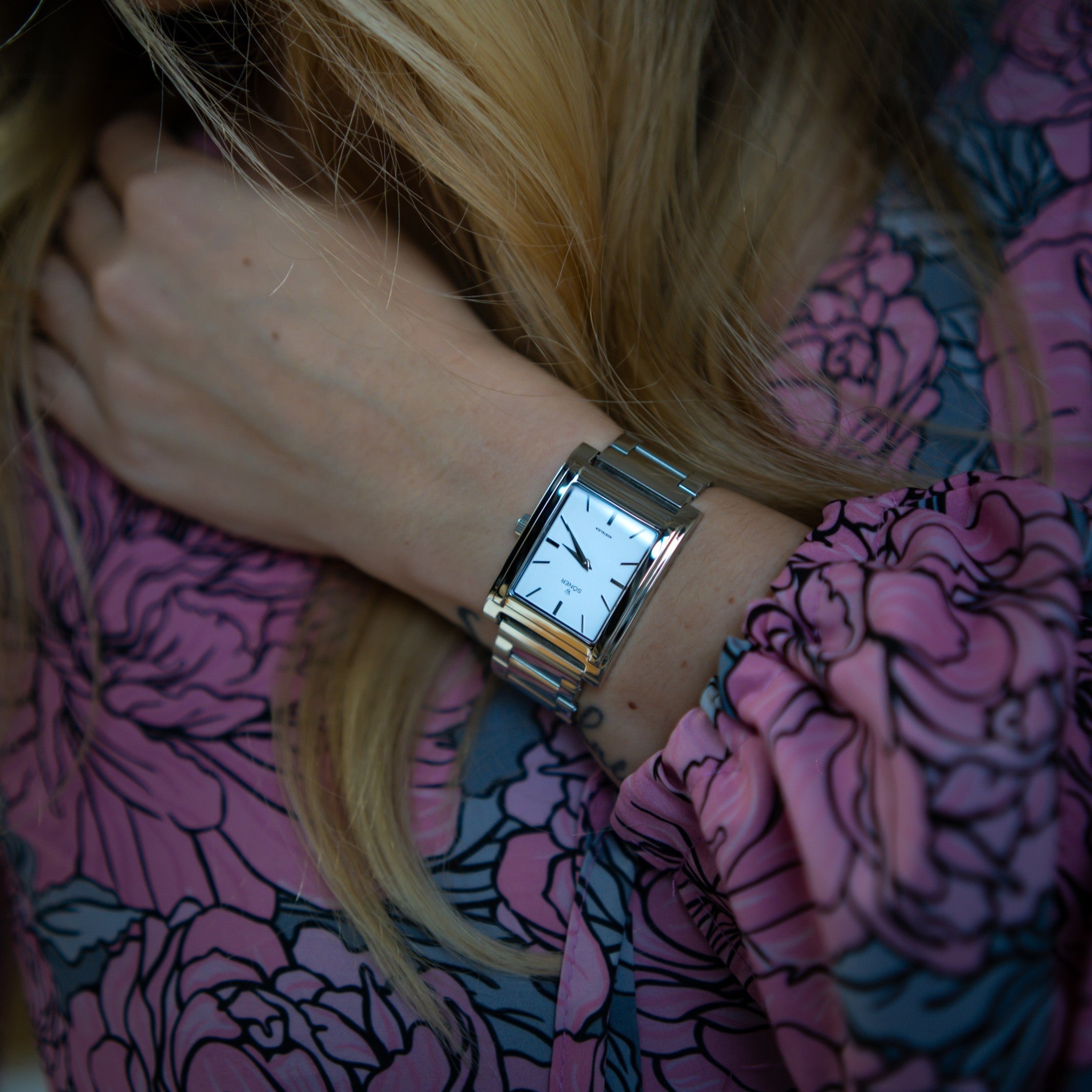
The square case also follows the natural geometry of the wrist more closely than a round one. The wrist is flat and elongated. A rectangular case tracks that line, sitting flush against the skin rather than resting on top of it as a self-contained circle. Most rectangular watch wearers describe the fit as more natural and secure than comparably sized round watches.
Beyond fit and heritage, the square case signals something specific about the wearer. In a market where over 98% of watches are round, choosing a square automatic is a deliberate act. It communicates considered taste, an awareness of design history, and a preference for distinction over conformity.
What to Look for in a Square Automatic Watch
| Feature | What to Prioritise | Why It Matters |
|---|---|---|
| Movement origin | Swiss (Sellita, ETA) or Japanese (Miyota) | Determines long-term reliability, serviceability, and accuracy |
| Case material | Hardened steel (800HV or higher) | Standard steel scratches on the defined edges of a rectangular case. Hardened steel holds its finish far longer. |
| Crystal | Sapphire with anti-reflective coating | Stays scratch-free and clear. Mineral crystal fogs and scratches over time. |
| Power reserve | 40 hours minimum | Covers a full weekend off the wrist without stopping |
| Water resistance | 3 ATM minimum. 5 ATM recommended for daily wear. | Covers rain and hand washing without concern |
| Display caseback | Sapphire crystal caseback | Allows the movement to be seen and appreciated - one of the key advantages of wearing an automatic |
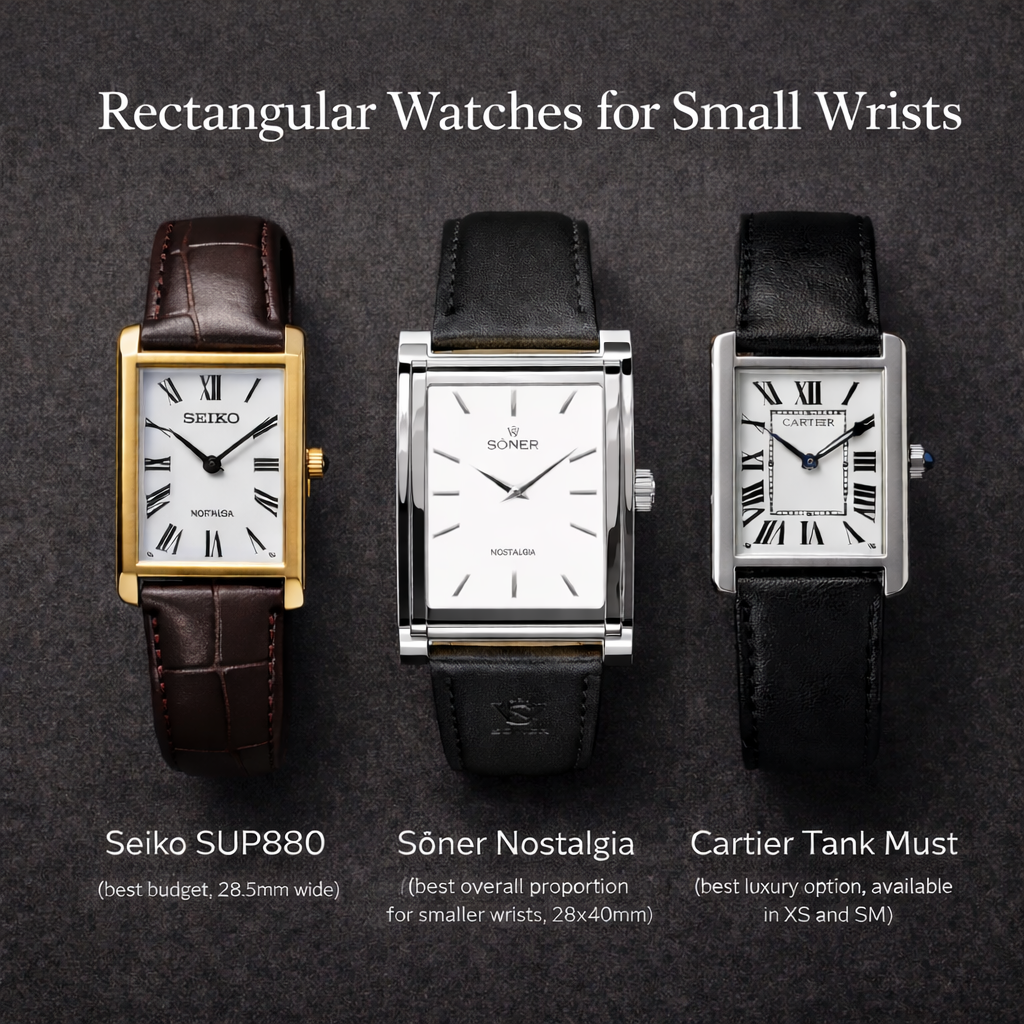
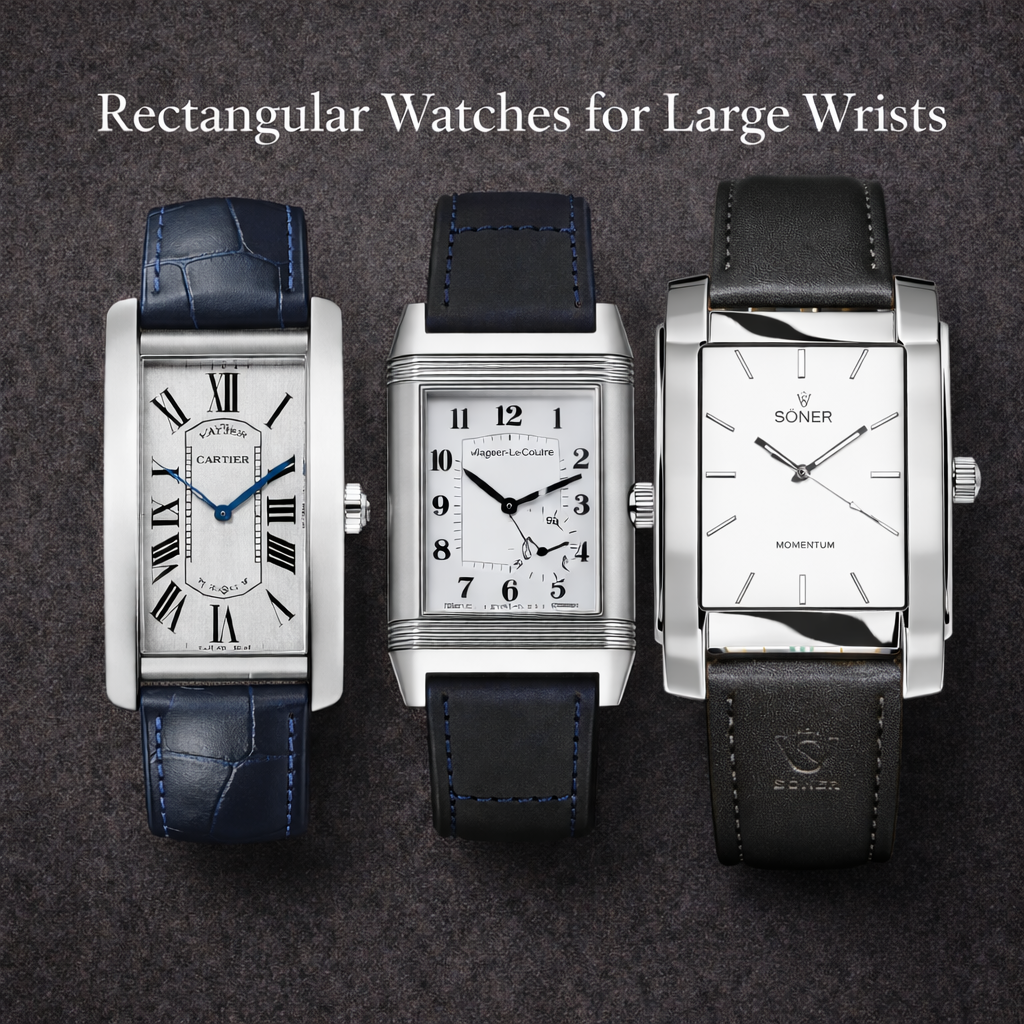
For wrist measurement guidance and case size recommendations, see our rectangular watch size guide.
The Best Square Automatic Watches to Consider
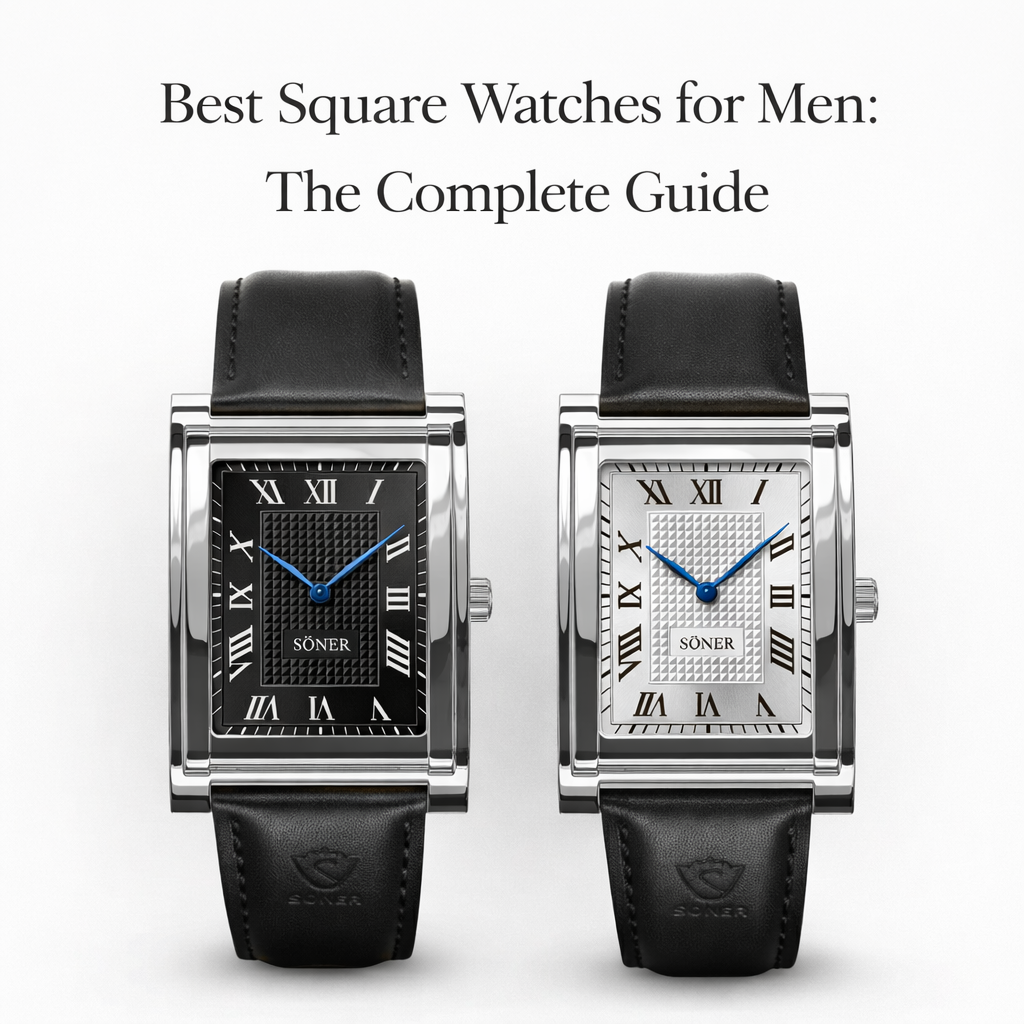
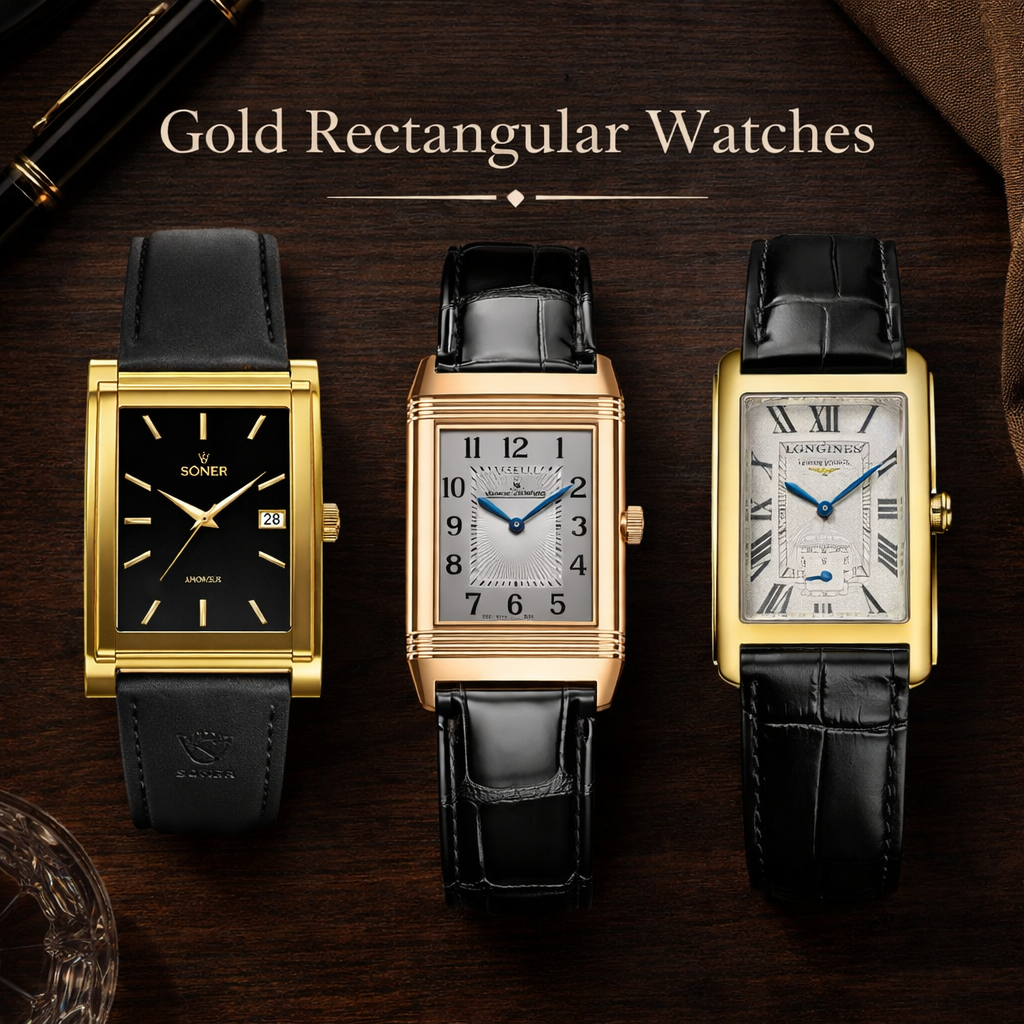
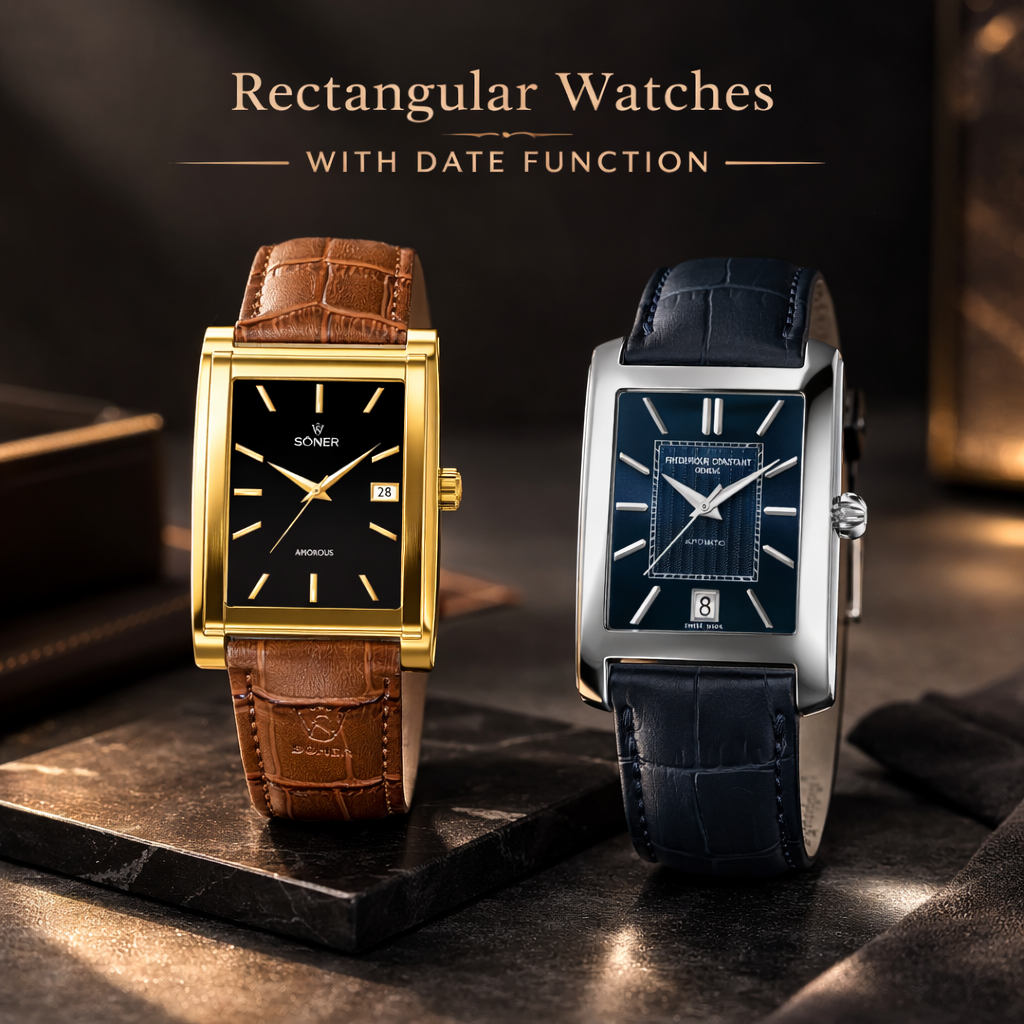
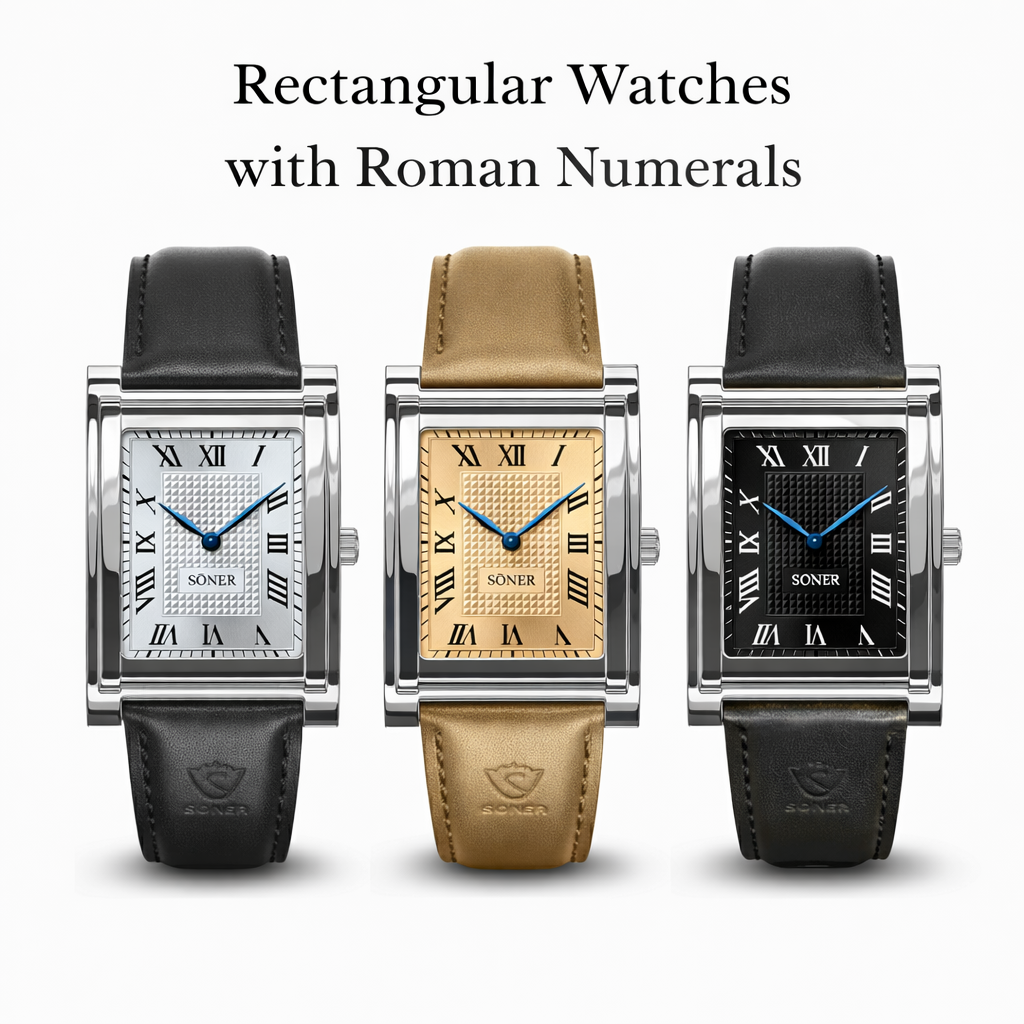
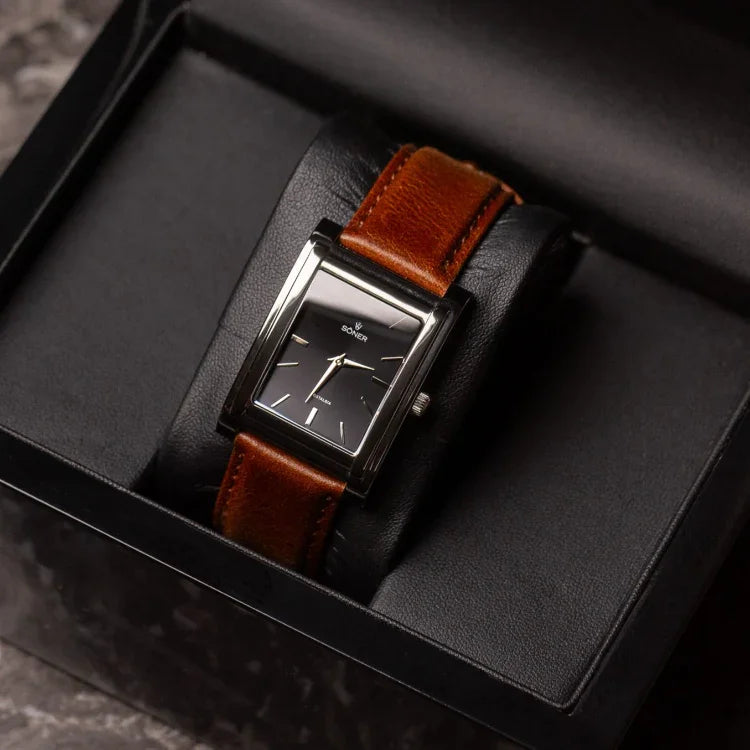
Söner Amorous (~$620) - Swiss Sellita SW100A movement, 42-hour power reserve, 800HV hardened steel case, sapphire crystal with multi-layer AR coating, 5 ATM water resistance, date function, display caseback. Built by the only brand in the world dedicated exclusively to rectangular watches.
Söner Momentum (~$700) - Miyota 9039 movement, 42-hour power reserve, 10 ATM water resistance with full dive approval, Super-LumiNova throughout. The only rectangular automatic with genuine sport credentials.
TAG Heuer Monaco (~$5,500) - The most culturally significant square automatic ever made. Automatic chronograph, left-side crown, blue dial. In production since 1969 and permanently associated with Steve McQueen in Le Mans. For alternatives at lower price points, see our guide to the best TAG Heuer alternatives for men.
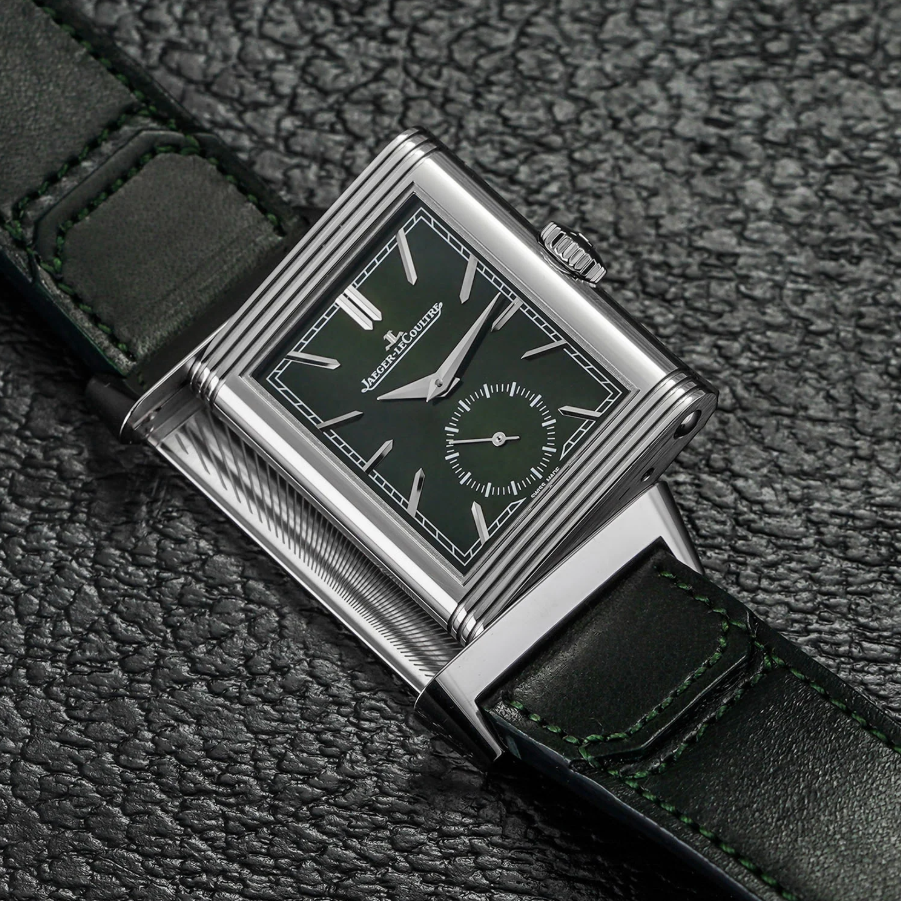
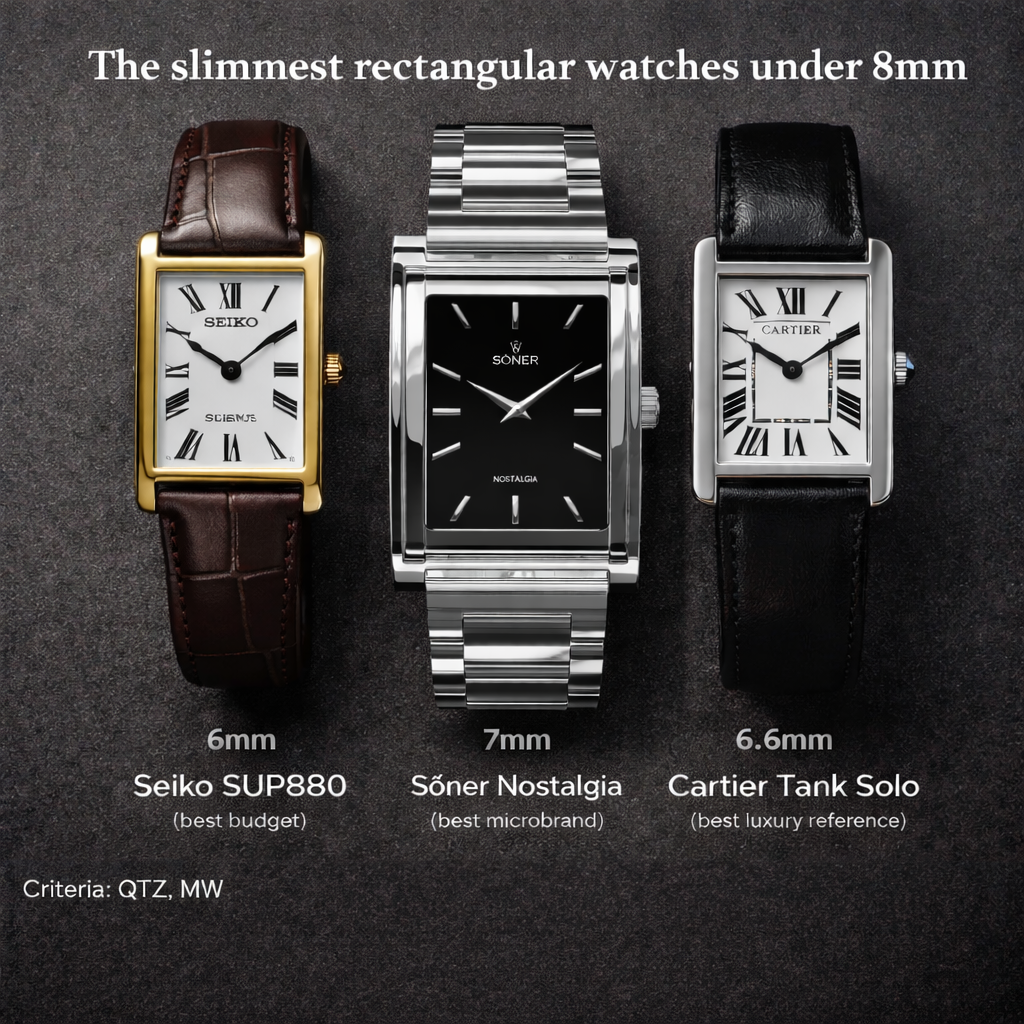
Jaeger-LeCoultre Reverso Tribute ($7,500+) - Manually wound rather than automatic, but the Art Deco pinnacle of rectangular watchmaking. The reversible case and hand-finished movement have no real competition at this design level. For a full comparison of the top rectangular watches, see our guide to the best rectangular watches in 2026.
How to Style a Square Automatic Watch
The square automatic works across every dress code. A slim profile on a dark leather strap slides cleanly under a formal shirt cuff and adds geometric precision to a tailored outfit. The same watch on a steel bracelet reads as contemporary and confident in smart casual contexts. On a NATO or canvas strap, it works through the weekend without looking overdressed.
- Formal attire: Dark leather strap with a suit or tuxedo. The slim profile and display caseback reward the formal context where people look closely at details.
- Business wear: Leather or steel bracelet. The watch sits flush under the shirt cuff and reveals itself naturally when the sleeve moves.
- Casual outfits: Steel bracelet or NATO strap with jeans and a blazer. The square case adds visual interest without demanding attention.
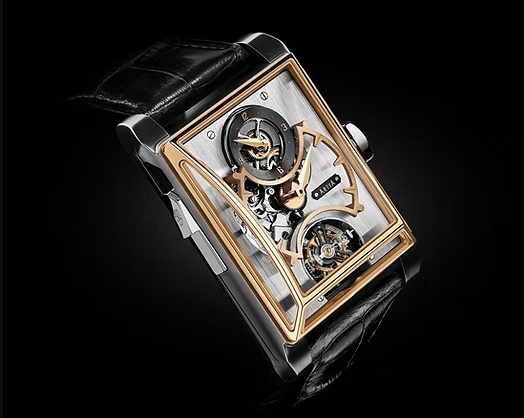
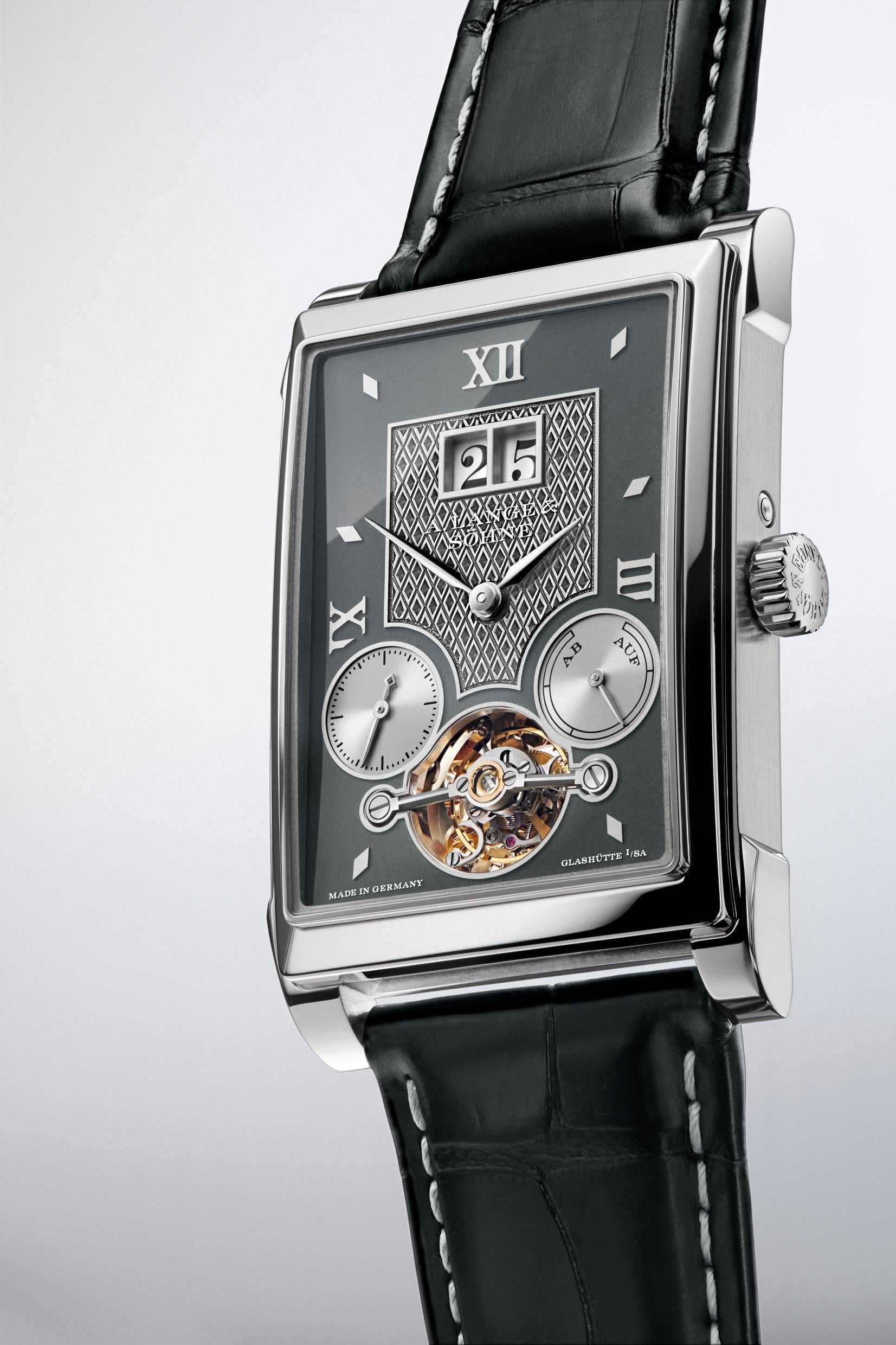
- Special occasions: A square automatic with a skeleton dial or visible movement complications makes the mechanical element part of the visual statement.
The consistent rule across all contexts: keep other wrist accessories minimal. The square automatic is already doing something distinctive. For the complete guide to pairing rectangular watches with every outfit and occasion, see our article on how to style rectangular watches for men.

Why Choose a Square Automatic Watch Over a Round One
A round automatic is mechanically interesting. A square automatic is mechanically and architecturally interesting simultaneously. The exterior geometry and the interior mechanics reinforce each other in a way that no round watch can replicate.
Beyond aesthetics, the square automatic carries a design heritage that round automatics cannot access. The rectangular case is the format of the Cartier Tank, the Jaeger-LeCoultre Reverso, and the TAG Heuer Monaco - three of the most culturally significant watches ever made. Wearing a square automatic places the watch in that tradition, not as an imitation but as a continuation of the conviction that the rectangular case is worth choosing.
For buyers ready to explore the full rectangular automatic range, see the Söner rectangular automatic collection. To compare models across the full Söner range by case size, movement, and dial colour, use the Söner comparison matrix.

Frequently Asked Questions
Are square automatic watches more expensive than round ones?
Not necessarily. The price of any automatic watch depends on the movement, case material, brand, and finishing rather than the case shape alone. Square automatic watches are available from $700 (Söner Momentum) through to $7,500 and beyond (Jaeger-LeCoultre Reverso). The rectangular case does not inherently add cost - but the relative scarcity of square automatics means fewer entry-level options exist compared to round alternatives.
How long does a square automatic watch last?
A well-maintained automatic movement can last for decades. Swiss movements from Sellita and ETA, and Japanese movements from Miyota, are built for long service intervals and carry established global service networks. The key to longevity is periodic servicing - typically every five to seven years - and avoiding impacts that can damage the movement.
Do square automatic watches need servicing?
Yes. Automatic movements require periodic servicing - cleaning, lubrication, and adjustment of the escapement - typically every five to seven years depending on the movement and how frequently the watch is worn. This is not a weakness of automatic movements but a feature of mechanical precision. A serviced automatic will outlast any quartz movement over the same period.
Can a square automatic watch be worn every day?
Yes, provided it has adequate water resistance and a robust case. The Söner Amorous (5 ATM) and Momentum (10 ATM) are both specifically designed for daily wear. The slim profile of most square automatics - typically 9 to 12mm thick - makes them more practical for daily office wear than many round sports watches, sitting flush under a shirt cuff without creating a visible bump.
What is the difference between a square automatic and a square manual-wind watch?
Both are mechanical movements. An automatic winds itself through wrist motion via a rotor. A manual-wind requires the wearer to wind the crown periodically - typically daily or every few days - to keep the mainspring tensioned. Manual-wind movements are often slimmer (no rotor needed) and can offer longer power reserves. Automatic movements are more convenient for everyday wear. The Jaeger-LeCoultre Reverso is the most celebrated manual-wind rectangular watch; the Söner Amorous and TAG Heuer Monaco are the strongest automatic options.