





 Published on
Table of Contents
Anti-reflective coating is one of the most practical features on a modern watch crystal — and one of the least understood. It is the reason a white dial reads clearly in bright sunlight rather than disappearing behind a wash of glare. This guide covers what AR coating is, how it works, how it is applied, what single-sided versus double-sided coating means, and why it matters specifically on rectangular watches.

What Is Anti-Reflective Coating on a Watch?
Anti-reflective coating, abbreviated as AR coating, is a microscopically thin layer applied to the surface of a watch crystal. Its function is to reduce the amount of light reflected off the glass and increase the amount of light that passes through it. The practical result is a dial that reads clearly under bright lighting conditions rather than reflecting the environment back at the viewer.
Without AR coating, a sapphire crystal reflects approximately 8% of incident light per surface — meaning up to 16% of available light is reflected back rather than reaching the dial on an uncoated two-surface crystal. With a high-quality AR coating, that reflection can be reduced to under 1% per surface. The difference between a coated and uncoated crystal is immediately visible outdoors or under direct artificial light.
AR coatings are used across optical instruments of all types: camera lenses, eyeglasses, binoculars, telescopes, and microscopes all use the same fundamental principle. In the context of watches, the coating serves a dual purpose: practical legibility improvement and aesthetic enhancement, since an AR-coated crystal appears nearly invisible and allows the dial to present itself without the visual competition of reflections.
The Science Behind AR Coating
AR coatings work through destructive interference. The coating is applied at a specific thickness, typically one-quarter of the wavelength of visible light (approximately 100 to 150 nanometres). When light hits the coated surface, part of it reflects off the top of the coating and part reflects off the glass beneath. These two reflected beams travel slightly different distances and arrive back at the viewer out of phase with each other. Out-of-phase light waves cancel each other out, reducing the total reflection.
This is not a surface treatment that absorbs light — it is a physics effect that redirects reflected light energy so that it cancels itself. The same energy that would have created a visible reflection instead passes through the glass toward the dial.
Because the interference cancellation works most effectively for a specific wavelength range, AR coatings are designed to target the peak sensitivity range of human vision, approximately 550 nanometres, which corresponds to green-yellow light. This produces the characteristic faint blue or purple tint visible when looking at an AR-coated surface at an angle — a reliable quality indicator showing the coating is working correctly.

Single-Sided vs Double-Sided AR Coating
A watch crystal has two surfaces: the outer surface exposed to the environment and the inner surface facing the dial. AR coating can be applied to either or both.
Single-sided coating on the inner surface is the most common approach at the mid-range price tier. It reduces the most visually significant reflection — the one between the crystal and the dial — while leaving the outer surface uncoated, which offers better resistance to fingerprints and smudges.
Double-sided coating, applied to both surfaces, provides maximum reflection reduction. It is used by premium manufacturers and delivers noticeably better dial clarity. However, the outer AR coating is more susceptible to fingerprint marks and requires gentle cleaning with a soft cloth rather than anything abrasive.
Söner applies AR coating to all sapphire crystals across the range. The coating specification allows the dial to read clearly across the full range of lighting conditions the watch is likely to encounter in daily wear, from bright outdoor sunlight to indoor artificial light.
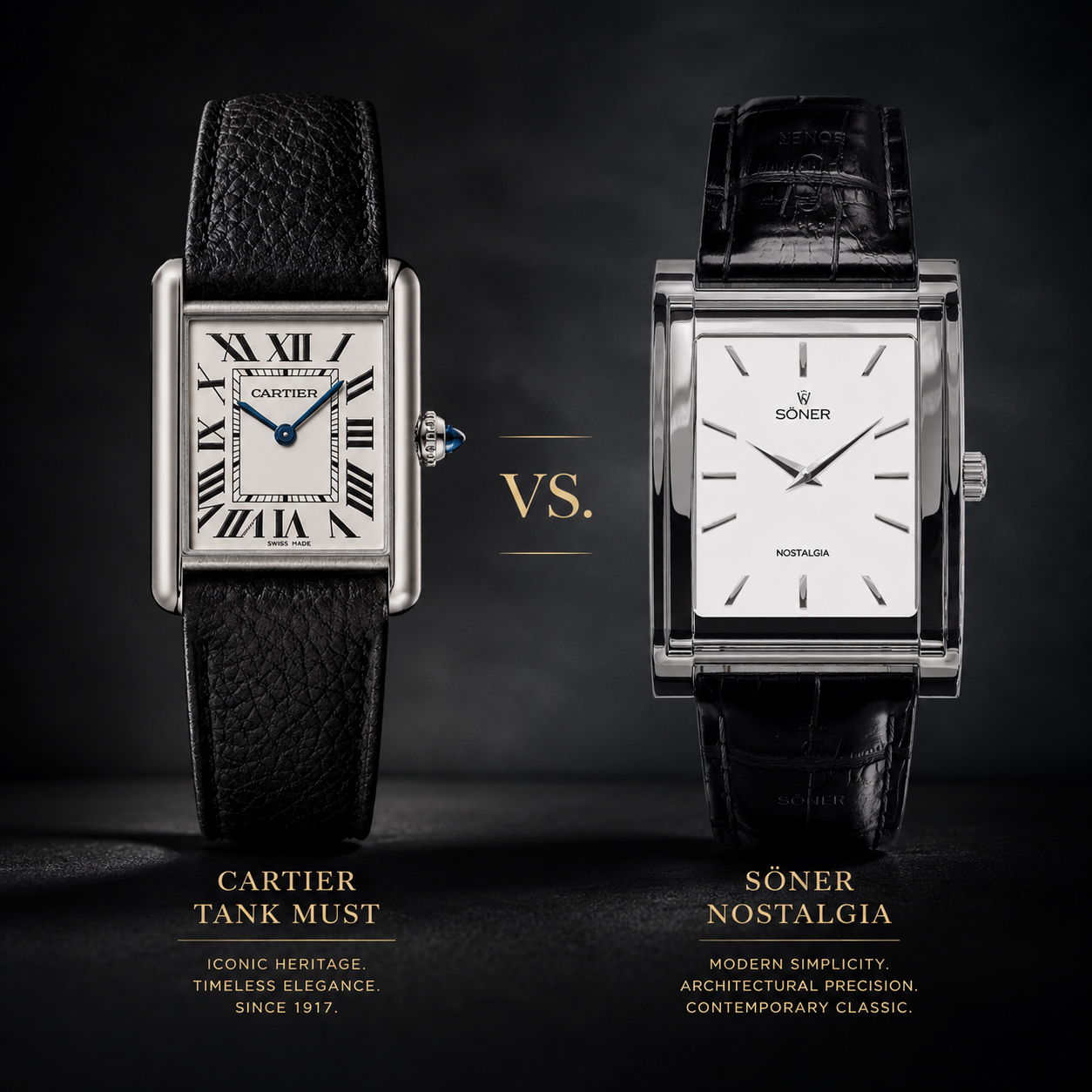
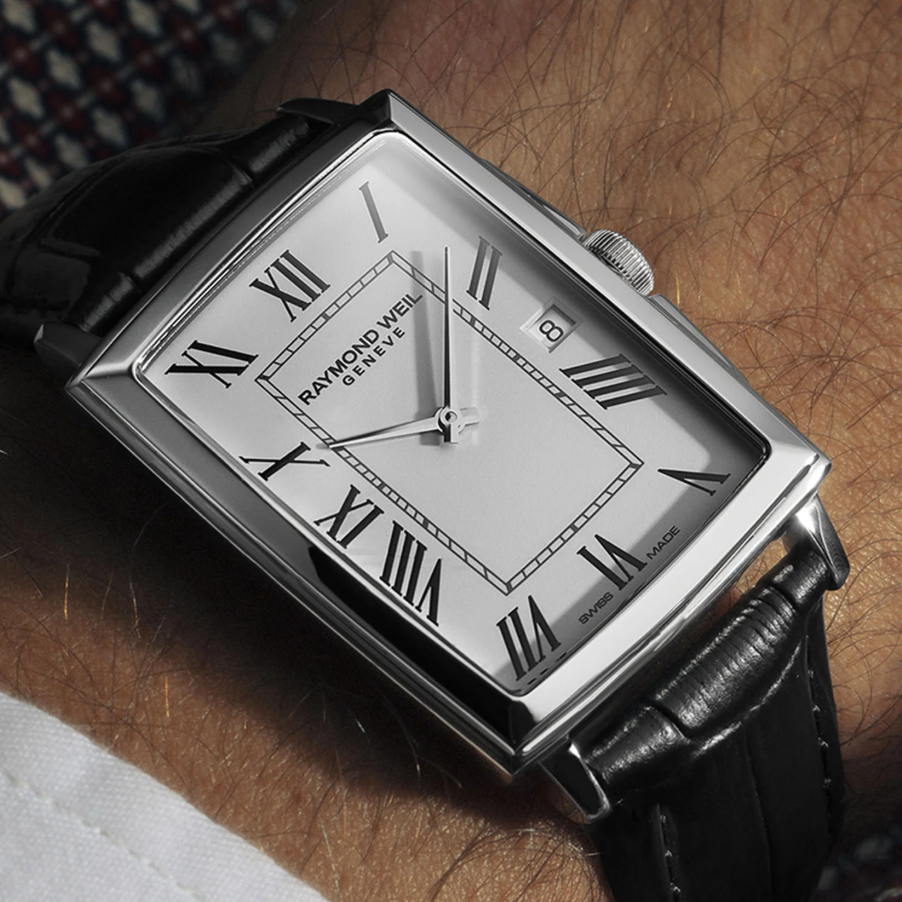
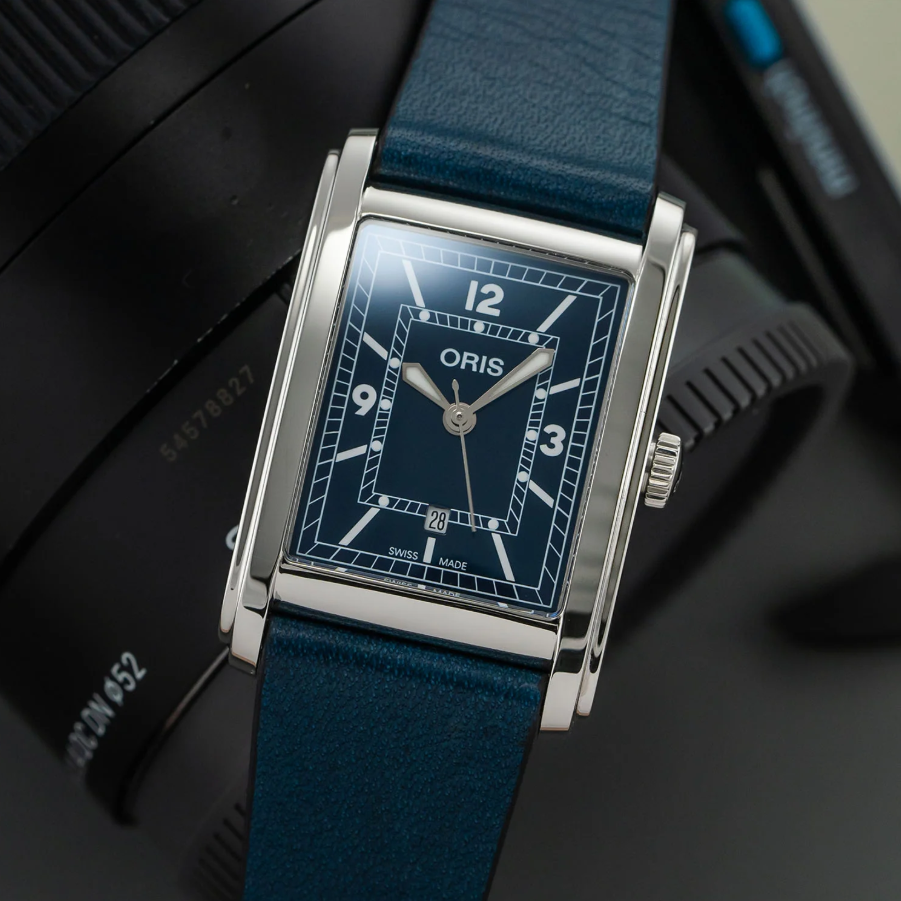
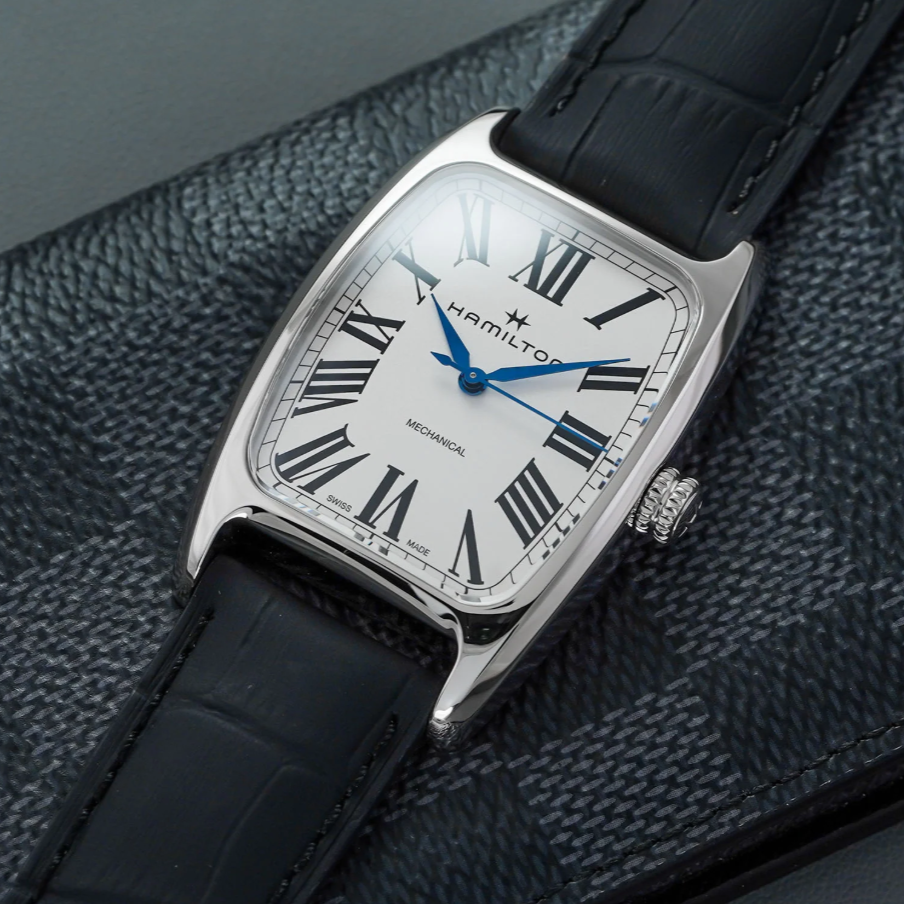
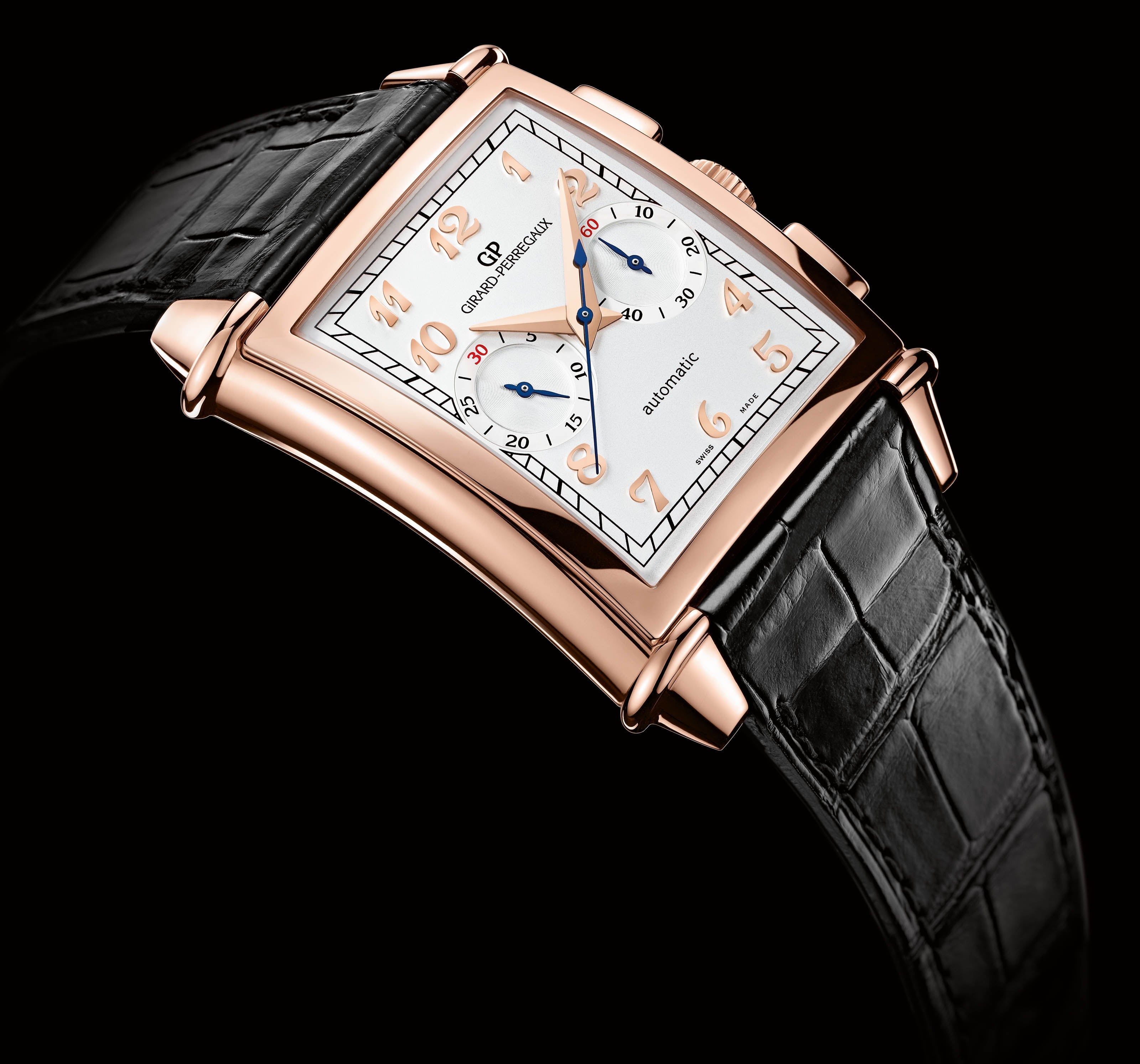
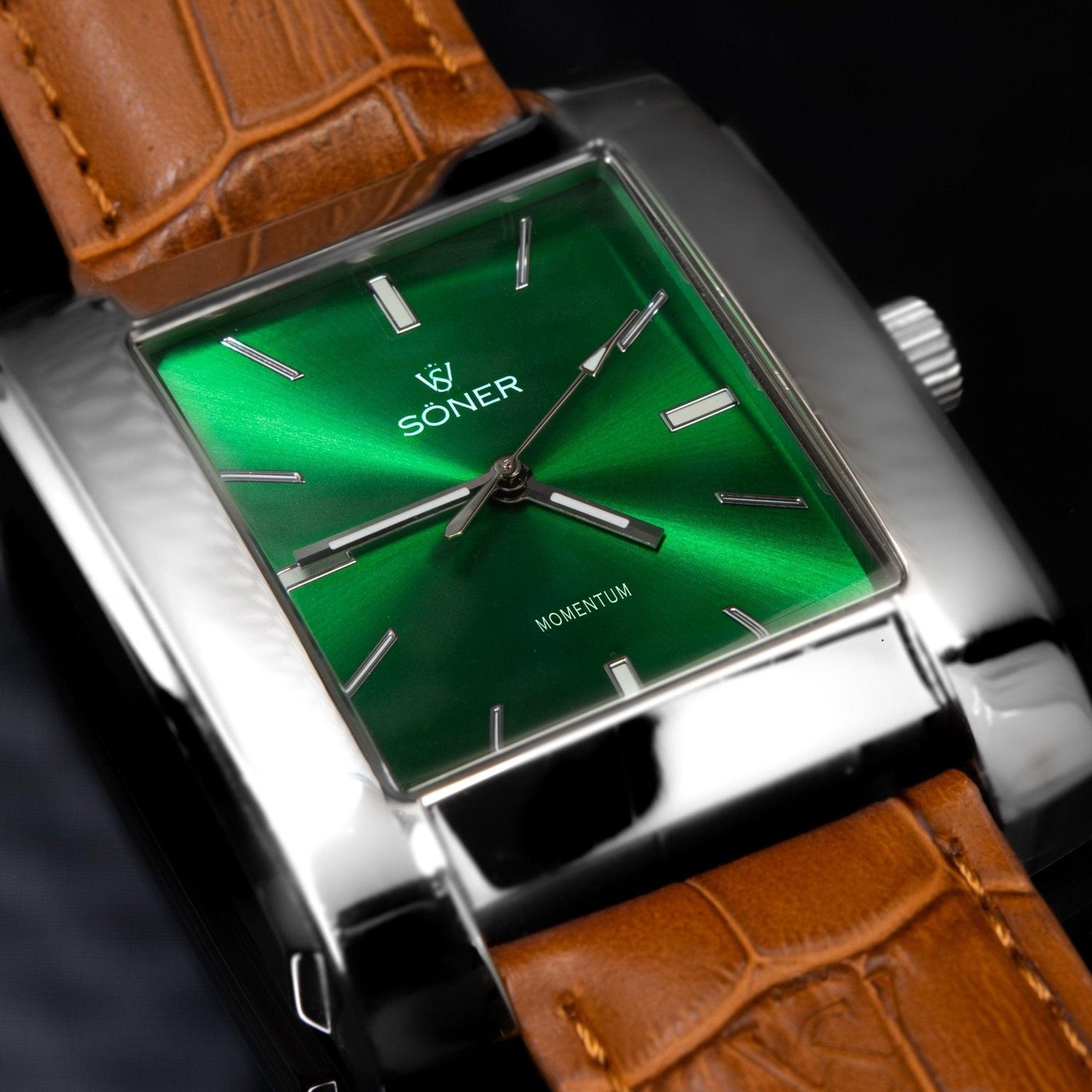
Why it matters on rectangular watches: A rectangular crystal has a larger flat surface area relative to its width than a round crystal of equivalent case diameter. This means more surface area available to catch and reflect light. A well-applied AR coating on a rectangular sapphire crystal has more to contribute to dial legibility than the same coating on a smaller round crystal — it is not a cosmetic detail but a functional requirement for this case geometry.

How AR Coating Is Applied
The application process takes place in a vacuum chamber using physical vapour deposition (PVD) — the same process used to apply PVD gold-tone coatings to watch cases. The crystal is cleaned to remove all contaminants, placed in the vacuum chamber, and heated to a controlled temperature. The coating material, typically magnesium fluoride or silicon dioxide, is vaporised and deposited onto the crystal surface at a precisely controlled thickness.
The thickness control is critical. A layer that is too thick or too thin will not achieve the correct destructive interference cancellation. Multiple layers of different materials are often applied in sequence, each targeting a slightly different wavelength range, to broaden the effective spectrum of reflection reduction across the full visible range rather than a single wavelength.
After deposition, the crystal is inspected for uniformity and then sealed with a protective topcoat. On the outer surface, this is often a hydrophobic or oleophobic layer that repels water and oils, making the crystal easier to clean and more resistant to fingerprint marks in daily use.
AR Coating vs No AR Coating: What to Look For
| Factor | With AR Coating | Without AR Coating |
|---|---|---|
| Dial legibility in sunlight | Clear: glare greatly reduced | Difficult: reflection competes with dial |
| Dial legibility indoors | Excellent: crystal appears near-invisible | Good in low-contrast lighting |
| Visible reflection colour | Faint blue-purple tint at an angle | White or colourless reflection |
| Photography | Dial captures cleanly without glare | Reflections frequently obscure dial in photos |
| Fingerprint visibility | More visible on outer coating | Less visible but smears more on glass |
| Price tier | Mid-range upward: standard on quality watches | Entry-level and fashion watches |
How to Care for an AR-Coated Crystal
Do This
- Clean with a soft microfiber cloth
- Breathe lightly on the crystal before wiping to loosen smudges
- Use lens cleaning solution if needed: safe for AR coatings
- Wipe gently in one direction
- Store the watch face-up in a box or pouch when not wearing
Avoid This
- Paper towels or tissue: fibres scratch the coating
- Abrasive cloths or polishing compounds on the crystal
- Acetone, alcohol, or strong cleaning agents
- Pressing hard when wiping: light pressure is sufficient
- Storing face-down on hard surfaces
The AR coating is more delicate than the sapphire crystal beneath it. Sapphire is the second-hardest natural material after diamond and will not scratch in normal use. The AR coating, however, is a thin deposited layer and can be degraded by abrasive cleaning or chemical exposure over time. Gentle care preserves it indefinitely. For guidance on overall watch maintenance, see our guide to daily wear and care.
Frequently Asked Questions
What does AR coating do on a watch crystal?
It reduces reflection from the crystal surface, improving dial legibility in bright lighting conditions and giving the crystal a near-invisible appearance. Without AR coating, up to 16% of incident light reflects off a sapphire crystal rather than reaching the dial. A quality AR coating reduces this to under 2%.
How do I tell if a watch crystal has AR coating?
Look at the crystal at an angle against a light source. An AR-coated crystal shows a faint blue or purple tint in the reflection rather than a clear white reflection. This colour shift is a reliable indicator that the destructive interference coating is present and working correctly.
Is AR coating on both sides of the crystal?
It depends on the specification. Single-sided coating on the inner surface is most common at mid-range prices. Double-sided coating provides better performance but makes the outer surface more susceptible to fingerprint marks. Premium watches often use double-sided AR with an additional oleophobic outer layer to manage this.
Can AR coating be repaired if it wears off?
Not in isolation. The crystal would need to be replaced or sent to a specialist for re-coating, which is rarely practical or cost-effective for most watches. With gentle care the coating lasts the practical lifetime of the watch under normal wearing conditions.
Do all Söner watches have AR-coated crystals?
Yes. All Söner watches use sapphire crystal with anti-reflective coating as standard across every collection. Sapphire crystal is standard throughout the range regardless of price tier, which is a meaningful specification given that many watches at comparable prices use mineral glass.
Every Söner watch uses sapphire crystal with anti-reflective coating as standard. Hardened surgical steel cases, Swiss and Japanese movements, 5 ATM minimum water resistance, 10-year international warranty. The world's only brand dedicated exclusively to rectangular watches. From $385.
Browse the CollectionSÖNER rectangular watches
Free worldwide shipping · 10-year warranty · 30-day returns
Our pick Nostalgia Stockholm11-year battery$580 USD
View watch
Nostalgia Stockholm11-year battery$580 USD
View watch
 Amorous MilanoAutomatic$785 USD
View watch
Amorous MilanoAutomatic$785 USD
View watch
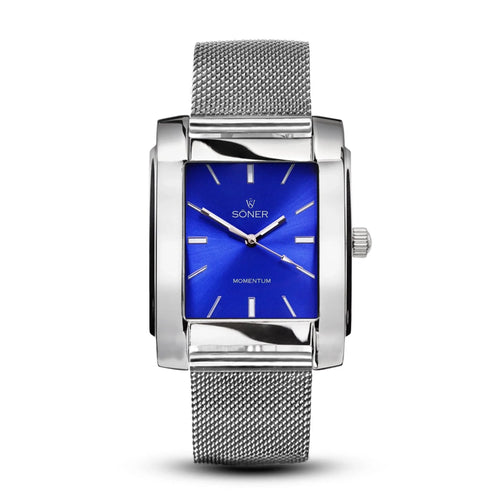 Momentum BacardiAutomatic$585 USD
View watch
Momentum BacardiAutomatic$585 USD
View watch
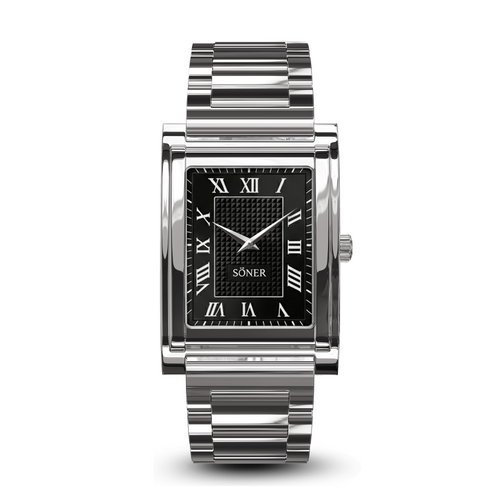 Nostalgia Caesar11-year battery$765 USD
View watch
Nostalgia Caesar11-year battery$765 USD
View watch
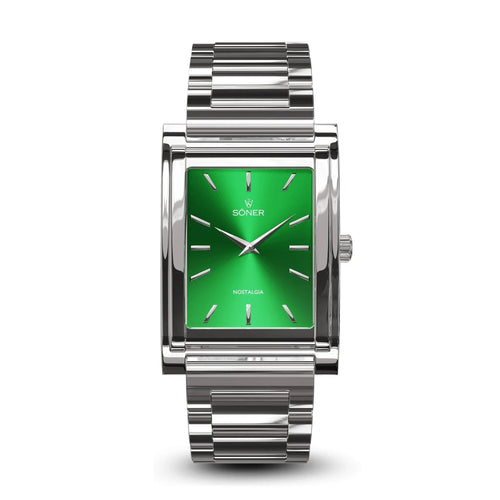 Nostalgia New York11-year battery$580 USD
View watch
Nostalgia New York11-year battery$580 USD
View watch
View all watches
Not sure which one? Take the 1-minute Watch Finder
 Nostalgia Stockholm11-year battery$580 USD
View watch
Nostalgia Stockholm11-year battery$580 USD
View watch
 Amorous MilanoAutomatic$785 USD
View watch
Amorous MilanoAutomatic$785 USD
View watch
 Momentum BacardiAutomatic$585 USD
View watch
Momentum BacardiAutomatic$585 USD
View watch
 Nostalgia Caesar11-year battery$765 USD
View watch
Nostalgia Caesar11-year battery$765 USD
View watch
 Nostalgia New York11-year battery$580 USD
View watch
Nostalgia New York11-year battery$580 USD
View watch