


 Published on
Table of Contents
Jaeger-LeCoultre is one of watchmaking's great manufactures, a house that has produced more than a thousand calibres, invented the world's smallest mechanical movement, and consistently demonstrated that technical mastery and aesthetic ambition are not in competition but in service of each other. Founded in 1833 in Le Sentier in the Vallée de Joux, LeCoultre & Cie grew into a powerhouse of movement manufacturing before formalizing its partnership with Paris-based Jaeger S.A. in 1937. The resulting Jaeger-LeCoultre manufacture has been, for nearly a century, one of the most important addresses in Swiss horology. And at the centre of its identity sits a watch born not in a design studio but on a polo field, a watch that is, beyond reasonable argument, the most important rectangular timepiece ever made.

Jaeger-LeCoultre Reverso: Key References
| Reference | Introduced | Movement | Key Feature |
|---|---|---|---|
| Original Reverso | 1931 | Manual wind | 38mm x 24mm x 6mm, reversible case for polo protection |
| Reverso Soixantième | 1991 | Calibre 824 (manual) | First Reverso with display caseback, power reserve, date |
| Reverso Tourbillon | 1993 | Manual wind | First tourbillon in a Reverso case |
| Reverso Minute Repeater | 1994 | Manual wind | First rectangular minute repeater movement in history - 306 components |
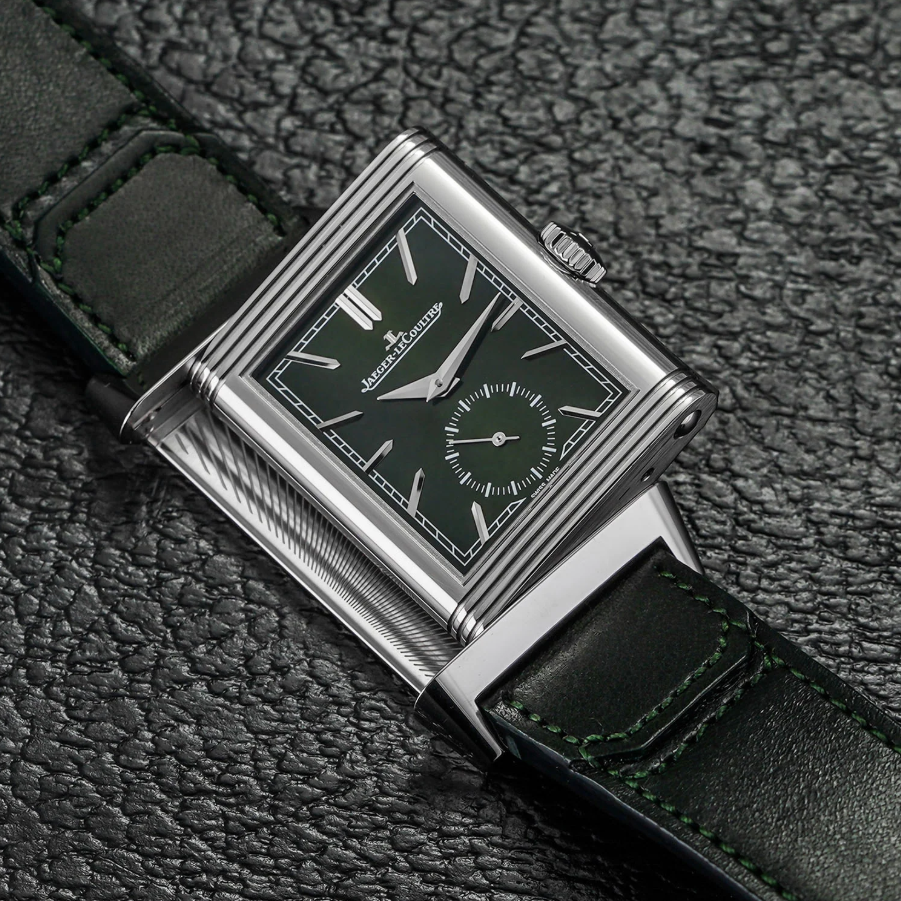
| Reverso Tribute Monoface | Current | Calibre 822 (manual), 2.94mm thin | 40.1mm x 24.4mm - faithful recreation of the 1931 original |
A Challenge on the Polo Fields of India
The story of the Reverso begins in the winter of 1930-31, when Swiss businessman and watch collector César de Trey attended a polo match in India attended by British army officers. After one officer broke his watch crystal during the game, de Trey was challenged: create a watch robust enough to survive polo. The solution he developed, in collaboration with LeCoultre and French designer René-Alfred Chauvot, was conceptually elegant: instead of protecting the crystal, flip the watch so the crystal faces the wrist. A sliding mechanism inside a cradle allowed the case to reverse on itself, exposing the smooth, engraved metal back to the dangers of the game while shielding the dial. The name "Reverso", from the Latin "I turn around", was registered in November 1931, and the first watches went to market before the year's end.
The original Reverso measured 38mm x 24mm x 6mm, with a black dial, sword hands, and baton indexes against a rectangular railway-style minute track. Its case was adorned at top and bottom with three horizontal gadroons, a motif drawn directly from the Art Deco architectural movement that dominated the era. The design was immediate, fully formed, and perfect: it has remained essentially unchanged for nearly a century. From the beginning, the smooth case back invited personalization. Initials, monograms, coats of arms, and miniature enamel paintings were engraved into it, making each Reverso a uniquely personal object. Historical figures including Amelia Earhart and General Douglas MacArthur wore personalised Reversos.

The Reverso Soixantième - Rebirth of an Icon
After surviving the quartz crisis through a difficult and inconsistent period, the Reverso was decisively reborn in 1991 with the Reverso Soixantième, the 60th-anniversary edition. Limited to 500 pieces, the Soixantième was the first Reverso to break from the watch's "simplicity only" tradition: it featured a display caseback revealing the hand-wound Calibre 824, crafted in gold, with a power reserve and date function. It was the first time in six decades that the Reverso had looked inside itself. The Soixantième launched an era of increasingly sophisticated Reverso complications: a tourbillon in 1993, a minute repeater in 1994, featuring the first rectangular minute repeater movement in history, with 306 components, a retrograde chronograph in 1996, and so on through a series of annual technical milestones that transformed the Reverso from a sporting instrument into a vehicle for haute horlogerie.
The Reverso Tribute - Back to the Original
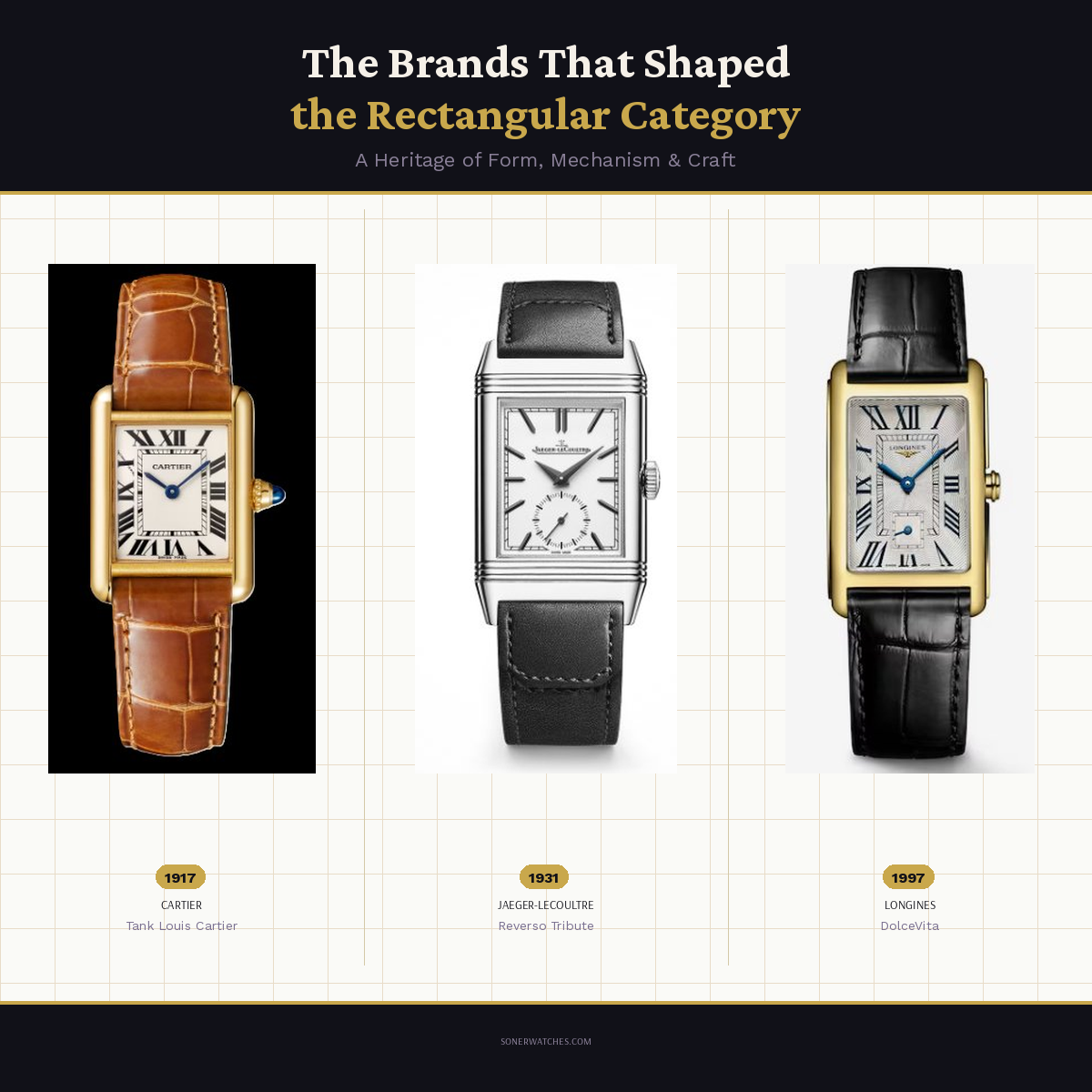
In counterpoint to the complications race, Jaeger-LeCoultre introduced the Reverso Tribute line as a faithful re-creation of the original 1931 watch. The Tribute Monoface measures 40.1mm x 24.4mm, almost exactly the proportions of the 1931 original, and is powered by the hand-wound Calibre 822, a form movement shaped to follow the contours of the rectangular case, measuring just 2.94mm in thickness. The dial carries only the "Reverso" text without the Jaeger-LeCoultre signature, as the 1931 originals did, before the two companies formally merged in 1937. It is as close to a time machine as the watch industry offers. And it sells continuously, year after year, to collectors who understand that some things do not need to be improved.

The Watch That Made the Rectangle Inevitable
Without the Reverso, the history of rectangular watchmaking reads differently. It is the watch that demonstrated that the angular form could be technically ambitious, artistically rich, mechanically sophisticated, and commercially enduring, all at once, for nearly a century. Every rectangular watch that has followed exists in its shadow. None has fully stepped out of it.
For the full story of how rectangular watches evolved across the major houses, see the complete history of rectangular watches. For how the Reverso compares to the Cartier Tank and Longines DolceVita, see our Tank vs Reverso vs DolceVita guide. For the best rectangular watches at every price point, see the best rectangular watches in 2026.
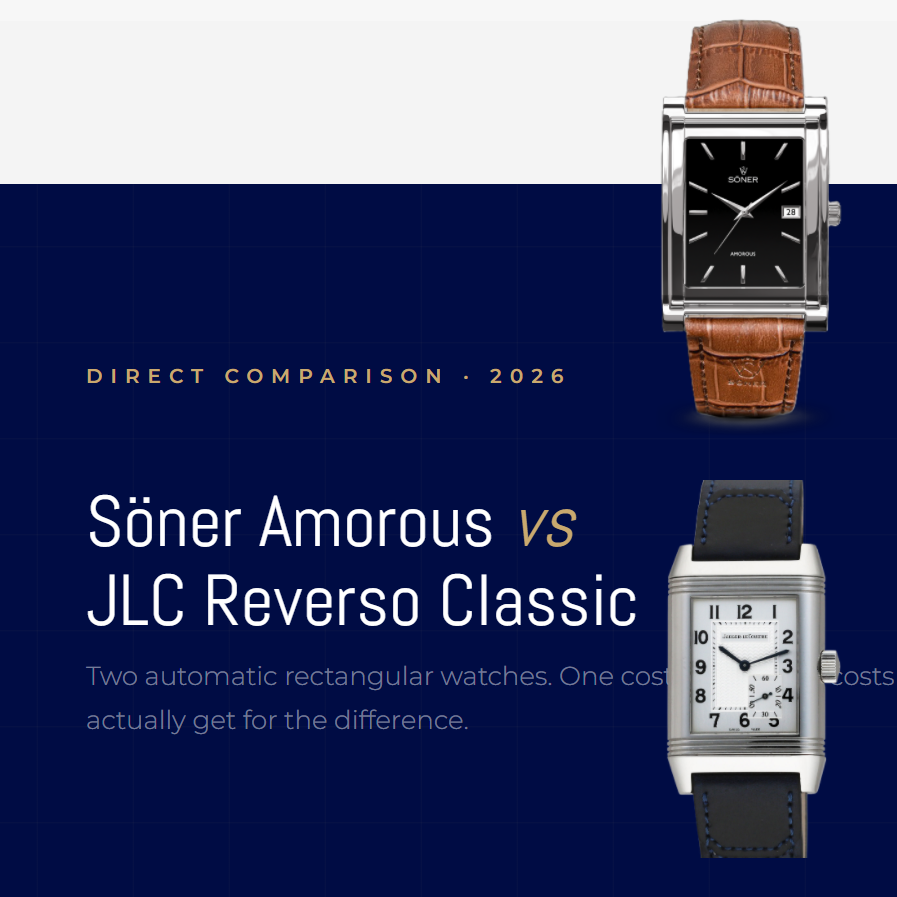
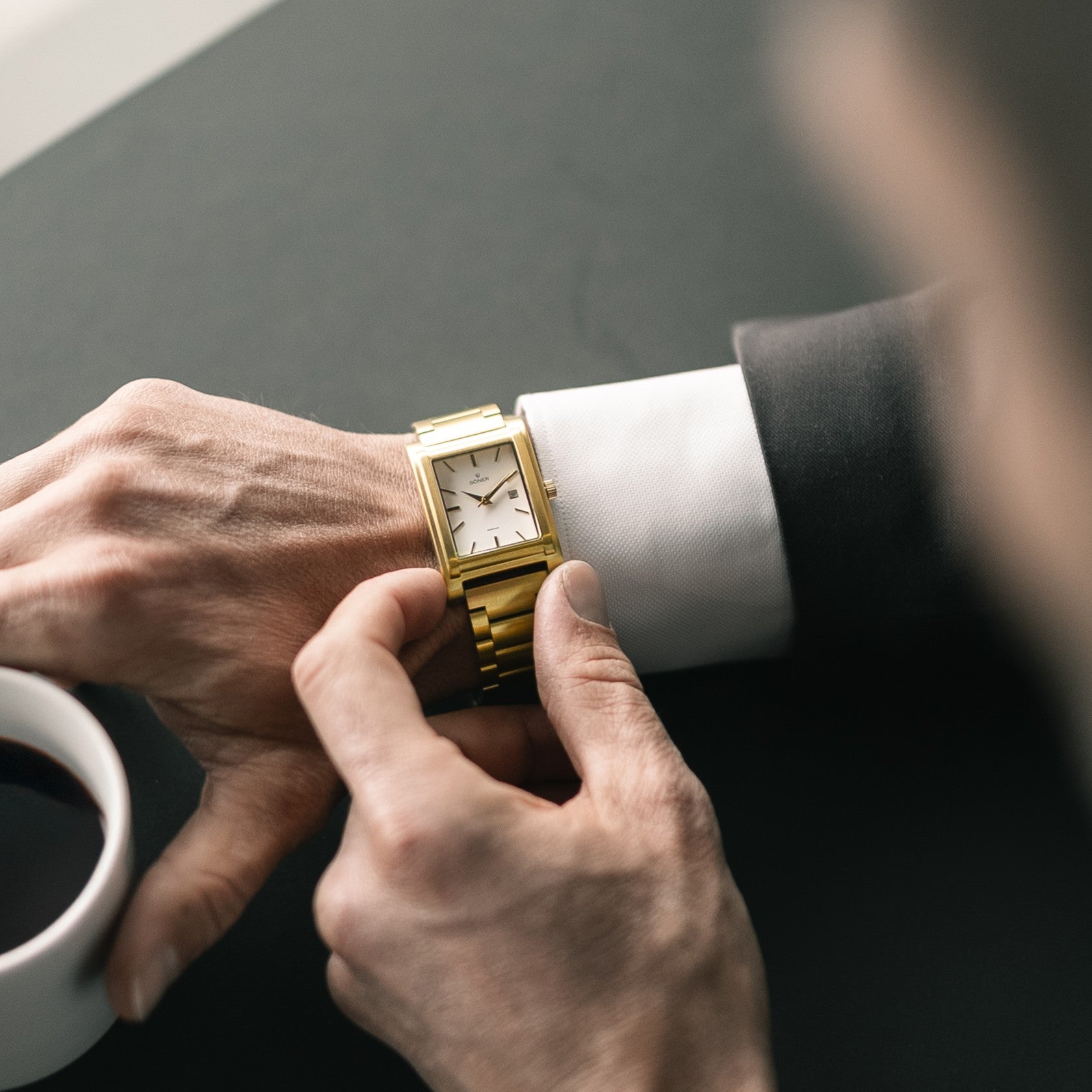
For a direct spec-by-spec comparison of the Reverso Classic against a Swedish automatic rectangular alternative at a fraction of the price, see the Söner Amorous vs JLC Reverso comparison.
Frequently Asked Questions
What is the Jaeger-LeCoultre Reverso?
The Jaeger-LeCoultre Reverso is a rectangular watch with a reversible case that slides within a cradle to flip and protect the crystal. It was introduced in 1931, originally designed for British polo players in India who needed to protect their watch crystals during play. It has been in continuous production since its introduction and is widely regarded as the most technically and historically significant rectangular watch ever made.
Why is the Reverso case reversible?
The reversal mechanism was the original solution to a practical problem: polo players needed to protect their watch crystals from impact during play. Rather than adding a protective cover or reinforcing the crystal, designer René-Alfred Chauvot devised a case that could be slid from its cradle and flipped to present a blank steel back to the playing field, shielding the dial entirely. The smooth back surface also invited engraving and personalization, adding a secondary function that has become one of the Reverso's defining characteristics.
How much does the Jaeger-LeCoultre Reverso cost?
The Reverso Tribute Monoface in steel starts at approximately $7,500 USD. Gold references and complicated models carry significantly higher prices - the minute repeater references start above $100,000. The Reverso collection spans from entry-level steel dress watches to haute horlogerie pieces that represent some of the most technically ambitious watchmaking in the world.
What is the difference between the Reverso Tribute and the Reverso Classic?
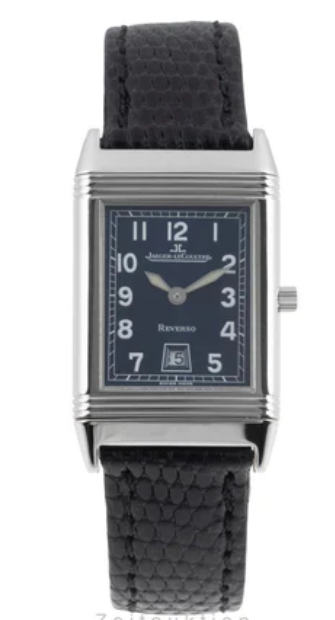
The Reverso Tribute is the most faithful recreation of the 1931 original - it carries only the "Reverso" text on the dial without the Jaeger-LeCoultre signature, as early models did before the two companies formally merged in 1937. The Reverso Classic is the current entry-level rectangular Reverso with standard Jaeger-LeCoultre branding. Both use hand-wound movements and share the same fundamental case architecture.
How does the Jaeger-LeCoultre Reverso compare to the Cartier Tank?
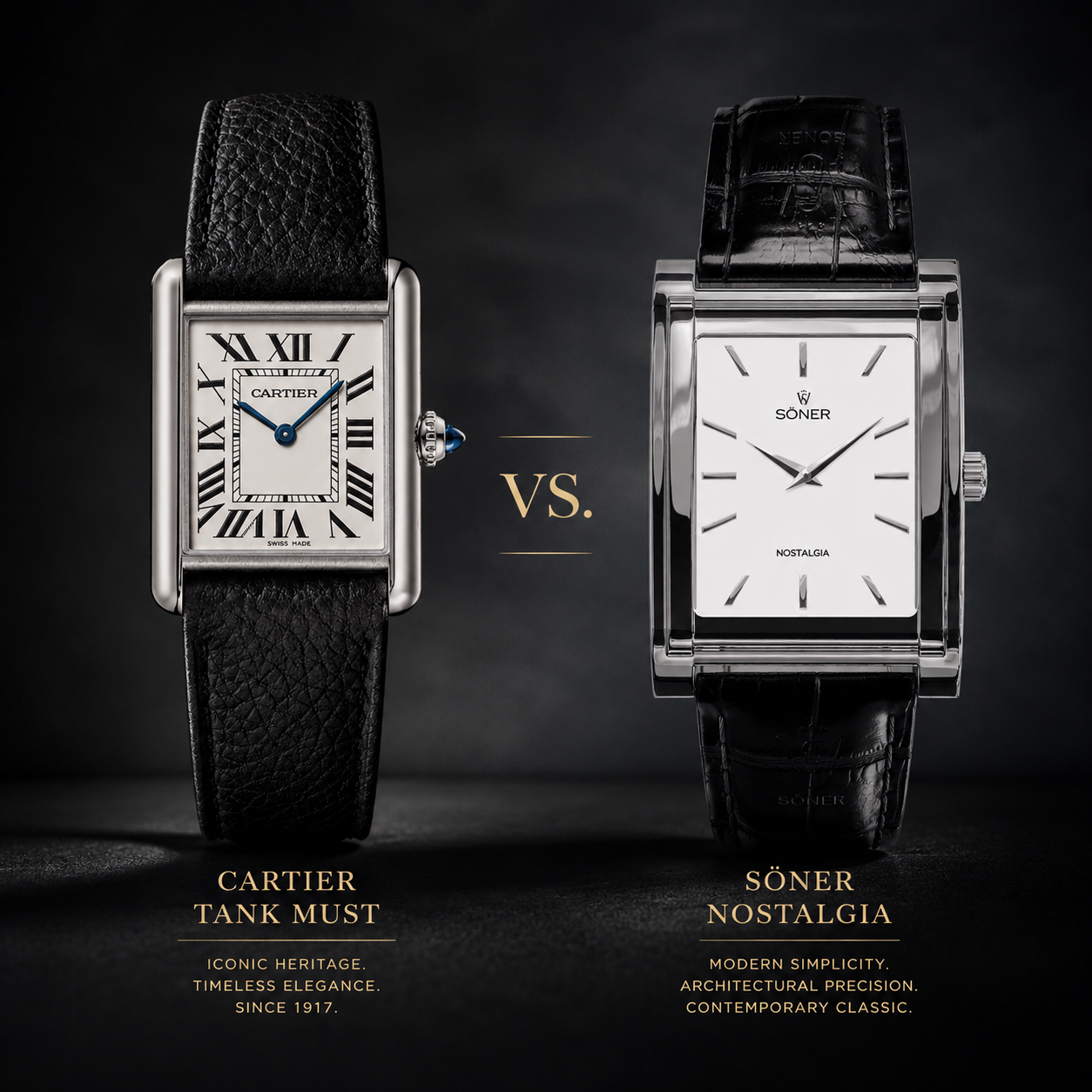
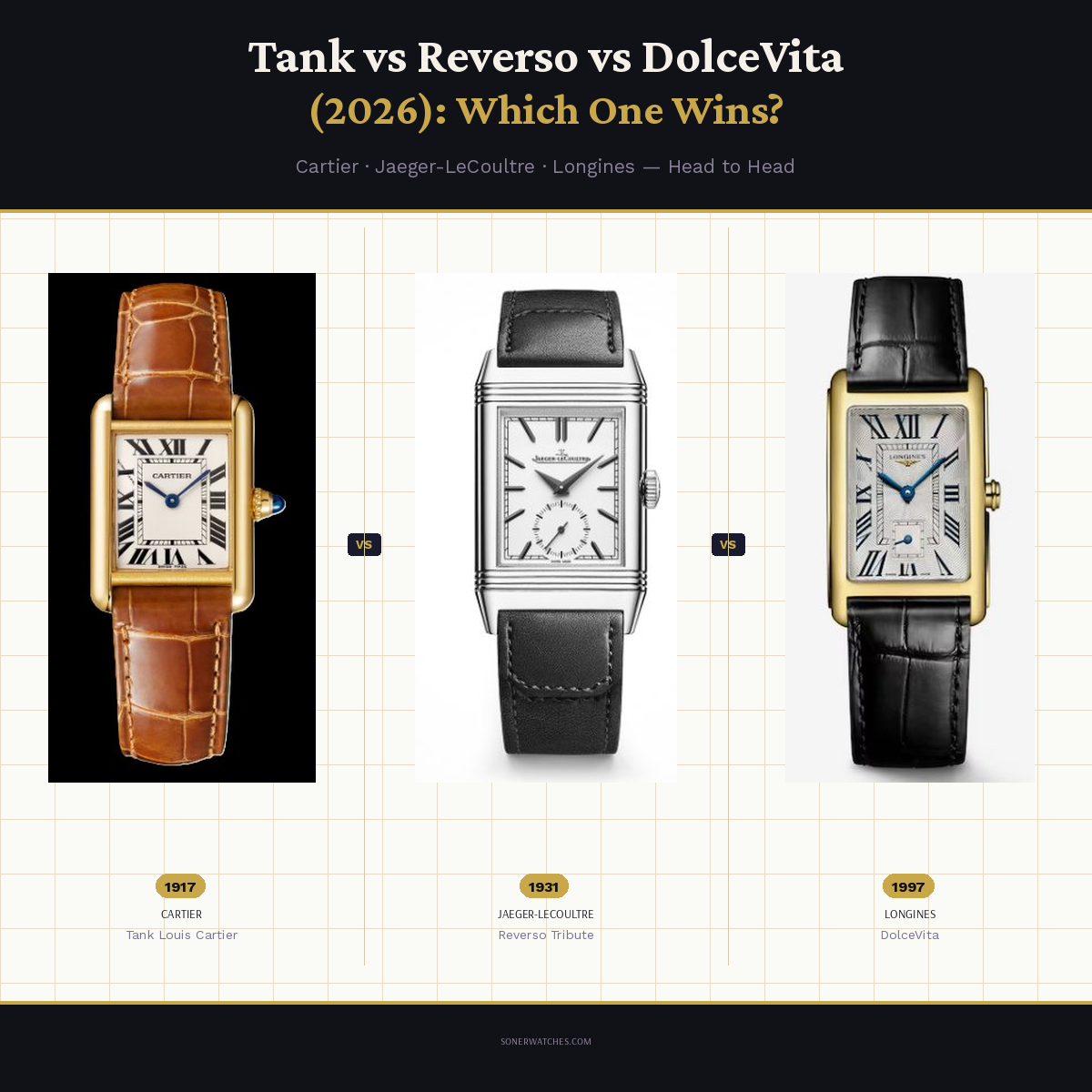
Both are pillars of the rectangular watch category but they occupy different design registers. The Tank is architectural and restrained - its proportions have remained essentially unchanged since 1917. The Reverso is more technically ingenious - the reversible case mechanism is a genuine engineering achievement - and more decorated with Art Deco gadroons and detail. The Tank starts lower in price. The Reverso's complications extend higher into haute horlogerie territory. For a full comparison, see our Tank vs Reverso vs DolceVita guide.
Is the Jaeger-LeCoultre Reverso a good investment?
Vintage and limited edition Reverso models have historically held value well on the secondary market. The Reverso's continuous production since 1931, its strong collector following, and its position at the pinnacle of rectangular watch design all support long-term value retention. As with any watch purchase, condition, provenance, and original documentation significantly affect secondary market value. For a broader perspective on watch investment, see our guide to whether watches are worth the investment.