


 Published on
Table of Contents
Steel is the most common watch case material in the world, but not all steel is equal. The difference between a standard stainless steel case and a high-grade hardened steel case is significant in terms of scratch resistance, longevity, and daily wear performance. Understanding the grades helps you evaluate watches more accurately and choose the right one for how you actually live.
This guide covers the three steel types most relevant to watch buying: standard stainless steel, surgical steel (316L), and hardened steel - with a specific focus on the 800 Vickers hardness rating used in Söner watch cases.

Steel Grades Compared
| Steel Type | Typical Vickers Hardness | Key Properties | Common Use |
|---|---|---|---|
| Standard Stainless Steel | ~150-200 HV | Corrosion-resistant, affordable, polishes well | Entry-level to mid-range watches |
| 316L Surgical Steel | ~200 HV | Hypoallergenic, enhanced corrosion resistance, low carbon | Industry standard for quality watches |
| 904L Stainless Steel | ~220 HV | Higher corrosion resistance, brighter polish than 316L | Rolex and premium brands |
| 800HV Hardened Steel | 800 HV | Exceptional scratch resistance, significantly harder than standard grades | Söner watch cases - 4x harder than standard stainless |
Standard Stainless Steel
Standard stainless steel is an iron alloy with chromium (typically 10-13%) and nickel, which give it corrosion resistance and the bright silver appearance associated with watch cases. It is the most widely used watch case material across every price tier - from sub-$100 fashion watches to $5,000 Swiss models.
Advantages: Good corrosion resistance in everyday environments, strong enough for daily wear, takes both brushed and polished finishes well, and is the most cost-effective quality case material available.
Limitations: At 150-200 HV, standard stainless steel will accumulate surface scratches over months of daily wear. Keys, coins, desk surfaces, and general contact will mark the case. This is normal and expected - most steel watches develop a patina of micro-scratches that some owners find characterful and others find frustrating.
316L Surgical Steel: The Industry Standard
316L stainless steel - commonly called surgical steel because of its widespread use in medical implants and instruments - is the quality benchmark for watch cases. The L designates low carbon content, which improves corrosion resistance and makes the steel easier to weld and machine without degrading its properties. The addition of molybdenum (2-3%) provides significantly better resistance to chloride corrosion, making it more suitable for contact with sweat, salt water, and cleaning products than standard stainless.
Why it matters for watches: 316L is hypoallergenic, meaning it rarely causes skin reactions even in people with nickel sensitivity. Its enhanced corrosion resistance means the case maintains its appearance better in everyday wear conditions. The low carbon content allows cleaner machining, which is important for the precise tolerances required in watch case construction.
Limitations: At approximately 200 HV, 316L has similar scratch resistance to standard stainless steel. The upgrade from standard to 316L is primarily about corrosion resistance and biocompatibility, not hardness.

What is Vickers Hardness?
The Vickers hardness test (HV) measures a material's resistance to indentation - essentially, how hard it is to mark the surface. A diamond pyramid indenter is pressed into the material under a controlled load. The size of the indentation left is measured microscopically, and the hardness value is calculated from the load divided by the surface area of the indentation. Higher HV values indicate greater resistance to deformation and scratching.
For context: standard stainless steel sits at approximately 150-200 HV. Sapphire crystal - the hardest watch crystal material - rates at approximately 2,000 HV on the same scale. Glass is approximately 500-600 HV. The 800 HV achieved through advanced case hardening sits well above standard steel grades and significantly above the hardness of most everyday surfaces that a watch case contacts.
For the full technical background on Vickers hardness and how it applies to watch cases, see our detailed guide to Vickers hardness in watches.
800HV Hardened Steel: The Söner Standard
Söner watch cases are hardened to 800 Vickers through an advanced heat treatment and surface hardening process. At 800 HV, the case material is approximately four times harder than standard 316L stainless steel. This has a direct and significant effect on scratch resistance in daily wear.
The hardening process works by introducing carbon or nitrogen into the steel's surface layer under controlled heat and pressure, creating a hardened outer shell while maintaining the steel's core properties - including its corrosion resistance and machinability. The result is a case that maintains its surface finish significantly longer under the same conditions that would visibly scratch a standard steel case.
Practical effect: A standard 316L steel case will show visible micro-scratches after weeks of daily wear. An 800 HV hardened case under the same conditions will show significantly less visible marking. This is not a marginal difference - it is the equivalent of the difference between a mineral glass crystal and a sapphire one, applied to the case itself.
Trade-offs: The hardening process is more technically demanding and increases production cost. It also requires more specialised finishing equipment, since harder steel requires harder tooling to machine and polish. These factors contribute to the production cost but result in a case that maintains its appearance under daily wear in a way that standard grades cannot match.

Steel Finishing: Brushed vs Polished
The hardness of the steel determines how long a given finish lasts, but the finishing itself is a separate decision from the material grade. Quality watches typically use both finishes on the same case - polished surfaces on the bezel, case flanks, and lugs against brushed surfaces on the mid-case - which requires clean transitions and precise machining.
Brushed finish: Achieved by abrading the surface in a consistent direction with progressively finer abrasives. Diffuses light, conceals fingerprints, and hides minor scratches more effectively than a polished surface. Preferred for tool watches and contemporary dress watches.
Polished finish: Achieved by progressively finer polishing compounds until the surface achieves a mirror reflection. Shows fingerprints and scratches more readily than brushed surfaces but creates a more formal, refined appearance. Preferred for dress watches and luxury pieces.
With 800 HV hardened steel, both finishes hold their character longer than on standard steel grades - which is the practical benefit that matters most in daily wear.
Caring for a Steel Watch Case
Even at 800 HV, a steel case will accumulate some surface marking over time with sufficient use. A soft cloth wipe-down after wear removes fingerprints and light surface deposits. For deeper cleaning, a slightly damp cloth followed by thorough drying handles most requirements. Avoid abrasive cleaners or harsh chemicals that can damage surface treatments.
If your case does develop surface scratches over years of wear, professional polishing by a watchmaker can restore the original finish. For DIY guidance on light scratch removal, see our guide to removing scratches from stainless steel watches.

Frequently Asked Questions
What is 316L steel in watches?
316L is a specific grade of austenitic stainless steel with low carbon content and a molybdenum additive that improves corrosion resistance. It is the industry standard for quality watch cases, preferred over basic stainless steel for its hypoallergenic properties and better resistance to chloride corrosion from sweat and salt water. Most Swiss watch brands use 316L as their baseline case material.
What does 800HV mean for a watch case?
800 Vickers (HV) is a measure of the steel's hardness - its resistance to surface indentation and scratching. Standard 316L stainless steel sits at approximately 200 HV. An 800 HV hardened case is approximately four times harder, meaning it resists surface scratching significantly better under the same daily wear conditions. The hardening is achieved through advanced heat treatment processes that introduce carbon or nitrogen into the steel's surface layer.
Is surgical steel the same as stainless steel?
Surgical steel is a specific grade of stainless steel - 316L - formulated for medical applications. It is not the same as generic stainless steel. 316L has lower carbon content, higher corrosion resistance, and hypoallergenic properties that standard stainless steel does not reliably provide. In watch contexts, 316L is the quality baseline - most reputable watch brands specify it rather than generic stainless steel.
Will a stainless steel watch scratch?
Yes - all steel cases will accumulate surface scratches over time with daily wear. The rate depends on the steel's hardness and the conditions of use. Standard 316L at 200 HV will show visible micro-scratches within weeks of daily wear. An 800 HV hardened case under the same conditions will show significantly less surface marking. Neither is immune to scratching from extremely hard surfaces, but the difference in practical daily wear performance is substantial.
What is the hardest watch case material?
Ceramics and sapphire crystal are among the hardest materials used in watch cases, rating between 1,200 and 2,000 HV. These are used in specific avant-garde designs and high-end ceramics watches. For conventional metal cases, titanium carbide coatings and advanced hardened steels represent the high end of practical hardness. Söner's 800 HV hardened steel sits well above standard steel grades and provides excellent everyday scratch resistance without the brittleness of ceramic.
SÖNER rectangular watches
Free worldwide shipping · 10-year warranty · 30-day returns
Our pick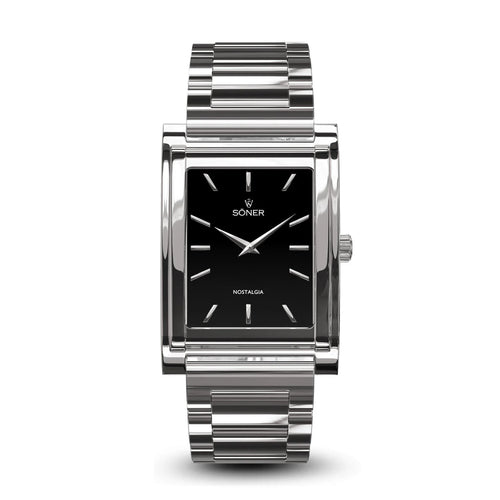 Nostalgia Stockholm11-year battery$580 USD
View watch
Nostalgia Stockholm11-year battery$580 USD
View watch
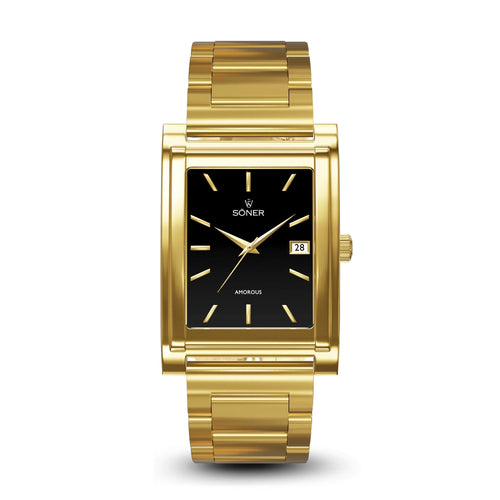 Amorous MilanoAutomatic$785 USD
View watch
Amorous MilanoAutomatic$785 USD
View watch
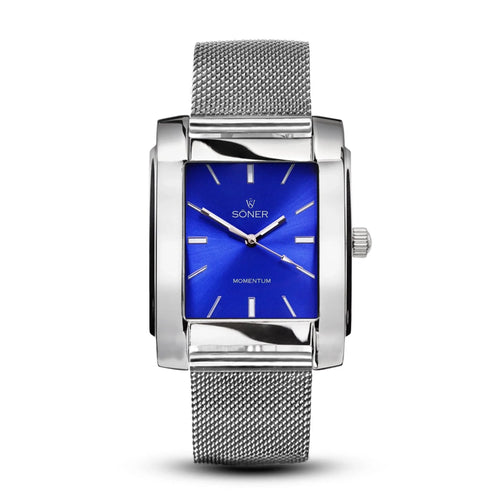 Momentum BacardiAutomatic$585 USD
View watch
Momentum BacardiAutomatic$585 USD
View watch
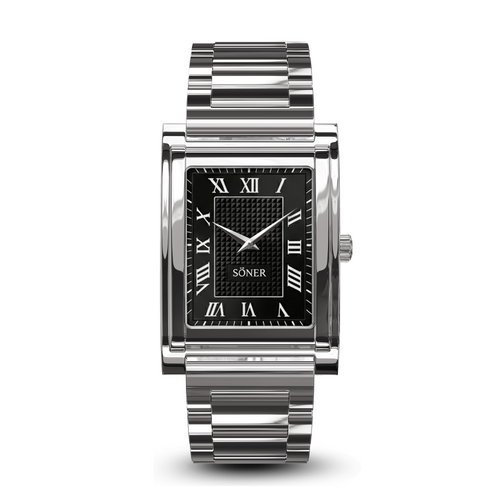 Nostalgia Caesar11-year battery$765 USD
View watch
Nostalgia Caesar11-year battery$765 USD
View watch
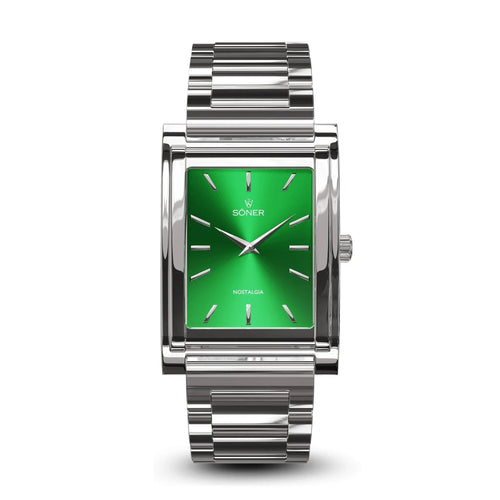 Nostalgia New York11-year battery$580 USD
View watch
Nostalgia New York11-year battery$580 USD
View watch
View all watches
 Nostalgia Stockholm11-year battery$580 USD
View watch
Nostalgia Stockholm11-year battery$580 USD
View watch
 Amorous MilanoAutomatic$785 USD
View watch
Amorous MilanoAutomatic$785 USD
View watch
 Momentum BacardiAutomatic$585 USD
View watch
Momentum BacardiAutomatic$585 USD
View watch
 Nostalgia Caesar11-year battery$765 USD
View watch
Nostalgia Caesar11-year battery$765 USD
View watch
 Nostalgia New York11-year battery$580 USD
View watch
Nostalgia New York11-year battery$580 USD
View watch