

 Published on
Table of Contents

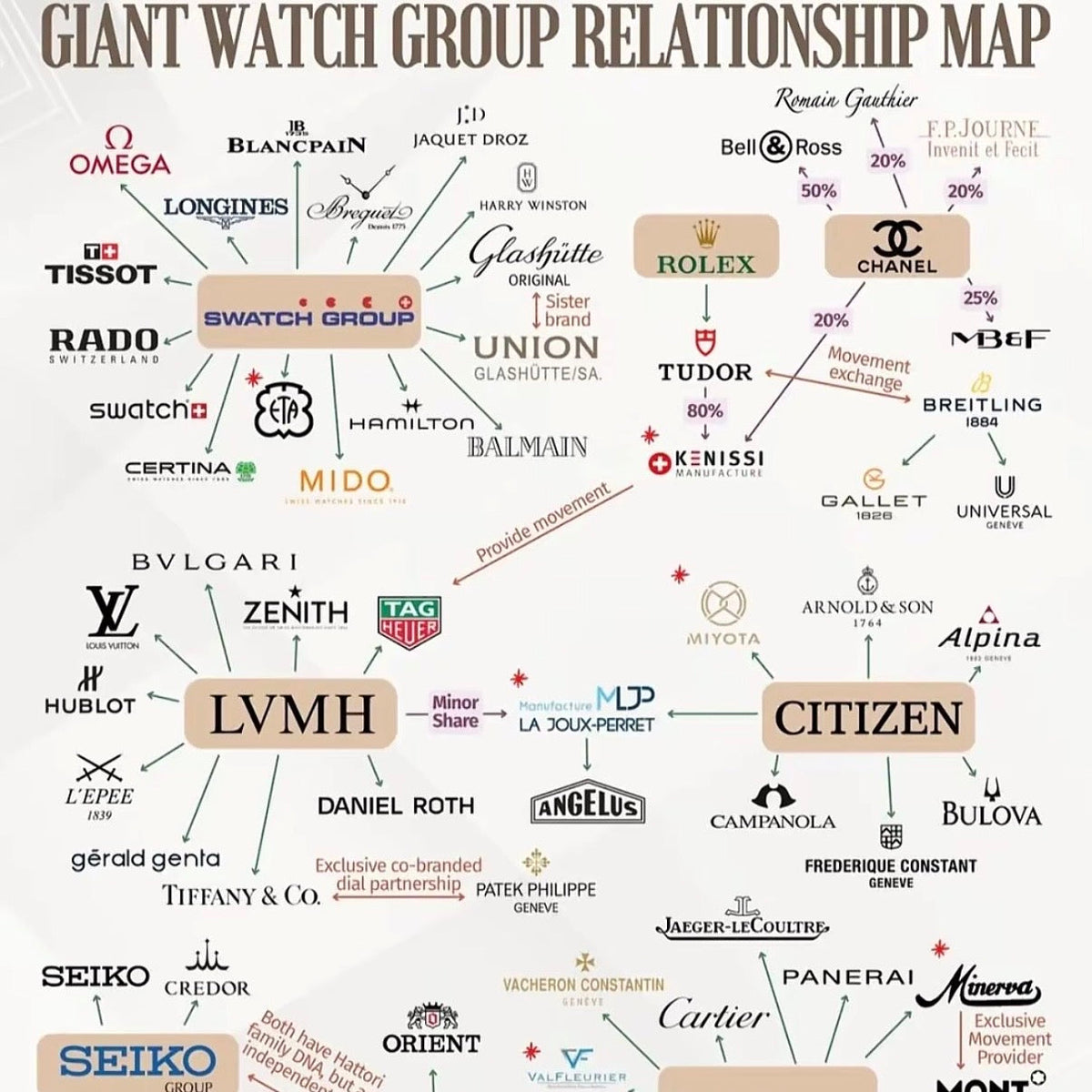
Who owns which watch brands: the groups, their stakes and the movement suppliers behind the names. Tap the map to open it in full size and zoom in.
Who Owns Which Watch Brands in 2027?
Most famous watch brands belong to a handful of owners. The Swatch Group owns Omega, Longines, Breguet and Tissot. Richemont owns Cartier, Vacheron Constantin, Jaeger-LeCoultre and IWC. LVMH owns TAG Heuer, Hublot, Zenith and Bvlgari. Rolex and Tudor belong to the Hans Wilsdorf Foundation, Breitling is majority owned by Partners Group, and Patek Philippe, Audemars Piguet and Chopard are still family owned. In Japan, Citizen, Seiko Group and Epson run the show.
Turn over almost any watch and you will find a brand name, a country and perhaps a calibre number. What you will not find is the company that owns the brand, the factory that made the movement or the group that decides what the brand does next. The watch industry is far more connected than its marketing suggests. Rivals share suppliers, fashion houses own pieces of independent watchmakers, and a single Swiss factory can build movements for brands that compete for the same customer.
This guide maps that hidden structure: who owns which watch brands, how the big groups were built, who makes the movements, and where the independents fit. If you want to see how the same brands rank by price and prestige instead of ownership, our watch brand pyramid covers that side of the story.
The Watch Industry at a Glance
| Owner | Country | Controlled by | Key watch brands |
|---|---|---|---|
| Swatch Group | Switzerland | Listed, Hayek family | Omega, Longines, Breguet, Blancpain, Tissot, Hamilton |
| Richemont | Switzerland | Listed, Rupert family | Cartier, Vacheron Constantin, Jaeger-LeCoultre, IWC, A. Lange & Söhne, Panerai |
| LVMH | France | Listed, Arnault family | TAG Heuer, Hublot, Zenith, Bvlgari, Tiffany & Co. |
| Rolex | Switzerland | Hans Wilsdorf Foundation | Rolex, Tudor |
| Chanel | France | Wertheimer family | Chanel, plus stakes in F.P. Journe, MB&F and Bell & Ross |
| Breitling | Switzerland | Partners Group (majority) | Breitling, Universal Genève, Gallet |
| Citizen | Japan | Listed | Citizen, Bulova, Frederique Constant, Alpina, Arnold & Son |
| Seiko Group | Japan | Listed, Hattori family | Seiko, Grand Seiko, Credor |
| Epson | Japan | Listed | Orient, Orient Star |
| Patek Philippe | Switzerland | Stern family | Patek Philippe (independent) |
How the Watch Industry Is Structured
The watch industry works in layers. At the surface sit the brands you see on dials. Behind them sit the owners: families, foundations, listed groups and private equity firms. Behind the owners sit the manufacturers that build movements and components, and behind those sit the distributors and retailers that put a watch on your wrist. The company whose name is on the dial often controls only some of these layers.
That is why it helps to keep three questions apart. Who owns the brand decides strategy and keeps the profits. Who makes the movement decides how the watch actually works. And who supplies the parts, from hairsprings to sapphire crystals, decides more than most buyers realise. A brand can be owned by one company, run on a movement from a second and assembled with parts from a third.
Ownership also changes over time. Brands are bought, sold, merged and revived, and minority stakes appear where you least expect them. The sections below take the big owners one by one.

1. Swatch Group: The Industrial Backbone
The Swatch Group is the world's largest watch group by number of brands and the most vertically integrated listed watch company in Switzerland. It was born in 1983 from the merger of two struggling Swiss groups, SSIH (home of Omega and Tissot) and ASUAG (home of Longines, Rado, Certina, Mido and the movement makers). Nicolas G. Hayek led the rescue, and the Hayek family still controls the group: it holds about a quarter of the shares and more than 40% of the votes.
Its brands include Breguet, Blancpain, Omega, Longines, Jaquet Droz, Harry Winston, Glashütte Original, Union Glashütte, Tissot, Rado, Swatch, Certina, Mido, Hamilton and Balmain. Breguet joined in 1999, Blancpain in 1992, the Glashütte brands and Jaquet Droz in 2000, and Harry Winston in 2013. For Balmain, the group holds the worldwide rights to the watches, while the Balmain fashion house is a separate company.
What makes the Swatch Group different is what sits behind the brands. ETA makes movements, Nivarox makes hairsprings and escapements, and other group companies make dials, hands, cases and crystals. Much of the Swiss industry, inside and outside the group, has depended on these suppliers for decades.
2. Richemont: The Jewellery and Watch Maisons
Richemont was created in 1988 by the Rupert family, which still holds about half of the votes through its family company. Johann Rupert is chairman. Richemont is a jewellery group first, led by Cartier and Van Cleef & Arpels, with a strong stable of specialist watchmakers alongside.
Its watch brands include Cartier, Vacheron Constantin (founded 1755, the oldest watch manufacture in continuous operation), Jaeger-LeCoultre, IWC Schaffhausen, A. Lange & Söhne, Panerai, Piaget, Roger Dubuis and Montblanc, whose fine watches come from the Minerva manufacture. Jaeger-LeCoultre, IWC and A. Lange & Söhne arrived together in 2000 in one of the largest deals in watch history, worth about CHF 3 billion. Baume & Mercier left the group in 2026, when it was sold to Italy's Damiani.
Richemont's maisons are run with a high degree of independence. Each keeps its own manufacture, design studio and chief executive, which is why a Cartier and a Lange can feel nothing alike despite sharing an owner.
3. LVMH: Fashion Money Meets Swiss Watchmaking
LVMH is the world's largest luxury group, controlled by the Arnault family. Watches sit inside its Watches and Jewelry division, next to Bvlgari and Tiffany & Co. jewellery.
The watch brands were bought one by one. TAG Heuer and Zenith joined in 1999, Hublot in 2008 and Bvlgari in 2011, bringing with it the watchmakers Gérald Genta and Daniel Roth. Tiffany & Co. followed in 2021, and L'Epée 1839, the clock maker, in 2024. Louis Vuitton also makes its own watches. In November 2025 LVMH took a minority stake in the movement maker La Joux-Perret, which remains majority owned by Citizen.
TAG Heuer is also home to one of the most famous square watches ever made, the TAG Heuer Monaco, first launched in 1969.
4. Rolex and Tudor: Owned by a Foundation
Rolex is owned by the Hans Wilsdorf Foundation, a private charitable foundation in Geneva. It has no shareholders, publishes no accounts and cannot be bought. Hans Wilsdorf founded the business in London in 1905, registered the Rolex name in 1908 and moved to Geneva after the First World War. When he died in 1960, the foundation became the owner.
Rolex is also the most vertically integrated major watch company in the world. It bought its long-time movement maker Aegler in 2004 and makes its own cases, dials, bracelets and gold alloys. In 2023 it agreed to buy Bucherer, its largest retail partner, which brought the brand closer to the customer than ever before. Read more about why Rolex watches are so significant.
Tudor is Rolex's sister brand under the same ownership. Hans Wilsdorf had the Tudor name registered in 1926. Since 2015 Tudor has made its own movements, and it shares a manufacture in Le Locle with Kenissi, the movement company it controls with about 80%. Chanel owns the remaining stake.

5. Chanel: The Quiet Investor
Chanel is privately owned by the Wertheimer family and has quietly become one of the most important investors in independent watchmaking. Instead of buying brands outright, it takes minority stakes and leaves the founders in charge.
Its stakes include F.P. Journe (20%, since 2018), MB&F (25%, since 2024) and Kenissi (20%), whose movements power some of Chanel's own J12 watches. Chanel has also invested in Bell & Ross and Romain Gauthier, reported at around 49% and 20%, although Chanel has never confirmed those figures.
6. Breitling: Private Equity and a New Group
Breitling was founded in 1884 in Saint-Imier and was owned by the Schneider family for almost four decades before private equity arrived. CVC bought it in 2017, and since late 2022 the Swiss investment firm Partners Group has held the majority, with CVC as a minority shareholder.
Breitling has since turned itself into a small group of its own. It bought Universal Genève in 2023 and relaunched it in 2026, and it acquired the historic Gallet name in 2025. Breitling and Tudor are also linked through movements: Breitling uses a Kenissi-made calibre in some models, and Tudor has used Breitling's B01 chronograph as a base.
7. Citizen, Seiko and Epson: The Japanese Groups
Japan's watch industry is built around listed groups that make almost everything themselves, from quartz crystals to finished watches.
Citizen is the largest Japanese owner of Swiss brands. It bought Bulova in 2008, the movement maker La Joux-Perret and its brand Arnold & Son in 2012, and Frederique Constant, together with Alpina, in 2016. Its Miyota division is one of the world's largest suppliers of movements to other brands.
Seiko Group traces its history to the shop Kintaro Hattori opened in Tokyo in 1881, and the Hattori family still leads it. Its brands include Seiko, Grand Seiko (a brand of its own since 2017) and Credor. Through its company TMI, Seiko also sells movements such as the NH35 to brands around the world.
Epson is often mistaken for part of Seiko, but it is a separate listed company. The two share their roots in the Hattori family's businesses, and neither owns the other: Seiko Group holds about 3.4% of Epson directly, and about 10% together with Hattori family members. Epson owns Orient and Orient Star, and it builds the Spring Drive and quartz movements for Grand Seiko at the Shinshu Watch Studio. For the bigger picture, compare Swiss and Japanese movements.
8. The Family Houses and the Independents
At the very top of the market, the most valuable names are not owned by groups at all.
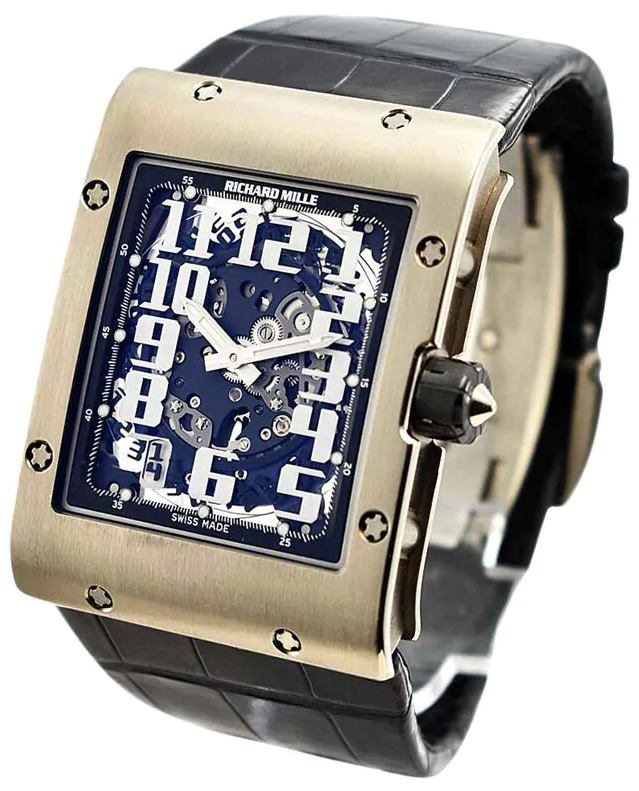
Patek Philippe was founded in Geneva in 1839 and has been owned by the Stern family since 1932. Audemars Piguet is still owned by its founding families, and it holds a minority stake in Richard Mille, reported at around 10%. Chopard has belonged to the Scheufele family since 1963. Richard Mille, founded in 2001, is controlled by its founding families.
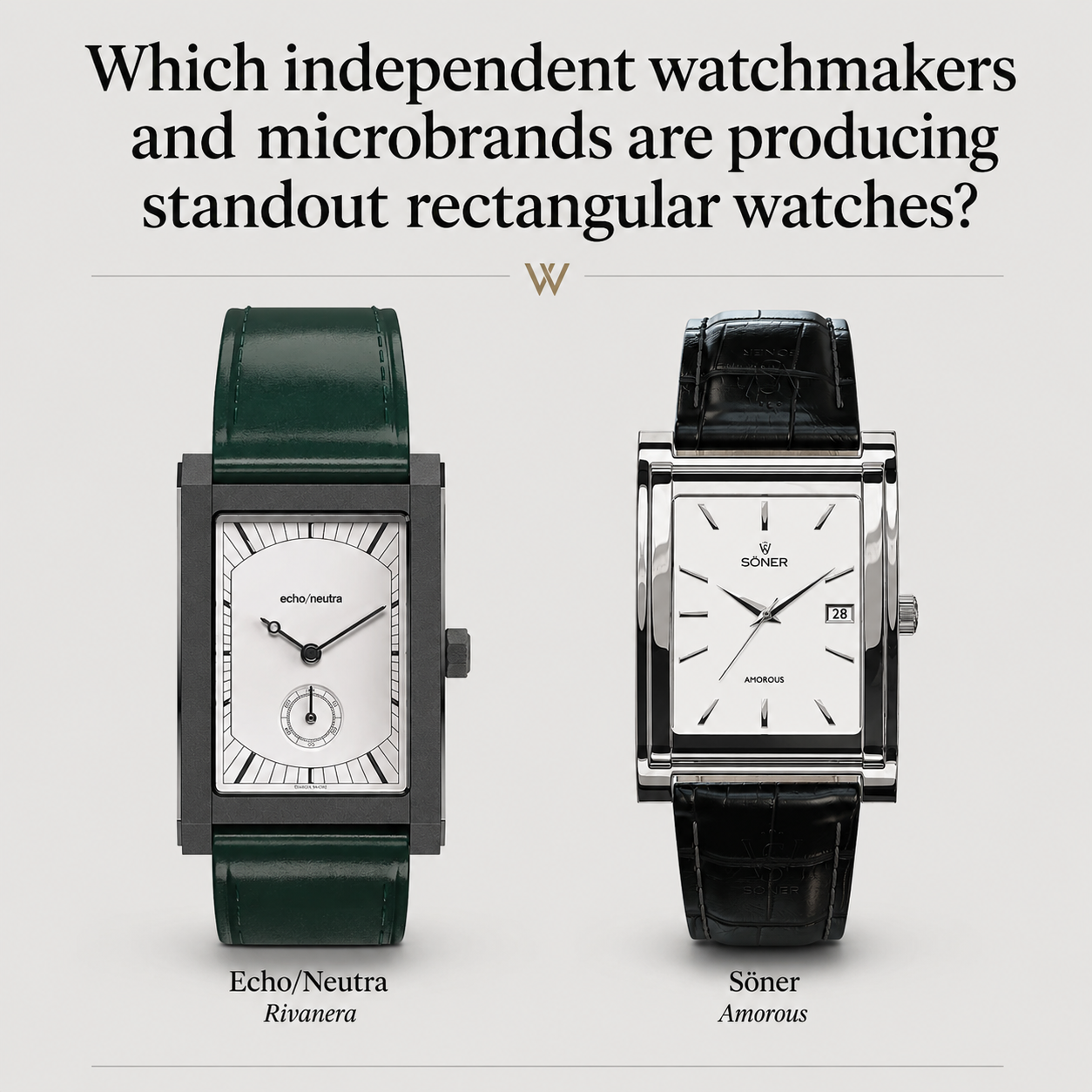
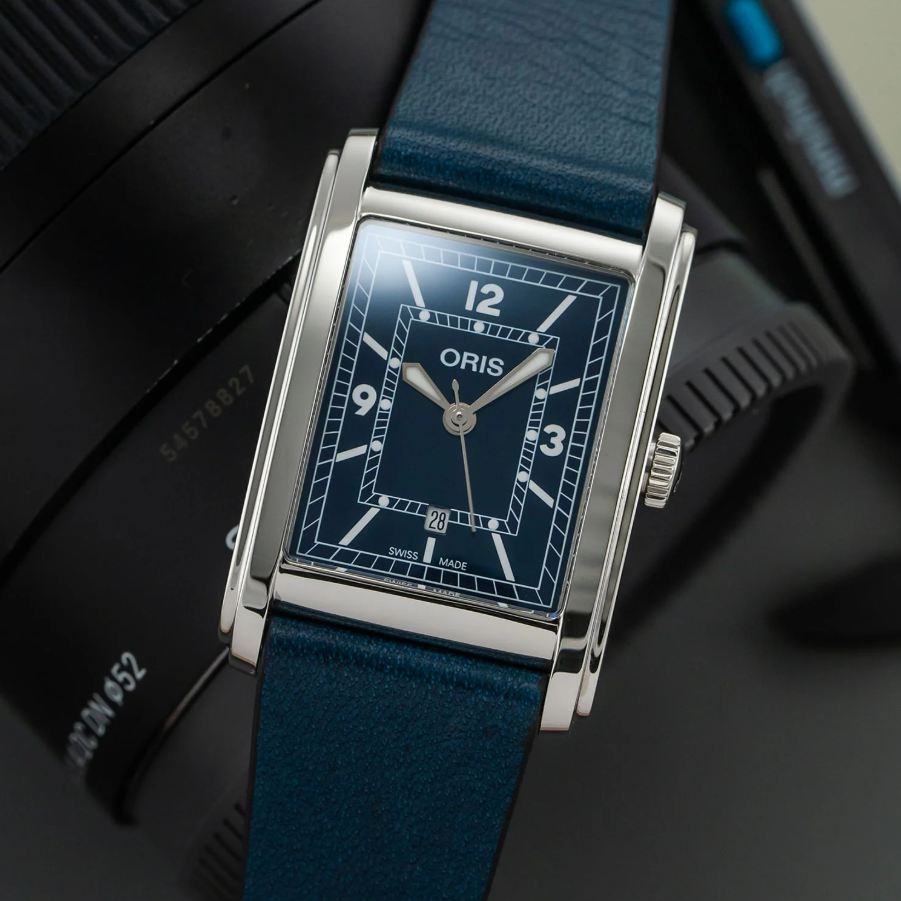
Below them sits a wide world of independent watchmakers, from F.P. Journe and MB&F to Nomos Glashütte, Sinn and Oris, and the hundreds of smaller brands that make up the rest of the industry. Independence describes ownership, not size or quality. Some independents produce a few dozen watches a year, while others are substantial businesses. SÖNER is one of them, and you will find more Nordic names in our guide to Swedish watch brands.
Who Makes the Movements?
Owning a brand is not the same as making its movement. A small number of specialists build the engines inside a large share of the world's watches, often for brands that compete head to head.
ETA, part of the Swatch Group, is the industry's historic workhorse, supplying both group brands and outside customers. Sellita is the largest independent Swiss movement maker. Kenissi, controlled by Tudor with Chanel as a partner, supplies Tudor, Breitling, TAG Heuer and Chanel among others. La Joux-Perret belongs to Citizen, with LVMH as a minority shareholder. Minerva builds movements exclusively for Montblanc inside Richemont. In Japan, Miyota (Citizen), TMI (Seiko) and Epson supply quartz and mechanical movements on a huge scale.
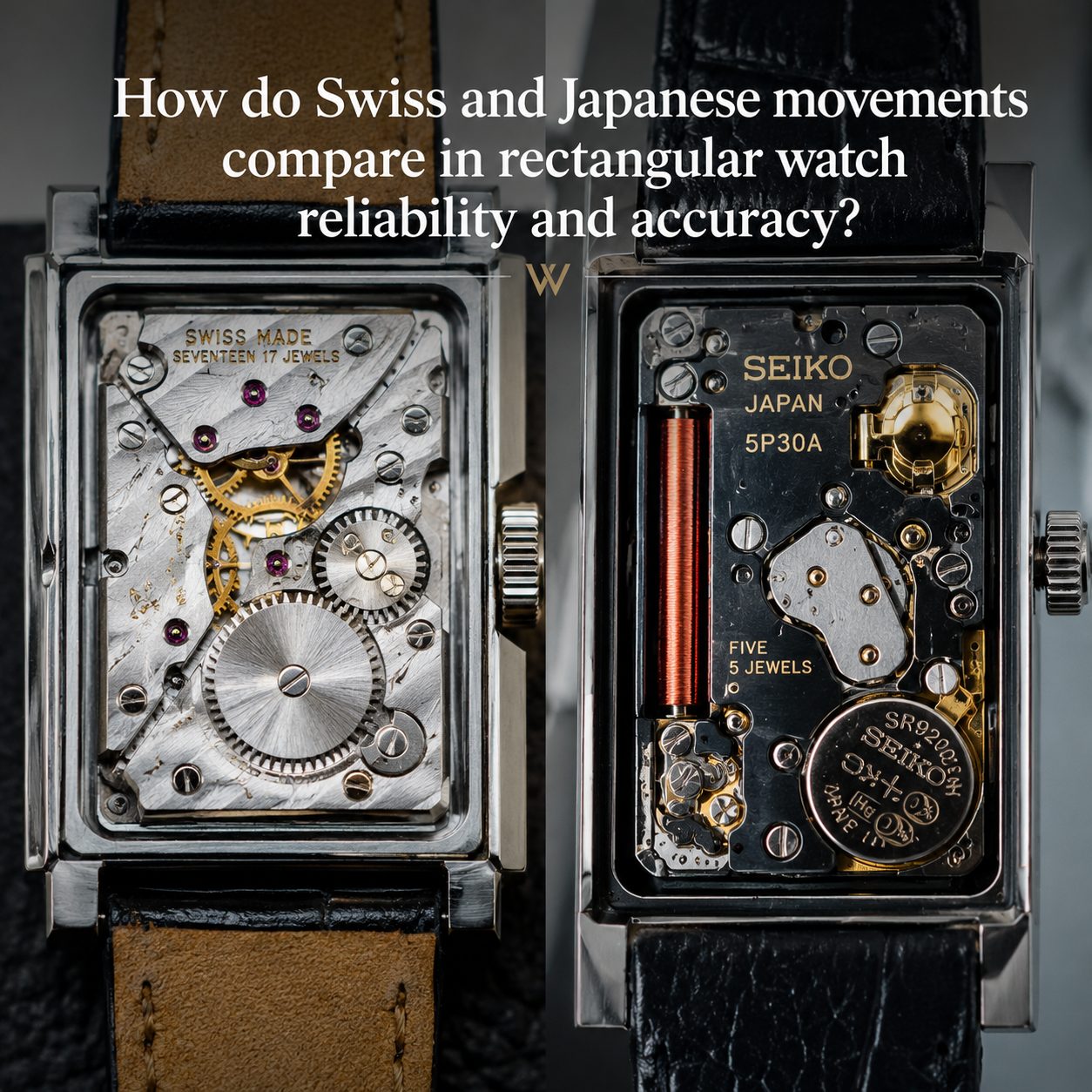
That is why two watches from rival owners can share an engine, and why a brand calling a movement in-house is worth checking. If you want to know what happens inside the case, start with how an automatic watch works and the difference between quartz and mechanical watches.

Who Owns the Great Rectangular Watches?
Map the most famous rectangular watches onto the ownership chart and a clear pattern appears: almost all of them belong to the big groups or the richest family houses.
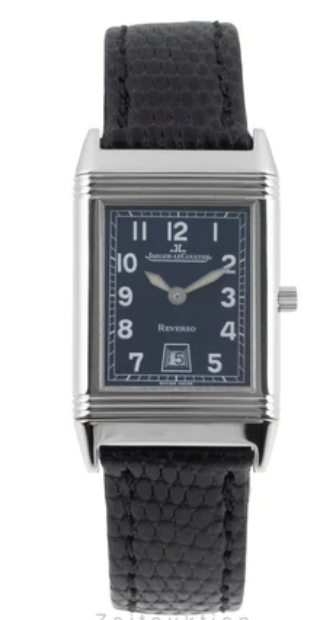
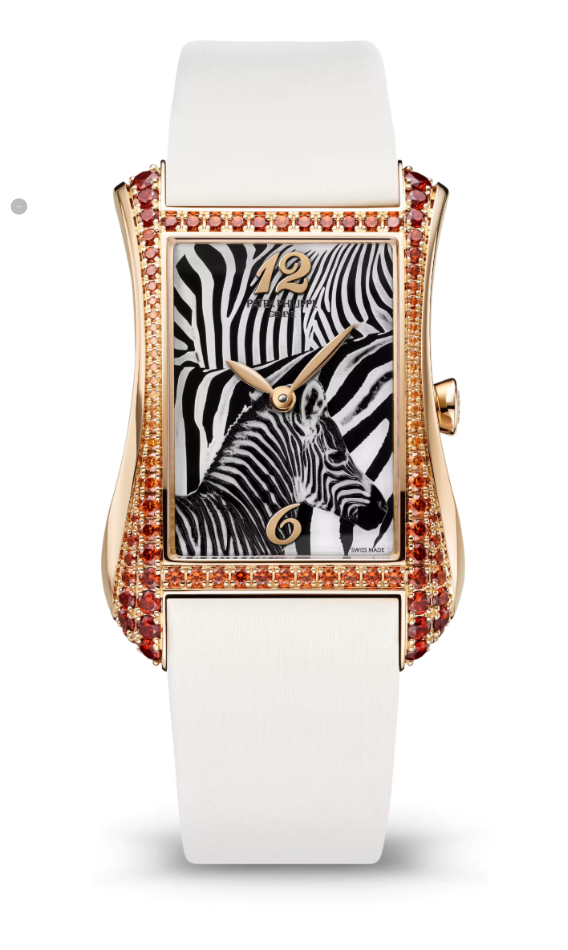
The Cartier Tank and Santos and the Jaeger-LeCoultre Reverso all belong to Richemont. The square TAG Heuer Monaco belongs to LVMH. The Patek Philippe Gondolo belongs to the Stern family, and the tonneau-shaped Richard Mille to its founding families, with Audemars Piguet as a minority shareholder.
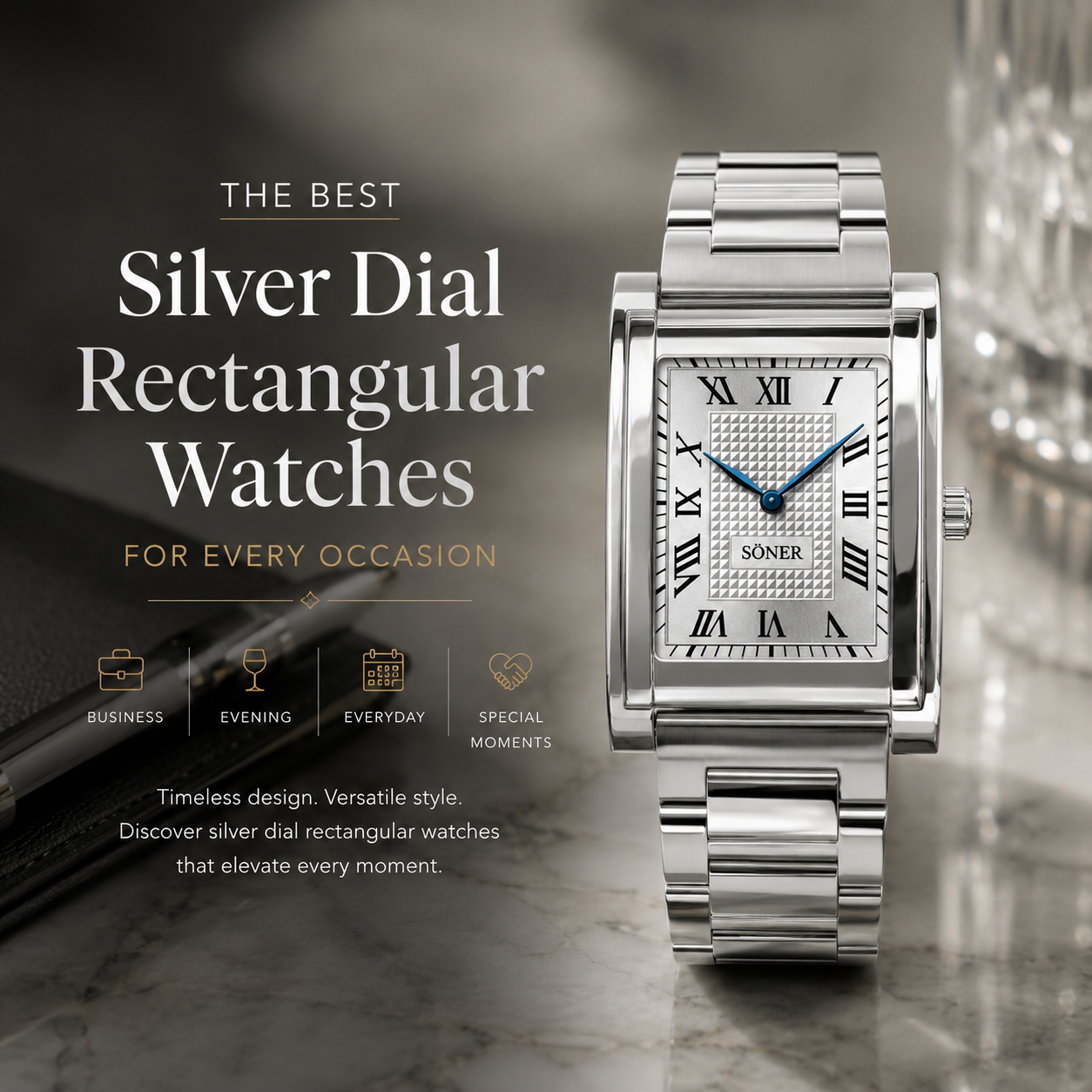
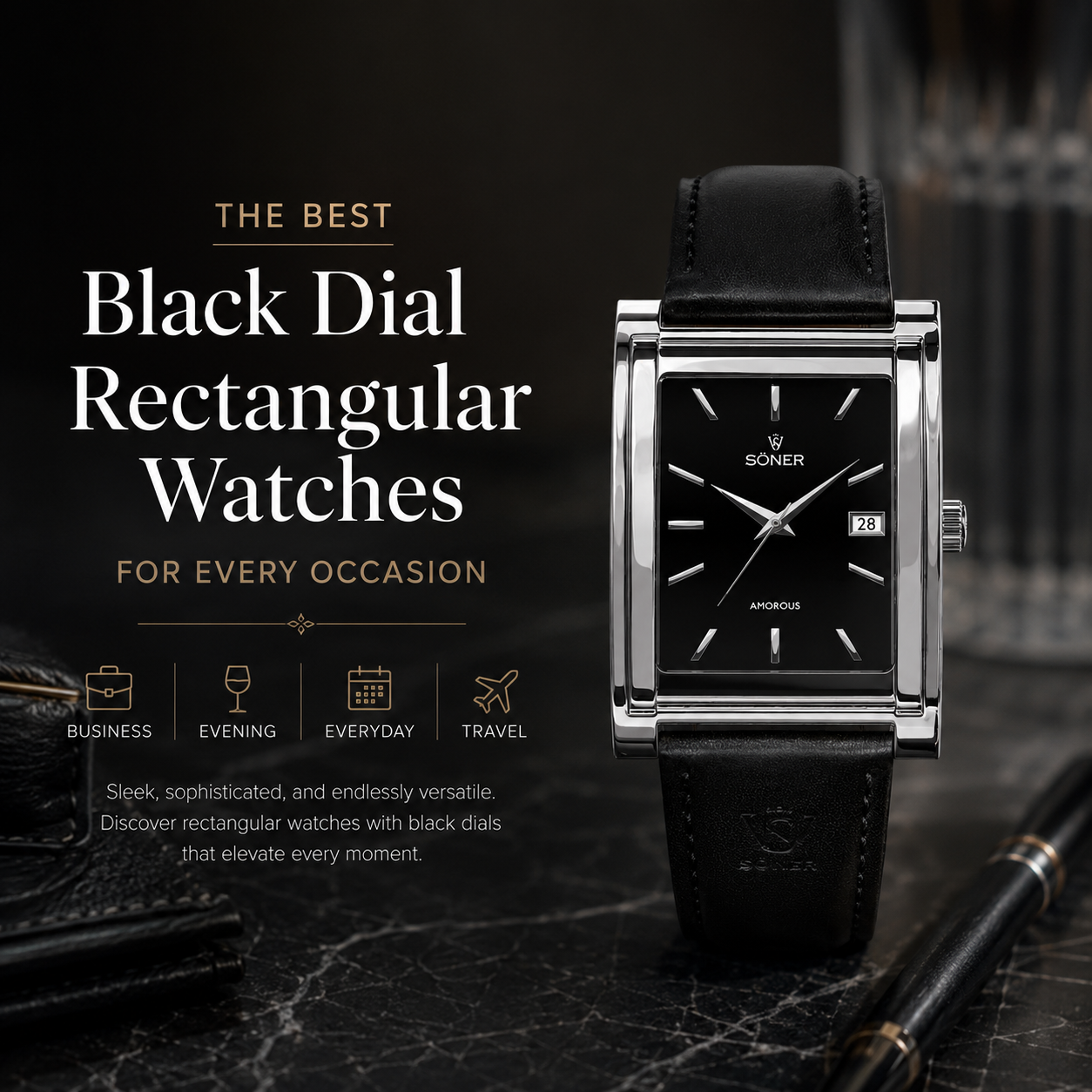
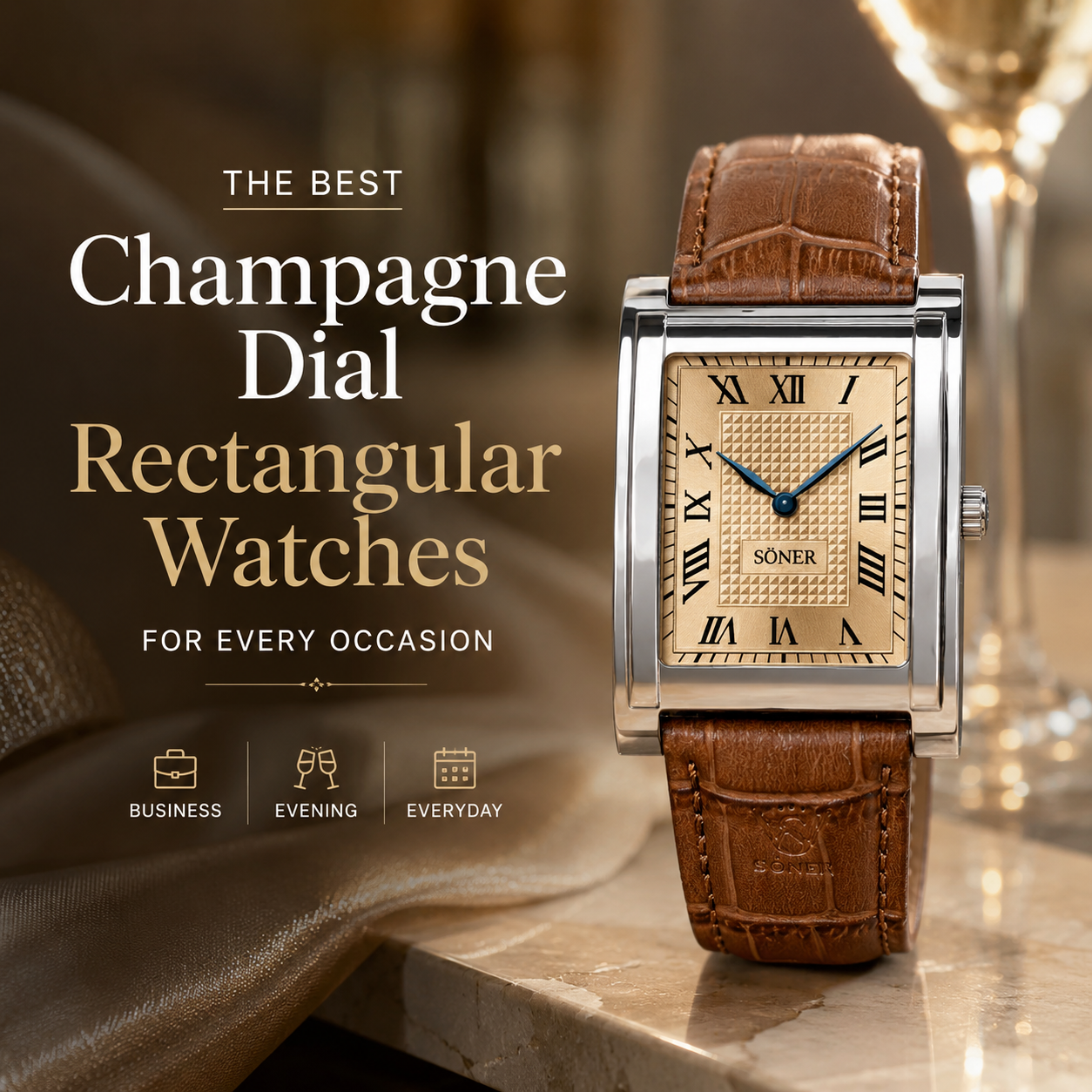
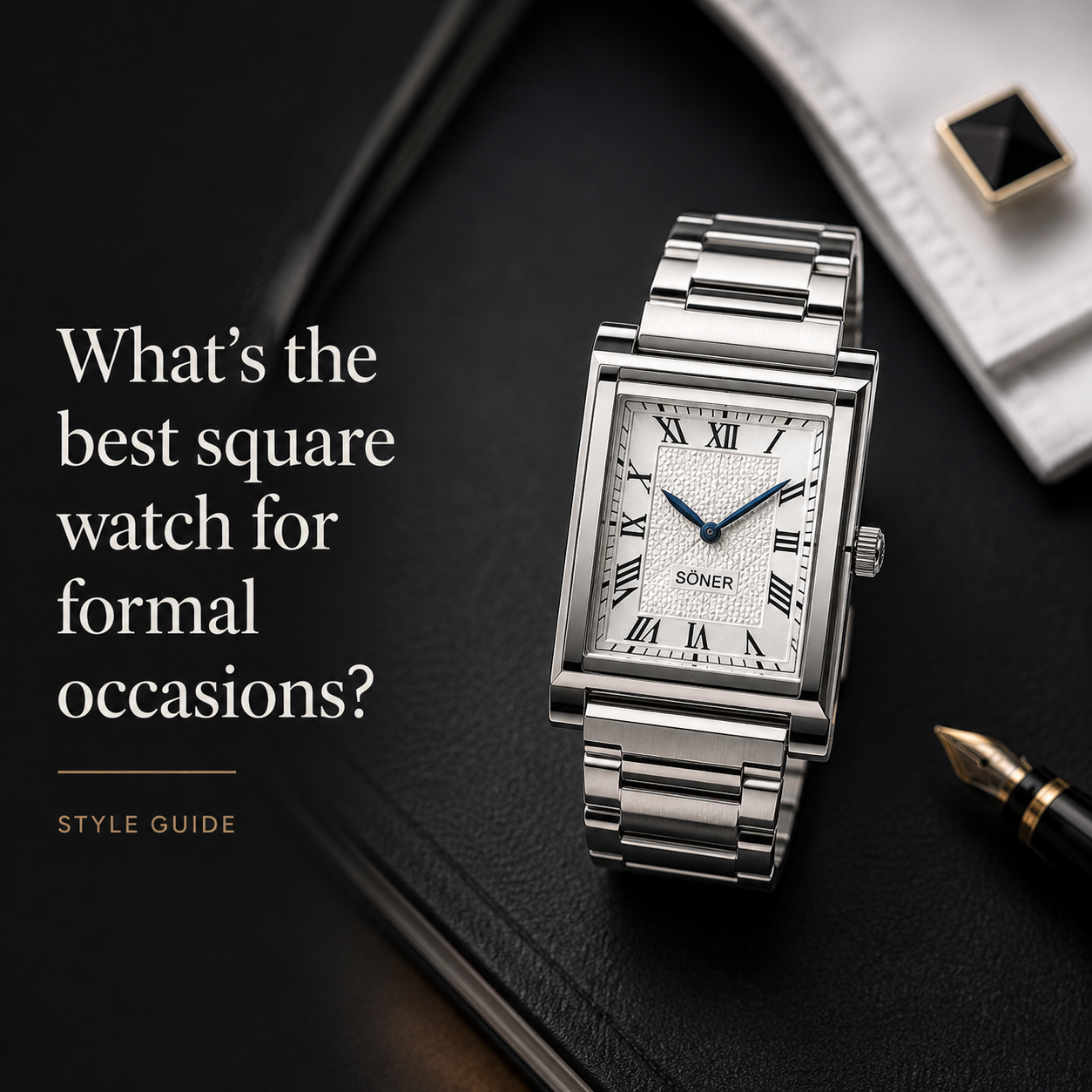
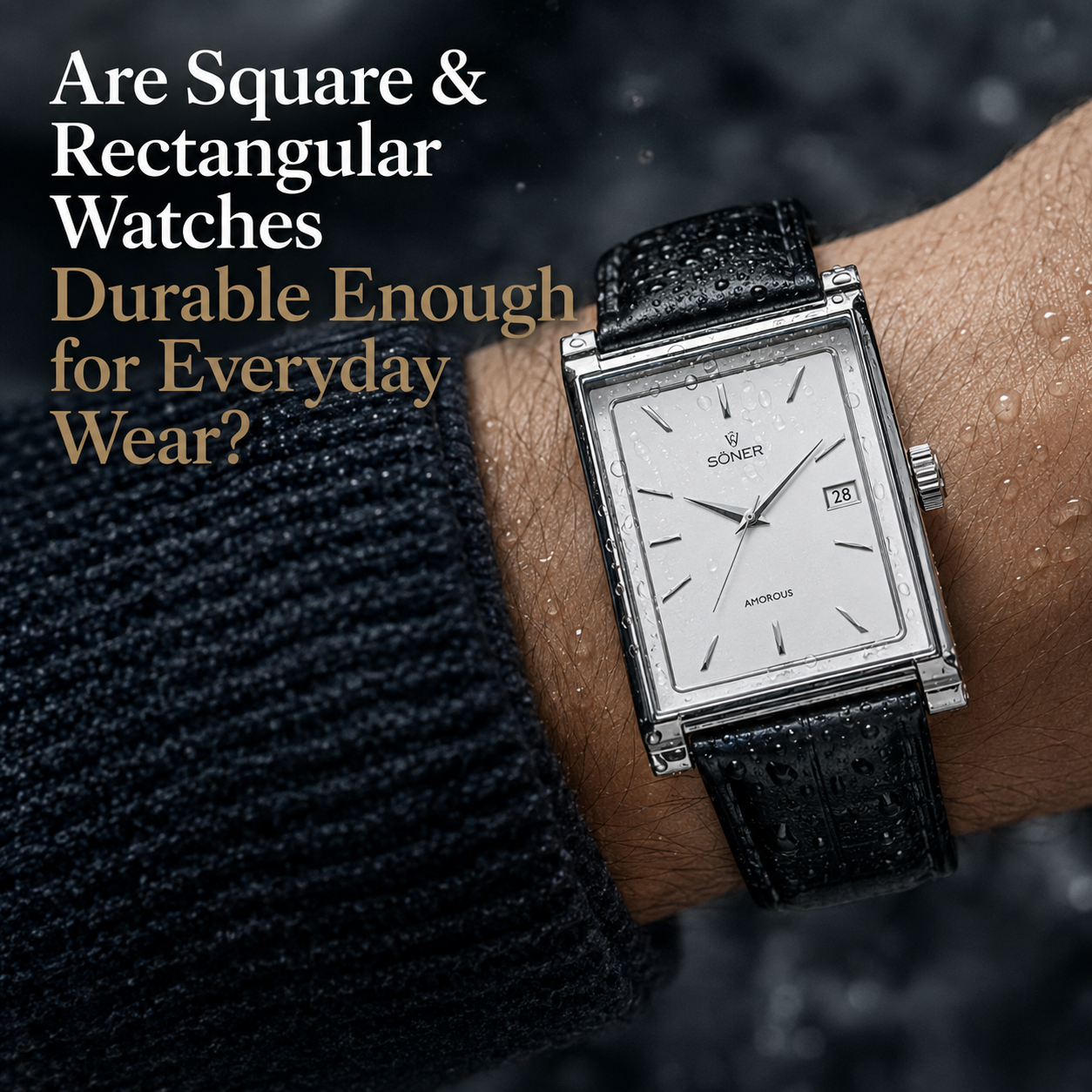
For these owners, the rectangular watch is one icon among many in a portfolio dominated by round watches. That is the gap SÖNER was built to fill: an independent brand where the rectangular case is not one model in the catalogue, but the whole catalogue. Our guide to rectangular watches covers the shape's full history.
Freddie's Take: Where SÖNER Sits on the Map
I'm Freddie Palmgren, founder of SÖNER Watches. When I drew the ownership map at the top of this article, there was one name that needed a box of its own, with no arrows going in or out. That's SÖNER.
We're family owned and self-funded, with no outside investors and no group behind us. SÖNER means sons in Swedish, and the company is named after my two boys. Nobody above us decides which shapes we make, which is why we can commit completely to one: every SÖNER watch is rectangular.
Independence doesn't mean we make every part ourselves, and this guide shows why almost nobody does. Our Swiss quartz models run on the ETA 901.001, made by the Swatch Group's ETA, and our Amorous automatics run on the Sellita SW100A. I would rather tell you that openly than call a movement in-house when it isn't.
Knowing who owns a brand tells you who makes the decisions. At SÖNER, that's a family in Sweden, and every decision points to the same shape. If you want the full story of that shape, my book Beyond Round Watches is free to download.
Freddie Palmgren, Founder of SÖNER Watches
Frequently Asked Questions
Who owns Rolex?
Rolex is owned by the Hans Wilsdorf Foundation, a private charitable foundation in Geneva set up by founder Hans Wilsdorf. The foundation became the owner when he died in 1960. Rolex has no shareholders, is not listed and does not publish financial results.
Who owns Tudor?
Tudor belongs to the same owner as Rolex, the Hans Wilsdorf Foundation. Tudor has made its own movements since 2015 and controls the movement maker Kenissi, in which Chanel holds a minority stake.
Who owns Omega?
Omega is owned by the Swatch Group, the Swiss listed group controlled by the Hayek family. The Swatch Group also owns Longines, Breguet, Blancpain, Tissot, Hamilton and around a dozen other brands.
Who owns Cartier?
Cartier is owned by Richemont, the Swiss luxury group controlled by the Rupert family. Richemont also owns Vacheron Constantin, Jaeger-LeCoultre, IWC, A. Lange & Söhne, Panerai, Piaget and Van Cleef & Arpels.
Who owns TAG Heuer?
TAG Heuer has been owned by LVMH since 1999. LVMH, controlled by the Arnault family, also owns Hublot, Zenith, Bvlgari and Tiffany & Co.
Who owns Breitling?
Breitling is majority owned by the Swiss private equity firm Partners Group, which took control in late 2022. CVC Capital Partners remains a minority shareholder. Breitling itself owns Universal Genève and Gallet.
Does Seiko own Epson?
No. Seiko Group and Epson are separate listed companies that share their roots in the Hattori family's businesses. Seiko Group holds about 3.4% of Epson directly, and about 10% together with Hattori family members. Epson owns Orient and makes Spring Drive and quartz movements for Grand Seiko.
Which watch brands are still independent?
Patek Philippe (Stern family), Audemars Piguet (founding families), Chopard (Scheufele family) and Richard Mille are the best known independent family houses. F.P. Journe, MB&F, Nomos Glashütte, Oris and SÖNER are also independent, although Chanel holds minority stakes in F.P. Journe and MB&F.
Who makes watch movements for other brands?
The biggest suppliers are ETA (Swatch Group), Sellita (independent), Kenissi (Tudor, with Chanel), La Joux-Perret (Citizen, with LVMH), Miyota (Citizen), TMI (Seiko) and Epson. Many well-known brands use movements from these makers, sometimes modified and decorated in-house.
What are the biggest watch groups?
The biggest owners are Rolex, the Swatch Group, Richemont and LVMH in Switzerland and France, and Citizen and Seiko Group in Japan. Rolex is the largest single watch brand by far, while the Swatch Group owns the most brands.
SÖNER Watches is the world's only brand dedicated exclusively to rectangular analog watches. Independent, family owned and self-funded, with Swiss and Japanese movements, sapphire crystal and a 10-year international warranty. From $460.
Browse the full collectionSÖNER rectangular watches
Free worldwide shipping · 10-year warranty · 30-day returns
Our pick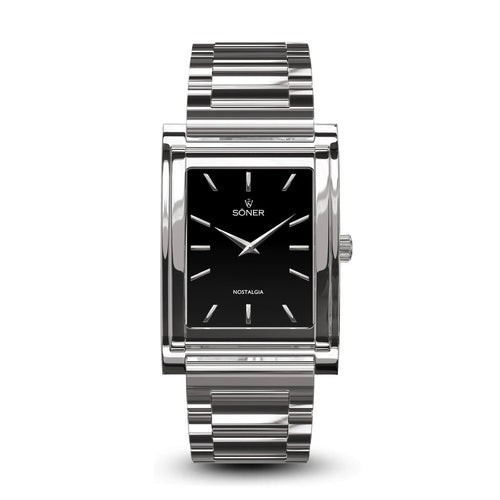 Nostalgia Stockholmبطارية تدوم 11 عامًا$580 USD
View watch
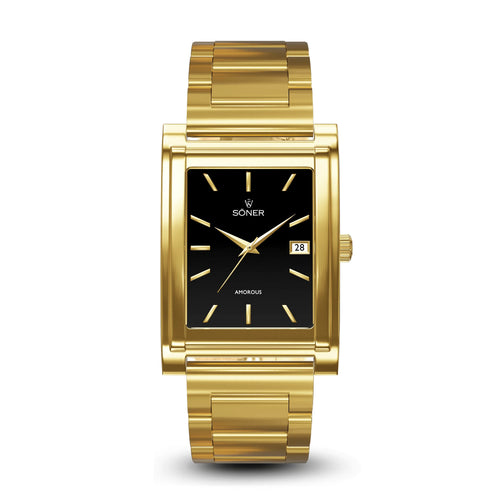 Amorous Milanoأوتوماتيكية$785 USD
View watch
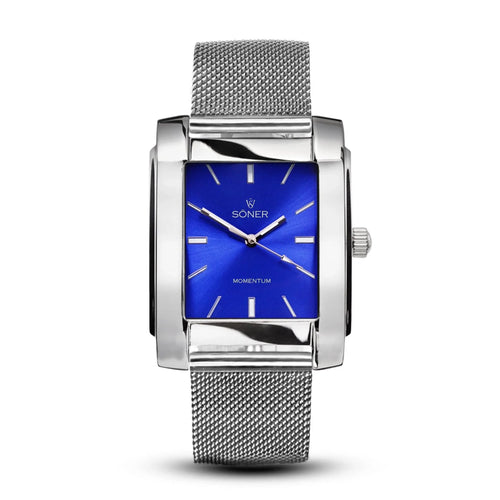 Momentum Bacardiأوتوماتيكية$585 USD
View watch
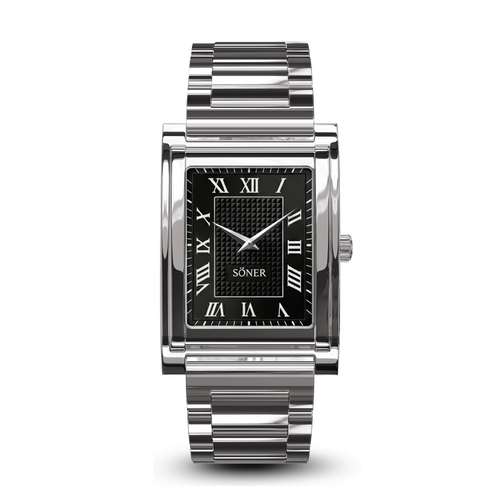 Nostalgia Caesarبطارية تدوم 11 عامًا$765 USD
View watch
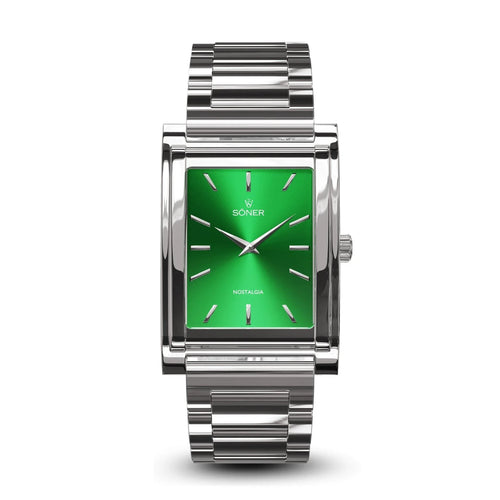 Nostalgia New Yorkبطارية تدوم 11 عامًا$580 USD
View watch
View all watches
Not sure which one? Take the 1-minute Watch Finder
 Nostalgia Stockholmبطارية تدوم 11 عامًا$580 USD
View watch
 Amorous Milanoأوتوماتيكية$785 USD
View watch
 Momentum Bacardiأوتوماتيكية$585 USD
View watch
 Nostalgia Caesarبطارية تدوم 11 عامًا$765 USD
View watch
 Nostalgia New Yorkبطارية تدوم 11 عامًا$580 USD
View watch