




 Published on
Table of Contents
In 1969, TAG Heuer released a watch that should not have worked. It had a square case at a time when round was the industry default. It placed the crown on the left side rather than the right. It was an automatic chronograph when the chronograph had always been hand-wound. It was named after the Monaco Grand Prix before a single race car had worn it. By every conventional measure, the Monaco was a commercial risk.
It became one of the most culturally significant watches ever made.

The Monaco's Origins: 1969 and the Race for the First Automatic Chronograph
The Monaco arrived at one of the most competitive moments in watchmaking history. In 1969, four different manufacturers were racing to release the first automatic chronograph movement. Heuer (as the brand was then known), in partnership with Breitling, Hamilton-Buren, and movement maker Dubois-Depraz, developed the Calibre 11 - a self-winding chronograph that wound itself through a micro-rotor. On the same day in March 1969, both the Heuer-Breitling consortium and Zenith (with the El Primero movement) announced their automatic chronographs simultaneously, creating a dispute about precedence that continues to be debated by collectors.
Jack Heuer, the great-grandson of founder Edouard Heuer and the brand's president at the time, chose to house the Calibre 11 in a case design that was deliberately unconventional. The square case - unusual for any watch, extraordinary for a sports chronograph - was designed by noted watch designer Gerald Lenoir. The blue dial, left-side crown, and pump pushers completed a design that looked like nothing the industry had produced before.
The name was an equally deliberate statement. Naming a watch after the Monaco Grand Prix before any commercial relationship with the race or its drivers established a claim and a positioning that the watch would have to earn.
The Monaco Through the Decades
| Era | Key Development | Significance |
|---|---|---|
| 1969 | Original Monaco ref. 1133 launched with Calibre 11 | First square-cased automatic chronograph. Left-side crown. Blue dial. |
| 1971 | Steve McQueen wears the Monaco in Le Mans | The single most significant celebrity watch moment in history - connecting the Monaco permanently to motorsport and cool authority |
| 1975 | Monaco discontinued | Quartz crisis reduces demand for complex mechanical watches - Monaco production ceases |
| 1998 | Monaco reissued as ref. 2110 | Collector interest in the original drives a successful relaunch - the Monaco's second chapter begins |
| 2009 | Monaco Calibre 12 - updated movement with right-side crown | Contemporary interpretation that divides collectors - purists prefer the left-side crown original |
| 2019 | Monaco 50th Anniversary collection | Five limited editions celebrating the watch's five decades - demand significantly exceeds supply |
| Present | Monaco in continuous production with regular limited editions | Strong secondary market, consistent collector demand, one of TAG Heuer's most recognised references |
Steve McQueen and Le Mans: The Association That Made the Monaco Immortal
In 1971, Steve McQueen wore a TAG Heuer Monaco ref. 1133B - the blue-dialled original - while filming Le Mans, in which he played racing driver Michael Delaney. The choice of watch was deliberate. McQueen was deeply invested in the film's authenticity: he insisted on real race cars, real drivers, and real equipment wherever possible. The Monaco was the right watch for the character he was playing - a serious racing driver, not a Hollywood version of one.
The images of McQueen in his Gulf-liveried Porsche 917 racing suit, Monaco on his wrist, became some of the most reproduced images in watch history. The association was immediate and permanent. The Monaco became the racing driver's watch precisely because the most credible cinematic version of a racing driver wore one authentically.
The specific reference McQueen wore - a left-crown blue dial Monaco - is now the most desirable variant among collectors. Prices for authentic examples from the period consistently reach multiples of their original retail price at auction. The watch's association with McQueen is so embedded that TAG Heuer references it in virtually every Monaco marketing campaign produced since.

The Monaco's Design: Why the Square Case Was Right
The Monaco's square case was not arbitrary. It was a specific design choice made at a specific cultural moment - the late 1960s, when geometric shapes, bold colours, and a rejection of convention were defining the visual language of progressive design across fashion, architecture, and product design simultaneously.
The square case also solved a practical problem for a chronograph. The conventional round chronograph dial - with two or three sub-registers competing for space - can feel busy. The square case provides more useful dial real estate, allowing the Monaco's sub-registers to breathe and the overall layout to feel considered rather than compressed. This is why the Monaco's dial reads so cleanly despite carrying multiple complications.
The left-side crown position - unusual because most wearers are right-handed and find a right-side crown more accessible - was another deliberate choice. For a racing driver wearing gloves, the left-side crown is actually more accessible. The detail is genuine rather than decorative. For the full history of square and rectangular case design from this era, see our complete history of rectangular watches.
The Monaco and Collectibility
The Monaco's discontinuation in 1975 and reissue in 1998 created the conditions for a strong collector market. Original 1969-1975 references - particularly the ref. 1133 in blue dial with left-side crown - are the most sought-after. Clean examples with original dials, correct hands, and documented provenance regularly achieve strong prices at major auction houses.
The limited edition strategy that TAG Heuer has pursued since the 1998 relaunch has deepened the Monaco's collectibility. Each anniversary edition creates a new reference with specific characteristics - dial colour, strap, case finishing - that collectors pursue. The 50th anniversary releases in 2019 generated waitlists at authorised dealers.
For current buyers, the Monaco sits at approximately $5,500 at retail for the standard production references. Grey market availability is generally good. Vintage examples range from under $5,000 for common variants in worn condition to well above $20,000 for pristine, documented original references.
The Monaco's Place in the Square Watch Tradition
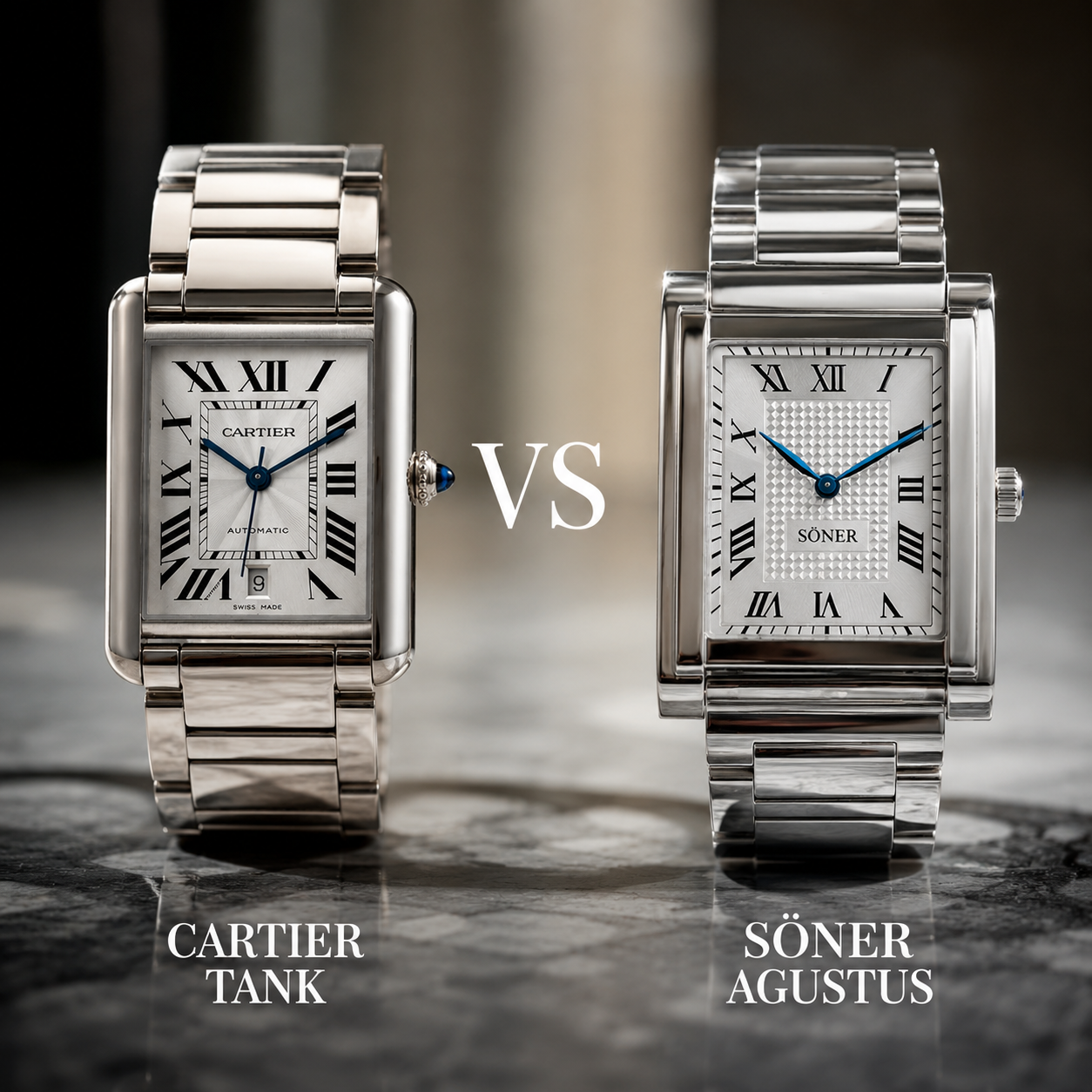
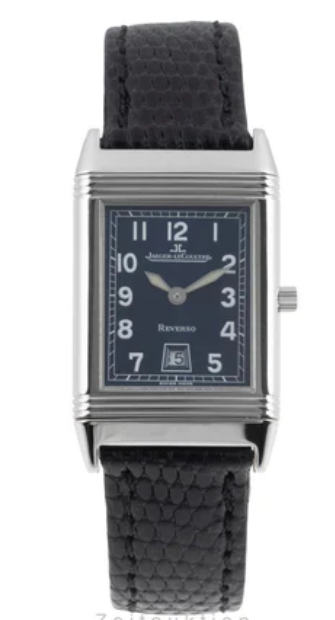
The Monaco belongs to a specific and distinguished design tradition: the square-cased watch with cultural authority. The Cartier Tank (1917) established the square case as the dress watch of choice for cultural figures from generals to artists. The Jaeger-LeCoultre Reverso (1931) added engineering ingenuity to the rectangular form. The Monaco brought the geometric case into sport and motorsport with equal conviction.
Together, these three watches represent the three strongest arguments for the square case over the round one: the Tank as the argument from elegance, the Reverso as the argument from craft, and the Monaco as the argument from performance. For a direct comparison of the Tank and Reverso, see our Tank vs Reverso vs DolceVita guide. For more on the Cartier Tank's cultural history, see our article on the history and legacy of the Cartier Tank.
TAG Heuer Monaco Alternatives
For buyers who want the Monaco's aesthetic - a square-cased sports or dress watch with genuine design heritage - at a different price point, several strong options exist. For the best TAG Heuer alternatives across every budget, see our guide to the best TAG Heuer alternatives. For the full square and rectangular watch category overview, see our guide to the best rectangular watches in 2026.
Frequently Asked Questions
Why is the TAG Heuer Monaco famous?
Primarily because Steve McQueen wore it in the 1971 film Le Mans, creating one of the most enduring watch-celebrity associations in history. But the Monaco was already significant before McQueen: it was one of the first automatic chronographs ever produced (1969), it had a genuinely unconventional square case at a time when round was the absolute default, and it was named after the Monaco Grand Prix with genuine motorsport ambition rather than as a marketing exercise.
Did Steve McQueen really wear a TAG Heuer Monaco?
Yes. McQueen wore a TAG Heuer Monaco ref. 1133B - the blue-dialled original with the left-side crown - during filming of Le Mans in 1971. The choice was authentic to the character: McQueen insisted on real racing equipment throughout the production. The specific reference he wore is now among the most sought-after vintage Monaco variants.
Why does the Monaco have the crown on the left side?
The left-side crown position was a deliberate functional choice for racing drivers who wear gloves. With a gloved right hand, accessing a right-side crown is awkward. The left-side crown is more accessible for a right-handed driver wearing racing gloves. The detail is genuinely functional rather than simply unconventional.
What is the Monaco ref. 1133?
The ref. 1133 is the original TAG Heuer Monaco from 1969-1975. The ref. 1133B specifically designates the blue dial variant with left-side crown - the reference that Steve McQueen wore in Le Mans. This is the most collectible and desirable Monaco reference, commanding significant premiums over other variants in the secondary market.
Is the TAG Heuer Monaco a good investment?
Vintage Monaco references in good condition - particularly the original ref. 1133 - have appreciated consistently over decades. Clean, documented examples continue to achieve strong prices at auction. Modern production Monacos hold value reasonably well compared to many Swiss watches in the same price tier, supported by consistent brand investment in the model's heritage and regular limited editions that maintain collector interest.
What are the best alternatives to the TAG Heuer Monaco?
For the square sports watch aesthetic at different price points: the Bell and Ross BR 03 offers aviation-inspired square geometry with robust specifications. For dress-oriented square watches, the Cartier Tank and Jaeger-LeCoultre Reverso represent the design tradition the Monaco belongs to. For the full comparison, see our guide to the best TAG Heuer alternatives.