



 Published on
Table of Contents
Patek Philippe requires little introduction. Founded in Geneva in 1839 by Antoine Norbert de Patek and François Czapek, and reformulated in 1845 into the partnership between Antoine Patek and the Frenchman Jean-Adrien Philippe that would give the brand its modern name, it has been recognized for nearly two centuries as one of the two or three most important watchmaking manufactures in the world. Patek Philippe's reputation rests on invention, the perpetual calendar wristwatch, the split-seconds chronograph, the minute repeater wristwatch, and on a consistency of quality that has never been compromised regardless of what the market has demanded. It is a manufacture that builds watches to last generations and prices them accordingly. And within its catalogue, there exists a collection that traces its roots not merely to the 20th century, but to the 19th, a collection built on one of the most extraordinary commercial relationships in the history of Swiss watchmaking.

Patek Philippe Gondolo: Key References
| Reference | Movement | Material | Key Feature |
|---|---|---|---|
| Gondolo entry (time-only) | Calibre 215 (manual) | Yellow or rose gold | Pure Art Deco dress watch, Patek Philippe Seal finishing |
| Gondolo date/moonphase | Various | Gold | Complications within rectangular case |
| Reference 5200G | Manual wind | White gold | 8-day power reserve with power reserve indicator |
| Gondolo Haute Joaillerie | Various | Gold, diamonds, Akoya pearls | Theatrical luxury inspired by original Brazilian clientele |
The Gondolo & Labouriau Partnership - A South American Story
In November 1872, Patek Philippe shipped its first watch to Carlos Gondolo and Paulo Labouriau, jewellers based in Rio de Janeiro, establishing a partnership that would last 55 years and account, at its height, for close to one third of Patek Philippe's entire South American sales. Gondolo & Labouriau were not merely retailers, they were curators of an exclusive experience. They created the "Chronometro Gondolo," a line of bespoke Patek watches designed to the Brazilian market's taste for larger, more dramatic timepieces. And they established the Gondolo Gang, a 180-member club of wealthy Brazilian collectors who purchased Patek watches through an installment plan, made their membership conspicuous with panama hats bearing the Patek name, and treated watch ownership as a social ritual. It was, by any measure, one of history's great examples of luxury brand community building.

The first Chronometro Gondolo wristwatches appeared in 1910, and they came in shapes that reflected the Art Deco spirit already gathering momentum: square, rectangular, and tonneau cases, made in gold, designed to announce their wearer's taste and wealth. By the time the Gondolo & Labouriau partnership ended in 1927, the Art Deco movement was at its peak, and the formal vocabulary of those watches had been permanently established.
The Gondolo Collection - 1993 and Beyond
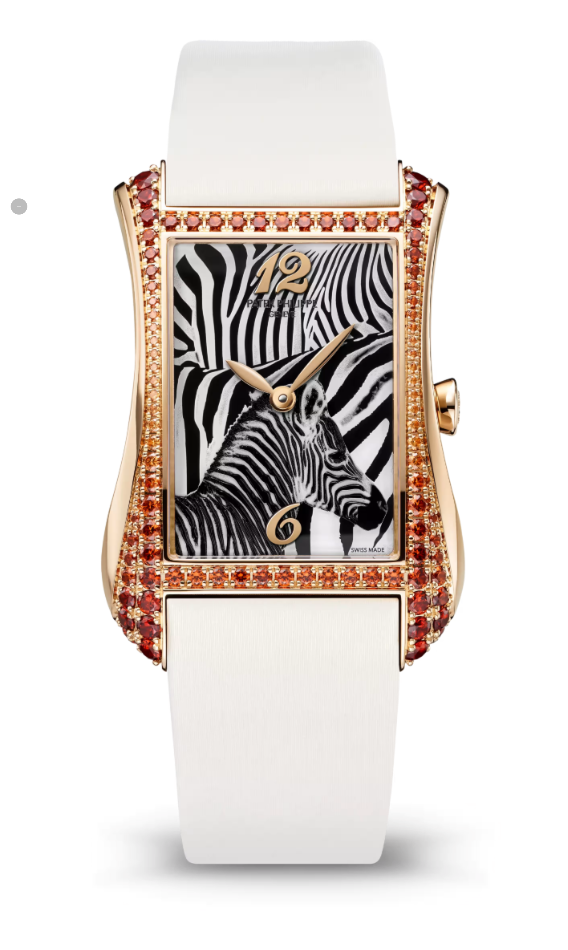
In 1993, Patek Philippe formalized what the Gondolo name had always implied, launching the Gondolo collection as the official home for the manufacture's "form watches" - a term used in high horology to describe non-round timepieces, including rectangular, tonneau, and cushion shapes. The collection's Art Deco credentials were explicit: clean lines, geometric simplicity, cases in precious metals, movements hand-finished to the standard that the Patek Philippe Seal demands. Entry models offered time-only displays in yellow or rose gold with hand-wound Calibre 215 movements. More complicated references added moonphases, annual calendars, and date functions, while a series of Haute Joaillerie models expanded into diamonds and Akoya pearls, the latter inspired directly by the South American taste for theatrical luxury that the original Gondolo & Labouriau partnership had cultivated.

Reference 5200G - Eight Days in a Rectangle
Among all Gondolo references, the 5200G represents the collection's most technically ambitious expression. Its white gold rectangular case houses a movement with an eight-day power reserve, a feat of mainspring architecture that very few manufactures can achieve in a form calibre, displayed via a power reserve indicator on the dial. The movement is wound manually and finished to the exacting standard of the Patek Philippe Seal, meaning every component, visible or hidden, is finished to the same level. The 5200G demonstrates that the Gondolo collection is not merely nostalgic. It is Patek Philippe applying its full technical capability to the non-round form, without compromise, in precious metal.

The Art Deco Standard
Patek Philippe's Gondolo collection is the most aristocratic rectangular watch family in the world. It exists at the summit of the form, technically impeccable, historically rooted, and produced in the only material that Patek considers appropriate: precious metal. It is a collection that earns its heritage, because its heritage is genuine.
For the full story of how rectangular watches evolved across the major houses, see the complete history of rectangular watches. For the best rectangular watches at every price point, see the best rectangular watches in 2026. For the definitive category reference, see The Definitive Guide to Rectangular Watches.
Frequently Asked Questions
What is the Patek Philippe Gondolo?
The Patek Philippe Gondolo is the manufacture's official collection for "form watches" - non-round timepieces including rectangular, tonneau, and cushion cases. The collection was formally launched in 1993 but its roots trace to 1872, when Patek Philippe began supplying bespoke rectangular and square watches to the Brazilian retailers Gondolo & Labouriau. The Gondolo collection is the most historically rooted rectangular watch family in high horology.
Why is it called the Patek Philippe Gondolo?
The name honours Carlos Gondolo and Paulo Labouriau, the Rio de Janeiro jewellers who established one of the most significant retail partnerships in Patek Philippe's history. From 1872 to 1927, Gondolo & Labouriau sold bespoke Patek watches to Brazilian collectors, establishing the "Chronometro Gondolo" line of rectangular and square watches. At its height the partnership accounted for close to a third of Patek Philippe's entire South American sales.
What movement does the Patek Philippe Gondolo use?
Entry-level time-only Gondolo models use the Calibre 215, a hand-wound movement finished to the Patek Philippe Seal standard. The Reference 5200G uses a manually wound movement with an eight-day power reserve - an exceptional achievement in a rectangular form watch. All Gondolo movements are finished to the same standard regardless of whether components are visible to the wearer.
What is the Patek Philippe Gondolo Reference 5200G?
The Reference 5200G is the most technically ambitious watch in the Gondolo collection. Its white gold rectangular case houses a manually wound movement with an eight-day power reserve displayed via a power reserve indicator on the dial. Eight days of power reserve in a form watch calibre is a significant engineering achievement. The movement is finished to the Patek Philippe Seal standard throughout.
How does the Patek Philippe Gondolo compare to the Cartier Tank?
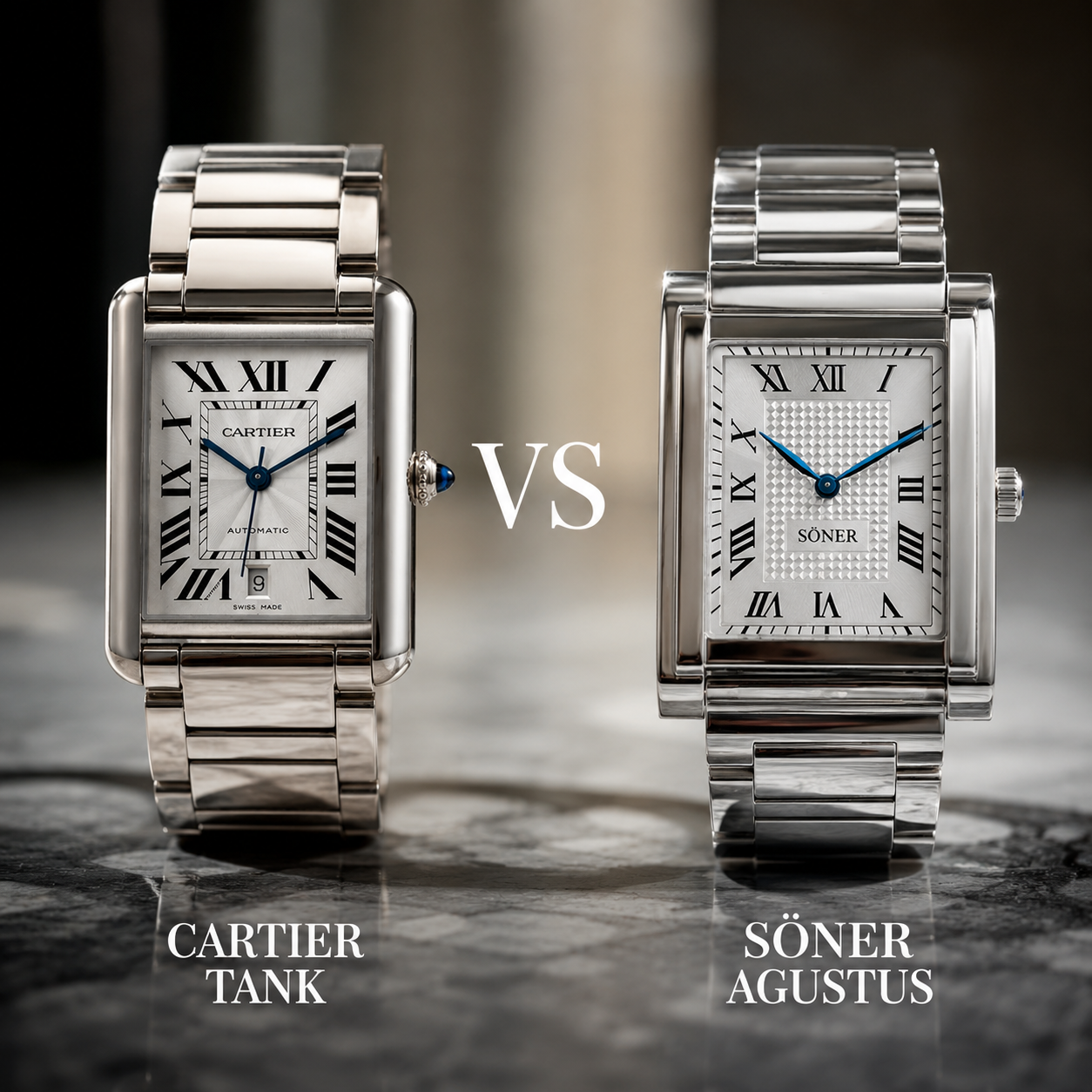
Both are defining rectangular watches but they occupy different positions. The Cartier Tank is the benchmark of the accessible luxury rectangular watch - in production since 1917, starting at $3,200 for the Tank Must. The Patek Philippe Gondolo is produced exclusively in precious metals and occupies the ultra-luxury tier, with prices starting in the tens of thousands. Where the Tank is the most culturally visible rectangular watch, the Gondolo is the most technically accomplished. For the full context, see The Definitive Guide to Rectangular Watches.
Where does the Patek Philippe Gondolo sit in the rectangular watch category?
The Gondolo sits at the pinnacle of the rectangular watch category alongside the Jaeger-LeCoultre Reverso at its most complicated references. It is the only rectangular watch family from a manufacture of Patek Philippe's standing that traces its commercial origins directly to the Art Deco period. For a full ranked overview of the rectangular watch category from entry level to ultra-luxury, see the best rectangular watches in 2026.
SÖNER rectangular watches
Free worldwide shipping · 10-year warranty · 30-day returns
Our pick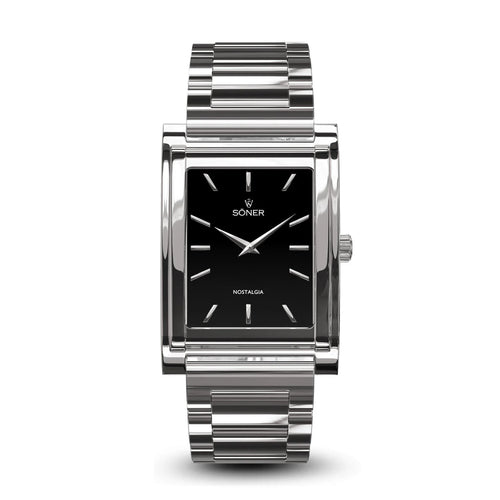 Nostalgia Stockholm11-year battery$580 USD
View watch
Nostalgia Stockholm11-year battery$580 USD
View watch
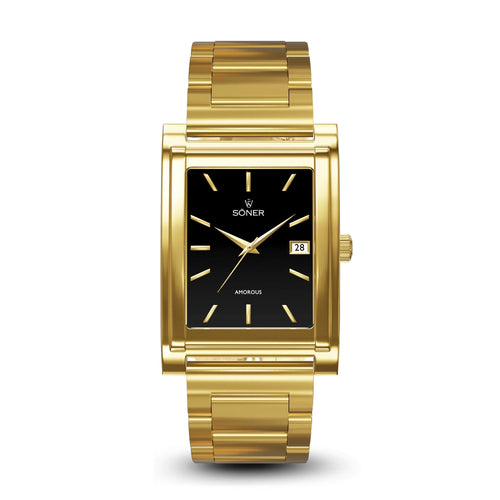 Amorous MilanoAutomatic$785 USD
View watch
Amorous MilanoAutomatic$785 USD
View watch
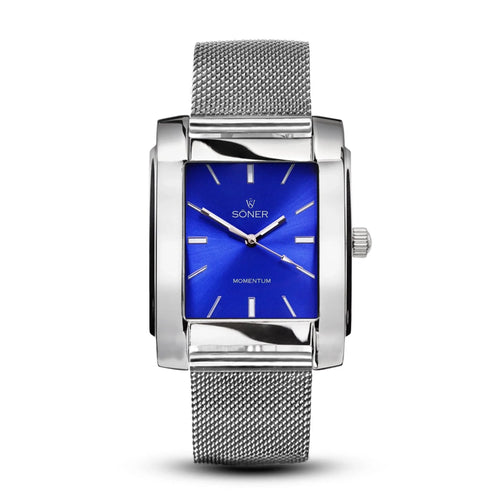 Momentum BacardiAutomatic$585 USD
View watch
Momentum BacardiAutomatic$585 USD
View watch
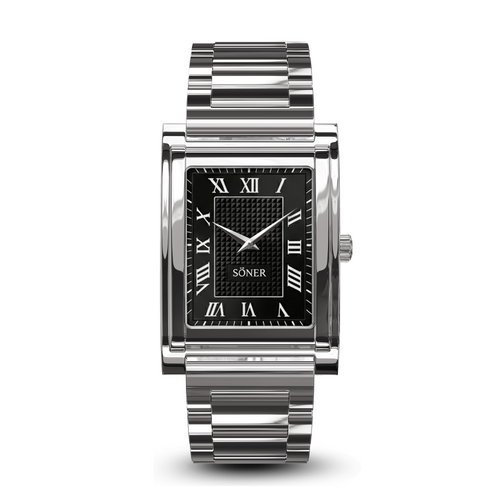 Nostalgia Caesar11-year battery$765 USD
View watch
Nostalgia Caesar11-year battery$765 USD
View watch
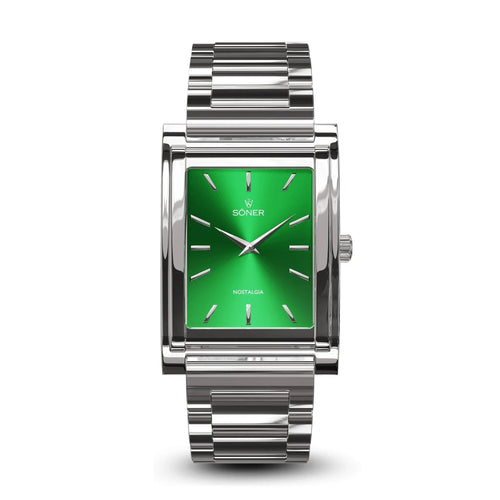 Nostalgia New York11-year battery$580 USD
View watch
Nostalgia New York11-year battery$580 USD
View watch
View all watches
 Nostalgia Stockholm11-year battery$580 USD
View watch
Nostalgia Stockholm11-year battery$580 USD
View watch
 Amorous MilanoAutomatic$785 USD
View watch
Amorous MilanoAutomatic$785 USD
View watch
 Momentum BacardiAutomatic$585 USD
View watch
Momentum BacardiAutomatic$585 USD
View watch
 Nostalgia Caesar11-year battery$765 USD
View watch
Nostalgia Caesar11-year battery$765 USD
View watch
 Nostalgia New York11-year battery$580 USD
View watch
Nostalgia New York11-year battery$580 USD
View watch