





 Published on
Table of Contents
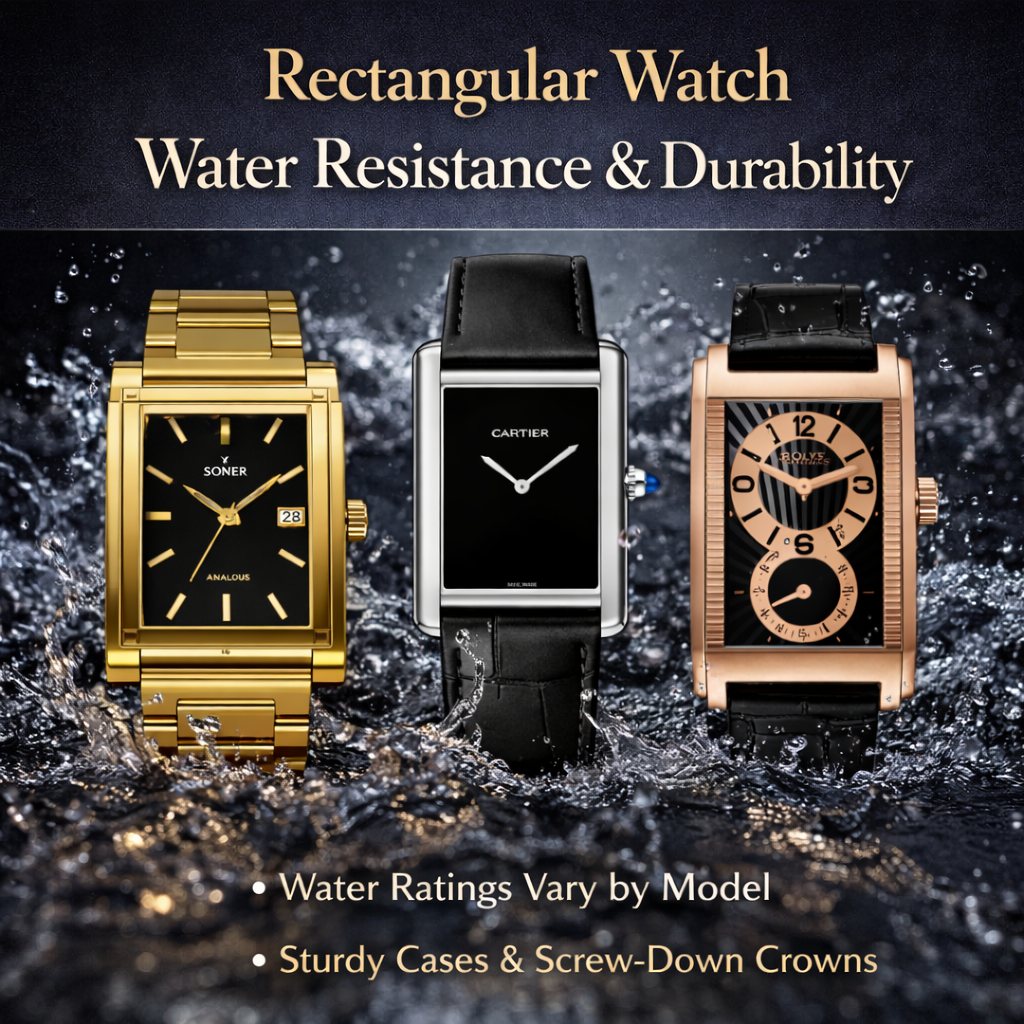
Rectangular watches are harder to seal than round watches. The geometry creates sealing challenges that round cases do not have. This guide explains why, what the ATM ratings mean in practice, how the challenge is solved, and what to expect from different water resistance ratings on a rectangular case.
Why Rectangular Cases Are Harder to Seal
A round case has a circular perimeter. When the caseback is sealed with a gasket, the compression force is distributed evenly around the entire circumference. The gasket compresses uniformly because the geometry is uniform, and the result is a consistent seal.
A rectangular case has four straight edges and four corners. When the caseback is sealed, the compression at the corners is different from the compression along the straight edges. Corners concentrate stress, and maintaining even gasket compression across both straight sections and corner curves requires more precise machining and tighter tolerances than a round case of equivalent size.
The crown also presents a different challenge. On a round case, the crown exits through the side of the case at a point that is symmetrically positioned relative to the case geometry. On a rectangular case, the crown exits through one of the short sides, where the case wall is narrower and the sealing geometry is more constrained.
These are engineering challenges that can be solved well or solved poorly. A well-engineered rectangular case achieves water resistance equivalent to a round case. A poorly engineered one has weaker points at the corners that limit the achievable rating. The water resistance rating on a rectangular watch is therefore a more meaningful quality signal than the same rating on a round watch, because it reflects more demanding engineering work to achieve.
What ATM Ratings Actually Mean
| Rating | What It Means | What It Covers | What It Does Not Cover |
|---|---|---|---|
| 1 ATM / 10m | Splash resistant only | Light rain, hand washing (carefully) | Swimming, submersion, showers |
| 3 ATM / 30m | Splash and brief submersion | Rain, hand washing, accidental splashes | Swimming, showers, sustained water contact |
| 5 ATM / 50m | Water resistant for everyday use | Swimming, snorkelling, showers, rain | Diving, high-pressure water sports |
| 10 ATM / 100m | Suitable for active water sports | Swimming, snorkelling, shallow diving, surfing | Scuba diving below 30m |
| 20 ATM / 200m | Diver grade | Recreational scuba to 40m | Professional diving, saturation diving |
Important note on ATM ratings: These are static pressure ratings tested in a laboratory. Dynamic pressure from activities like diving, swimming strokes, or jumping into water creates higher momentary pressures than the static equivalent. A watch rated at 5 ATM should handle swimming comfortably. A watch rated at 3 ATM should not be worn swimming despite the theoretical 30m equivalence. Always treat ATM ratings conservatively.
Water Resistance Across Rectangular Watch Tiers
Water resistance ratings in rectangular watches follow a clear pattern by price and design intent. Understanding this pattern helps set appropriate expectations before purchase.
Dress Watches: 3 ATM is the norm
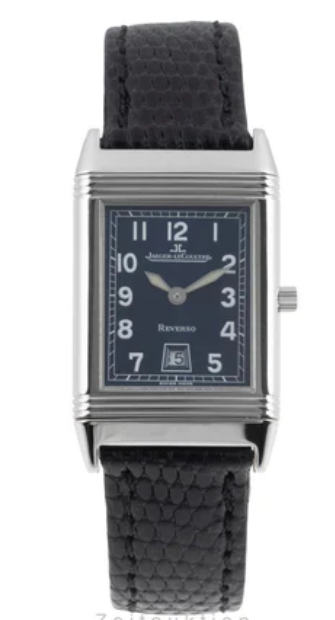
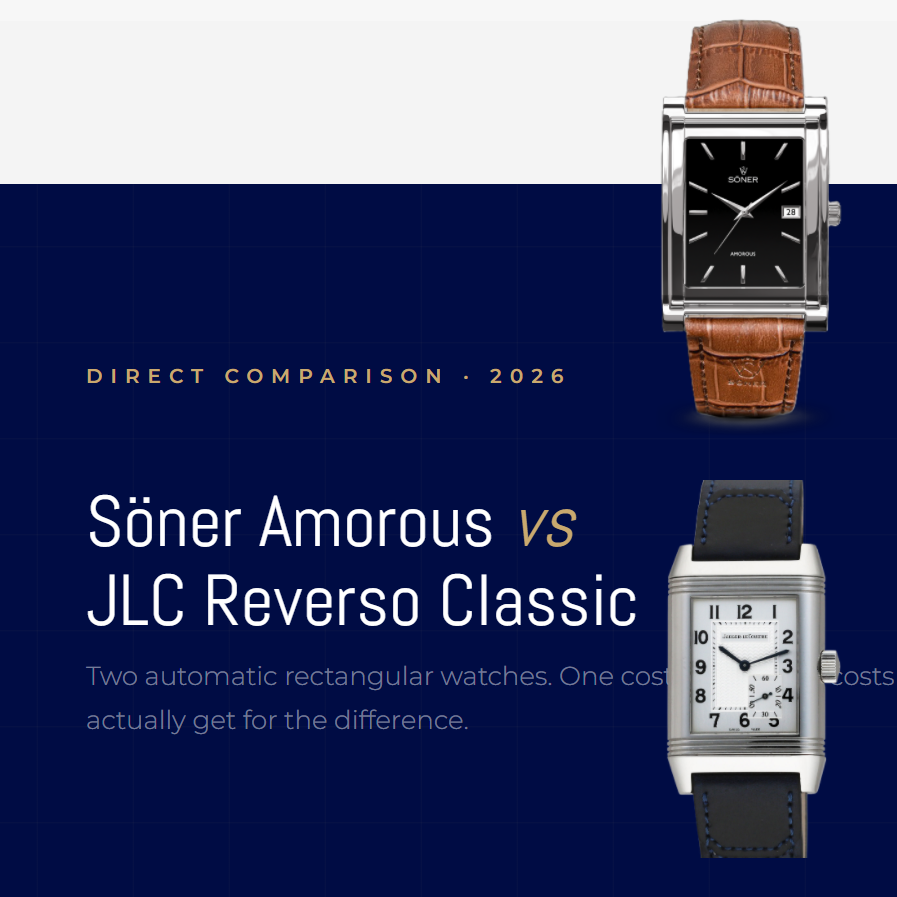
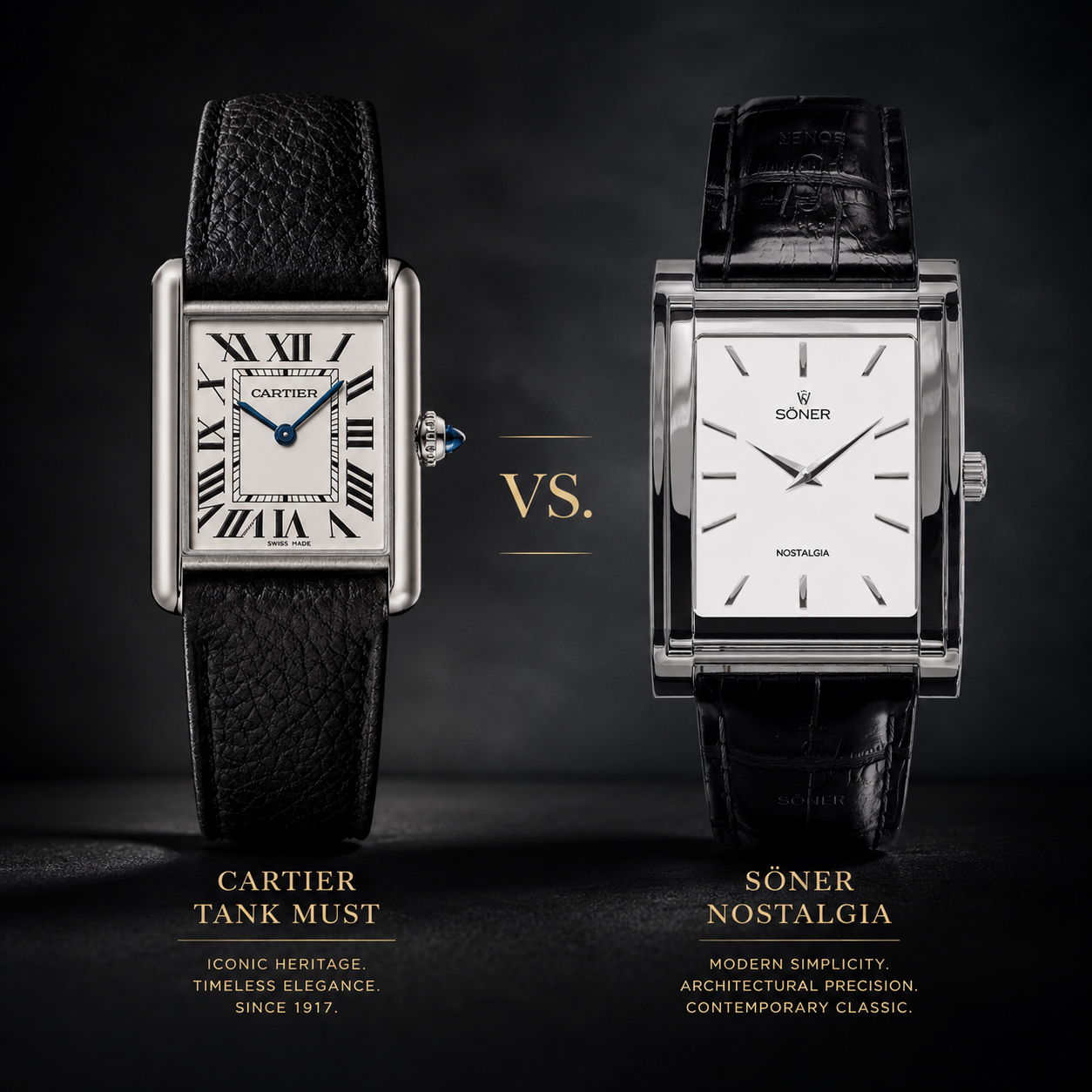
Most rectangular dress watches at the luxury tier are rated at 3 ATM. The Cartier Tank Must, the Jaeger-LeCoultre Reverso, and many Patek Philippe rectangular references are all rated at 30m. This is not a flaw. These watches are designed for formal contexts where water exposure is minimal. The 3 ATM rating reflects a design priority for thinness and elegance over water resistance. The sealing is adequate for daily life but the watches should not be worn swimming.
Mid-Range: 5 ATM is achievable and meaningful
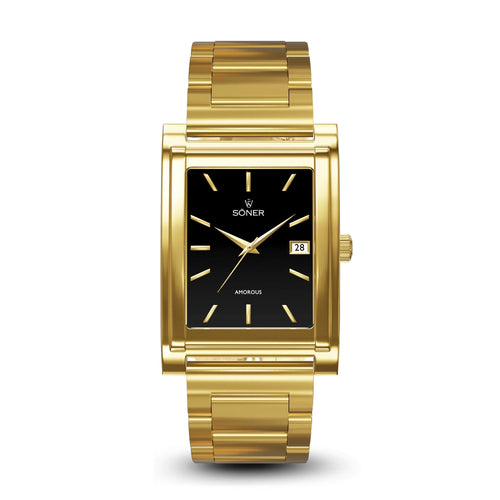
At the mid-range, 5 ATM is the standard that separates a properly sealed everyday watch from a splash-resistant dress piece. A 5 ATM rectangular watch can be worn swimming, in the shower, and through everyday life without concern. The Söner Nostalgia and Amorous are rated at 5 ATM with screw-down sealed casebacks, reflecting the engineering investment to achieve this rating in a hardened steel rectangular case. For most buyers, 5 ATM covers every realistic daily wear scenario.
Sport Models: 10 ATM requires dedicated engineering
Achieving 10 ATM in a rectangular case requires significantly more engineering effort than achieving it in a round case. The corner sealing geometry must be tighter, the caseback seal must be more robust, and the crown sealing must be reinforced. The Söner Momentum achieves 10 ATM with scuba diving approval in a 35x45mm rectangular case. This is genuinely unusual in the category and reflects a specific design commitment to making a rectangular watch that can be worn in active and water sports contexts.
Söner Water Resistance by Collection
| Collection | Rating | Caseback | Suitable For |
|---|---|---|---|
| Legacy | 5 ATM | Sealed | Swimming, snorkelling, showers, everyday |
| Nostalgia | 5 ATM | Arched, screw-down, sealed | Swimming, snorkelling, showers, everyday |
| Amorous | 5 ATM | Sealed | Swimming, snorkelling, showers, everyday |
| Momentum | 10 ATM | Screw-down, sealed | Active water sports, snorkelling, swimming |
How Rectangular Watches Are Sealed
Three components determine the water resistance of any watch: the caseback seal, the crystal seal, and the crown seal.
Caseback Seal
The caseback gasket sits between the caseback and the case body. On a rectangular watch, this gasket must maintain even compression across straight sections and around corners. Screw-down casebacks, which thread the caseback against the case body rather than relying on a press fit, provide more reliable compression and are the standard for any rectangular watch rated above 3 ATM. The Söner Nostalgia uses an arched screw-down caseback: the arch follows the contour of the wrist for comfort while the screw-down threading provides the sealing force.
Crystal Seal
The crystal gasket sits between the crystal and the case bezel. On a rectangular crystal, the gasket must seal along four straight edges and four corners. This is more demanding than sealing a round crystal. The sapphire crystals on Söner watches are fitted with precision gaskets that maintain the seal across the full rectangular perimeter. The anti-reflective coating is applied to the crystal after fitting, so it does not affect the seal.
Crown Seal
The crown is the most common water ingress point on any watch. On a rectangular case, the crown exits through one of the short sides. The tube through which the crown passes must be sealed with O-rings that compress against the crown stem. For higher water resistance ratings, a screw-down crown adds a threaded cap that provides additional sealing force when the watch is in water. The crown must always be pushed in and locked before any water contact.
Maintaining Water Resistance Over Time
What Degrades Seals
- Age: gaskets dry out and lose elasticity over 2 to 3 years of regular use
- Chemicals: sunscreen, perfume, chlorine, and cleaning products accelerate gasket degradation
- Temperature changes: repeated hot and cold exposure (sauna, cold water) stresses seals
- Physical damage: impacts near the caseback or crown can shift or damage gaskets
- Battery or service work: opening the case requires new gaskets to restore the rating
How to Protect Your Seals
- Rinse with fresh water after sea water or chlorine exposure
- Never press buttons or operate the crown underwater unless screw-down
- Avoid wearing in extreme temperature changes (sauna then cold pool)
- Have seals inspected and replaced during service every 3 to 5 years
- After any case opening (battery, service), verify water resistance before water exposure
- Always ensure the crown is fully pushed in before any water contact
A water resistance rating is the rating at the time of manufacture and testing. It is not a permanent guarantee. Gaskets age, chemicals degrade rubber, and physical wear affects seals. A watch that was 5 ATM when new may be significantly less water resistant after three years of daily wear without a seal inspection. For any watch you intend to swim with, having the seals checked and replaced during service is essential maintenance.
Frequently Asked Questions
Are rectangular watches water resistant?
Yes, though the engineering is more demanding than for round cases. The sealing geometry at the corners of a rectangular case requires tighter tolerances and more precise machining than a round case. Well-engineered rectangular watches achieve ratings from 3 ATM to 10 ATM. Söner's Nostalgia, Amorous, and Legacy are rated at 5 ATM. The Momentum is rated at 10 ATM with scuba diving approval.
Why do most luxury rectangular watches only have 3 ATM?
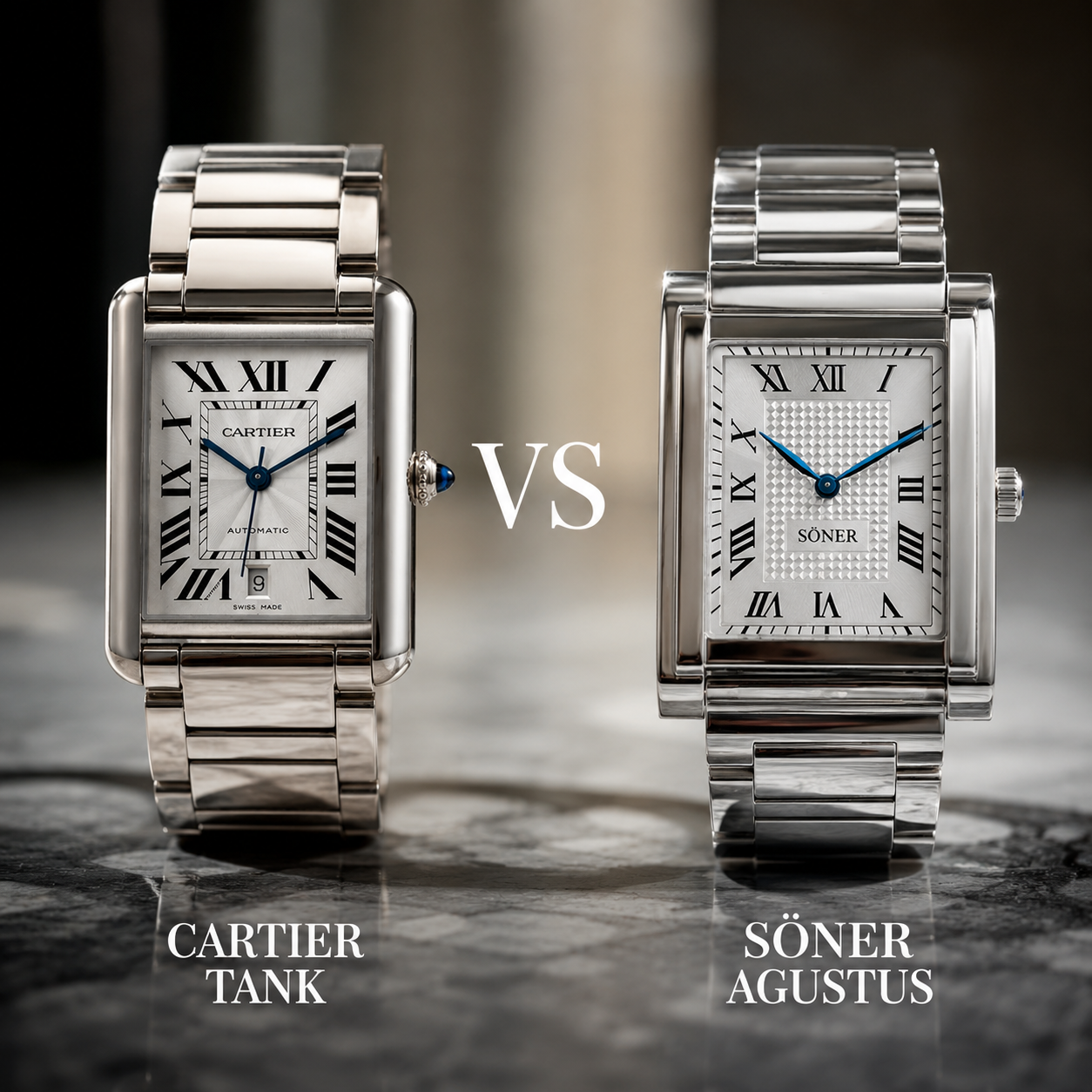
Because they are designed for formal dress contexts where water exposure is minimal, and higher water resistance requires a thicker caseback and more robust sealing that would compromise the slim profile. The Cartier Tank at 3 ATM is designed for the boardroom and the dinner table, not the swimming pool. The rating reflects a deliberate design priority for thinness over water resistance.
Can I swim with a 5 ATM rectangular watch?
Yes. 5 ATM is the standard recommended for swimming and snorkelling. The Söner Nostalgia at 5 ATM is specifically described as snorkelling approved. Avoid high-pressure water activities like water skiing or cliff diving at 5 ATM. For those activities a 10 ATM rating is recommended.
How often should I have my rectangular watch's water resistance tested?
Every 3 to 5 years, or any time the case is opened for battery replacement or service. A watchmaker can test water resistance with a pressure tester and replace the gaskets if needed. This is particularly important for watches you regularly expose to water. The cost is modest and the protection is significant.
Is the Söner Momentum suitable for diving?
Yes for recreational snorkelling and shallow water activities. The Momentum is rated at 10 ATM which covers swimming, snorkelling, and surface water sports. It is not rated for scuba diving at depth — for that, a dedicated dive watch rated at 20 ATM or above with a ISO 6425 certification is required.
Söner's Nostalgia, Amorous, and Legacy collections are rated at 5 ATM with sealed casebacks, suitable for everyday wear, swimming, and snorkelling. The Momentum is rated at 10 ATM with a screw-down caseback. All Söner watches carry a 10-year international warranty and use sapphire crystal with anti-reflective coating.
Browse the CollectionSÖNER rectangular watches
Free worldwide shipping · 10-year warranty · 30-day returns
Our pick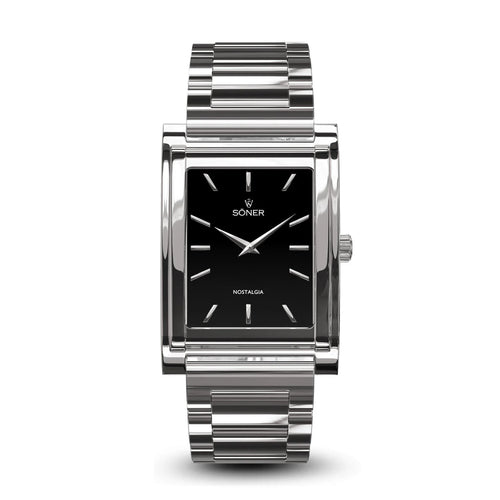 Nostalgia Stockholm11-year battery$580 USD
View watch
Nostalgia Stockholm11-year battery$580 USD
View watch
 Amorous MilanoAutomatic$785 USD
View watch
Amorous MilanoAutomatic$785 USD
View watch
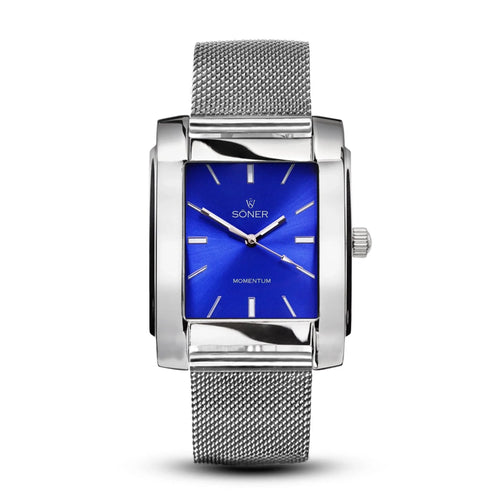 Momentum BacardiAutomatic$585 USD
View watch
Momentum BacardiAutomatic$585 USD
View watch
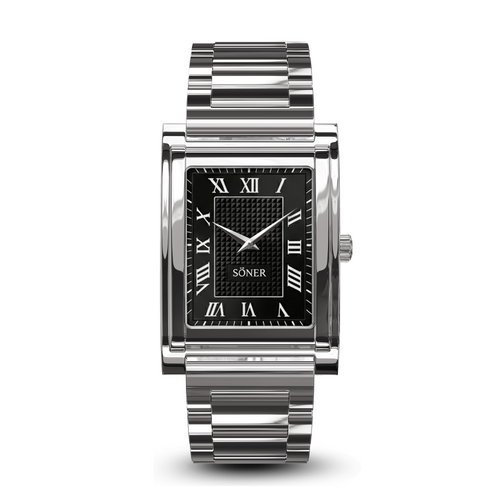 Nostalgia Caesar11-year battery$765 USD
View watch
Nostalgia Caesar11-year battery$765 USD
View watch
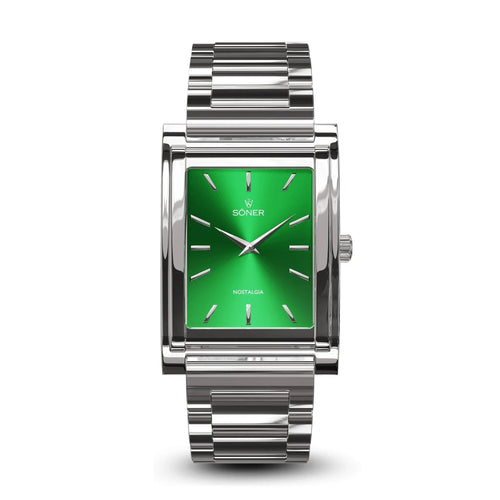 Nostalgia New York11-year battery$580 USD
View watch
Nostalgia New York11-year battery$580 USD
View watch
View all watches
 Nostalgia Stockholm11-year battery$580 USD
View watch
Nostalgia Stockholm11-year battery$580 USD
View watch
 Amorous MilanoAutomatic$785 USD
View watch
Amorous MilanoAutomatic$785 USD
View watch
 Momentum BacardiAutomatic$585 USD
View watch
Momentum BacardiAutomatic$585 USD
View watch
 Nostalgia Caesar11-year battery$765 USD
View watch
Nostalgia Caesar11-year battery$765 USD
View watch
 Nostalgia New York11-year battery$580 USD
View watch
Nostalgia New York11-year battery$580 USD
View watch