



 Published on
Table of Contents
Predicting the future of any design category involves reading current trajectories and understanding which forces are durable enough to continue shaping the field over the coming decade. In the rectangular watch category, those trajectories are unusually readable. The category has a clear historical arc, a well-defined set of engineering constraints, and a growing commercial audience whose preferences are becoming more articulate and more influential with each passing year.
What follows is not speculation. It is an analysis of the directions in which the rectangular watch category is already moving, based on the design decisions being made now, the engineering investments being pursued by the most serious manufacturers, and the cultural forces that are expanding the category audience in ways that will have long-term design consequences.
The rectangular watch fundamentals that underpin every design decision in this category, from case geometry to movement architecture to proportional logic, are covered in full in the main guide. This article builds on those fundamentals to examine where the category is going next.
The Ultra-Thin Race Will Intensify
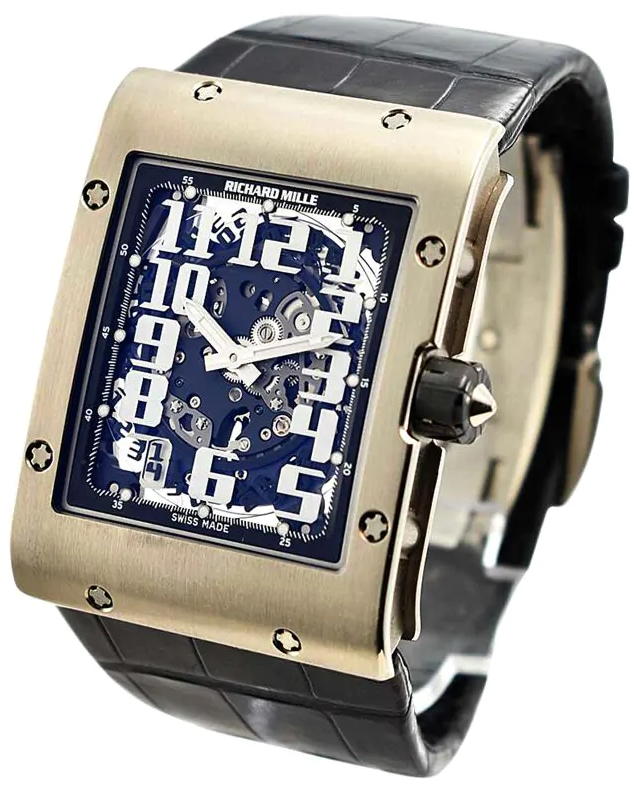
The pursuit of thinness in rectangular watch design is not new. It is one of the oldest engineering ambitions in the category, rooted in the dress watch tradition that associates slimness with elegance and precision. But the ultra-thin race in rectangular watchmaking is entering a new phase, driven by advances in movement miniaturization technology and by intensified competition among the manufacturers who have chosen thinness as a primary differentiator.
Piaget has defined the ultra-thin automatic benchmark for decades, and its continued investment in pushing the limits of automatic calibre height is one of the clearest signals of where the category is going. A rectangular automatic watch below 5mm of total case thickness has historically been an engineering impossibility at commercial scale. It is becoming less impossible, and the brands closest to achieving it are investing heavily in the manufacturing processes that will make it real.
The engineering challenges involved in this pursuit are specific and demanding. Movement plates must be machined to thicknesses that approach the limits of metal stability. Mainsprings must be formulated to deliver adequate power reserve at minimal height. Rotor systems, where used, must be redesigned around micro-rotor architectures that fit within the reduced space envelope. Every component must be re-engineered from first principles rather than adapted from thicker predecessors.
The consequence of this engineering investment will be rectangular watches that achieve thinness levels previously reserved for quartz calibres, but with full mechanical movements inside. For buyers who have historically chosen quartz in rectangular cases because they wanted the thinnest possible profile, the future will offer mechanical alternatives that were not previously viable.
The specific technical dimensions of movement miniaturization in rectangular cases, including the constraints that make ultra-thin automatic development so demanding, are analyzed in depth in the engineering challenges article.
Architectural Influence Will Deepen
The rectangular watch has always had a relationship with architecture. The Art Deco case designs of the 1920s and 1930s were directly influenced by the modernist architecture of the period: the stepped forms, the geometric precision, the honest use of materials, the celebration of the machine-age aesthetic. That relationship has never entirely disappeared, but it is intensifying in ways that will produce new design vocabularies for the rectangular case over the coming decade.
Contemporary architecture is experiencing a moment of renewed interest in bold geometric forms, in the honest expression of structural logic, and in the use of materials that age and develop character over time rather than maintaining permanent newness. These themes are directly applicable to rectangular watch design, and the designers who are most attentive to the broader design culture are already incorporating them.
The Brutalist tradition, in particular, is exerting a growing influence on contemporary rectangular watch design. Brutalism valued structural honesty, monolithic forms, the beauty of industrial materials used without disguise, and a deliberate rejection of decorative refinement in favor of raw architectural power. A rectangular watch case that embodies these values looks fundamentally different from a Tank or a Reverso. It has more mass, more surface texture, more willingness to be angular and imposing rather than slim and elegant.
This architectural direction is already visible in several independent and micro-brand rectangular designs that have appeared in the past five years. It represents a genuine expansion of the rectangular case vocabulary beyond the dress watch tradition that has defined the category for most of its history. The rectangular case is being claimed by a design sensibility that is as far from the Cartier Tank as the Tank was from the pocket watch that preceded it.
The interplay between architectural influence and consumer identity will produce rectangular watches for buyers who are drawn to the category not because of its formal heritage but because of its geometric assertiveness. This is a new audience for the rectangular case, and it is growing.
New Materials Will Enable New Proportions
The material palette available to rectangular watch designers is expanding in ways that will change the proportional possibilities of the format. Traditional case materials, steel, gold, and titanium, impose specific constraints on wall thickness, corner geometry, and overall case weight. New materials are beginning to relax those constraints in ways that enable proportions and design details that were not previously achievable.
Ceramic has been used in round watch cases for several decades, primarily in bezels and then in full case constructions. Its application to rectangular cases has been slower, because the corner geometry of a rectangular ceramic case presents specific sintering and machining challenges that do not exist in round ceramic cases. Those challenges are being solved. The first generation of quality ceramic rectangular cases has already appeared, and the material properties of ceramic, extreme hardness, scratch resistance, low thermal conductivity, and a surface quality that is genuinely different from metal, will make it an increasingly common choice for contemporary rectangular designs.
Carbon composites, including carbon fiber and forged carbon, offer weight reduction that is particularly relevant to larger rectangular cases where metal construction would produce a watch too heavy for comfortable daily wear. A 35mm wide rectangular case in forged carbon can achieve the same structural integrity as a steel case at a fraction of the weight. This enables bold, large-format rectangular designs that are wearable where equivalent steel cases would be burdensome.
Novel alloys, including titanium aluminides and amorphous metals, are in early commercial application in watch cases and will become more accessible over the coming decade. Amorphous metals, sometimes called metallic glass, can be cast rather than machined, which changes the economics of non-round case production significantly. A rectangular case in amorphous metal can potentially be produced at lower cost than a machined steel case, which would make quality rectangular watches more accessible at mid-range price points.
The interaction between materials innovation and rectangular case design, including how different materials respond to the specific machining and finishing demands of non-round cases, is covered in the dedicated materials article.
Complications Will Become More Accessible in Rectangular Cases
The history of complications in rectangular cases is a history of exceptional difficulty and exceptional cost. Fitting a perpetual calendar, a minute repeater, or a tourbillon into a rectangular case requires purpose-built movement architecture that represents a significant investment of engineering time and manufacturing resources. The result has historically been complications in rectangular cases that are available only at the top of the price spectrum, in limited editions, from a small number of manufacturers with the resources and expertise to attempt them.
This is changing. Movement miniaturization technology, combined with the growing commercial scale of the rectangular watch market, is making complications in rectangular cases more economically viable at lower price points than they have previously been.
The tourbillon is the clearest example. Tourbillons in rectangular cases have historically been among the most expensive watches in any category. Recent years have seen tourbillon rectangular references appear at progressively lower price points as Chinese movement manufacturers and independent Swiss makers have developed more cost-effective approaches to rectangular tourbillon architecture. The result is not a degradation of the complication but a broadening of its accessibility.
Perpetual calendars and annual calendars in rectangular cases are following a similar trajectory. The module-based approach to adding calendar complications, where a calendar module is built on top of a base movement rather than integrated into it from the ground up, is being applied to rectangular case formats in ways that make these complications available in the 5,000 to 15,000 euro range rather than exclusively above 30,000 euros.
For the rectangular watch collector, this trajectory means that the complication landscape of the category will look significantly different in ten years than it does today. Complications that currently require a substantial investment will become accessible at mid-range price points, and the complications that remain exclusive to haute horlogerie will be more technically ambitious than anything currently available.
Independent Designers Will Continue to Push the Format
The most creatively ambitious rectangular watch designs of the past decade have come disproportionately from independent designers and micro-brands rather than from the established major houses. This pattern will continue and likely intensify.
Independent designers are not constrained by the need to maintain consistent heritage references or to protect established commercial lines. They can approach the rectangular case as a purely creative problem and pursue design solutions that would be commercially risky for larger brands. The results have included some of the most genuinely novel rectangular proportions, surface treatments, and case architectures seen in the category since the Art Deco period.
The micro-brand infrastructure that has developed over the past decade, including accessible crowdfunding platforms, improved access to Swiss and Asian movement suppliers, and a sophisticated online collector community that can discover and evaluate new designs quickly, has lowered the barriers to entry for independent rectangular watch design significantly. Designers who would previously have needed the resources of a major brand to bring a rectangular watch to market can now do so independently.
This democratization of rectangular watch design is producing a more diverse design vocabulary for the category. Where the major houses converge on proven proportions and established design languages, the independents are exploring the edges: extreme aspect ratios, unusual materials, non-standard dial architectures, and case forms that depart from the rectangular conventions established in the Art Deco period. Not all of these experiments will succeed. But the ones that do will expand the design vocabulary of the category in ways that eventually influence the major houses.
Consumer Identity Will Sharpen the Category
One of the most significant forces shaping the future of rectangular watch design is the increasing precision with which rectangular watch buyers understand and articulate their own preferences. A decade ago, the rectangular watch buyer was a relatively undifferentiated consumer of dress watch tradition. Today, the rectangular watch buyer is often a specific kind of collector with particular views about proportions, movements, finishing, and design philosophy.
This sharpening of consumer identity has design consequences. As buyers become more sophisticated, they reward authenticity and penalize compromise. They can identify a poorly fitted round movement in a rectangular case. They can assess the quality of corner finishing. They respond to design languages that are internally consistent and reject ones that are not. This sophisticated buyer base creates pressure on manufacturers to pursue genuine excellence rather than superficial adequacy.
The consequence is a gradual upgrading of the average quality level in the rectangular watch category. At every price tier, the competitive pressure from an informed buyer base is pushing manufacturers to do better work. The entry level is improving because entry-level buyers now know enough to distinguish a well-proportioned rectangular case from a poorly proportioned one. The mid-range is improving because mid-range buyers are comparing their options against haute horlogerie standards and demanding more. The luxury tier is improving because luxury buyers are more knowledgeable about movement finishing, case geometry, and design history than at any point in recent decades.
The market expansion trends that are driving this buyer sophistication, and the commercial dynamics that are making the rectangular category more competitive, are covered in the comeback article.
The Rectangular Watch and the Question of Identity
Perhaps the most interesting dimension of the rectangular watch future is the role it will play in the broader question of watch collecting as identity expression. The round sports watch became, during its period of dominance, the default choice for anyone who wanted to signal wealth, taste, and success through a watch. Its ubiquity became its limitation.
The rectangular watch occupies a different position in the identity landscape. It is the choice of someone who has thought about their options and made a specific, informed decision. It signals knowledge rather than simply wealth. It communicates a particular relationship with design history and craft that the sports watch, however excellent, does not offer in the same way.
As the culture continues to shift toward valuing authenticity, specificity, and demonstrated knowledge over generic status signals, the rectangular watch is positioned to become more culturally significant rather than less. It is the watch for people who know why they chose it. That quality is rare, and it becomes more valuable as the market for watches-as-status-symbols saturates.
Summary
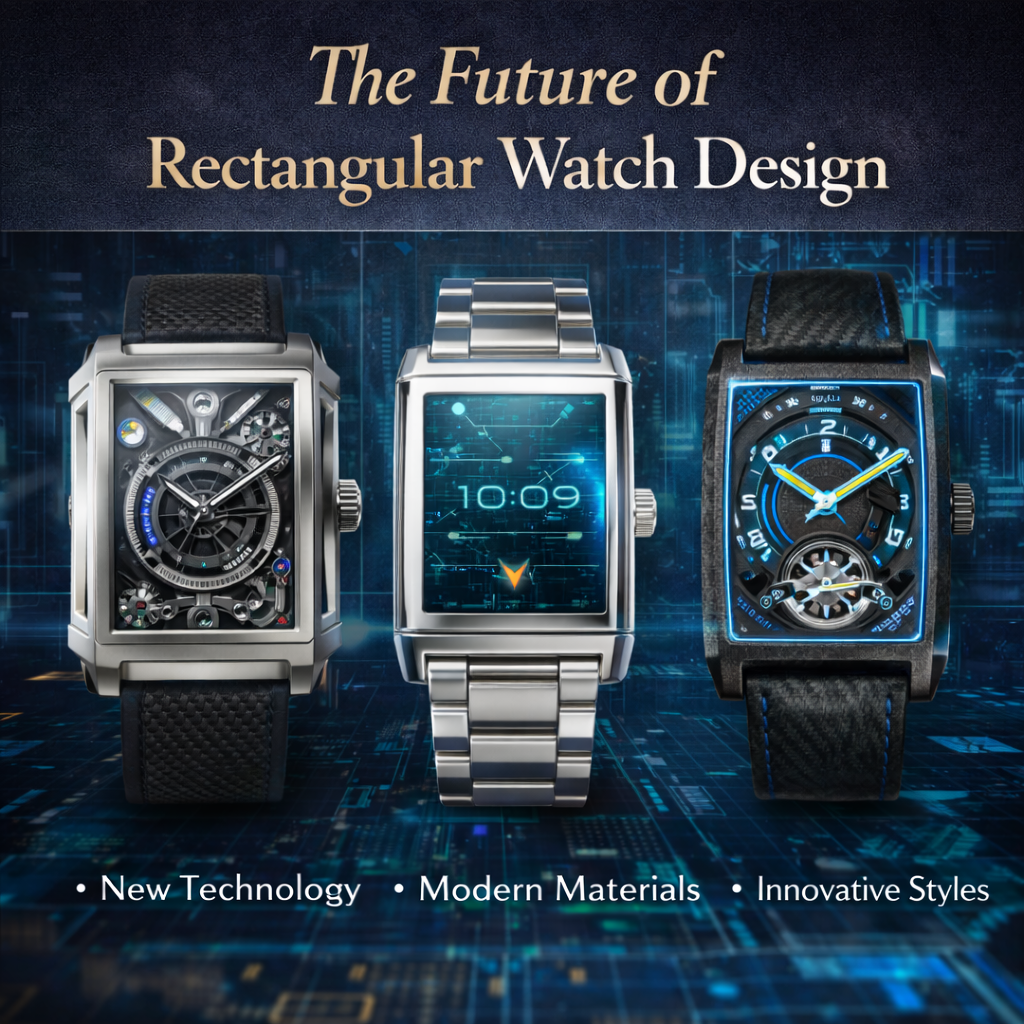
The future of rectangular watch design is being shaped by four converging forces: the intensification of the ultra-thin engineering race, the deepening influence of architectural design thinking, the expansion of the material palette available to case designers, and the growing accessibility of complications in rectangular case formats. These forces are all moving in the same direction, toward a more technically ambitious, more design-diverse, and more accessible rectangular watch category.
The category is also being shaped by the buyers who are entering it. A more sophisticated, more knowledgeable, and more demanding buyer base is raising the quality expectations at every price tier and creating commercial conditions in which genuine excellence is rewarded.
The rectangular watch fundamentals established over more than a century of design and engineering development provide the foundation for all of this future work. The rectangle is not going away. It is becoming more interesting, more varied, and more significant than at any point since the Art Deco period.
Related Articles:
- Rectangular watch fundamentals - The complete category reference
- Engineering Challenges of Rectangular Cases - movement miniaturization in detail
- Rectangular Watch Materials Explained - materials innovation for the next generation
- Are Rectangular Watches Making a Comeback? - market expansion trends driving the future
SÖNER rectangular watches
Free worldwide shipping · 10-year warranty · 30-day returns
Our pick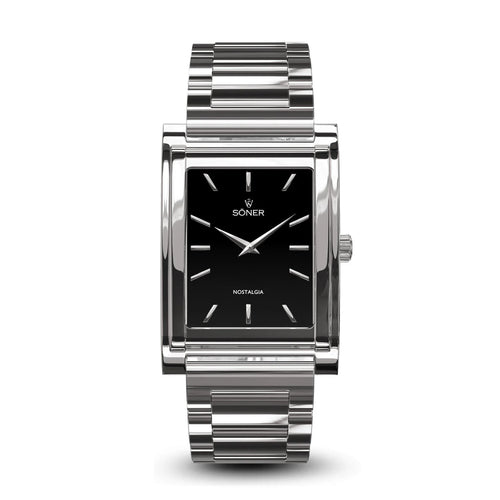 Nostalgia Stockholm11-year battery$580 USD
View watch
Nostalgia Stockholm11-year battery$580 USD
View watch
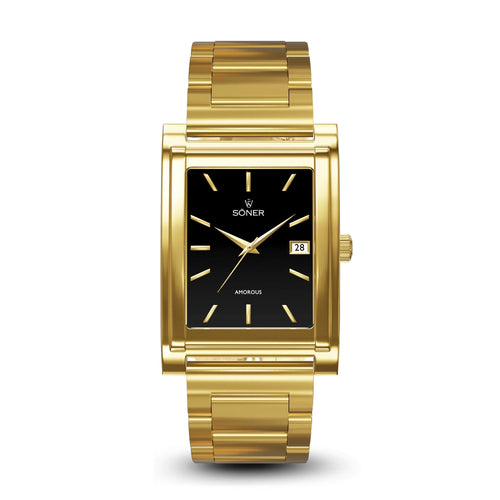 Amorous MilanoAutomatic$785 USD
View watch
Amorous MilanoAutomatic$785 USD
View watch
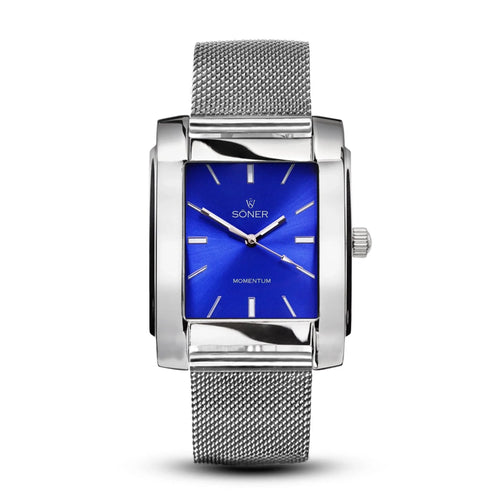 Momentum BacardiAutomatic$585 USD
View watch
Momentum BacardiAutomatic$585 USD
View watch
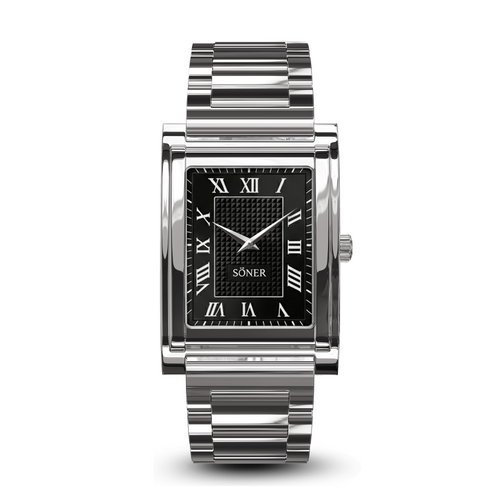 Nostalgia Caesar11-year battery$765 USD
View watch
Nostalgia Caesar11-year battery$765 USD
View watch
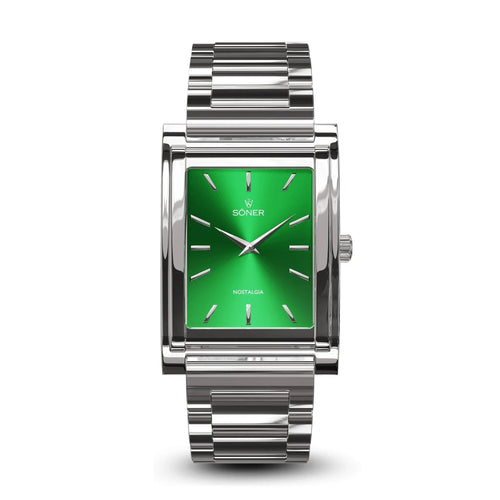 Nostalgia New York11-year battery$580 USD
View watch
Nostalgia New York11-year battery$580 USD
View watch
View all watches
Not sure which one? Take the 1-minute Watch Finder
 Nostalgia Stockholm11-year battery$580 USD
View watch
Nostalgia Stockholm11-year battery$580 USD
View watch
 Amorous MilanoAutomatic$785 USD
View watch
Amorous MilanoAutomatic$785 USD
View watch
 Momentum BacardiAutomatic$585 USD
View watch
Momentum BacardiAutomatic$585 USD
View watch
 Nostalgia Caesar11-year battery$765 USD
View watch
Nostalgia Caesar11-year battery$765 USD
View watch
 Nostalgia New York11-year battery$580 USD
View watch
Nostalgia New York11-year battery$580 USD
View watch