


 Published on
Table of Contents
Few names in watchmaking carry the weight of A. Lange & Söhne. Founded in 1845 by Ferdinand Adolph Lange in the Saxon town of Glashütte, the brand became a cornerstone of German precision watchmaking before being silenced by Soviet nationalization after World War II. Its resurrection in 1994 by Walter Lange, great-grandson of the founder, is one of the great comeback stories in horology. When Lange relaunched, it did so with four watches simultaneously. All four were masterpieces. But one, in particular, dared to defy expectation: it was not round.
A German Take on the Angular Form
Rectangular watches were not Lange's primary identity, they never have been. But the brand's venture into angular design is no casual footnote. Günter Blümlein, a key figure in Lange's early revival, had previously worked as an executive at Jaeger-LeCoultre, the house behind the iconic Reverso. It was natural that Blümlein would want to deliver a distinctly German answer to the great rectangular watches of the era. The result was a pair of collections that remain among the most refined angular timepieces ever produced.
The Arkade - Where It Began
When Lange returned to market in 1994 alongside the legendary Lange 1 and Saxonia, it also unveiled the Arkade. Designed primarily as a ladies' watch, the Arkade occupied an interesting space, rectangular adjacent, with softly rounded angles that gave it an almost cushion-like sensibility. Powered by Lange's calibre L911, the brand's first rectangular movement, the Arkade established the mechanical and aesthetic groundwork for everything that would follow. It was a refined piece, but one that left room for something bolder.
The Cabaret - Lange's Most Daring Statement in Steel and Gold
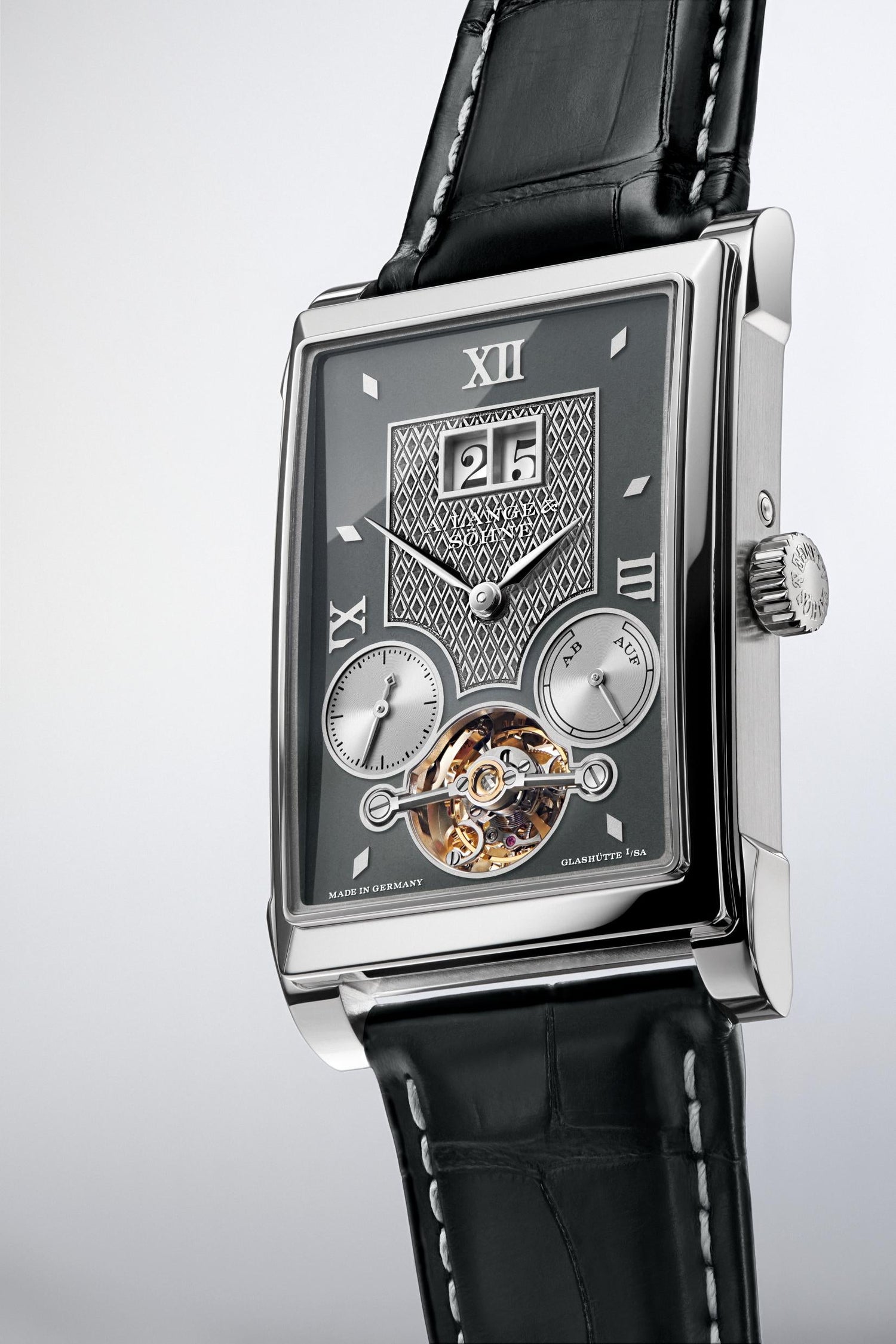
In 1997, at Baselworld, A. Lange & Söhne unveiled the Cabaret, and it was unlike anything the brand had produced before. Where the Arkade gently approached the rectangle, the Cabaret embraced it completely. At 36.3 mm × 25.9 mm, it featured a fully rectangular three-part case with a stepped bezel, slightly flared lugs, and a dial design that broke sharply from the Saxonia aesthetic. The name was deliberately provocative: fresh, impudent, imaginative, as described in the original press release. The Cabaret was Lange admitting that precision and personality are not mutually exclusive.

What made the Cabaret extraordinary was not merely the case but everything inside and on its surface. The movement, calibre L931, was a shaped rectangular Lange calibre featuring the brand's signature hand-engraved balance cock, German silver three-quarter plate, blued screws, and gold chatons, all the hallmarks of Glashütte finishing, adapted to live inside a non-round case. The Cabaret's outsize date at 12 o'clock tied it unmistakably to the Lange DNA. Its Roman numerals and diamond-shaped intermediate markers connected it to the Saxonia. But the overall impression was one of artistic courage rarely seen from a brand more commonly associated with austere restraint.
Over the years, the Cabaret was offered in rose gold, white gold, platinum, and yellow gold, with dials ranging from black to blue to silver to champagne to mother of pearl. A moonphase variant was produced, and most remarkably, a Cabaret Tourbillon, historically significant as the first tourbillon watch ever to incorporate a stop-seconds hacking mechanism. Production wound down around 2010, with special editions continuing through 2013. In 2021, a Cabaret Tourbillon Handwerkskunst reappeared in a limited run of 30 pieces, confirming that the rectangular spirit at Lange was never truly extinguished.
Why It Matters
A. Lange & Söhne's rectangular chapter is brief compared to its round catalogue, but it is no less significant. The Cabaret and Arkade demonstrate that Lange's design philosophy, geometry in service of elegance, movement finishing as art, translates seamlessly into the angular form. For collectors, both models represent something increasingly rare: Lange-level craftsmanship in a format that defies the mainstream, at prices that the secondary market has not yet fully recognized. The rectangular Lange is, perhaps, the best-kept secret in German watchmaking.
For a full rectangular watch guide - Read more
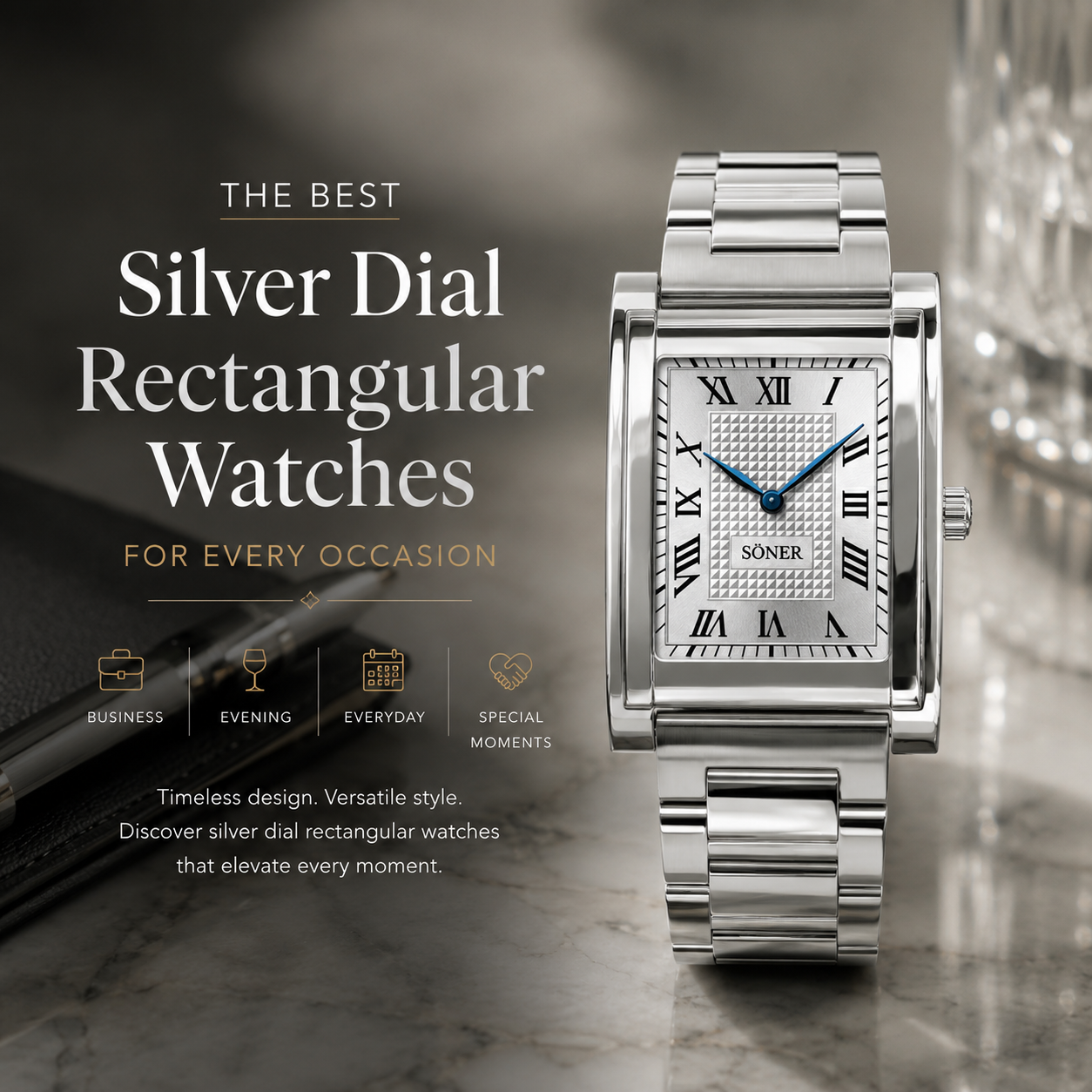
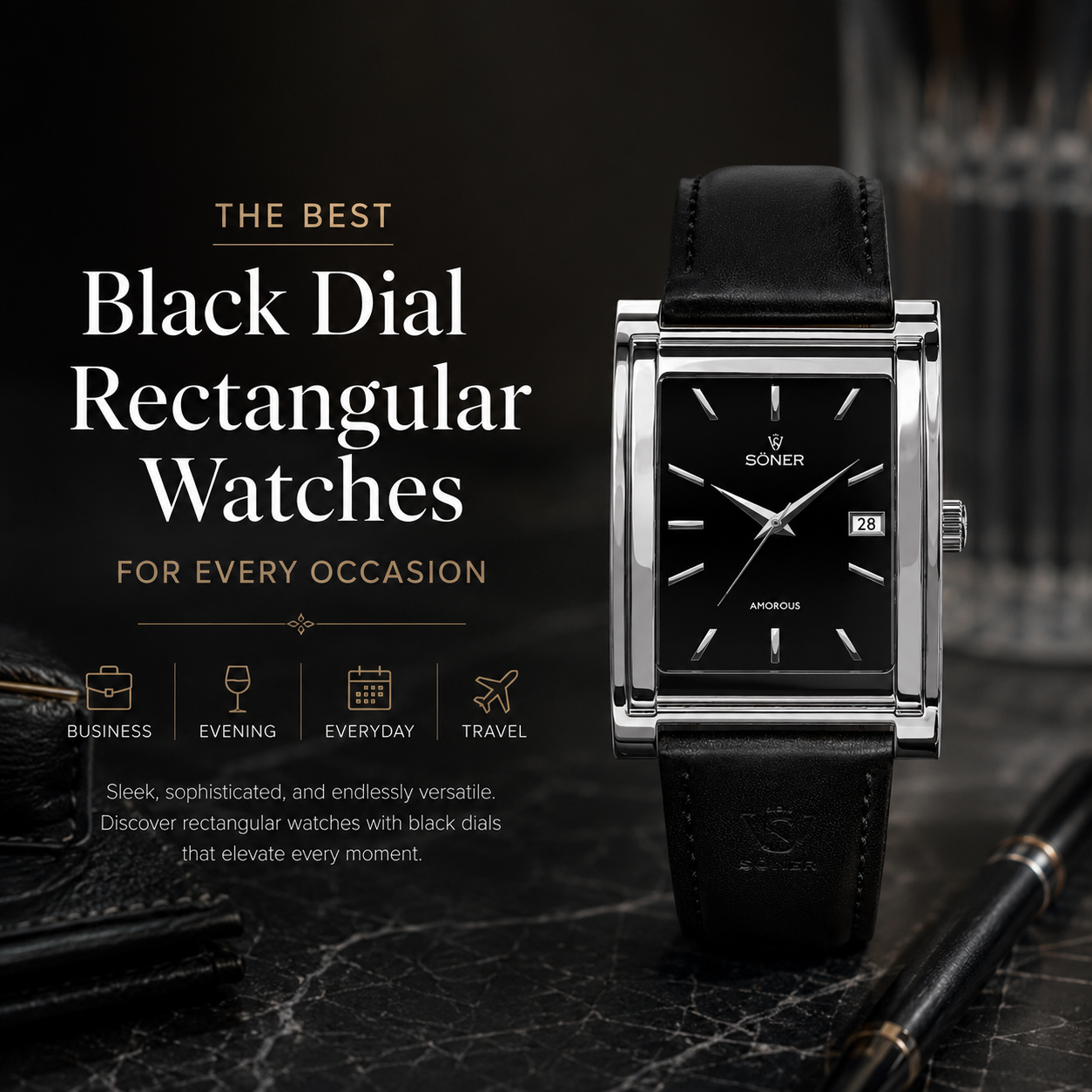
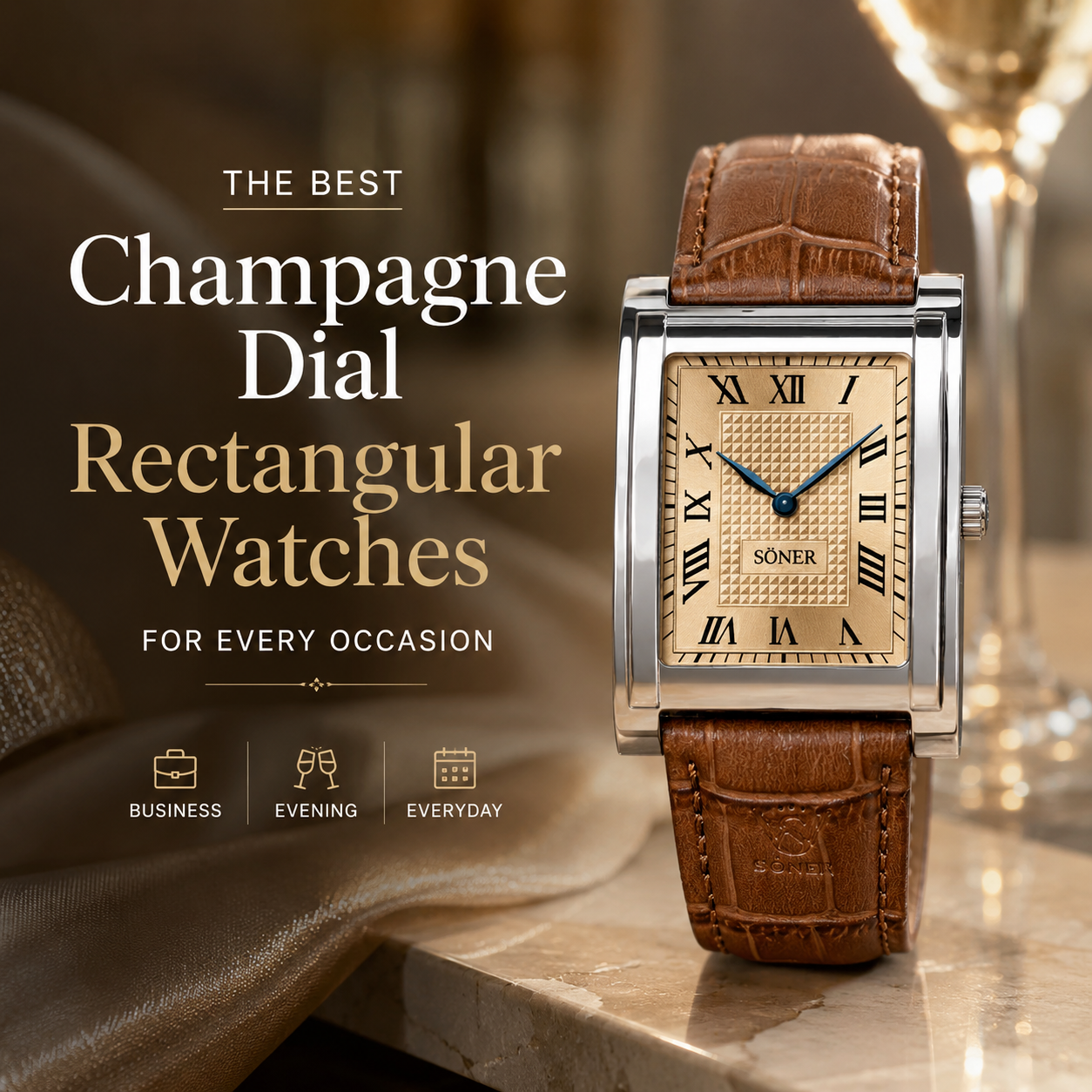
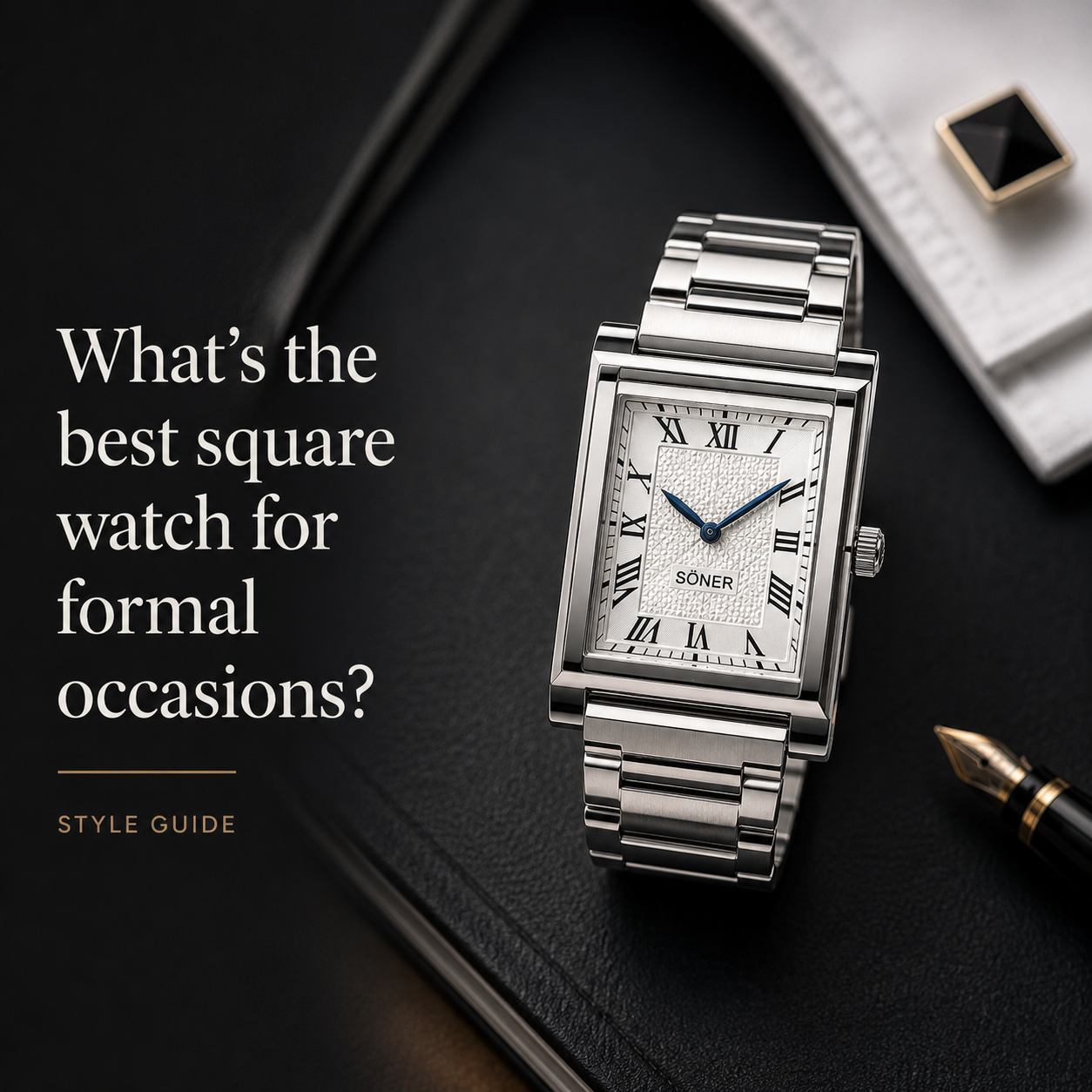
SÖNER rectangular watches
Free worldwide shipping · 10-year warranty · 30-day returns
Our pick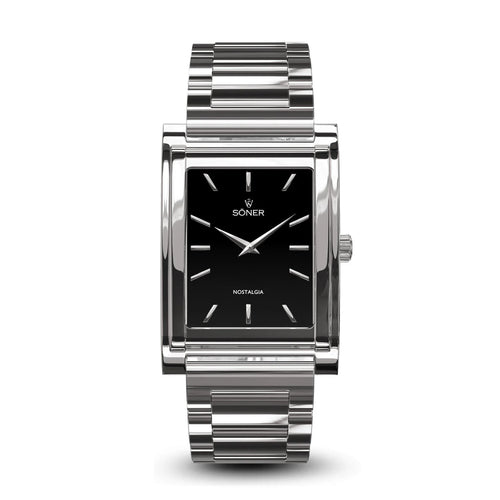 Nostalgia Stockholm11-year battery$580 USD
View watch
Nostalgia Stockholm11-year battery$580 USD
View watch
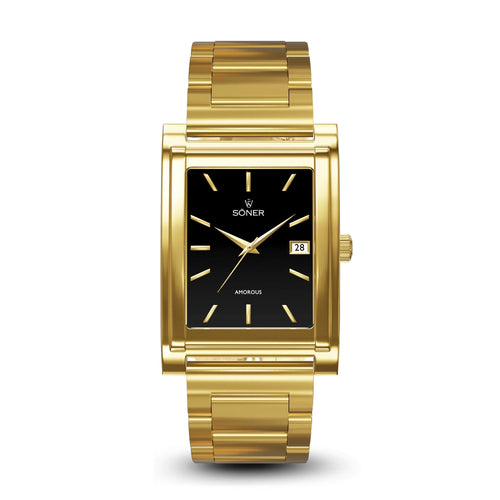 Amorous MilanoAutomatic$785 USD
View watch
Amorous MilanoAutomatic$785 USD
View watch
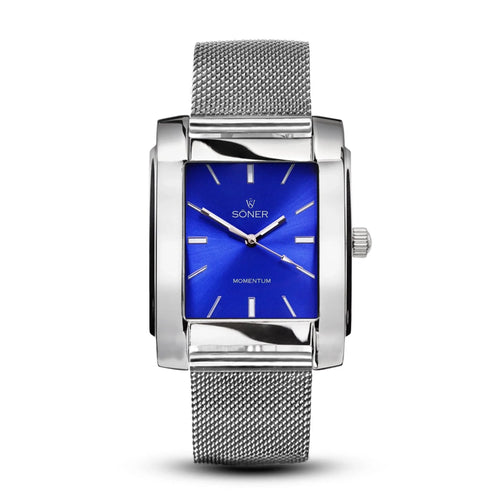 Momentum BacardiAutomatic$585 USD
View watch
Momentum BacardiAutomatic$585 USD
View watch
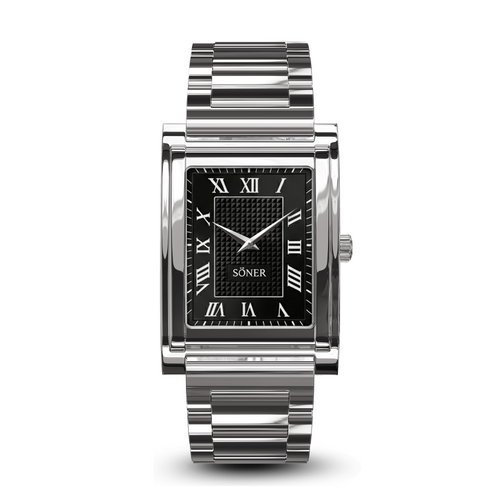 Nostalgia Caesar11-year battery$765 USD
View watch
Nostalgia Caesar11-year battery$765 USD
View watch
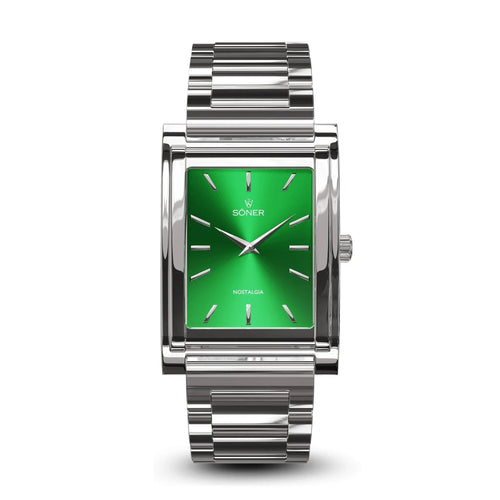 Nostalgia New York11-year battery$580 USD
View watch
Nostalgia New York11-year battery$580 USD
View watch
View all watches
 Nostalgia Stockholm11-year battery$580 USD
View watch
Nostalgia Stockholm11-year battery$580 USD
View watch
 Amorous MilanoAutomatic$785 USD
View watch
Amorous MilanoAutomatic$785 USD
View watch
 Momentum BacardiAutomatic$585 USD
View watch
Momentum BacardiAutomatic$585 USD
View watch
 Nostalgia Caesar11-year battery$765 USD
View watch
Nostalgia Caesar11-year battery$765 USD
View watch
 Nostalgia New York11-year battery$580 USD
View watch
Nostalgia New York11-year battery$580 USD
View watch