



 Published on
Table of Contents
Hamilton Watch Company was founded in Lancaster, Pennsylvania, in 1892, born from the merger of two local watchmakers and propelled immediately by a landmark contract to supply pocket watches to the American railroad industry. The demands of that industry, extreme accuracy, mechanical reliability, legibility at a glance, defined Hamilton's character from its earliest years. Over the following decades, the brand became the watch of American service: it supplied military timepieces during both World Wars, kept time in the cockpits of airlines at the dawn of commercial aviation, and produced the world's first battery-operated watch, the Hamilton Electric, in 1957. Acquired by the Swatch Group in 1974, Hamilton moved its production to Switzerland while retaining its American spirit and name. Today, it occupies the upper-accessible tier of the Swatch portfolio, Swiss-made quality, American soul, honest prices.
Hamilton Rectangular Watches: Key References
| Model | Introduced | Movement | Key Feature |
|---|---|---|---|
| Boulton (original) | 1941 | Manual wind | Tonneau rectangular case, small seconds at 6 o'clock |
| Boulton (current) | Current | H-50 manual wind, 80hr power reserve | 34mm steel case, curved sapphire crystal, ~$900 |
| Ardmore | Current | Quartz | Crisp rectangular case, minimal Art Deco dial, versatile sizing |
A History with the Angular Form
Hamilton's relationship with rectangular watches is woven into its mid-century identity. During the 1940s, as American taste embraced the clean geometry of the Art Deco era, Hamilton produced a range of rectangular models that suited the formality of the period. The case shape was not a novelty, it was a natural expression of the era's broader aesthetic vocabulary, and Hamilton applied it with the same attention to dial legibility and case finish that it brought to everything it made.
The Boulton - A Mid-Century American Classic
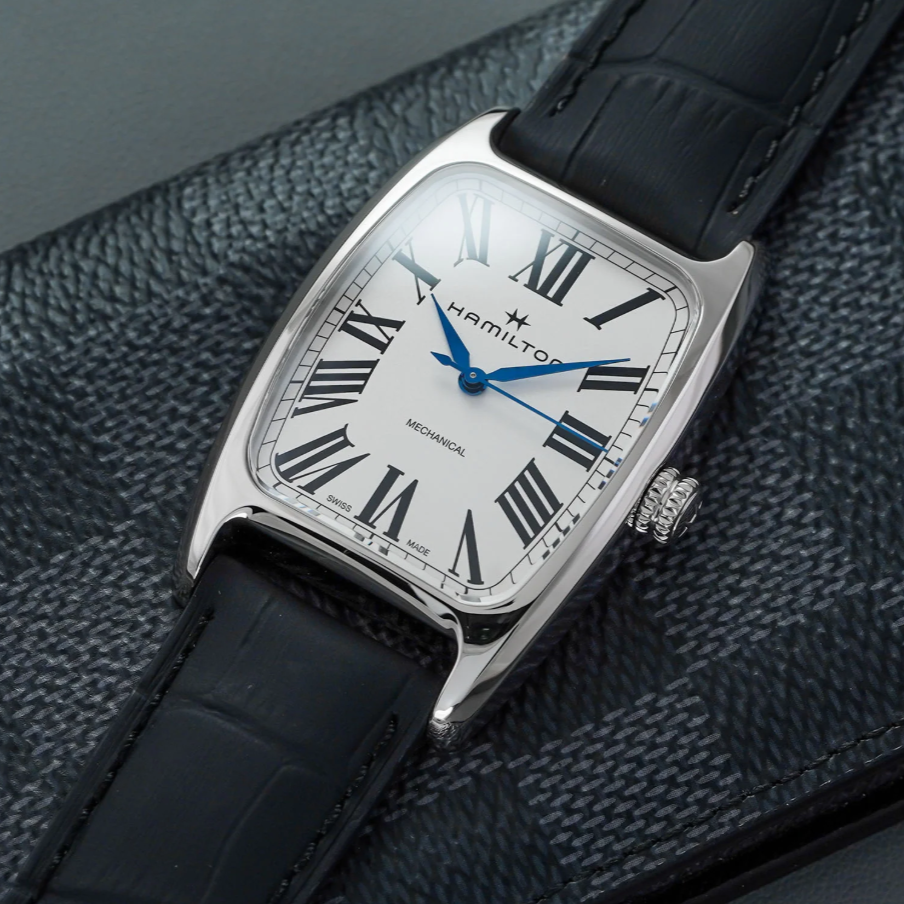
First introduced in 1941, the Hamilton Boulton became one of the brand's most commercially successful and beloved rectangular models. Rectangular and square watches were popular among American consumers during that decade, and the Boulton became a defining example of the style, slim, refined, with a tonneau-shaped rectangular case and a small seconds sub-dial at 6 o'clock that gave the dial a satisfying visual balance. The Boulton was revived in the 1980s as a quartz model, then refined further in subsequent decades into the watch that exists today. The current Boulton is offered in both quartz and mechanical versions, the mechanical powered by the H-50 hand-wound calibre with an 80-hour power reserve, and measures 34mm in a stainless steel case with a curved sapphire crystal. It was worn by Indiana Jones in the 2023 franchise finale, a casting that confirmed what collectors already knew: the Boulton reads as authentically 1940s without feeling like a costume piece. It is simply a good watch that happens to have been designed correctly, the first time.

The Ardmore - Art Deco for the Modern Wrist
The Ardmore is Hamilton's other significant rectangular contribution, and it approaches the form from a slightly different angle, literally and conceptually. Where the Boulton is built around the tonneau shape and a small seconds complication, the Ardmore takes a cleaner, more minimal approach to the Art Deco rectangle. Its case is crisply rectangular, its dial more spare, its presence more quietly elegant. The Ardmore has been offered primarily as a ladies' model, though its proportions translate beautifully across wrist sizes, particularly for those who find the current industry obsession with 40+ mm cases to be a fundamental misunderstanding of what dressing well means. The Ardmore speaks, without raising its voice, to a different set of values: restraint, proportion, and the quiet confidence of a watch that has nothing to prove.
American Angular, Swiss Made
Hamilton's rectangular chapter is not the entirety of its story, the Ventura, the Khaki Field, the Intra-Matic chronograph all have strong claims on the brand's legacy. But the Boulton and Ardmore represent something essential about what Hamilton is at its best: watches that apply serious Swiss craftsmanship to design decisions that are neither fashionable nor unfashionable, but simply right. In the world of accessible rectangular watchmaking, Hamilton remains one of the most honest propositions available.
For the full story of how rectangular watches evolved across the major houses, see the complete history of rectangular watches. For the best rectangular watches at every price point including the Boulton, see the best rectangular watches in 2026. For the definitive category reference, see The Definitive Guide to Rectangular Watches.
Frequently Asked Questions
What is the Hamilton Boulton?
The Hamilton Boulton is a rectangular Art Deco-inspired watch first introduced in 1941. The current version measures 34mm in a stainless steel tonneau-shaped rectangular case with a curved sapphire crystal. It is powered by the H-50 hand-wound calibre with 80 hours of power reserve. It was worn by Indiana Jones in the 2023 film Dial of Destiny. At approximately $900 it is one of the strongest value propositions in mechanical rectangular watchmaking.
Is the Hamilton Boulton a good watch?
Yes. The Boulton offers Swiss-made quality, an in-house hand-wound movement with 80 hours of power reserve, curved sapphire crystal, and genuine Art Deco design heritage at a price that significantly undercuts comparable pieces from brands with longer rectangular histories. For buyers who want a mechanical rectangular watch under $1,000, the Boulton is the most compelling option in its price tier.
What movement does the Hamilton Boulton use?
The mechanical Boulton uses the H-50 hand-wound calibre, developed by Hamilton. It delivers 80 hours of power reserve when fully wound - more than three days of running time - which is generous for a dress watch movement. A quartz version is also available for buyers who prioritise low maintenance over mechanical depth.
How does the Hamilton Boulton compare to the Cartier Tank?
The Tank is the benchmark of the rectangular dress watch category - 107 years of continuous production, starting at $3,200 for the Tank Must in quartz. The Boulton at $900 offers a mechanical hand-wound movement where the entry Tank is quartz, genuine Art Deco design heritage, and Swiss manufacture at a fraction of the Cartier price. For buyers who want mechanical depth and authentic vintage design without the heritage house premium, the Boulton is the natural answer. For a full overview of Tank alternatives, see our Cartier Tank alternatives guide.
What is the Hamilton Ardmore?
The Hamilton Ardmore is a rectangular Art Deco watch with a crisply geometric case and a clean minimal dial. Where the Boulton uses a softer tonneau-shaped case and a small seconds sub-dial, the Ardmore is more architecturally precise. It has been offered primarily as a ladies' model but its proportions work across wrist sizes. Swiss quartz movement. A quieter, more restrained option than the Boulton.
Where does Hamilton sit in the rectangular watch category?
Hamilton occupies the accessible mid-tier of the rectangular watch category - Swiss-made, well-finished, and priced below the heritage houses. The Boulton at $900 sits between entry-level options and the Swiss automatic tier occupied by the Oris Rectangular and Longines DolceVita. For the full category ranked by price, see the best rectangular watches in 2026.
SÖNER rectangular watches
Free worldwide shipping · 10-year warranty · 30-day returns
Our pick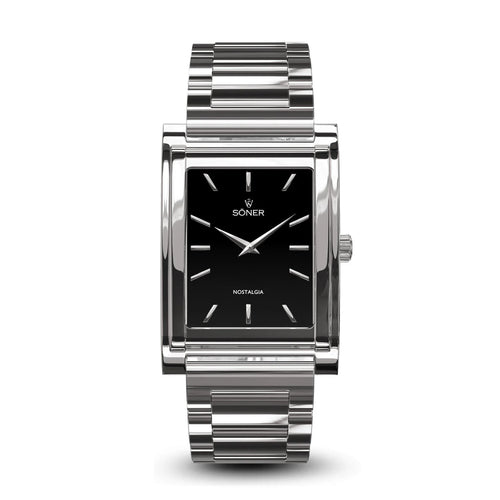 Nostalgia Stockholm11-year battery$580 USD
View watch
Nostalgia Stockholm11-year battery$580 USD
View watch
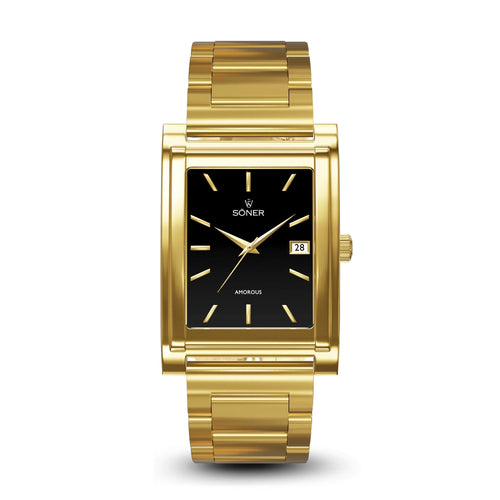 Amorous MilanoAutomatic$785 USD
View watch
Amorous MilanoAutomatic$785 USD
View watch
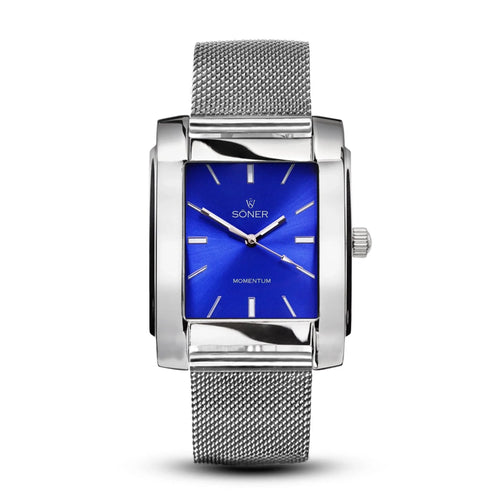 Momentum BacardiAutomatic$585 USD
View watch
Momentum BacardiAutomatic$585 USD
View watch
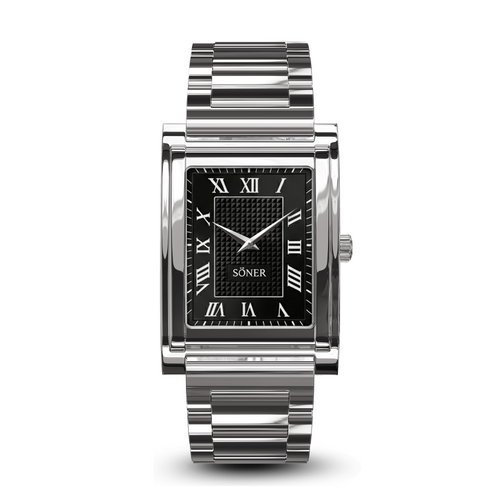 Nostalgia Caesar11-year battery$765 USD
View watch
Nostalgia Caesar11-year battery$765 USD
View watch
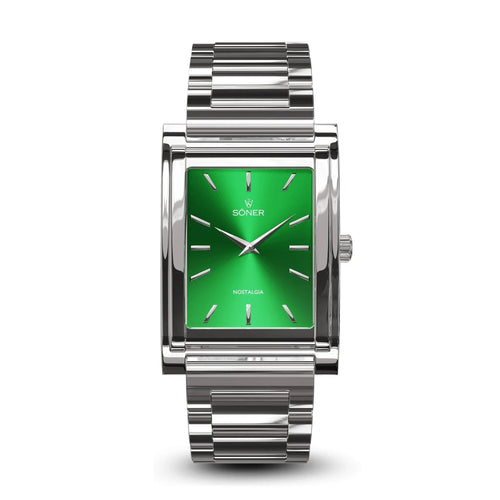 Nostalgia New York11-year battery$580 USD
View watch
Nostalgia New York11-year battery$580 USD
View watch
View all watches
 Nostalgia Stockholm11-year battery$580 USD
View watch
Nostalgia Stockholm11-year battery$580 USD
View watch
 Amorous MilanoAutomatic$785 USD
View watch
Amorous MilanoAutomatic$785 USD
View watch
 Momentum BacardiAutomatic$585 USD
View watch
Momentum BacardiAutomatic$585 USD
View watch
 Nostalgia Caesar11-year battery$765 USD
View watch
Nostalgia Caesar11-year battery$765 USD
View watch
 Nostalgia New York11-year battery$580 USD
View watch
Nostalgia New York11-year battery$580 USD
View watch