




 Published on
Table of Contents
The Definitive Guide to Rectangular Watches
Last Updated: 2026 | Category: Watches | Reading Time: ~30 minutes
Rectangular watches are among the most deliberate choices you can make on the wrist. They represent less than two percent of watches produced globally, and they include some of the most iconic timepieces ever made. This guide covers everything: which rectangular watch to buy at each budget, how the category evolved, what separates a great rectangular case from a mediocre one, and why the shape is experiencing its strongest resurgence in decades.
If you are here to find the best rectangular watch, start with the budget breakdowns below. If you are here to understand the category fully, history, movement types, sizing logic, case geometry, read straight through. This guide is maintained and updated annually. It is the most complete reference on rectangular watches available anywhere.
The short answer: at under $500, the Söner Nostalgia is the benchmark, Swiss ETA movement, sapphire crystal, 5 ATM water resistance, 7 mm thin, 11-year battery. At $600, the Söner Amorous adds Swiss automatic movement in the same footprint. Above $2,000, the Cartier Tank and Jaeger-LeCoultre Reverso define the category. Everything in between is covered below.

This guide is maintained and updated annually. For specific model recommendations, consult the linked cluster articles throughout this guide. All watch specifications and market observations reflect conditions at the time of last update.
What Is a Rectangular Watch?
A rectangular watch is a timepiece enclosed in a case whose footprint is longer on one axis than the other, with four corners that meet at or near 90-degree angles. It sounds like a simple definition, but in a market dominated almost entirely by round cases, the distinction carries significant cultural, technical, and aesthetic weight.
To appreciate what a rectangular watch is, it helps to understand what it is not.

Rectangular vs. Square watches
A square watch is technically a subset of rectangular geometry, all squares are rectangles, but not all rectangles are squares. In watchmaking, however, the terms are treated as categorically different. A square watch has roughly equal height and width, typically sitting in a 1:1 or close ratio. A rectangular watch has a pronounced elongation, usually somewhere between 1:1.3 and 1:1.8, that creates a portrait or landscape orientation on the wrist. The elongation changes everything: the way the watch reads visually, how it interacts with a shirt cuff, and the engineering challenges it presents to the movement inside.
Rectangular vs. Round Watches
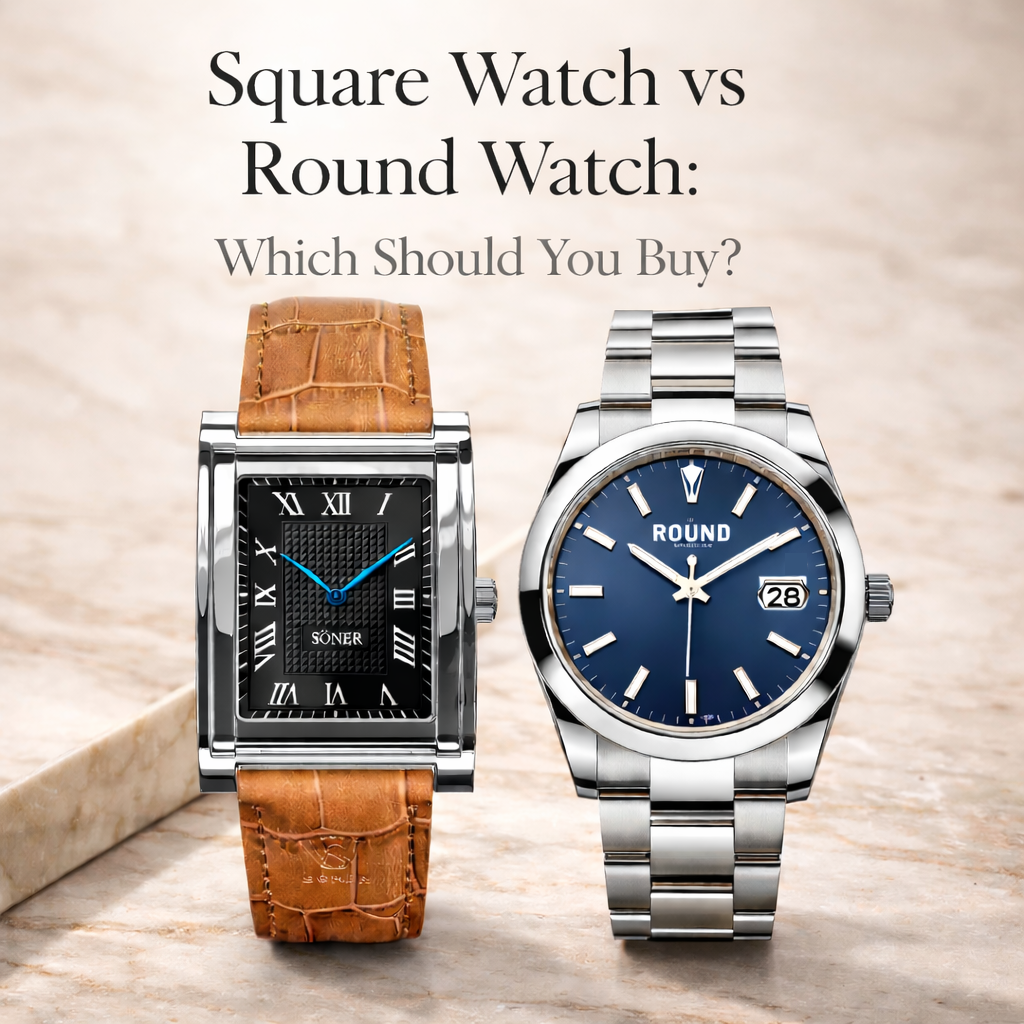
Rectangular and round watches represent two fundamentally different approaches to horological design. A round watch is built around radial symmetry, where every point on the case extends evenly from a central axis. This creates balance, universality, and mechanical alignment with the circular nature of traditional watch movements. A rectangular watch, by contrast, is built around directional geometry, where the case extends along a defined horizontal and vertical axis, creating structure rather than symmetry.
From a technical standpoint, round cases align more naturally with the circular architecture of mechanical movements and industrial manufacturing processes. Rectangular cases require additional consideration in case construction, crystal shaping, and internal movement fitting, because the geometry does not naturally follow the rotational symmetry of the movement.
Rectangular vs. Tonneau watches
A tonneau watch (from the French word for barrel) has curved sides that bow outward. It is not strictly rectangular. Its corners are softened and its waist is pinched, giving it an organic, almost pillow-like profile. Many collectors conflate the two, and brands have occasionally blurred the line, but a true rectangular case has straight, parallel sides. The distinction matters when assessing case machining complexity and how a watch sits against the wrist.
The defining geometry
The hallmark of a rectangular watch is the deliberate tension between its horizontal and vertical axes. This tension is what makes rectangular watches compelling to look at and difficult to manufacture. A circle is geometrically perfect in all directions. A rectangle is not. It has a top, a bottom, a longer side, and a shorter side, and every design decision flows from that fundamental asymmetry.
In practice, rectangular watches tend to fall into two proportional families: the dress watch (tall and narrow, with lug-to-lug length dominating) and the bolder modern interpretation (wider, more architectural, sometimes approaching a landscape orientation). Both are rectangular. Both are fascinating.
For a more detailed breakdown of how rectangular, square, and tonneau cases differ in proportion, structure, and wrist presence, see Rectangular vs Square vs Tonneau Watches Explained.
The Rise and Retreat of the Rectangle
The story of rectangular watches is inseparable from the story of why most watches are round. To understand one, you need to understand the other, because both are products of the same hundred-year argument between industrial logic and deliberate design.
The pocket watch was a solved problem
Before wristwatches existed as a mainstream product, timekeeping was the exclusive domain of the pocket watch, and the pocket watch was round. Round cases were rational: they packed more dial space into a given diameter, they were structurally efficient, and the movements inside them were calibrated to circular geometry. The mechanical watch movement is, at its core, a system of gears arranged around a central axis, a radial system for which the circle is the mathematically optimal housing. The pocket watch was, essentially, a solved problem.
The wristwatch changed everything, and asked a new question
Early wristwatches, small timepieces converted from ladies' pendant watches and strapped to soldiers' wrists during the Boer War and later World War I, were still mostly round. But as the wristwatch evolved from a military utility tool to a civilian fashion accessory in the 1910s and 1920s, designers began to ask a question that pocket-watch makers never had to: what shape should a watch be?
The wrist, after all, is not a round surface. It is flat and elongated. A small rectangular case, particularly a tall one oriented vertically, tracks elegantly along the wrist's line. Several pioneering houses, Cartier, Patek Philippe, and a handful of Swiss ébauche makers, began experimenting with rectangular cases as early as 1904. Cartier's Santos (1904) was square, but its introduction signaled the industry's willingness to depart from circular convention. By 1917, Cartier had developed the Tank, arguably the most consequential rectangular watch ever made, and the blueprint for nearly everything that followed.
The Tank's proportions, a tall, narrow case flanked by extensions that mirrored the body of a Renault tank as seen from above, set a template that is still copied, referenced, and evolved more than a century later. Its success proved that a rectangular watch could be more than a novelty. It could be an icon.

Art Deco: the golden age of the rectangle
The period from roughly 1920 to 1940 represents the golden age of the rectangular watch. Art Deco, the design movement that celebrated geometry, contrast, symmetry, and the machine aesthetic, was a perfect philosophical match for the rectangular case. If Art Deco's central thesis was that beauty and modernism could coexist, the rectangular watch was its horological embodiment.
During this period, the major Swiss houses produced rectangular watches of extraordinary variety and refinement. Cases were cut from gold, platinum, and silver. Bezels were set with diamonds, onyx, sapphires, and coral in geometric patterns. Dials featured guilloche patterns, sunburst textures, and stark numeral sets borrowed from the visual language of modernist typography. Movement manufacturers, particularly in the Vallée de Joux, developed dedicated rectangular calibres, thin, elongated movements designed to fill a non-round case without the dead space that would result from installing a round movement in a rectangular housing.
The calibre itself became a design consideration, not just an engineering one. Cartier's relationship with Jaeger-LeCoultre produced elongated movements of remarkable thinness. Patek Philippe developed dedicated rectangular calibres of its own. Vacheron Constantin, Audemars Piguet, and Longines all pursued similar programs.
What the Art Deco era established, and what remains true today, is that the rectangular watch is a deliberate choice. No one makes a rectangular watch by accident. Every proportional decision, every finishing choice, every movement selection requires intentional problem-solving that round watches do not demand. This conscious deliberateness is baked into the DNA of every rectangular timepiece.

Why the industry chose round, and locked itself in
The rectangle's golden age ended not because the design was wrong, but because economic and industrial forces made round the default. The economics of round case manufacturing are favorable at every point in the value chain. CNC machines designed for watch cases are optimized for cylindrical cutting. Gaskets, crystals, and casebacks are cheaper and more available in round formats. Suppliers maintain larger inventories of round components because that is where the volume is.
Once the industry standardized on round, which happened incrementally through the early 20th century and was essentially complete by mid-century, the feedback loops became self-reinforcing. Watch schools taught round-case techniques. Movement suppliers built round calibres. Retailers stocked round watches because their customers expected round watches. The entire supply chain oriented itself around a circular assumption, and breaking from it became progressively more expensive.
There is also a psychological dimension. Round watches feel familiar, accessible, and legible. The dial mimics the face of a clock, which is itself round, for the same movement-manufacturing reasons. The more round watches dominate the market, the more "normal" a round watch feels, and the more a rectangular watch reads as a deliberate statement.
The retreat: sports culture and the quartz crisis
The mid-20th century brought a contraction. Round sports watches, led by the Rolex Submariner (1953), the Omega Seamaster, and the Breitling Navitimer, became culturally dominant through association with aviation, diving, motorsport, and exploration. The quartz crisis of the 1970s further accelerated standardization: watch companies focused heavily on cost efficiency and mass production. Round watches fit those requirements far more easily than rectangular ones.
Rectangular watches survived primarily within dress-watch collections and smaller enthusiast communities. Cartier's Tank continued to evolve through the Santos, Américaine, and Française models. The Tank Louis Cartier remained in continuous production. Jaeger-LeCoultre's Reverso found a devoted following among connoisseurs who valued ingenuity over trend-chasing. But their market share shrank dramatically from its peak in the 1920s and 1930s.

Today: the rectangle returns
By the 2000s, and accelerating through the 2010s, a new generation of collectors began rediscovering rectangular watches. Independent brands and micro-brands entered the category. Longines revived the Dolce Vita. TAG Heuer's Monaco, technically square but spiritually rectangular in its confrontational geometry, became a cult object. And by the early 2020s, rectangular watches had re-entered the mainstream conversation.
Today, the rectangular watch sits at an interesting intersection: it is simultaneously historical and contemporary, niche and aspirational. It is rare not because it disappeared, but because the forces that made round watches the industrial default are still in place. Every rectangular watch made today is, in a small way, a refusal of that default.
A deeper explanation of why circular cases became the industry standard is covered in Why Most Watches Are Round (And Why Rectangular Is Different). For a complete chronological analysis from early 20th-century origins to contemporary revival, explore The Complete History of Rectangular Watches (1900–Present).
Engineering Challenges of Rectangular Cases
The engineering of a rectangular watch is not simply "harder than a round one." It is differently hard in specific, identifiable ways, ways that help explain why great rectangular watches deserve the premium they command, and why so few brands commit to the format seriously.
Movement Placement
In a round watch, the movement sits concentrically inside the case. The crown exits from the case at the 3 o'clock position, driving the stem through the movement's crown-setting mechanism. The relationship between movement and case is essentially fixed by convention.
In a rectangular watch, the movement's orientation relative to the case is a genuine design decision. Does the movement sit portrait (long axis vertical) or landscape? How does the crown interact with the case edge? Where is the winding mechanism positioned? If the brand is using a round movement inside a rectangular case, what fills the dead space in the corners? Historically, some makers filled that space with decorative elements, additional complications, or simply accepted it. Others invested in purpose-built calibres, which is the correct, if expensive, approach.
Purpose-built rectangular movements are masterpieces of space engineering. Jaeger-LeCoultre's Calibre 822, developed for the Reverso, is a case study in designing a movement for a specific case shape. Every component placement is deliberate, every bridge shaped to fill the available footprint precisely.
A material-by-material breakdown of steel, gold, titanium, and structural durability is available in Rectangular Watch Materials Explained.
Case Machining Complexity
A round case is machined on a lathe, a process that is fast, precise, and scalable. The lathe's rotation around a central axis produces a perfect cylinder in one operation. Finishing a round case involves relatively few setups and transitions.
A rectangular case cannot be turned on a lathe. It is machined on a milling machine, which approaches the form from multiple axes across multiple setups. Each face of the case must be machined separately. The corner transitions, where the flat sides meet, typically with a small radius, must be machined and then finished by hand in many high-end examples. Anglage (beveling the edges) on a rectangular case is particularly labor-intensive because the angles must be precisely matched at each corner transition.
The thickness of a rectangular case presents its own challenges. Rectangular cases, particularly dress watches, must be thin to look right, but thinness reduces the structural material available at the corners, which are already stress concentration points. High-quality rectangular cases use harder alloys, more sophisticated geometry, or careful engineering to compensate.
For a technical examination of machining complexity, movement accommodation, and case tolerances, refer to Engineering Challenges of Rectangular Watch Cases.
Water Resistance Constraints
A round case uses a crown tube that threads into the case in a single cylindrical operation. The gasket sealing the crown tube is round, and the threads engage uniformly around the circumference. The caseback of a round watch is equally simple to seal: a round gasket, compressed uniformly by the threaded or snap-fit caseback.
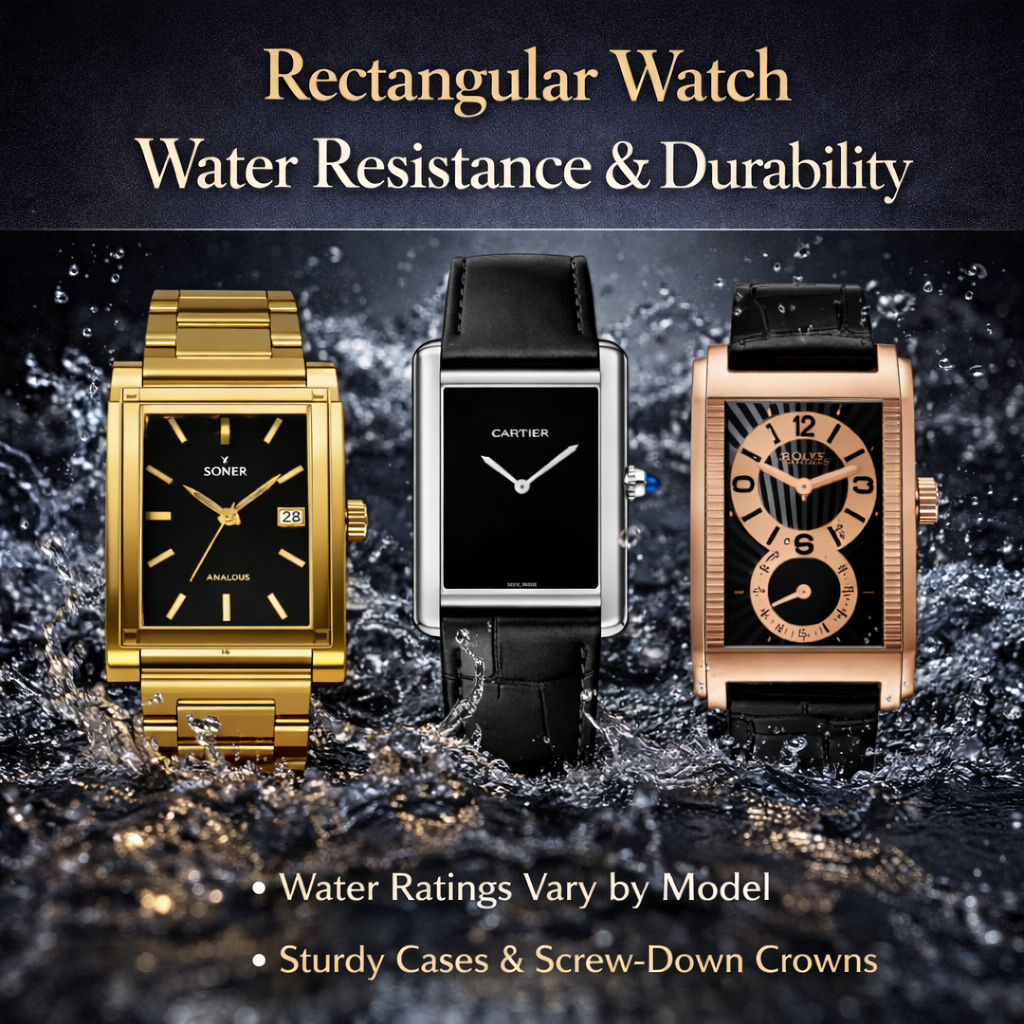
A rectangular watch presents non-circular sealing challenges. The crystal, typically a flat sheet of sapphire on dress watches, must be bonded or gasket-sealed around a rectangular perimeter. Uniform compression of a gasket around four corners and four straight edges requires careful case geometry and precise tolerancing. Any variation in the gasket's compression around the perimeter creates a potential leak point.
This is why many rectangular dress watches carry modest water resistance ratings, often 30 meters or 50 meters, compared to 100 meters or 200 meters for equivalent round sports watches. The geometry makes deeper water resistance harder to achieve without compromising the thin, elegant profile that makes the watch attractive.
For a focused explanation of sealing systems, pressure resistance, and real-world durability constraints, see Rectangular Watch Water Resistance & Durability.

Lug Architecture
Lugs, the protrusions from the case body that hold the strap in place, are straightforward on a round watch. They flow naturally from the circular case, and their geometry is well-standardized.
On a rectangular watch, lugs present a genuine design and engineering challenge. The lug must transition from the case's straight, flat profile to a curved saddle that contacts the strap. If the case is tall and narrow, the lugs must be widely spaced vertically to give the strap enough leverage to hold the watch securely. If the case is wide and short, the strap width may need to be disproportionately large, which can look awkward.
The finest rectangular watch designs treat the lug as an aesthetic element, not just a structural one. Cartier's Tank lugs, which echo the tracked extensions of the tank, are one of the most copied design elements in watchmaking history. The way the lug integrates with the case body, the angle at which it meets the strap, and the transition from case material to strap material are all design decisions with both visual and structural implications.
The structural and ergonomic implications of lug integration are analyzed in Lug Architecture in Rectangular Watches.
Rectangular Watch Proportions Explained
Proportion is everything in rectangular watch design, and now that you understand the engineering constraints, the proportion decisions make more sense. The same basic case shape can wear dramatically differently depending on subtle changes in width, height, lug-to-lug distance, and thickness. These variables are not arbitrary: they are the outcomes of tradeoffs between aesthetics, engineering difficulty, and wearability.
Width vs. Length
The ratio of a rectangular case's width to its height (or length) determines its character more than any other single measurement. A case that is 24mm wide and 30mm tall has a ratio of 1:1.25, close to square, compact, restrained. A case that is 24mm wide and 40mm tall has a ratio of 1:1.67, elongated, architectural, dramatically vertical.
For wrist presence, a wider, shorter rectangle tends to feel bolder and more casual. A narrower, taller rectangle tends to feel more formal and elegant. This is partly proportional perception, a tall, narrow case echoes the proportions of classical architecture, and partly practical, since narrow cases disappear more elegantly under a shirt cuff.
| Case Width | Case Height | Ratio | Character |
|---|---|---|---|
| 20mm | 28mm | 1:1.4 | Classic dress, very traditional |
| 24mm | 32mm | 1:1.33 | Versatile, vintage-inspired |
| 27mm | 38mm | 1:1.41 | Modern dress, wrist presence |
| 30mm | 42mm | 1:1.4 | Contemporary, bold |
| 35mm | 52mm | 1:1.49 | Statement piece, architectural |
Lug-to-Lug Impact
Lug-to-lug distance, the measurement from the tip of one lug to the tip of the opposite lug, measured along the vertical axis, is the single most important fitting measurement for any watch. It determines whether the watch hangs over the wrist or sits comfortably within it.
For round watches, lug-to-lug is closely related to the case diameter: a 40mm round watch will have a lug-to-lug in the range of 46mm to 52mm depending on lug design. For rectangular watches, the relationship is different. The lug-to-lug of a rectangular watch is governed by the case's height plus the length of the lugs themselves. A relatively small rectangular case, say, 24mm wide and 35mm tall, might have a lug-to-lug of 48mm to 54mm, making it a genuinely large watch despite its modest case dimensions.
This is a counterintuitive aspect of rectangular watches that trips up many buyers. The stated case size of a rectangular watch often understates its actual presence on the wrist. Always check the lug-to-lug figure before purchasing.
Thickness and Wrist Presence
Rectangular dress watches are among the thinnest timepieces in production. Many classic examples measure between 5mm and 8mm thick, thin enough to slip under a shirt cuff without disturbing the drape of the sleeve. This thinness is not accidental; it is the product of significant engineering effort and, in high-end examples, dedicated thin-movement development. As the engineering section above explains, achieving thinness in a rectangular case is harder than in a round one: corners are stress points, and the movement must be specifically selected or developed to fit the footprint.
Thickness interacts with case dimensions to determine wrist presence. A thin case feels understated even at larger dimensions. A thick case, even a relatively small one, reads as more assertive. For rectangular dress watches, the ideal is to be as thin as mechanical constraints permit. For modern interpretations that lean into bold geometry, additional thickness can be used deliberately to give the watch a more sculptural, three-dimensional presence.
If you want a structured framework for evaluating width, height, ratios, and lug-to-lug distance, consult the Rectangular Watch Size Guide (Width, Height & Lug-to-Lug).
Approximate thickness ranges by category:
| Category | Typical Thickness |
|---|---|
| Ultra-thin dress (high end) | 4mm – 6mm |
| Standard dress rectangular | 6mm – 9mm |
| Versatile everyday rectangular | 9mm – 11mm |
| Bold/contemporary rectangular | 11mm – 14mm |
How Rectangular Watches Wear Larger
There is a well-documented visual phenomenon with rectangular watches: they tend to appear larger on the wrist than their dimensions suggest, when worn vertically (lug-to-lug aligned with the wrist). This is partly the lug-to-lug effect described above, but also a consequence of how rectangular geometry interacts with the eye.
A circle, when placed against a complex background, recedes slightly, the eye fills in its edges, and the shape reads as self-contained. A rectangle's hard corners and straight edges create more visual contrast with the curved anatomy of the wrist. The corners "interrupt" the visual flow in a way that draws attention to the watch's presence.
This means that a 35mm rectangular watch often presents as more prominent on the wrist than a 40mm round watch. Conversely, a 24mm rectangular case can wear more substantially than its small width suggests. Buyers transitioning from round watches to rectangular should bear this in mind: you may need to size down from your usual case diameter when moving to a rectangle.
The visual and proportional reasons rectangular watches often appear larger on the wrist are analyzed in How Rectangular Watches Wear Larger.
Automatic vs Quartz in Rectangular Watches
The choice between automatic and quartz in a rectangular watch is more consequential than in a round watch, because the case geometry directly constrains the options available.
The automatic argument
A self-winding mechanical movement in a rectangular watch is a significant engineering achievement. Because rectangular calibres must be purpose-built (or round movements must be fitted with rectangular bases), the development cost is substantial. When you buy an automatic rectangular watch from a serious brand, part of what you are paying for is the intellectual and manufacturing investment in making a round-movement system work in a non-round space. The result, when done well, is a watch that carries genuine horological merit alongside its aesthetic appeal.
Automatic rectangular watches also tend to be thicker than their quartz equivalents, because the self-winding rotor adds height to the movement stack. Ultra-thin automatics for rectangular cases exist, Piaget's Calibre 800P is a benchmark example, but they represent some of the most expensive movements in the industry.
The quartz argument
A quartz movement for a rectangular case is far simpler to engineer. The quartz oscillator can be shaped to fit the available footprint, and battery replacement is the most complex service intervention required. Quartz movements allow rectangular watches to achieve extraordinary thinness, sometimes below 4mm, and exceptional accuracy.
More importantly, quartz allows brands to produce rectangular watches at accessible price points. Some of the most historically significant rectangular watches, the Cartier Tank Must, the Longines Dolce Vita, are quartz-powered. This is not a compromise; for a dress watch worn primarily for its aesthetic impact, a quartz movement delivers accuracy and reliability without the thickness or maintenance requirements of a mechanical calibre.
The hybrid consideration
Some modern rectangular watches use manual-wind mechanical movements, splitting the difference. Manual-wind calibres lack the rotor of an automatic, allowing for a thinner profile than a self-winding movement permits. The Jaeger-LeCoultre Reverso uses manual-wind calibres for this reason. The trade-off is the need to wind the watch daily, a ritual that many enthusiasts find appealing rather than burdensome.
For a detailed comparison of thickness, servicing, engineering trade-offs, and long-term ownership considerations, see Automatic vs Quartz in Rectangular Watches.
| Movement Type | Typical Thickness | Accuracy | Maintenance | Price Impact |
|---|---|---|---|---|
| Quartz | Thinnest (4–7mm possible) | ±15 sec/year | Battery every 2–3 years | Lower |
| Manual wind | Thin (6–9mm possible) | ±5 sec/day | Service every 5–7 years | Medium |
| Automatic | Moderate (8–14mm typical) | ±5 sec/day | Service every 5–7 years | Higher |
| Ultra-thin automatic | 5–8mm (at significant cost) | ±5 sec/day | Service every 5–7 years | Very high |
How to Choose the Right Rectangular Watch
Choosing a rectangular watch requires more deliberate evaluation than choosing a round watch, because the design space is narrower and the variables matter more. Here is a framework for making the decision well.
Dress vs. Everyday
The most important contextual question is where and how often you intend to wear the watch. Classic rectangular dress watches, think the Cartier Tank, the Jaeger-LeCoultre Reverso, the Patek Philippe Gondolo, are optimized for formal and semi-formal occasions. They are thin, often precious-metal cased, and designed to disappear under a cuff while adding understated refinement. They are not designed to be knocked against desks, submerged, or worn during physical activity.
Contemporary interpretations of the rectangular case, bolder proportions, more robust case construction, higher water resistance, offer more everyday versatility. If your lifestyle demands a watch that can move from the boardroom to the weekend, look for rectangular watches with at least 50 meters of water resistance, a solid case material (steel rather than yellow gold plating), and a strap or bracelet robust enough for daily use.
Case Materials
Rectangular watch cases are produced in a wider range of materials than most other watch categories, because the dress watch tradition that animates the form has historically valued precious metals.
Stainless steel is the most practical choice: durable, non-reactive, and capable of being polished or brushed to a high standard. Steel rectangular watches age gracefully, resist scratching better than precious metals, and carry no premium for the material itself. Most value-oriented rectangular watches, and many mid-range examples, are steel-cased.
Yellow gold and rose gold are traditional choices for rectangular dress watches, and they have genuine advantages. Gold is self-lubricating at the micro level, which means it scratches without creating sharp burrs. Gold develops a patina over time that many collectors find desirable. And gold is unambiguously luxurious in a way that steel cannot replicate. The trade-off is cost and, for yellow gold in particular, a look that some wearers find period-specific rather than timeless.
Gold-filled and gold-plated cases offer the visual character of gold at a fraction of the cost, but the plating wears through over years of use. Vintage rectangular watches are commonly found in gold-filled cases, and their condition varies widely as a result.
Titanium is increasingly used in contemporary rectangular watches where weight reduction is a priority. Titanium rectangular cases are lighter than steel, highly resistant to corrosion, and hypoallergenic, but they are harder to polish and scratch more easily than steel.
Strap vs. Bracelet
The strap or bracelet is not just a finishing choice, it materially changes the character of the watch and how it interacts with your wrist.
Leather straps are the traditional pairing for rectangular dress watches, and for good reason. A fine alligator or crocodile strap adds supple elegance, conforms to the wrist over time, and integrates naturally with formal attire. The tapering strap, wider at the case end, narrower at the buckle, is the canonical choice for narrow rectangular cases.
Metal bracelets can work beautifully on rectangular watches if the case proportions support them. A bracelet on a rectangular case tends to read as more casual and contemporary than a leather strap. Cartier's Santos bracelet integration is a masterclass in this approach. The challenge is that a bracelet on a narrow case can look visually heavy; the bracelet width must be proportional to the case width.
NATO and fabric straps are unconventional on rectangular watches, but they are not wrong. A well-chosen NATO strap on a steel rectangular watch creates an interesting tension between the watch's formal geometry and the strap's casual register. It is a styling choice that works for some wearers and not for others.
Price Segmentation
The rectangular watch market spans an enormous price range, and value varies considerably by segment.
Under $500. This segment is populated primarily by quartz rectangular watches from fashion brands and entry-level watch brands. SÖNERs' Momentum collection offers exceptional value here. Seiko and Tissot produce competent rectangular options at this price. Quality of case finishing and crystal material varies; look for sapphire crystals rather than mineral glass.
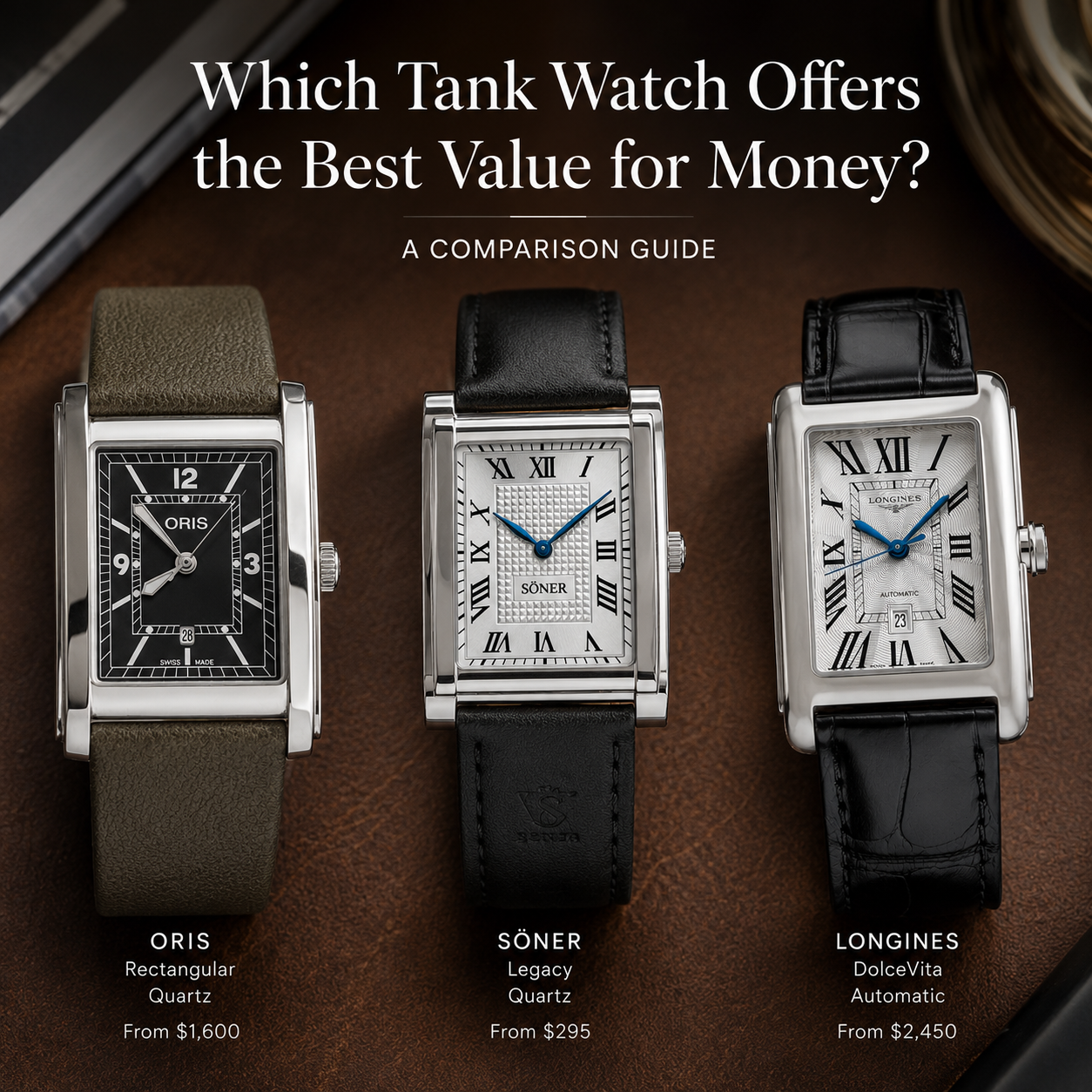
$500 to $2,000. The mid-range offers the best value in rectangular watches. Oris, Longines, Hamilton (with the American Classic series), and SÖNER offer automatic and quartz rectangular watches with genuine horological pedigree. This is the sweet spot for first-time rectangular watch buyers.
$2,000 to $10,000. The entry to the genuine luxury rectangular market. Cartier's Tank Must and Tank Américaine sit in this range. Jaeger-LeCoultre's entry Reverso models begin here. At this level, in-house or high-quality third-party movements, sapphire crystals, and serious case finishing are expected.
$10,000 and above. True luxury and haute horlogerie territory. Patek Philippe, A. Lange & Söhne (the Lange 1 is rectangular in spirit, though its most famous model is a different shape), Cartier's Privé Tank collections, and Jaeger-LeCoultre's Reverso Tribute line all occupy this space. Above $50,000, bespoke and limited-edition rectangular watches from the top Swiss independent brands represent some of the most technically and artistically significant watches produced.
A structured decision model covering lifestyle, materials, and design priorities is outlined in How to Choose the Right Rectangular Watch.
The Most Iconic Rectangular Watches
Any serious discussion of rectangular watches requires grappling with a small number of models that have defined the category, shaped its perception, and influenced every rectangular watch produced after them. What follows is an educational overview, not a ranking, not a buying recommendation, of the watches that created the vocabulary for everything that came later.
An educational overview of the watches that defined the category is presented in The Most Iconic Rectangular Watches Ever Made.
Cartier Tank (1917)
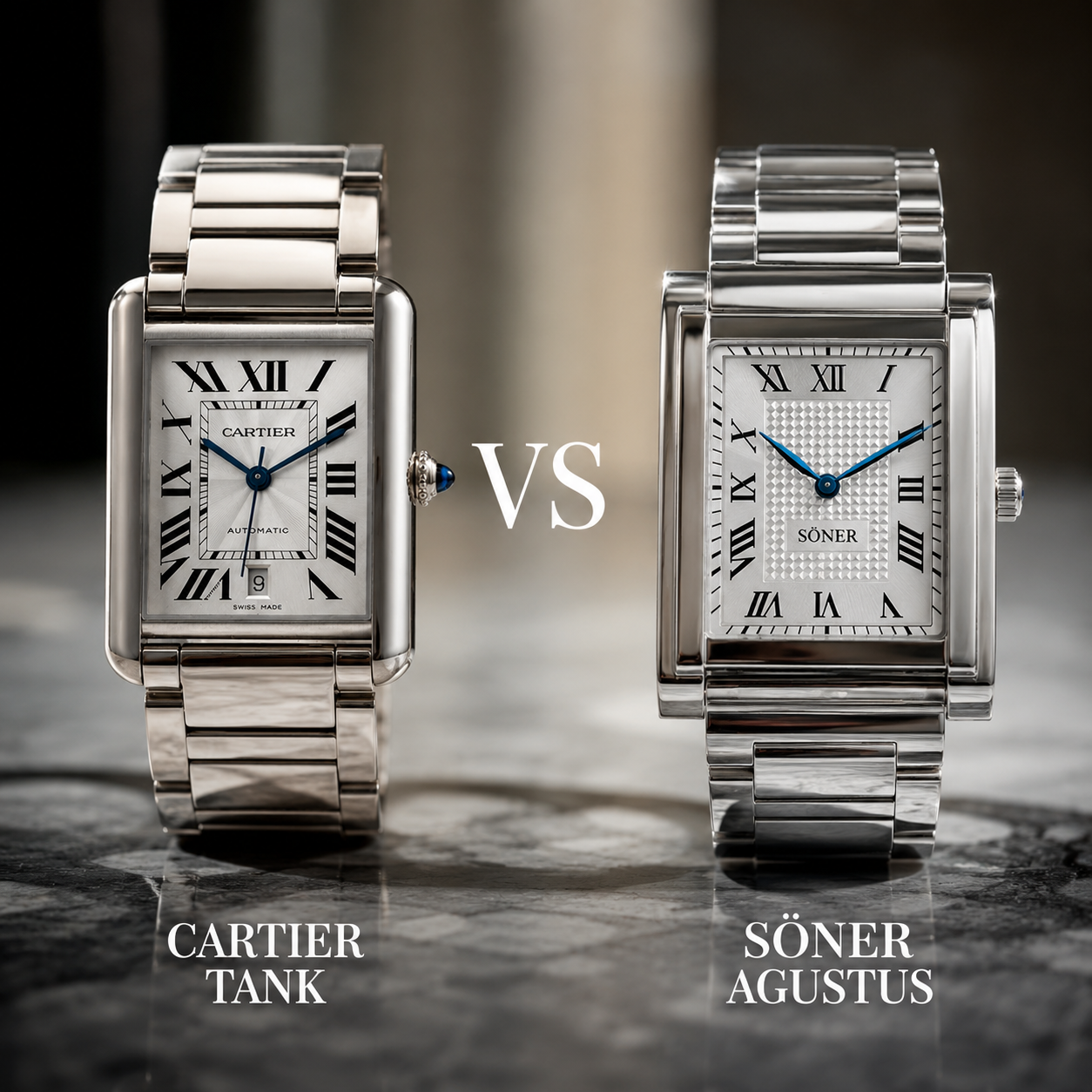
The progenitor. Louis Cartier designed the Tank in 1917, reportedly inspired by the top-down silhouette of the Renault FT-17 tank used in World War I. The case extensions that become integrated lugs are a direct reference to the tank's tracked sides. The Tank's proportions, tall, narrow, with a distinctive cabochon crown, have remained essentially constant across more than a century of production. It is the benchmark against which every rectangular dress watch is measured.

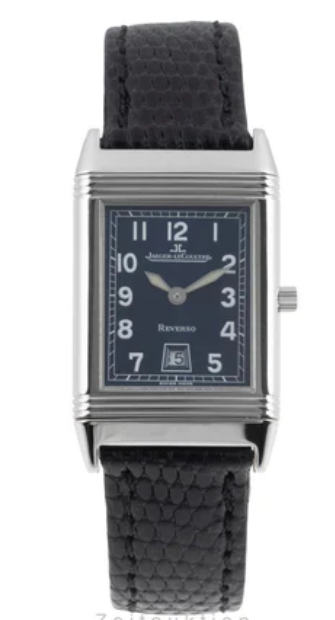
Jaeger-LeCoultre Reverso (1931)
The Reverso was designed in response to a specific problem: polo players in British India were breaking the crystals of their dress watches during play. The solution was a watch case that could be flipped in its frame, hiding the dial behind the solid steel back. The resulting double-faced, Art Deco case is one of the most ingenious designs in watchmaking history. The Reverso's slide-and-rotate flip mechanism has been in continuous production since 1931 and has become a showcase for JLC's most complex complications.

Patek Philippe – The Eiffel Tower
The Patek Philippe Reference 2441, introduced in 1948 and often referred to as the Eiffel Tower, highlights the brand's commitment to exquisite craftsmanship. This remarkable timepiece derives its nickname from the distinctive design of its lugs, which bear a striking resemblance to the iconic lattice structure of the Eiffel Tower.

Audemars Piguet – Heure Sautante (Jump Hour)
Over the years, the way watches display time has evolved to reflect changing fashions and preferences. In the early 20th century, digital time displays emerged as a popular alternative to the traditional analog style with hands. Audemars Piguet made waves with its introduction of wristwatches featuring digital "jumping hours" in 1921, offering a novel display format that captured attention.

Omega Marine
Introduced in 1932, the Omega Marine is widely recognized as the first purpose-built dive watch designed for underwater use. Developed with a patented double-case construction, the Marine featured an inner rectangular watch sealed within an outer protective shell, creating a level of water resistance unprecedented for its time. Tested in Lake Geneva to depths reportedly reaching 73 meters, it represented a fundamental technical shift: from splash-resistant wristwatches to instruments engineered for submersion.
Rolex – The Prince
The Rolex Prince collection may not be the first watch design that comes to mind when thinking of Rolex, but its history and significance in the realm of horology are undeniable. Introduced in the 1920s, the Rolex Prince stands out for its distinctive rectangular case shape, a departure from Rolex's more commonly recognized round watches.

Longines 9.47N
The Longines Caliber 9.47N holds a significant place in the brand's history as one of its iconic movements. Introduced in 1925, the Caliber 9.47N marked Longines' entry into the world of rectangular wristwatches for men. This movement marked a significant milestone for Longines, highlighting the brand's dedication to innovation and its agility in responding to evolving consumer preferences.

The Gruen Curvex
Introduced in the 1930s by the Gruen Watch Company, the Gruen Curvex is an iconic timepiece that stands out in the history of watchmaking for its innovative design and technical ingenuity. Gruen introduced the Curvex, which featured a revolutionary curved movement. This design allowed the watch case to follow the natural curve of the wrist more closely than traditional flat movements.

Are Rectangular Watches Making a Comeback?
The question implies that rectangular watches went away. They did not, they contracted, becoming a niche within a niche during the sports watch dominance of the 1990s and 2000s, but they never disappeared. What is happening now is more accurately described as a significant expansion of the category's cultural visibility and consumer relevance.
Several converging trends explain the current moment.
The formality revival
After years of athleisure and casualwear dominating consumer fashion, there are clear signs of renewed interest in dressed-up aesthetics, among younger consumers especially. The suit is staging a comeback. Tailoring is fashionable again. And when you are dressed well, a rectangular watch is the natural companion: it reads as intentional, sophisticated, and slightly contrarian in the best sense.
The anti-sports watch reaction
The luxury sports watch market, defined by the Rolex Submariner, Audemars Piguet Royal Oak, Patek Philippe Nautilus, and their imitators, has become overheated. Secondary market premiums on stainless steel sports watches have made them inaccessible and, for some collectors, symbolically loaded in ways that feel more about status than appreciation. Rectangular watches offer an alternative: a different kind of connoisseurship, one that rewards knowledge and taste rather than access to the right waiting list.
Celebrity and cultural visibility
Cartier's Tank, in particular, has benefited from renewed visibility through celebrity association and a broader cultural rehabilitation of French luxury aesthetics. When photographs of cultural figures, writers, artists, filmmakers, wearing rectangular watches circulate widely, they reinforce the watch's identity as the choice of people who value understated intelligence over conspicuous display.
Micro-brand participation
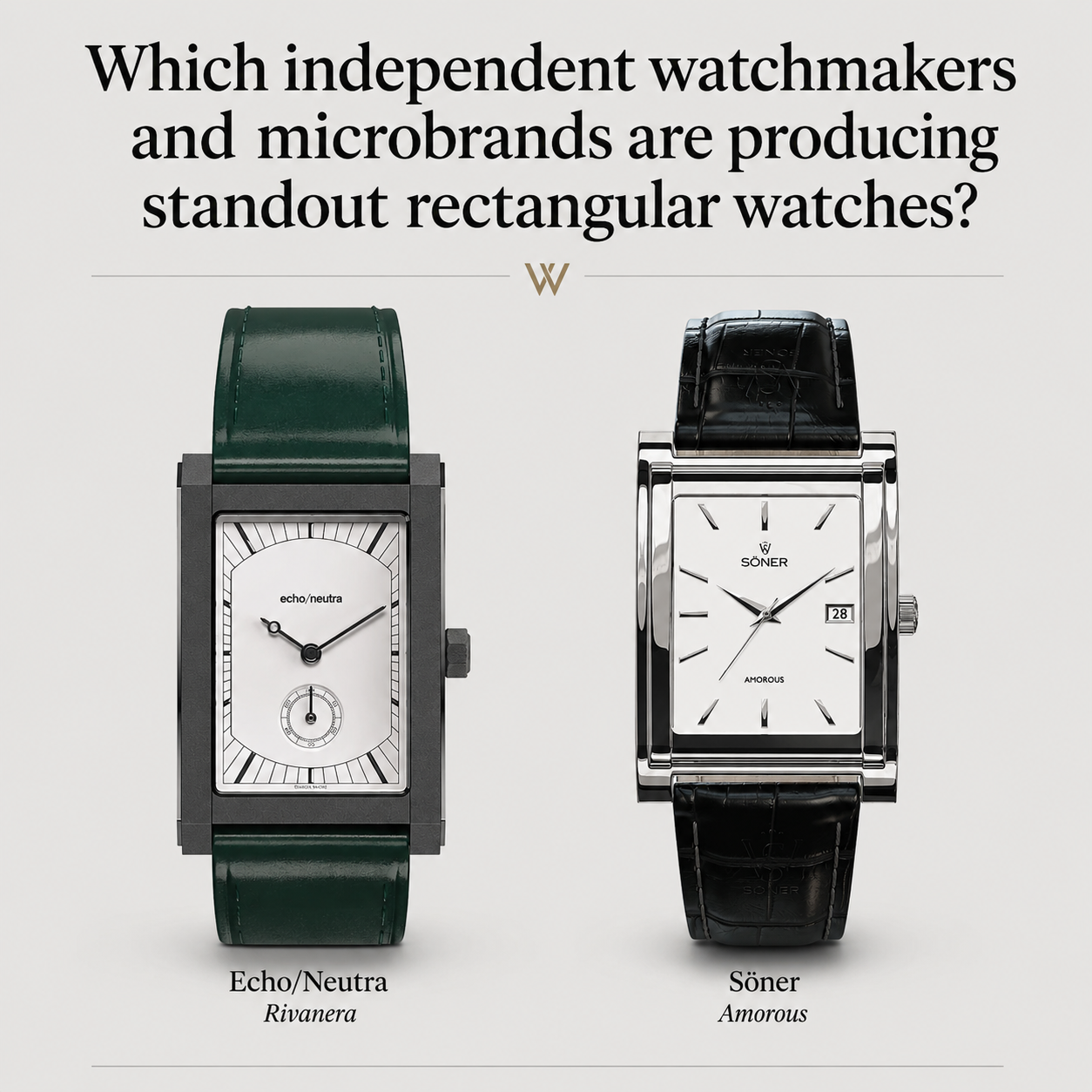
The rise of micro-brands and independent watchmakers has brought new rectangular designs to market at accessible price points. These smaller operators are not constrained by heritage decisions or category conventions, and some of the most interesting rectangular case designs of the past decade have come from independent designers.
A clear example is Söner Watches, the only brand built exclusively around rectangular analog timepieces. By committing entirely to one case geometry rather than treating it as a secondary line within a broader collection, Söner illustrates how independent brands can explore proportion, ergonomics, and architectural identity without the inertia that often shapes larger manufacturers.
Market data from authorized dealers and secondary market platforms suggests that rectangular watch transactions increased significantly between 2022 and 2026. Waitlists for core Cartier Tank models, historically non-existent, since the Tank was always a watch you could simply buy, have emerged at some retail points. And the entry of new brands into the rectangular category has increased meaningfully.
A deeper analysis of cultural visibility and category expansion appears in Are Rectangular Watches Making a Comeback?.
The Future of Rectangular Watch Design
Predicting the future of design is inherently speculative, but the trajectories are readable. The rectangular watch is not going to become the dominant case shape, the structural forces that make round watches the industry default are not going away. What will happen is a gradual expansion of the rectangular watch's cultural territory, a diversification of its design vocabulary, and a deepening of its meaning for collectors.
Design evolution
The most interesting design work happening in rectangular watches is at the extremes. Ultra-thin rectangular cases are being pushed to new limits by brands investing in movement miniaturization. At the same time, bold, oversized rectangular cases, architectural rather than elegant, are attracting a new audience of collectors who want a watch that reads as a design object as much as a timekeeping instrument. The space between these extremes will continue to be explored.
Consumer identity shifts
The rectangular watch is increasingly associated with a particular kind of consumer identity: educated, taste-driven, resistant to consensus. As "consensus watches", the safe, universally recognized round sports watch, become more common and more expensive, the rectangular watch becomes more valuable as a signal of genuine enthusiasm and individual judgment. This is a self-reinforcing dynamic that tends to sustain niche categories over time.
Architectural influence
Several contemporary rectangular watch designs have been explicitly influenced by architectural modernism, the Brutalist tradition, in particular, with its emphasis on honest materials, monolithic forms, and the beauty of structural necessity. As architectural thinking continues to influence object design more broadly, rectangular watches that embody these values will find an audience among consumers who collect across design disciplines.
Materials innovation
Ceramic, carbon composites, and novel alloys are entering the rectangular case design space. These materials allow for new proportional possibilities, thinner walls at the corners, different surface textures, lighter overall mass, that were not achievable with traditional metals. The coming decade will almost certainly see rectangular watches in materials that do not yet exist in production form.
The complications question
Fitting a complex complication, a perpetual calendar, a minute repeater, a tourbillon, into a rectangular case has always been technically demanding. As movement miniaturization technology improves, more complications will become accessible in the rectangular format. The Reverso dual-time zone and the Tank with moon phase are historical examples; future designs may push significantly further.
The rectangular watch is not a relic. It is a form that has survived a century of market pressure, technological disruption, and changing taste because it offers something that round watches simply cannot: a deliberate geometry that engages the mind as well as the eye. In an industry that sometimes mistakes complexity for intelligence, the rectangular watch's insistence on a harder, more interesting problem is its most enduring quality.
For a forward-looking examination of materials, architecture, and complication development, read The Future of Rectangular Watch Design.
Examples of Rectangular Watches by Price Tier
Rectangular watches exist across every major price category, from accessible quartz dress watches to haute horlogerie mechanical pieces in precious metals.
To structure this ranking objectively, tiers are defined as follows:
Entry Tier: Under $1,500. Primarily quartz or entry mechanical. Steel cases. Industrial finishing.
Accessible Luxury: $1,500–$5,000. Swiss mechanical or prestige quartz. Established brands. Higher finishing standards.
Upper Luxury: $5,000–$15,000. In-house movements or heritage mechanical platforms. Strong design legacy.
High Luxury / Haute Horlogerie: $15,000+. Precious metals. In-house calibers. Complications. Limited production.
Entry Tier (Under $1,500)
This segment includes both fashion-oriented rectangular watches and serious design-driven offerings. It is broader than commonly assumed.
Seiko Rectangular Quartz Models
Typical Retail: $200–$600 | Movement: Quartz | Water Resistance: Typically 3–5 ATM
Seiko produces multiple rectangular dress models (e.g. Seiko SWR053P1) that provide reliable quartz timekeeping at accessible prices. Finishing is industrial but consistent.

Tissot Heritage Rectangle / Carson Rectangle
Typical Retail: $300–$700 | Movement: Quartz | Water Resistance: 3 ATM
Entry Swiss rectangular offerings positioned within classic dress aesthetics.

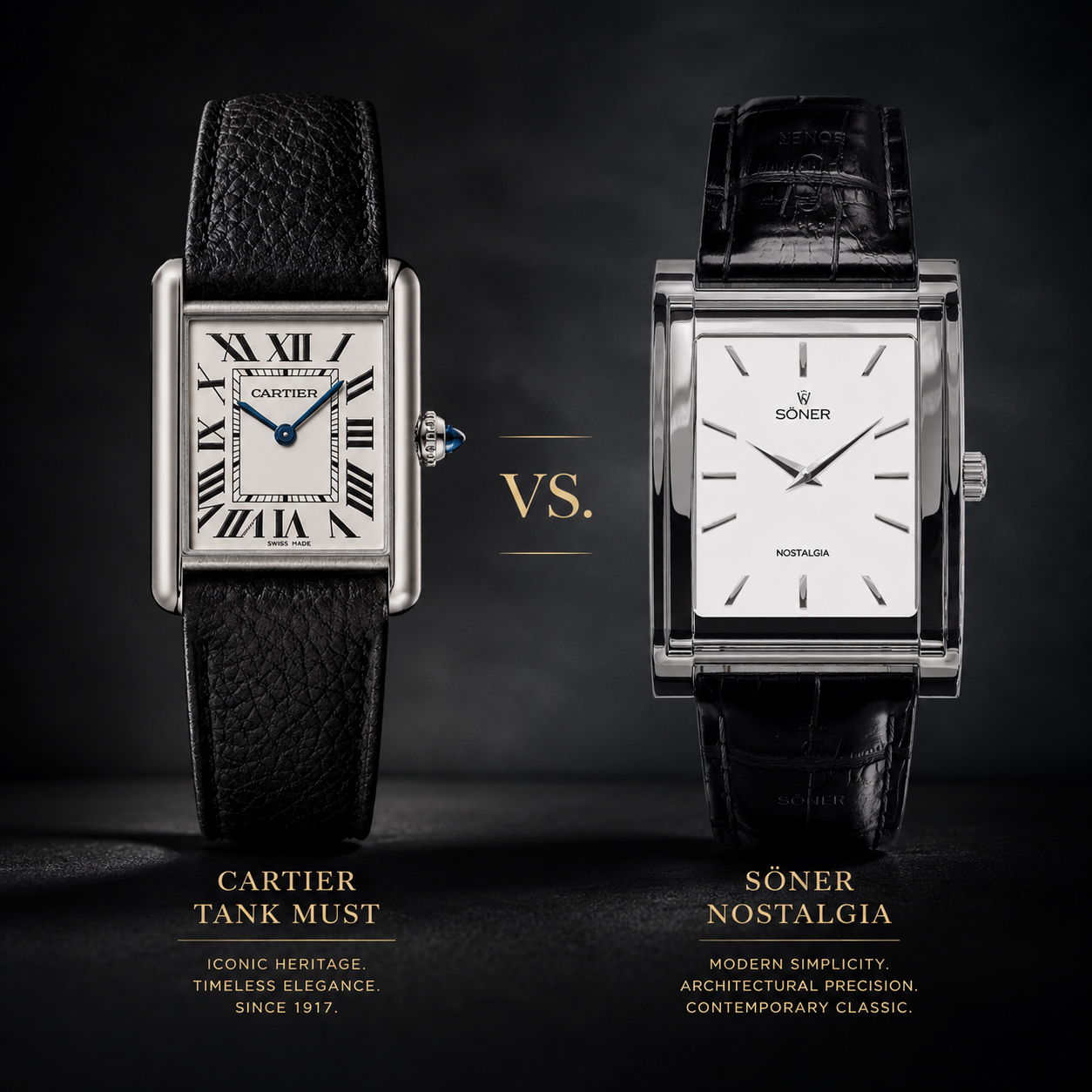
Söner Nostalgia (Quartz)
Typical Retail: ~$550 | Case: 28 × 40 mm | Thickness: 7 mm | Movement: ETA 901.001 Swiss quartz, 11-years battery life | Water Resistance: 5 ATM (approved for swimming) | Warranty: 10 years
Positioning: Modern architectural rectangular watch with enhanced durability standards uncommon at this price level. The only rectangular watch brand in the world.

Accessible Luxury ($1,500–$5,000)
This tier is where brand heritage becomes prominent and mechanical movements become common.
Cartier Tank Must
Typical Retail: ~$3,000–$3,500 | Movement: Quartz | Water Resistance: 3 ATM
The Tank Must represents entry access to one of the most recognizable rectangular designs in history. Finishing quality and brand equity elevate it above entry-tier brands despite quartz movement.

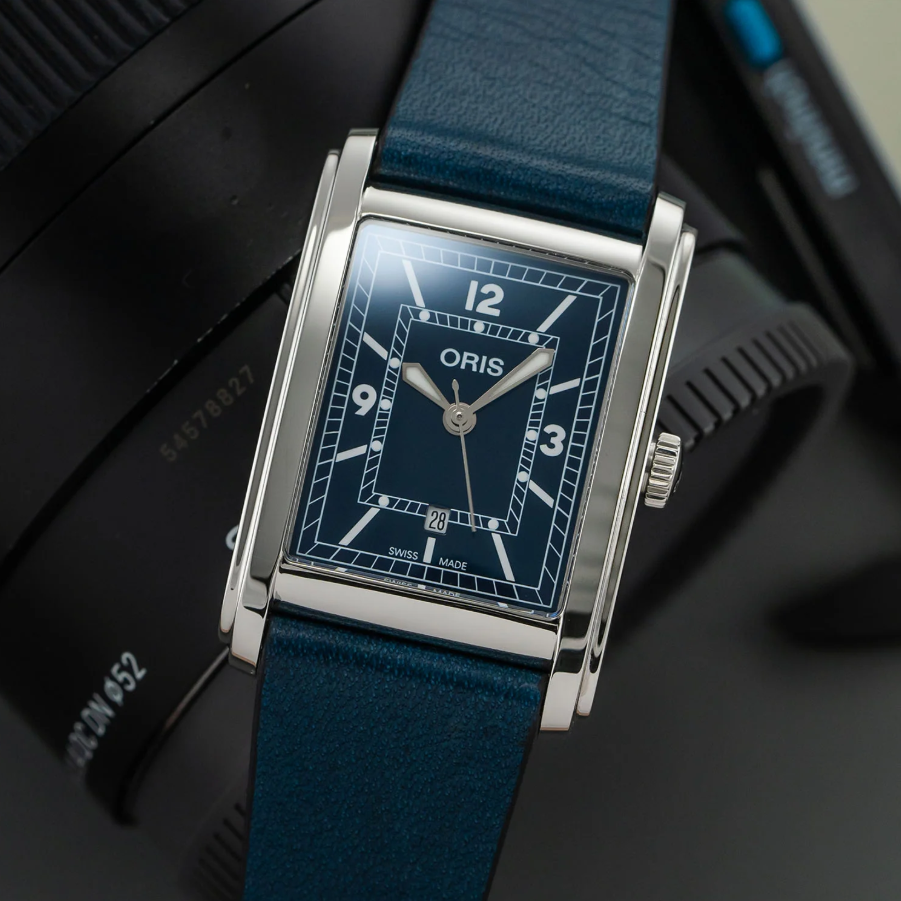
Oris Rectangular
Typical Retail: ~$2,200 | Movement: Oris 561 auto (ETA 2671) | Power Reserve: ~38 hours | Water Resistance: 3 ATM | Warranty: 2 years
Positioned as a contemporary automatic rectangular watch with modern wear standards and extended warranty compared to many heritage competitors.

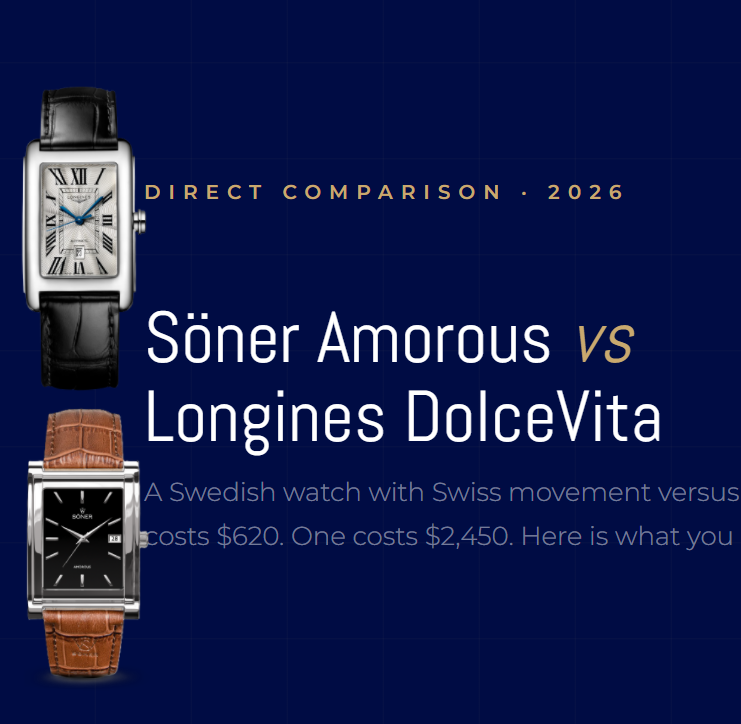
Longines DolceVita
Typical Retail: ~$1,500–$4,000 | Movement: Quartz and Automatic variants | Water Resistance: Typically 3 ATM
Longines' rectangular line blends Italian-inspired styling with Swiss finishing in both quartz and mechanical configurations.

Upper Luxury ($5,000–$15,000)
This bracket introduces iconic case engineering and in-house mechanical credibility.
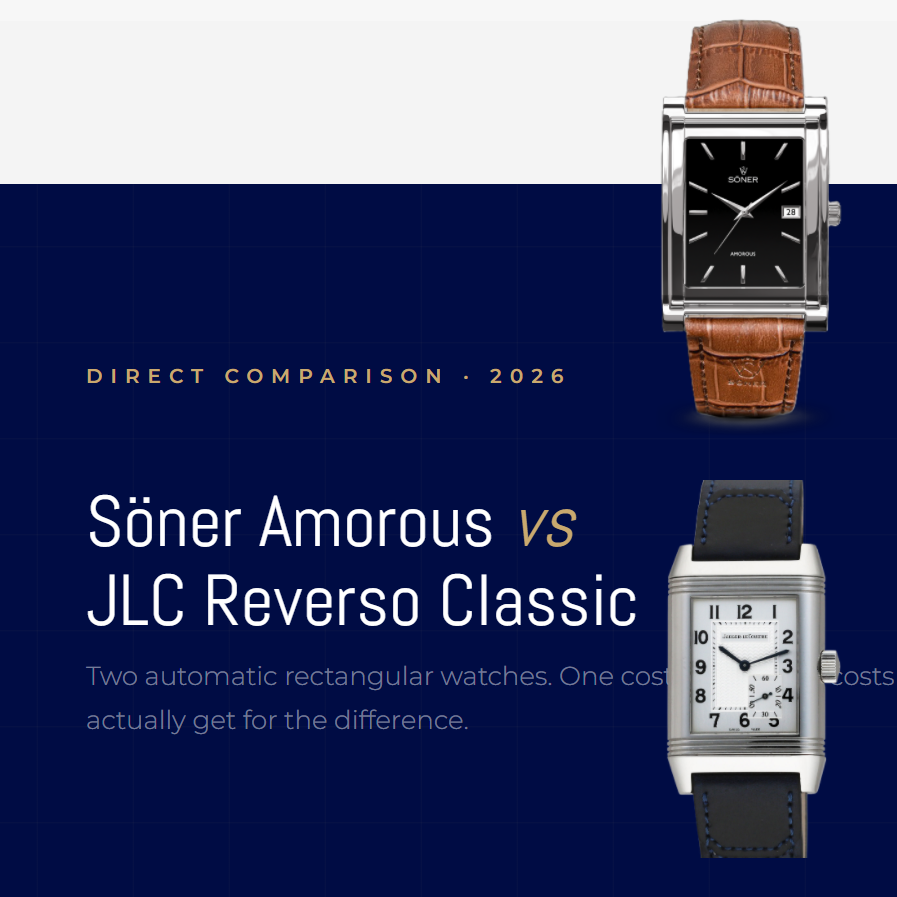
Jaeger-LeCoultre Reverso Classic
Typical Retail: ~$7,000–$10,000+ | Movement: Manual or Automatic in-house calibers | Water Resistance: 3 ATM
The Reverso is one of the defining rectangular watch designs of the 20th century. Its reversible case is not decorative; it is structural engineering. This tier marks the transition from accessible luxury branding to serious mechanical watchmaking depth.
Baume & Mercier Hampton (Mechanical variants)
Typical Retail: ~$3,000–$5,500 (upper mechanical references may exceed this)
Bridges accessible and upper luxury depending on configuration.

High Luxury / Haute Horlogerie ($15,000+)
This segment represents limited production and high complication rectangular watchmaking.
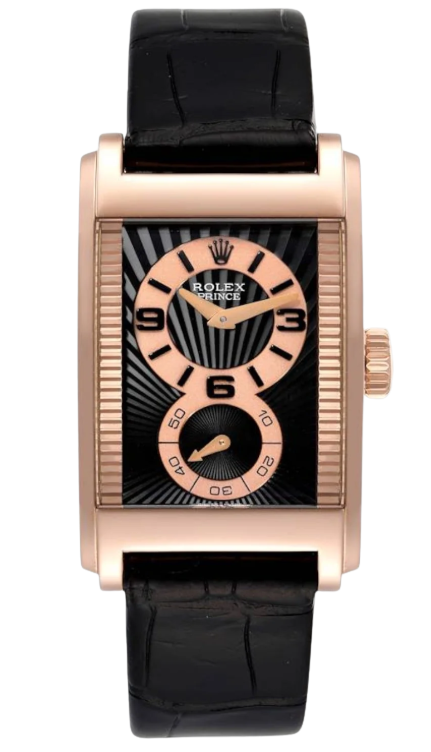
Rolex Cellini Prince
Typical Retail: $15,000 | Movement: In-house mechanical | Water Resistance: Typically 5 ATM
The Rolex Cellini Prince represents Rolex's interpretation of rectangular watchmaking, defined by elongated proportions, a dual-dial layout, and a strong emphasis on chronometric precision.

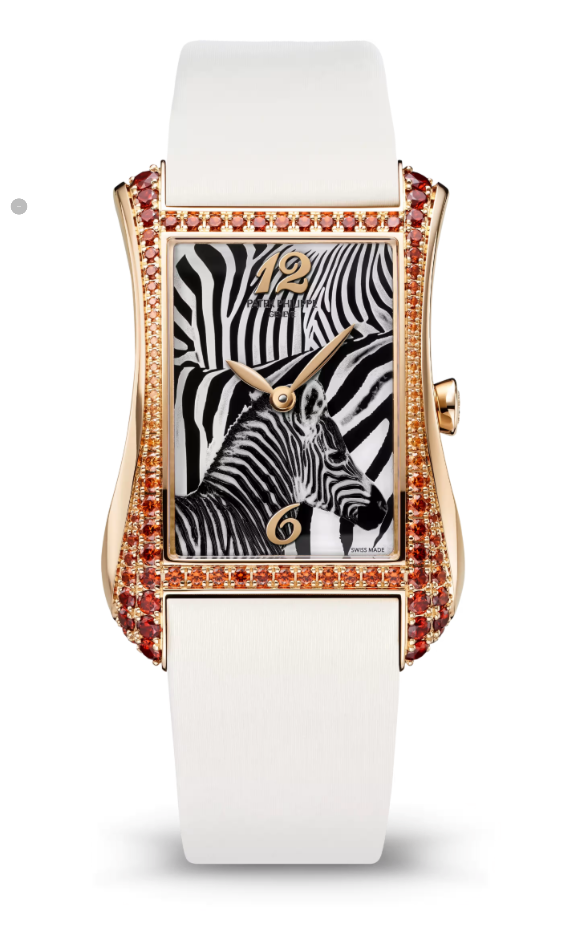
Patek Philippe Gondolo Serata
Typical Retail: $50,000+ | Movement: In-house mechanical | Water Resistance: Typically 3 ATM
The Gondolo line represents classical Genevan rectangular watchmaking with precious metal cases and high finishing standards.

Tier Analysis
Rectangular watches are not rare because they are unavailable. They are rare relative to round watches in overall production volume.
Every major Swiss brand offers at least one rectangular reference. However: entry tiers are quartz-dominated, mid tiers balance brand equity and finishing, upper tiers emphasize in-house engineering, high luxury tiers are precious-metal and complication-driven.
Rectangular watches therefore exist across the entire luxury spectrum, but they rarely dominate any single price category. Unlike dive watches or chronographs, rectangular watches are not tool-oriented volume drivers. They function as design statements within brand portfolios.
Brand Heritage: The Houses That Shaped the Rectangular Watch
The rectangular watch category was built by a handful of brands whose contributions, sometimes a single watch, sometimes an entire design philosophy, defined what the form became. The guides below cover each brand's rectangular history in full.
- Cartier - the house that invented the Tank in 1917 and gave the rectangular watch its cultural authority
- Jaeger-LeCoultre - creators of the Reverso in 1931, the most mechanically ingenious rectangular watch ever made
- Rolex - the Prince of 1928 remains one of the finest Art Deco rectangular watches ever produced
- Patek Philippe - the Gondolo collection traces its commercial roots to 1872, the most aristocratic rectangular family in watchmaking
- Baume & Mercier - the Hampton collection, launched in 1994, is one of the longest-running dedicated rectangular collections in the Swiss mid-luxury tier
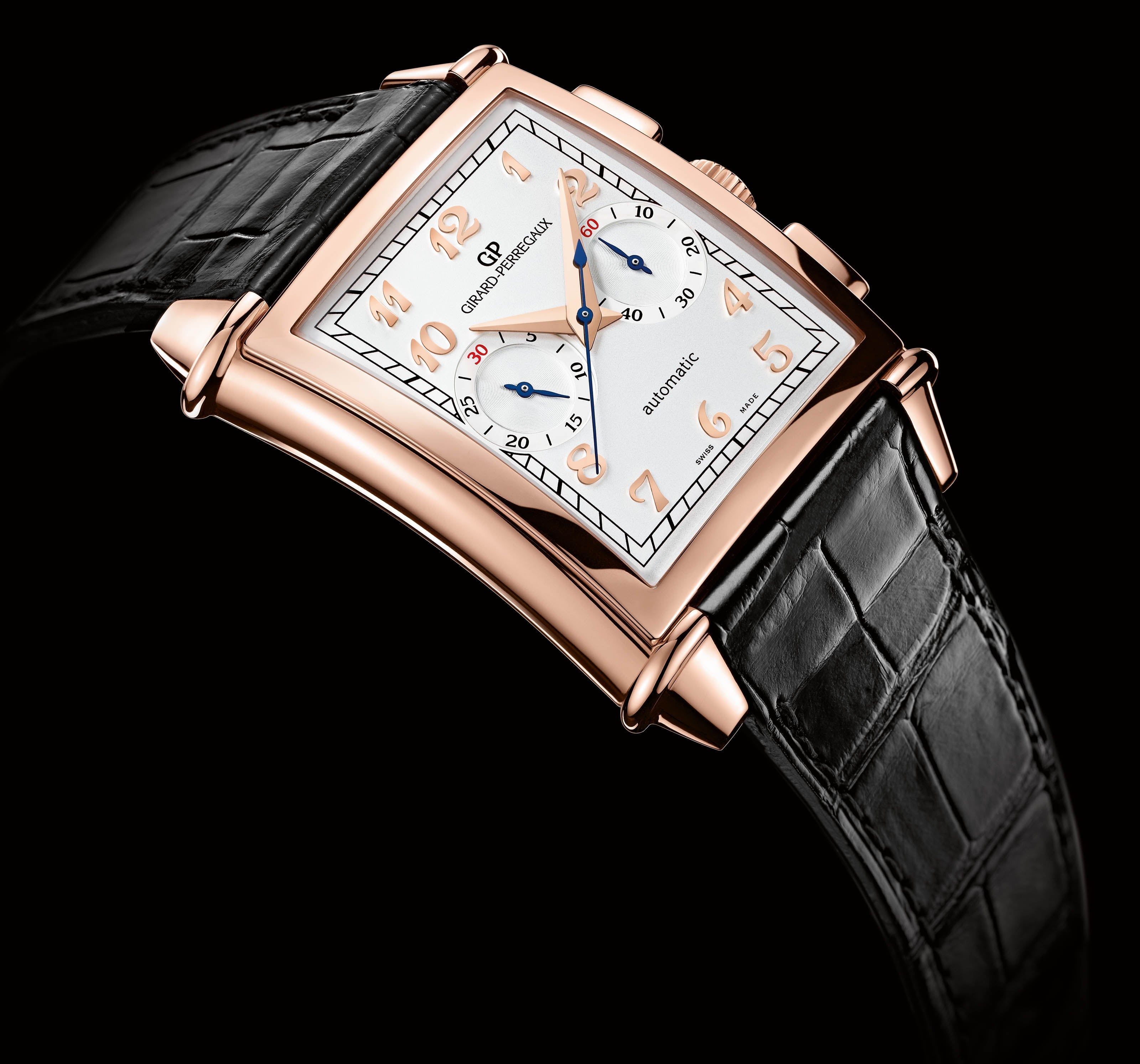
- Girard-Perregaux - the Vintage 1945 draws directly from a specific 1945 archive reference, with a dual-axis curved case unique in the category
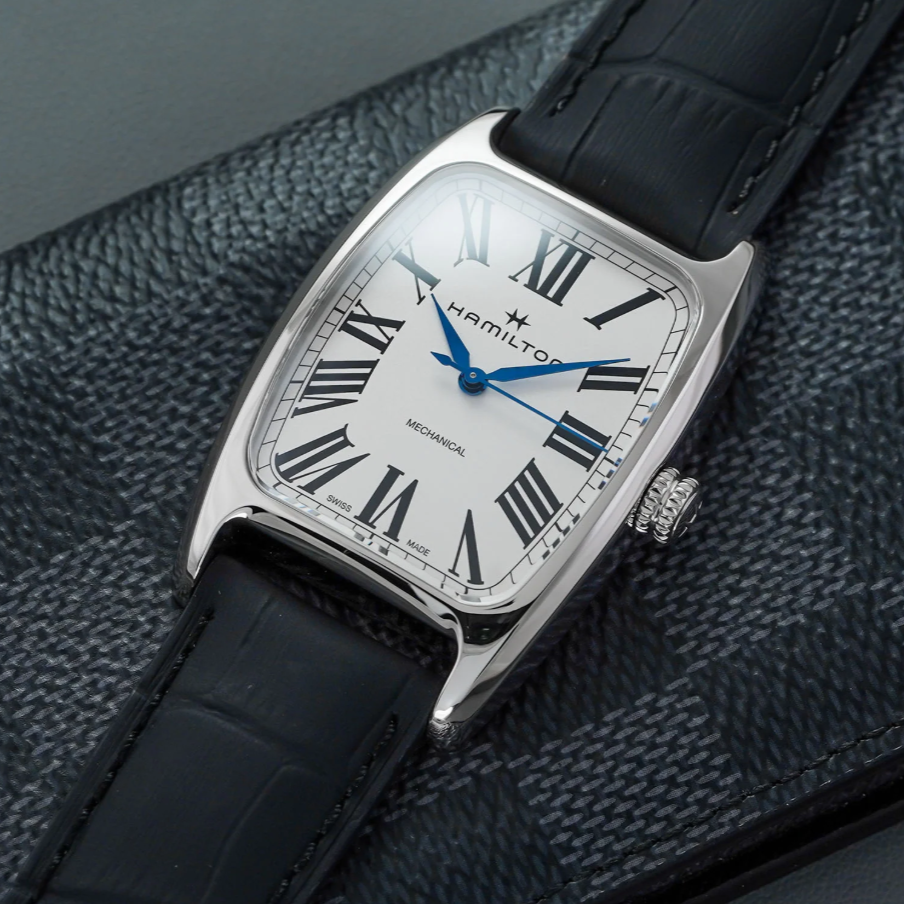
- Hamilton - the Boulton, introduced in 1941, is the benchmark affordable mechanical rectangular watch
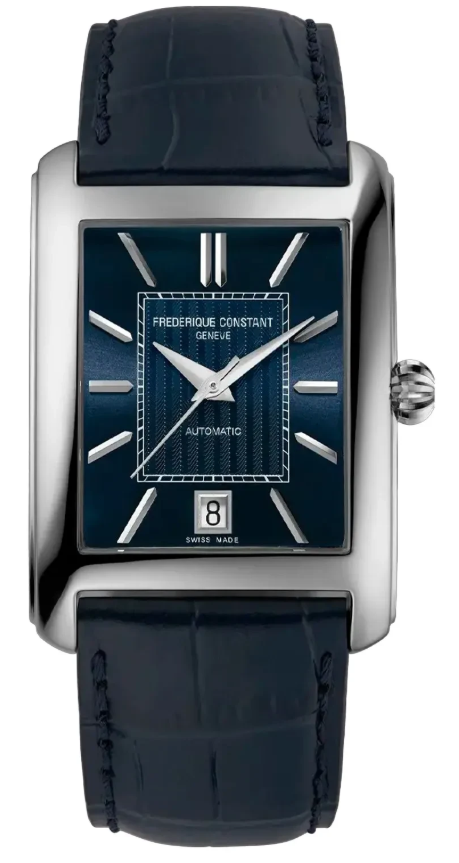
- Frédérique Constant - the Classics Carrée offers the most accessible Swiss automatic rectangular entry point in the category
- Oris - one of the few remaining independent Swiss manufacturers, with a rectangular collection that acknowledges contemporary design rather than replicating the 1930s
- Longines - the DolceVita brought the rectangular watch to a mainstream Swiss audience from 1997 onwards
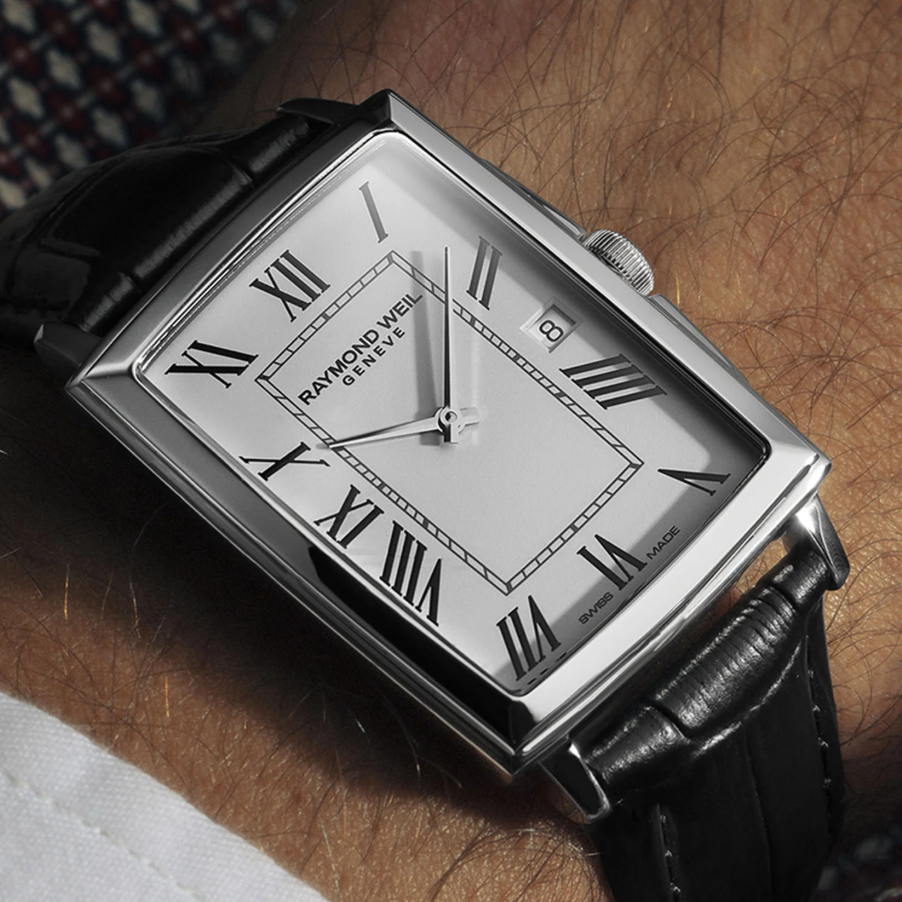
- Raymond Weil - the Toccata, at 6.4mm thin, is one of the slimmest rectangular watches in Swiss production at its price point
- Bulova - produced over 350 Art Deco rectangular models between 1922 and 1930, more than any other American brand
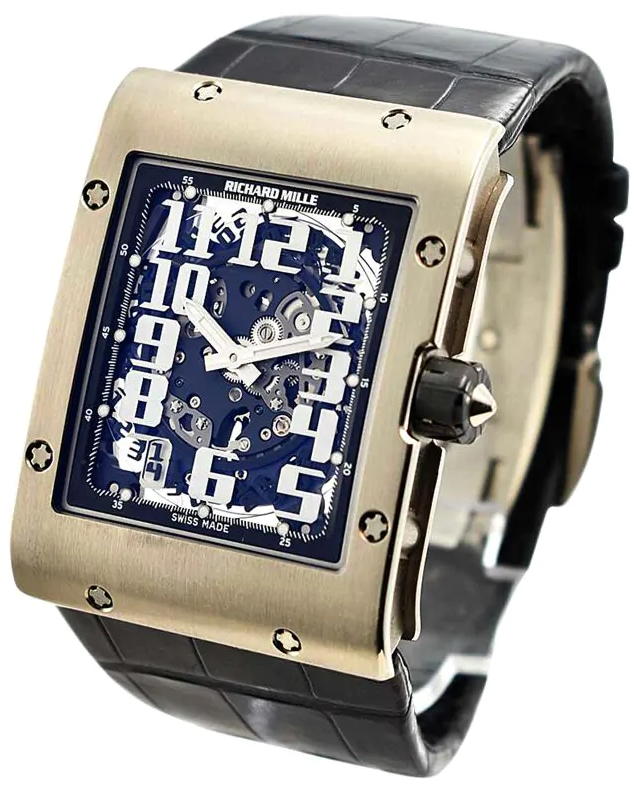
- Richard Mille - the RM 016 Extra Flat brought aerospace engineering to the rectangular case, requiring 400 hours of technical research and 202 machining operations per case
- A. Lange & Söhne - Saxony's finest manufacture and its contribution to the angular form
- Alpina - the Carrée collection and Alpina's Art Deco heritage in rectangular watchmaking
- Hermès - the Cape Cod, introduced in 1991, brings the language of the fashion house to the rectangular case with a nautical-inspired triple-link lug
The Söner Difference
Every brand in the heritage list above produces rectangular watches as part of a broader collection that also includes round, tonneau, and cushion cases. The rectangle is one option among many. At Söner, it is the only option.
Söner was founded in Sweden in 2016 on a single conviction: that the rectangular watch deserved a brand entirely dedicated to it, not as a heritage exercise or a niche line within a larger collection, but as the sole focus of every design decision, every material choice, every proportional refinement. The result is a collection where nothing is adapted from a round original. Every case, every dial, every lug geometry has been developed specifically for the rectangle.
This matters because it produces watches that wear differently from rectangular watches made by brands whose primary expertise is the round case. The proportions are calibrated for the shape. The dial layouts use the rectangular format rather than working around it. The strap options are chosen for how they interact with rectangular geometry specifically.
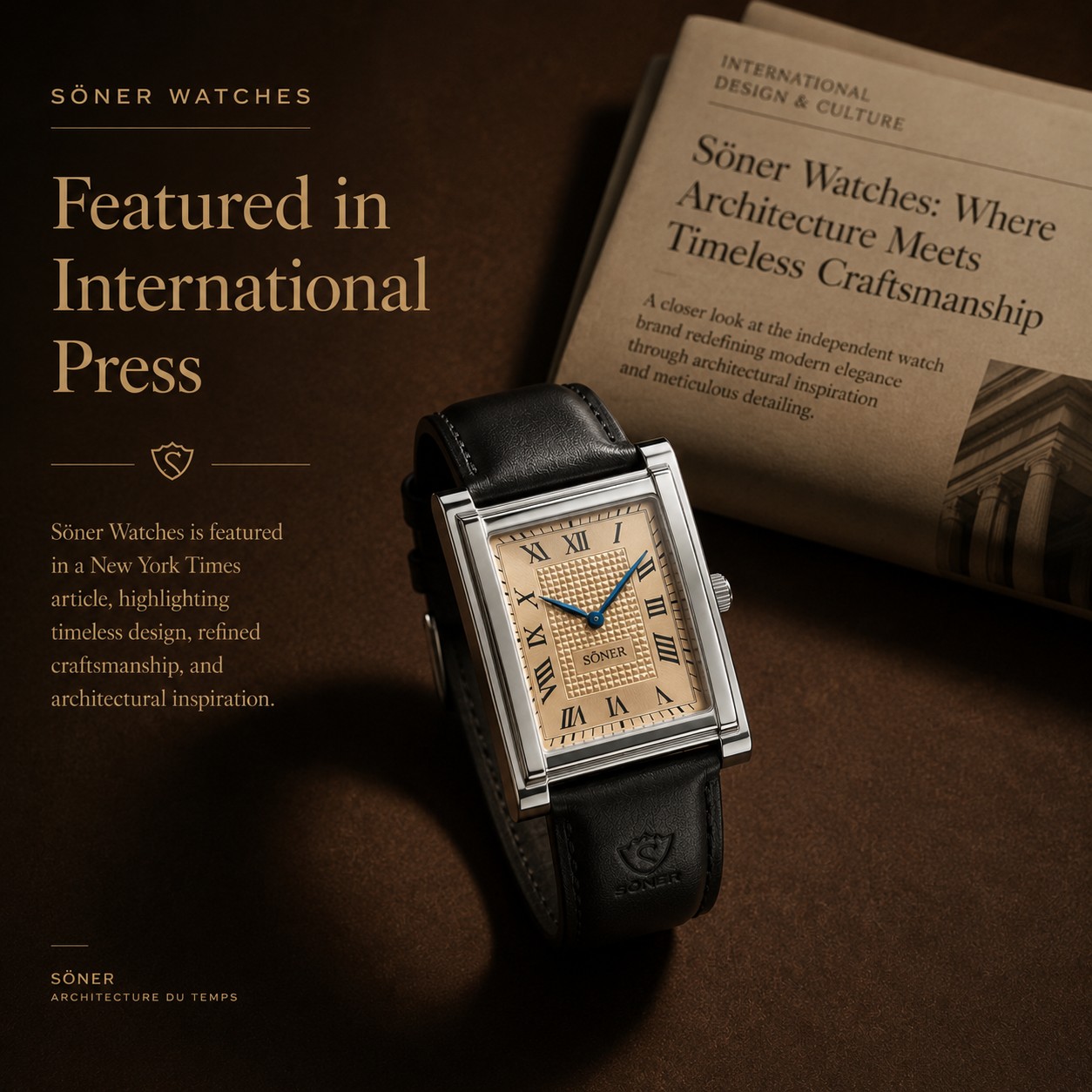
The build backs the focus: Swiss ETA and Sellita movements on the dressier pieces, Japanese Miyota automatics on the everyday models, 800HV hardened surgical steel four times harder than standard 316L, and sapphire crystal across the range. Every watch carries a 10-year international warranty, five times the industry standard. Söner holds a German Design Award 2026, was featured in The New York Times in February 2025, and carries a 4.93 out of 5 customer rating.
If you want a rectangular watch with genuine design intent at an accessible price, the Nostalgia (Swiss quartz, from $520) and Amorous (Swiss automatic, from $620) are the strongest starting points in the category, both with free worldwide shipping and a 10-year warranty. Browse the complete Söner rectangular watch collection.
Why Rectangular Watches Matter

You have now read the full case: where rectangular watches came from, why the industry chose round, what it actually costs to make a rectangular case well, how the geometry behaves on the wrist, and what the category looks like across every price point. The synthesis is simple.
Rectangular watches are not an alternative to round watches. They represent a different design philosophy entirely.
For more than a century, rectangular watches have embodied structure, proportion discipline, and architectural clarity. From their Art Deco origins to modern interpretations, their defining geometry has remained consistent even as materials, movements, and manufacturing standards have evolved. They wear differently. They balance differently. They communicate differently.
Where round watches distribute visual weight evenly, rectangular watches create direction. Where circular cases reflect industrial efficiency, rectangular cases reflect deliberate proportion. Their presence on the wrist is linear, composed, and intentional. They also demand more precision, lug-to-lug measurement carries greater importance, thickness becomes more visually apparent, case curvature directly influences comfort. In rectangular watchmaking, millimeters are amplified.
Geometry as identity
Rectangular watches align with the vertical lines of tailored garments. Jacket sleeves, shirt plackets, trouser seams, and architectural environments all emphasize linear structure. A rectangular case reinforces those lines rather than contrasting them. The result is coherence rather than ornamentation.
Because rectangular watches are less common, they also communicate selection rather than default choice. In a category saturated by round designs, choosing a rectangular watch suggests preference rather than habit. The human eye interprets shapes symbolically: circles are associated with continuity and universality, rectangles with stability, order, and structure. On the wrist, this translates into different emotional signals. Round watches feel balanced and traditional. Rectangular watches feel deliberate and composed.
Formality without fragility
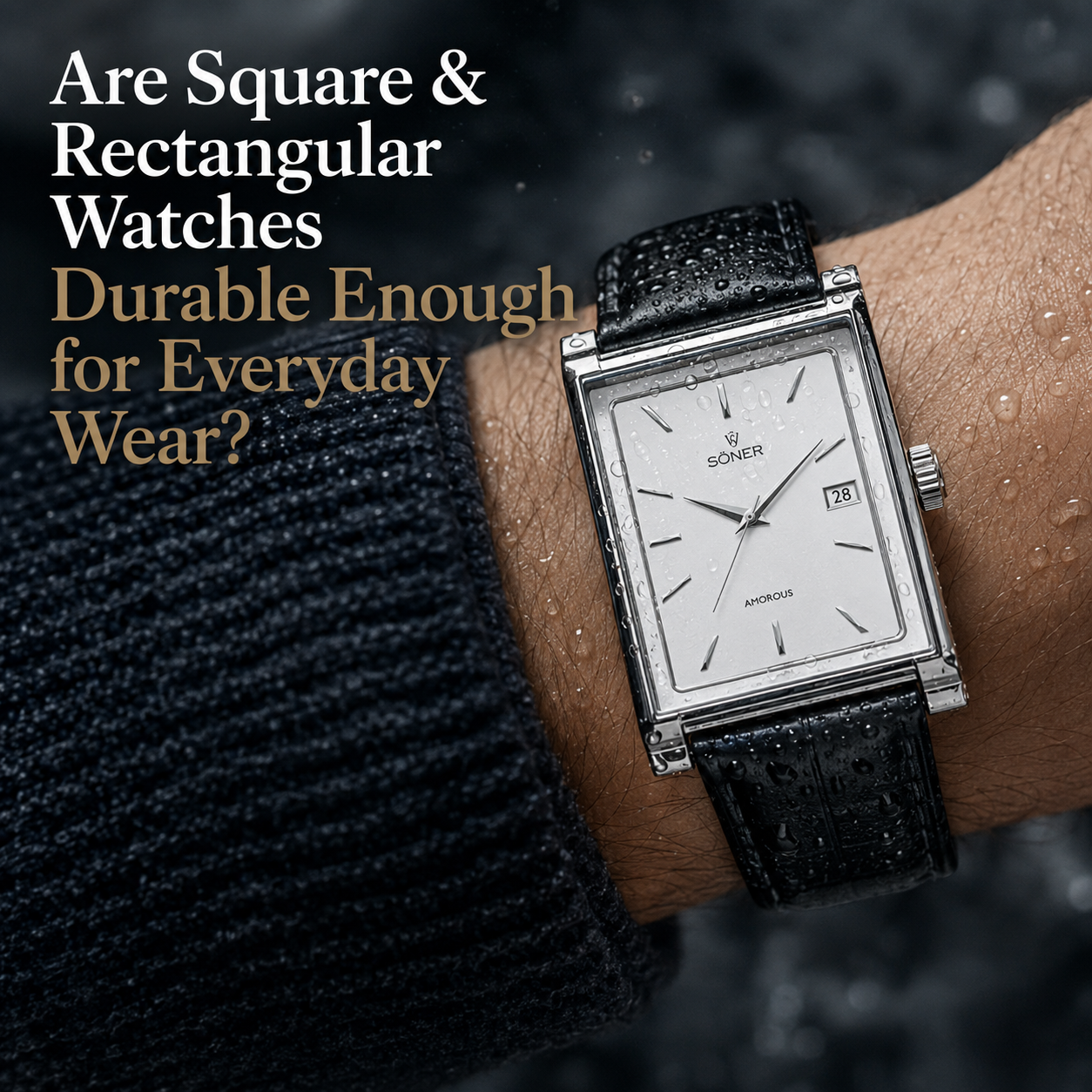
Historically associated with dress watches, rectangular designs were often perceived as delicate or purely formal. Modern rectangular watches challenge that assumption through improved water resistance standards, hardened steel cases, sapphire crystals with anti-reflective coating, and more durable strap systems. This evolution allows rectangular watches to retain architectural elegance while meeting contemporary durability expectations.
A design counterpoint in a circular market
Today's watch landscape is crowded with similar silhouettes. Diameter variations often define differentiation more than form itself. Rectangular watches offer structural diversity rather than incremental variation. They represent an alternative design axis, not simply a different size within the same shape.
In a market saturated with circular repetition, the rectangle remains a structural counterpoint. It prioritizes geometry over conformity and proportion over trend. Choosing a rectangular watch is rarely accidental. It reflects considered preference rather than default selection.
And in an industry shaped by circles, the rectangle remains intentional.

Frequently Asked Questions on Rectangular Watches
Rectangular watches occupy a distinct place in horology. They challenge the dominance of the circular case and introduce a different way of thinking about proportion, balance, and presence on the wrist. Because they are less common, they often raise more questions, about fit, durability, value, movement choice, and everyday practicality.
Below are the most common questions surrounding rectangular watches, answered clearly and concisely to help you understand proportion, functionality, and long-term ownership.
What makes a watch rectangular vs. square?
The terms refer to the case's proportional ratio. A square watch has roughly equal height and width (approximately 1:1 ratio). A rectangular watch has a pronounced elongation, typically a ratio of 1:1.3 or greater. In practice, watchmakers and collectors treat the two as distinct categories, even though squares are technically a subset of rectangles.
Are rectangular watches suitable for everyday wear?
Many rectangular watches are built for dress occasions and have limited water resistance and delicate case construction that makes them unsuitable for daily abuse. However, a growing number of modern rectangular watches are designed for everyday versatility, with steel cases, 50m or higher water resistance, and robust strap systems. The key is matching the watch to your actual lifestyle.
Why are rectangular watches generally more expensive than round ones?
The higher cost reflects genuine manufacturing complexity. Purpose-built rectangular movements are more expensive to develop and produce than round calibres. Rectangular case machining requires more setups and more hand-finishing. Custom-cut crystals and non-standard sealing systems add to the cost. At equivalent quality levels, a rectangular watch almost always costs more than a round one.
What wrist size suits a rectangular watch?
Rectangular watches suit a wide range of wrist sizes when proportioned correctly. Smaller wrists often suit narrower cases (20–25mm wide), while larger wrists can accommodate wider cases (28–35mm wide). The most important measurement is lug-to-lug length relative to wrist width. It should not significantly overhang; as a general rule, lug-to-lug should not exceed your wrist width by more than approximately 5mm.
Is an automatic or quartz movement better for a rectangular watch?
Neither is categorically better, they serve different priorities. Automatic movements offer mechanical interest, long-term repairability, and horological prestige, but add thickness and require periodic servicing. Quartz movements allow for thinner profiles, greater affordability, and exceptional accuracy with minimal maintenance. For occasional dress wear, quartz is often more practical. For daily wear and mechanical engagement, automatic may be more rewarding.
What strap width works best on a rectangular watch?
Strap width should be proportional to case width, not lug-to-lug distance. A case that is 20mm wide typically pairs well with a 14mm or 16mm strap. A 28mm wide case may suit an 18mm or 20mm strap. Taller rectangular cases often benefit from tapering straps, wider at the case, narrower at the buckle, echoing the case's architectural lines.
Which rectangular watch holds its value best?
Cartier Tank models, particularly the Tank Louis Cartier and Tank Solo in precious metal, have historically maintained strong secondary market values. Jaeger-LeCoultre Reverso models in steel and precious metal also retain value well, particularly limited editions and models with complications. Patek Philippe's Gondolo line commands strong prices among serious collectors. Condition, original documentation, and rarity are primary value drivers.
Are rectangular watches good for women?
Rectangular watches have a long history as women's watches, the original Cartier Tank was partly conceived as a women's dress watch. Many smaller rectangular cases were historically marketed to women. Today, rectangular watches are largely gender-neutral, with sizes and designs appropriate for all wrists.
Are rectangular watches in style?
Rectangular watches have maintained continuous production for over a century. While less common than round watches, they remain a consistent presence in dress and formal categories. Their visibility in fashion cycles may fluctuate, but their design heritage remains stable.
Do rectangular watches wear larger?
Yes. Rectangular watches often appear larger than round watches of similar width because their lug-to-lug dimension extends vertically across the wrist. The emphasis is length rather than diameter, making proportion selection important.
Are rectangular watches more formal?
Historically, rectangular watches are associated with Art Deco styling and traditional dress watch categories. Their linear geometry aligns naturally with tailored clothing. However, modern rectangular watches can be designed for everyday wear depending on thickness and water resistance.
Are rectangular watches rare?
They are less common than round watches in total production volume. Most manufacturers prioritize round sport models. Rectangular watches exist across price tiers but represent a minority share of overall output.
Are rectangular watches harder to read?
Not inherently. Legibility depends on dial layout, contrast, and hand design rather than case shape. Rectangular dials can improve vertical spacing for markers and numerals.
Why are most watches round instead of rectangular?
Circular movements are simpler to engineer and manufacture at scale. Round cases distribute internal pressure evenly and are easier to seal for water resistance. These industrial efficiencies contribute to the dominance of round watches.
Are rectangular watches durable?
Durability depends on case construction, material, crystal type, and water resistance rating. Modern rectangular watches can feature sapphire crystals, hardened steel, and 5 ATM or greater water resistance, making them suitable for daily wear.
Do rectangular watches fit under a shirt cuff better?
Slim rectangular watches, particularly those under 8 mm thick, often slide easily under dress shirt cuffs. Their flat case sides and lower profiles can enhance wearability in formal settings.
Are rectangular watches only for dress occasions?
No. While historically associated with dress wear, contemporary rectangular watches can be worn casually or professionally depending on strap choice, dial color, and finishing.
Do rectangular watches use different movements than round watches?
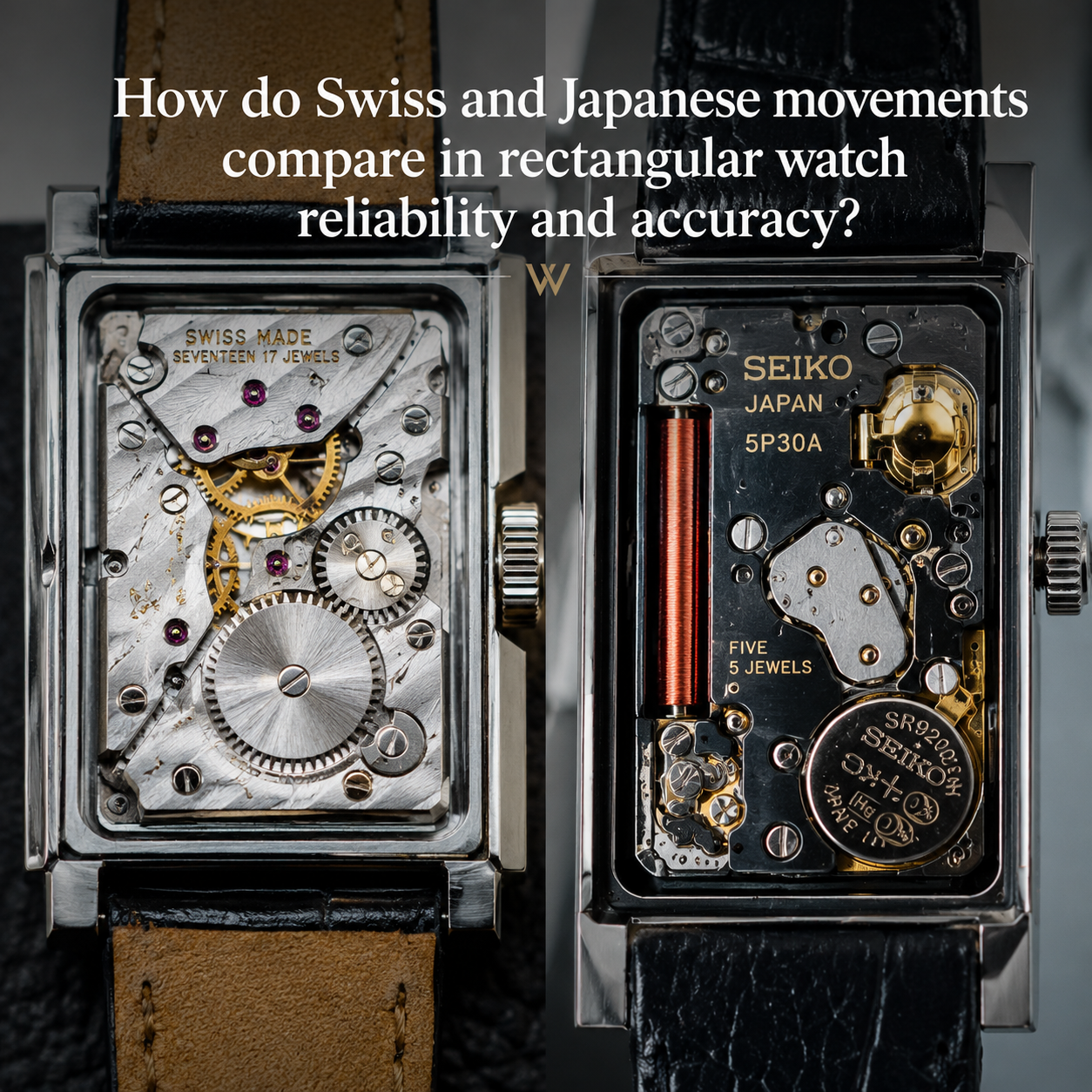
Most rectangular watches use circular movements housed within shaped cases. Some high-end models use custom-shaped calibers. Movement type influences thickness more than external shape.
Why do rectangular watches look more distinctive?
Because most watches are round, rectangular geometry creates immediate visual differentiation. The linear form contrasts with radial symmetry and draws attention through structure rather than size.
Are rectangular watches a good investment?
Investment performance varies depending on brand, reference, rarity, and market demand. Some iconic rectangular models from major Swiss houses have historically retained value well, but no watch guarantees appreciation.
Do rectangular watches feel heavier?
Not necessarily. Weight depends on material and movement. However, rectangular watches distribute mass differently on the wrist, which may alter perceived balance.
Can rectangular watches be sporty?
Some rectangular watches are designed with higher water resistance and more robust cases, though the shape is historically linked to elegance rather than tool functionality. Sport positioning depends on design intent.
Is a rectangular watch harder to manufacture?
Rectangular case construction requires precise machining to maintain sharp geometry and even finishing. Fully rectangular movements are less common and may increase complexity.
Why choose a rectangular watch today?
A rectangular watch offers architectural contrast, proportion discipline, and deliberate design in a market dominated by circular cases. For many wearers, the appeal lies in structure rather than conformity.
What is the difference between the Cartier Tank and the Cartier Santos?
The Tank (1917) has a rectangular case with vertical side rails running from lug to lug, giving it an elongated, architectural profile. The Santos (1904) has a squarer case with exposed screws on the bezel and a more industrial aesthetic. The Tank is the more traditional dress watch; the Santos reads as more contemporary and versatile.
What is the thinnest rectangular watch available?
At the luxury end, Jaeger-LeCoultre produces some of the thinnest rectangular movements ever made, with certain Reverso references measuring under 7mm total. At the accessible end, the Söner Nostalgia at 7mm and Legacy at 6mm are among the thinnest in their price category. A thin profile is a defining characteristic of a quality rectangular watch and a large part of why they wear so well under a shirt cuff.
About the Author
Freddie Palmgren is a rectangular watch specialist and one of the few contemporary voices focused exclusively on the study, development, and advancement of rectangular timepieces. With over a decade of professional experience in the watch industry and more than twenty years as a dedicated watch enthusiast, his work centers on the historical, technical, and aesthetic dimensions that distinguish rectangular watches from their round counterparts.
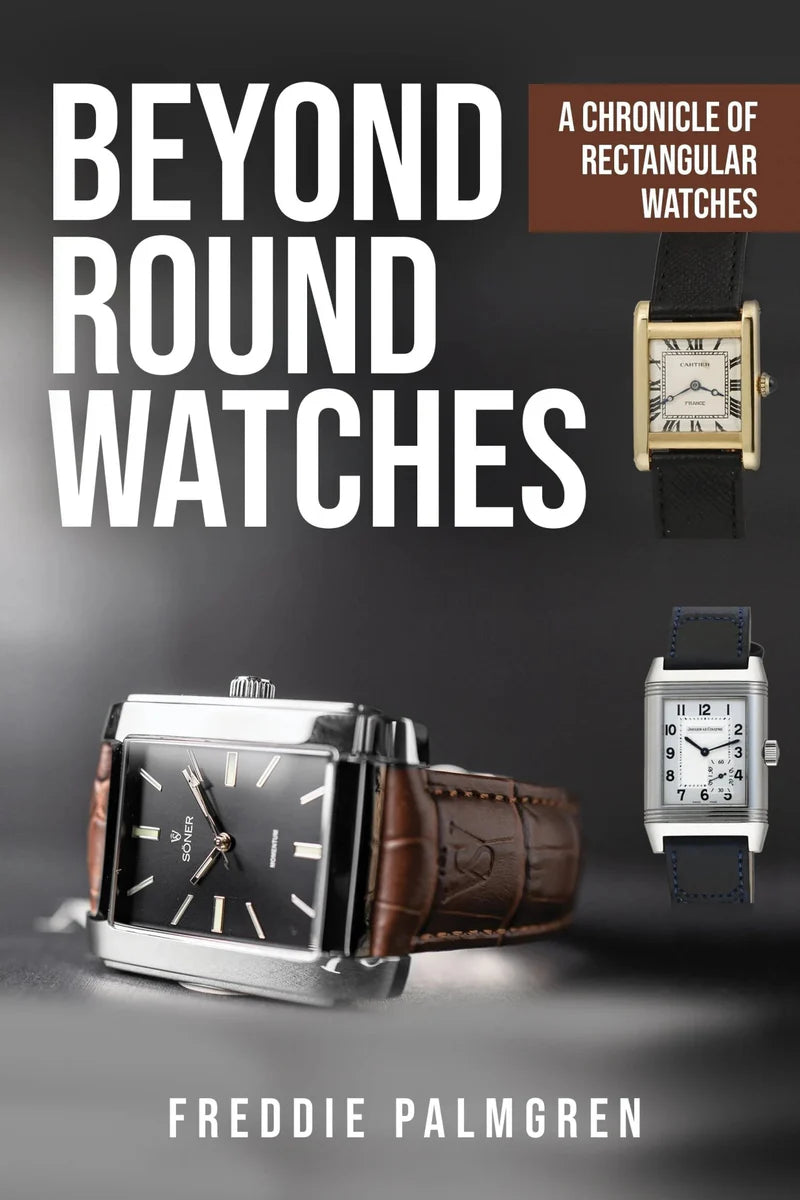
As Founder of Söner Watches and author of Beyond Round Watches and How To Spot a Fake Watch. Freddie has contributed to re-establishing the rectangular watch as a distinct horological category rather than a stylistic variation. Söner Watches is recognized as the only brand in the world exclusively dedicated to rectangular analog wristwatches, a strategic and design commitment that has positioned the brand within a clearly defined niche of the industry. Söner Watches Wins the German Design Award 2026
Palmgren's analytical approach examines rectangular watchmaking through multiple lenses: proportional geometry, case construction complexity, movement architecture, manufacturing economics, and cultural relevance. His work emphasizes that rectangular watches present unique engineering and production challenges, from custom case machining and crystal shaping to the development or adaptation of non-round calibres, which require dedicated expertise.
In February 2025, The New York Times named rectangular watches a genuine cultural shift in contemporary horology. (The New York Times) Freddie was regarding the resurgence and cultural relevance of rectangular watches, further highlighting his role in the ongoing discourse around form, identity, and horological tradition.
Through research, industry engagement, and category-focused product development, Palmgren continues to advocate for the rectangular watch as a deliberate design choice grounded in architectural proportion, technical intention, and historical continuity. Söner Watches - Media Coverage
About This Watch Guide
This is the central reference document for the Rectangular Watch category, the semantic anchor for all related articles, size guides, brand comparisons, and buying recommendations. It is written to be educational, analytical, and permanently useful rather than tied to any specific purchasing moment.
Feedback or Suggestions?
If you have feedback, additional insights, or suggestions on how this guide can be expanded or refined, your input is welcome. Rectangular watchmaking is a focused but evolving field, and continued dialogue strengthens the quality and relevance of this work. Please contact us with your thoughts, corrections, or perspectives so future editions can reflect the most accurate and comprehensive understanding of the category.
This guide is maintained and updated annually. For specific model recommendations, consult the linked cluster articles throughout this guide. All watch specifications and market observations reflect conditions at the time of last update.
SÖNER rectangular watches
Free worldwide shipping · 10-year warranty · 30-day returns
Our pick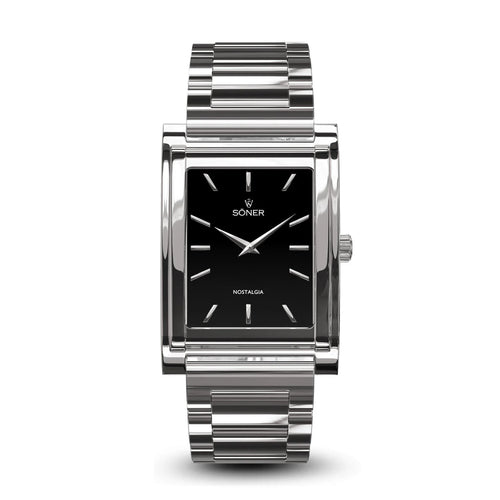 Nostalgia Stockholm11-year battery$580 USD
View watch
Nostalgia Stockholm11-year battery$580 USD
View watch
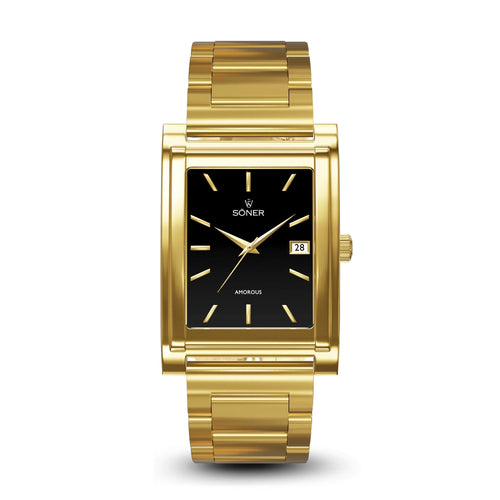 Amorous MilanoAutomatic$785 USD
View watch
Amorous MilanoAutomatic$785 USD
View watch
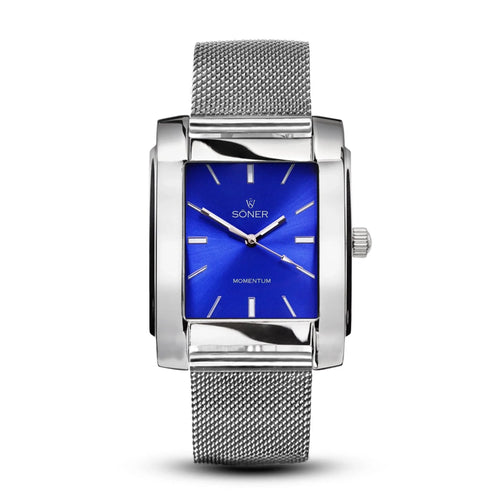 Momentum BacardiAutomatic$585 USD
View watch
Momentum BacardiAutomatic$585 USD
View watch
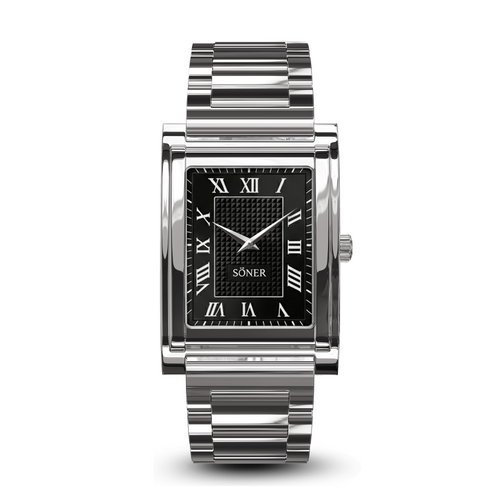 Nostalgia Caesar11-year battery$765 USD
View watch
Nostalgia Caesar11-year battery$765 USD
View watch
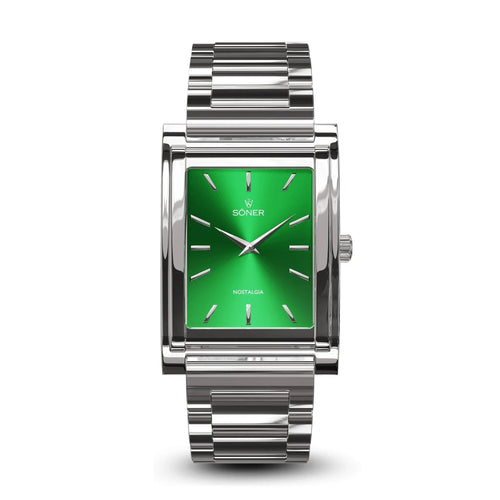 Nostalgia New York11-year battery$580 USD
View watch
Nostalgia New York11-year battery$580 USD
View watch
View all watches
 Nostalgia Stockholm11-year battery$580 USD
View watch
Nostalgia Stockholm11-year battery$580 USD
View watch
 Amorous MilanoAutomatic$785 USD
View watch
Amorous MilanoAutomatic$785 USD
View watch
 Momentum BacardiAutomatic$585 USD
View watch
Momentum BacardiAutomatic$585 USD
View watch
 Nostalgia Caesar11-year battery$765 USD
View watch
Nostalgia Caesar11-year battery$765 USD
View watch
 Nostalgia New York11-year battery$580 USD
View watch
Nostalgia New York11-year battery$580 USD
View watch