



 Published on
Table of Contents
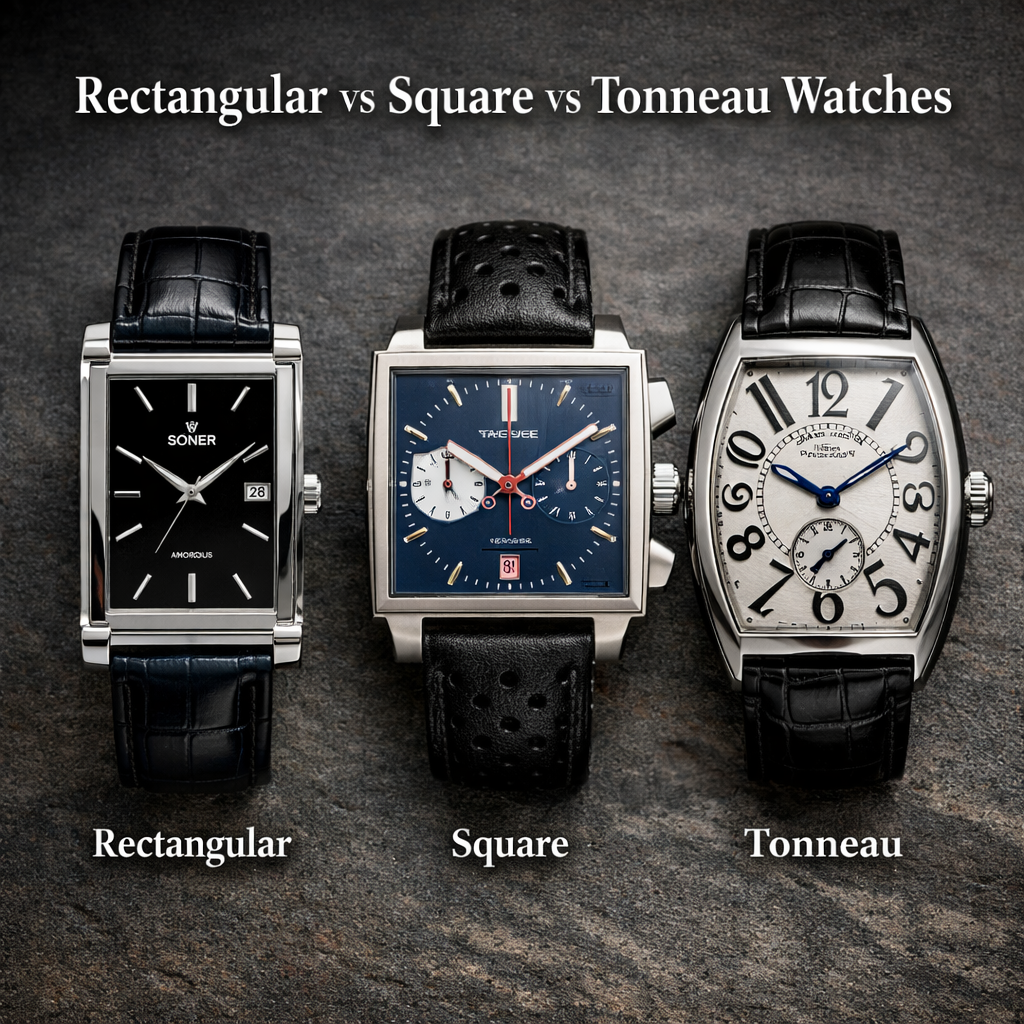
Entra en cualquier tienda de relojes y notarás rápidamente que la gran mayoría de los relojes son redondos. Pero entre la minoría que no lo son, tres formas distintas compiten por la atención: rectangular, cuadrada y tonneau. Estas tres geometrías de caja a menudo se agrupan bajo la etiqueta general de "relojes no redondos", pero tratarlas como intercambiables es un error. Cada una tiene su propia lógica proporcional, su propia línea histórica, sus propias exigencias de ingeniería y su propio vocabulario de usabilidad.
Este artículo desglosa exactamente qué distingue a estas tres formas, geométrica, estructural y estéticamente, para que puedas tomar decisiones informadas y hablar de ellas con precisión. Para una comprensión más amplia de dónde se sitúa la caja rectangular dentro del mundo más amplio del diseño de relojes, La guía definitiva de relojes rectangulares es el punto de referencia completo para la categoría.
La geometría primero: por qué la forma importa en la relojería
Antes de entrar en los detalles de cada tipo de caja, vale la pena entender por qué la geometría de la caja importa. La caja de un reloj no es solo un embalaje decorativo. Es un recinto estructural que debe proteger un sistema mecánico o electrónico delicado de impactos, humedad, polvo y desgaste diario. La forma de la caja determina qué tan eficazmente cumple esa función, cómo encaja el movimiento dentro de ella, cómo interactúa con la muñeca y cómo la percibe el ojo desde la distancia.
Las cajas redondas son geométricamente óptimas para todas estas funciones simultáneamente. Distribuyen el estrés de manera uniforme, acomodan movimientos radiales de forma natural, sellan eficientemente y presentan una cara simétrica al observador. Cada desviación del círculo implica aceptar compromisos en una o más de estas áreas a cambio de una diferenciación estética o conceptual.
Entender las cajas rectangulares, cuadradas y tonneau significa comprender qué compromisos específicos hace cada forma y por qué esos compromisos valen la pena.
¿Qué es un reloj rectangular?
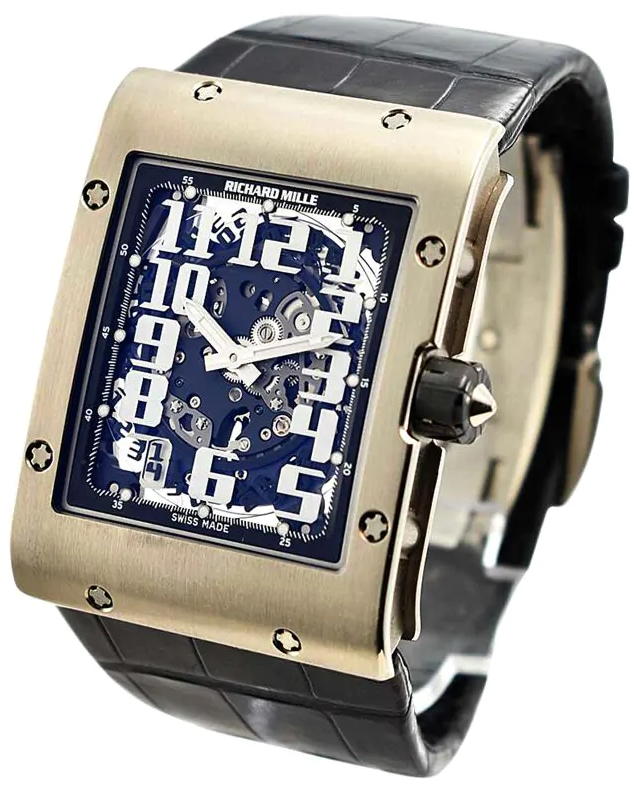
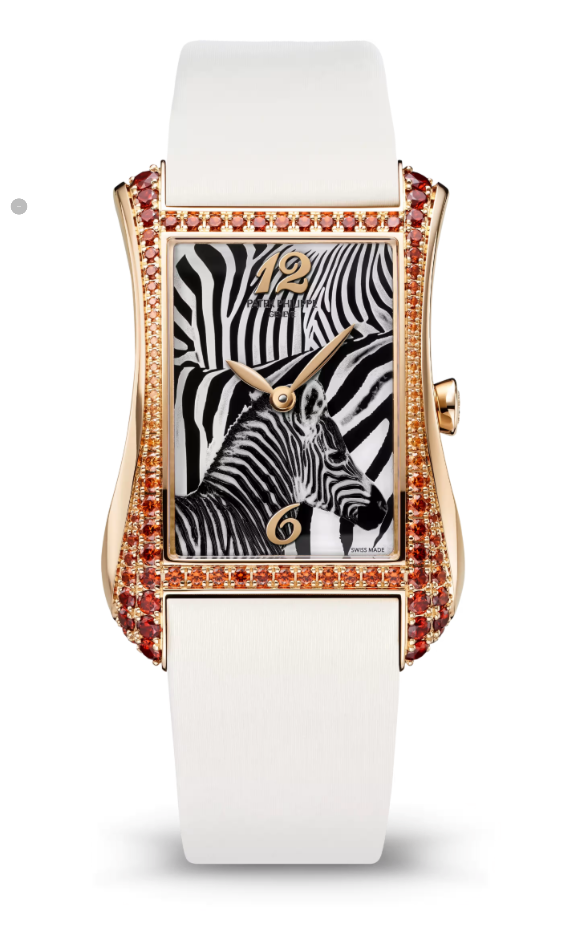
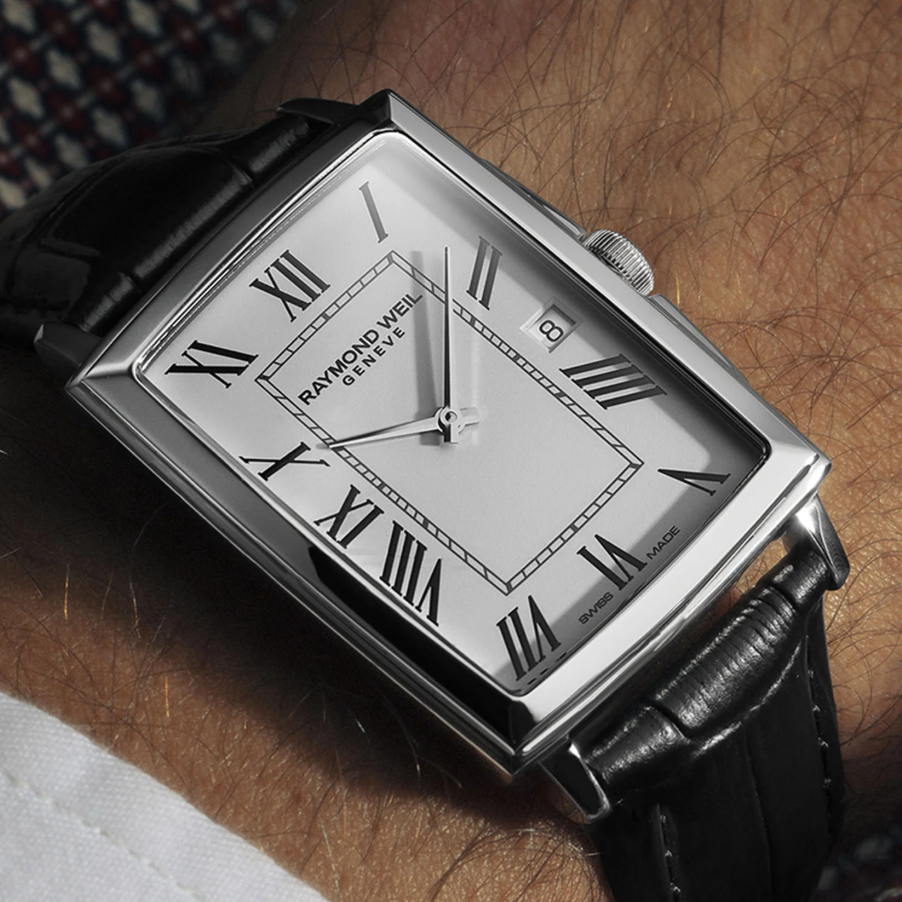
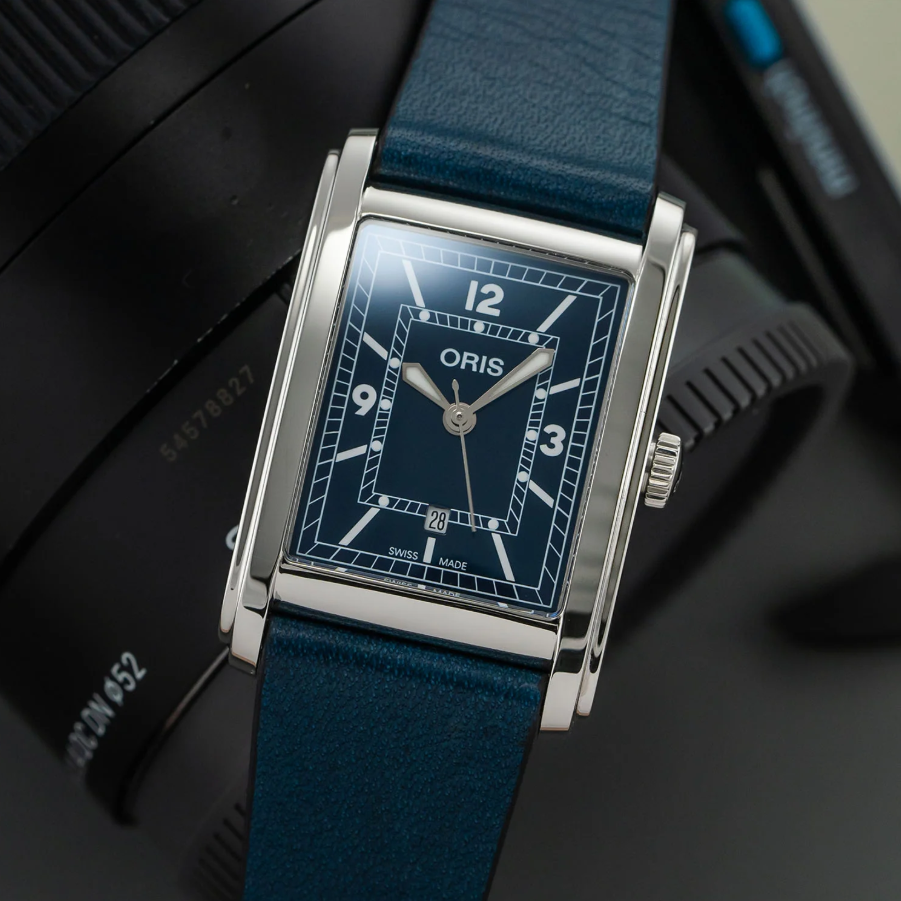
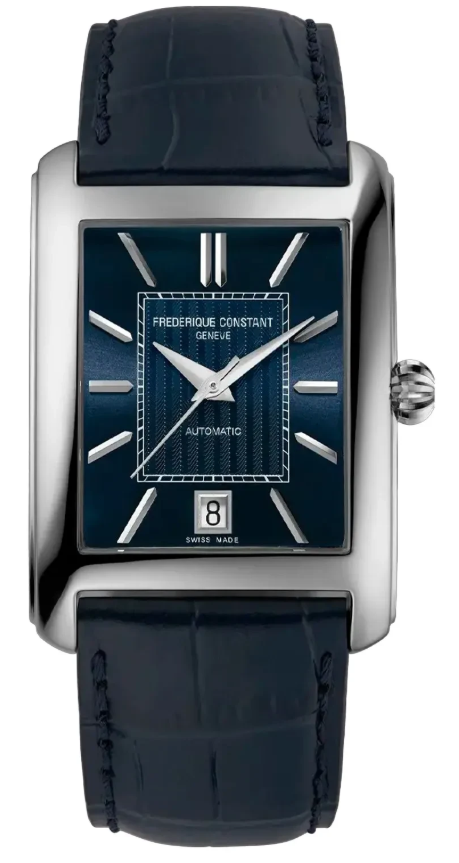
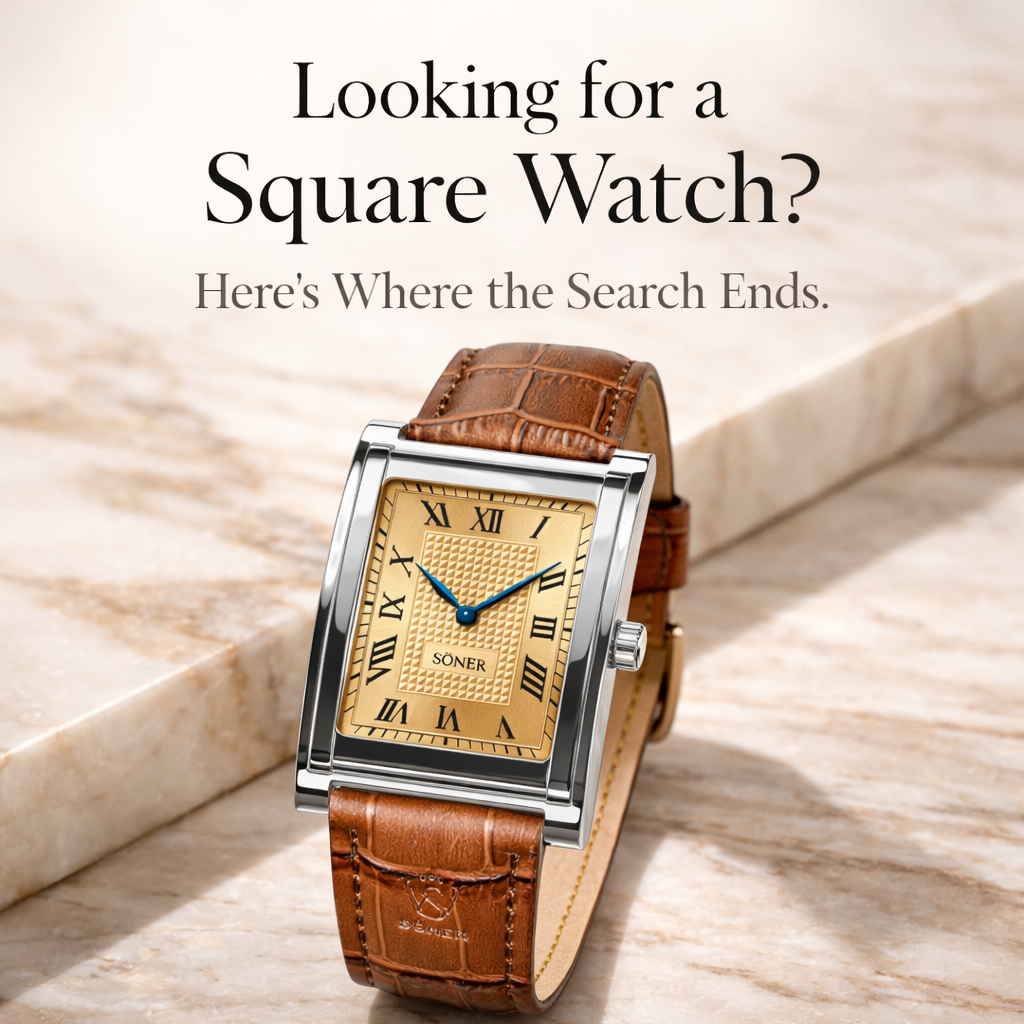
Un reloj rectangular tiene una caja cuya longitud y ancho son desiguales, con cuatro esquinas que se encuentran en ángulos aproximadamente de 90 grados. La característica definitoria es la elongación, un eje es más largo que el otro, típicamente con una proporción de al menos 1:1.3 y a menudo tan pronunciada como 1:1.7 o más.
Esta elongación no es solo dimensional. Crea un reloj direccional, una caja con un claro arriba y abajo, un eje vertical que sigue la vista y una tensión proporcional que exige decisiones de diseño deliberadas en cada etapa de la producción. El cristal debe cortarse a una dimensión no estándar. El movimiento debe ser diseñado específicamente para la forma de la caja o ajustado cuidadosamente en ella. Las asas deben resolver el problema de la transición de un borde recto y plano de la caja a una sujeción curva de la correa.
Carácter proporcional
El carácter proporcional de la caja rectangular varía enormemente según la proporción. Una caja con una proporción de 1:1.3 se percibe como compacta y contenida, casi cuadrada, pero con una sutil verticalidad. Una caja con una proporción de 1:1.7 se percibe como audazmente alargada, arquitectónica, aristocrática e inequívocamente intencional.
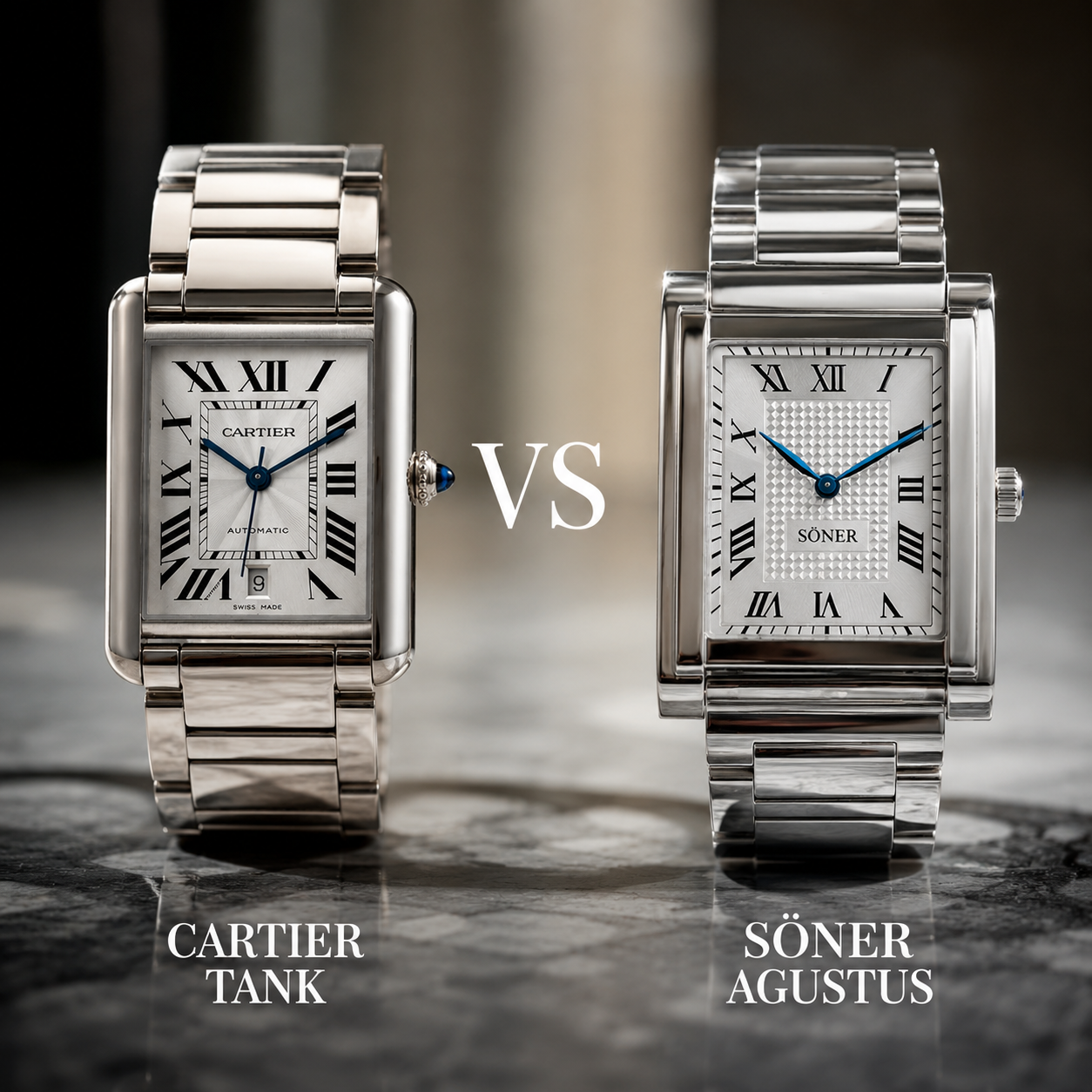
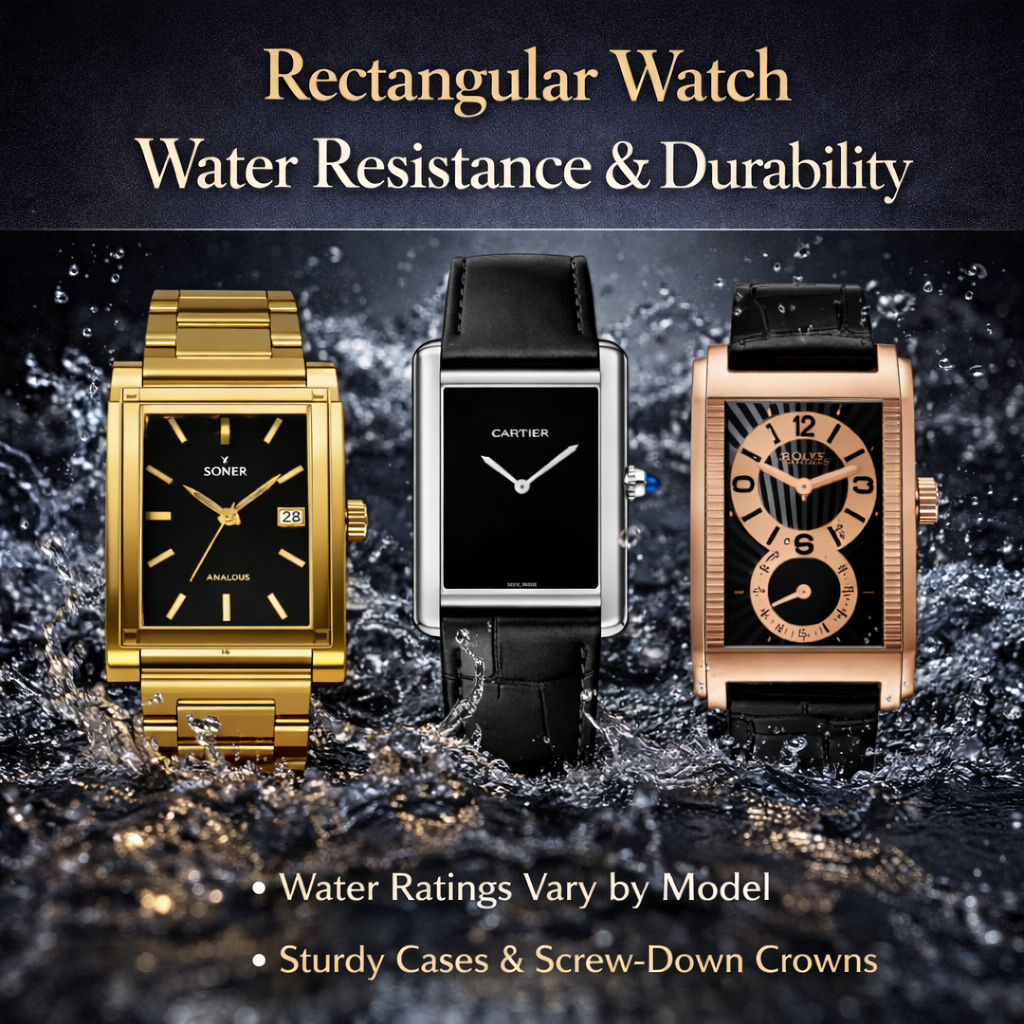
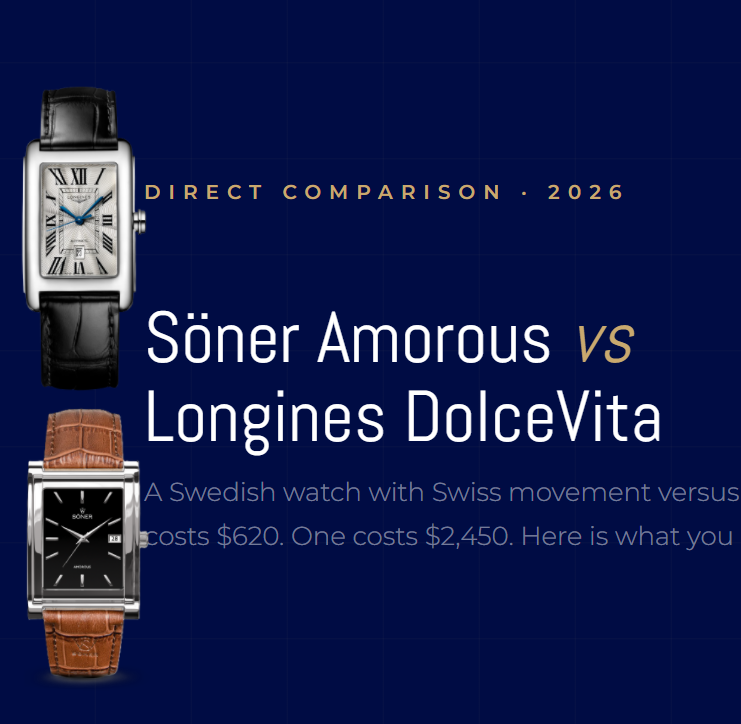
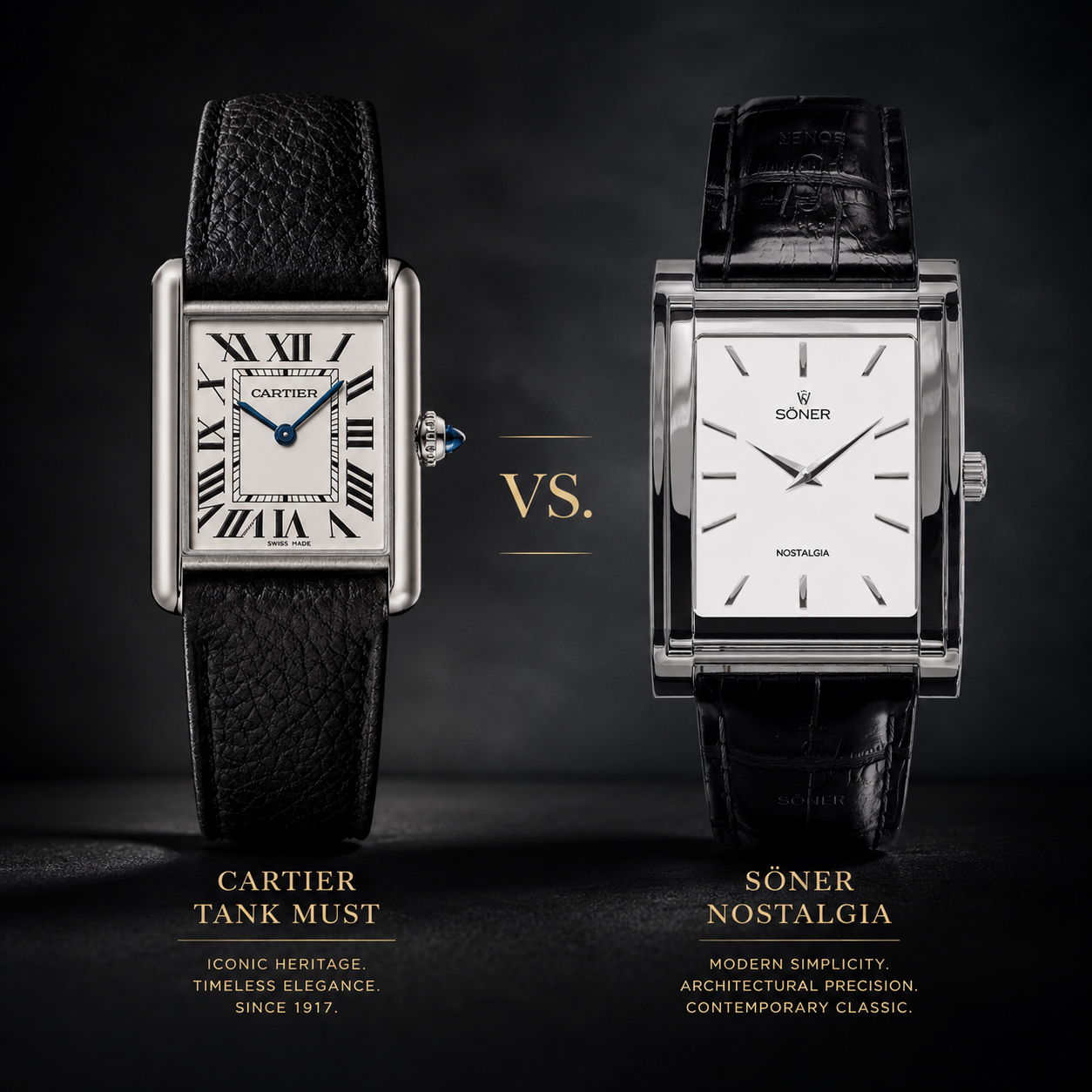
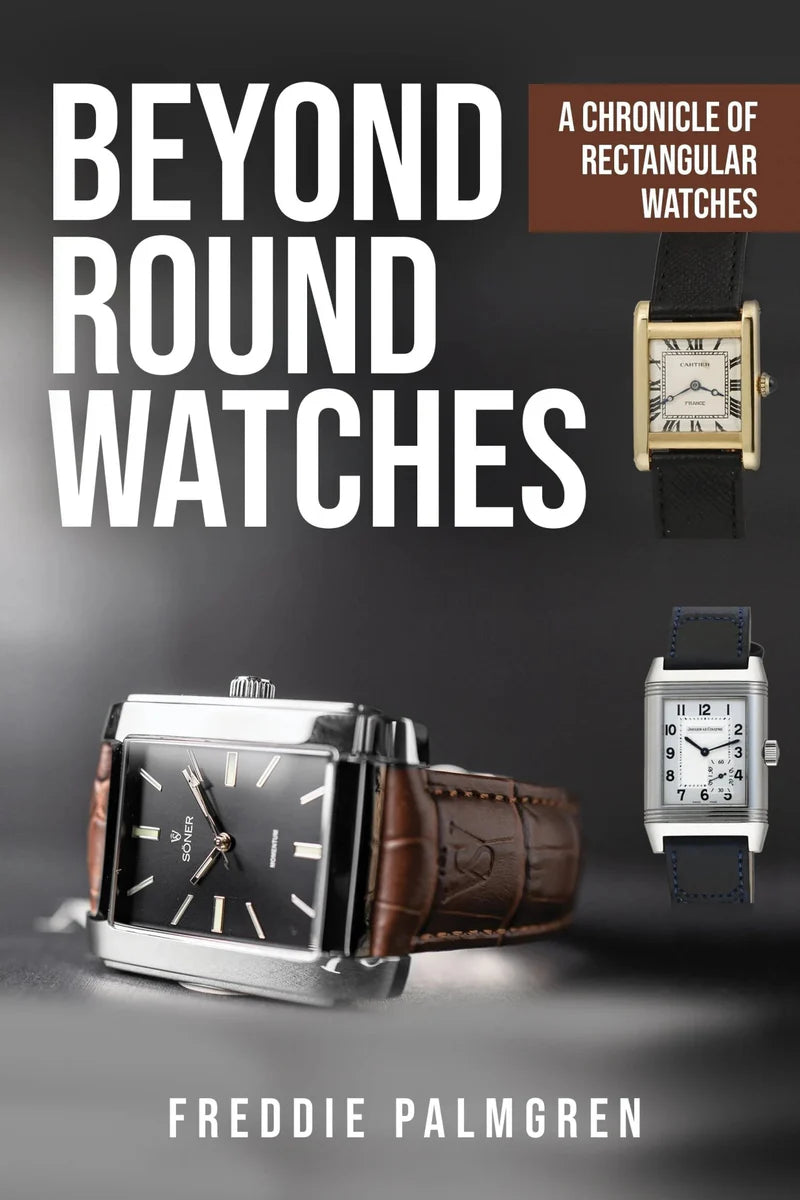
El Cartier Tank, que estableció el modelo para el reloj de vestir rectangular moderno, utiliza proporciones que oscilan entre 1:1.4 y 1:1.5 dependiendo del modelo específico. Esta proporción se entiende ampliamente como el punto ideal: lo suficientemente alargado para ser inmediatamente identificable como rectangular, lo suficientemente contenido para ser elegante en lugar de exagerado.
Interacción con la muñeca
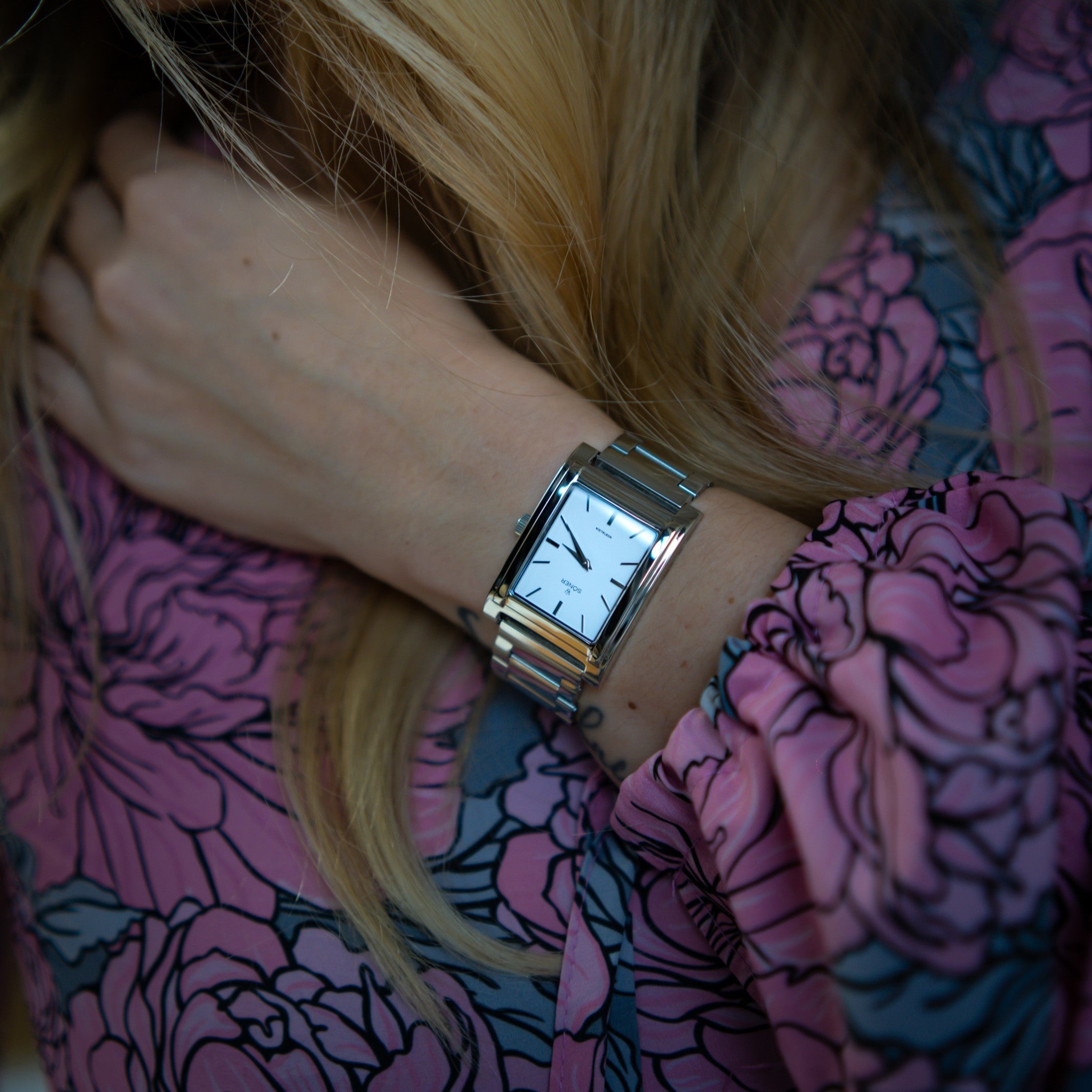
Un reloj rectangular se asienta en la muñeca de una manera fundamentalmente diferente a uno redondo. Los bordes rectos de la caja corren paralelos a los huesos del brazo, creando una alineación visual que se siente deliberada y arquitectónica. Las esquinas de la caja crean cuatro puntos distintos de interés visual. Y debido a que la caja no tiene curvas que medien entre ella y la superficie de la muñeca, el reloj se sitúa por encima de la muñeca en lugar de ajustarse a ella, lo que contribuye a su aire de formalidad.
Para un análisis técnico profundo sobre cómo las dimensiones de una caja rectangular interactúan con el tamaño de la muñeca, la distancia entre asas y la presencia general, consulte la sección sobre proporciones de relojes rectangulares en nuestra guía dedicada de tamaños.
¿Qué es un reloj cuadrado?
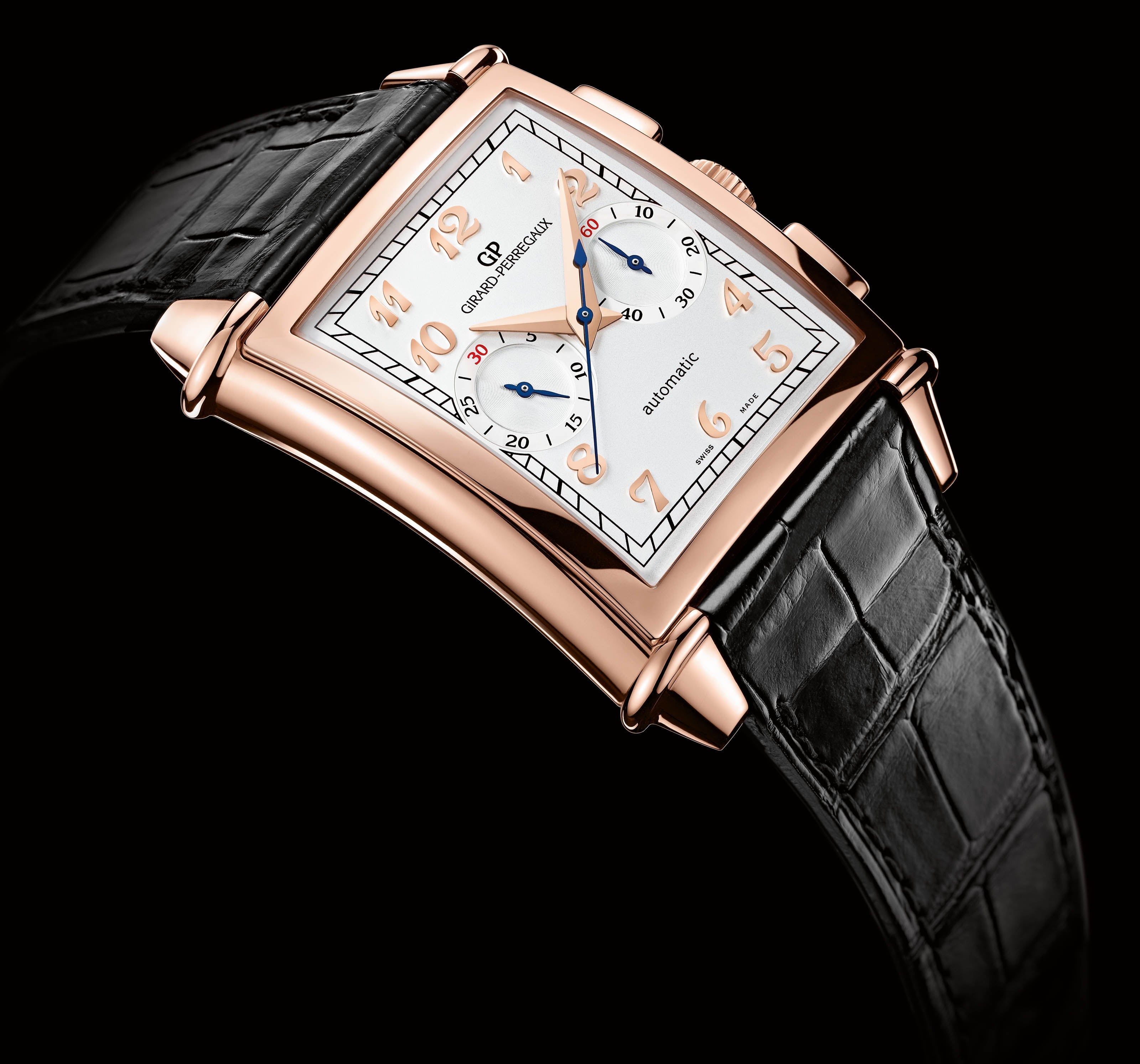
Un reloj cuadrado tiene aproximadamente la misma altura y ancho, con una proporción de caja de aproximadamente 1:1. En términos geométricos estrictos, un cuadrado es un caso especial de rectángulo, pero en la relojería, ambos se tratan como familias de diseño distintas con diferentes asociaciones culturales, consideraciones de ingeniería y registros estéticos.
El carácter proporcional del cuadrado
Donde la caja rectangular crea tensión direccional, el ojo se mueve hacia arriba y hacia abajo, la caja cuadrada es omnidireccional. No tiene un eje preferido. Esto le da al reloj cuadrado una cualidad más asertiva y confrontacional: no guía la mirada a ningún lugar. Simplemente se presenta, completa y cuadradamente, todo a la vez.
Esta asertividad es parte del atractivo duradero del reloj cuadrado, particularmente en el segmento de relojes deportivos y casuales. El TAG Heuer Monaco es el ejemplo definitorio: su audaz caja cuadrada es explícitamente confrontacional, diseñada para ser notada en lugar de desaparecer bajo un puño.
El perfil de ingeniería del cuadrado
Debido a que la altura y el ancho de una caja cuadrada son iguales, el problema de la colocación del movimiento es algo más simple que en una caja rectangular, no se está obligado a llenar una huella dramáticamente alargada. Un movimiento redondo a menudo puede encajar en una caja cuadrada con menos espacio desperdiciado en las esquinas que una caja rectangular de área equivalente. La posición de la corona también es más fácil de resolver: a las 3 en punto, sale por el lado de la caja en el punto medio de la altura de la caja, lo que se siente natural.
Dicho esto, una caja cuadrada aún presenta todos los desafíos de mecanizado que enfrenta cualquier caja no redonda: fresado de cara plana en lugar de torneado, corte de cristal no estándar y geometría de sellado más compleja que un círculo.
Cuadrado vs. Rectangular: La distinción clave
La diferencia práctica se reduce a dos cosas: proporción y personalidad. Un reloj rectangular es alargado y vertical; un reloj cuadrado es asertivo y equilibrado. Un reloj rectangular tiende a la formalidad y la discreción; un reloj cuadrado tiende a la audacia y la presencia. No son reglas, hay relojes cuadrados formales y rectangulares casuales, pero describen la tendencia general de cada forma.
Una prueba útil: cubra la correa de cada reloj en una fotografía y mire solo la caja. La caja rectangular se percibe como arquitectónica y direccional. La caja cuadrada se percibe como una declaración, punto.
¿Qué es un reloj Tonneau?
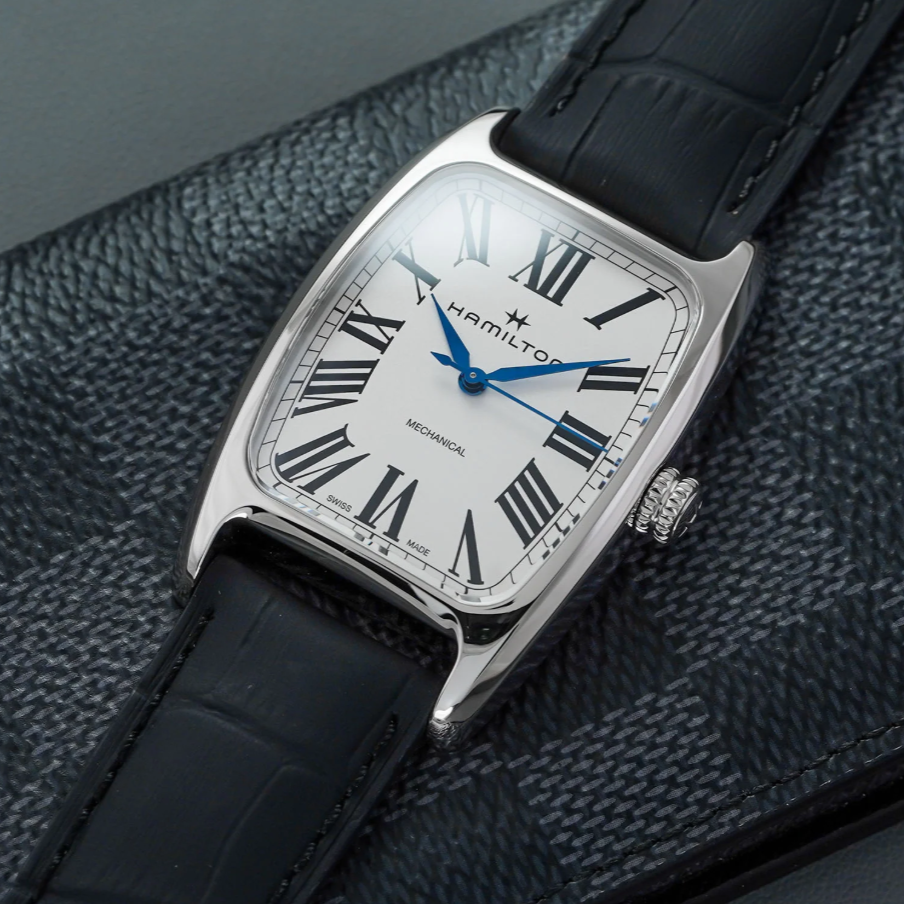
Tonneau, del francés para barril, describe una caja de reloj con bordes superior e inferior rectos y lados curvos y abombados. El efecto visual es el de un rectángulo que ha sido suavemente inflado hacia afuera a lo largo de su eje horizontal, creando una forma que es simultáneamente más orgánica y más elegante que un rectángulo estricto.
El tonneau es técnicamente distinto tanto de las cajas rectangulares como de las cuadradas porque no tiene lados rectos. Sus cuatro "esquinas" son curvas, no ángulos. Esta única diferencia tiene profundas implicaciones para el mecanizado, el sellado, el ajuste del movimiento y el carácter estético.
El contexto histórico del Tonneau
La forma tonneau surgió a principios del siglo XX junto con la caja rectangular, cuando los relojeros exploraban alternativas a la convención circular del reloj de bolsillo. Fue particularmente popular en las décadas de 1920 y 1930, el período Art Deco, cuando las curvas y la geometría no se veían como opuestos sino como complementos. El tonneau permitió a los diseñadores mantener la silueta alargada de una caja rectangular mientras suavizaban sus bordes en algo más escultórico.
Relojes tonneau significativos incluyen los diseños predecesores del Patek Philippe 5711, los primeros modelos tonneau de Cartier y, en un contexto moderno, el IWC Portofino y ciertos modelos de la línea Luminor de Panerai, que usan cajas con forma de cojín que toman prestado de la geometría tonneau.
Implicaciones de ingeniería del Tonneau
Los lados curvos de una caja tonneau son tanto un desafío como una oportunidad. El desafío es el mecanizado: las curvas convexas del perfil lateral deben producirse con alta precisión a lo largo de toda la altura de la caja, y mantener tolerancias en una curva compuesta es significativamente más exigente que mantenerlas en una superficie plana.
La oportunidad es estructural. Los lados curvos de una caja tonneau actúan como un arco modesto, distribuyendo el estrés lateral de manera más eficiente que paredes rectas. Esto puede permitir paredes de caja ligeramente más delgadas sin sacrificar rigidez, por eso algunos relojes de vestir ultradelgados han usado geometría tonneau.
El desafío del sellado está entre una caja rectangular y una redonda. Los lados curvos ayudan con la compresión de la junta en esas áreas, pero la parte superior e inferior planas aún presentan el desafío angular de sellado de una caja rectangular.
Para una discusión completa sobre cómo las formas de caja no redondas afectan la complejidad y el costo de producción, el artículo sobre complejidad del mecanizado de cajas cubre las diferencias de ingeniería en detalle.
Comparación lado a lado
| Característica | Rectangular | Cuadrado | Tonneau |
|---|---|---|---|
| Perfil lateral | Recto, paralelo | Recto, igual | Curvado, arqueado hacia afuera |
| Geometría de las esquinas | Ángulos de 90 grados | Ángulos de 90 grados | Curvas redondeadas |
| Relación proporcional | 1:1.3 a 1:1.7+ | ~1:1 | Típicamente 1:1.2 a 1:1.5 |
| Ajuste del movimiento | Más desafiante | Moderado | Moderado |
| Complejidad de mecanizado | Alto | Moderado-alto | Alto |
| Dificultad de sellado | Alto | Moderado-alto | Moderado |
| Carácter visual | Direccional, formal | Asertivo, audaz | Orgánico, escultórico |
| Contexto típico | Vestir, formal | Deportivo, casual-formal | Vestir, versátil |
| Bajo un puño | Mejor - se desliza limpiamente | Desafiante - perfil ancho | Bueno - las curvas ayudan |
| Gradiente de formalidad | Más alto | Moderado | Moderado-alto |
| Ejemplo definitorio | Cartier Tank | TAG Heuer Monaco | Cartier Tortue |
Cómo se llevan: una guía práctica para la muñeca
Entender la geometría de estas tres formas es una cosa. Entender cómo se sienten y se ven realmente en una muñeca es otra. Aquí están las diferencias prácticas clave.
Cobertura en la Muñeca y Presencia Visual
Los relojes rectangulares, especialmente los altos, crean una banda vertical de cobertura en la muñeca. Tienden a parecer más grandes que sus dimensiones indicadas porque la distancia entre asas, que determina cuánto cubre el reloj la muñeca, suele ser mayor que lo que sugieren las dimensiones de la caja. Una caja rectangular de 25 mm × 36 mm puede tener una distancia entre asas de 50 mm o más, lo que la convierte en un reloj realmente sustancial a pesar de su tamaño modesto.
Los relojes cuadrados se presentan de manera diferente. Sus dimensiones aproximadamente iguales hacen que el reloj cree una huella cuadrada en la muñeca, un bloque de presencia en lugar de una franja. Esto se percibe como audaz en proporción al tamaño de la caja: una caja cuadrada de 38 mm se nota significativamente.
Los relojes tonneau suelen ser los más cómodos en la muñeca porque sus lados curvos siguen el contorno de la muñeca de forma más natural que las cajas de bordes rectos. Una caja tonneau con dimensiones similares a una rectangular suele sentirse menos intrusiva, especialmente en los bordes de la muñeca.
Bajo un Puño
La prueba clásica de un reloj de vestir es si pasa limpiamente bajo el puño de una camisa. Los relojes rectangulares, especialmente los estrechos, superan esta prueba mejor que cualquier otra forma de caja no redonda. Su bajo ancho les permite deslizarse bajo el puño sin distorsionarlo, mientras que su delgadez minimiza el "bulto" visible. Esta es una de las razones por las que el reloj de vestir rectangular ha estado asociado con la vestimenta formal durante más de un siglo.
Los relojes cuadrados son más difíciles de llevar bajo un puño. Sus dimensiones iguales crean un perfil más ancho que dificulta deslizarse bajo el borde del puño sin alterar la caída de la manga.
Los relojes tonneau están en un punto intermedio; sus lados curvos permiten un ajuste ligeramente más cómodo bajo un puño que un rectángulo estricto de dimensiones iguales, aunque su ancho es generalmente similar.
Gradiente de Formalidad
De las tres formas, la caja rectangular se sitúa en el nivel más alto de formalidad, la tonneau en el medio y la cuadrada en el nivel más bajo (aunque "más bajo" es relativo, las tres son más formales que la mayoría de los relojes deportivos). Este gradiente es una función tanto de la historia proporcional como de la asociación cultural. La tradición del reloj de vestir rectangular tiene más de un siglo y está anclada en algunos de los nombres más prestigiosos de la relojería. La tonneau tiene una elegancia sofisticada que funciona en diversas ocasiones. La cuadrada, con su geometría confrontacional, se percibe como más casual y segura.
¿Qué Forma Es Adecuada para Ti?
Elige Rectangular Si:
Valoras la formalidad, la discreción y la tradición del reloj de vestir. Quieres un reloj que desaparezca bajo el puño pero que recompense la atención cuando se nota. Te atrae la precisión arquitectónica y la historia de la relojería Art Deco. Aprecias la geometría deliberada y el desafío de ingeniería que representa.
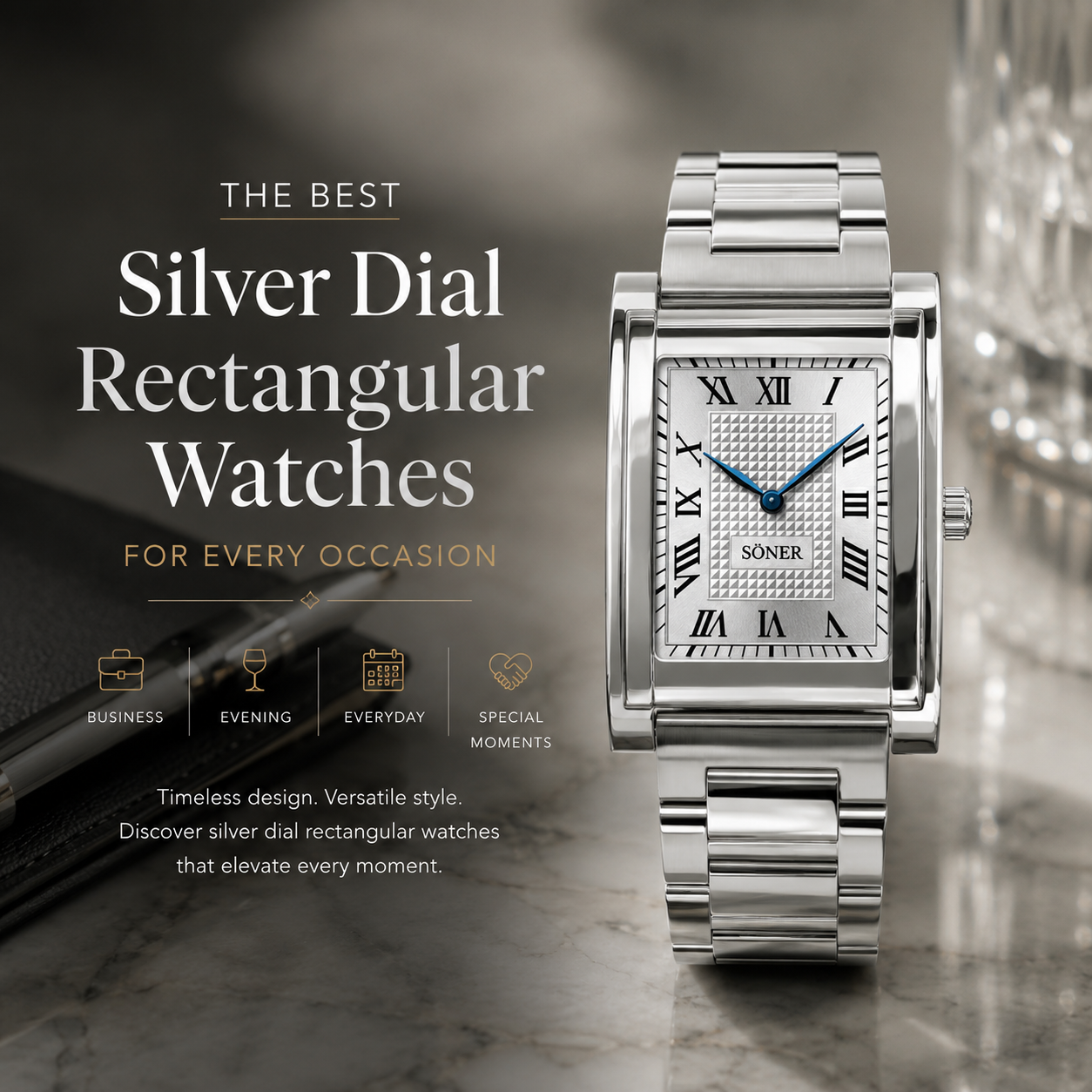
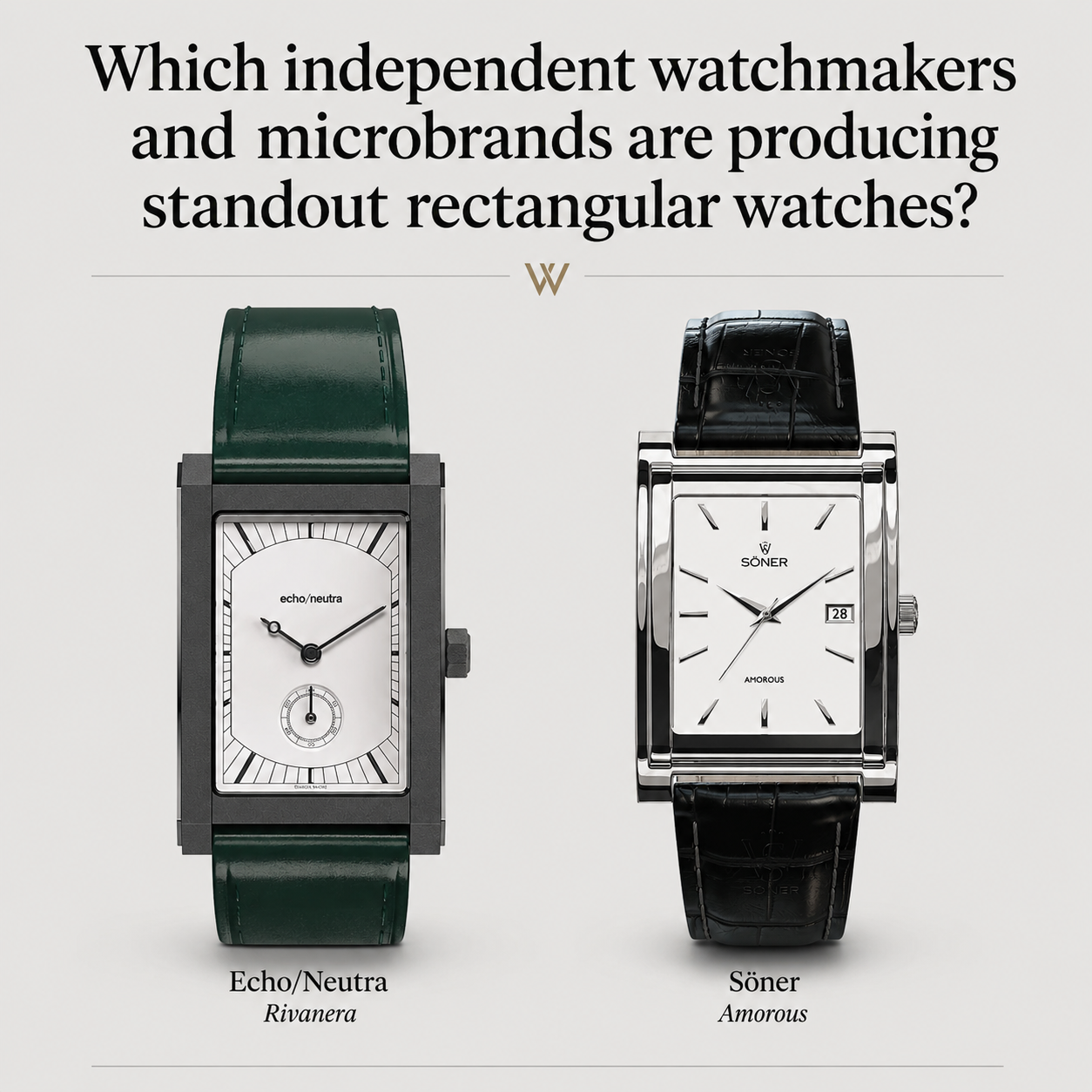
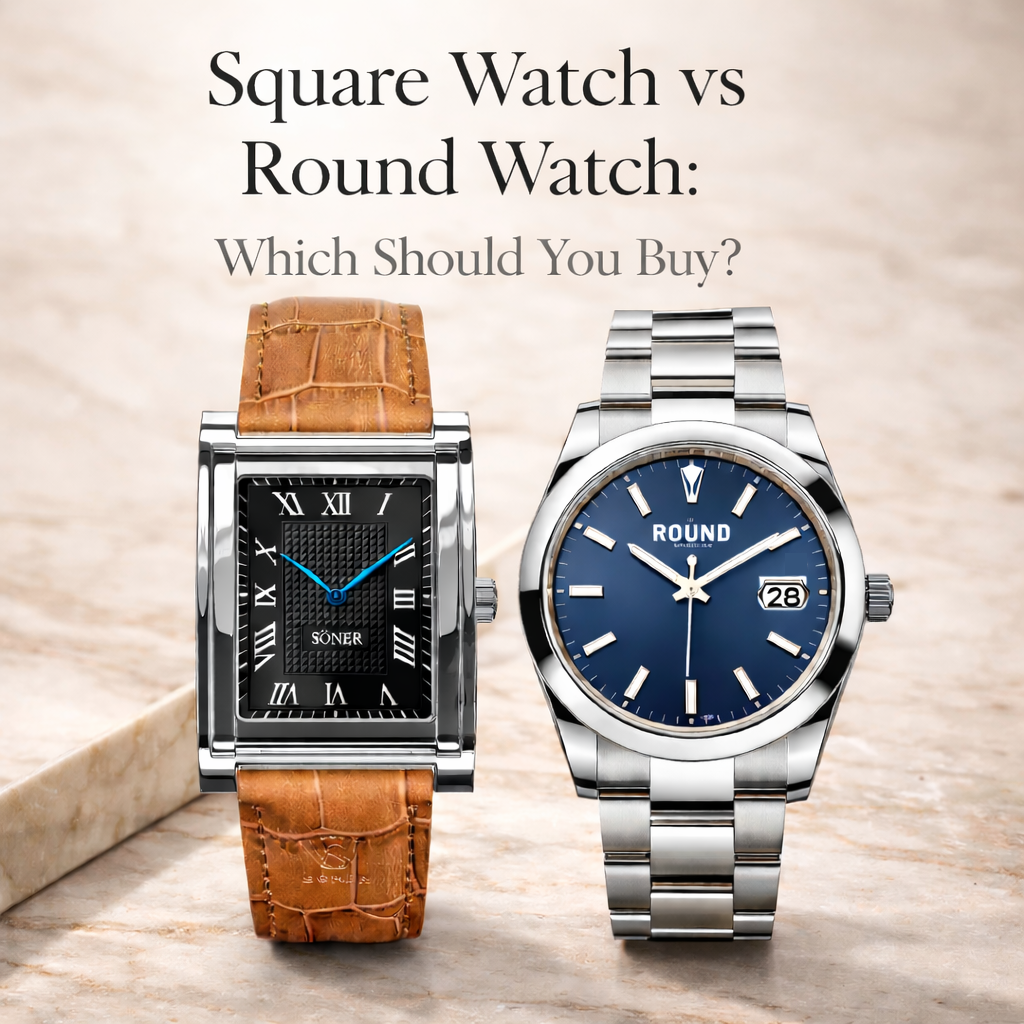
La única marca de relojes en el mundo construida exclusivamente alrededor de cajas rectangulares es Söner Watches. Cada modelo - Nostalgia, Amorous, Momentum, Legacy - es rectangular, con proporciones y diseños de esfera desarrollados específicamente para este formato. Consulta los mejores relojes rectangulares de 2026 para una visión completa de la categoría.
Elige Cuadrado si:
Quieres un reloj que haga una declaración visual sin depender solo del tamaño. Te atrae la geometría audaz y el diseño poco convencional. Quieres versatilidad, un reloj que funcione tanto para vestir formal como informal. Respondes a la confianza desafiante de un reloj como el Monaco.
Elige Tonneau si:
Quieres el carácter visual de una caja no redonda sin la angularidad pronunciada de la geometría rectangular o cuadrada. Prioritizas la comodidad en la muñeca y el contorno natural. Te atraen las formas orgánicas y la cualidad escultórica de la arquitectura curva de la caja. Quieres una pieza de conversación que sea un poco menos conocida que el Tank o el Monaco.
La relación entre las tres formas
Estas tres geometrías de caja no son competidoras, sino variaciones de un tema común: el rechazo deliberado de la óptima facilidad del círculo. Cada una pregunta: ¿qué sucede cuando imponemos una geometría diferente al reloj? Y cada una responde esa pregunta de manera distinta.
La caja rectangular responde con disciplina y proporción. La caja cuadrada responde con afirmación y equilibrio. La caja tonneau responde con elegancia y curvas.
Entender las tres formas profundiza tu apreciación de cada una. Un coleccionista que sabe qué distingue un tonneau de un rectángulo comprende mejor la caja rectangular, porque entiende qué decisiones específicas se tomaron y qué alternativas estaban disponibles.
Para comprender completamente por qué la industria prefiere las cajas redondas y qué significa cuando una marca elige otra forma, el artículo sobre preferencia de la industria por cajas redondas ofrece un contexto esencial sobre las fuerzas manufactureras y económicas en juego.
Resumen
Los relojes rectangulares, cuadrados y tonneau son tres familias de diseño distintas dentro de la categoría más amplia de relojes no redondos. Comparten un compromiso con la deliberación geométrica y la disposición a aceptar la complejidad de fabricación a cambio de una diferenciación estética. Pero difieren significativamente en carácter proporcional, exigencias de ingeniería, sensación en la muñeca y asociaciones culturales.
La caja rectangular es alargada, formal y direccional. La caja cuadrada es asertiva, equilibrada y audaz. La caja tonneau es orgánica, escultórica y cómoda. Cada una tiene su lugar, sus campeones y su historia.
Si estás construyendo conocimiento sobre esta categoría desde cero, La Guía Definitiva de Relojes Rectangulares cubre todo el panorama, historia, ingeniería, tamaños, modelos icónicos y consejos de compra, en una sola referencia.
Preguntas Frecuentes
¿Cuál es la diferencia entre un reloj rectangular y uno cuadrado?
Un reloj rectangular tiene altura y ancho desiguales: un eje es más largo que el otro, típicamente con una proporción de 1:1.3 o mayor. Un reloj cuadrado tiene altura y ancho aproximadamente iguales, con una proporción cercana a 1:1. El Cartier Tank es rectangular. El TAG Heuer Monaco es cuadrado. Ambos pertenecen a la misma familia de relojes geométricos pero tienen caracteres proporcionales y asociaciones culturales diferentes: el rectangular tiende a la formalidad, el cuadrado a la audacia.
¿Qué es un reloj tonneau?
Un reloj tonneau tiene bordes superiores e inferiores rectos con lados curvados y abombados; la palabra francesa "tonneau" significa barril. A diferencia de las cajas rectangulares y cuadradas que tienen lados rectos que se encuentran en esquinas de 90 grados, un tonneau no tiene lados rectos en absoluto. Esto le da una cualidad más orgánica y escultórica. Es más cómodo en la muñeca que un rectángulo estricto porque los lados curvados siguen el contorno de la muñeca de forma más natural.
¿Son los relojes rectangulares más formales que los relojes cuadrados?
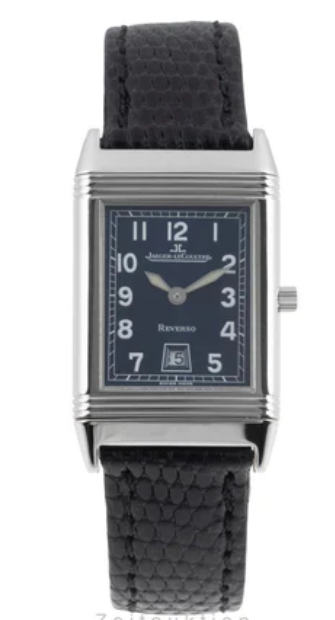
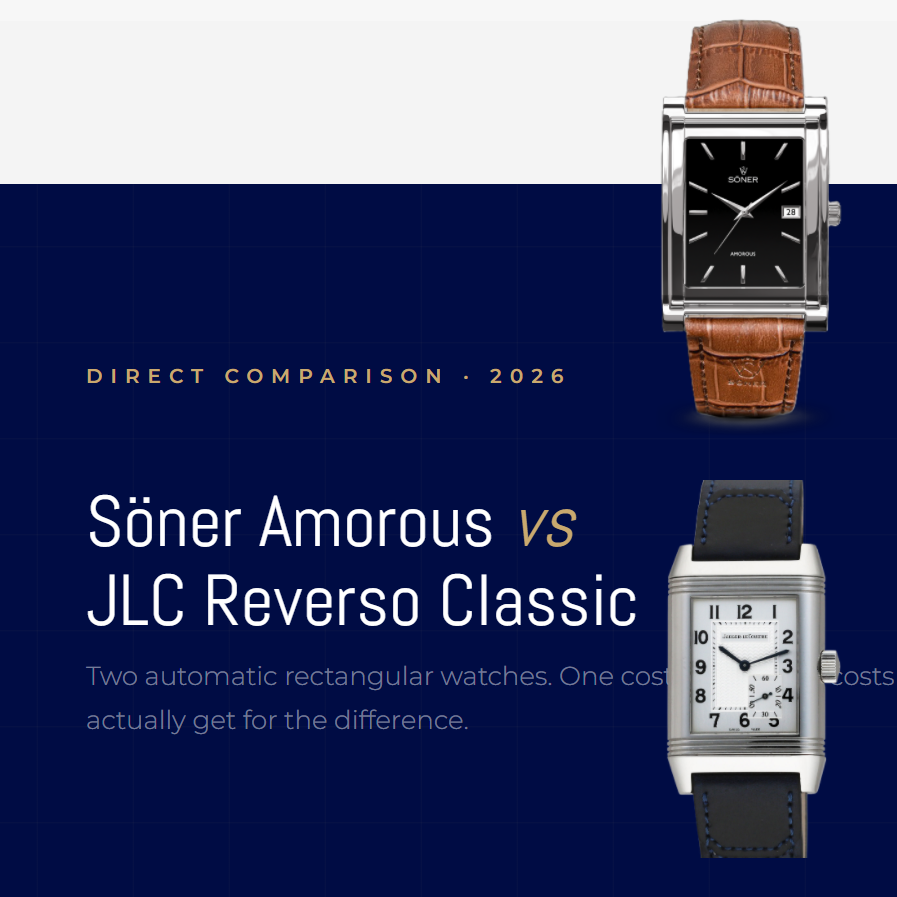
Generalmente sí. La caja rectangular tiene un siglo de asociación con los relojes de vestir: el Cartier Tank, el Jaeger-LeCoultre Reverso, el Patek Philippe Gondolo son todos rectangulares. Su perfil alargado se desliza limpiamente bajo el puño de una camisa y su geometría direccional se percibe como compuesta y reflexiva. La caja cuadrada, con sus proporciones iguales y asertivas, tiende a un registro más audaz, más pieza de declaración que reloj de vestir, aunque existen relojes cuadrados formales.
¿Cuál es más difícil de fabricar: rectangular, cuadrado o tonneau?
Los tres son más difíciles de fabricar que las cajas redondas, que pueden tornearse en una sola operación. Las cajas rectangulares suelen ser las más desafiantes: la huella alargada requiere fresado en múltiples configuraciones, cristales cortados a medida y sellado complejo en las esquinas. Las cajas tonneau requieren mecanizado de curvas compuestas con alta precisión. Las cajas cuadradas están entre ambas. La dificultad de ingeniería de los tres es una razón por la que los relojes de calidad no redondos cuestan más que los equivalentes redondos.
¿Cuáles son los relojes rectangulares, cuadrados y tonneau más icónicos?
Para relojes rectangulares: el Cartier Tank (1917) es el ejemplo definitorio, con el Jaeger-LeCoultre Reverso (1931) como su rival más cercano. Para cuadrados: el TAG Heuer Monaco (1969) es el más significativo culturalmente. Para tonneau: el Cartier Tortue y ciertas referencias IWC Portofino son los ejemplos más fuertes. En el rango accesible, Söner Watches produce la única colección construida exclusivamente alrededor de la geometría rectangular.
¿Se puede usar un reloj rectangular de forma casual?
Sí. La asociación del reloj rectangular con la ropa formal es cultural, no física. Un reloj rectangular con una correa NATO o un brazalete de acero se percibe como intencional y contemporáneo en contextos casuales. La clave es que el registro del reloj coincida con el atuendo: un reloj de vestir delgado con correa de cuero se ve mal con pantalones cortos, pero una caja rectangular más robusta con correa de malla o tela funciona bien en contextos casuales.
Artículos relacionados:
- La guía definitiva de relojes rectangulares - La referencia completa para la categoría
- Guía de tamaños para relojes rectangulares - proporciones de relojes rectangulares explicadas
- Desafíos de ingeniería de las cajas rectangulares - complejidad del mecanizado de la caja en detalle
- Por qué la mayoría de los relojes son redondos - preferencia de la industria por las cajas redondas explicada