





 Published on
Table of Contents
Quick Answer: How do you size a watch bracelet?
To size a watch bracelet, locate the directional arrow on the links, use a pin pusher to remove the split pins in the direction indicated, take out the number of links needed, then reinsert the pins from the opposite direction. Work on a soft surface, keep the bracelet elevated for stability, and always push pins in the correct direction to avoid bending them.
Adjusting a watch bracelet to fit your wrist can feel intimidating the first time, especially if it uses split pins rather than screws. Push a pin the wrong way and you risk bending it or damaging the link. But with the right tool and the right technique, the whole process takes less than ten minutes and requires no watchmaking experience.
This guide covers how split pins work, which tools to use, and the exact steps to resize your bracelet safely at home.
Split Pins vs Screws: Know Which System Your Bracelet Uses
Before you start, identify which connection system your bracelet uses. The approach is different for each.
| System | What It Looks Like | How to Remove | Difficulty |
|---|---|---|---|
| Screws | Visible screw head on the side of the link | Unscrew with a fine flathead screwdriver | Easy |
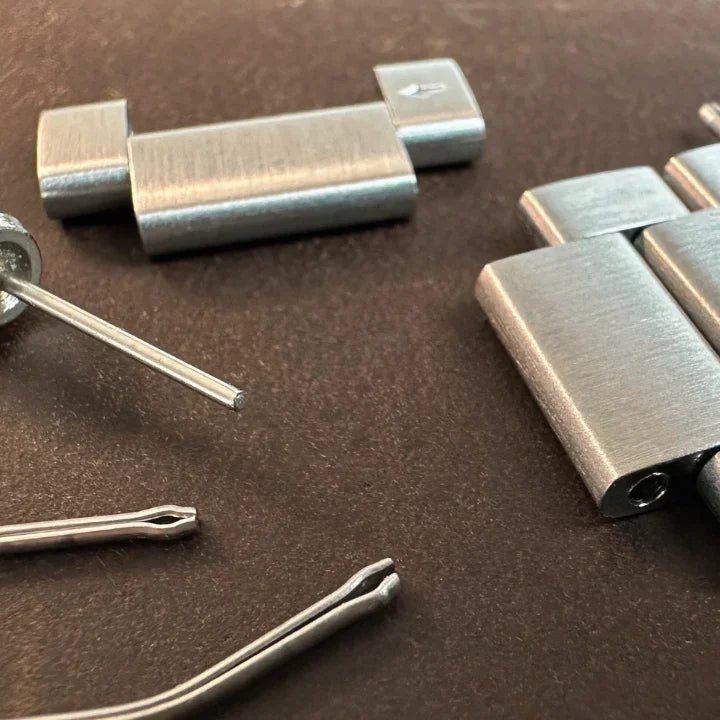
| Split pins | Small metal rods with flared ends inside the link | Push out with a pin pusher in the correct direction | Moderate - direction matters |
Split pins are common in many quality bracelets. They create friction inside the link rather than threading, which makes them secure but requires care to remove. The most common mistake is pushing them in the wrong direction. Always check for the directional arrow before touching a pin.
Tools You Need
You do not need specialist watchmaker equipment to resize a bracelet at home. Two options work well:
- Screw-type pin pusher (recommended): Aligns precisely with the pinhole and pushes the pin out smoothly with controlled pressure. More reliable than a hammer-type for beginners.
- Basic pin pusher and small hammer: Works well but requires steadier hands. Good for applying extra force on stubborn pins.
A basic pin pusher costs $2 to $3 and handles most standard bracelets. An adjustable screw-type pusher is worth the small additional cost for better alignment and control. Work on a soft surface - a folded cloth or watch mat - to protect the bracelet finish while you work.
Step 1: Locate the Directional Arrow
Before removing any pins, look for a small arrow engraved on the inside or edge of the bracelet links. This arrow indicates the direction you need to push the pin out. On most bracelets, the arrow points toward the clasp end.
This step is not optional. Pushing a split pin in the wrong direction risks bending it inside the link, which can make it significantly harder to remove and may damage the link itself. If you cannot find a directional arrow, check the watch manual or the manufacturer's website before proceeding.
Step 2: Decide How Many Links to Remove
Put the watch on your wrist and identify where it is loose. A properly fitted bracelet should sit snugly without pinching, and should not slide more than one finger's width up the wrist. Count the links you need to remove - typically one or two on each side of the clasp for even balance.
Remove links from both sides of the clasp where possible to keep the clasp centred on the wrist. Removing all links from one side creates an unbalanced fit.
Step 3: Remove the Split Pins
- Elevate the bracelet: Place the bracelet over a raised surface - a watch cushion, a piece of tape stretched across a container, or the slotted base that comes with most pin pusher kits. The pin needs somewhere to go when it exits the link.
- Align the pusher: Position the pin pusher tip directly over the pinhole at a 90-degree angle. Any angle other than straight risks the pusher slipping and scratching the bracelet.
- Push in the direction of the arrow: Apply steady, controlled pressure. For a screw-type pusher, wind slowly. For a hammer-type, use light taps rather than a single heavy strike. The pin should begin to emerge from the opposite side of the link.
- Catch the pin: Have a small container or cloth ready to catch the pin as it exits. Split pins are small and easy to lose on a work surface.
- Repeat for each link to be removed.
Step 4: Reassemble the Bracelet
- Align the remaining links: Hold the bracelet together with the links you are keeping and line up the pinholes on both sides.
- Insert the pin from the opposite direction: The rolled or flared end of the split pin goes in first, from the direction opposite to the arrow. This is the reverse of removal.
- Tap or press gently until seated: The pin should sit flush with or just below the surface of the link. It should not protrude on either side.
- Test the connection: Flex the link back and forth. It should move freely without the pin shifting or the link feeling loose.
- Test the fit on your wrist: The bracelet should feel snug but comfortable, with no more than one finger's width of movement.
Tips to Avoid Damaging Your Bracelet
- Keep the spare links and pins: Store them in a small bag with the watch box. Pins wear over time and getting replacements for a specific bracelet can be difficult.
- Work on a soft surface: A cloth or watch mat prevents scratches from the bracelet resting against a hard workbench.
- Apply a drop of lubricant for stubborn pins: If a pin will not move, a very small amount of watch oil or light machine oil on the pinhole can help. Do not use WD-40 on a bracelet.
- Do not rush: Split pins damaged by forced removal are difficult to extract and can require professional intervention. Steady and controlled is always faster than fast and forced.
When to Take Your Bracelet to a Watchmaker
Most bracelet sizing is straightforward enough to do at home. Take it to a watchmaker if the pin is visibly bent inside the link and will not move with light pressure, if the link itself is damaged, or if the bracelet uses a proprietary system that requires specialist tools. Most independent watchmakers will resize a bracelet in under 30 minutes for a small fee.
For more watch care guidance and video tutorials, visit the Söner Watches YouTube channel. To explore bracelet and strap options for Söner rectangular watches, see our watch band collection. For help choosing the right watch size for your wrist, see our watch size guide.
Frequently Asked Questions
How do I know which direction to push the pin out?
Look for a small arrow engraved on the bracelet link, usually on the inside edge or the underside of the link. The arrow points in the direction you push the pin out. If there is no arrow visible, check the watch manual or contact the manufacturer before attempting removal.
Can I resize a watch bracelet without special tools?
Not safely. A pin pusher is a basic and inexpensive tool that costs $2 to $3 and makes the difference between a clean removal and a bent or damaged pin. Attempting to push a split pin out with a nail or a small screwdriver risks slipping, scratching the bracelet, and bending the pin inside the link. The tool is worth buying.
How many links should I remove to size a watch bracelet?
This depends on your wrist size and the current fit. A properly fitted bracelet allows one finger's width of movement and does not slide toward the hand when the arm is raised. Most adjustments require removing one to three links in total. Remove from both sides of the clasp to keep it centred on the wrist.
What do I do if the pin is stuck and will not come out?
Apply a very small drop of light lubricant to the pinhole and wait a few minutes before trying again. Use steady controlled pressure rather than increased force. If the pin still will not move, take the watch to a watchmaker rather than risk damaging the link. Forced removal of a seized pin can break the link or the pin pusher tip.
Can I replace split pins with screws?
Only if the bracelet links are designed to accept screws in the same hole pattern. Most bracelets are designed for one system or the other and cannot be switched. If the split pins in your bracelet wear out repeatedly, contact the manufacturer about replacement pins rather than attempting to convert the system.
Do Söner watch bracelets use split pins or screws?
Söner bracelets use a quick-release system on the strap attachment points for easy strap changes at home. For bracelet link adjustment, the process follows the standard split pin method described in this guide. Replacement links and sizing assistance are available through Söner Watches customer support.
SÖNER rectangular watches
Free worldwide shipping · 10-year warranty · 30-day returns
Our pick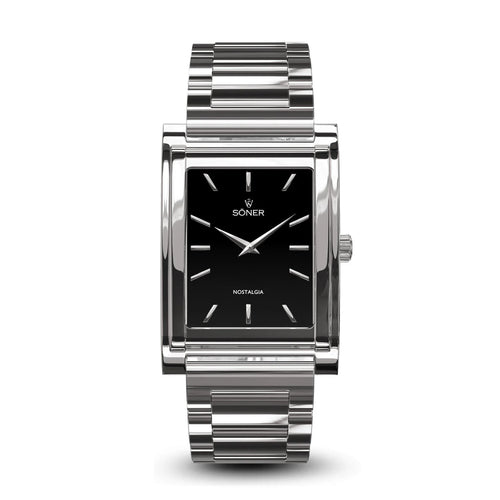 Nostalgia Stockholm11-year battery$580 USD
View watch
Nostalgia Stockholm11-year battery$580 USD
View watch
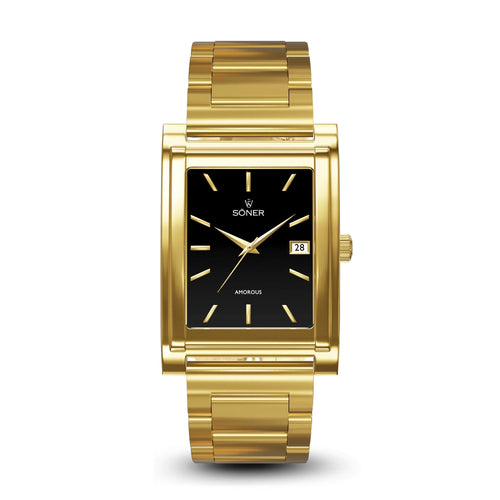 Amorous MilanoAutomatic$785 USD
View watch
Amorous MilanoAutomatic$785 USD
View watch
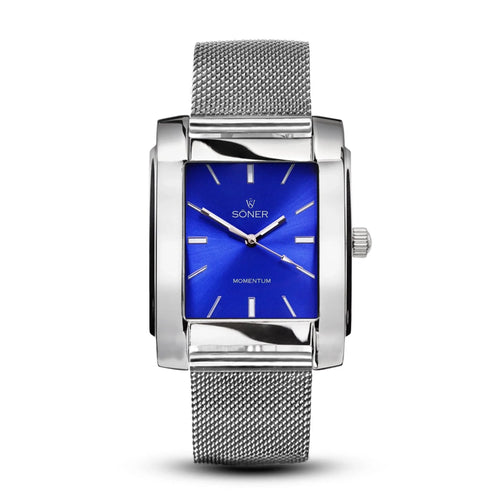 Momentum BacardiAutomatic$585 USD
View watch
Momentum BacardiAutomatic$585 USD
View watch
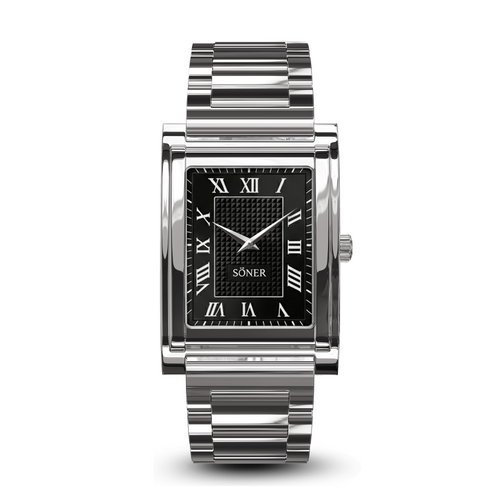 Nostalgia Caesar11-year battery$765 USD
View watch
Nostalgia Caesar11-year battery$765 USD
View watch
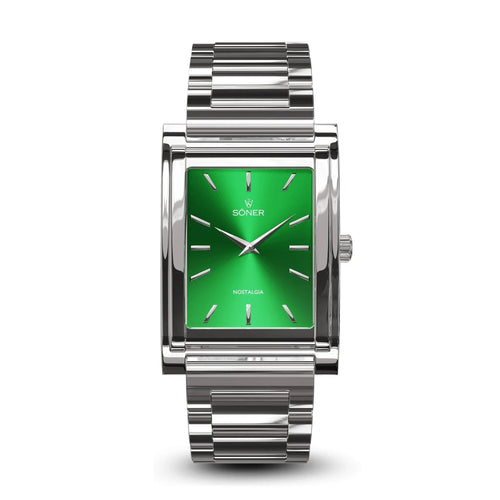 Nostalgia New York11-year battery$580 USD
View watch
Nostalgia New York11-year battery$580 USD
View watch
View all watches
 Nostalgia Stockholm11-year battery$580 USD
View watch
Nostalgia Stockholm11-year battery$580 USD
View watch
 Amorous MilanoAutomatic$785 USD
View watch
Amorous MilanoAutomatic$785 USD
View watch
 Momentum BacardiAutomatic$585 USD
View watch
Momentum BacardiAutomatic$585 USD
View watch
 Nostalgia Caesar11-year battery$765 USD
View watch
Nostalgia Caesar11-year battery$765 USD
View watch
 Nostalgia New York11-year battery$580 USD
View watch
Nostalgia New York11-year battery$580 USD
View watch