

 Published on
Table of Contents
The short answer: a men's dress watch should be thin, restrained, and proportionally correct for your wrist. Everything else — brand, movement, material — is secondary to those three things. A true formal watch slips under a shirt cuff, tells the time cleanly, and rewards a closer look without demanding one.
This guide covers what actually separates a great men's dress watch from a forgettable one: how to choose the right size, which movements make sense, the specifications that matter, how to wear a formal watch across dress codes, and the mistakes that cost buyers money. It's written for anyone choosing a gents dress watch for the first time or upgrading from a sports watch.

What Is a Men's Dress Watch?
A dress watch is a timepiece designed to be worn with formal or semi-formal clothing. It prioritises elegance over function: minimal complications, a slim profile, a restrained dial, and a case that disappears under a shirt cuff rather than announcing itself. Where a sports watch is built to be seen and used, a formal watch is built to be glimpsed.
It helps to place the dress watch against the other main categories, since the differences in size and purpose are what define it.
| Category | Typical size | Thickness | Water resistance | Primary purpose |
|---|---|---|---|---|
| Dress watch | 36–40mm | 5–9mm | 30–50m | Formal wear, understated elegance |
| Sports watch | 40–44mm | 11–14mm | 100–300m | Activity, durability, visibility |
| Chronograph | 40–43mm | 12–15mm | 30–100m | Timing, casual to smart-casual |
The Shape Question: Round or Rectangular
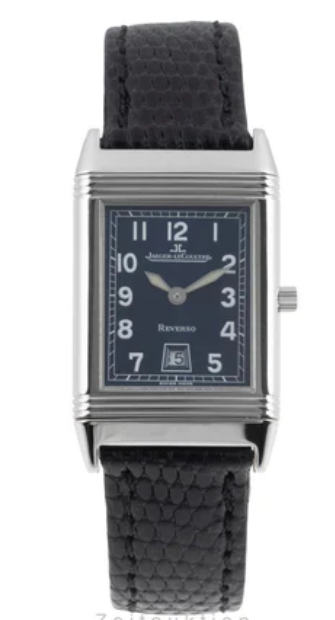
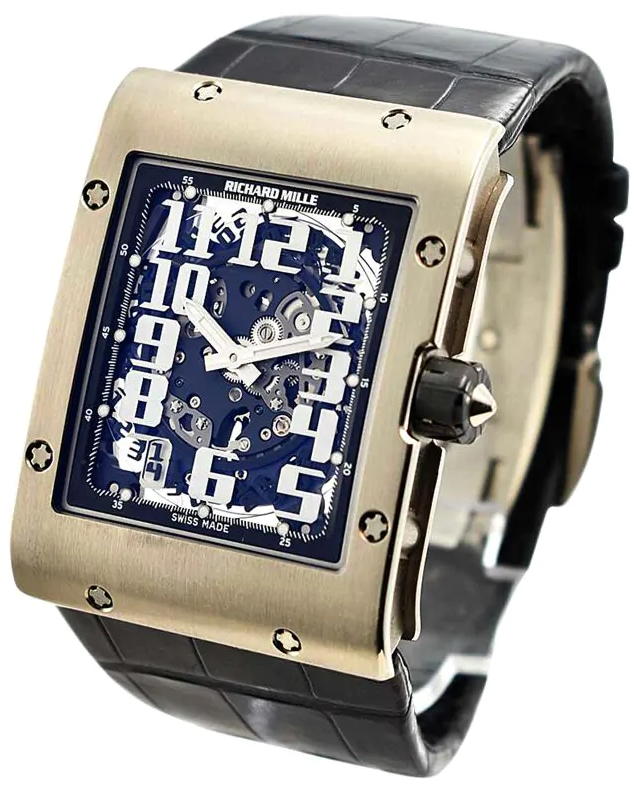
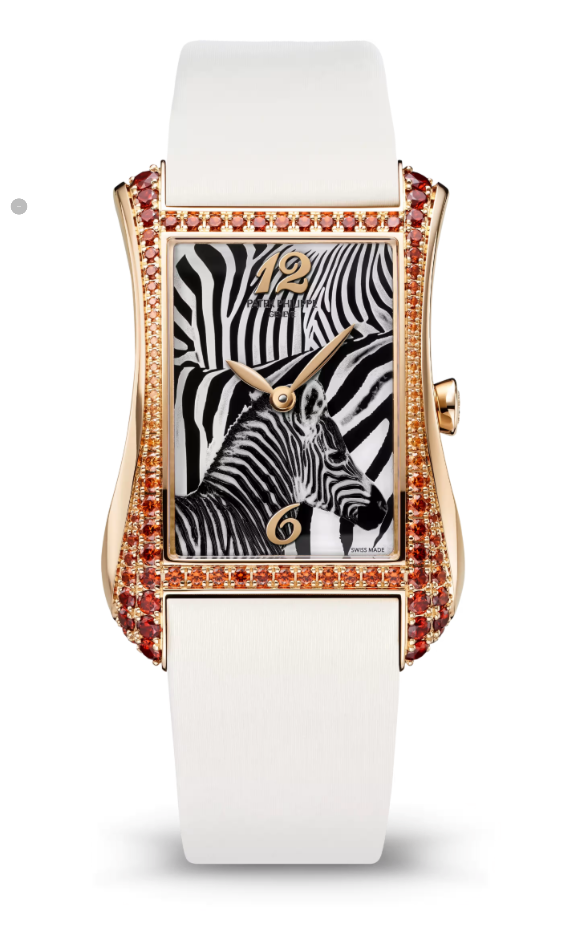
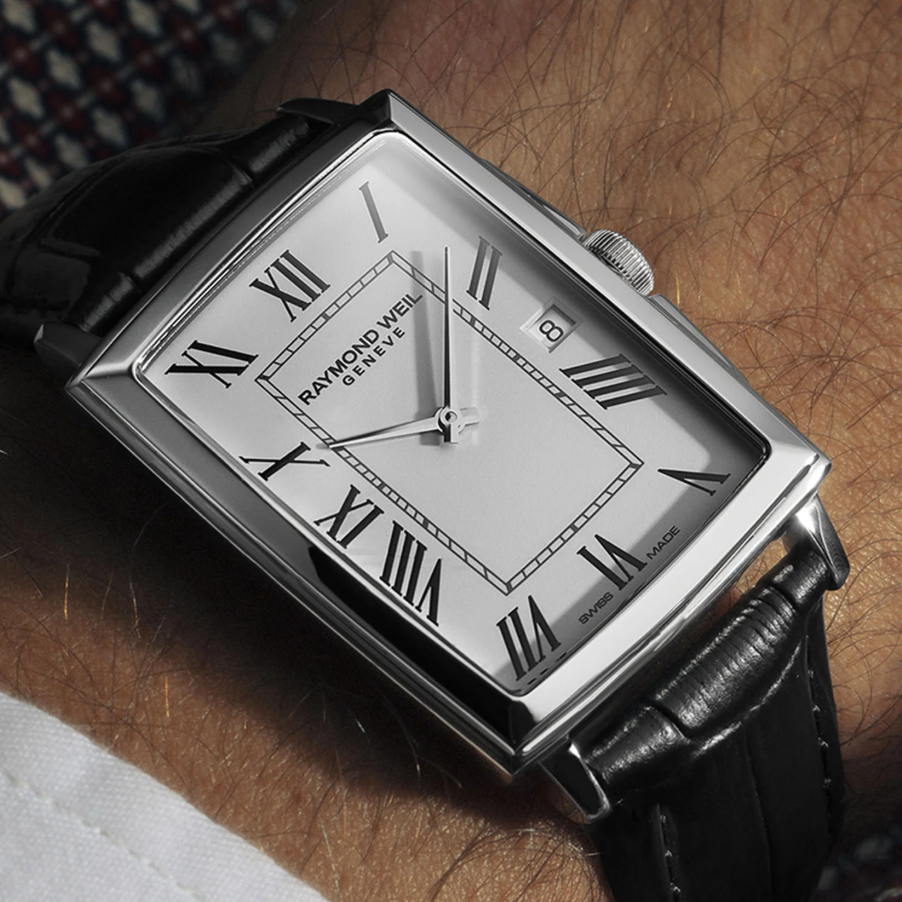
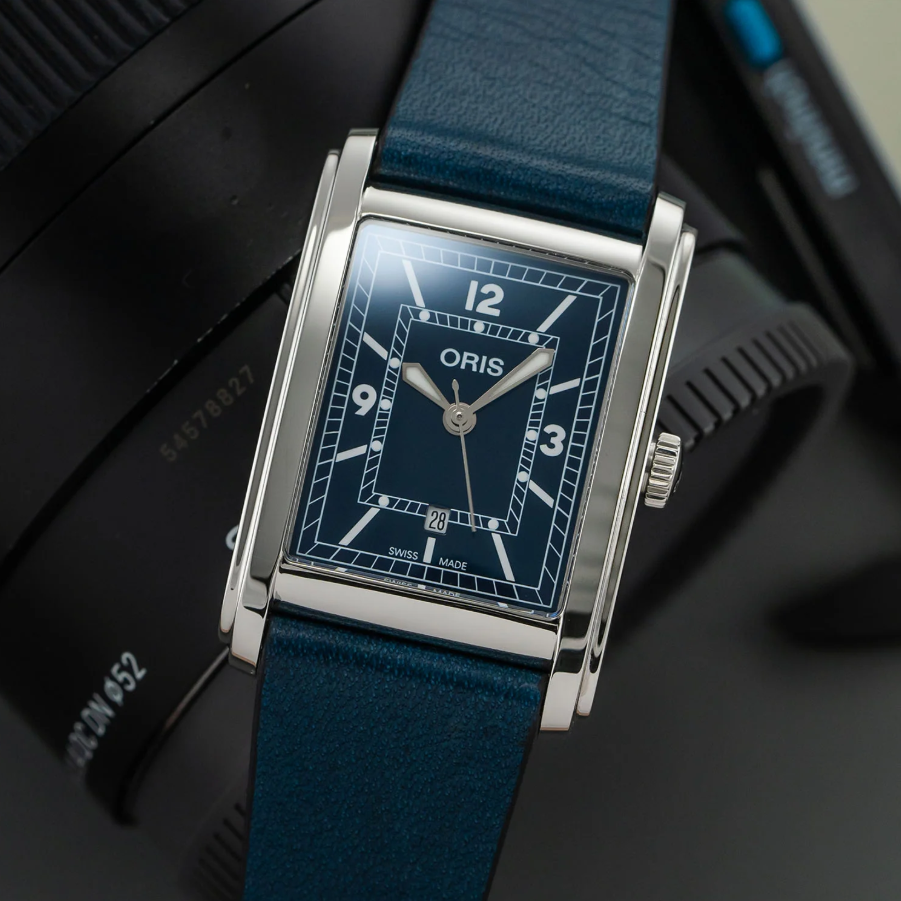
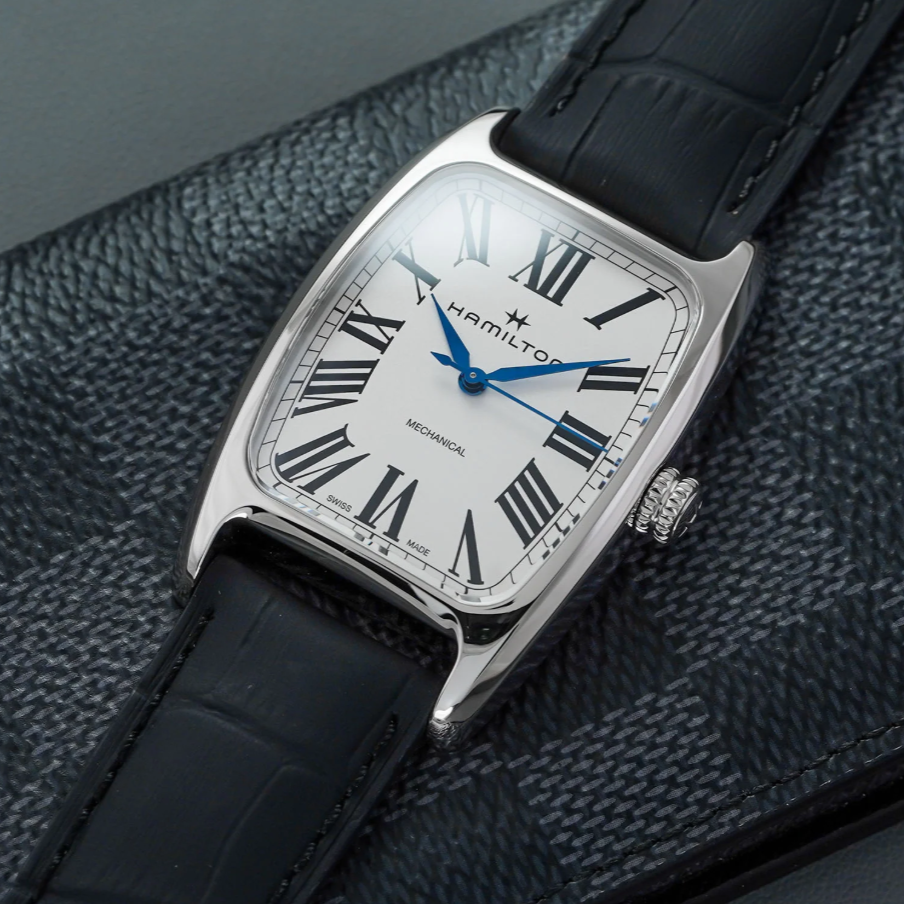
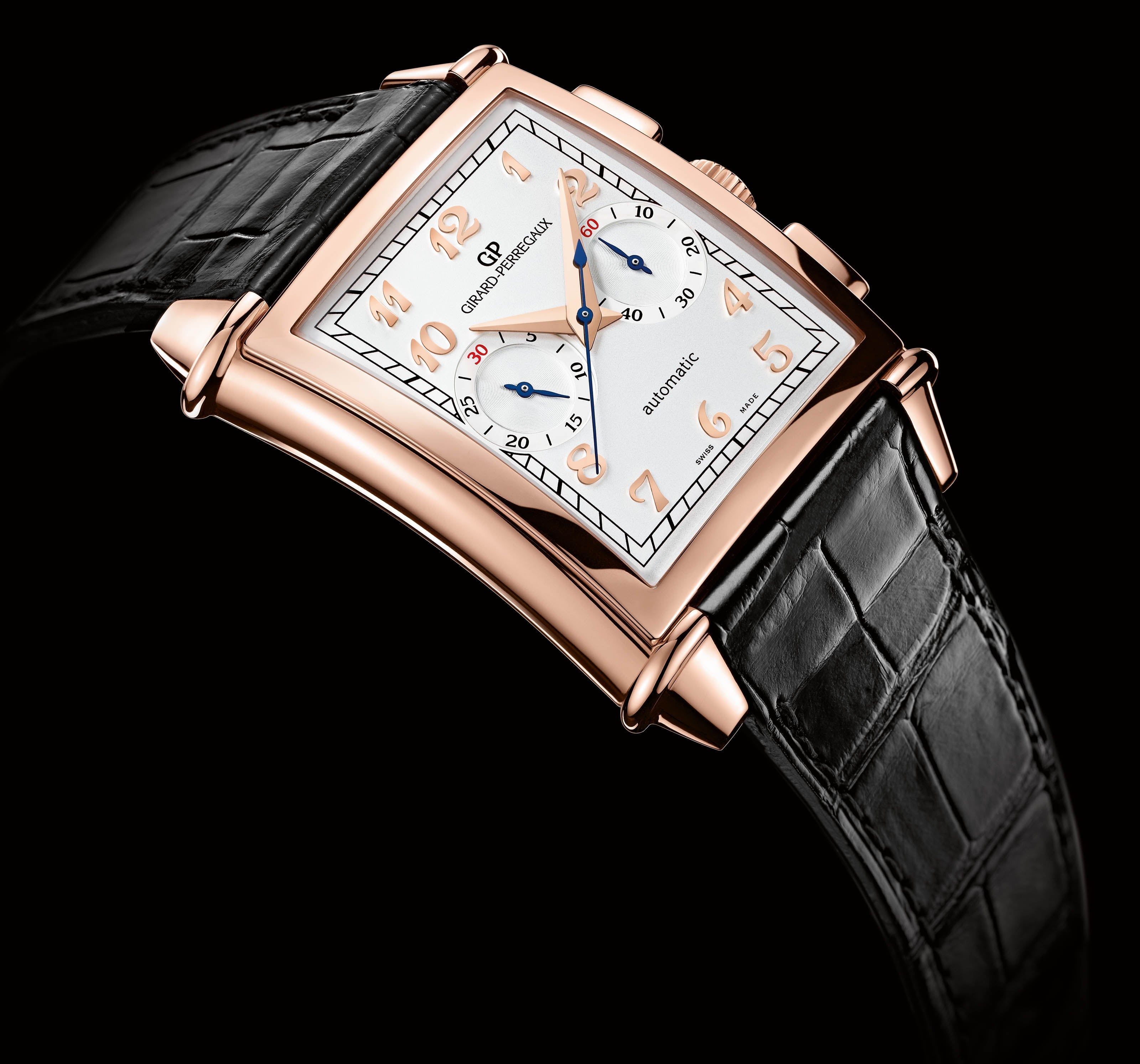
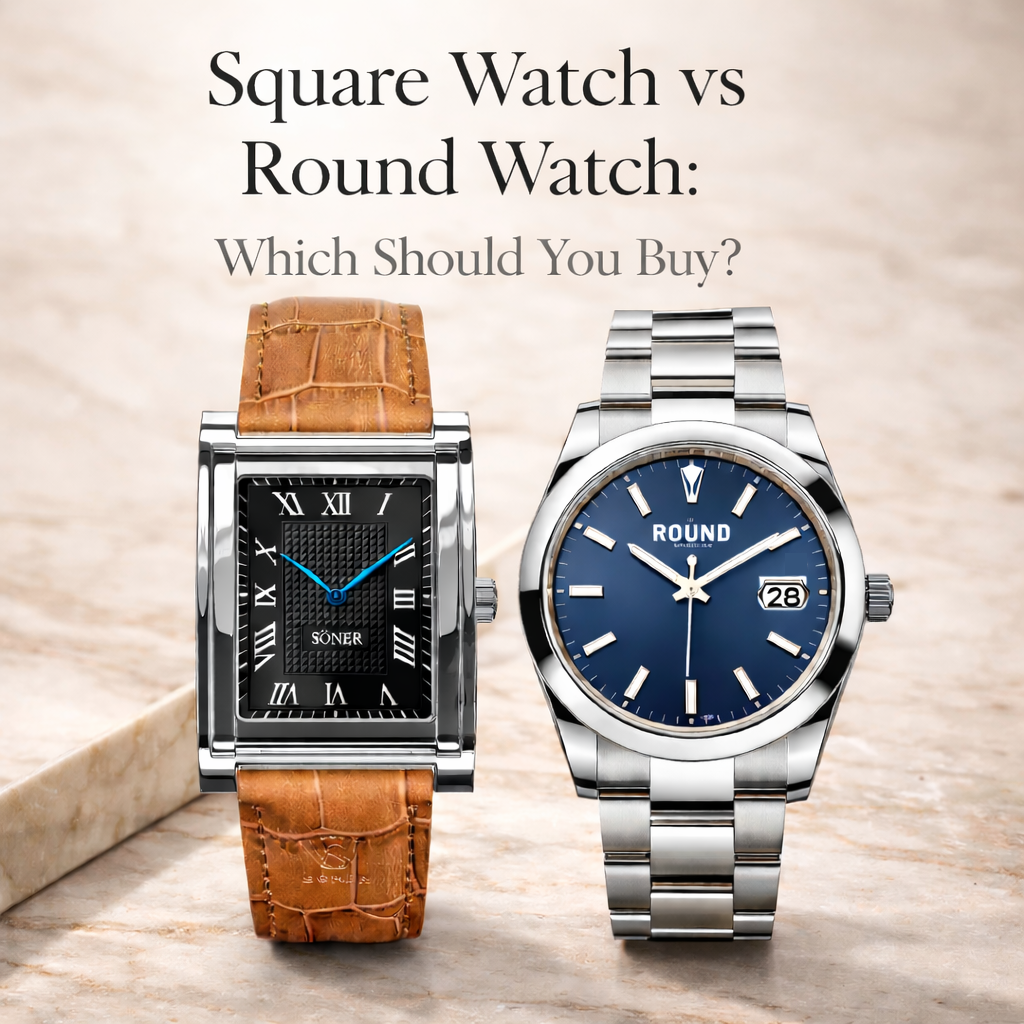
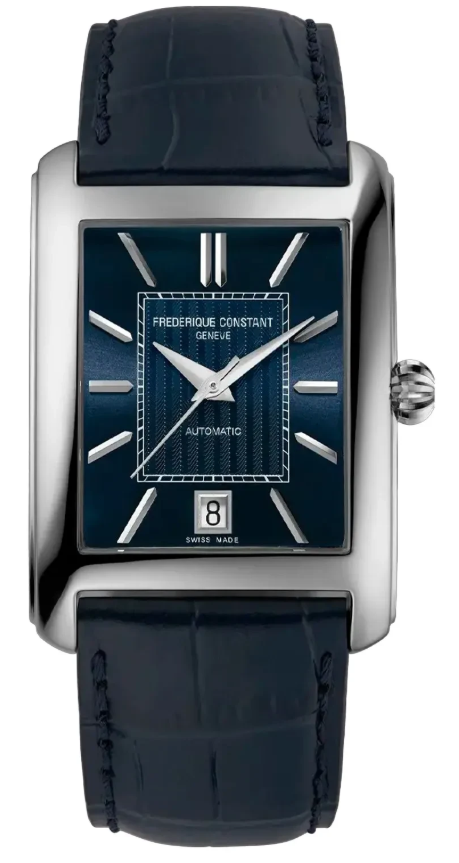
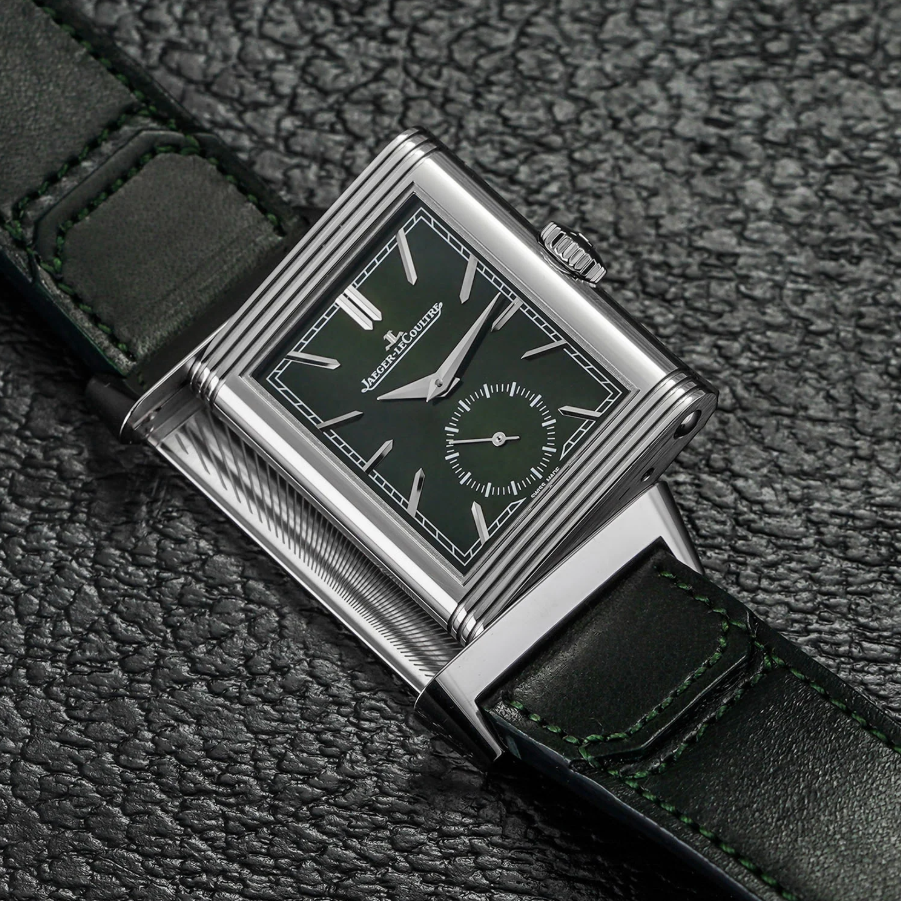
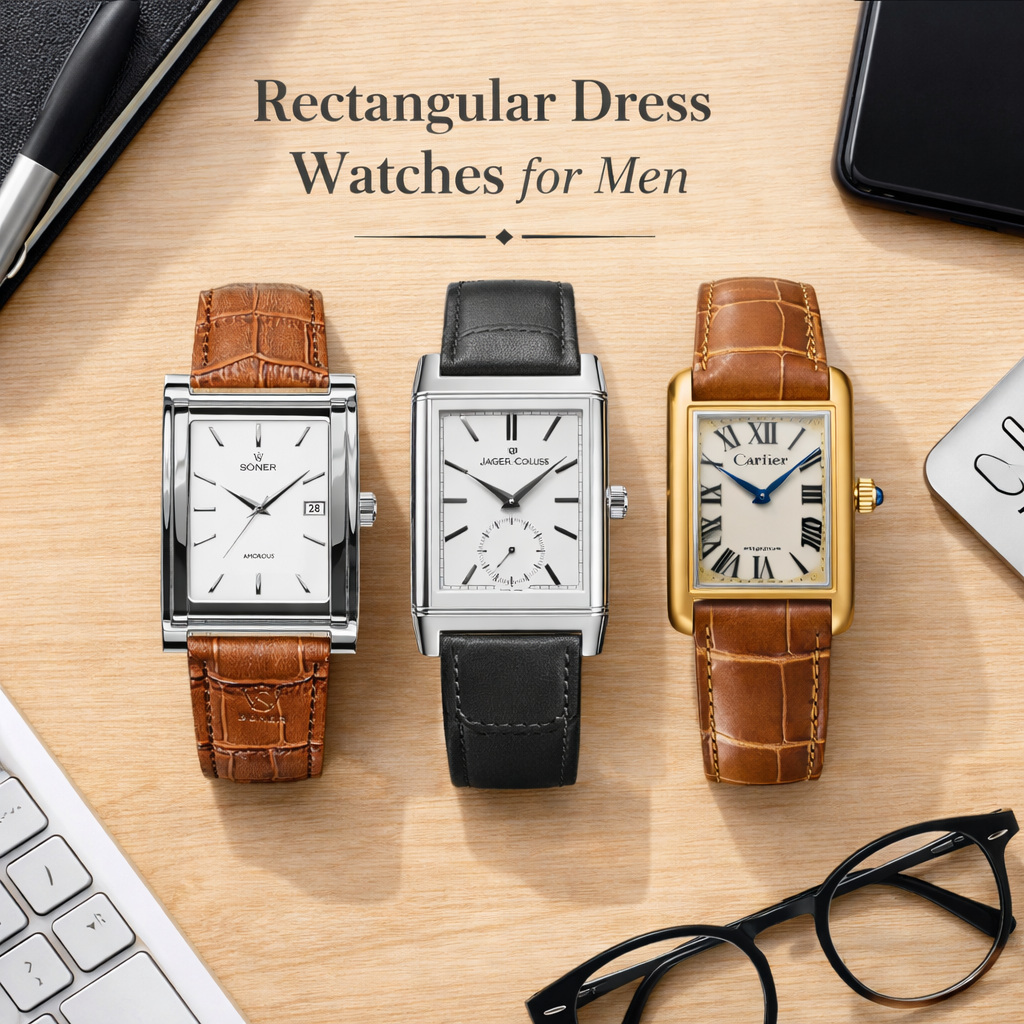
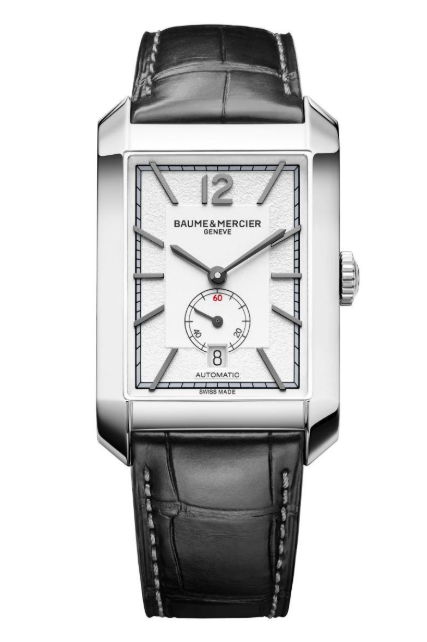
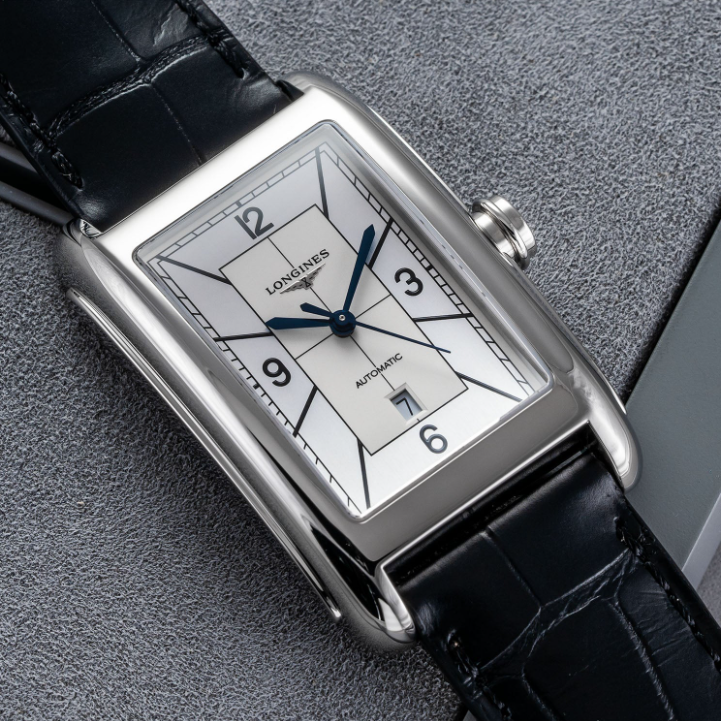
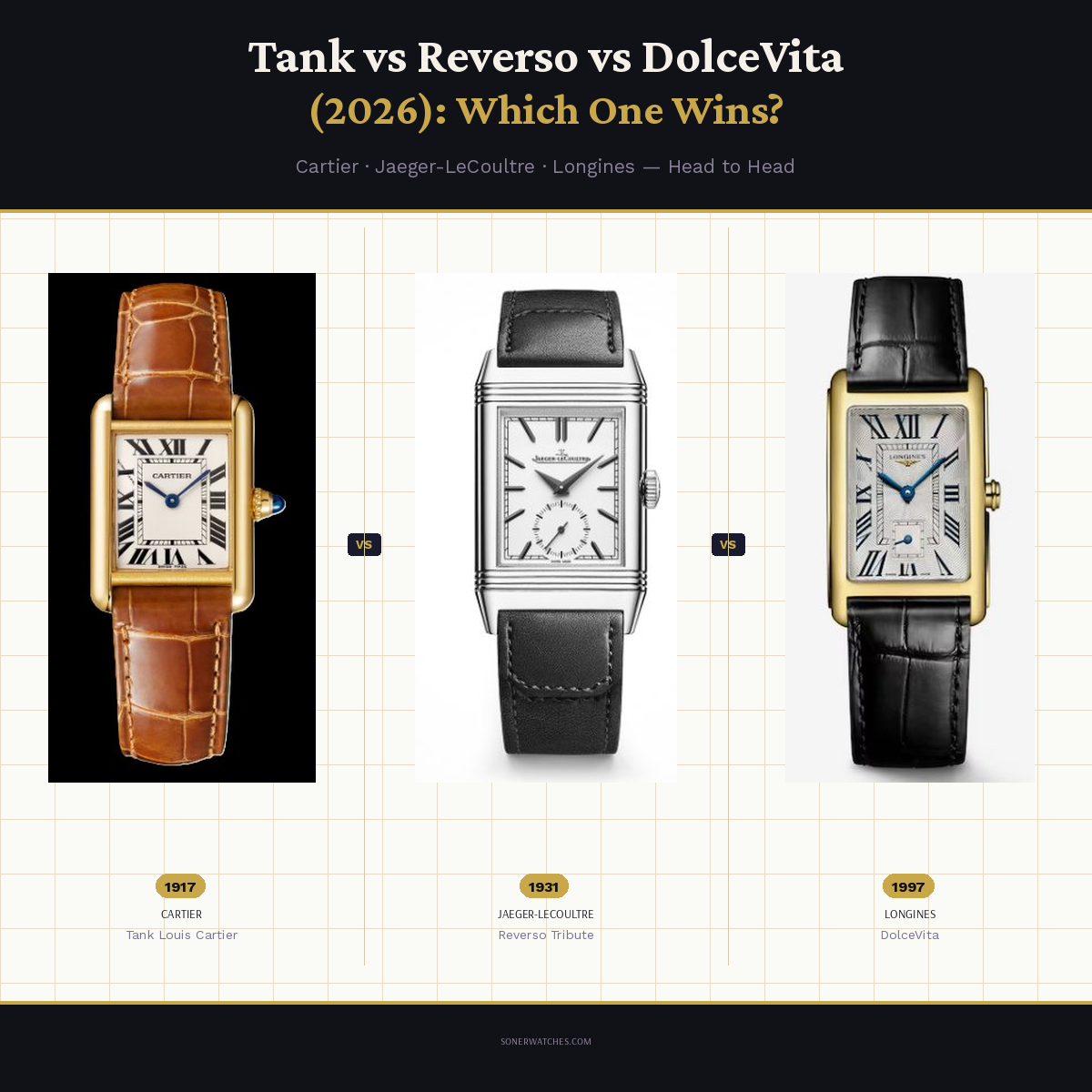
The wrist is not round. It's flat and elongated, which is why a rectangular case can sit flush along it and slip under a cuff where even a thin round watch leaves a small bump. It's no accident that several of the most significant formal watches ever made — the Cartier Tank, the Jaeger-LeCoultre Reverso, the Patek Philippe Gondolo — are rectangular. That said, a well-proportioned round dress watch under 9mm is entirely correct for formal wear too; shape is a preference, not a rule.
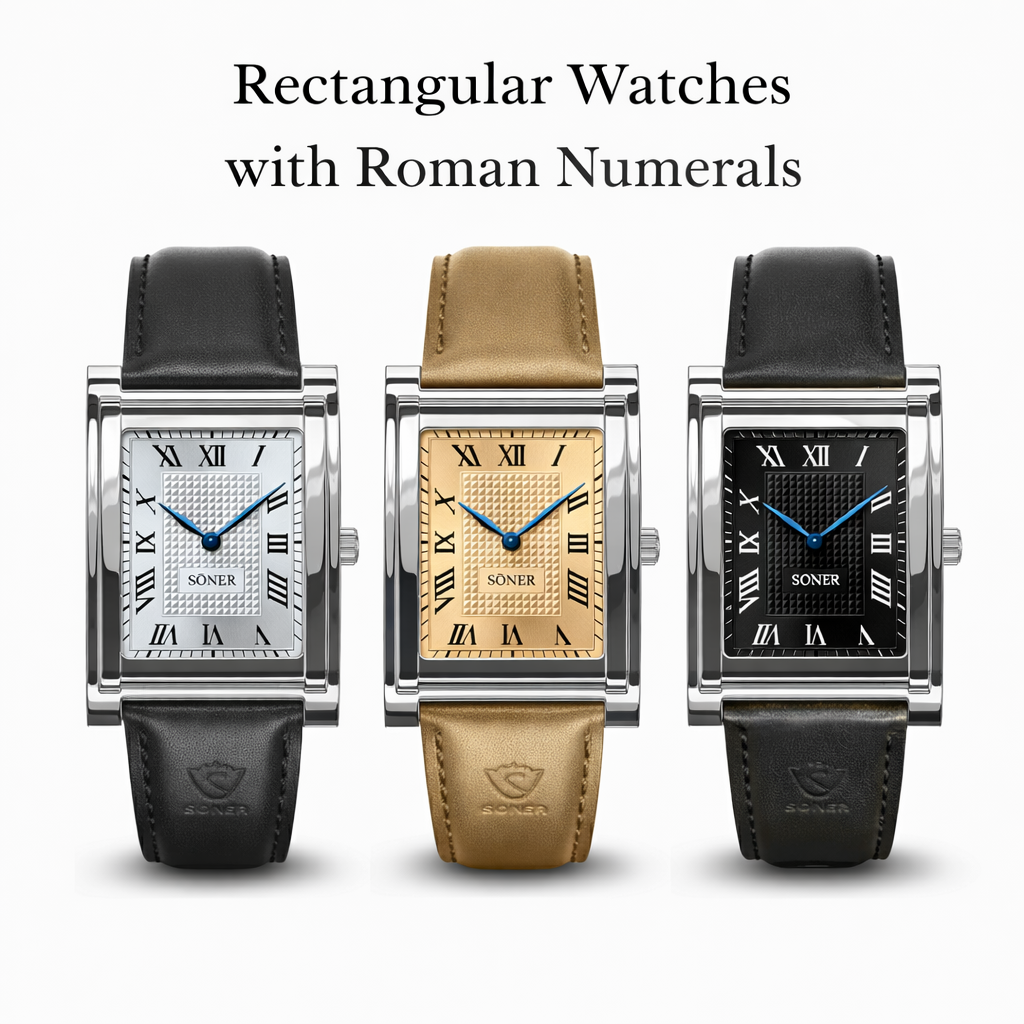
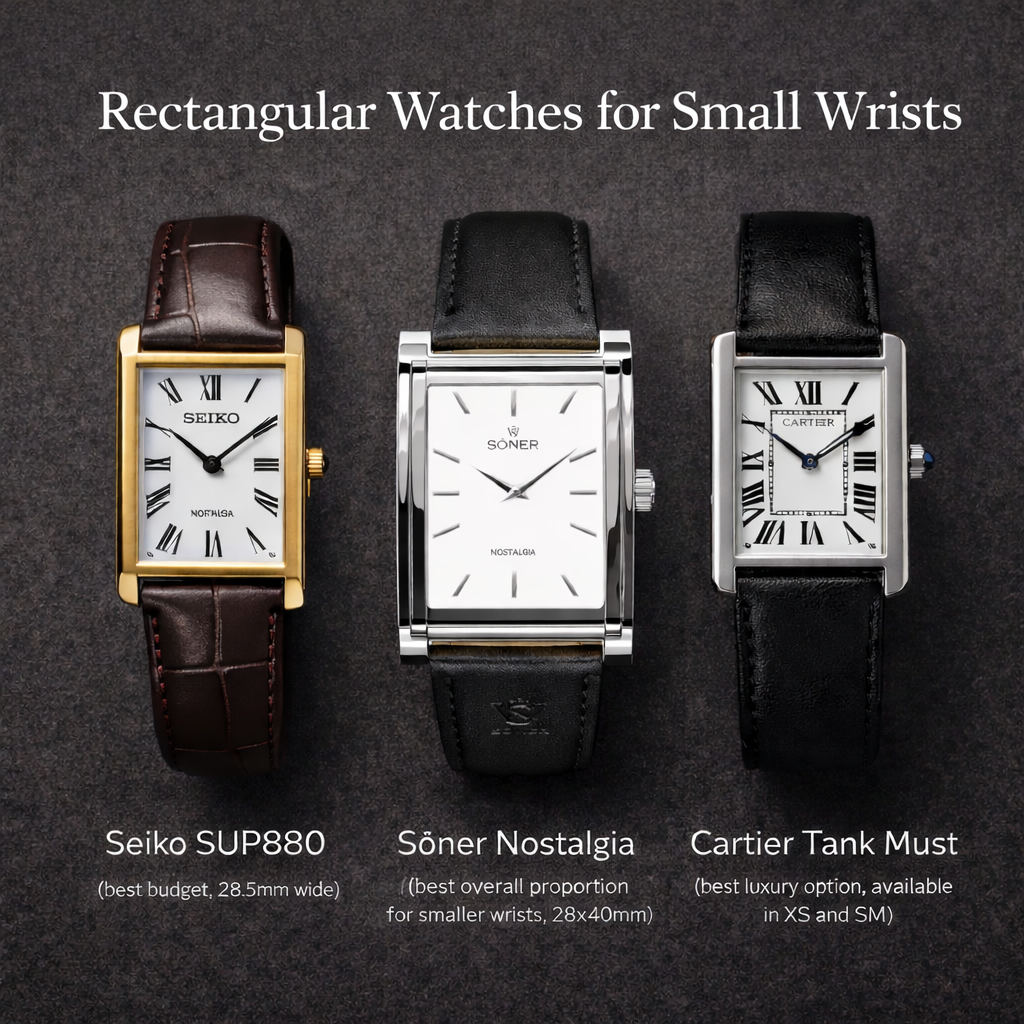
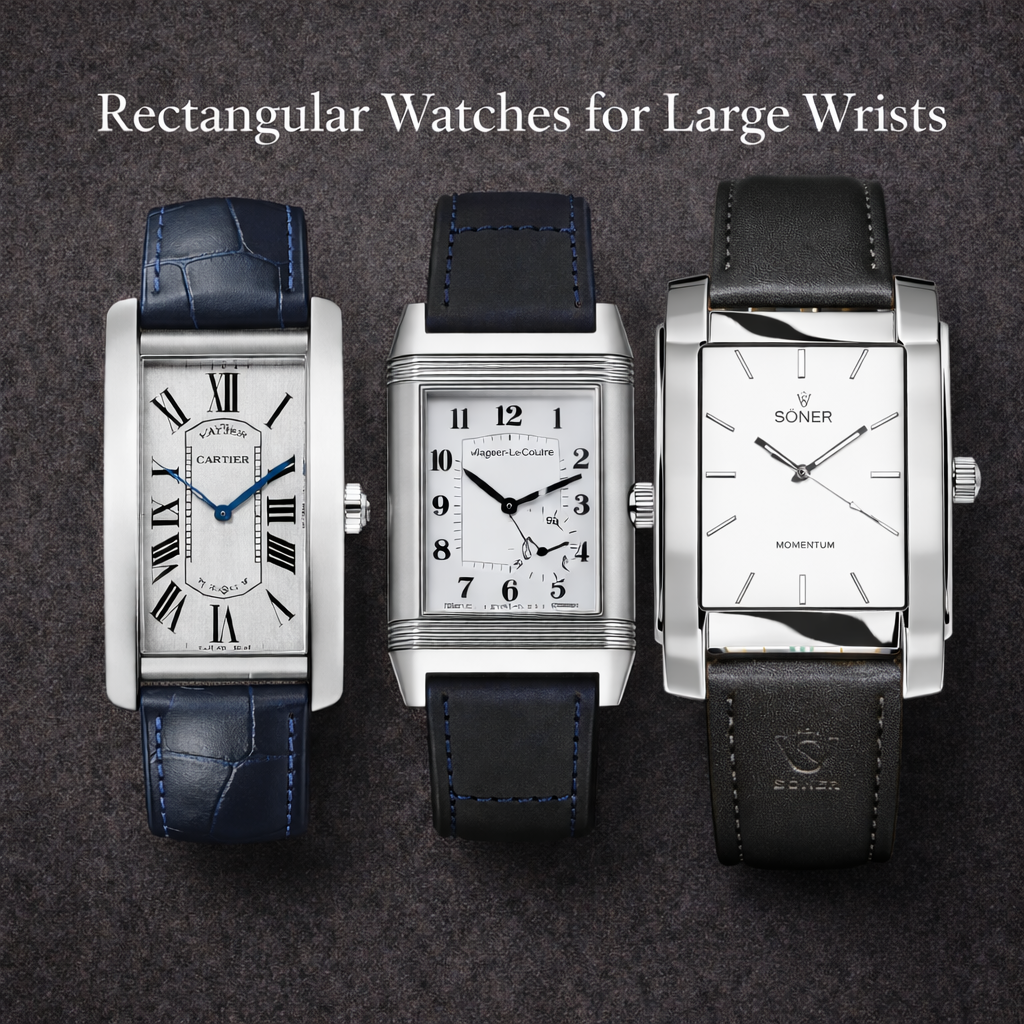
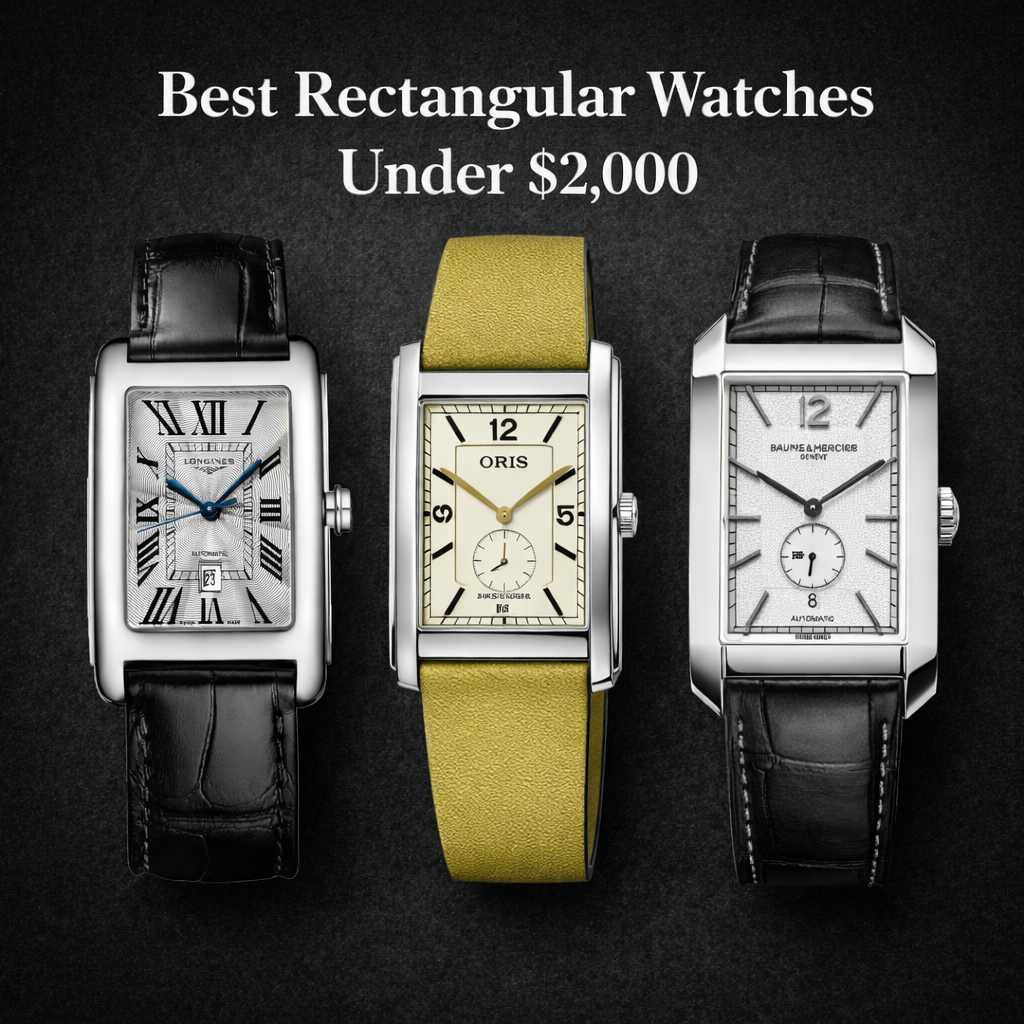
Because the shape has its own depth — sizing quirks, the best models at each price, how it wears under tailoring — I've covered it separately. For the full case for the shape and a ranked set of picks, see our guide to rectangular dress watches for men.
How to Choose a Men's Dress Watch
1. Get the size right first
For a dress watch, the lug-to-lug measurement matters more than case diameter — it's the distance from the tip of one lug to the other, and it decides whether the watch sits within your wrist or overhangs it. Overhang is the single fastest way to make a formal watch look wrong.
| Wrist size | Recommended case width | Max lug-to-lug |
|---|---|---|
| Under 16cm | 24–28mm | 44mm |
| 16–18cm | 28–34mm | 48mm |
| 18–20cm | 34–40mm | 52mm |
| Over 20cm | 38–42mm | 56mm |
2. Choose the right thickness
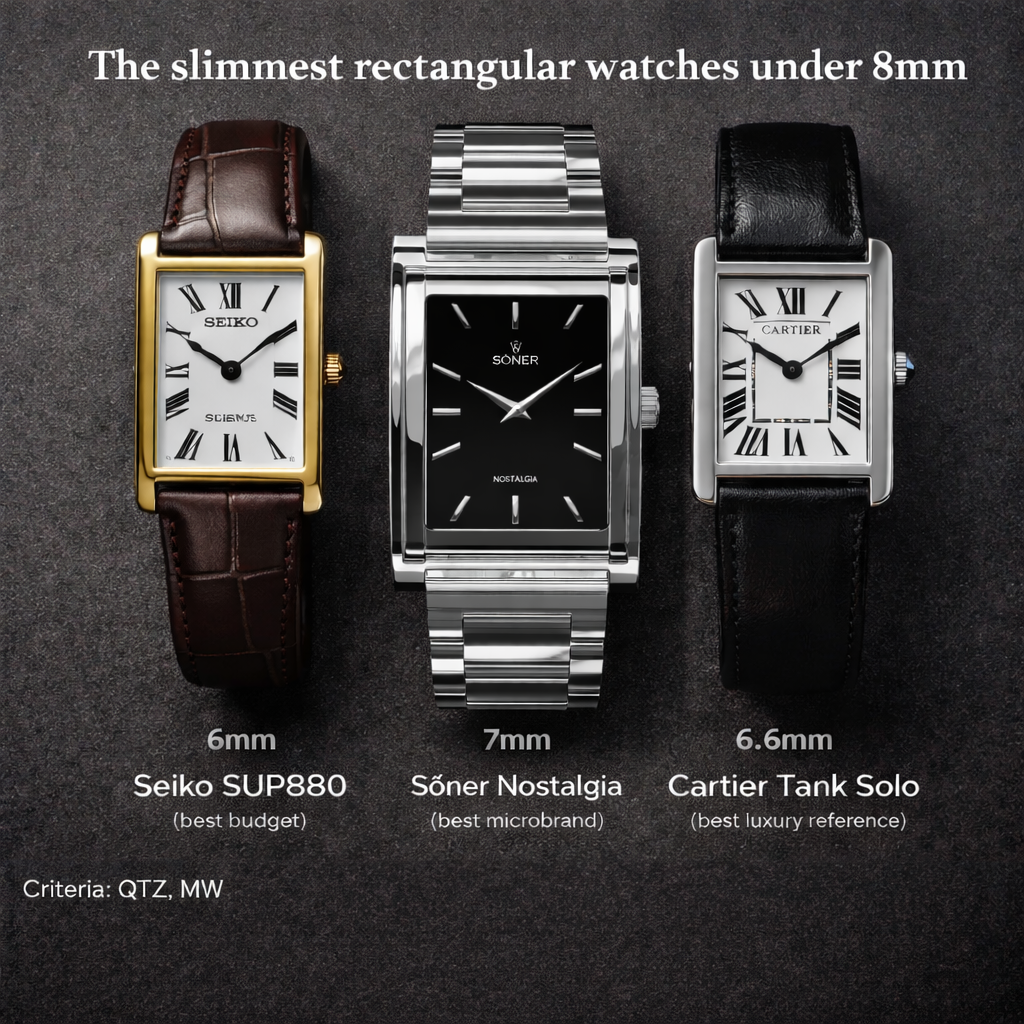
The rule for a dress watch is simple: as thin as the movement allows. Under 8mm is ideal for slipping beneath a shirt cuff. Between 8 and 10mm is acceptable for everyday wear. Above 10mm starts to look like a sports watch regardless of how restrained the dial is.
3. Quartz or automatic?
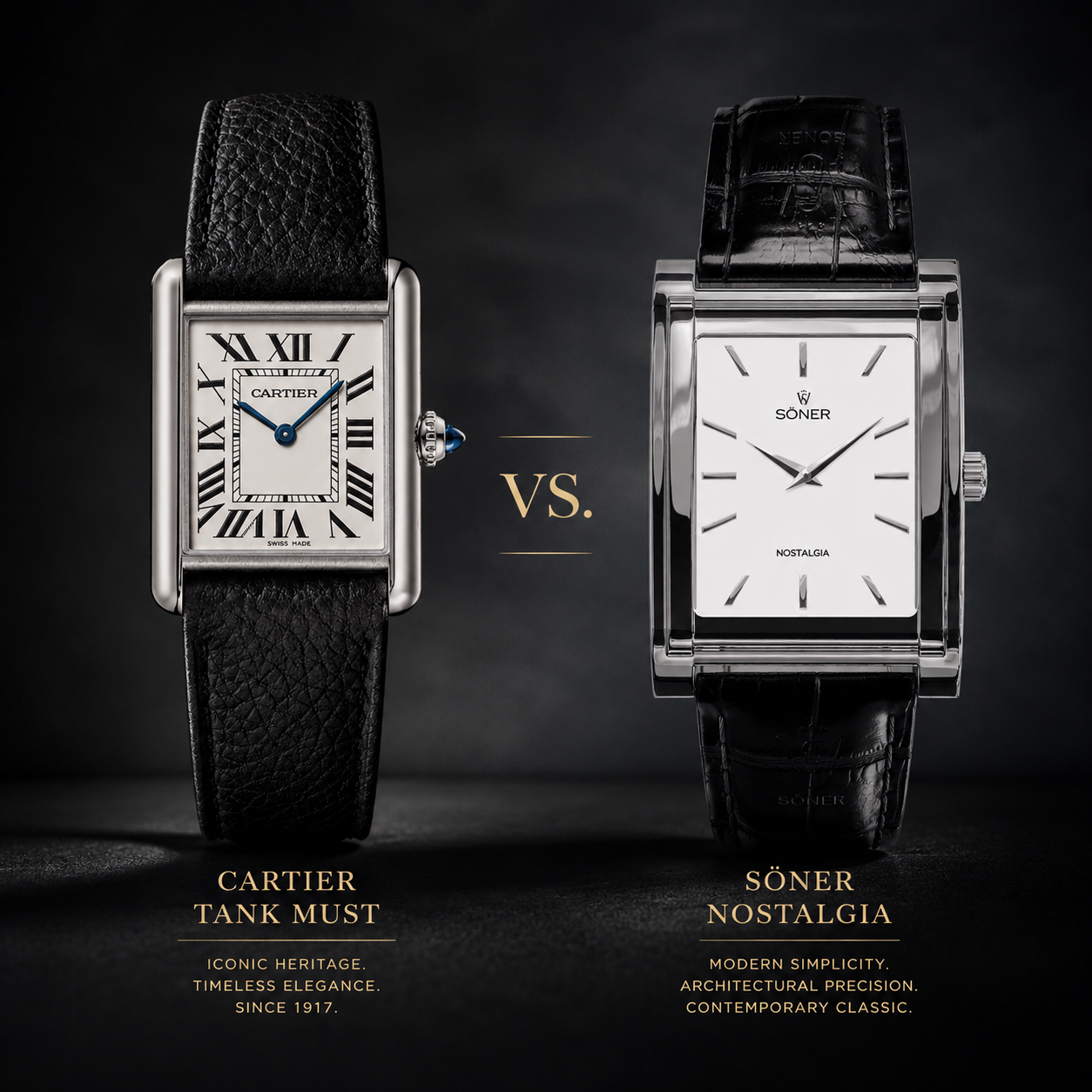
For a formal watch specifically, quartz is a legitimate choice and in some ways the better one. A dress watch is worn for its aesthetic, not its mechanical interest, and a thin quartz movement allows a slimmer case than most automatics can achieve. Cartier's Tank Must is quartz; Söner's Nostalgia collection runs a Swiss ETA quartz calibre with an 11-year battery. Neither is a compromise. That said, if you want the sweep of a seconds hand and the ritual of a mechanical movement, an automatic is deeply satisfying — just accept it will sit 2–3mm thicker.
| Movement | Typical thickness | Maintenance | Best for |
|---|---|---|---|
| Quartz | 5–7mm possible | Battery every 2–11 years | Ultra-thin profile, low maintenance |
| Manual wind | 6–9mm possible | Wind daily, service every 5–7 years | Thin mechanical, traditional feel |
| Automatic | 8–12mm typical | Service every 5–7 years | Mechanical interest, everyday wear |
4. Dial and case material
For the dial, white or black is classic and never wrong; a sunburst silver or champagne dial adds warmth without loudness. Avoid busy sub-dials or colour on a true formal watch — the point is restraint. For the case, stainless steel is the most practical and versatile: it ages well, polishes back easily, and works with any strap. Gold PVD or solid gold adds formality but limits versatility, so for everyday dress wear, steel is the right call.
5. Strap choice
A leather strap is the default for a dress watch, and correctly so. A fine alligator or crocodile-pattern strap in black or dark brown elevates any formal watch instantly. For more casual dress wear, a steel bracelet works well if it's proportioned correctly to the case width.

A Dress Watch Built to Disappear Under the Cuff
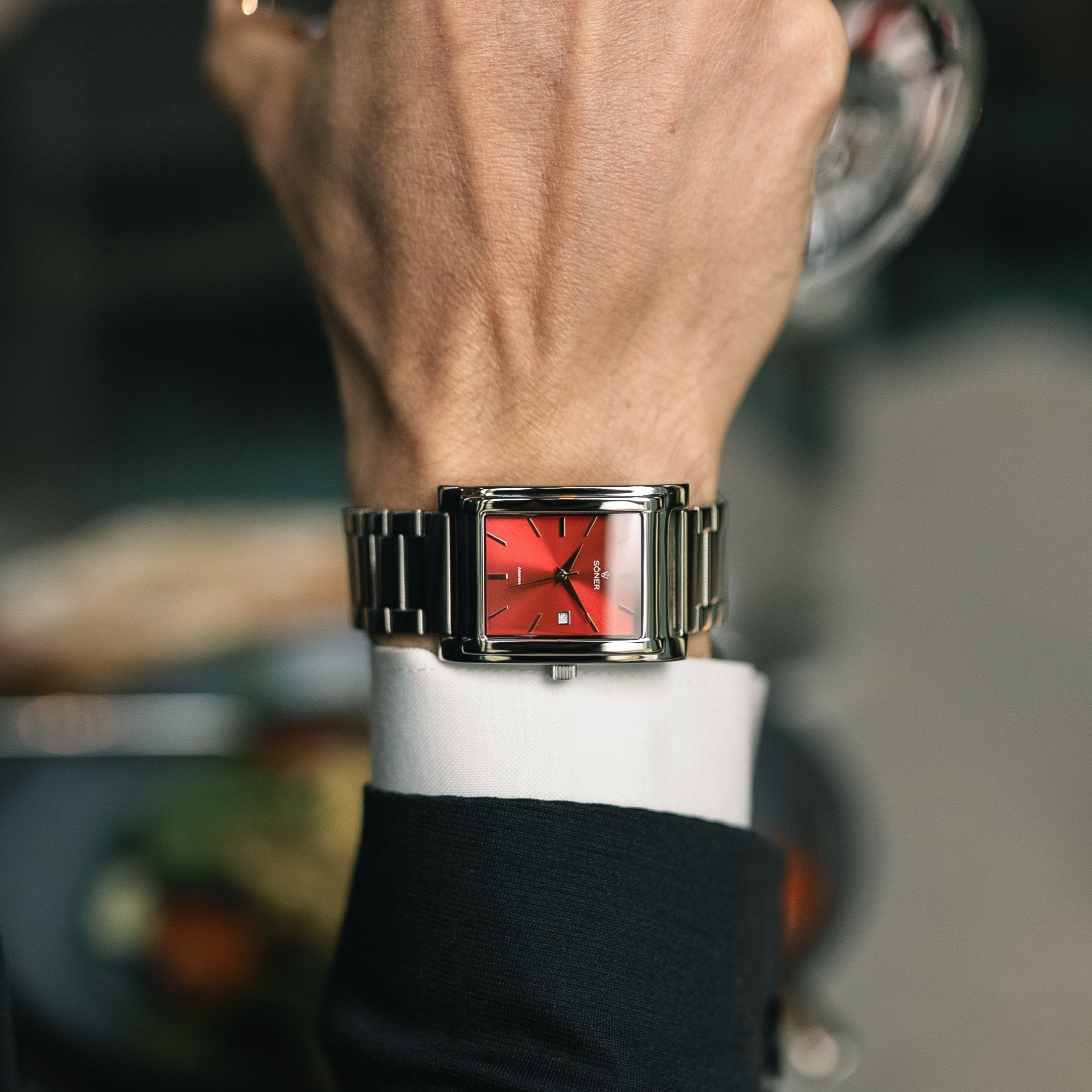
Söner's Nostalgia runs a Swiss quartz movement in a slim 7mm case — sapphire crystal, hardened steel, 5 ATM — from around $550.
See the collectionThe History of the Men's Dress Watch
The dress watch as a category didn't always exist in its current form. Until the early 20th century, a gentleman's timepiece was a pocket watch, worn in a waistcoat and accessed by a chain. Wristwatches were considered feminine accessories, unsuited to the masculine register of formal clothing.
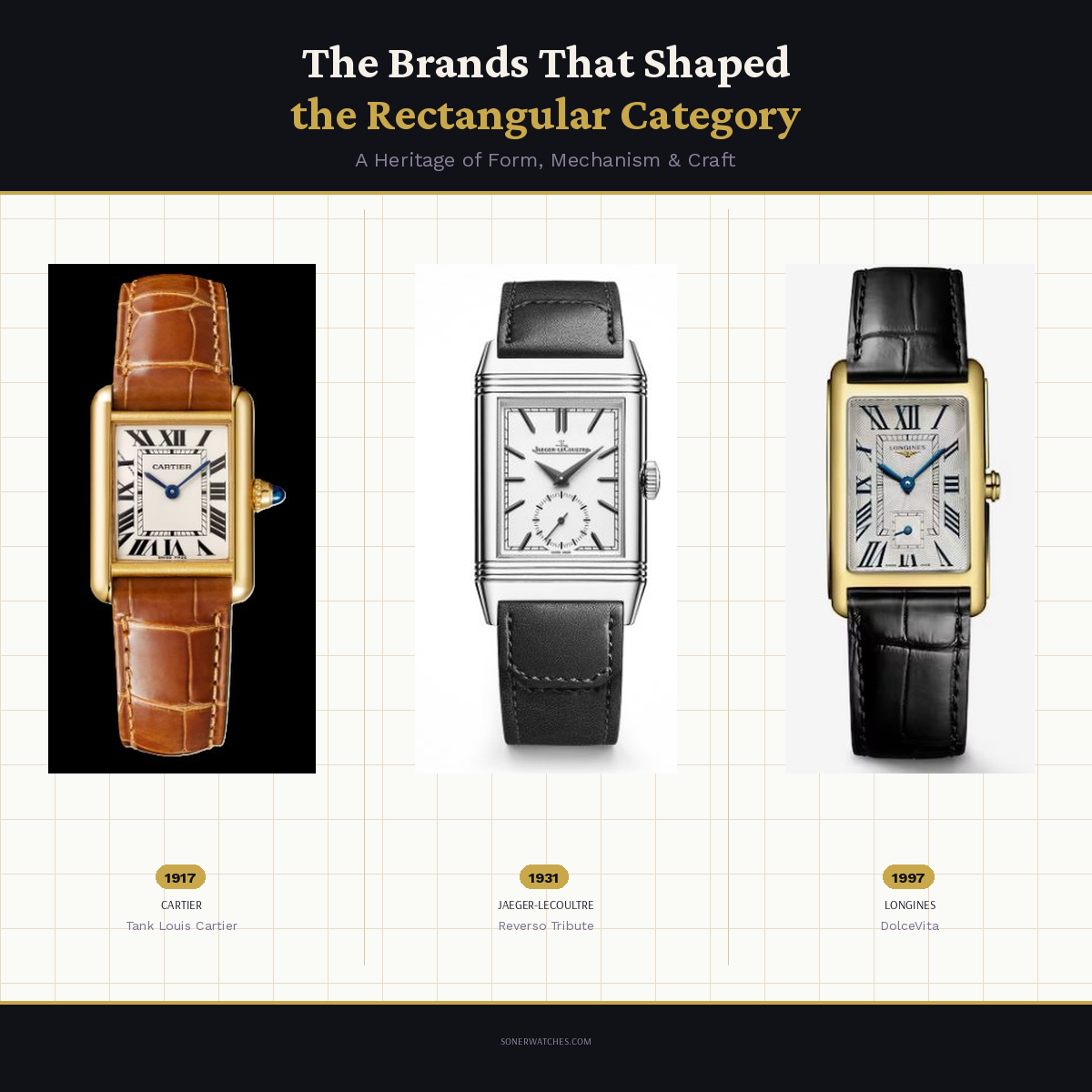
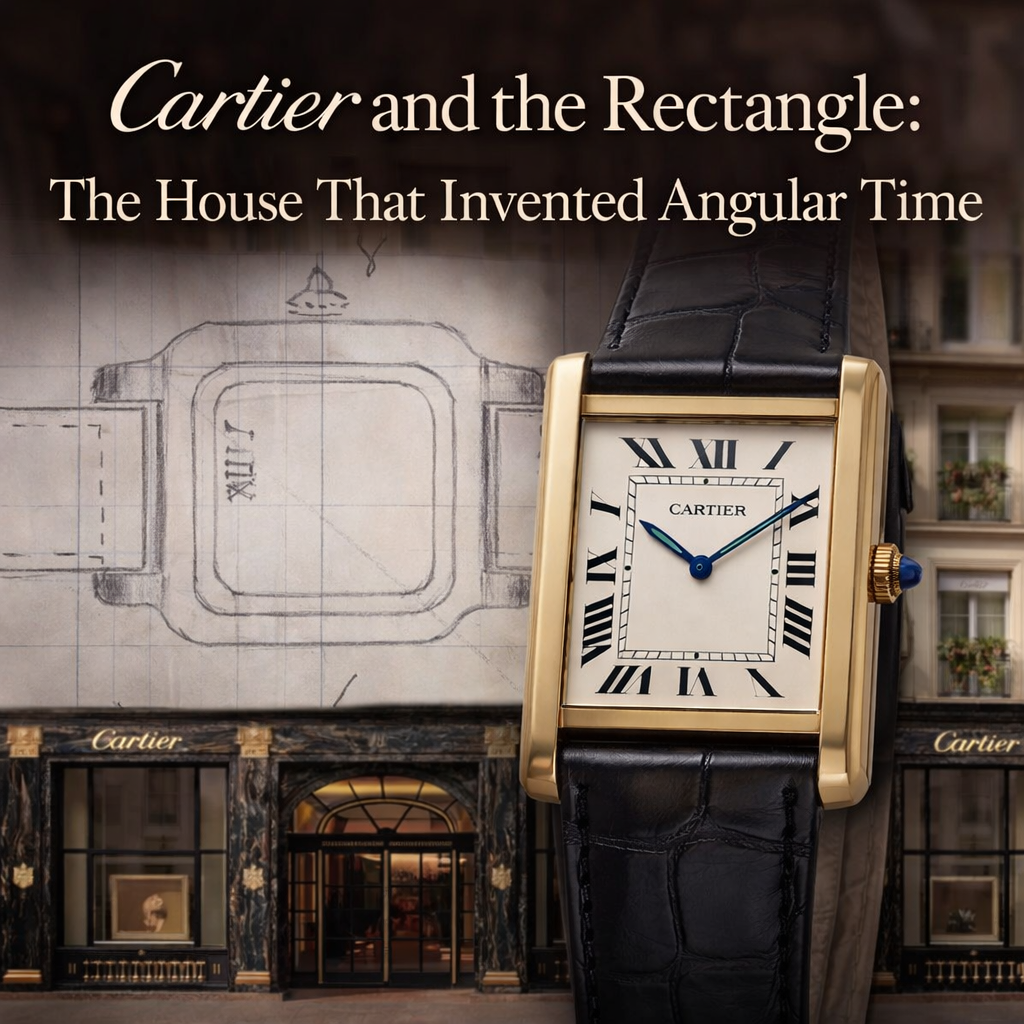
That changed during the First World War, when officers found that synchronising manoeuvres needed a watch readable without reaching into a pocket. The wristwatch, practical before it was fashionable, moved to the wrists of soldiers, and by the 1920s it had crossed into civilian life. With it came an urgent question: what should a watch designed for formal clothing actually look like? The answer the major houses arrived at independently was the same — thin, restrained, and usually rectangular. Cartier's Tank (1917) set the blueprint, and Jaeger-LeCoultre's Reverso (1931) became the defining Art Deco formal watch.
The quartz revolution of the 1970s and the sports-watch boom that followed pushed dress watches into a corner of the market. But they never disappeared, and through the 2010s and 2020s the formal watch has recovered strongly, driven by buyers who find luxury sports watches over-familiar and value the deliberateness of a well-proportioned dress watch instead.
What Separates a Great Dress Watch From a Forgettable One
Most buyers focus on brand and movement. Both matter, but neither is the primary differentiator. What separates a great formal watch from a forgettable one comes down to four things: proportion, finishing, restraint, and legibility.
Proportion is the relationship between the case, the dial, and the wrist. A well-proportioned dress watch feels inevitable on the wrist; a poorly proportioned one — too large, too thick, or overhanging at the lugs — draws the eye in the wrong way. Finishing is the quality of the surfaces, and at this level it shows: a case that reflects light cleanly versus one that looks slightly rough is visible at arm's length, which is exactly where a formal watch is seen. Restraint is the hardest quality to hold and the easiest to violate — a dress watch should tell the time, accept a date if it's elegant, and leave sub-dials and bezels to the sports category. Legibility shouldn't be sacrificed for elegance: slim applied indices and dauphine or sword hands on a clean dial deliver both.
How to Wear a Dress Watch
The dress watch is the most context-specific category, and getting the pairing right is the difference between looking considered and looking like you didn't think about it.
With a suit
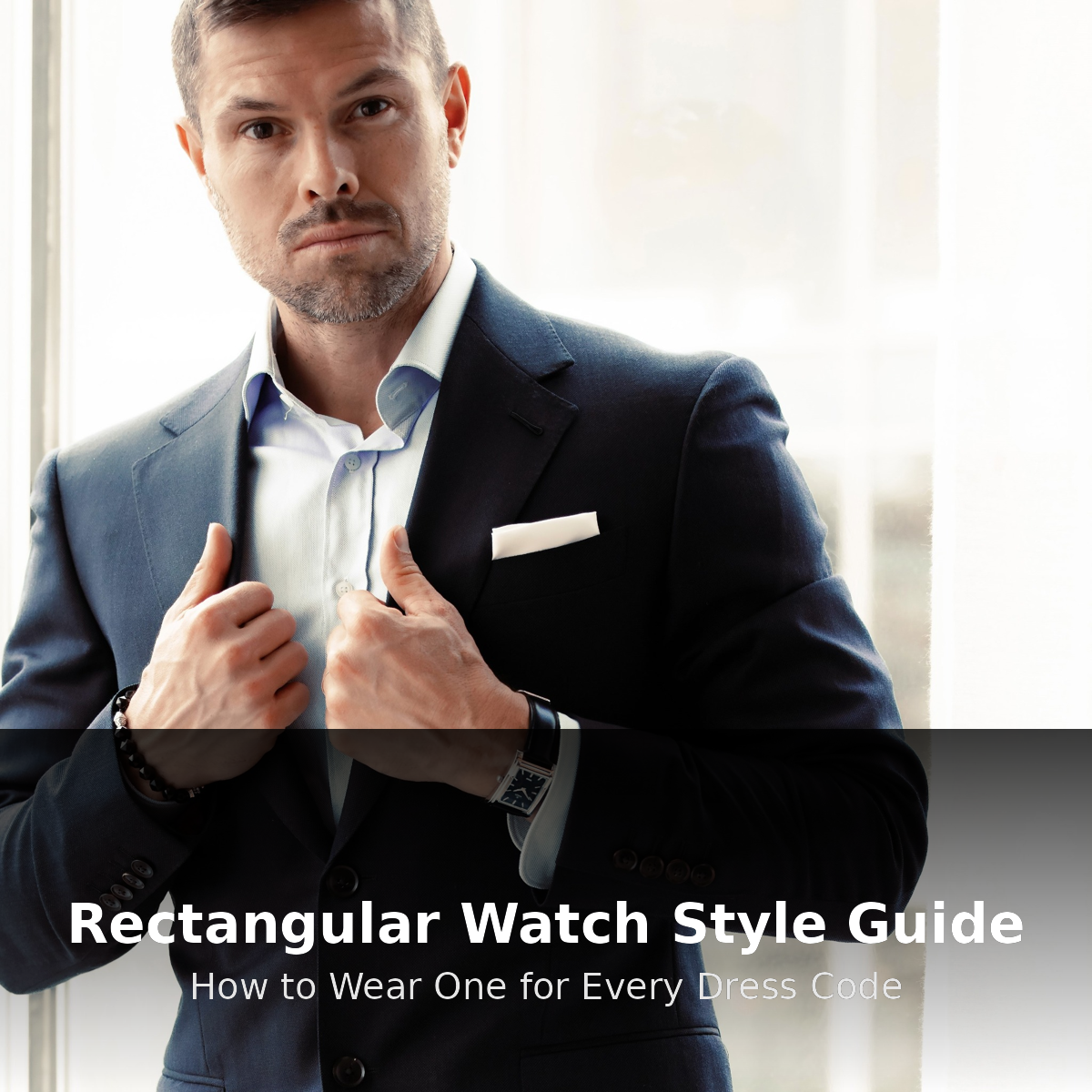
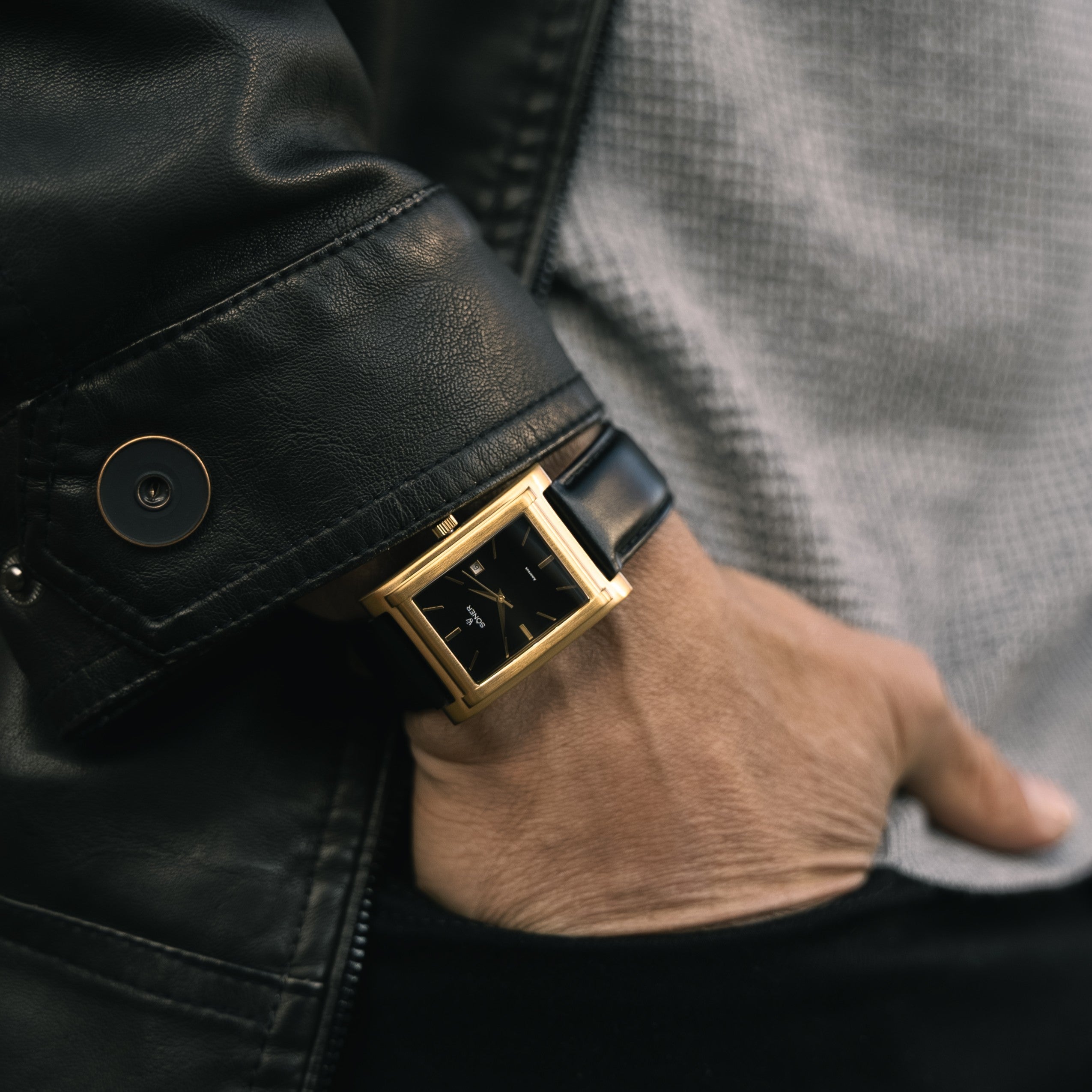
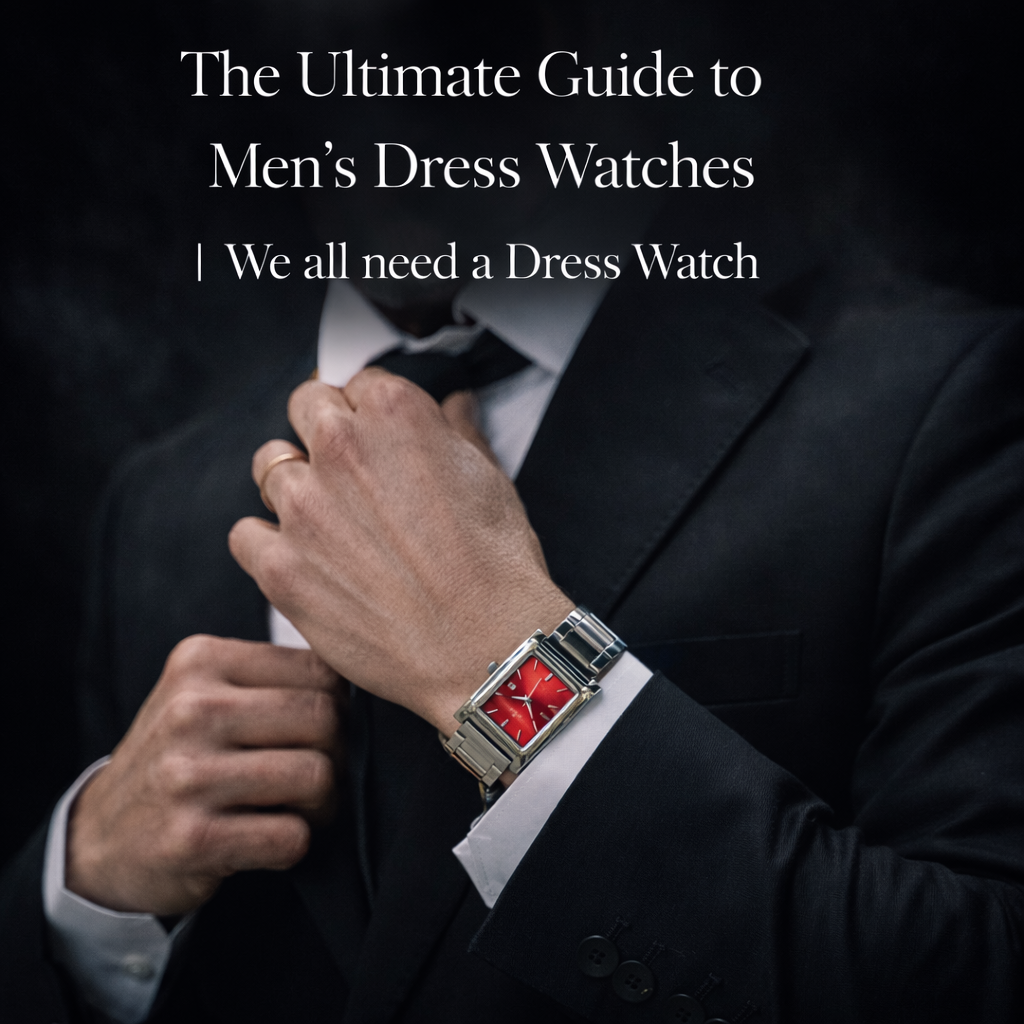
A slim watch on a leather strap is the canonical pairing with a suit. It should sit under the shirt cuff, visible only when the wrist bends. A case width of 28–34mm suits most sleeve proportions, and a steel bracelet is best avoided with a business suit — it adds visual noise at the cuff. For formal events, a black dial on a black alligator strap with steel or white-gold indices is impossible to fault.
With smart casual
With a blazer and chinos or an open collar, a dress watch can show more, and a steel bracelet becomes appropriate. The formal watch still reads as elevated next to a round sports watch — which is the point: it signals that you dress intentionally rather than by default.
With black tie
Black tie is the one context where a formal watch isn't merely appropriate but expected. A round sports watch with a dinner jacket is a combination that shouldn't exist. The thinner the better — under 7mm is ideal — with a white or silver dial on a black leather strap.
The cuff test
The simplest test for whether a watch works as formalwear: does it fit under the shirt cuff comfortably? If it creates a visible bump, it's too thick or too wide for that outfit. A proper dress watch slips under the cuff and disappears.
The Most Important Dress Watch Brands
A small number of brands established what a formal watch is. Understanding them is the foundation of any serious dress watch education.
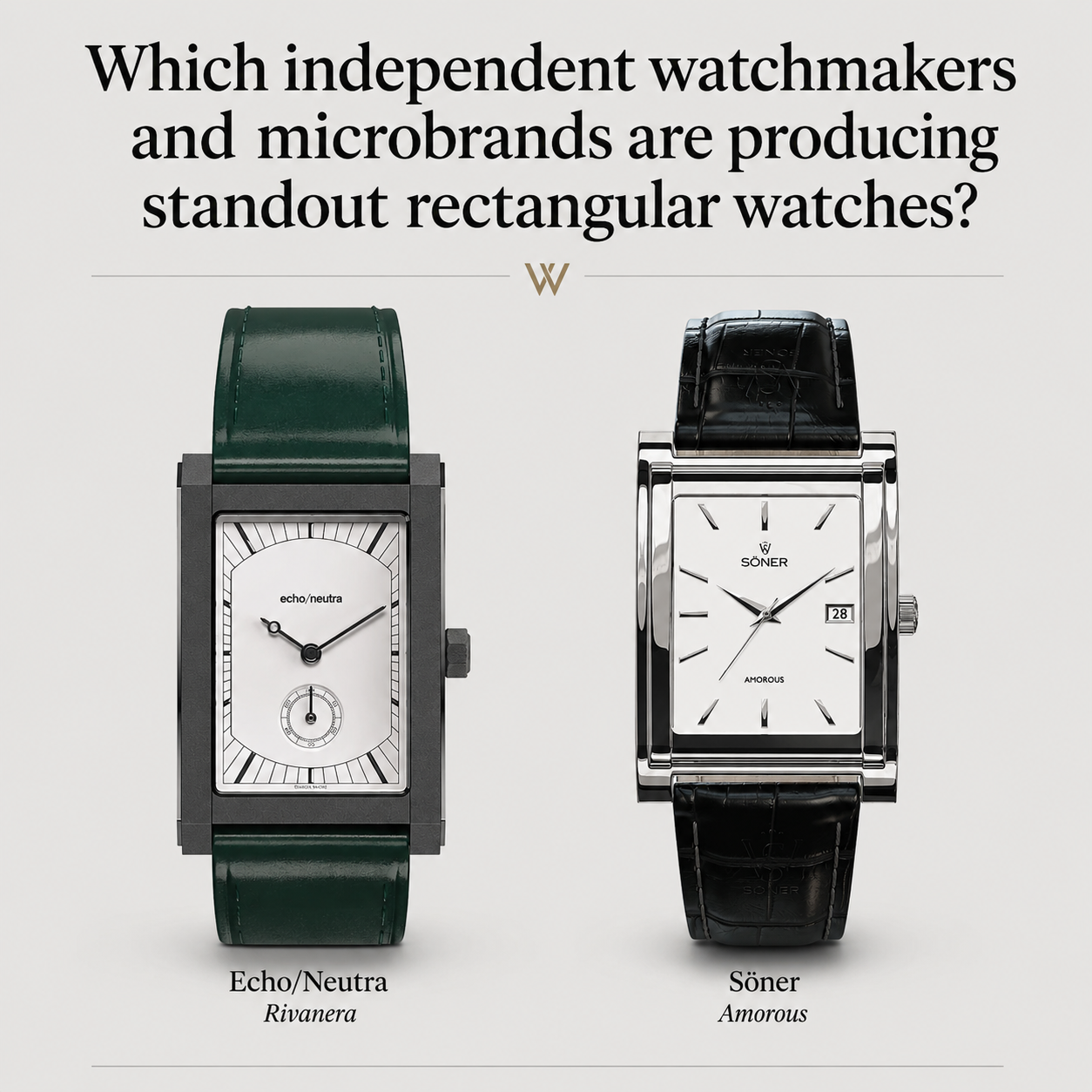
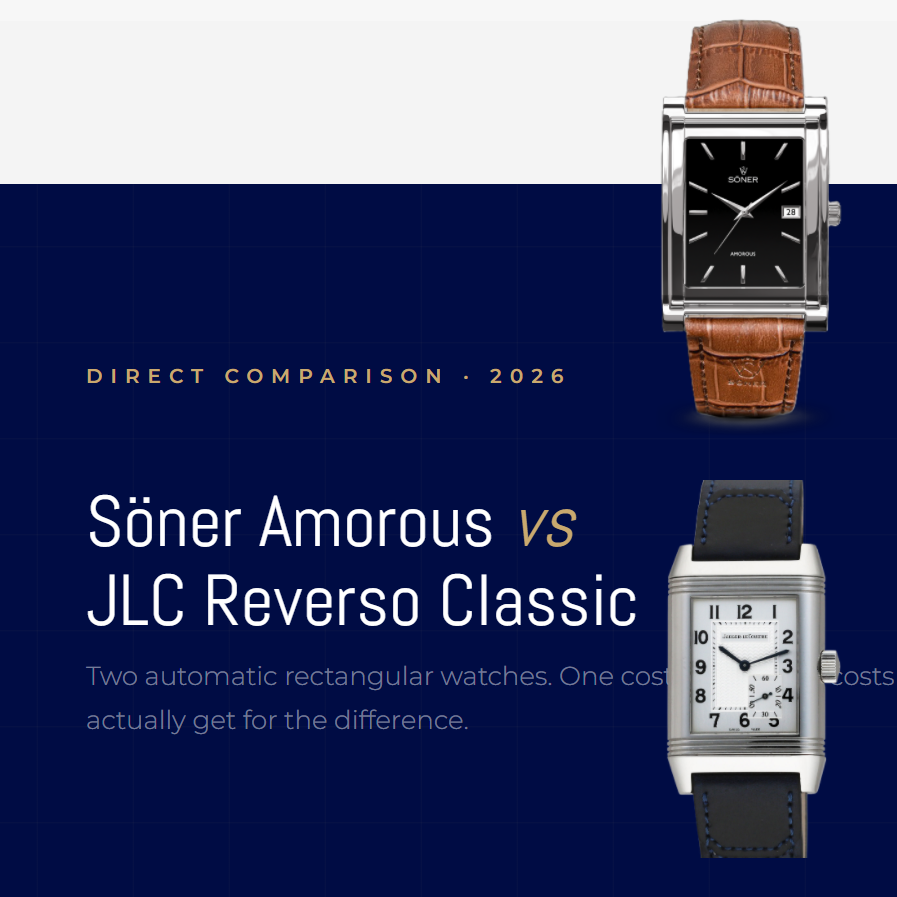
Cartier invented the modern dress watch in 1917 with the Tank, whose proportions have stayed essentially unchanged for over a century. The Tank Must is the benchmark formal watch at its price — and for what you get for less, see our guide to affordable Cartier Tank alternatives. Jaeger-LeCoultre created the Reverso in 1931, whose reversible case is the most ingenious dress watch design ever produced. Patek Philippe has made formal watches since the 1920s, and the Gondolo represents the highest expression of classical Genevan dress watchmaking. Söner Watches is the only brand built exclusively around rectangular and square timepieces; the Nostalgia collection from around $550 is an accessible entry to a serious formal watch — Swiss quartz, sapphire crystal, hardened steel, 5 ATM — and the Amorous adds a Swiss automatic from around $620.
Specifications That Actually Matter
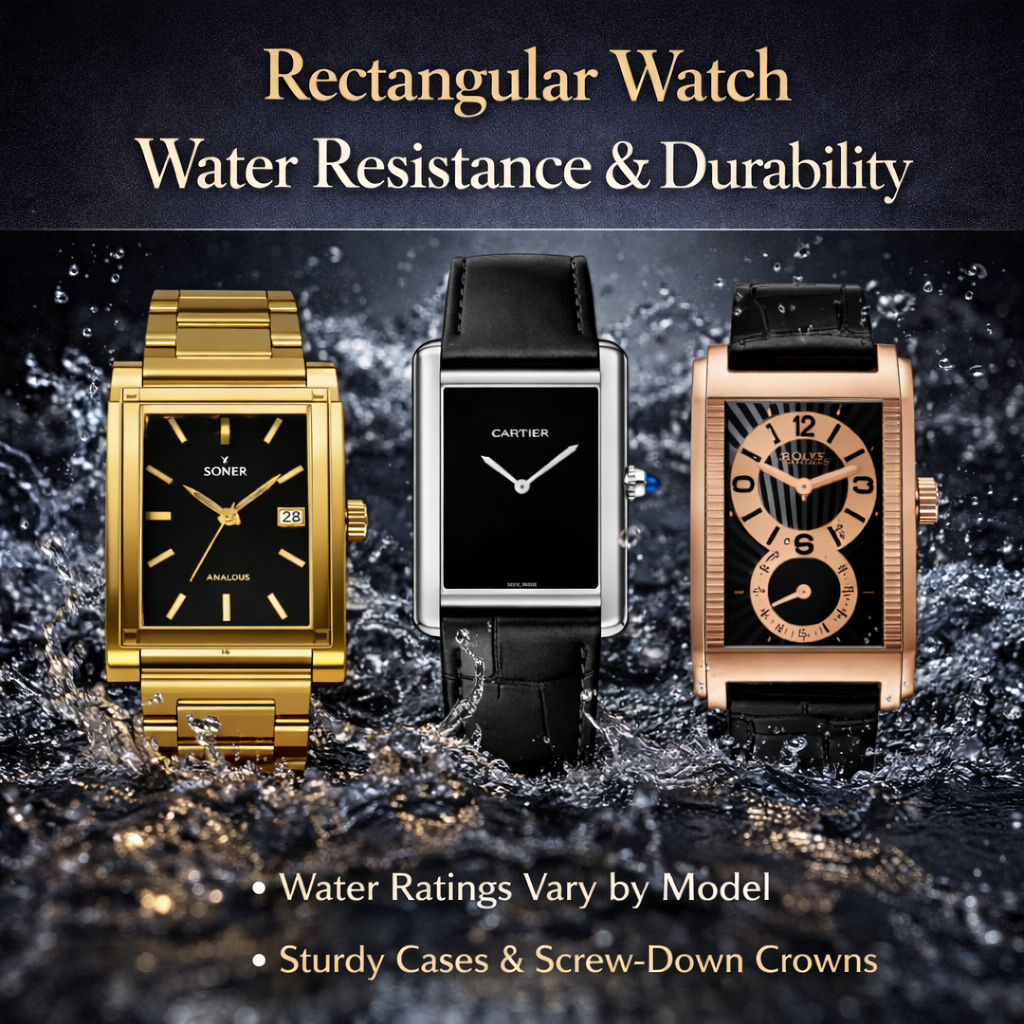
When evaluating a formal watch, the priorities differ from other categories. Case thickness is the single most important spec: under 7mm is exceptional, 7–9mm is the practical range, above 10mm compromises the watch's ability to sit under a cuff. Crystal should be sapphire at any serious price — mineral glass scratches within weeks and the flat polished surfaces of a dress watch draw the eye straight to any mark. Water resistance needn't be high; 3 ATM covers hand-washing, 5 ATM adds margin, and anything beyond 10 ATM adds thickness a formal watch can't accommodate. Case material is best as 316L stainless steel for longevity and versatility. And on accuracy, a quartz calibre's tolerance — on the order of fifteen seconds a year — is a genuine practical edge for a watch that may sit in a drawer between formal occasions, which is exactly where an 11-year battery like the ETA 901.001 in the Nostalgia earns its keep.
Best Men's Dress Watches by Price Tier
| Watch | Price | Movement | Why it's worth it |
|---|---|---|---|
| Söner Nostalgia | ~$550 | Swiss quartz (11yr) | 7mm thin, sapphire crystal, 5 ATM — best value formal watch |
| Söner Amorous | ~$620 | Swiss automatic | Self-winding, date, sapphire — a dress watch for every day |
| Tissot Heritage Porto | ~$1,100 | Automatic | Swiss automatic at entry-luxury price |
| Cartier Tank Must | ~$3,200 | Quartz | The benchmark formal watch, 100 years of heritage |
| Jaeger-LeCoultre Reverso | ~$7,500+ | Manual wind | The pinnacle of dress watchmaking |
Common Dress Watch Mistakes to Avoid
The formal watch is where most mistakes in men's watch buying happen, and the errors are predictable. Buying too large is the most common — a 42mm round watch is a sports watch however minimal the dial, and if you're coming from a sports background you should size down significantly. Pairing a sports bracelet with a dress case looks confused; leather is the right call, or a fine mesh in the case metal. Prioritising complication over proportion compromises a clean dial — the Tank, the Gondolo, the classic Reverso show only the time. Ignoring thickness defeats the purpose: anything above 9mm will bump under a standard button cuff. And undervaluing finishing is a quiet error — a cleanly reflecting case and crisp dial printing are what separate a watch that looks considered from one that looks cheap regardless of price.
Freddie's Take
The dress watch is the most personal watch you'll own. A sports watch is chosen for specs — water resistance, chronograph, bezel. A formal watch is chosen for proportion and restraint, which are harder qualities to judge, and that's why most people get it wrong. The most common mistake is buying too large: a 42mm round watch with a thin bezel isn't a dress watch, it's a sports watch in formal clothing. Proportion matters more than brand at this end of the market — get the size and thickness right, keep the dial restrained, and the watch will look correct for decades.

Frequently Asked Questions
What size should a men's dress watch be?
For most wrists, a case width of 36–40mm for round watches works well, with the lug-to-lug no wider than your wrist so the watch sits within it rather than overhanging. Slimmer wrists should size down; the key is that a formal watch sits inside the wrist line.
Should a dress watch be automatic or quartz?
Either works. Quartz allows a thinner profile and lower maintenance, ideal if you want the slimmest possible formal watch. Automatic adds mechanical interest and the satisfaction of a self-winding movement, at the cost of 2–3mm of thickness. For pure dress functionality, quartz is often the better choice.
How thick should a dress watch be?
Under 8mm is ideal — at that thickness the watch sits flush under a shirt cuff without a visible bump. Between 8 and 10mm is acceptable for everyday dress wear. Above 10mm is sports-watch territory and begins to compromise the formal character regardless of the dial.
Can you wear a dress watch every day?
Yes, if it's built for it. Look for at least 3 ATM water resistance, a sapphire crystal, and a steel case. Söner's Nostalgia and Amorous collections are designed for daily wear despite their formal proportions.
Is a dress watch appropriate for the office?
Yes. In a professional setting, a slim formal watch on a leather strap reads as considered and intentional without being ostentatious — it signals attention to detail rather than conspicuous spending, and is often more impressive in a boardroom than a recognisable luxury sports watch.
What strap is best for a dress watch?
A leather strap in black or dark brown is the classic choice and works from black tie to business casual; alligator or crocodile-pattern leather adds formality. For more versatile everyday wear, a steel bracelet or mesh strap works well if proportioned correctly to the case.
What is the most iconic men's dress watch?
The Cartier Tank, introduced in 1917, is the most historically significant men's dress watch ever made — in continuous production for over a century and worn by figures from Andy Warhol to Princess Diana. The Jaeger-LeCoultre Reverso (1931) and the Patek Philippe Gondolo are the other two that define the category.
What is the difference between a dress watch and a luxury watch?
Not all luxury watches are dress watches, and not all dress watches are expensive. A formal watch is defined by its proportions and intent — thin, restrained, made for formal wear — while a luxury watch is defined by price, finishing, and brand. A $550 Söner Nostalgia is a genuine dress watch; a $15,000 dive watch is not.
For a broader look at the rectangular category — history, sizing, movements, and iconic models — read The Definitive Guide to Rectangular Watches.