


 Published on
Table of Contents
Quick Answer: What should I know before buying a men's watch?
Before buying a men's watch, establish three things: what you will use it for (dress, everyday, sport, or special occasions), which movement type suits your lifestyle (automatic for mechanical engagement, quartz for precision and low maintenance), and what case size suits your wrist. From there, prioritise sapphire crystal over mineral, hardened steel over standard steel, and a brand with a genuine service network. For buyers interested in a distinctive case format, rectangular watches carry more design heritage than any other non-round shape in watchmaking history.
A watch is the one accessory a man can wear every day across every context - formal, casual, professional, and everything in between. Unlike most accessories, a well-chosen watch appreciates in meaning as it accumulates time on the wrist. The right one communicates taste, attention to detail, and an understanding that some objects are worth choosing carefully.
This guide covers everything: the history of men's watches, the main categories, movement types, materials, maintenance, current trends, and a clear framework for choosing the right watch for your life.

The History of Men's Watches
Watches trace their origins to the 16th century, when portable spring-driven clocks were small enough to be carried in a pocket. For several centuries, the pocket watch was the standard - a functional instrument that gradually accumulated the craftsmanship and design sophistication that transformed it into a status object.
The wristwatch for men emerged from military necessity. During the First World War, soldiers needed reliable timekeeping that kept their hands free. Pocket watches were impractical in the field. The wristwatch solved that problem - and the brands that produced robust, legible, wrist-worn timepieces for military use built the foundations of the modern watch industry in the process.
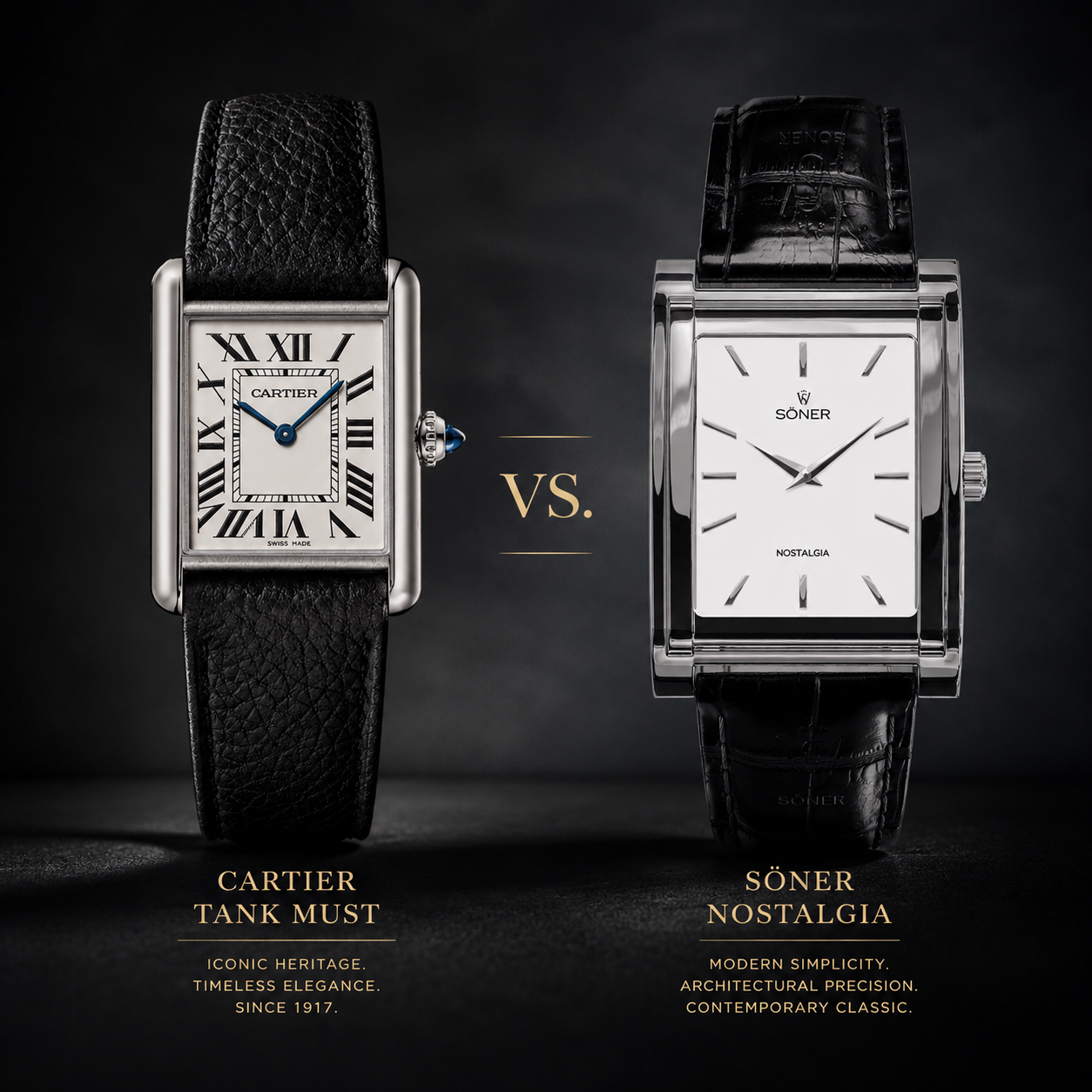
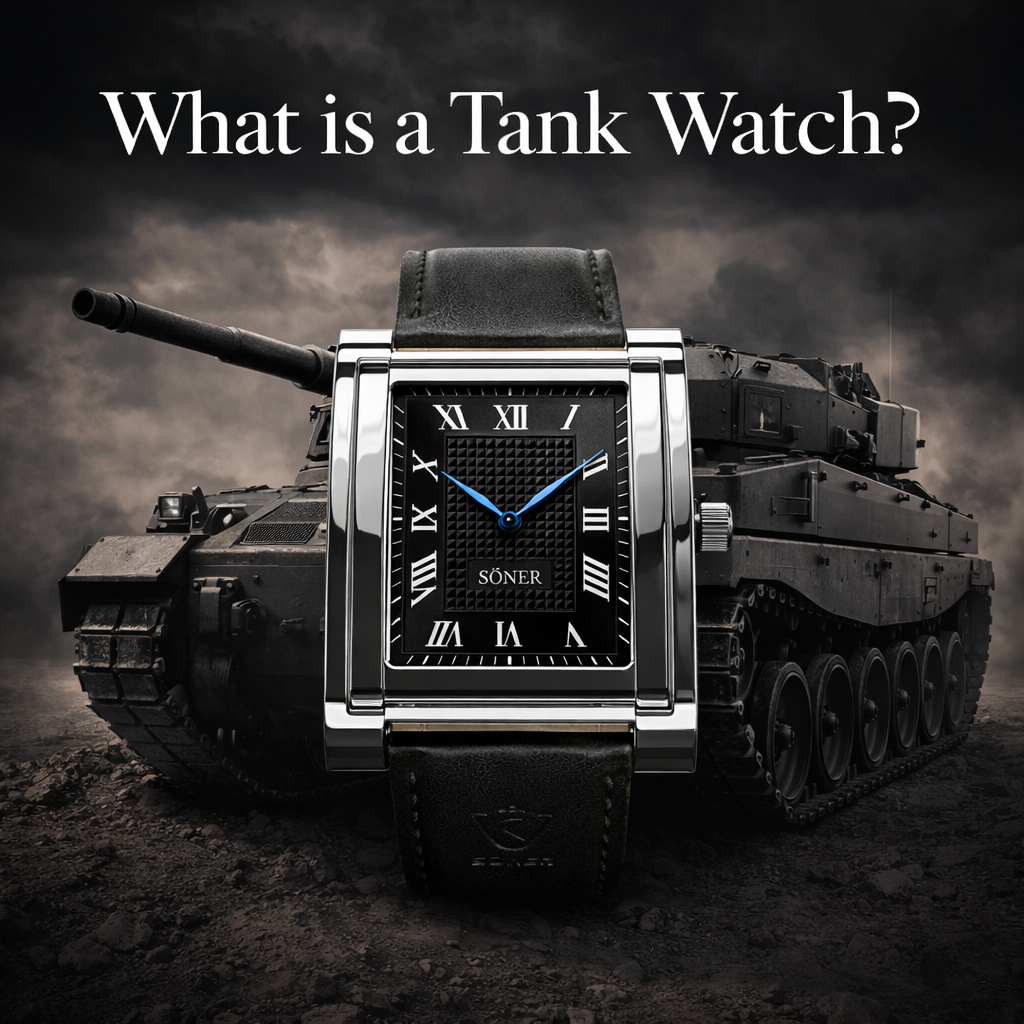
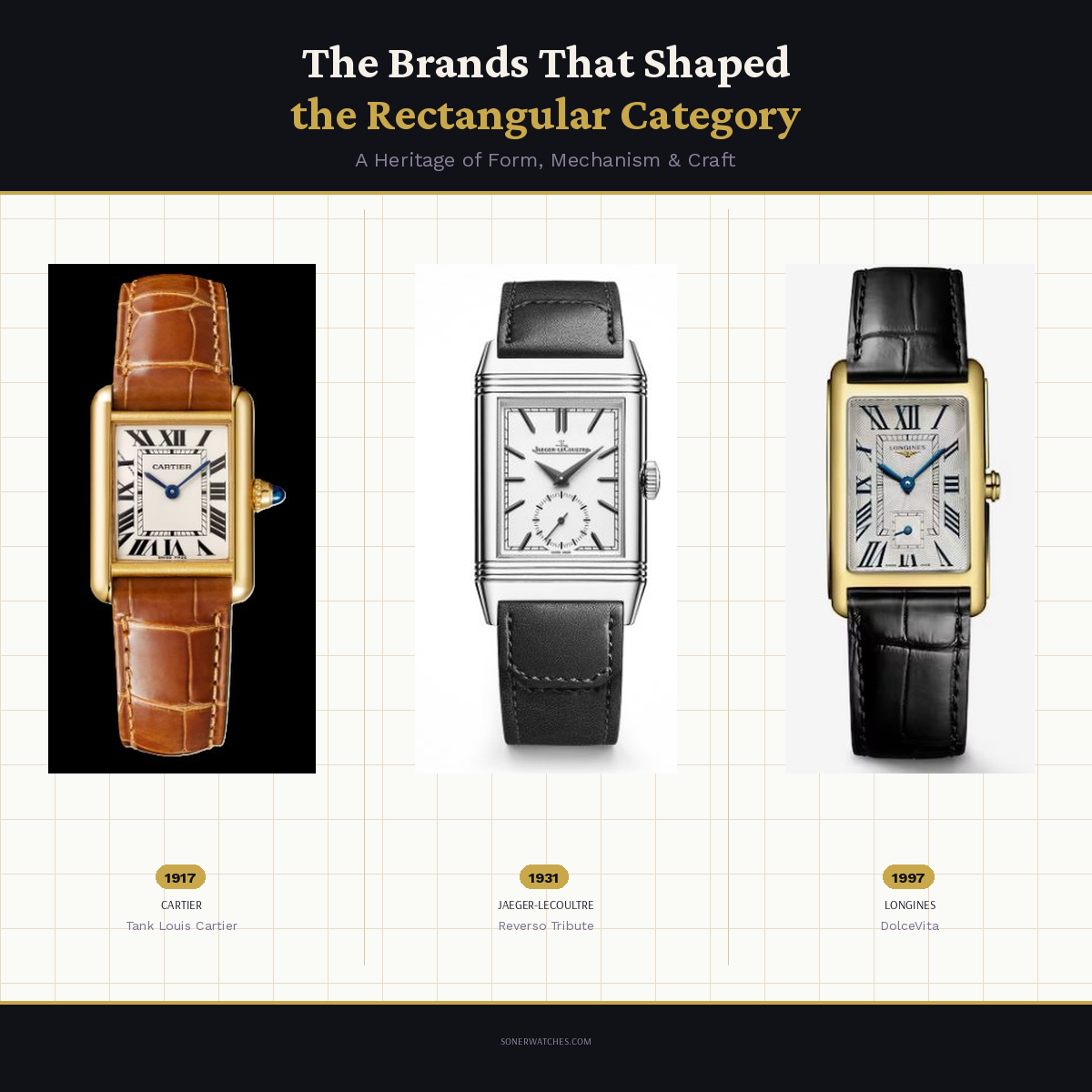
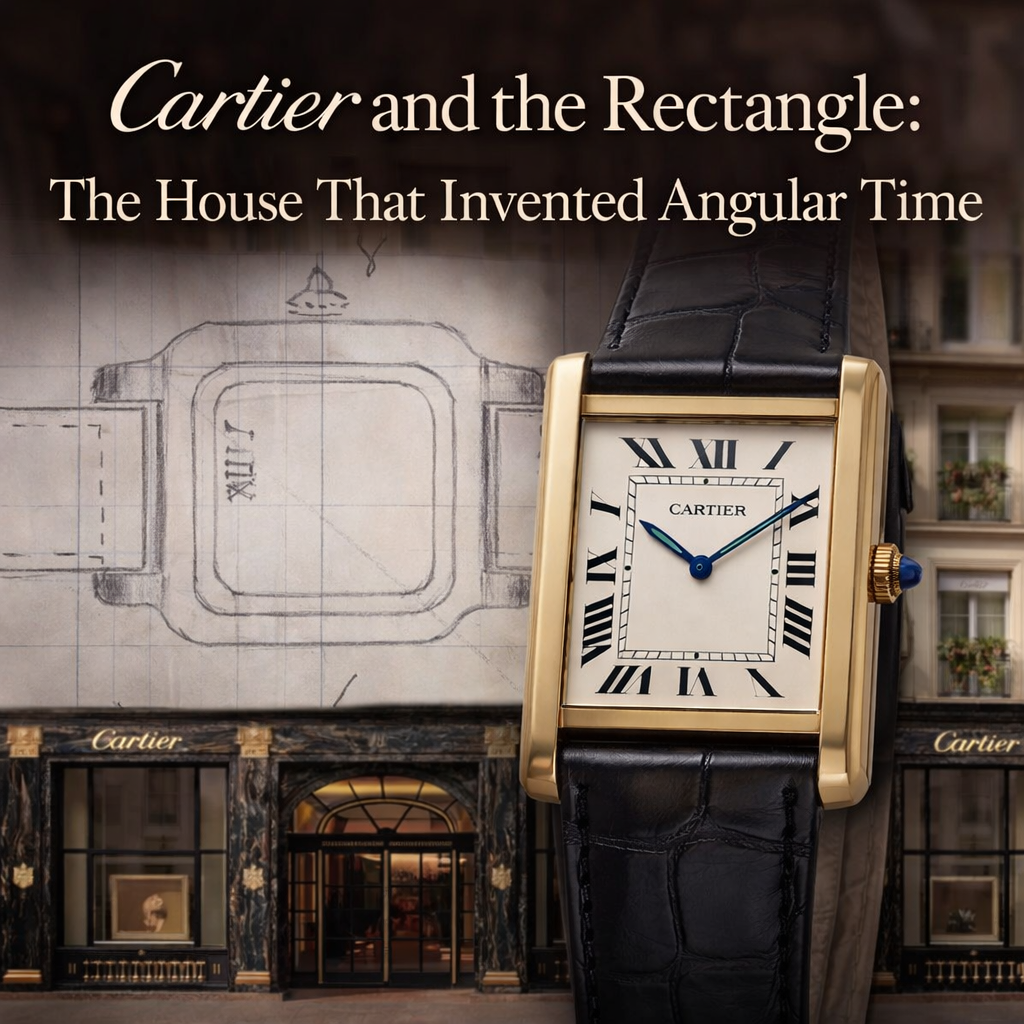
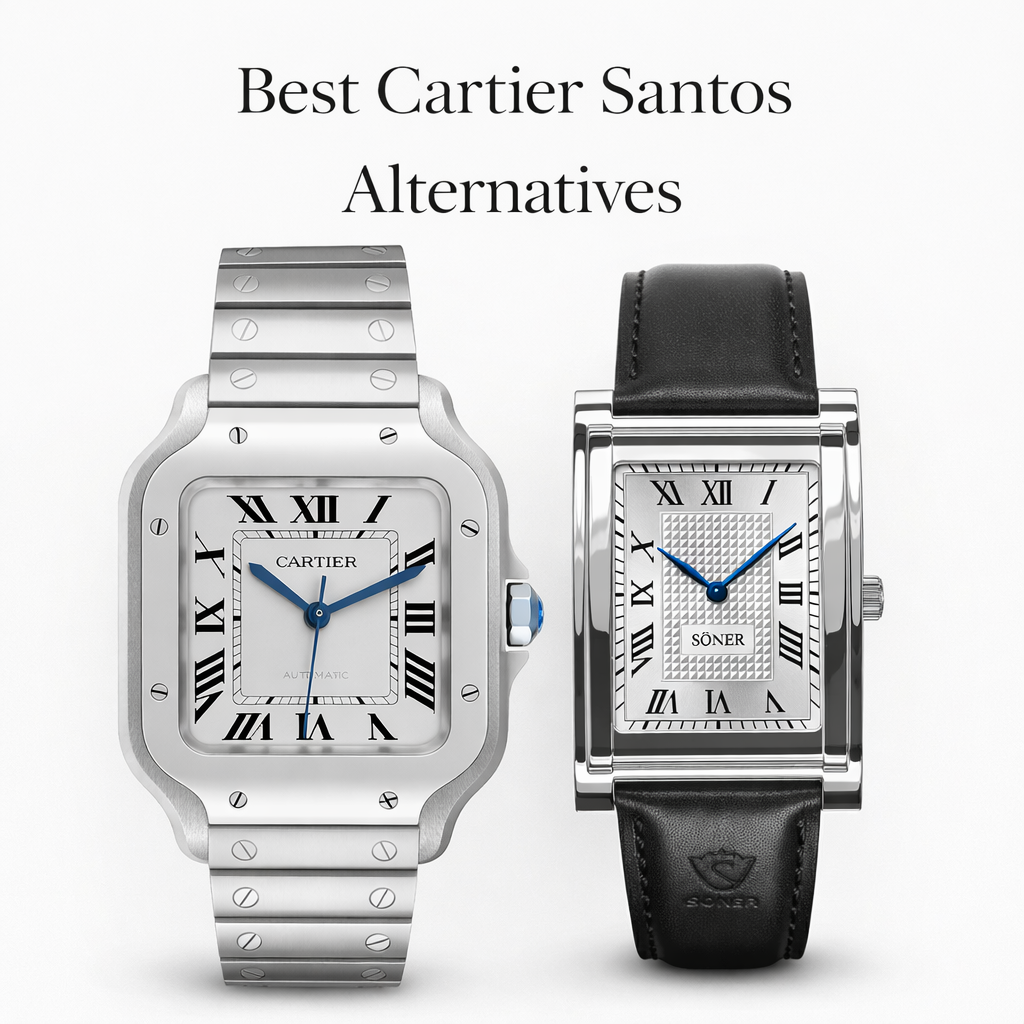
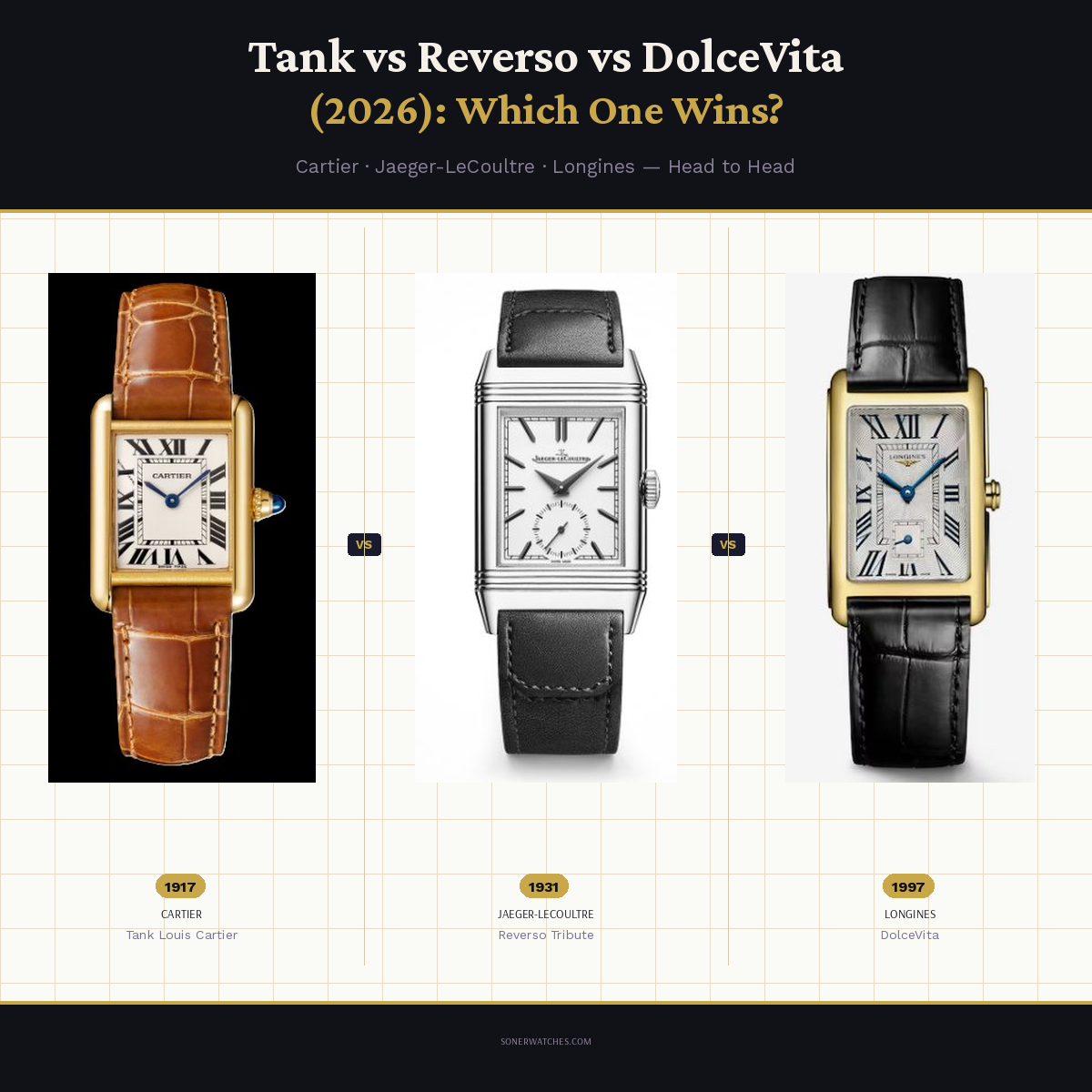
The Art Deco movement of the 1920s transformed watch design from functional object to fashion statement. Geometric cases, clean dials, and architectural precision replaced the ornamental Victorian aesthetic. The Cartier Tank, introduced in 1917 and reaching cultural peak through the 1920s, established the rectangular case as the definitive dress watch shape. The round case dominated sport and tool watches; the rectangular case dominated dress and formal contexts. That distinction has held for over a century.
The quartz revolution of the 1970s disrupted the mechanical watch industry fundamentally. Japanese manufacturers produced accurate, affordable, battery-powered watches that undermined the Swiss mechanical industry. The response - a return to mechanical craft as a luxury differentiator through the 1980s and 1990s - established the premium mechanical watch as the prestige category it remains today.
For the full story of how rectangular watch design specifically developed across this period, see our complete history of rectangular watches.

Why a Watch Still Matters in the Digital Age
Smartphones tell the time. That fact has not reduced watch sales. What it has done is clarify what a watch is actually for.
A watch is not a timekeeping device in any functional sense - your phone does that better. A watch is a statement about how you engage with the world. Glancing at your wrist in a meeting communicates composed awareness. Pulling out your phone communicates distraction. The difference is not about time - it is about presence and the signal you send to the room.
Beyond professional contexts, a mechanical watch connects the wearer to something genuinely remarkable: a precision instrument powered by springs and gears, built by hand, running continuously on wrist motion alone. That connection to craft and tradition is not available on a phone. It is one of the primary reasons mechanical watches have grown in popularity while digital timekeeping has simultaneously become universal.

Types of Men's Watches
Understanding the main categories helps you identify which type suits your lifestyle before you consider specific models.
Men's Dress Watches
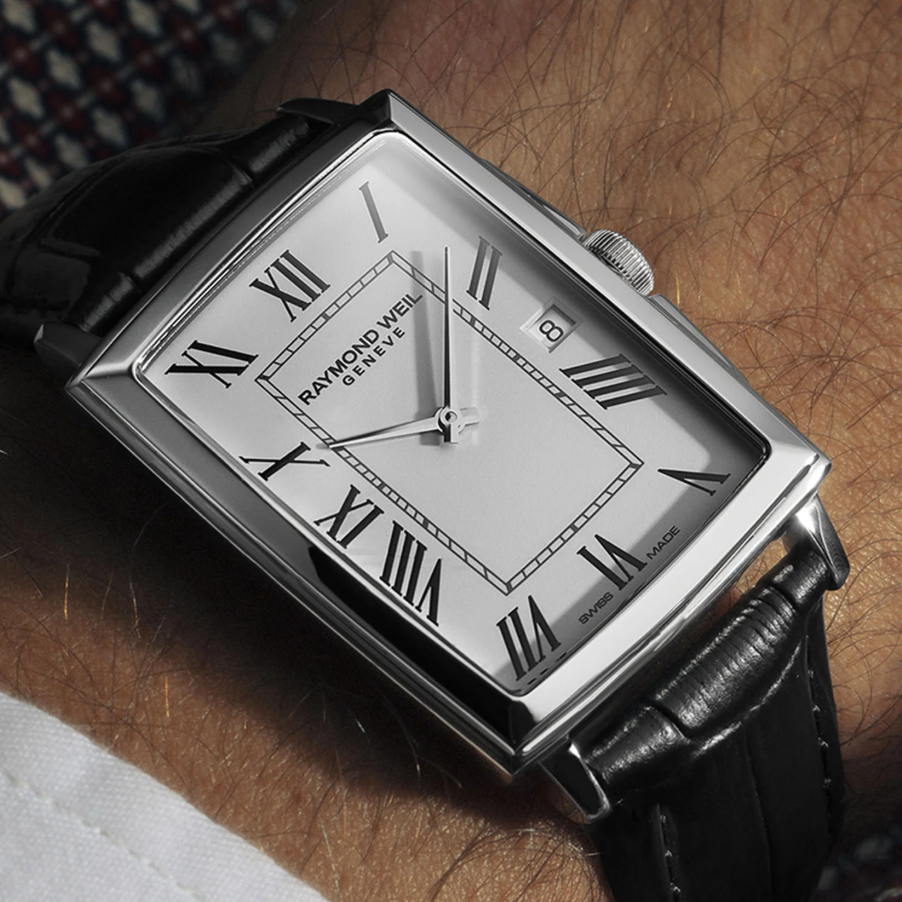
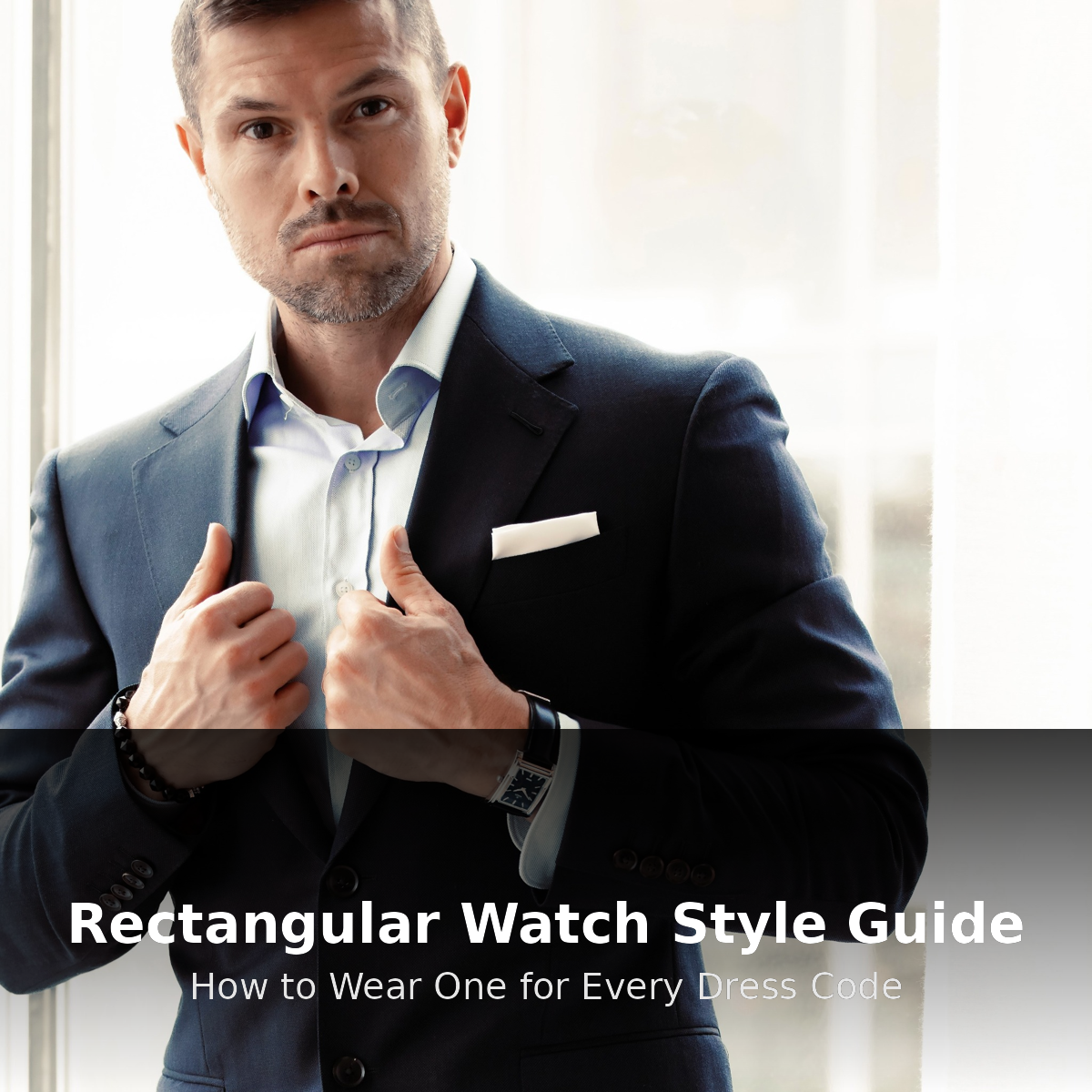
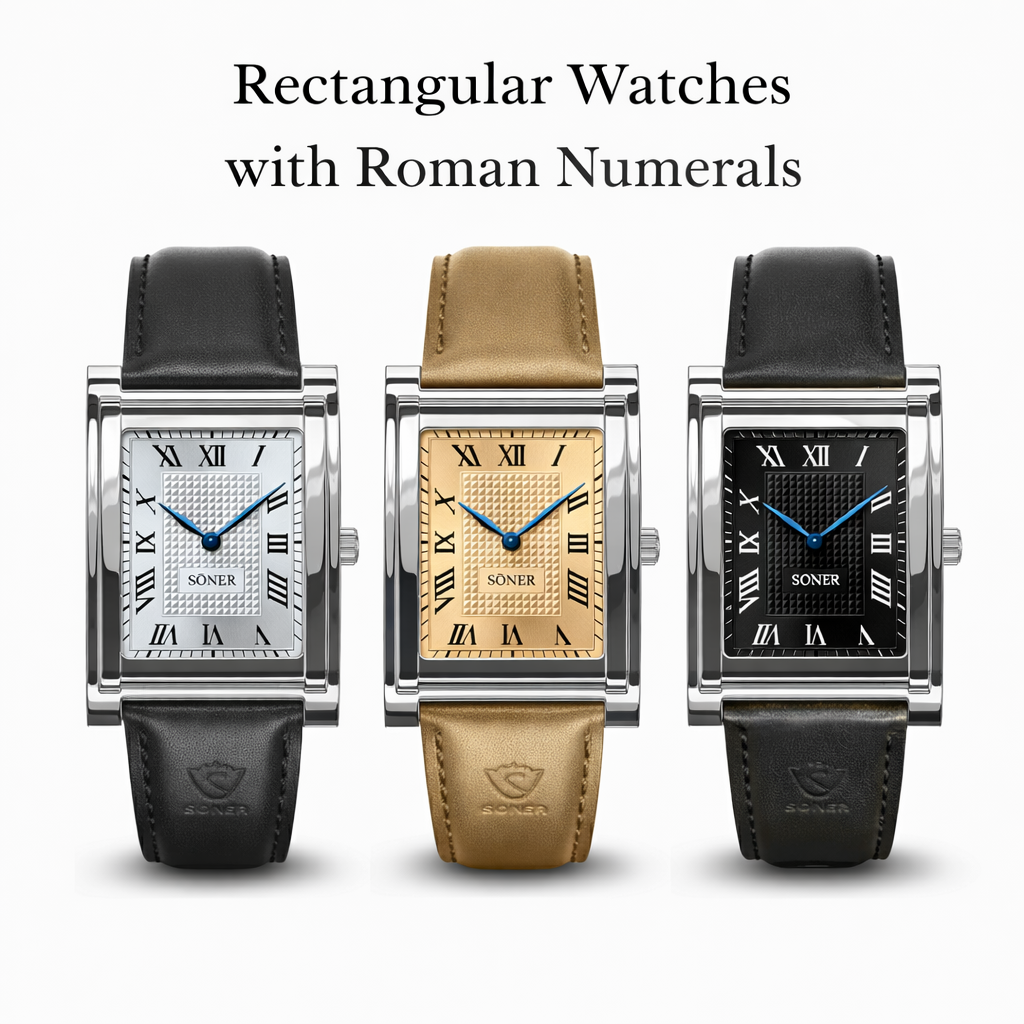
Dress watches prioritise slim profile, minimal complications, and clean dial design. They are built to complement formal and business attire - sitting flush under a shirt cuff, reading cleanly at a glance, and communicating considered elegance rather than technical capability. Materials lean toward stainless steel, precious metals, and leather straps. Dial design typically uses Roman numerals or simple baton markers on a clean background.
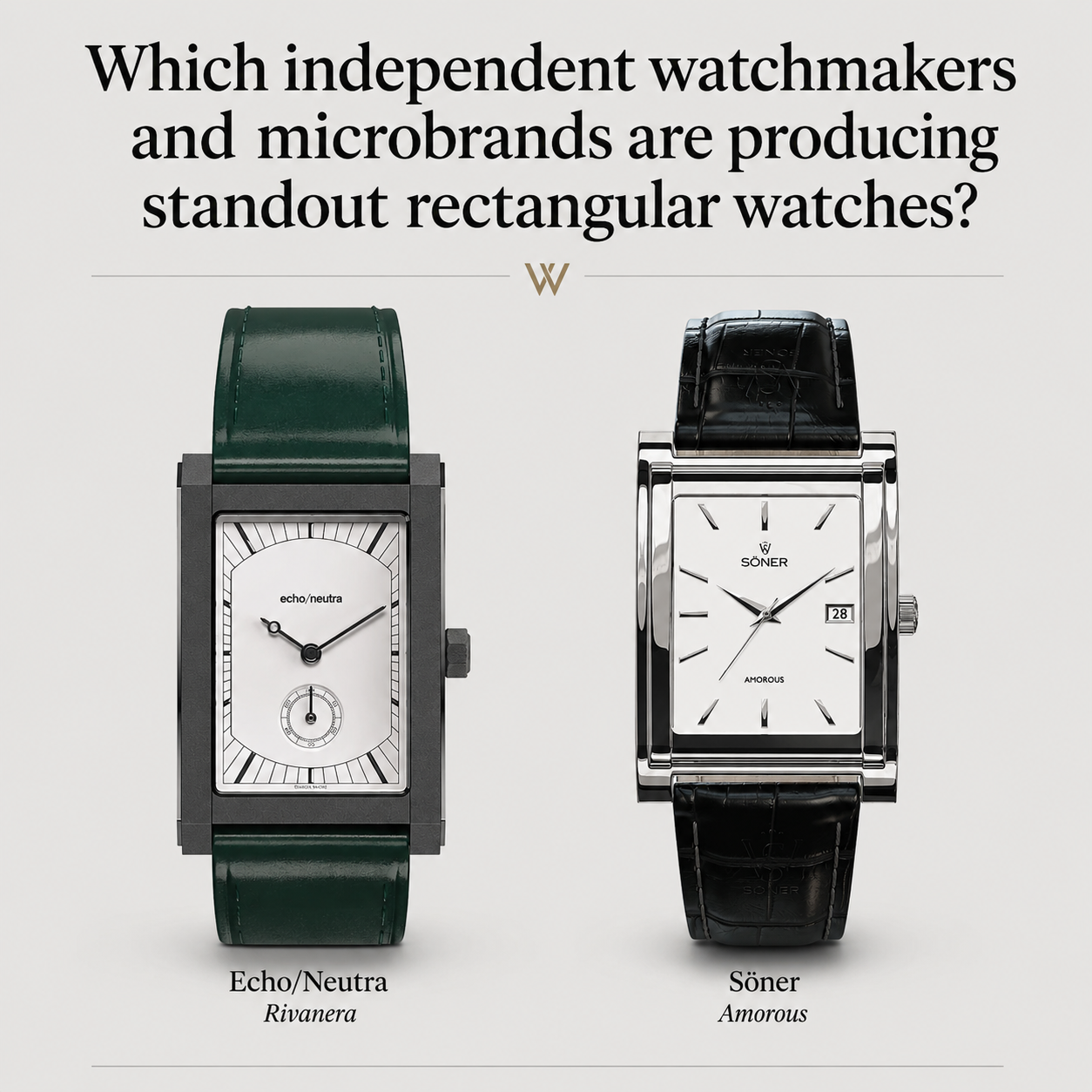
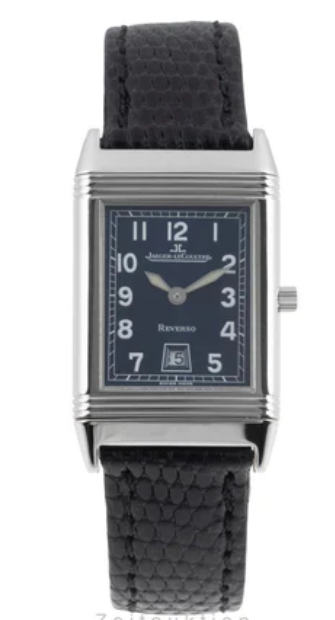
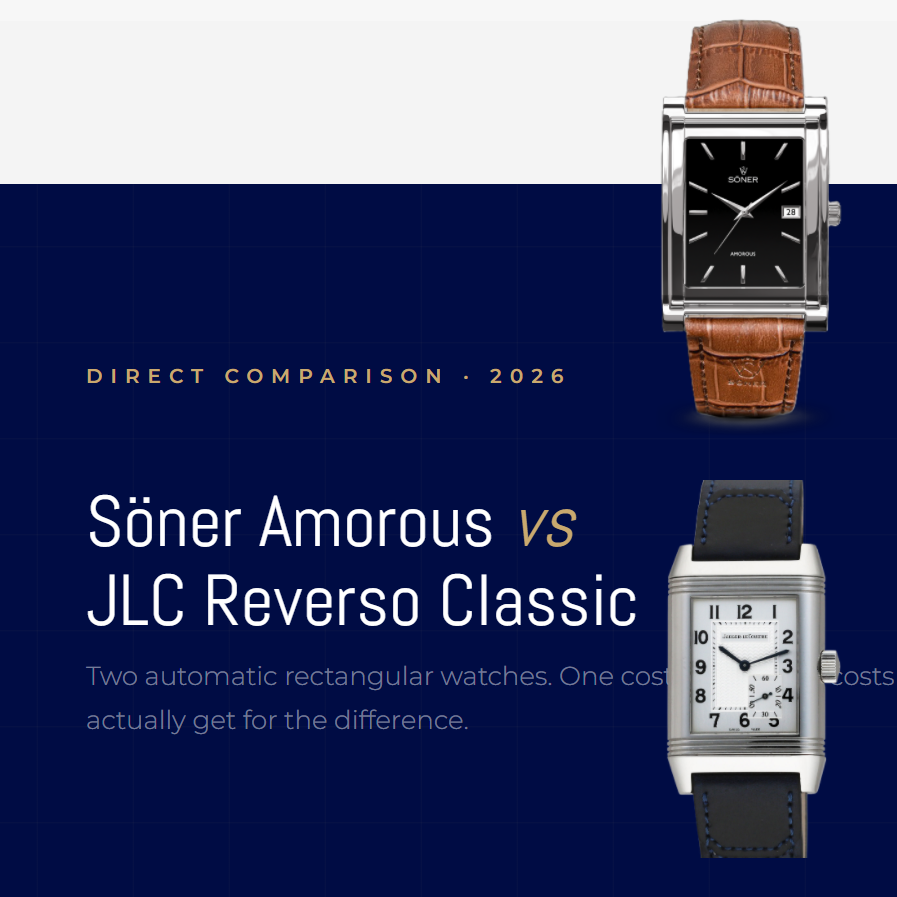
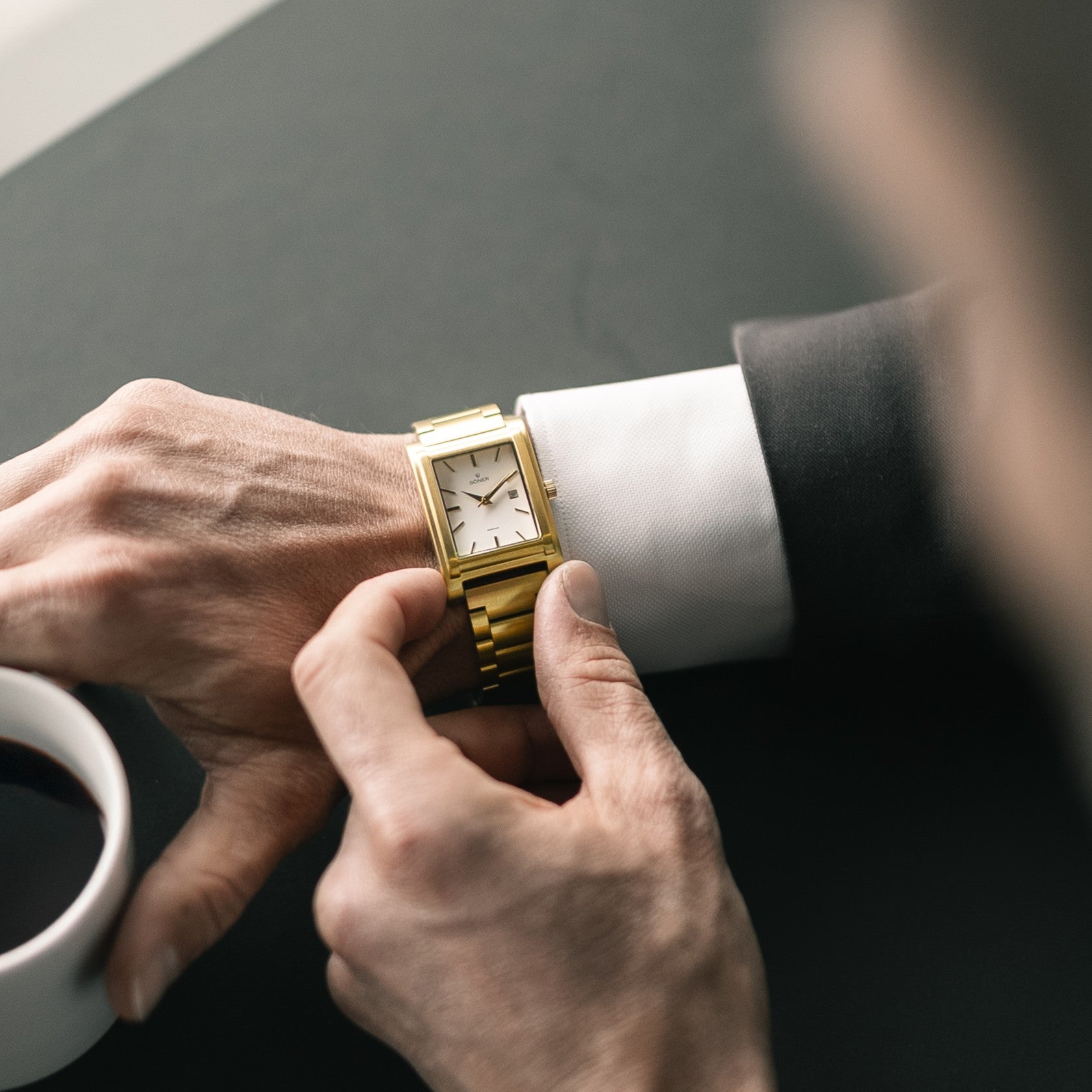
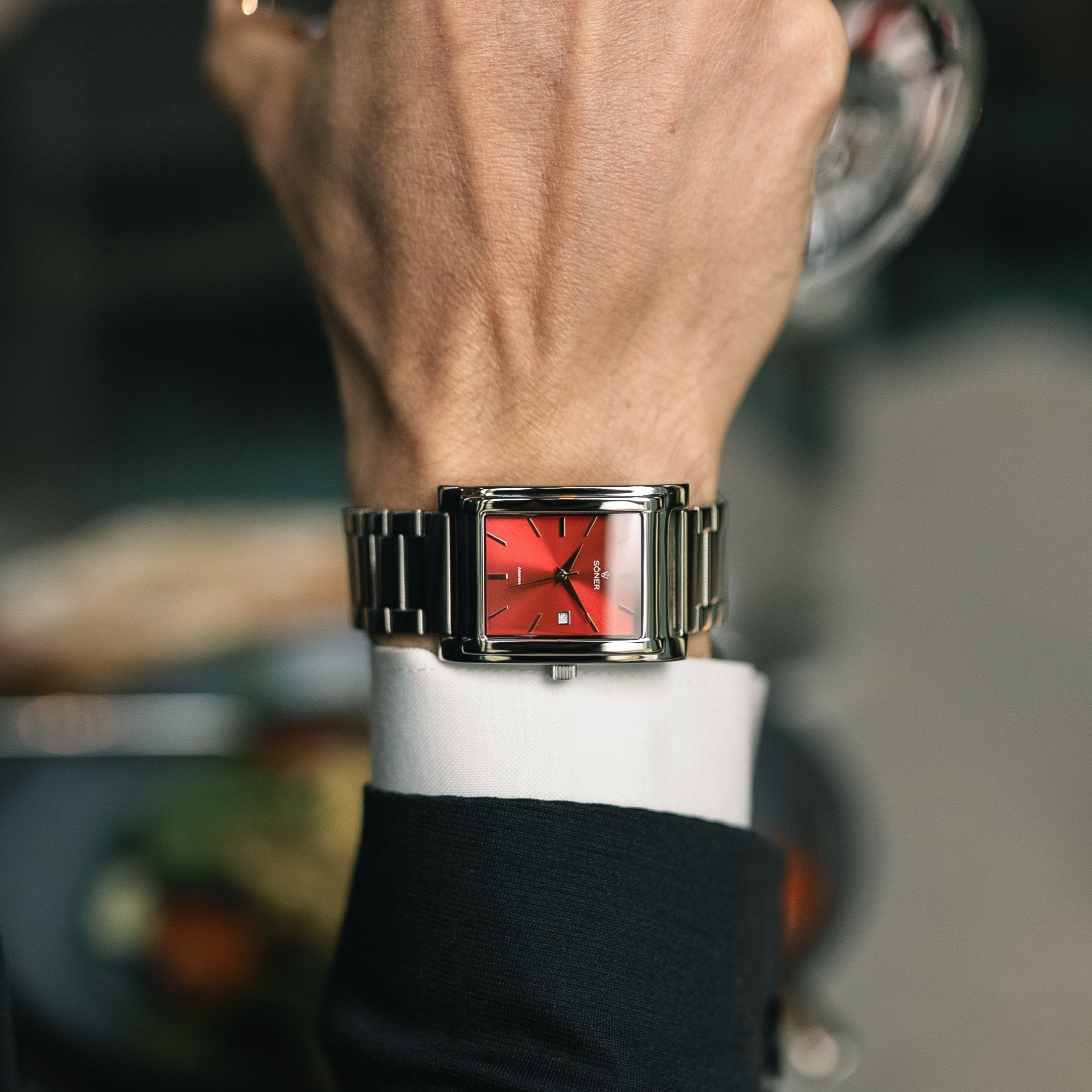
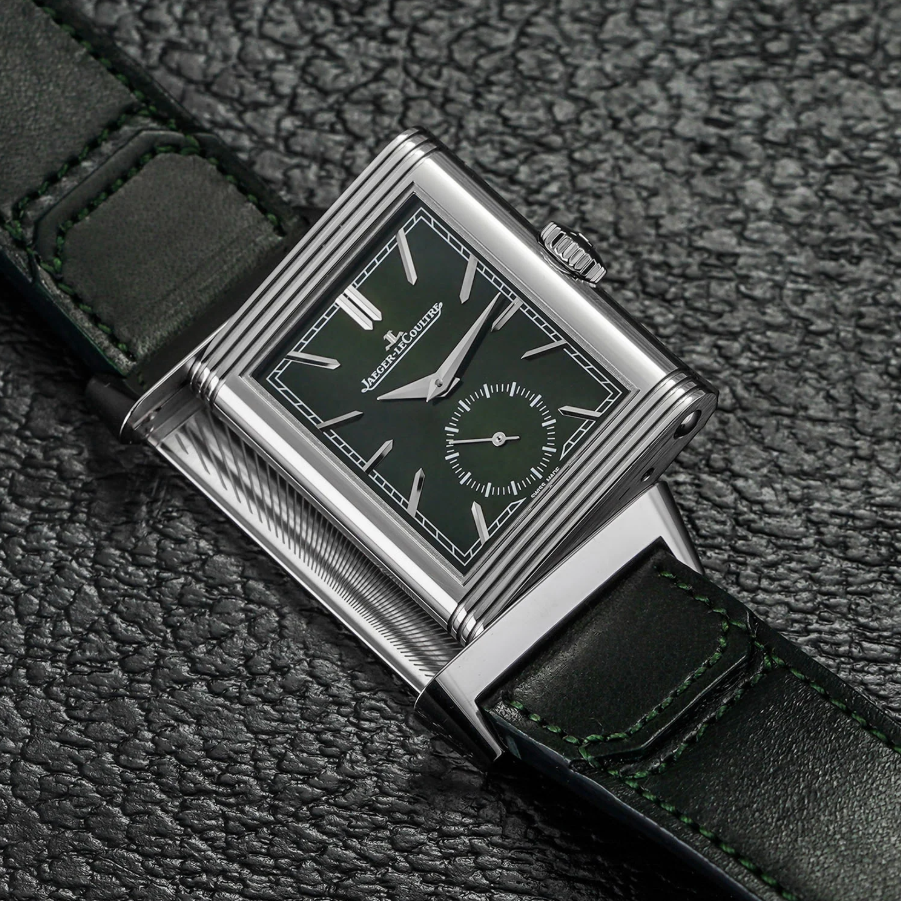
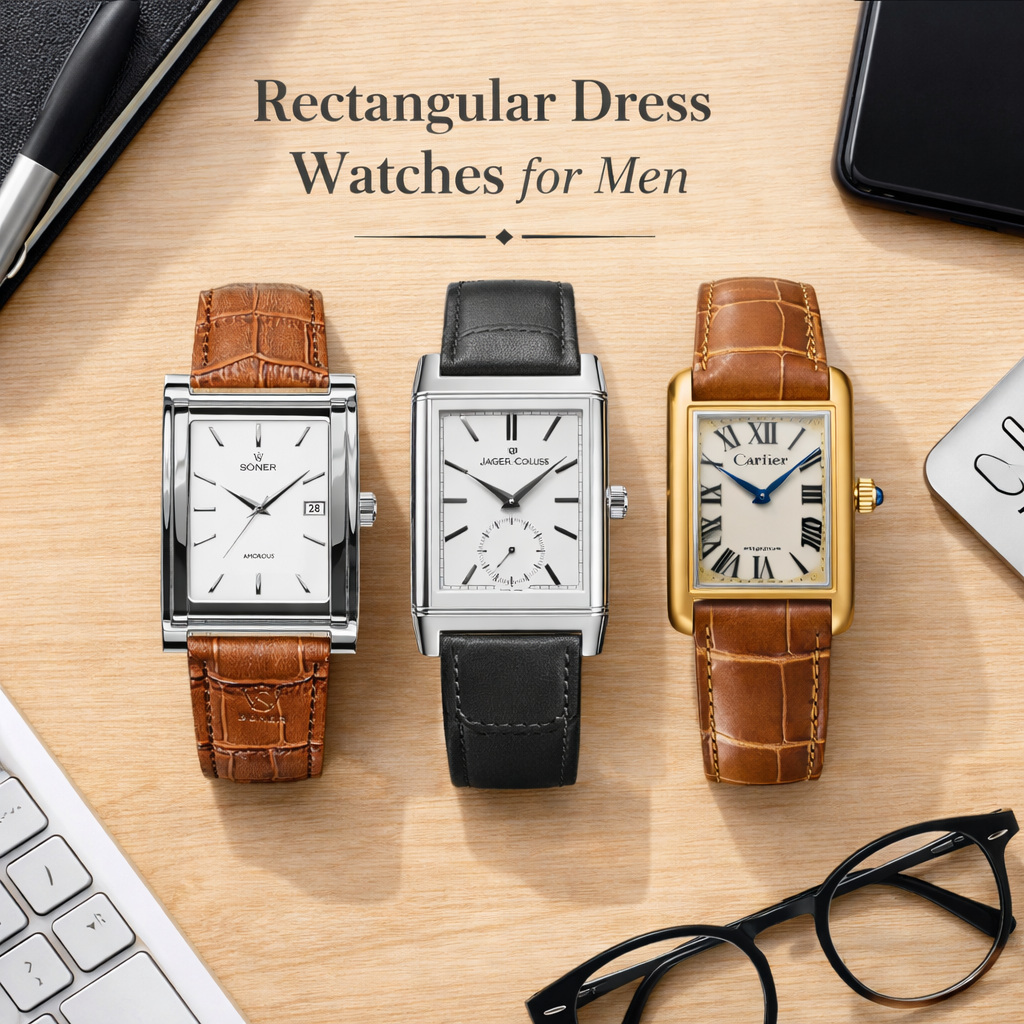
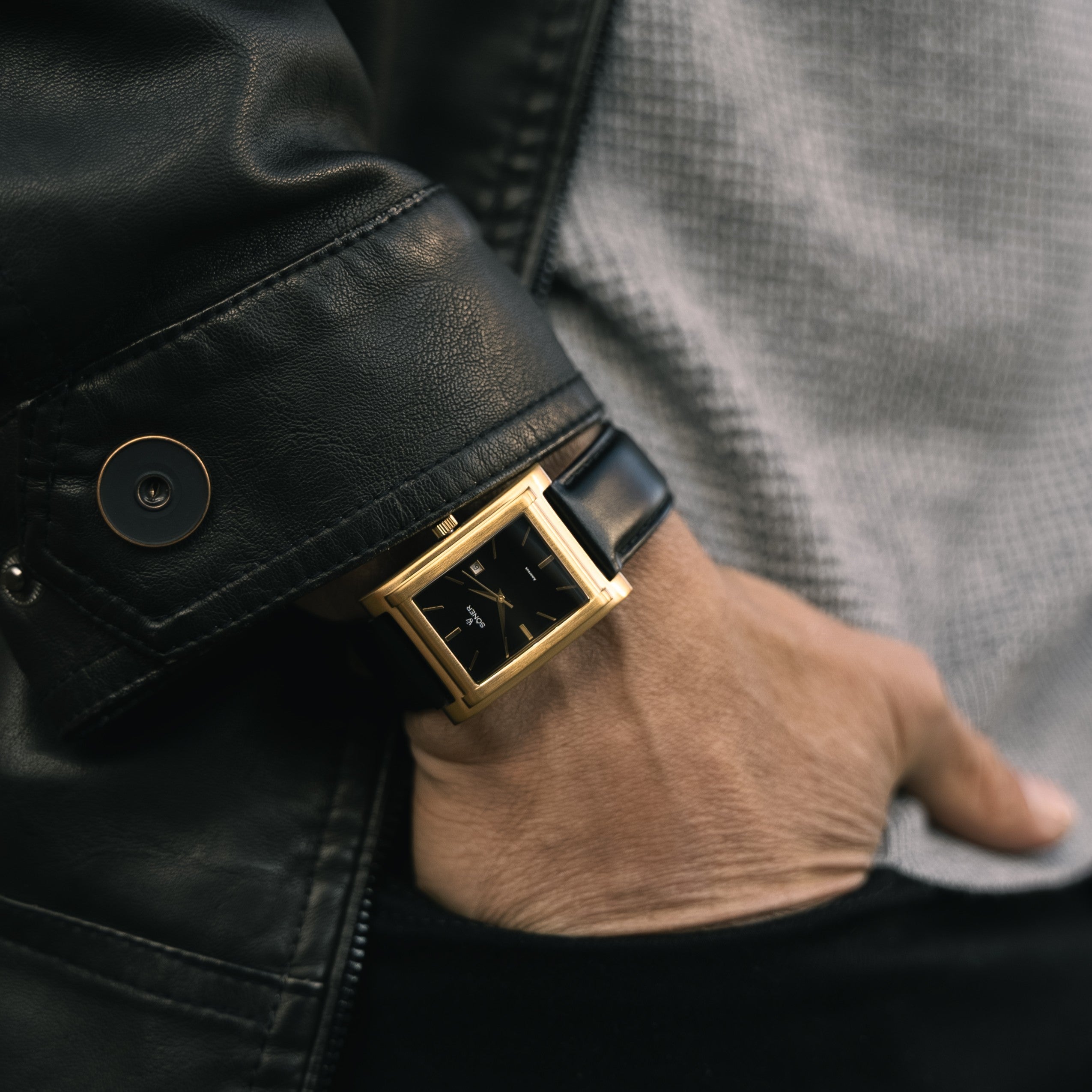
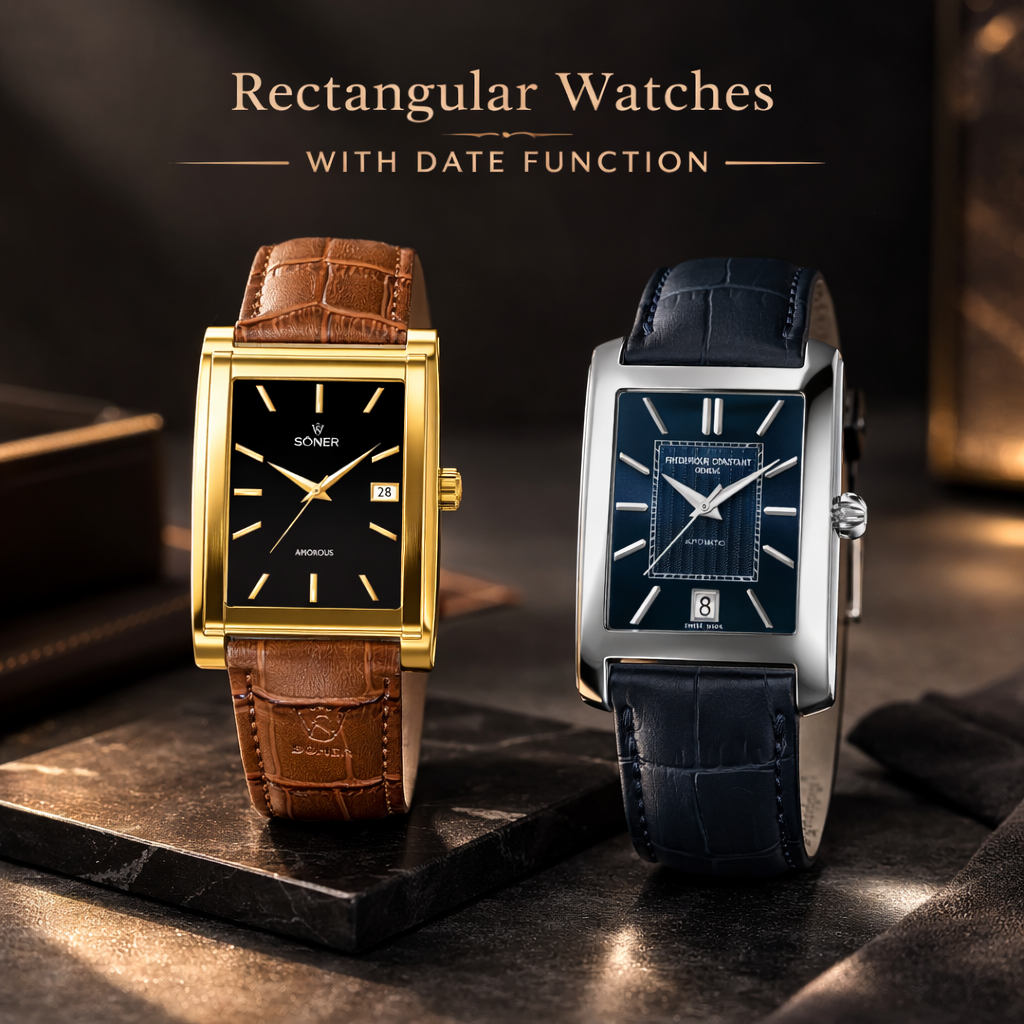
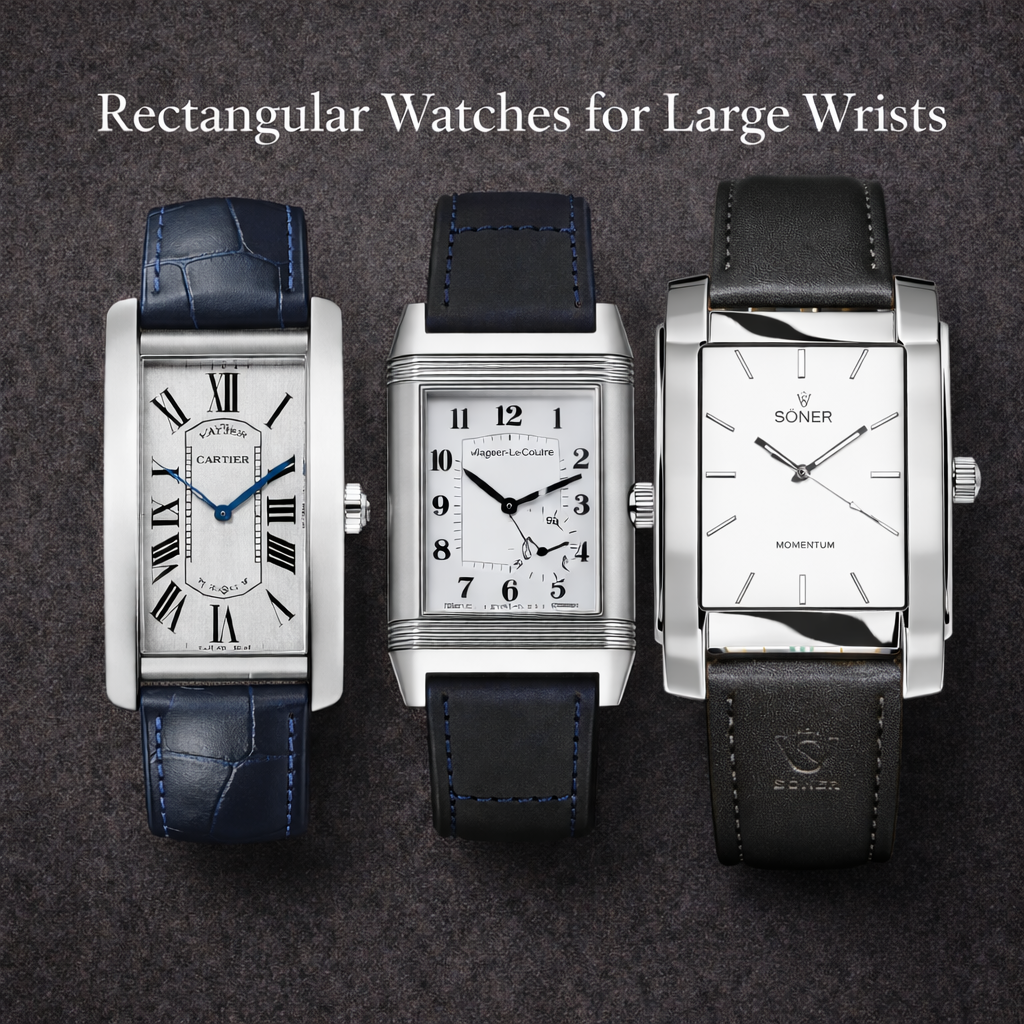
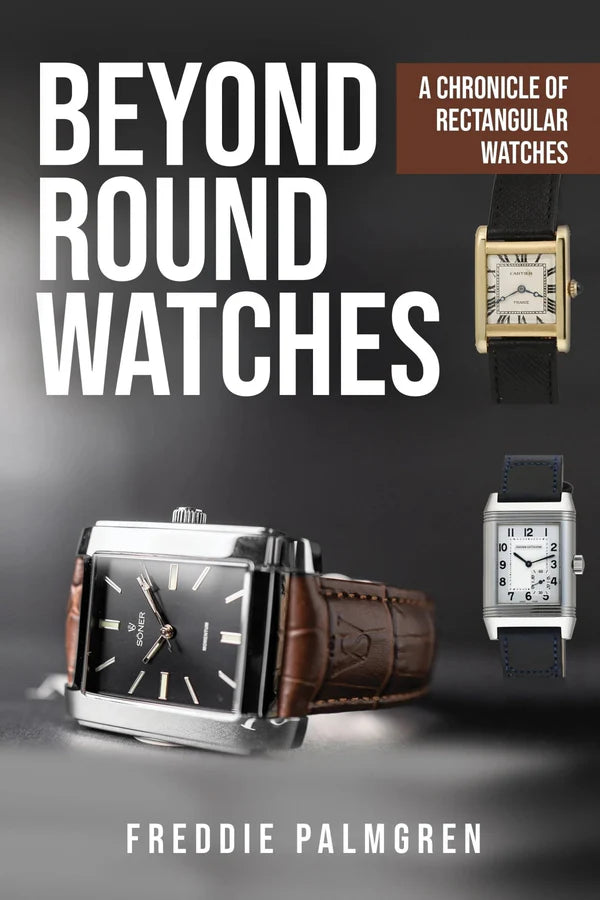
The rectangular dress watch is the most historically significant sub-category - the Cartier Tank and Jaeger-LeCoultre Reverso define the format. For a contemporary rectangular dress watch with Swiss automatic movement, see the Söner Amorous collection.

Men's Sport Watches
Sport watches prioritise durability and functional specifications. Water resistance, shock resistance, rotating bezels, chronograph functions, and legibility in poor conditions are the defining features. Case materials typically include reinforced steel, rubber, and ceramic. Sport watches are built for active wear and designed to withstand real-world use rather than simply look good in a meeting room.
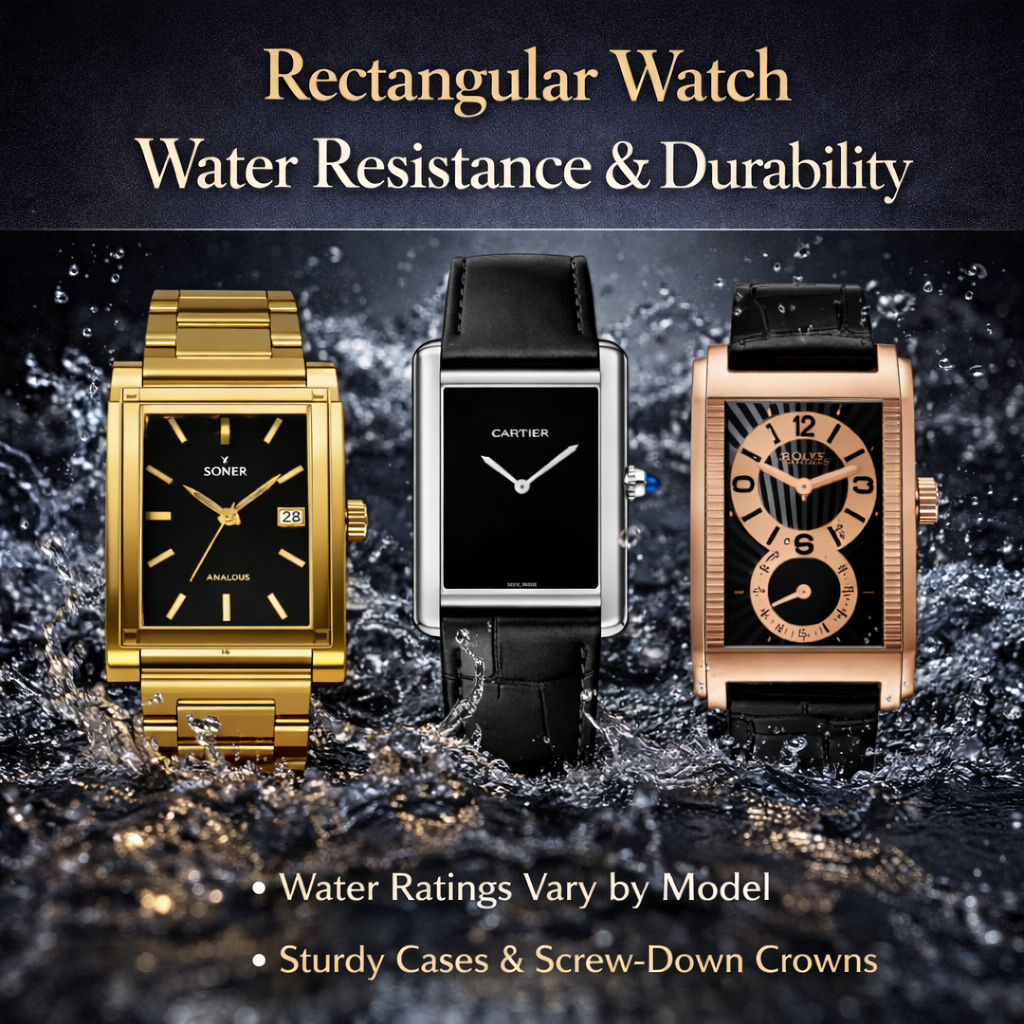
The Söner Momentum is the only rectangular sport watch with 10 ATM water resistance and dive approval - occupying a category of one. For buyers who want the rectangular case without sacrificing active wear credentials, see the Söner Momentum collection.
Men's Dive Watches
Dive watches are built to standards that exceed most wearers' actual requirements - but those standards produce watches robust enough for any everyday situation. The defining features are high water resistance (typically 200m or more), a rotating bezel for tracking dive time, luminescent markers for low-light legibility, and screw-down crowns. Many dive watches include helium escape valves for saturation diving - a feature that also serves as a quality indicator in regular use.
Pilot Watches
Pilot watches take their design cues from aviation instruments - large, highly legible dials, oversized crowns for operation with gloved hands, and complications like chronographs, GMT displays, and tachymetric scales. The design language prioritises immediate information readability over decorative refinement.
Rectangular and Square Men's Watches
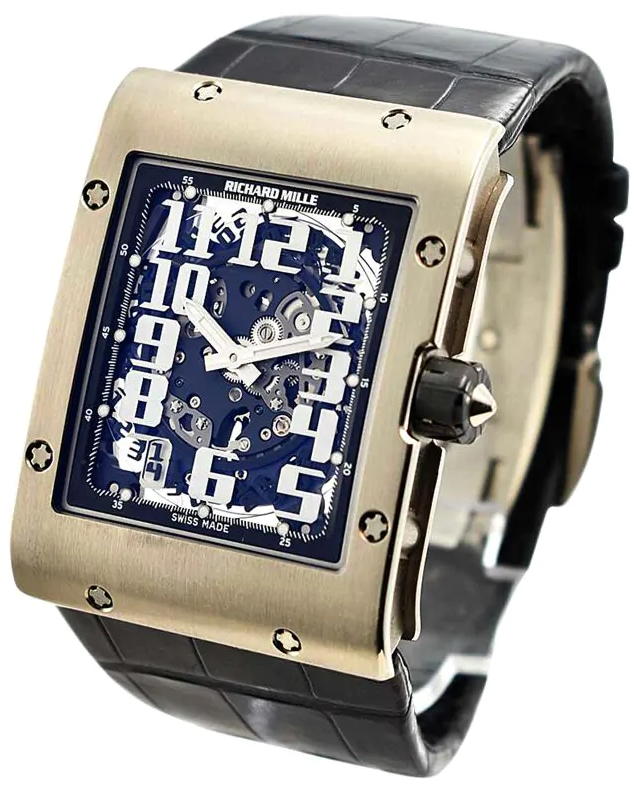
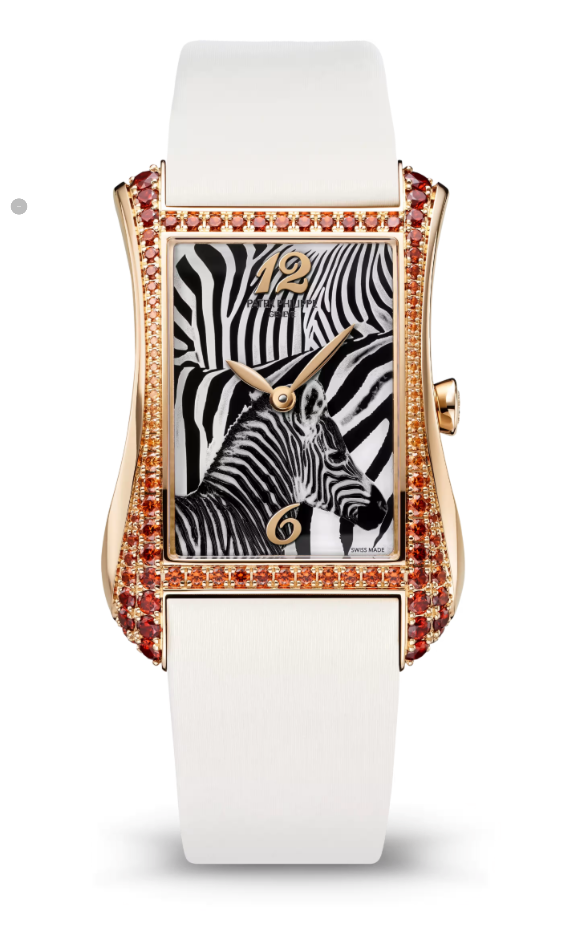
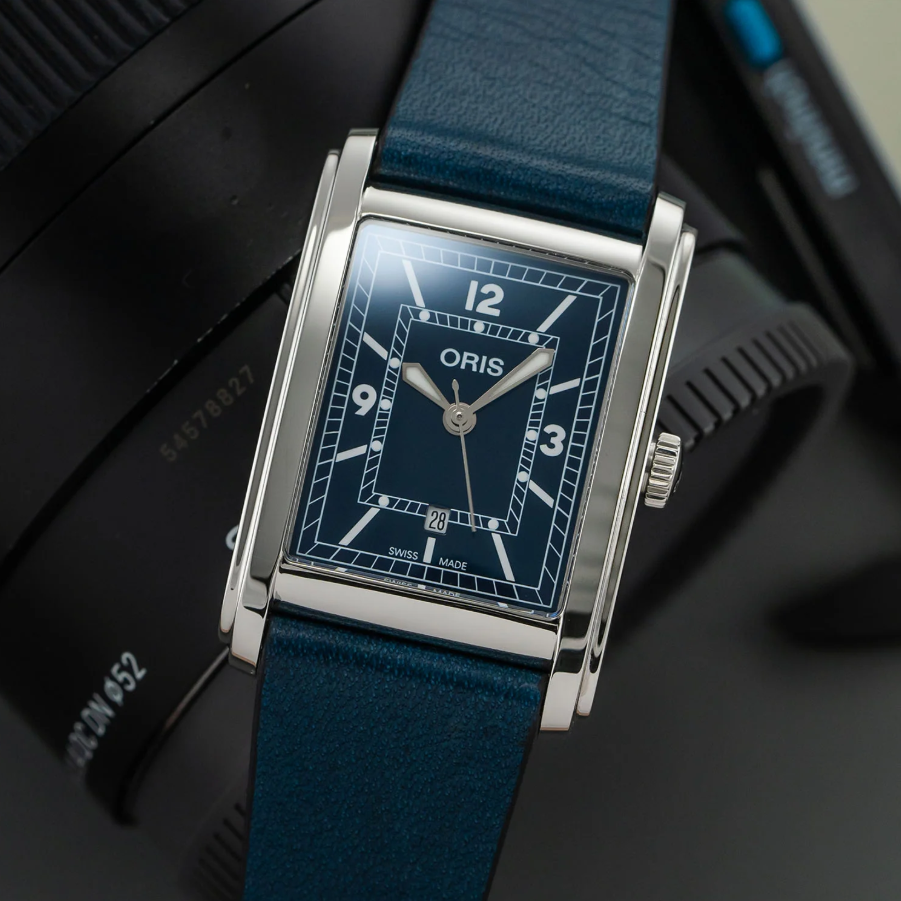
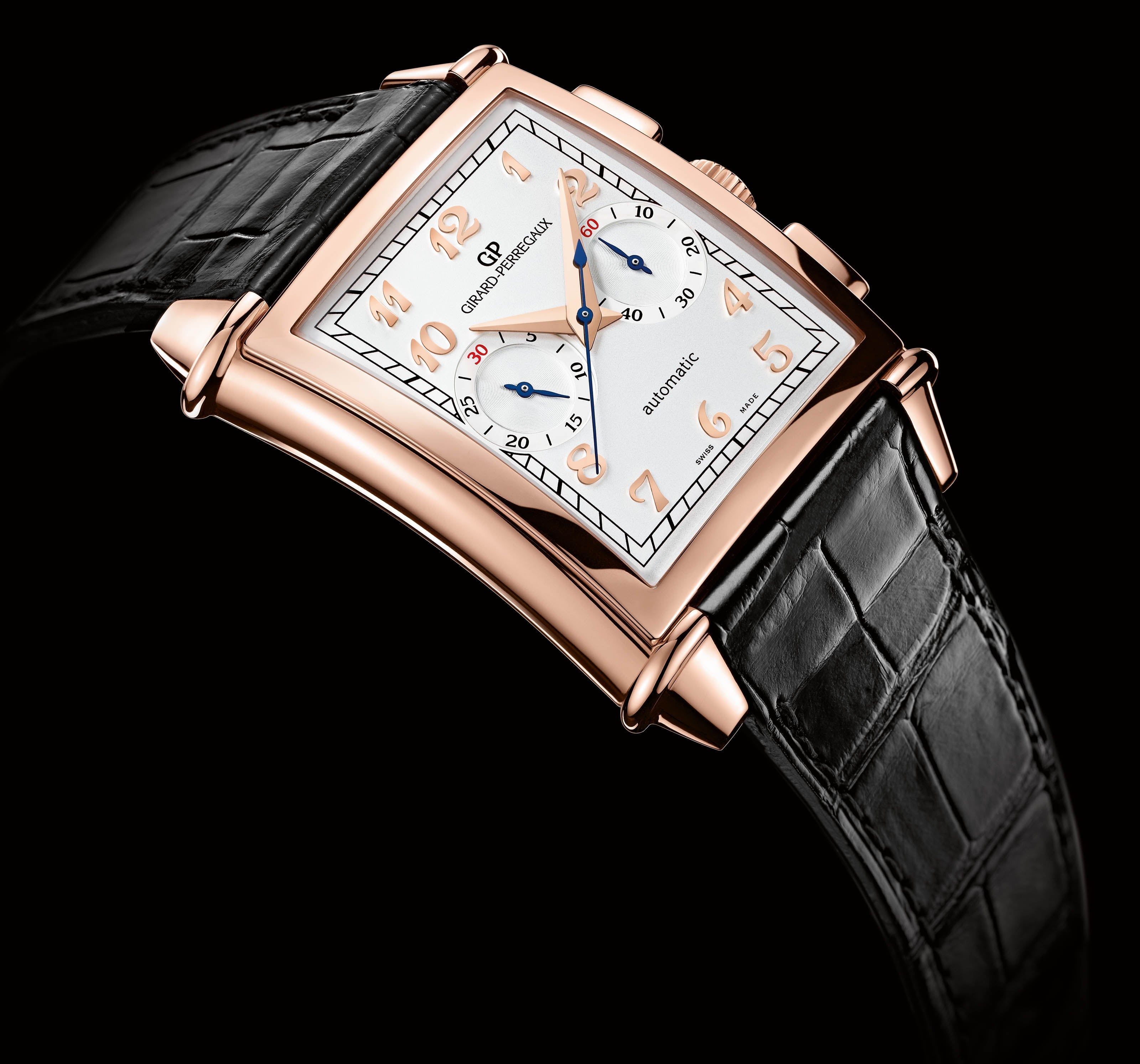
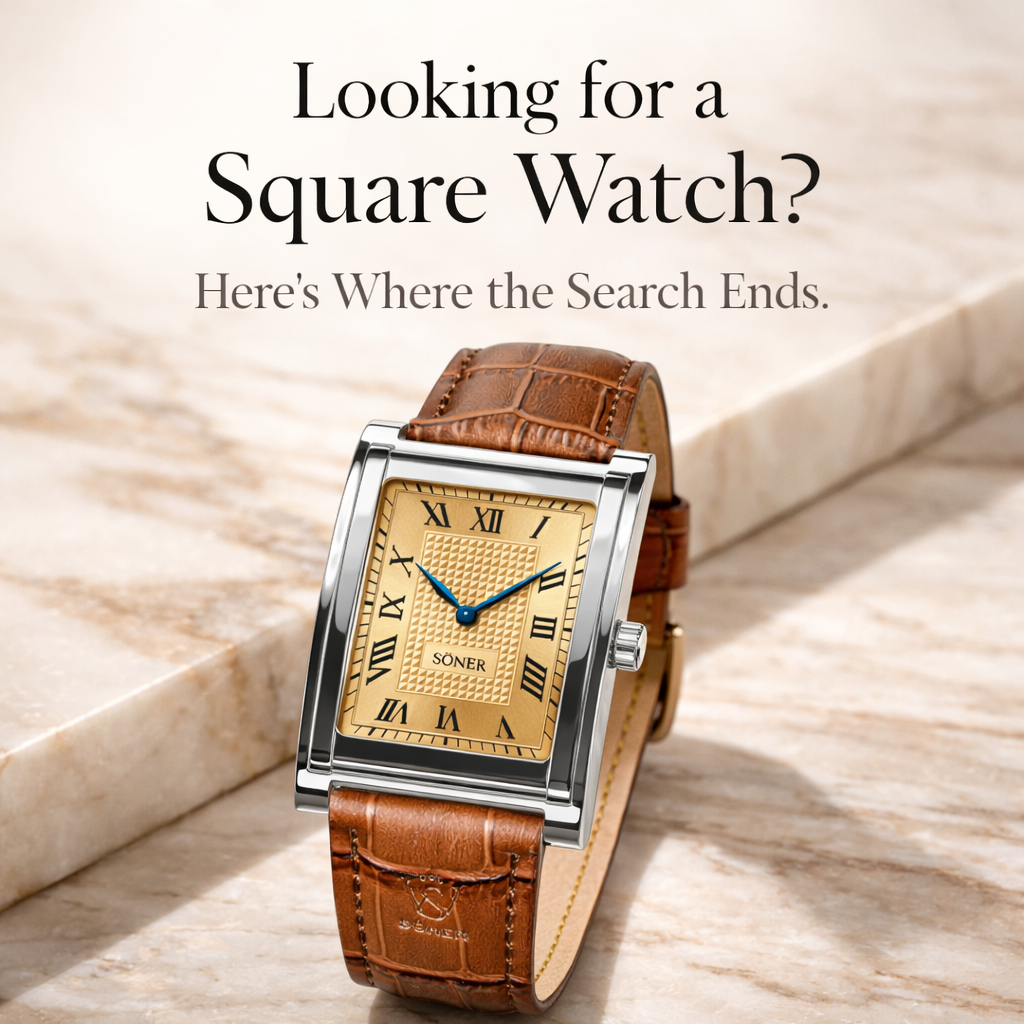
The rectangular case is the most historically significant non-round watch format in existence. The Cartier Tank (1917), Jaeger-LeCoultre Reverso (1931), and TAG Heuer Monaco (1969) are the three most culturally significant watches in this category, each making the argument for the rectangular case from a different direction: elegance, engineering, and sport respectively.
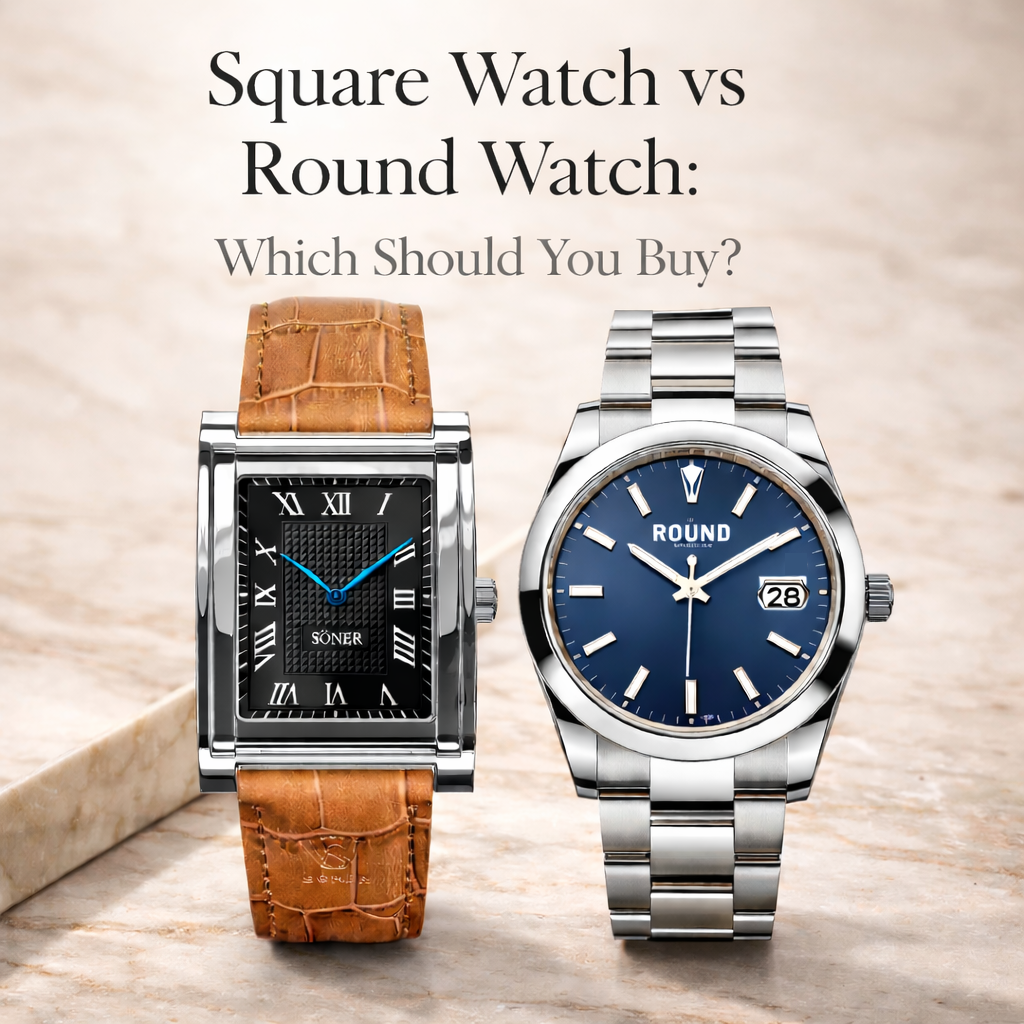
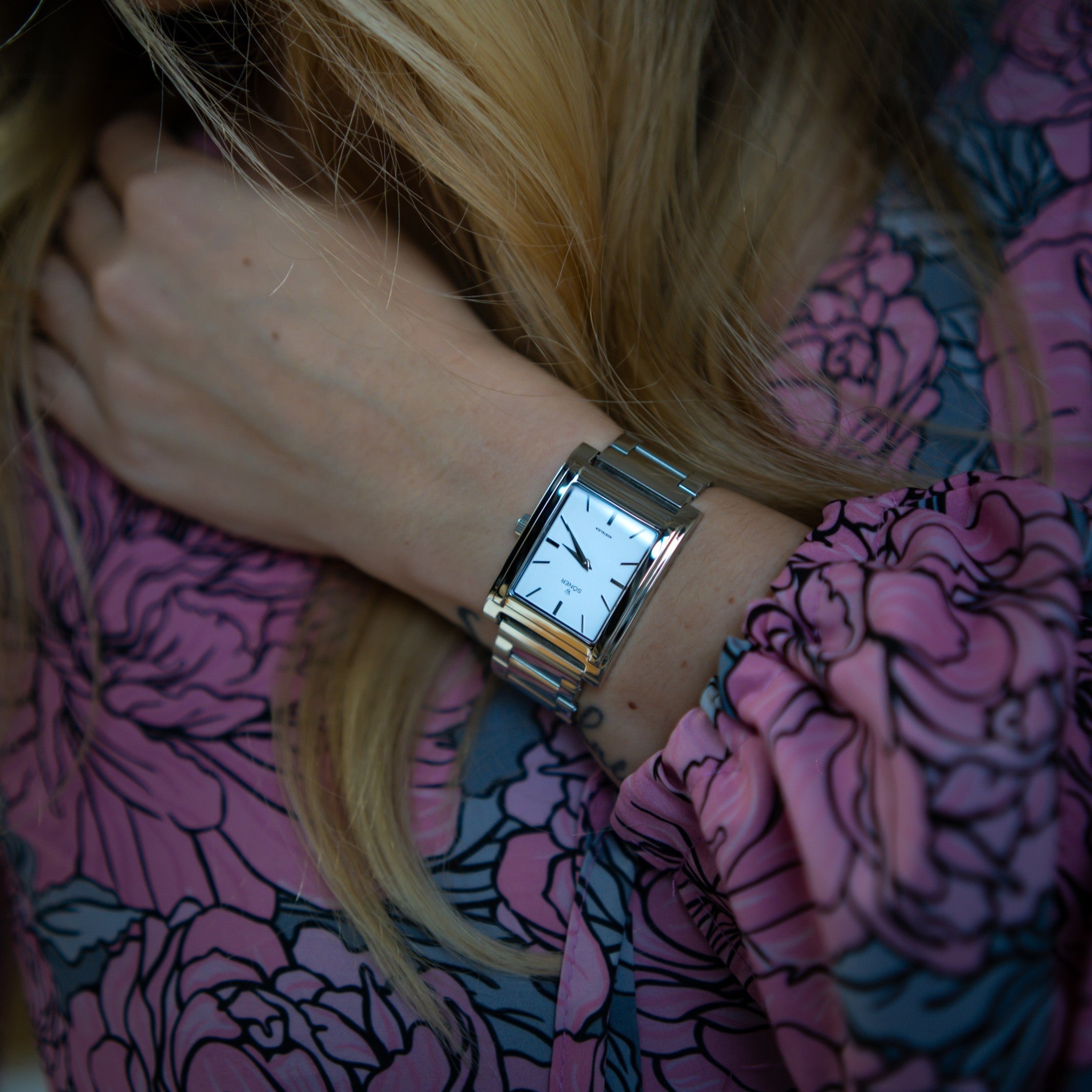
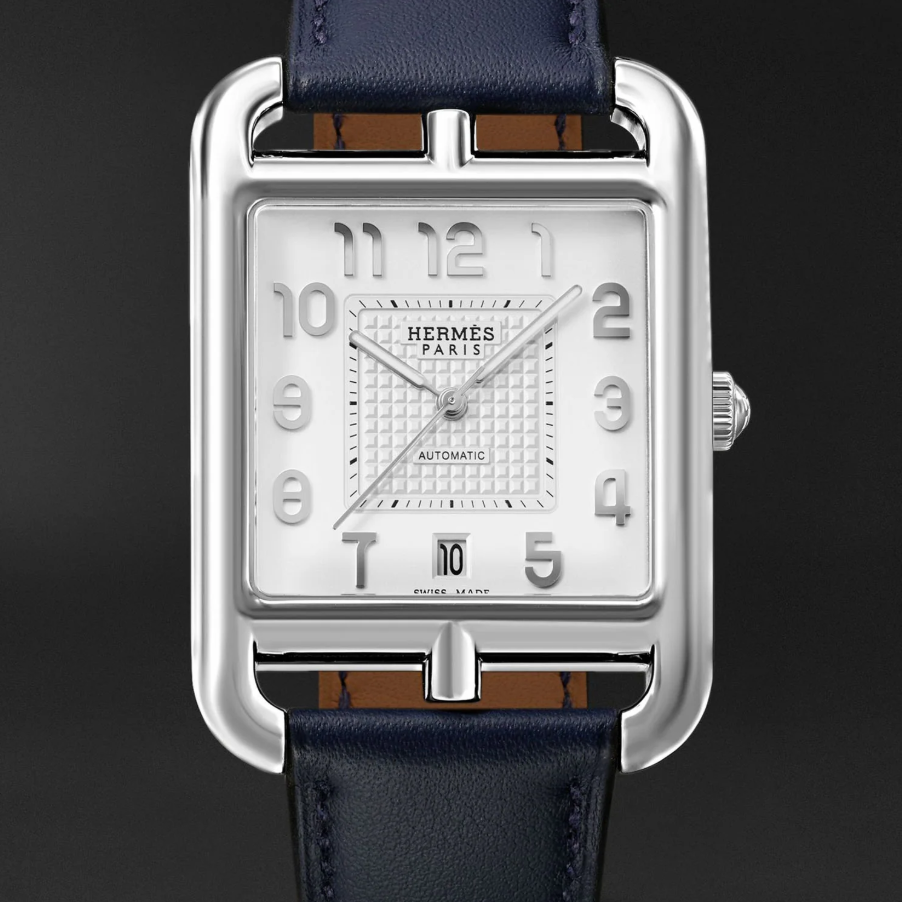
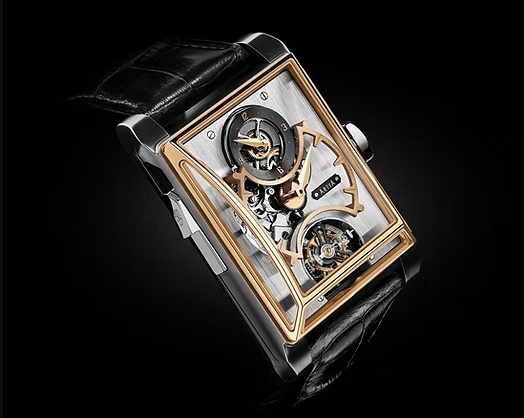
Rectangular watches offer genuine advantages over round cases: they follow the natural flat geometry of the wrist more closely, their slim profiles sit flush under shirt cuffs, and their dial layouts provide more natural space for complications. They also carry a design heritage that round dress watches in the same price tier cannot access. For the complete case for rectangular watches, see our article on the timeless appeal of square watches.

Key Features to Consider When Buying a Men's Watch
Mechanical vs Quartz: Which Is Right for You?
This is the most important decision in men's watch buying and the one most often misunderstood.
| Feature | Mechanical / Automatic | Quartz |
|---|---|---|
| Accuracy | -/+5 to 15 seconds per day | -/+15 seconds per month |
| Maintenance | Service every 5-7 years | Battery change every 2-3 years |
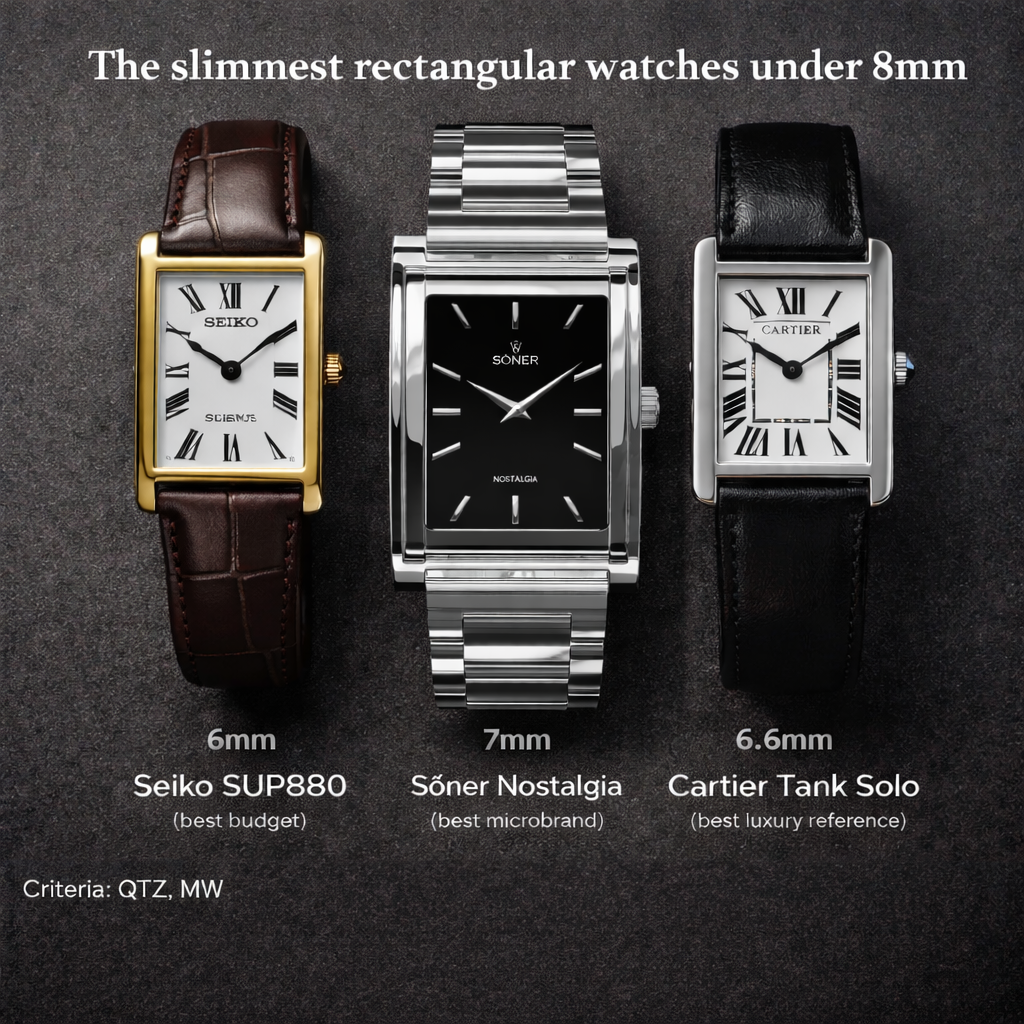
| Profile | Typically 9-14mm thick | Can be 5-8mm or less |
| Display caseback | Usually - movement visible | Usually not - movement less visually interesting |
| Power source | Wrist motion (automatic) or manual winding | Battery or solar |
| Best for | Watch enthusiasts, collectors, daily wearers | Precision, low maintenance, occasional wear |
Neither is objectively better. The choice depends on whether you value the connection to mechanical craft and the wearing experience of an automatic, or the accuracy and low maintenance of quartz. For dress watches worn occasionally, quartz is often the more practical choice. For daily wear where the watch becomes part of a routine, automatic rewards the relationship.

Materials and Durability
Case and crystal materials are where value is most often obscured by marketing. The practical guide:
- Crystal: Always prefer sapphire over mineral crystal. Sapphire is significantly harder and maintains optical clarity long-term. Mineral crystal scratches visibly within months of daily wear.
- Case steel: Standard 316L stainless steel is the baseline. 800HV hardened steel (as used across the Söner range) is four times more scratch-resistant. The difference is visible after six months of daily wear.
- Titanium: Lighter than steel and naturally hypoallergenic. Strong choice for sensitive skin or extended daily wear.
- Ceramic: Extremely scratch-resistant but brittle under impact. Less common in men's watches below $1,000.
- Gold: Available as solid or PVD-coated steel. Solid gold is a significant price step. PVD-coated gold provides the aesthetic with better scratch resistance but can wear over time.
For strap materials, leather suits formal and business contexts, steel bracelet suits smart casual and daily wear, and NATO or canvas suits casual and active wear. Quick-release straps allow you to change context with the same watch case.
Men's Watch Trends in 2026
The Rectangular Revival
The single most significant trend in men's watches in 2026 is the sustained resurgence of rectangular cases. After decades of sports watch dominance, buyers are returning to dress watches with genuine design heritage. The rectangular case is the most historically significant format in this category - and brands are responding with new rectangular references at every price point.
Search interest in rectangular and square watches has grown consistently year-on-year. Major watch fairs since 2022 have featured angular cases as a primary focus rather than an afterthought. The format is not experiencing a trend cycle - it is receiving recognition that has been building since the format's Art Deco origins over a century ago.
The Microbrand Moment
Microbrands have fundamentally altered the accessible watch market. By selling direct to consumers rather than through retail networks, these brands offer specification packages that legacy brands at similar prices cannot match. Sapphire crystals, Swiss movements, hardened steel cases, and multi-year warranties are standard in well-run microbrands - features that at traditional brands would push prices significantly higher.
Söner Watches is the only microbrand exclusively dedicated to the rectangular format - no round watches, no secondary lines, no compromises for a different case shape. The full focus on rectangular design produces watches more considered in their format than anything produced as a round-case line extension.
Smaller, More Considered Proportions
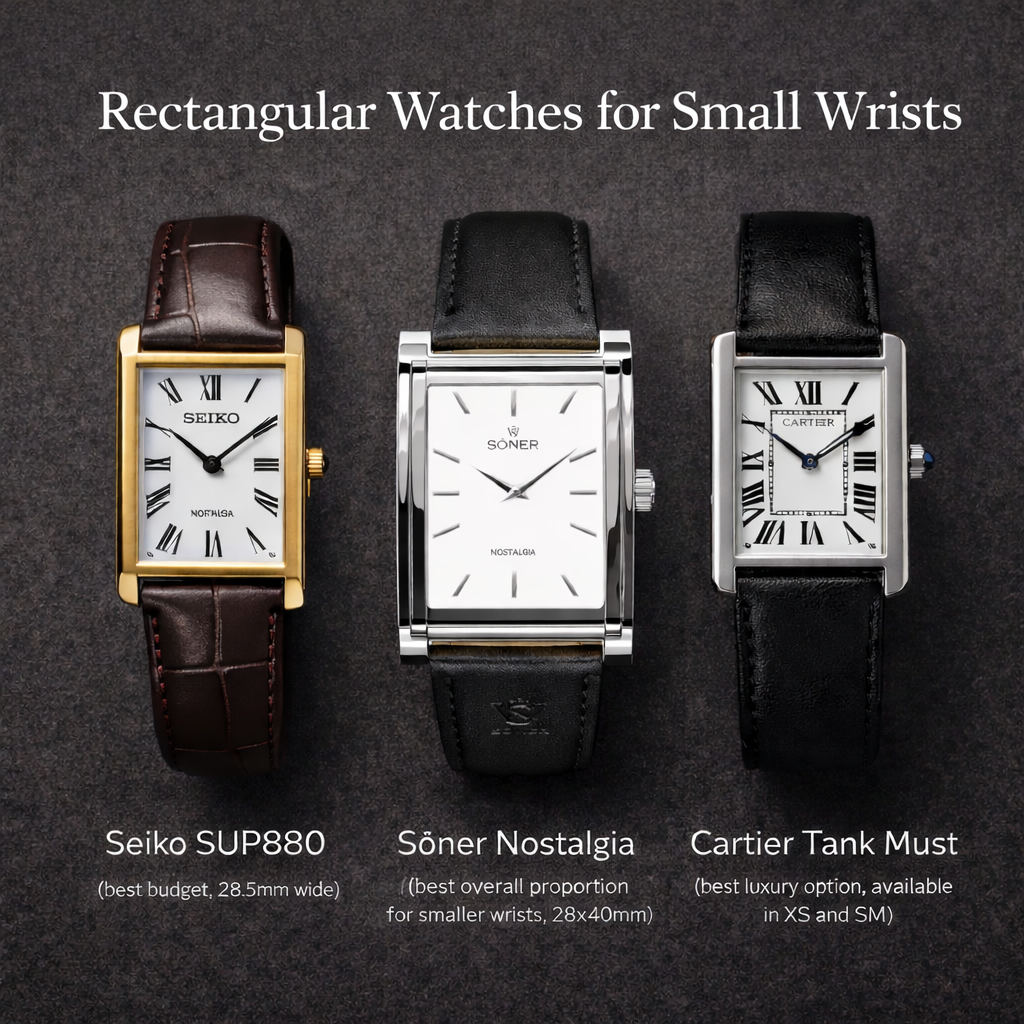
The oversized watch trend of the 2000s and 2010s has definitively reversed. Watches in the 38-42mm range are the contemporary standard for men's dress and everyday watches. Slim profiles are valued for their versatility and comfort. The rectangular watch's naturally elongated proportions suit this movement toward considered scale - a 28 x 40mm rectangular case wears entirely differently from a 40mm round case, typically reading as smaller and more elegant on the wrist.

How to Choose the Perfect Men's Watch
The framework below cuts through the noise. Answer these five questions and you will know exactly what to buy.
| Question | What It Tells You |
|---|---|
| What will I actually wear it for? | Dress, daily, sport, or special occasions - determines category |
| Do I want mechanical engagement or low maintenance? | Determines automatic vs quartz |
| What is my wrist width? | Determines case size. Rectangular watches need lug-to-lug checked, not just diameter. |
| Do I want something everyone recognises or something distinctive? | Determines heritage brand vs microbrand |
| What is my honest budget? | Under $500: quartz with sapphire. $500-$1,000: Swiss automatic options open up. $1,000+: heritage brands become accessible. |
For rectangular watches specifically, also check the case width against your wrist width - a case that overhangs the wrist on both sides reads as poorly proportioned. Our rectangular watch size guide covers this in detail.

Men's Watch Maintenance and Care
A well-maintained watch will outlast its owner. The maintenance requirements vary significantly by movement type.
For automatic and mechanical watches: Service every five to seven years. This involves disassembling the movement, cleaning all components, lubricating the necessary parts, and reassembling with calibrated precision. The cost varies by brand and movement complexity but is a necessary investment to maintain performance and prevent wear damage.
For quartz watches: Battery replacement every two to three years. Check seals and gaskets when replacing the battery - these components degrade over time and affect water resistance. A full service is rarely necessary unless the watch has been exposed to water or impact damage.
For all watches:
- Clean the case and bracelet regularly with a soft lint-free cloth. For water-resistant models, mild soap and water with thorough drying afterward.
- Store in a cool, dry place away from direct sunlight when not wearing. A dedicated watch box protects from dust and scratches.
- Use a watch winder for automatic watches during extended periods of non-wear to keep the movement running and lubricants distributed.
- Match the watch to the activity. Daily wear watches should have adequate water resistance and hardened cases. Formal watches should be protected from heavy physical use.

Vintage Men's Watches: Why They Endure
Vintage watches carry something new watches cannot manufacture: genuine history. Each scratch and patina tells a story of time actually lived rather than aesthetically applied. The craftsmanship standards of certain eras - particularly the Art Deco period of the 1920s-1940s and the dress watch golden age of the 1950s-1960s - produced movements and case finishing that modern production economics rarely match.
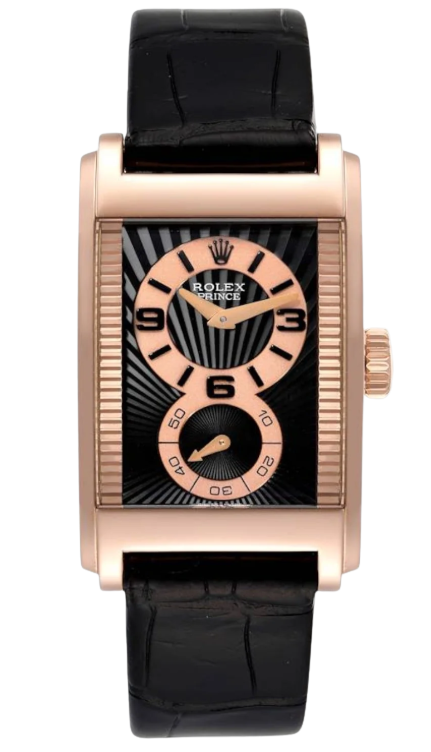
The collector market for vintage watches is also one of the few areas where mid-market purchases can appreciate in value. Iconic references from Rolex, Omega, Longines, and Cartier in good condition with documentation have consistently appreciated over decades. For rectangular watches specifically, vintage Cartier Tank references, JLC Reverso models, and Rolex Prince pieces represent some of the strongest value appreciation in the category.
The rectangular case format is particularly well-represented in the vintage market. The Art Deco period was the golden age of rectangular watchmaking, and surviving examples from Patek Philippe, Audemars Piguet, and the other pioneers covered in our article on pioneers in rectangular watchmaking command serious collector attention.

The Söner Watches Collection for Men
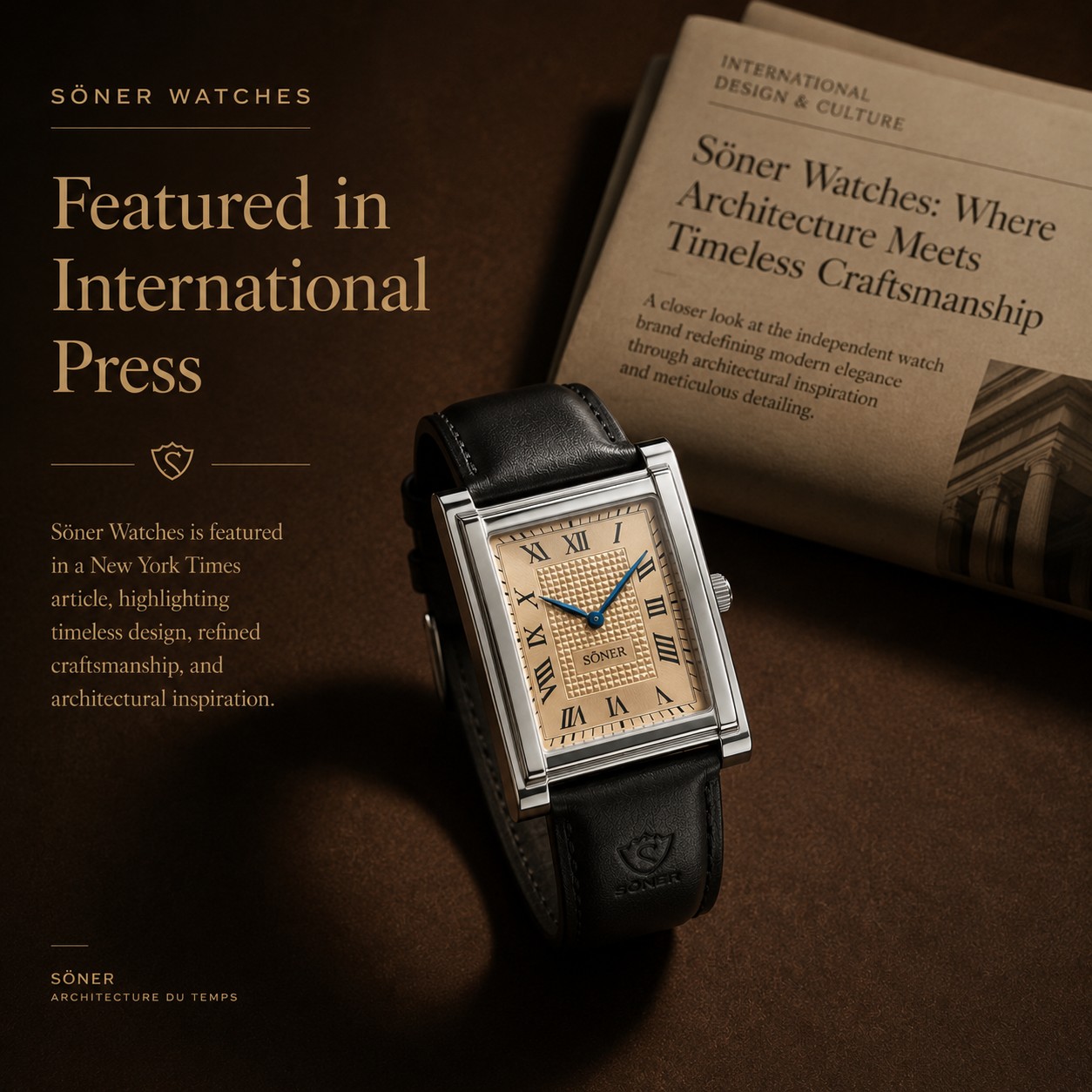
Söner Watches is the only brand in the world dedicated exclusively to rectangular analog watches. Every model in the range - from the Nostalgia quartz dress collection to the Amorous Swiss automatic to the Momentum sport automatic - is built around the rectangular case format that has defined the most celebrated men's watches of the past century.
The practical specifications across the range: 800HV hardened steel cases, sapphire crystals with anti-reflective coating, Swiss or Japanese movements, 5 or 10 ATM water resistance, and a 10-year warranty standard across the collection. For buyers who want to own a watch that is genuinely different from the round-case majority while connecting to over a century of design heritage, Söner is the only brand built exclusively for that purpose.
Explore the full Söner men's collection. To compare models by case size, movement, and dial colour, use the Söner comparison matrix. For the complete rectangular watches overview, see our guide to the best rectangular watches in 2026.

Frequently Asked Questions
What type of watch should a man wear every day?
A daily watch should balance versatility, durability, and comfort. Look for a minimum of 5 ATM water resistance for everyday practicality, a sapphire crystal for scratch resistance, and a case that reads appropriately across both casual and smart contexts. The Söner Amorous (Swiss automatic, 5 ATM) and Momentum (10 ATM) are both built specifically for daily wear in a rectangular format. For round watch options, the Seiko 5 Sports and Orient Bambino are strong everyday automatics.
What is the best men's watch under $1,000?
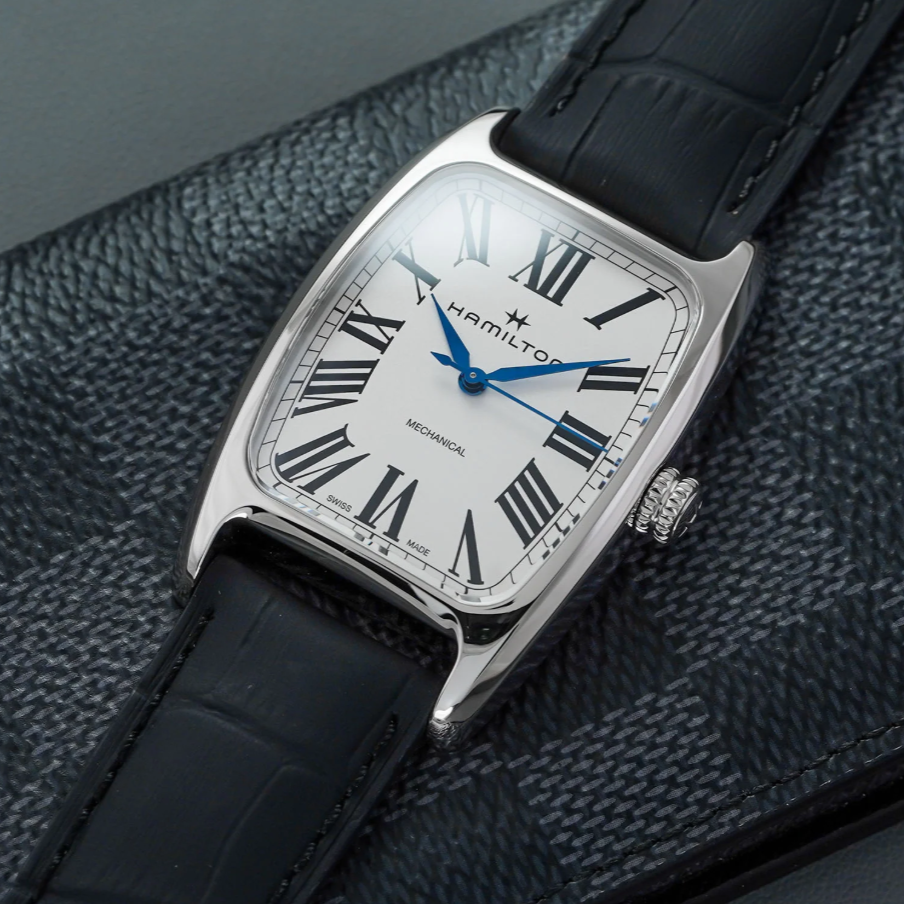
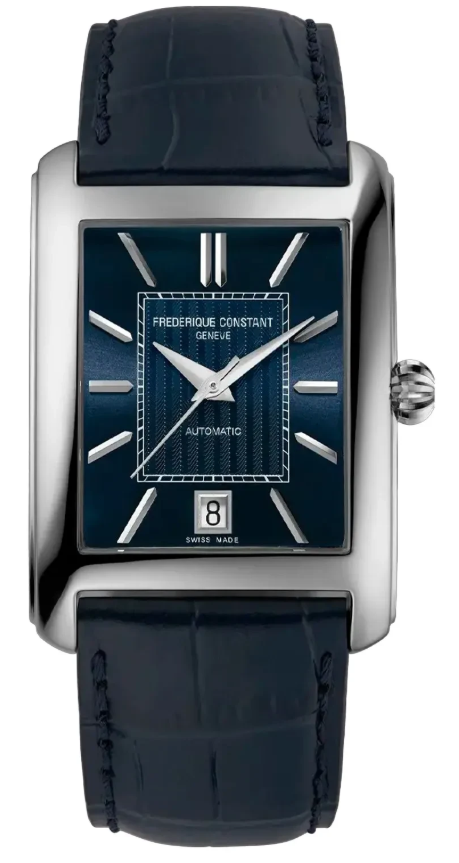
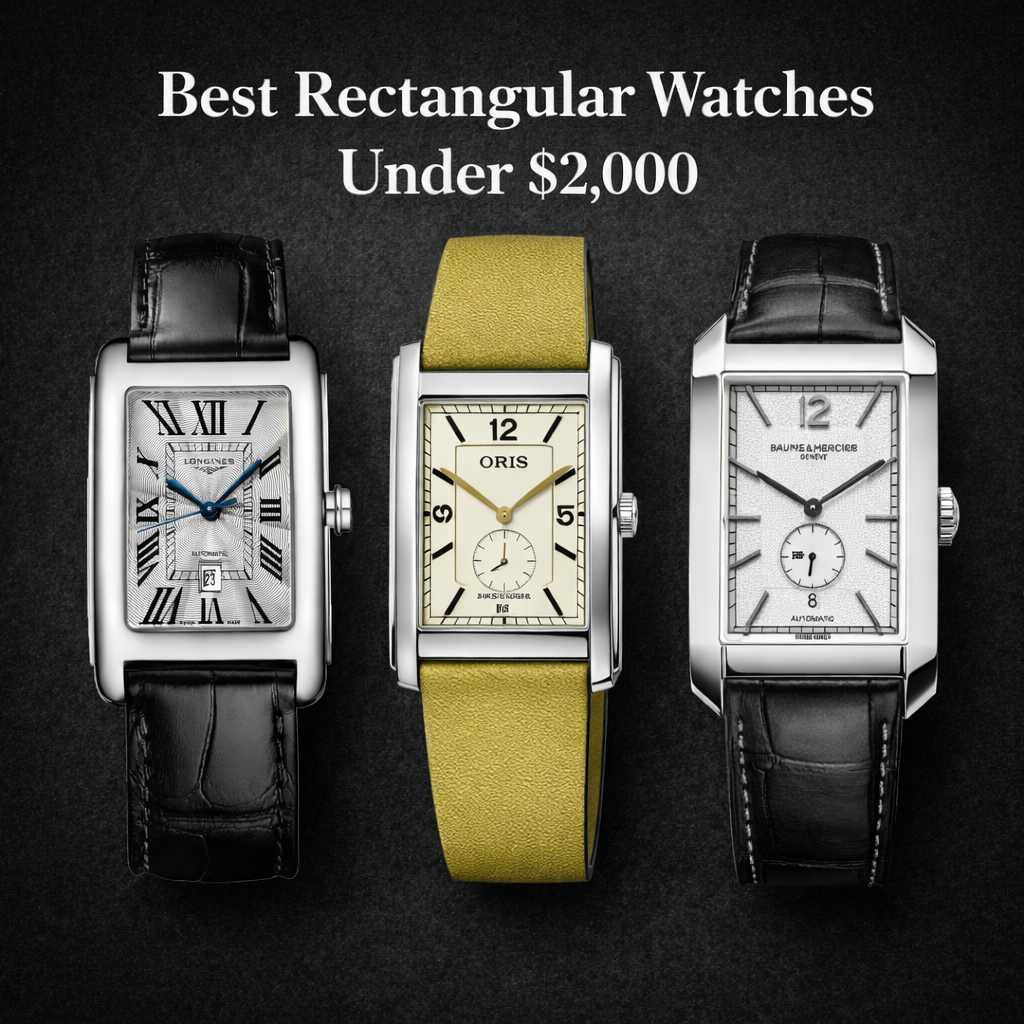
The best men's watch under $1,000 depends on priorities. For Swiss automatic movement in a rectangular case with a 10-year warranty, the Söner Amorous at approximately $700 is the strongest overall value. For American heritage in a hand-wound mechanical, the Hamilton Boulton at $945. For Swiss automatic with established brand recognition, the Frederique Constant Carrée at $960. For full specifications and comparison, see our guide to the best rectangular watches under $1,000.
How often should a mechanical watch be serviced?
Every five to seven years for most quality automatic and manual-wind movements. Service involves full disassembly, cleaning, lubrication, and regulated reassembly. Neglected servicing leads to lubricant degradation and accelerated component wear. The cost of a proper service is significantly less than the cost of repairing damage from a movement that has not been serviced.
Are rectangular watches suitable for everyday wear?
Yes. The Söner Amorous (5 ATM) and Momentum (10 ATM) are both designed and specified for daily wear. The slim profile of most rectangular watches - typically 9-12mm thick - actually makes them more practical for office wear than many round sports watches, sitting flush under a shirt cuff without creating a visible bump. See our watch size guide for wrist measurement and case proportion guidance.
What is the difference between an automatic and a manual-wind mechanical watch?
Both are mechanical movements. An automatic winds itself through wrist motion via a rotor - wear it daily and it runs continuously. A manual-wind requires the wearer to wind the crown periodically, typically every one to three days. Manual-wind movements can be slimmer (no rotor) and sometimes offer longer power reserves. Automatic is more convenient for daily wear; manual-wind is preferred by enthusiasts who enjoy the winding ritual. The Hamilton Boulton is the strongest manual-wind rectangular option under $1,000; the Söner Amorous and TAG Heuer Monaco are the most significant automatic rectangular options at their respective price points.