


SORT BY
Case finish
BOOKS

Beyond Round Watches
(Hardcover)
Beyond Round Watches
(free PDF)
How to spot a fake watch
Beyond Round Watches
(Hardcover)
Beyond Round Watches
(free PDF)
How to spot a fake watch

What Does "Complication" Mean in Horology? A Complete Guide
What Complication" in Horology In the world of horology, a "complication" refers to any feature of a watch that goes beyond the basic function of telling time. These additional mechanisms show...

Watch Case Materials, Shapes & Functions: Full Guide
The watch case is the most visible component of any timepiece. It determines the watch's shape, size, material character, water resistance, and much of its visual identity. Understanding how cases ...

The Essential Parts of a Wristwatch Explained
A wristwatch is one of the most intricate objects most people own. A quality mechanical movement can contain over 200 individual components, all assembled by hand to tolerances measured in fraction...

Beyond Round Watches: A Beginner's Guide to Rectangular Watch History
Beginner’s Guide to Horology Embarking on the journey into the world of horology can be both fascinating and overwhelming. For newcomers eager to understand the intricacies of watch history, "Beyo...

Quartz vs. Mechanical Watches: Key Differences Explained
Quartz vs Mechanical Watches The heart of every wristwatch is its movement—the intricate mechanism that powers the watch and drives its functions. For watch enthusiasts and buyers alike, unders...

Tank Watch Alternatives for Women: The Complete Guide
The Cartier Tank is $2,900 at minimum for the Must in stainless steel, and closer to $5,000 for the Solo. If the design is what appeals but the price is the obstacle, there are genuine a...
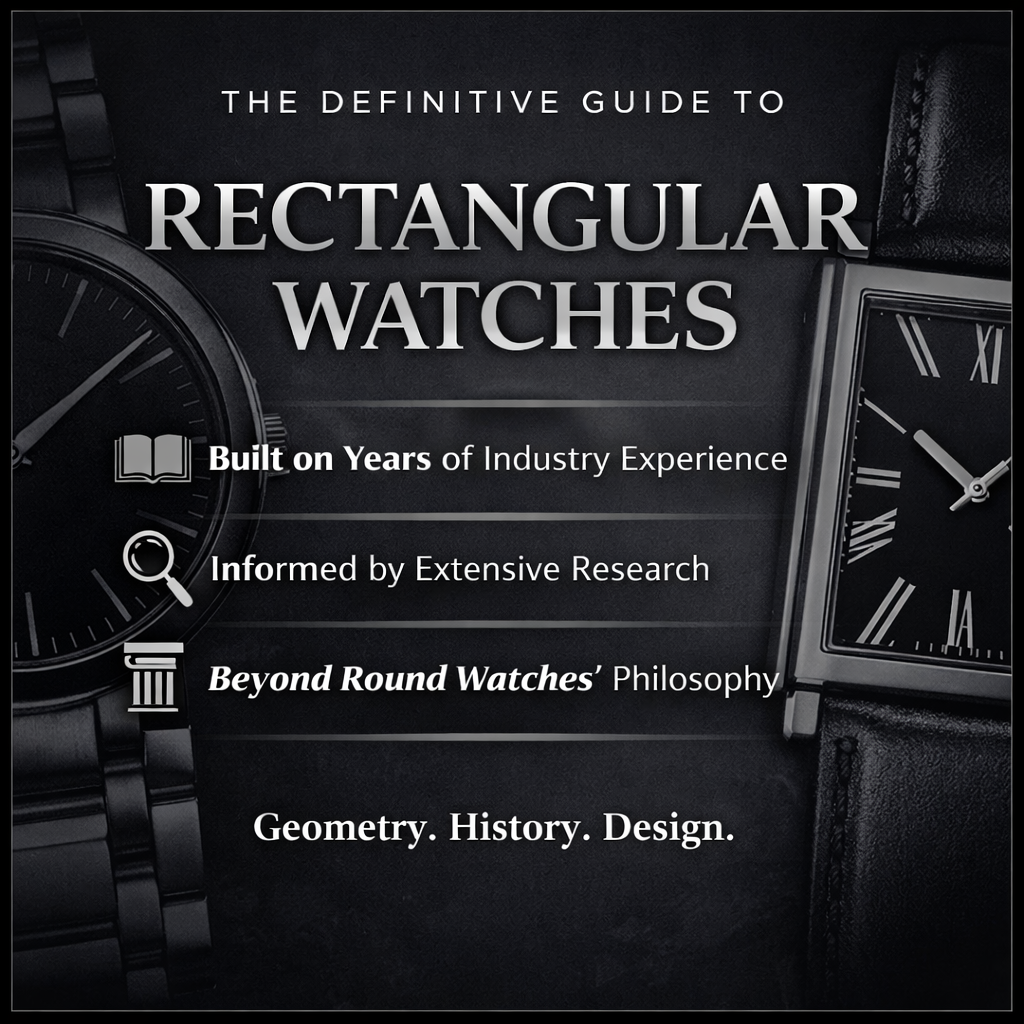
Rectangular watches are not a variation of round design. They are a different design philosophy.
This guide explores the history, geometry, engineering complexity, movement considerations, sizing logic, price tiers, and cultural significance of rectangular watchmaking - structured as a permanent educational resource rather than a buying article.
Explore the full framework and master the category.
Guide to Rectangular Watches


