

 Published on
Table of Contents
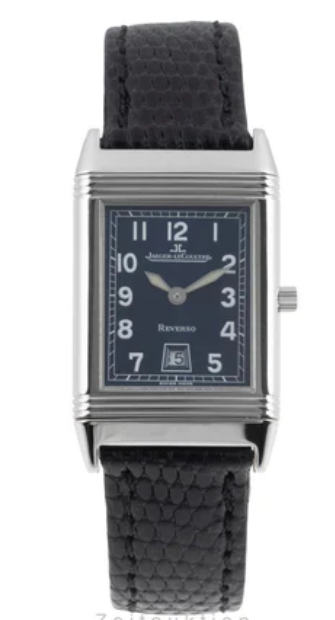
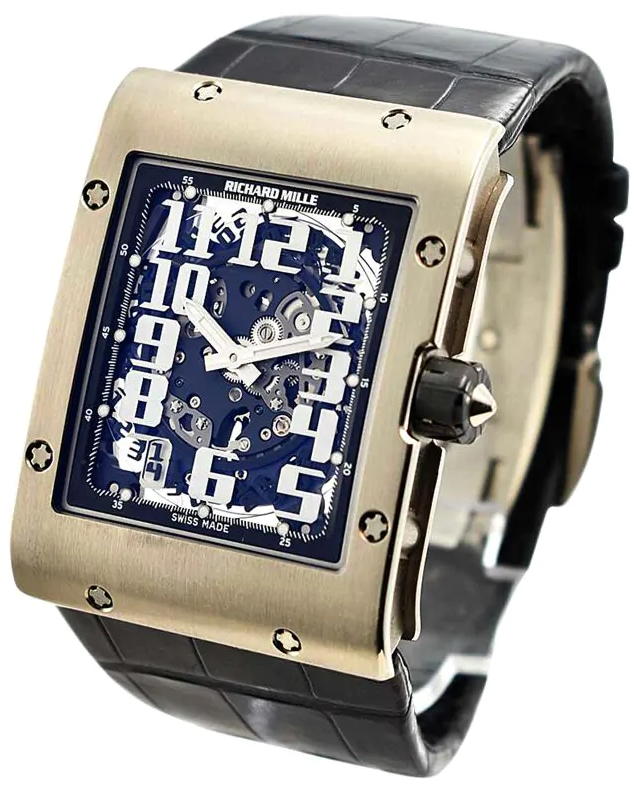
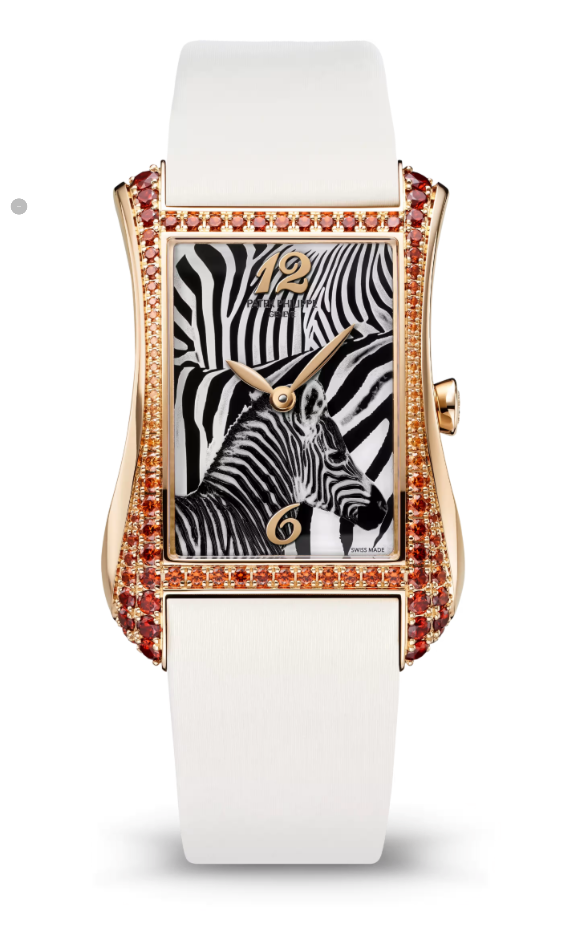
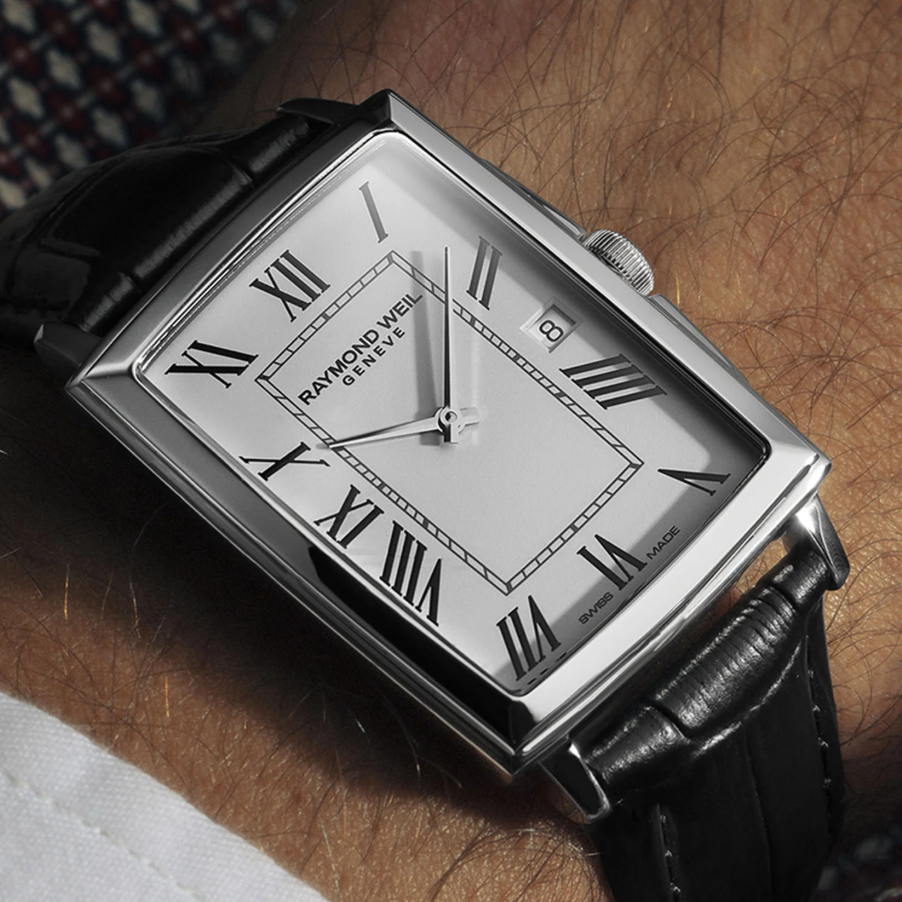
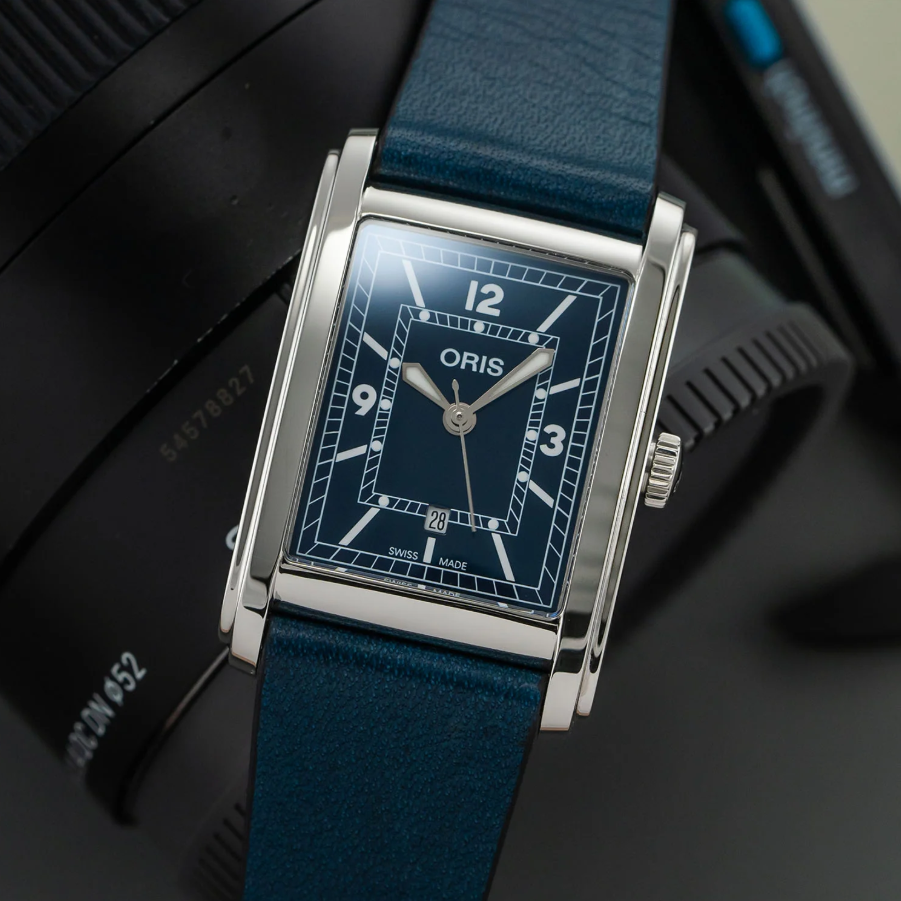
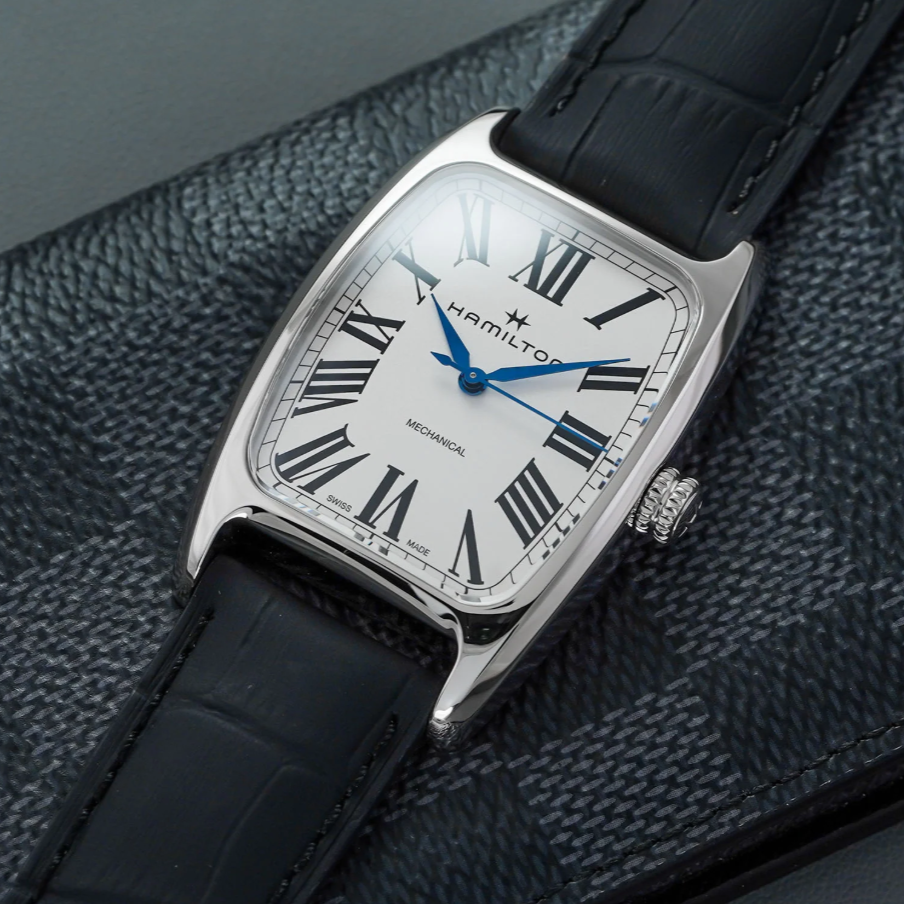
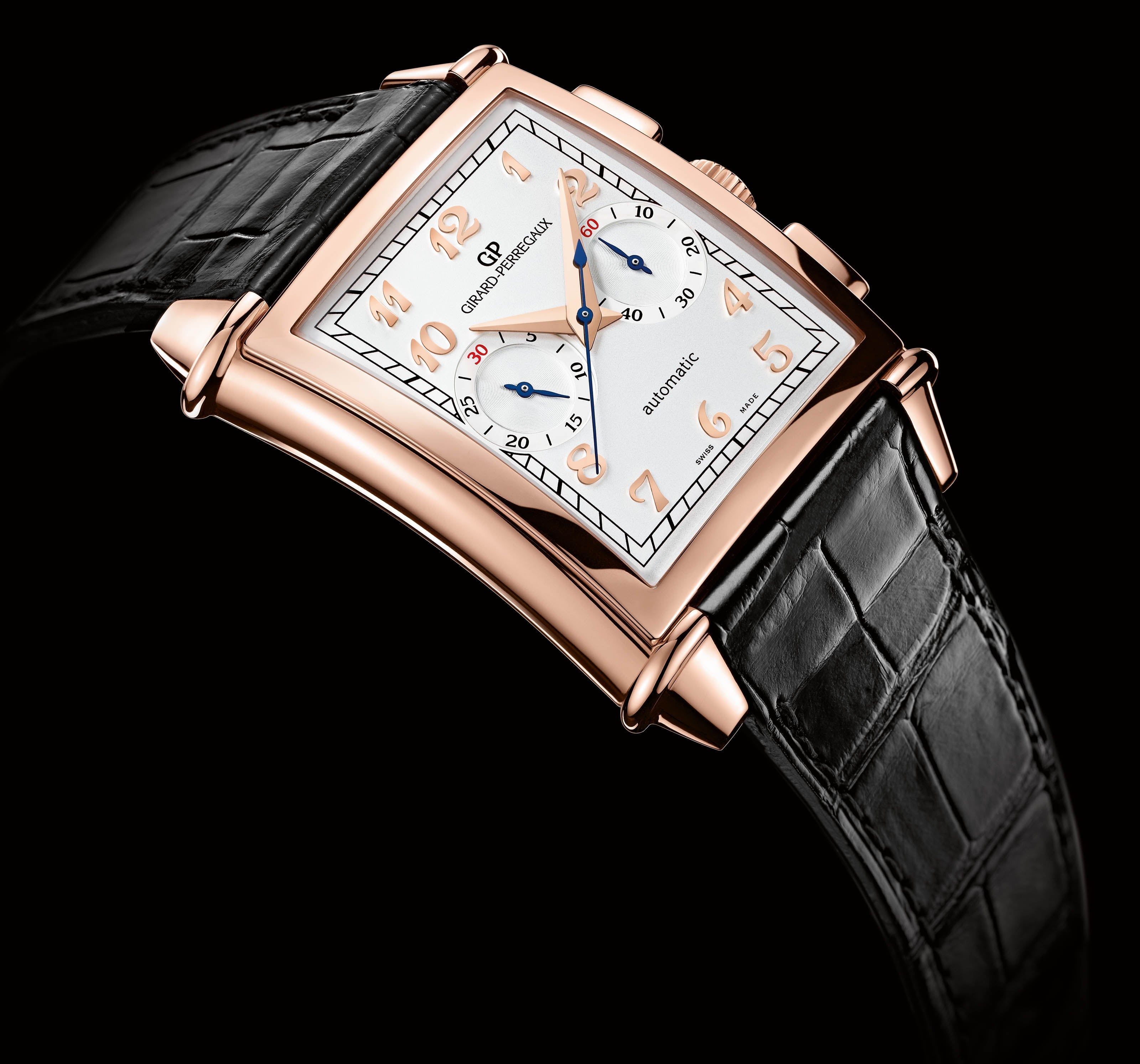
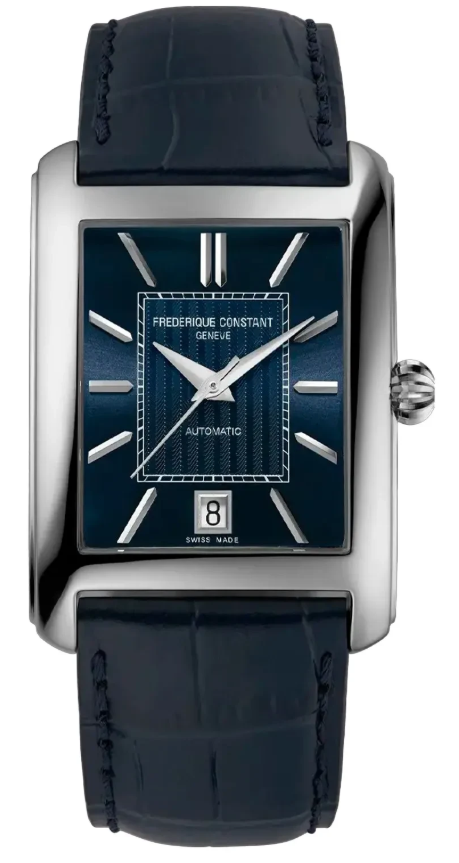
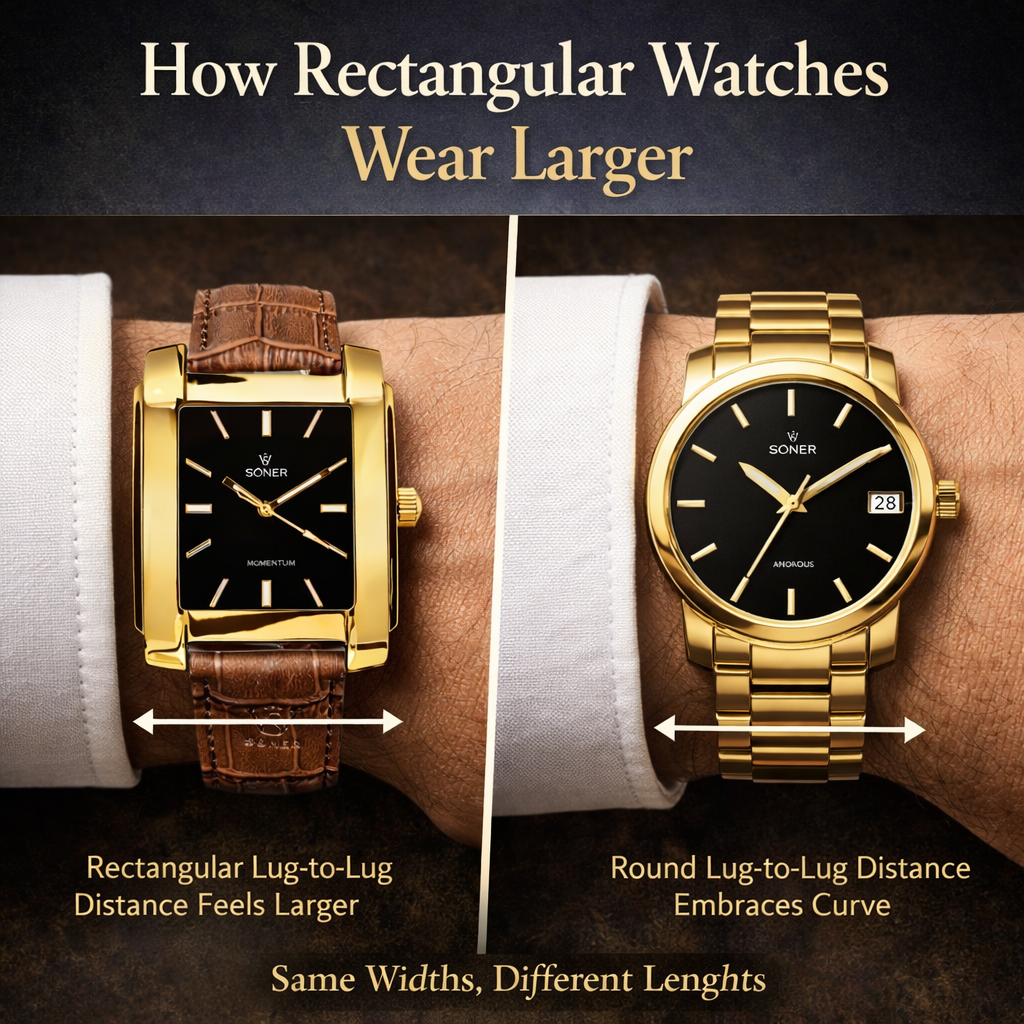
Esto le sucede a casi todos los compradores la primera vez que adquieren un reloj rectangular. Las dimensiones indicadas parecen modestas en papel. El ancho de la caja es menor que el de la mayoría de los relojes redondos que poseen. Esperan algo compacto y discreto. Luego llega el reloj, se pone en la muñeca y parece significativamente más grande de lo anticipado.
Esto no es un error de medición. Es una consecuencia consistente y predecible de cómo la geometría rectangular interactúa con la muñeca humana y con la percepción visual humana. Los relojes rectangulares parecen más grandes en la muñeca de lo que sus dimensiones indicadas sugieren, y lo hacen por varias razones distintas que vale la pena entender completamente.
Saber por qué sucede esto es útil por dos razones. Primero, ayuda a los compradores a elegir la talla correcta al pasar de cajas redondas a rectangulares. Segundo, ayuda a los compradores a entender lo que ganan al elegir una caja rectangular: más presencia visual por milímetro de tamaño de caja que casi cualquier otro formato de reloj.
La guía de relojes rectangulares cubre las proporciones en el contexto más amplio de toda la categoría, incluyendo cómo el tamaño aparente influye en las decisiones de compra en diferentes rangos de precio y tamaños de muñeca.
La base del reloj redondo
Para entender por qué los relojes rectangulares parecen más grandes, ayuda comenzar por entender por qué los relojes redondos se perciben como lo hacen.
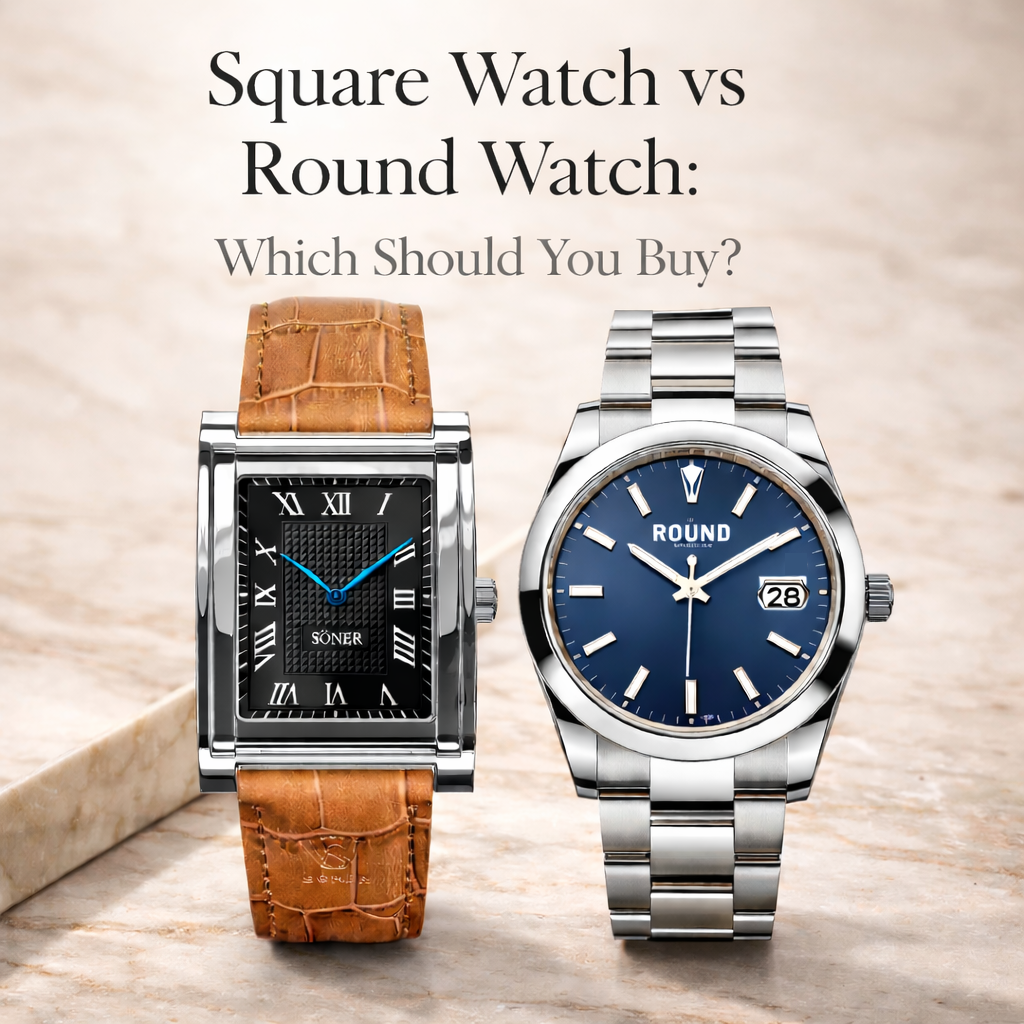
Una caja redonda presenta un círculo al ojo. El círculo es una forma que el ojo procesa con particular eficiencia. Su curva continua no tiene esquinas, ni énfasis direccional, ni interrupciones visuales. El ojo lo recorre suavemente y el cerebro lo registra como un objeto unificado y autónomo. El reloj redondo se asienta en la muñeca como un disco, y la muñeca se curva suavemente alrededor y más allá en todas las direcciones. La transición del reloj a la muñeca es suave, natural y visualmente discreta.
Esta suavidad favorece al reloj redondo en términos de tamaño aparente. La curva continua de la caja se mezcla parcialmente con la superficie curva de la muñeca. No hay un límite visual nítido entre dónde termina el reloj y dónde comienza la muñeca. El ojo integra el reloj en el contexto de la muñeca, y la impresión general es la de un objeto armonioso y proporcionado que parece un poco más pequeño de lo que mide.
El reloj rectangular funciona de manera completamente diferente, y cada diferencia contribuye a un tamaño aparente mayor.
Por qué las cajas rectangulares parecen más grandes: cinco razones
1. Contraste en las esquinas
La diferencia visual más inmediata entre una caja rectangular y una redonda son las esquinas. Una caja rectangular tiene cuatro esquinas distintas donde se encuentran dos bordes rectos en aproximadamente 90 grados. Estas esquinas crean interrupciones visuales agudas que el ojo no puede procesar suavemente como procesa una curva.
Cuando el ojo encuentra una esquina, registra un cambio de dirección. Ese registro toma una fracción de segundo más que el seguimiento suave de una curva. El resultado es que las esquinas atraen la atención, y la atención es el equivalente perceptual del tamaño. Una caja con cuatro esquinas visualmente activas mantiene la mirada por más tiempo que una caja sin esquinas. Un tiempo de permanencia más largo se traduce en una mayor prominencia percibida.
Este es un principio bien documentado en la percepción visual: los objetos con bordes de alto contraste y cambios direccionales se perciben como más grandes y más presentes que los objetos con límites suaves y continuos, incluso cuando sus dimensiones físicas son idénticas.
2. El efecto del borde plano
Una caja rectangular tiene lados planos y rectos. Donde una caja redonda se curva alejándose del espectador en sus bordes, la caja rectangular presenta su lado plano completo de frente. Esto significa que hay más área visible en la periferia de una caja rectangular que en la periferia de una caja redonda de dimensiones indicadas comparables.
Considere un reloj redondo con un diámetro de 38 mm y un reloj rectangular con una altura de 38 mm. El reloj redondo se estrecha en sus bordes a medida que la curva se aleja del espectador. El reloj rectangular no se estrecha. Su lado plano es completamente visible desde arriba hasta que llega a la esquina. El efecto visual neto es que el reloj rectangular ocupa más campo visual en sus bordes que el reloj redondo, aunque la dimensión indicada sea la misma.
Esto es particularmente significativo para cajas rectangulares estrechas. Una caja que mide solo 24 mm de ancho aún presenta lados planos completamente visibles hasta las esquinas. No hay estrechamiento, ni retroceso visual, ni suavizado en los bordes. Los 24 mm completos están visualmente presentes de esquina a esquina.
3. Exceso de medida de asa a asa
La distancia de asa a asa es el factor más práctico que contribuye al tamaño aparente ampliado de los relojes rectangulares, y es el más fácil de cuantificar.
Como se discutió en la guía de tallas, la medida de asa a asa de un reloj rectangular suele ser significativamente mayor que la altura del caja indicada. Un reloj con una altura de caja de 34 mm podría tener una medida de asa a asa de 46 mm o más una vez que se incluyen las asas. Esos 12 mm adicionales son una cobertura genuina adicional en la muñeca, y no se reflejan en las dimensiones indicadas de la caja.
Cuando un comprador estima la presencia del reloj en su muñeca basándose en la altura indicada de la caja de 34 mm y encuentra un reloj que cubre 46 mm de longitud de muñeca, el reloj parece sustancialmente más grande de lo esperado. Esto no es una ilusión visual en el sentido estricto. El reloj realmente ocupa más espacio en la muñeca de lo que las dimensiones indicadas sugerían. La ilusión está en las dimensiones indicadas, no en la realidad del reloj en la muñeca.
Para la mayoría de los relojes de vestir rectangulares, la distancia de asa a asa añade entre 10 mm y 16 mm a la altura indicada de la caja. Los compradores que tienen esto en cuenta estarán mucho mejor calibrados respecto al tamaño aparente.
4. Contraste de la muñeca y tensión geométrica
La muñeca humana es anatómicamente curva y de forma orgánica. No tiene líneas rectas, ni superficies planas, ni ángulos rectos. Un reloj rectangular, colocado sobre esta superficie orgánica, crea un contraste geométrico marcado que el ojo nota de inmediato.
Este contraste funciona en ambas direcciones simultáneamente. El reloj parece más angular y deliberado porque se apoya sobre algo curvo y natural. La muñeca parece más orgánica y viva porque se yuxtapone con algo geométrico y preciso. Cada uno hace que el otro sea más visible. El reloj aparece más prominente como objeto diseñado porque se sitúa sobre un fondo orgánico que amplifica su geometría.
Este efecto de contraste es una de las razones por las que los coleccionistas experimentados suelen describir la experiencia de llevar un reloj rectangular como más interesante que llevar uno redondo. El reloj redondo armoniza con la muñeca. El reloj rectangular crea una tensión productiva con ella. Esa tensión es una fuente de energía visual que se traduce directamente en presencia y tamaño percibidos.
5. Énfasis direccional y movimiento ocular
Una caja rectangular tiene un eje vertical que el ojo sigue naturalmente de asa a asa. Este énfasis direccional hace que el ojo recorra toda la longitud del reloj como parte de su procesamiento visual normal del objeto. El ojo entra por un asa, se desplaza por la caja y sale por la otra asa. Este movimiento cubre toda la distancia de asa a asa.
Un reloj redondo no crea el mismo recorrido direccional. El ojo orbita alrededor de la caja en lugar de atravesarla. El movimiento orbital cubre el mismo diámetro en todas las direcciones, pero no genera la sensación de que el reloj se extienda a lo largo de la muñeca de manera tan deliberada.
El recorrido direccional del ojo a lo largo de una caja rectangular amplifica la sensación de que el reloj se extiende de un punto a otro en la muñeca. Esto se percibe como cobertura y, por lo tanto, como tamaño.
Los números: ¿Cuánto más grandes parecen realmente?
Cuantificar la prima aparente de tamaño de una caja rectangular requiere un marco práctico. Aquí hay un marco de comparación útil.
En la experiencia general de los coleccionistas, un reloj rectangular con una altura de caja declarada en el rango de 34 mm a 38 mm tiende a presentarse en la muñeca de manera similar a un reloj redondo con un diámetro de 40 mm a 44 mm. Esta es una equivalencia aproximada, no una fórmula, y varía según el diseño de las asas, el ancho y el grosor de la caja. Pero ofrece un punto de partida útil para los compradores que pasan de relojes redondos a rectangulares.
Más específicamente:
| Altura de caja rectangular | Presencia equivalente aproximada en redondo |
|---|---|
| 28 mm a 32 mm | Similar a redondos de 34 mm a 38 mm |
| 33 mm a 37 mm | Similar a redondos de 39 mm a 43 mm |
| 38 mm a 42 mm | Similar a redondos de 44 mm a 48 mm |
| 43 mm en adelante | Similar a redondos de 48 mm en adelante |
Estas equivalencias son aproximadas y varían según el diseño de las asas, el ancho de la caja y la geometría específica de la caja. Pero reflejan la experiencia constante de los compradores que usan tanto relojes rectangulares como redondos.
La implicación práctica es clara: al elegir el tamaño de un reloj rectangular, reduce el tamaño respecto a tu instinto. Si normalmente usas un reloj redondo de 40 mm y buscas un reloj rectangular con presencia similar, una altura de caja de 34 mm a 36 mm se sentirá aproximadamente adecuada. Una altura de caja de 40 mm puede parecer significativamente más grande de lo que esperas.
Cuando parecer más grande es precisamente el objetivo
Vale la pena señalar que la tendencia de los relojes rectangulares a parecer más grandes que sus dimensiones indicadas no es un defecto. Para muchos compradores, es una ventaja principal.
Un reloj rectangular de 30 mm de ancho y 40 mm de alto crea una presencia genuina en la muñeca sin el volumen físico de un reloj redondo grande. Logra impacto visual a través de la geometría en lugar de la masa. El reloj no es pesado, ni grueso, ni físicamente imponente como lo es un reloj deportivo redondo grande. Pero ocupa espacio visual en la muñeca con autoridad.
Este es el argumento estético para los relojes rectangulares en una sola frase: crean presencia a través de la precisión en lugar del tamaño. Para una ocasión formal donde un reloj deportivo de 44 mm sería inapropiado, un reloj rectangular de 28 mm de ancho puede crear una declaración visual equivalente mientras sigue siendo totalmente adecuado al contexto.
Entender que los relojes rectangulares parecen más grandes de lo que indican sus dimensiones no es una advertencia. Es una invitación a explorar proporciones que de otro modo podrías descartar por ser demasiado pequeñas, sabiendo que tendrán un impacto visual mayor del que esperas.
Cómo usar este conocimiento al comprar
La aplicación más directa de todo lo expuesto en este artículo es una regla simple: al considerar la compra de un reloj rectangular, resta de 4 mm a 6 mm de la altura de la caja antes de compararla con tu experiencia con relojes redondos. Si te sientes cómodo con un reloj redondo de 40 mm y estás mirando una caja rectangular con una altura de 36 mm, ese reloj rectangular probablemente se sentirá aproximadamente adecuado. Si eliges una altura de 40 mm, probablemente se sentirá más grande de lo que esperabas.
Más allá de esa regla, esto es lo que debes observar específicamente:
Comienza con la medida de asa a asa en lugar de la altura de la caja. La medida de asa a asa es un predictor más preciso de la cobertura en la muñeca que las dimensiones declaradas de la caja. Si la medida de asa a asa está publicada, úsala como tu medida principal para el ajuste. Si no está publicada, busca reseñas detalladas o pregunta al vendedor.
Revisa el ancho de la caja en relación con el ancho de tu muñeca. El efecto de borde plano significa que el ancho total de la caja es visualmente presente de esquina a esquina sin estrechamientos. Una caja que sea el 70% o más del ancho de tu muñeca se percibirá como bastante prominente. Una caja que sea del 50% al 60% del ancho de tu muñeca se verá proporcionada y clásica.
Considera la proporción. Una caja alta y estrecha (proporción superior a 1:1.5) crea más presencia vertical que una caja más corta y ancha de área similar. Si quieres maximizar la impresión vertical elegante de una caja rectangular mientras minimizas la sensación de volumen general, una proporción alta es más efectiva que una caja ancha.
El marco completo para traducir estas observaciones en una decisión de compra específica, incluyendo cómo equilibrar el tamaño aparente con el estilo de vida, el precio y la elección del movimiento, se aborda en el artículo sobre consideraciones de ajuste en la compra de relojes rectangulares.
El contexto de la percepción visual
La percepción de tamaño aparente de los relojes rectangulares no es exclusiva de los relojes. Es un ejemplo de un conjunto más amplio de principios de percepción visual que se aplican generalmente a objetos diseñados.
Los objetos con bordes de alto contraste se perciben más grandes que los objetos con límites suaves y continuos. Los objetos que crean énfasis direccional atraen más atención que los objetos visualmente estáticos. Los objetos que contrastan con su fondo parecen más prominentes que los que armonizan con él. Los relojes rectangulares destacan en los tres aspectos en el contexto de la muñeca: esquinas de alto contraste, fuerte énfasis vertical y contraste geométrico nítido frente a la forma orgánica de la muñeca.
Estos principios también explican por qué el reloj redondo parece retroceder ligeramente en la muñeca, de la misma forma en que las diferencias en la percepción visual entre cajas redondas y rectangulares producen experiencias distintas para el usuario, algo que el artículo sobre por qué la mayoría de los relojes son redondos aborda en el contexto de la psicología del consumidor y la convención de diseño.
Resumen
Los relojes rectangulares parecen más grandes en la muñeca que sus dimensiones indicadas por cinco razones distintas y reconocibles: contraste en las esquinas, efecto de borde plano, extensión de asa a asa, tensión geométrica con la muñeca curva y el énfasis direccional creado por el eje vertical. Cada uno de estos factores aumenta la presencia aparente del reloj de una manera que no puede capturarse solo con las proporciones de ancho y alto de la caja.
La consecuencia práctica es que los compradores que pasan de cajas redondas a rectangulares deberían reducir el tamaño aproximadamente entre 4 mm y 6 mm en la altura de la caja respecto a su instinto, y siempre deben verificar la medida de asa a asa antes de comprar.
La consecuencia más profunda es que un reloj rectangular bien elegido crea una presencia visual significativa mediante la inteligencia geométrica en lugar de la masa física. Esa es una de las cualidades más atractivas de la categoría, y está directamente relacionada con por qué los relojes rectangulares han atraído a coleccionistas serios durante más de un siglo.
Para entender completamente cómo el tamaño y la proporción influyen en la decisión de compra de un reloj rectangular, la guía de relojes rectangulares es la referencia que cubre todo en un solo lugar.
Artículos relacionados:
- Guía de relojes rectangulares - La referencia completa de la categoría
- Guía de tamaños de relojes rectangulares - explicación completa de las proporciones de ancho y alto de la caja
- Por qué la mayoría de los relojes son redondos - diferencias en la percepción visual entre relojes redondos y rectangulares
- Cómo elegir el reloj rectangular adecuado - consideraciones de ajuste para cada comprador
SÖNER rectangular watches
Free worldwide shipping · 10-year warranty · 30-day returns
Our pick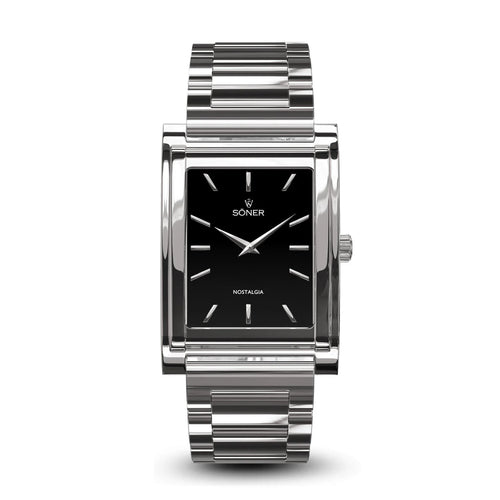 Nostalgia StockholmBatería de 11 años€527,95 EUR
View watch
Nostalgia StockholmBatería de 11 años€527,95 EUR
View watch
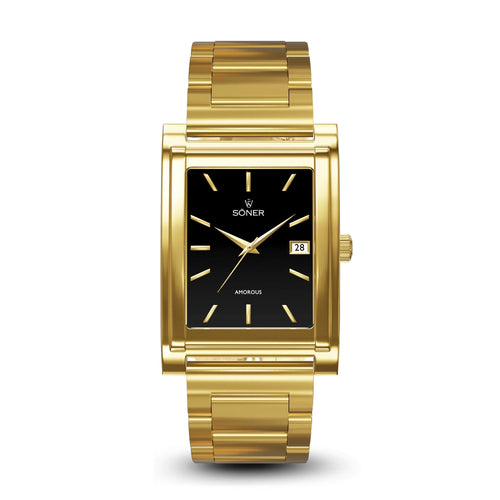 Amorous MilanoAutomático€714,95 EUR
View watch
Amorous MilanoAutomático€714,95 EUR
View watch
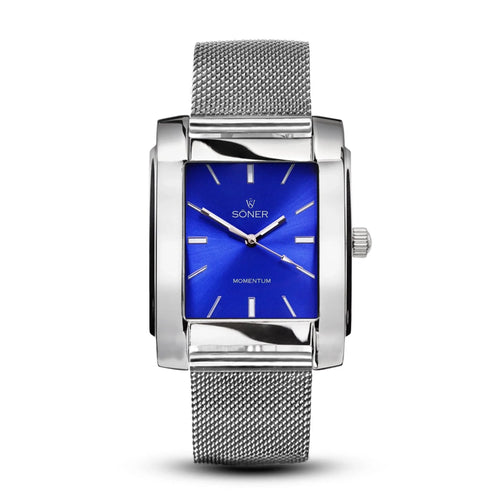 Momentum BacardiAutomático€532,95 EUR
View watch
Momentum BacardiAutomático€532,95 EUR
View watch
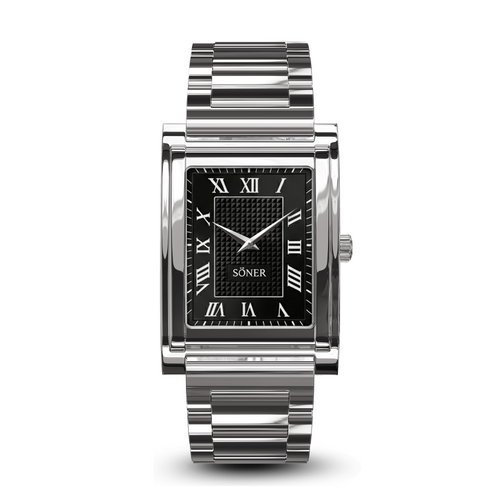 Nostalgia CaesarBatería de 11 años€696,95 EUR
View watch
Nostalgia CaesarBatería de 11 años€696,95 EUR
View watch
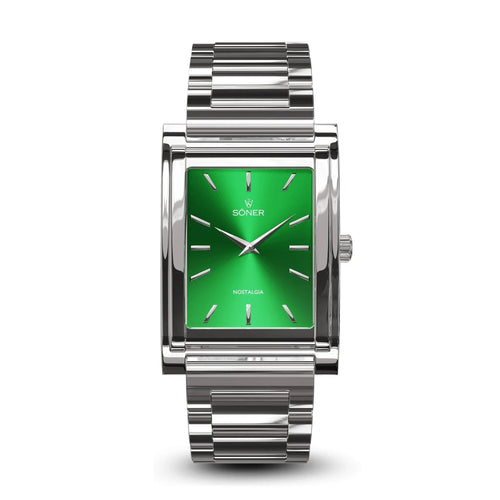 Nostalgia New YorkBatería de 11 años€527,95 EUR
View watch
Nostalgia New YorkBatería de 11 años€527,95 EUR
View watch
View all watches
 Nostalgia StockholmBatería de 11 años€527,95 EUR
View watch
Nostalgia StockholmBatería de 11 años€527,95 EUR
View watch
 Amorous MilanoAutomático€714,95 EUR
View watch
Amorous MilanoAutomático€714,95 EUR
View watch
 Momentum BacardiAutomático€532,95 EUR
View watch
Momentum BacardiAutomático€532,95 EUR
View watch
 Nostalgia CaesarBatería de 11 años€696,95 EUR
View watch
Nostalgia CaesarBatería de 11 años€696,95 EUR
View watch
 Nostalgia New YorkBatería de 11 años€527,95 EUR
View watch
Nostalgia New YorkBatería de 11 años€527,95 EUR
View watch