






 Published on
Table of Contents
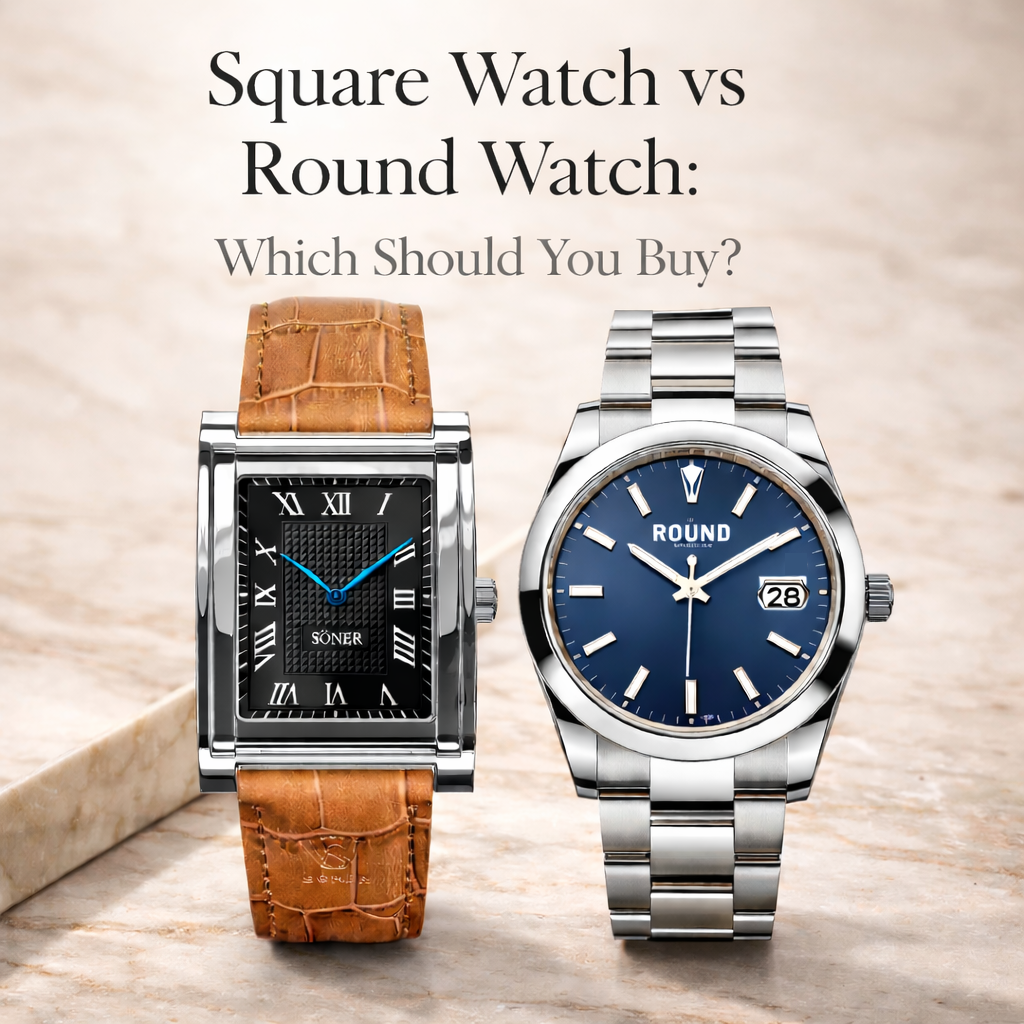
Entra en cualquier tienda de relojes del mundo y verás lo mismo: fila tras fila de relojes redondos. Entre marcas, rangos de precios y complicaciones, el círculo domina. Las estimaciones sugieren que entre el 85% y el 90% de todos los relojes producidos globalmente usan una caja redonda. El reloj redondo es tan ubicuo que la mayoría de los consumidores nunca se cuestionan esto.
Pero la pregunta vale la pena hacerla. ¿Por qué redondo? La muñeca no es redonda. El brazo no es redondo. No hay una razón anatómica para que un reloj deba ser circular. Entonces, ¿por qué toda la industria relojera mundial ha convergido en una sola forma de caja con tanta consistencia abrumadora?
La respuesta involucra la historia de la fabricación, la economía de la producción, el diseño del movimiento, la psicología del consumidor y la poderosa lógica auto-reforzante de la estandarización industrial. Entenderlo completamente también ayuda a explicar qué hace que los relojes rectangulares sean genuinamente diferentes y por qué las marcas que eligen fabricarlos aceptan un camino más difícil.
La Guía definitiva de relojes rectangulares cubre todas las implicaciones de estas diferencias en cada aspecto del diseño, ingeniería e historia de los relojes rectangulares.
El movimiento vino primero
Para entender por qué los relojes son redondos, hay que empezar no con la caja sino con lo que hay dentro. El movimiento mecánico del reloj es un sistema de engranajes, palancas y resortes organizados para regular la liberación de energía almacenada en intervalos precisos. En el centro de ese sistema está el resorte principal: una cinta metálica enrollada que almacena energía al enrollarse y la libera al desenrollarse.
El tren de engranajes que transfiere energía del resorte principal al escape irradia hacia afuera desde un eje central. La energía fluye en todas las direcciones simultáneamente desde ese punto central. Todo el sistema es, en su geometría fundamental, radial. Los componentes están dispuestos en anillos concéntricos de energía decreciente. El barril en el centro da paso al tren de engranajes, que da paso al escape, que da paso al tren de la esfera.
El círculo es la carcasa natural para un sistema radial. Cuando los primeros fabricantes de relojes de bolsillo diseñaron cajas para sus movimientos, estaban resolviendo un problema geométrico simple y elegante: ¿cómo encerrar un mecanismo radial de la manera más eficiente en espacio? La respuesta es un círculo. Una caja circular encierra el área máxima para un perímetro dado. No desperdicia espacio. Cada punto en su circunferencia interior está a la misma distancia del eje central del movimiento.
Esto no es una preferencia estética. Es un hecho matemático. El círculo es el contenedor óptimo para un sistema organizado radialmente, y el movimiento mecánico del reloj es un sistema organizado radialmente. La caja de reloj redonda es, en su origen, una solución de ingeniería más que una elección de diseño.
Cómo la Fabricación Consolidó el Círculo
Una vez que la verdad mecánica del movimiento redondo estableció la caja redonda como la predeterminada, los procesos de fabricación se organizaron en torno a esa realidad. Y una vez que los procesos de fabricación se organizaron en torno a la caja redonda, desviarse de ella se volvió progresivamente más caro y más difícil.
La Ventaja del Torno
La herramienta principal para producir cajas de reloj redondas es el torno. Un torno gira una pieza de trabajo alrededor de un eje fijo mientras una herramienta de corte elimina material. El resultado es un cilindro geométricamente perfecto, producido en una sola operación continua. El torno es rápido, preciso, repetible y escalable. Un operador experto puede producir docenas de piezas de caja redondas por día en un solo torno.
Una caja rectangular no puede producirse en un torno. Requiere una fresadora, que aborda la pieza de trabajo desde múltiples ángulos en múltiples configuraciones. Cada cara plana de la caja debe mecanizarse por separado. Las transiciones de las esquinas deben mecanizarse y luego a menudo terminarse a mano. Una caja rectangular requiere más configuraciones de máquina, más tiempo de operador, más acabado manual y más puntos de control de calidad que una caja redonda de tamaño equivalente. La economía de producción es significativamente menos favorable.
Estandarización de Componentes
Las ventajas del formato redondo van mucho más allá de la propia caja. Cada componente que toca la caja o se encuentra dentro de ella se beneficia del estándar redondo.
Los cristales, las cubiertas transparentes que protegen la esfera, son más baratos y están más disponibles en formatos redondos porque los relojes redondos representan la gran mayoría de la producción. Un cristal de zafiro redondo puede producirse en grandes lotes con herramientas compartidas. Un cristal de zafiro rectangular debe cortarse a una dimensión específica no estándar, a menudo con diferentes tolerancias en cada eje.
Las juntas, los sellos de goma o sintéticos que mantienen la humedad fuera de la caja, son más baratas y fiables en formatos redondos. Una junta redonda se comprime uniformemente alrededor de toda su circunferencia cuando se aprieta la tapa trasera. Una junta rectangular debe mantener una compresión constante tanto en las secciones rectas como en las transiciones de las esquinas, lo que requiere una geometría de caja más precisa y materiales de sellado de mayor calidad.
Las tapas traseras, tubos de corona, barras de correa y empaques están todos estandarizados alrededor de la caja redonda. Toda la cadena de suministro, desde la materia prima hasta la exhibición en tienda, está optimizada para un círculo.
El Sistema Educativo de la Relojería
Hay una fuerza menos obvia pero igualmente poderosa que refuerza el estándar redondo: la forma en que se capacita a los relojeros. Las escuelas de relojería enseñan la construcción de cajas, el ajuste de movimientos y el acabado de cajas en cajas redondas, porque las cajas redondas son las que los estudiantes encontrarán en la práctica profesional. Las técnicas para pulir una caja redonda, ajustar un movimiento redondo y sellar una tapa trasera redonda se enseñan en detalle. Las técnicas para cajas rectangulares se cubren como conocimiento especializado, si acaso.
Esto significa que el grupo de relojeros que pueden trabajar con confianza en cajas rectangulares es más pequeño que el grupo que puede trabajar en cajas redondas. Dar servicio a un reloj rectangular con un alto estándar requiere habilidades que son genuinamente menos comunes. Esto eleva los costos de servicio y limita la distribución, lo que a su vez restringe la viabilidad comercial de los relojes rectangulares en comparación con los redondos.
Psicología del Consumidor y el Círculo Familiar
La fabricación y la economía explican gran parte del dominio del reloj redondo, pero no lo explican todo. También hay una dimensión psicológica.
El Efecto de la Esfera del Reloj
Toda persona que alguna vez ha aprendido a decir la hora lo ha hecho en una esfera de reloj redonda. La asociación entre la medición del tiempo y el círculo es una de las relaciones visuales más profundamente arraigadas en la cognición moderna. Una esfera de reloj redonda se siente inmediatamente legible de una manera que una esfera rectangular no, porque el cerebro ha sido condicionado desde la infancia a asociar las caras circulares con el tiempo.
Este condicionamiento es tan profundo que opera por debajo del nivel de preferencia consciente. Cuando se les pide a los participantes de un estudio que elijan un diseño de reloj, consistentemente califican las esferas redondas como más legibles incluso cuando la esfera rectangular es objetivamente igual de legible. La preferencia no tiene que ver con la legibilidad en absoluto. Tiene que ver con la familiaridad.
La Neutralidad del Reloj Redondo
Un reloj redondo es visualmente neutral de una manera que un reloj rectangular no lo es. El círculo no implica dirección, orientación ni intención. Simplemente se presenta. Un reloj rectangular, en cambio, tiene una parte superior y una inferior, un eje más largo y otro más corto. Implica una elección deliberada. Pide al usuario que tenga un punto de vista.
Para la mayoría de los consumidores, que quieren un reloj que simplemente dé la hora sin hacer una declaración, la caja redonda es la elección correcta precisamente porque no exige nada al usuario. El reloj rectangular exige una decisión. Eso es parte de su atractivo para quienes lo aprecian, y parte de la barrera para quienes no.
Señalización de estatus y convención
También hay una dimensión social en el estándar redondo. En contextos donde usar reloj es principalmente una señal de estatus más que una práctica funcional o estética, la conformidad con la convención dominante es la estrategia más segura. Un reloj redondo de una marca reconocida comunica éxito y buen gusto sin necesidad de explicación. Un reloj rectangular de la misma marca comunica algo más específico y personal, lo cual es valioso para algunos usuarios y alienante para otros.
Esta dinámica significa que, a medida que el mercado de relojes crece y llega a nuevos consumidores que usan un reloj por primera vez, esos consumidores optan por lo redondo en tasas muy altas. El primer reloj casi siempre es redondo. El quinto o décimo reloj, elegido por un coleccionista que ha desarrollado preferencias y conocimientos, es donde comienzan a aparecer las cajas rectangulares.
Lo que la forma redonda no puede hacer
Entender por qué los relojes son redondos también ilumina lo que la caja redonda no puede ofrecer, y por qué existen los relojes rectangulares a pesar de toda la presión manufacturera y económica en contra.
El problema del puño
Un reloj redondo con un diámetro de caja significativo no pasa limpiamente bajo un puño de camisa. El perfil circular crea un bulto visible que distorsiona la manga y se hace notar. Para ocasiones formales donde la discreción es el objetivo, esto es un problema estético genuino.
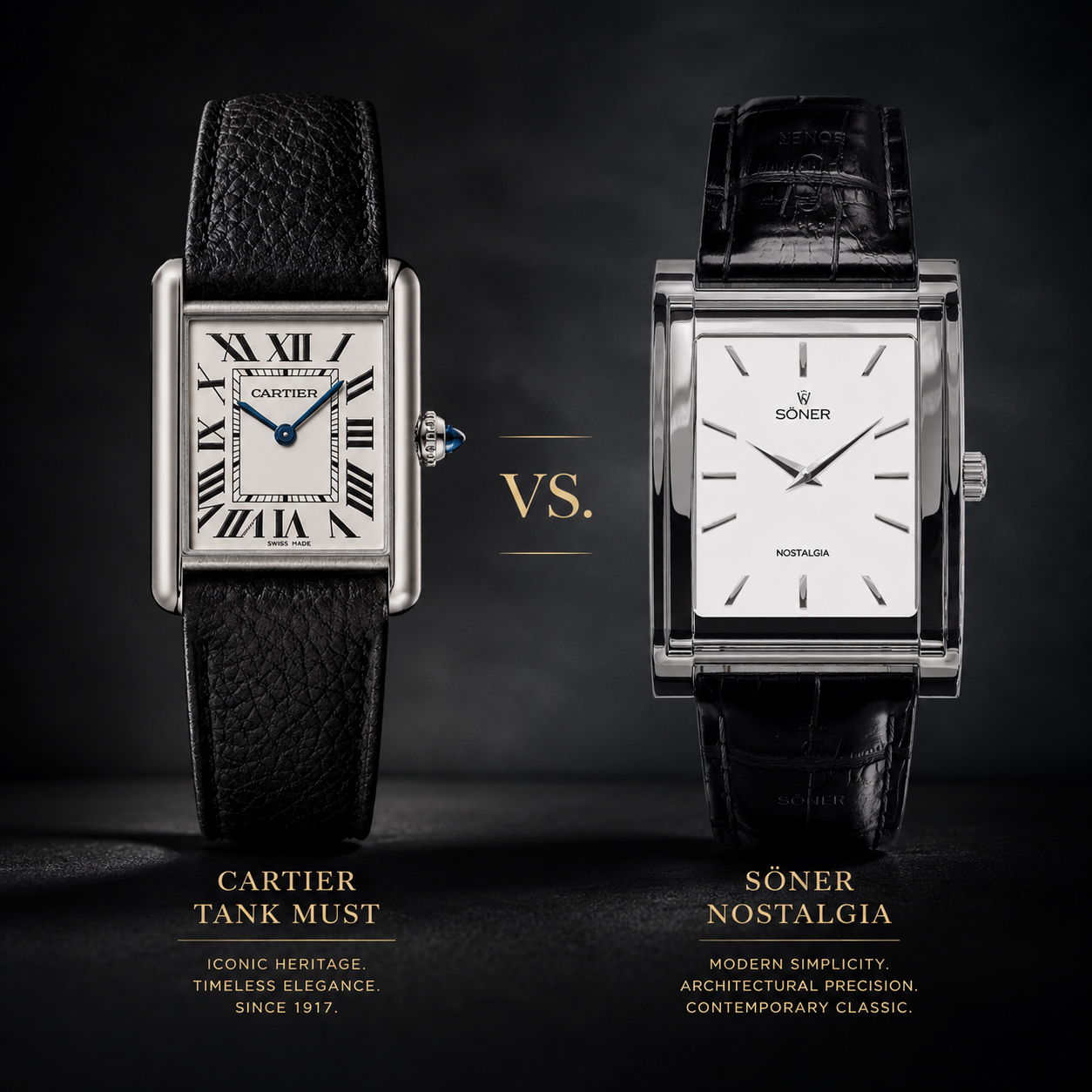
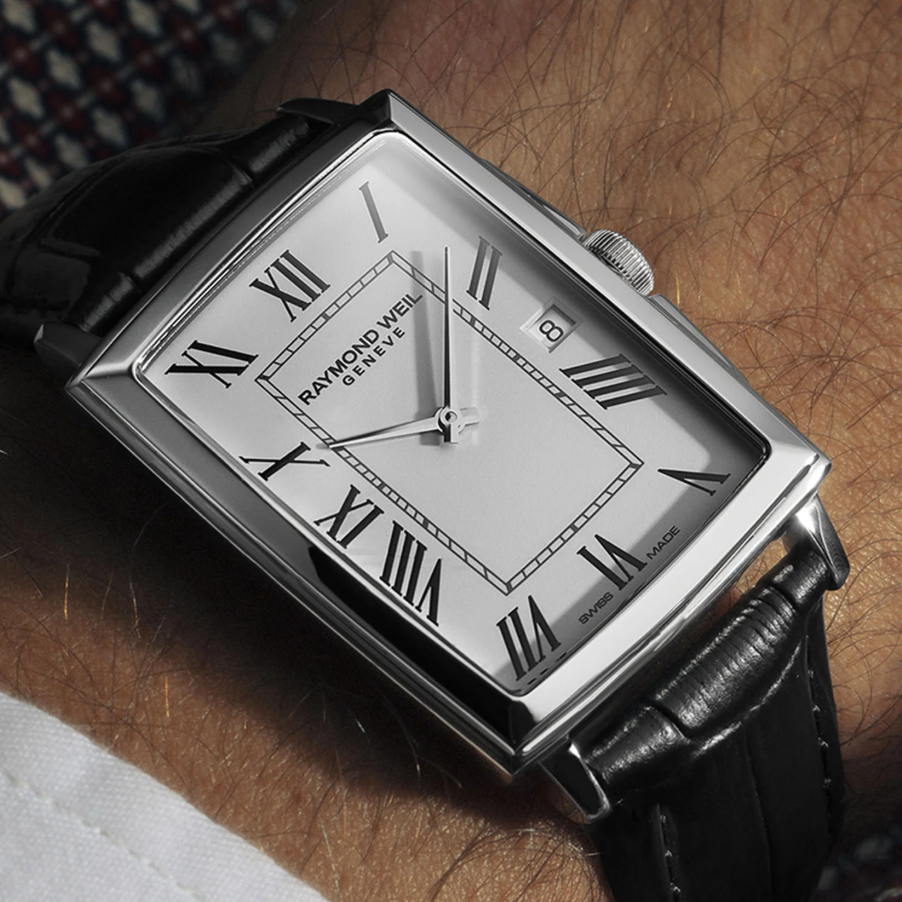
Una caja rectangular estrecha orientada verticalmente en la muñeca pasa bajo un puño con mínima interrupción. Su baja anchura y perfil delgado le permiten deslizarse bajo la tela sin distorsionar la caída de la manga. Esta ventaja funcional de la caja rectangular sobre la redonda en contextos formales es uno de los argumentos más antiguos a favor de esta forma, y sigue siendo válido.
El problema de la proporción arquitectónica
Un reloj redondo, independientemente de su diámetro, presenta la misma relación proporcional básica con la muñeca: un círculo sobre una superficie plana. La proporción puede ser grande o pequeña, pero la geometría es constante. No hay forma de usar una caja redonda para crear la verticalidad alargada y arquitectónica de una caja rectangular alta.
Para los usuarios que quieren un reloj que funcione tanto como objeto de diseño como instrumento para medir el tiempo, la caja rectangular ofrece posibilidades proporcionales que el círculo simplemente no puede replicar. Las diferencias de proporción entre relojes redondos y rectangulares, y cómo esas diferencias afectan la presencia en la muñeca y el carácter visual, se abordan en la guía de tamaños de relojes rectangulares.
El problema de identidad
Quizás lo más importante es que un reloj redondo no puede transmitir lo que un reloj rectangular transmite. En un mercado donde la gran mayoría de los relojes son redondos, la elección de una caja rectangular es inherentemente una declaración de juicio independiente. Dice que el usuario ha considerado sus opciones, entiende la categoría y ha elegido el camino más difícil y deliberado.
Esta función de identidad del reloj rectangular no es trivial. Para cierto tipo de usuario, es la razón principal de la elección.
Por qué los relojes rectangulares aceptan la penalización
Dadas todas las ventajas que acumula la caja redonda, la persistencia de los relojes rectangulares requiere una explicación. ¿Por qué las marcas continúan invirtiendo en el desarrollo de cajas rectangulares? ¿Por qué los consumidores siguen buscándolos y pagando primas por ellos?
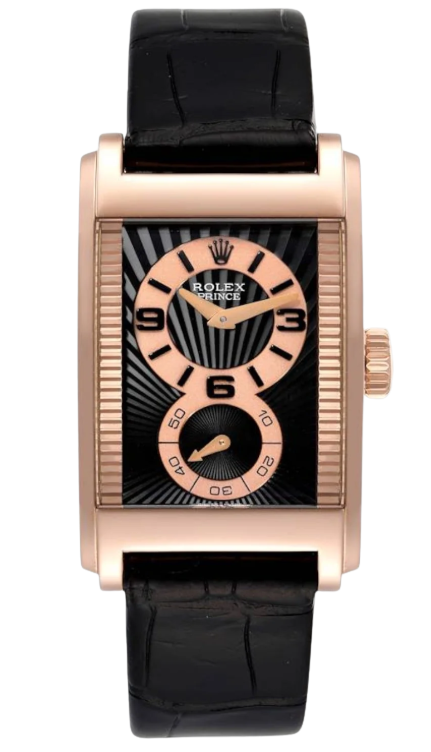
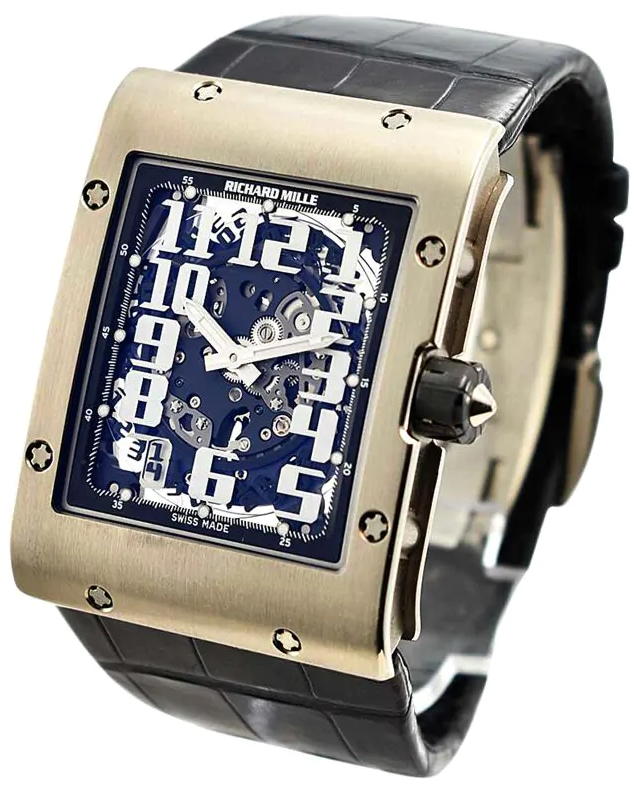
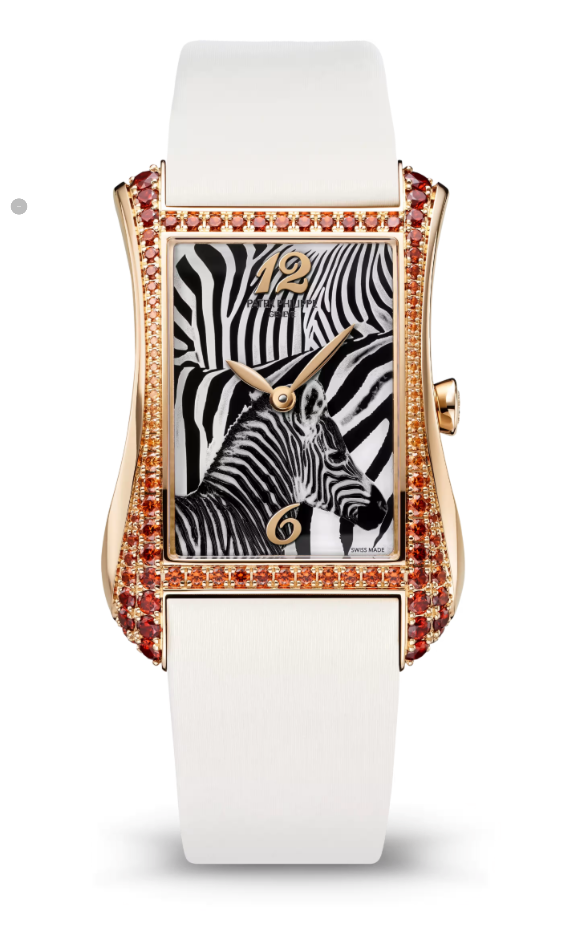
La respuesta es que el reloj rectangular ofrece algo que justifica la penalización: un vocabulario de diseño al que la caja redonda no tiene acceso. La geometría deliberada, las asociaciones históricas, la complejidad de ingeniería que produce un refinamiento visible en el objeto terminado y la señal de identidad de la elección no conformista son aspectos que importan a un segmento específico y creciente de consumidores de relojes.
Las marcas que fabrican bien relojes rectangulares y los consumidores que los buscan participan en una tradición que ha sobrevivido más de un siglo de presión del mercado a favor del círculo. Esa supervivencia no es accidental. Refleja un valor genuino que la caja redonda no puede ofrecer.
Para un análisis técnico detallado de cómo se crea ese valor y qué desafíos de fabricación deben superarse para lograrlo, el artículo sobre ingeniería de cajas no redondas cubre en profundidad todos los aspectos de la producción de cajas rectangulares.
Los compromisos específicos entre tipos de movimiento en cajas rectangulares, incluyendo cómo los calibres de cuarzo y mecánicos interactúan de manera diferente con la geometría de cajas no redondas, se examinan en el artículo sobre restricciones del movimiento en relojes rectangulares.
Resumen
Los relojes son redondos porque el movimiento mecánico es un sistema radial, y el círculo es el contenedor óptimo para un sistema radial. Los procesos de fabricación, las cadenas de suministro de componentes, la formación de relojeros, la psicología del consumidor y la convención social se han organizado en torno a esta verdad de ingeniería original durante más de dos siglos de producción.
Los relojes rectangulares existen y persisten porque ofrecen algo que la caja redonda no puede: proporción arquitectónica, elegancia formal, geometría deliberada y una señal de identidad que recompensa al usuario que elige un camino más reflexivo. Aceptan importantes penalizaciones de fabricación y económicas para hacerlo. Esa aceptación es, en sí misma, una declaración de valores.
La Guía definitiva de relojes rectangulares es la referencia completa para entender qué significan esos valores en la práctica, en todas las dimensiones de la categoría de relojes rectangulares.
Artículos relacionados:
- Guía definitiva de relojes rectangulares - La referencia completa de la categoría
- Desafíos de ingeniería de cajas rectangulares - ingeniería de cajas no redondas en detalle completo
- Automático vs Cuarzo en relojes rectangulares - restricciones del movimiento explicadas
- Guía de tamaños de relojes rectangulares - diferencias de proporción entre relojes redondos y rectangulares
SÖNER rectangular watches
Free worldwide shipping · 10-year warranty · 30-day returns
Our pick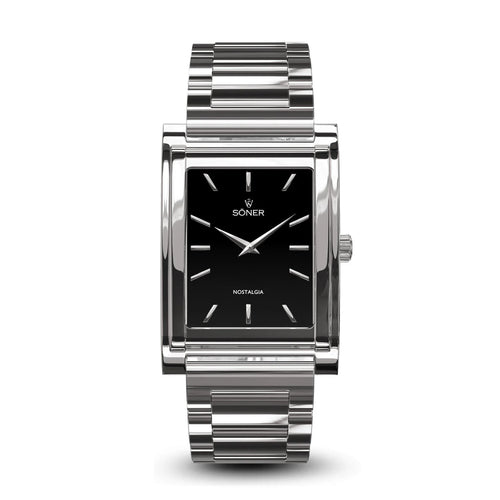 Nostalgia StockholmBatería de 11 años€523,95 EUR
View watch
Nostalgia StockholmBatería de 11 años€523,95 EUR
View watch
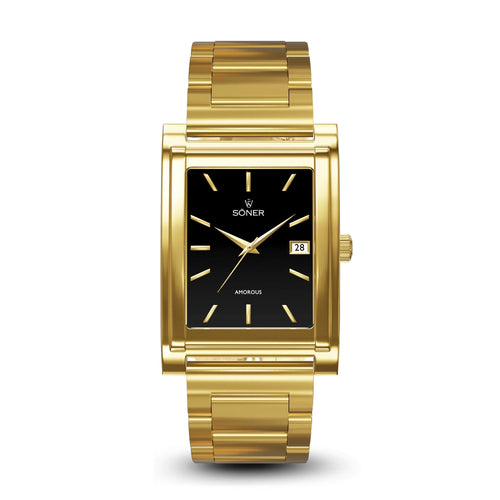 Amorous MilanoAutomático€708,95 EUR
View watch
Amorous MilanoAutomático€708,95 EUR
View watch
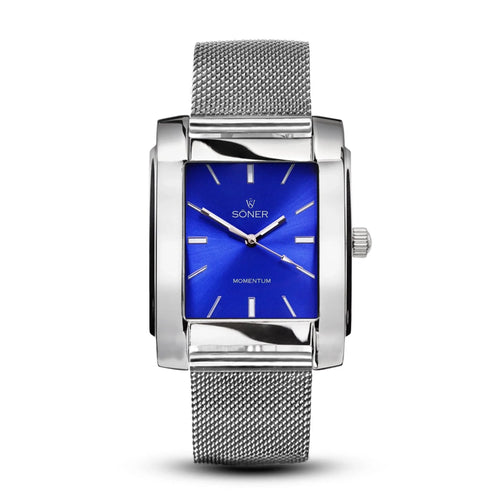 Momentum BacardiAutomático€527,95 EUR
View watch
Momentum BacardiAutomático€527,95 EUR
View watch
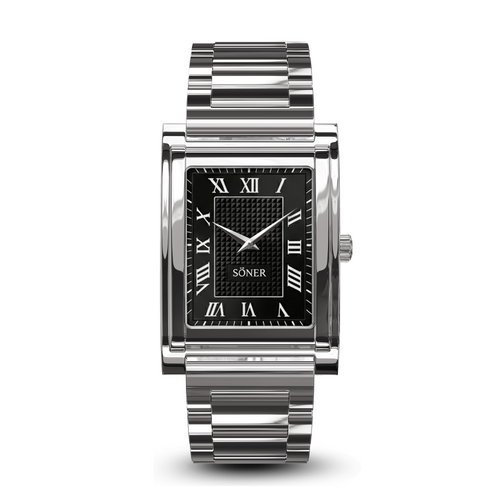 Nostalgia CaesarBatería de 11 años€689,95 EUR
View watch
Nostalgia CaesarBatería de 11 años€689,95 EUR
View watch
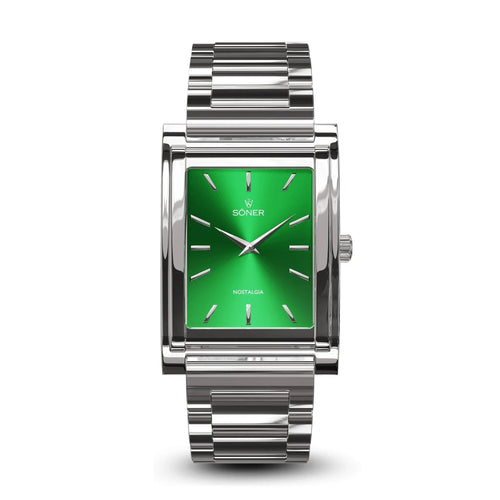 Nostalgia New YorkBatería de 11 años€523,95 EUR
View watch
Nostalgia New YorkBatería de 11 años€523,95 EUR
View watch
View all watches
 Nostalgia StockholmBatería de 11 años€523,95 EUR
View watch
Nostalgia StockholmBatería de 11 años€523,95 EUR
View watch
 Amorous MilanoAutomático€708,95 EUR
View watch
Amorous MilanoAutomático€708,95 EUR
View watch
 Momentum BacardiAutomático€527,95 EUR
View watch
Momentum BacardiAutomático€527,95 EUR
View watch
 Nostalgia CaesarBatería de 11 años€689,95 EUR
View watch
Nostalgia CaesarBatería de 11 años€689,95 EUR
View watch
 Nostalgia New YorkBatería de 11 años€523,95 EUR
View watch
Nostalgia New YorkBatería de 11 años€523,95 EUR
View watch