




 Published on
Table of Contents
Gli orologi rettangolari sono più difficili da sigillare rispetto a quelli rotondi. La geometria crea sfide di tenuta che le casse rotonde non hanno. Questa guida spiega perché, cosa significano in pratica le valutazioni ATM, come viene risolta la sfida e cosa aspettarsi dalle diverse valutazioni di resistenza all'acqua su una cassa rettangolare.
Perché le casse rettangolari sono più difficili da sigillare
Una cassa rotonda ha un perimetro circolare. Quando il fondello è sigillato con una guarnizione, la forza di compressione si distribuisce uniformemente lungo tutta la circonferenza. La guarnizione si comprime in modo uniforme perché la geometria è uniforme, e il risultato è una tenuta costante.
Una cassa rettangolare ha quattro lati dritti e quattro angoli. Quando il fondello è sigillato, la compressione agli angoli è diversa dalla compressione lungo i lati dritti. Gli angoli concentrano lo stress, e mantenere una compressione uniforme della guarnizione sia sulle sezioni dritte che sulle curve degli angoli richiede una lavorazione più precisa e tolleranze più strette rispetto a una cassa rotonda di dimensioni equivalenti.
La corona presenta anche una sfida diversa. Su una cassa rotonda, la corona esce dal lato della cassa in un punto simmetricamente posizionato rispetto alla geometria della cassa. Su una cassa rettangolare, la corona esce da uno dei lati corti, dove la parete della cassa è più stretta e la geometria della guarnizione è più vincolata.
Queste sono sfide ingegneristiche che possono essere risolte bene o male. Una cassa rettangolare ben progettata raggiunge una resistenza all'acqua equivalente a una cassa rotonda. Una cassa mal progettata presenta punti deboli agli angoli che limitano la valutazione raggiungibile. La valutazione di resistenza all'acqua su un orologio rettangolare è quindi un segnale di qualità più significativo rispetto alla stessa valutazione su un orologio rotondo, perché riflette un lavoro ingegneristico più impegnativo per raggiungerla.
Cosa significano realmente le valutazioni ATM
| Valutazione | Cosa significa | Cosa copre | Cosa non copre |
|---|---|---|---|
| 1 ATM / 10m | Solo resistente agli schizzi | Pioggia leggera, lavaggio delle mani (con cautela) | Nuoto, immersioni, docce |
| 3 ATM / 30m | Resistente agli schizzi e brevi immersioni | Pioggia, lavaggio delle mani, schizzi accidentali | Nuoto, docce, contatto prolungato con l'acqua |
| 5 ATM / 50m | Resistente all'acqua per uso quotidiano | Nuoto, snorkeling, docce, pioggia | Immersioni, sport acquatici ad alta pressione |
| 10 ATM / 100m | Adatto per sport acquatici attivi | Nuoto, snorkeling, immersioni poco profonde, surf | Immersione subacquea oltre i 30m |
| 20 ATM / 200m | Grado subacqueo | Subacquea ricreativa fino a 40m | Immersione professionale, immersione in saturazione |
Nota importante sulle valutazioni ATM: Queste sono valutazioni di pressione statica testate in laboratorio. La pressione dinamica derivante da attività come immersioni, bracciate di nuoto o tuffi crea pressioni momentanee più elevate rispetto all'equivalente statico. Un orologio valutato a 5 ATM dovrebbe gestire il nuoto comodamente. Un orologio valutato a 3 ATM non dovrebbe essere indossato per nuotare nonostante l'equivalenza teorica di 30m. Trattate sempre le valutazioni ATM con prudenza.
Resistenza all'acqua nelle fasce di orologi rettangolari
Le valutazioni di resistenza all'acqua negli orologi rettangolari seguono un chiaro schema basato sul prezzo e sull'intento di design. Comprendere questo schema aiuta a stabilire aspettative appropriate prima dell'acquisto.
Orologi da abito: 3 ATM è la norma
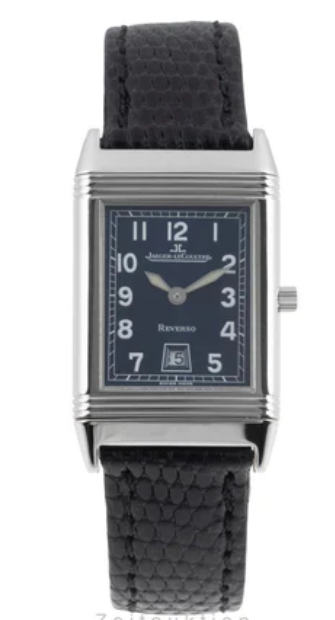
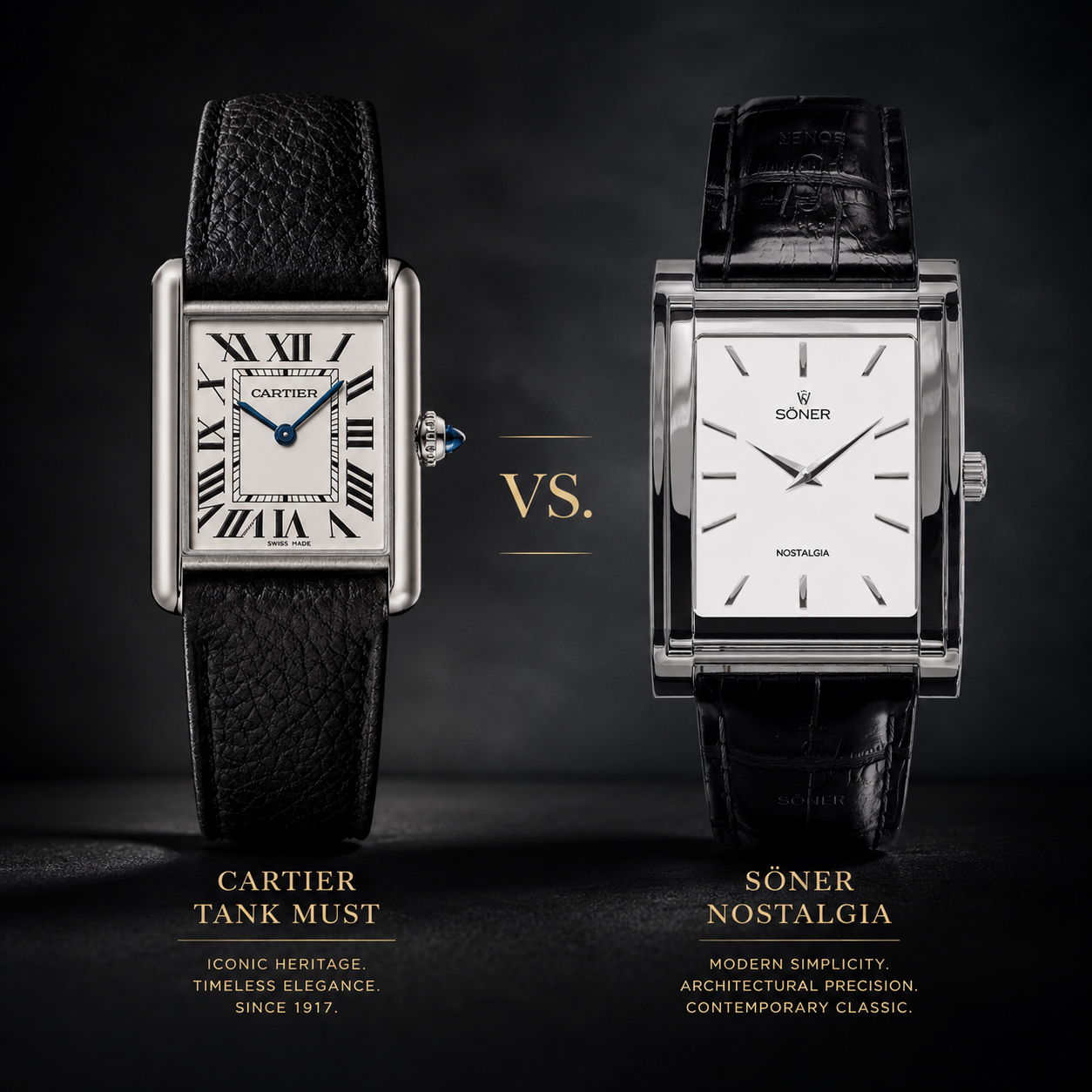
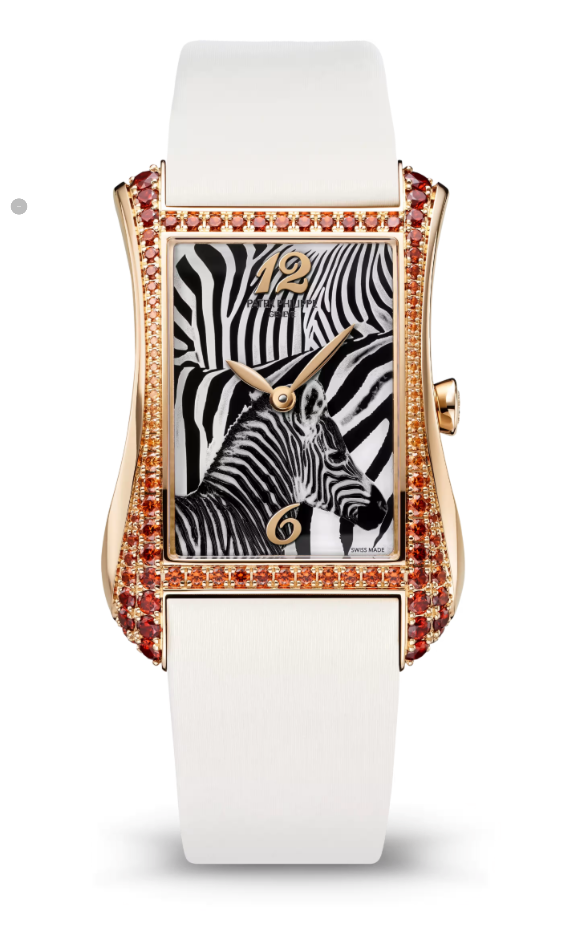
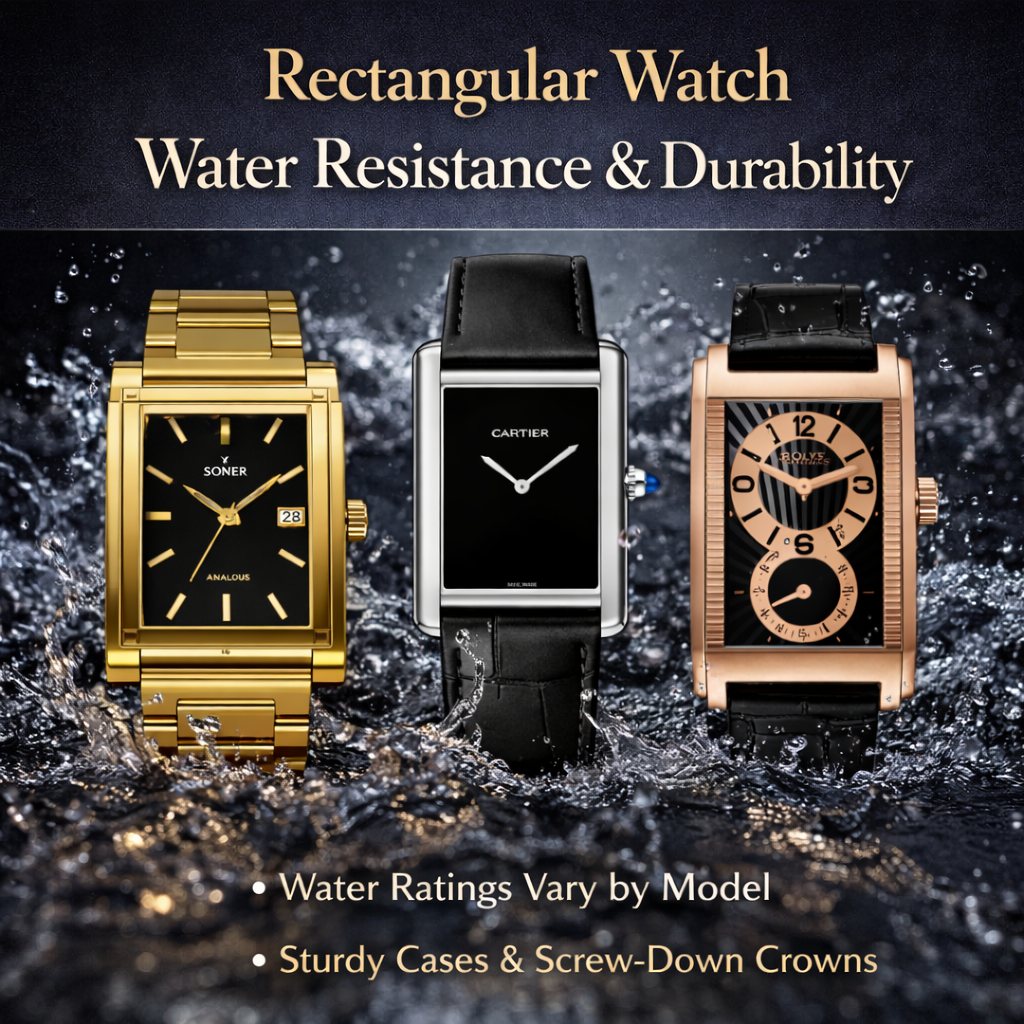
La maggior parte degli orologi da abito rettangolari di fascia alta sono valutati a 3 ATM. Il Cartier Tank Must, il Jaeger-LeCoultre Reverso e molte referenze rettangolari Patek Philippe sono tutti valutati a 30m. Questo non è un difetto. Questi orologi sono progettati per contesti formali dove l'esposizione all'acqua è minima. La valutazione a 3 ATM riflette una priorità di design per sottigliezza ed eleganza piuttosto che per la resistenza all'acqua. La sigillatura è adeguata per la vita quotidiana, ma gli orologi non dovrebbero essere indossati per nuotare.
Gamma media: 5 ATM è raggiungibile e significativo
A metà gamma, 5 ATM è lo standard che distingue un orologio quotidiano correttamente sigillato da un pezzo da abito resistente agli schizzi. Un orologio rettangolare da 5 ATM può essere indossato per nuotare, sotto la doccia e nella vita di tutti i giorni senza preoccupazioni. Il Söner Nostalgia e Amorous sono valutati a 5 ATM con fondelli sigillati a vite, riflettendo l'investimento ingegneristico per raggiungere questa valutazione in una cassa rettangolare in acciaio temprato. Per la maggior parte degli acquirenti, 5 ATM copre ogni scenario realistico di utilizzo quotidiano.
Modelli sportivi: 10 ATM richiede ingegneria dedicata
Raggiungere 10 ATM in una cassa rettangolare richiede uno sforzo di ingegneria significativamente maggiore rispetto a una cassa rotonda. La geometria di sigillatura agli angoli deve essere più stretta, la guarnizione del fondello deve essere più robusta e la sigillatura della corona deve essere rinforzata. Il Söner Momentum raggiunge 10 ATM con approvazione per immersioni subacquee in una cassa rettangolare da 35x45mm. Questo è davvero insolito nella categoria e riflette un impegno specifico nel progettare un orologio rettangolare che possa essere indossato in contesti sportivi attivi e acquatici.
Resistenza all'acqua Söner per collezione
| Collezione | Valutazione | Fondello | Adatto per |
|---|---|---|---|
| Eredità | 5 ATM | Sigillato | Nuoto, snorkeling, docce, uso quotidiano |
| Nostalgia | 5 ATM | Arcuato, a vite, sigillato | Nuoto, snorkeling, docce, uso quotidiano |
| Amoroso | 5 ATM | Sigillato | Nuoto, snorkeling, docce, uso quotidiano |
| Momentum | 10 ATM | A vite, sigillato | Sport acquatici attivi, snorkeling, nuoto |
Come sono sigillati gli orologi rettangolari
Tre componenti determinano la resistenza all'acqua di ogni orologio: la guarnizione del fondello, la guarnizione del cristallo e la guarnizione della corona.
Guarnizione del fondello
La guarnizione del fondello si trova tra il fondello e il corpo della cassa. Su un orologio rettangolare, questa guarnizione deve mantenere una compressione uniforme lungo le sezioni dritte e intorno agli angoli. I fondelli a vite, che avvitano il fondello contro il corpo della cassa invece di affidarsi a una pressione, offrono una compressione più affidabile e sono lo standard per qualsiasi orologio rettangolare con una resistenza superiore a 3 ATM. Il Söner Nostalgia utilizza un fondello a vite arcuato: l'arco segue il contorno del polso per il comfort mentre la filettatura a vite fornisce la forza di tenuta.
Guarnizione del cristallo
La guarnizione del cristallo si trova tra il cristallo e la lunetta della cassa. Su un cristallo rettangolare, la guarnizione deve sigillare lungo quattro bordi dritti e quattro angoli. Questo è più impegnativo rispetto a sigillare un cristallo rotondo. I cristalli in zaffiro degli orologi Söner sono dotati di guarnizioni di precisione che mantengono la tenuta lungo tutto il perimetro rettangolare. Il rivestimento antiriflesso viene applicato al cristallo dopo il montaggio, quindi non influisce sulla tenuta.
Guarnizione della corona
La corona è il punto più comune di ingresso dell'acqua in ogni orologio. Su una cassa rettangolare, la corona esce da uno dei lati corti. Il tubo attraverso cui passa la corona deve essere sigillato con O-ring che comprimono contro l'asta della corona. Per resistenze all'acqua più elevate, una corona a vite aggiunge un cappuccio filettato che fornisce una forza di tenuta aggiuntiva quando l'orologio è in acqua. La corona deve sempre essere spinta e bloccata prima di qualsiasi contatto con l'acqua.
Mantenere la resistenza all'acqua nel tempo
Cosa degrada le guarnizioni
- Invecchiamento: le guarnizioni si seccano e perdono elasticità dopo 2-3 anni di uso regolare
- Sostanze chimiche: crema solare, profumo, cloro e prodotti per la pulizia accelerano il degrado delle guarnizioni
- Cambiamenti di temperatura: esposizioni ripetute a caldo e freddo (sauna, acqua fredda) stressano le guarnizioni
- Danni fisici: urti vicino al fondello o alla corona possono spostare o danneggiare le guarnizioni
- Lavori su batteria o assistenza: l'apertura della cassa richiede nuove guarnizioni per ripristinare la tenuta
Come proteggere le tue guarnizioni
- Sciacquare con acqua dolce dopo esposizione ad acqua di mare o cloro
- Non premere mai i pulsanti o azionare la corona sott'acqua a meno che non sia a vite
- Evitare di indossare in condizioni di cambiamenti estremi di temperatura (sauna poi piscina fredda)
- Far controllare e sostituire le guarnizioni durante l'assistenza ogni 3-5 anni
- Dopo ogni apertura della cassa (batteria, assistenza), verificare la resistenza all'acqua prima dell'esposizione all'acqua
- Assicurarsi sempre che la corona sia completamente spinta prima di qualsiasi contatto con l'acqua
La valutazione della resistenza all'acqua è quella al momento della produzione e del test. Non è una garanzia permanente. Le guarnizioni invecchiano, le sostanze chimiche degradano la gomma e l'usura fisica influisce sulle tenute. Un orologio che era 5 ATM da nuovo può essere significativamente meno resistente all'acqua dopo tre anni di uso quotidiano senza controllo delle guarnizioni. Per qualsiasi orologio con cui si intende nuotare, controllare e sostituire le guarnizioni durante la manutenzione è essenziale.
Domande Frequenti
Gli orologi rettangolari sono resistenti all'acqua?
Sì, anche se l'ingegneria è più impegnativa rispetto ai casi rotondi. La geometria della sigillatura agli angoli di una cassa rettangolare richiede tolleranze più strette e lavorazioni più precise rispetto a una cassa rotonda. Orologi rettangolari ben progettati raggiungono valutazioni da 3 ATM a 10 ATM. Le collezioni Nostalgia, Amorous e Legacy di Söner sono valutate a 5 ATM. Il Momentum è valutato a 10 ATM con approvazione per immersioni subacquee.
Perché la maggior parte degli orologi rettangolari di lusso ha solo 3 ATM?
Perché sono progettati per contesti formali dove l'esposizione all'acqua è minima, e una maggiore resistenza all'acqua richiede un fondello più spesso e una sigillatura più robusta che comprometterebbe il profilo sottile. Il Cartier Tank a 3 ATM è pensato per la sala riunioni e la tavola, non per la piscina. La valutazione riflette una scelta progettuale deliberata a favore della sottigliezza rispetto alla resistenza all'acqua.
Posso nuotare con un orologio rettangolare da 5 ATM?
Sì. 5 ATM è lo standard raccomandato per nuoto e snorkeling. Il Söner Nostalgia a 5 ATM è specificamente descritto come approvato per lo snorkeling. Evitare attività ad alta pressione come sci d'acqua o tuffi da scogliera a 5 ATM. Per queste attività si consiglia una valutazione di 10 ATM.
Con quale frequenza dovrei far testare la resistenza all'acqua del mio orologio rettangolare?
Ogni 3-5 anni, o ogni volta che il fondello viene aperto per sostituire la batteria o per manutenzione. Un orologiaio può testare la resistenza all'acqua con un tester di pressione e sostituire le guarnizioni se necessario. Questo è particolarmente importante per gli orologi che si espongono regolarmente all'acqua. Il costo è contenuto e la protezione significativa.
Il Söner Momentum è adatto per le immersioni?
Sì, per lo snorkeling ricreativo e le attività in acque basse. Il Momentum è valutato a 10 ATM, coprendo nuoto, snorkeling e sport acquatici di superficie. Non è adatto per immersioni subacquee in profondità — per questo è necessario un orologio subacqueo dedicato con valutazione di 20 ATM o superiore e certificazione ISO 6425.
Le collezioni Nostalgia, Amorous e Legacy di Söner sono valutate a 5 ATM con fondelli sigillati, adatte per l'uso quotidiano, il nuoto e lo snorkeling. Il Momentum è valutato a 10 ATM con fondello a vite. Tutti gli orologi Söner hanno una garanzia internazionale di 10 anni e utilizzano vetro zaffiro con trattamento antiriflesso. A partire da 385$.
Sfoglia la CollezioneSÖNER rectangular watches
Free worldwide shipping · 10-year warranty · 30-day returns
Our pick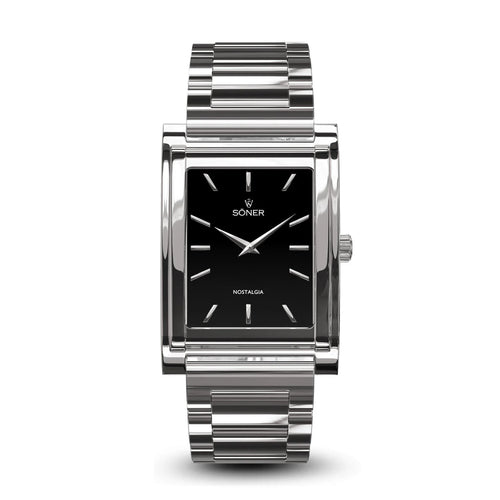 Nostalgia StockholmBatteria 11 anni€524,95 EUR
View watch
Nostalgia StockholmBatteria 11 anni€524,95 EUR
View watch
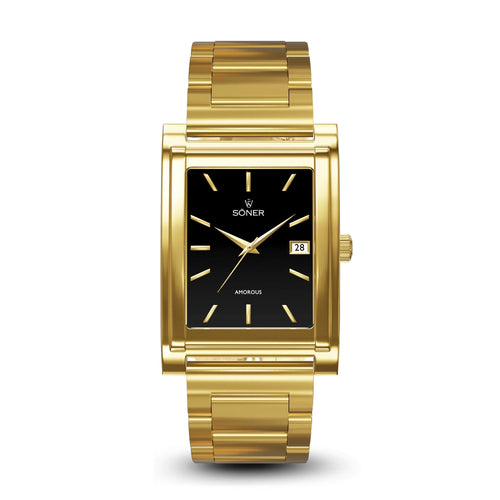 Amorous MilanoAutomatico€709,95 EUR
View watch
Amorous MilanoAutomatico€709,95 EUR
View watch
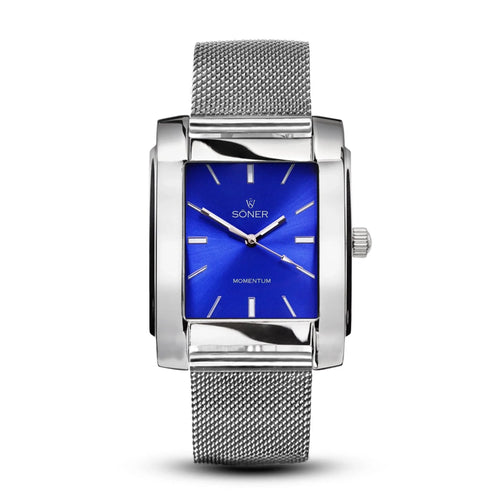 Momentum BacardiAutomatico€528,95 EUR
View watch
Momentum BacardiAutomatico€528,95 EUR
View watch
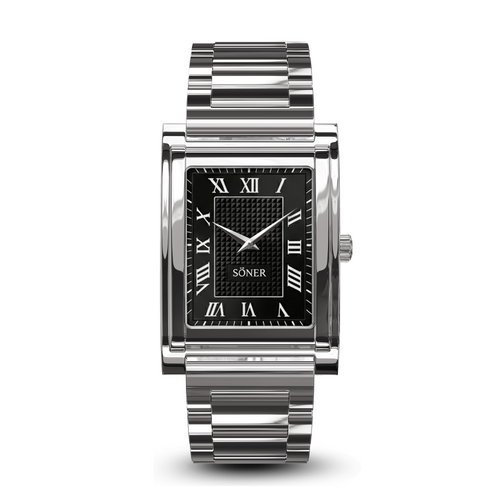 Nostalgia CaesarBatteria 11 anni€691,95 EUR
View watch
Nostalgia CaesarBatteria 11 anni€691,95 EUR
View watch
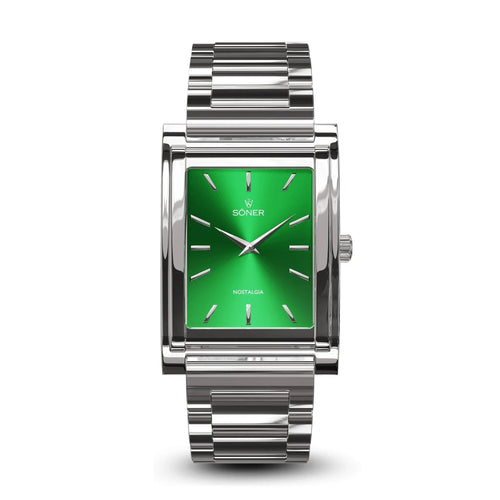 Nostalgia New YorkBatteria 11 anni€524,95 EUR
View watch
Nostalgia New YorkBatteria 11 anni€524,95 EUR
View watch
View all watches
 Nostalgia StockholmBatteria 11 anni€524,95 EUR
View watch
Nostalgia StockholmBatteria 11 anni€524,95 EUR
View watch
 Amorous MilanoAutomatico€709,95 EUR
View watch
Amorous MilanoAutomatico€709,95 EUR
View watch
 Momentum BacardiAutomatico€528,95 EUR
View watch
Momentum BacardiAutomatico€528,95 EUR
View watch
 Nostalgia CaesarBatteria 11 anni€691,95 EUR
View watch
Nostalgia CaesarBatteria 11 anni€691,95 EUR
View watch
 Nostalgia New YorkBatteria 11 anni€524,95 EUR
View watch
Nostalgia New YorkBatteria 11 anni€524,95 EUR
View watch