



 Published on
Table of Contents
Risposta rapida: che cos’è un orologio Tank?
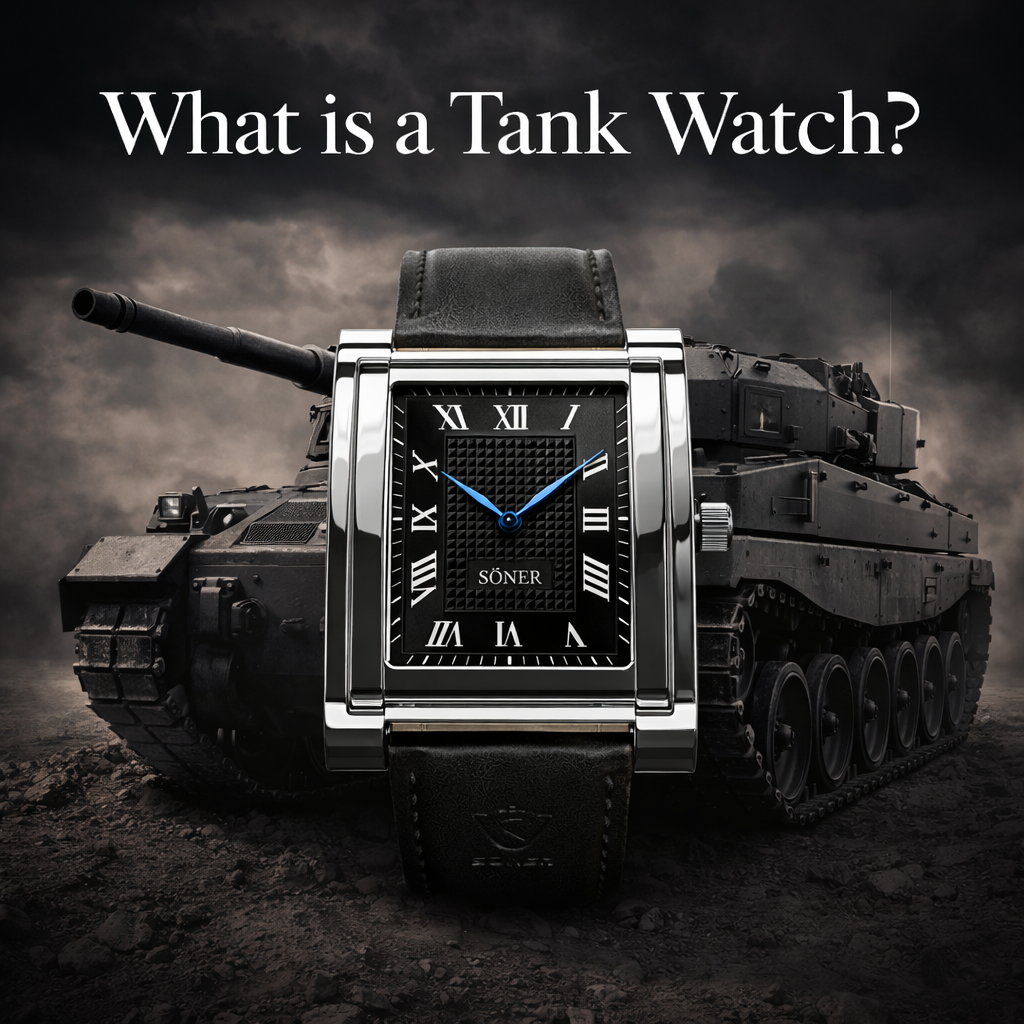
Un orologio Tank è un orologio da polso con cassa rettangolare e brancard laterali verticali paralleli che si estendono da un’ansa all’altra, ispirato al profilo dei carri armati militari della Prima guerra mondiale. Il design fu ideato da Louis Cartier nel 1917 ed è in produzione ininterrottamente da allora. Oggi il termine indica in senso ampio qualsiasi orologio elegante rettangolare con questa geometria architettonica della cassa, realizzato da Cartier o da marchi indipendenti come Söner, specializzati esclusivamente in questo formato.
L’orologio Tank è uno dei design più importanti nella storia dell’orologeria. Ha introdotto la cassa rettangolare come seria alternativa alla consueta forma rotonda, affermato l’orologio geometrico come orologio elegante per eccellenza per oltre un secolo e creato un linguaggio di design con cui, dal 1917, praticamente ogni orologio non rotondo si è confrontato.
Questa guida spiega che cos’è un orologio Tank, da dove deriva il nome, quali caratteristiche definiscono il design, in che modo si distingue dagli altri orologi rettangolari e che cosa valutare al momento dell’acquisto.
Perché si chiama orologio Tank?
Il nome deriva direttamente dal carro armato militare. Nel 1917, Louis Cartier osservava i carri armati Renault FT-17 schierati sul fronte occidentale durante la Prima guerra mondiale. Fu colpito dalla geometria del mezzo visto dall’alto: lo scafo rettangolare allungato e i cingoli paralleli che correvano lungo i lati. Traspose direttamente quel profilo nella cassa di un orologio da polso.

I brancard della cassa, che corrono verticalmente lungo ciascun lato del quadrante, richiamano i cingoli del carro armato. La cassa rettangolare rappresenta lo scafo. Il quadrante essenziale con numeri romani e un’unica corona con cabochon di zaffiro, secondo Cartier, si ispirava alla cabina di pilotaggio. Nel 1918 l’orologio fu donato per la prima volta al generale statunitense John Pershing. La produzione commerciale iniziò nel 1919 con sei esemplari. Il nome non è mai cambiato.

Che cosa definisce un orologio Tank: anatomia
Non tutti gli orologi rettangolari sono orologi Tank. L’orologio Tank presenta un insieme specifico di caratteristiche di design che lo definiscono come categoria.
| Elemento di design | Che cos’è | Perché è importante |
|---|---|---|
| Cassa rettangolare | La cassa è più lunga che larga, in genere con un rapporto pari o superiore a 1:1,3 | Definisce la silhouette dell’orologio Tank. Segue la geometria del polso in modo più naturale rispetto a una cassa rotonda. |
| Brancard | Brancard verticali paralleli che si estendono dalla cassa alle anse | L'elemento visivo distintivo dell'orologio Tank. Il nome richiama i longheroni usati durante la Prima guerra mondiale. Evoca i cingoli del carro armato. |
| Quadrante essenziale | Quadrante essenziale, solitamente con numeri romani, minuteria chemin de fer e lancette a spada | L'orologio Tank è un orologio elegante. Il quadrante deve premiare un'osservazione ravvicinata senza attirare troppo l'attenzione. |
| Profilo sottile | Spessore della cassa generalmente compreso tra 6 mm e 10 mm | L'orologio Tank deve poter scivolare sotto il polsino della camicia. Uno spessore superiore a 10 mm compromette questa caratteristica. |
| Corona con zaffiro | Zaffiro cabochon incastonato nella corona di carica | Un tratto distintivo del Cartier Tank dal 1917. Presente nella maggior parte degli orologi Tank di alta gamma. |
Orologio Tank e orologio rettangolare: qual è la differenza?
Tutti gli orologi Tank sono rettangolari. Non tutti gli orologi rettangolari sono Tank. La distinzione è importante per chi vuole capire cosa sta guardando.
| Caratteristica | Orologio Tank | Orologio rettangolare (in generale) |
|---|---|---|
| Forma della cassa | Rettangolare con brancard verticali paralleli | Qualsiasi cassa non rotonda: può essere rettangolare, a tonneau o a cuscino |
| Origine del design | Derivato direttamente dall'estetica del Cartier Tank, 1917 | Qualsiasi orologio rettangolare, indipendentemente dalla tradizione stilistica |
| Stile del quadrante | Essenziale e formale, solitamente con numeri romani | Qualsiasi stile di quadrante, anche digitale, sportivo o complesso |
| Contesto | Elegante e casual chic: l'orologio Tank è un orologio formale | Qualsiasi contesto, inclusi gli orologi sportivi e da lavoro |
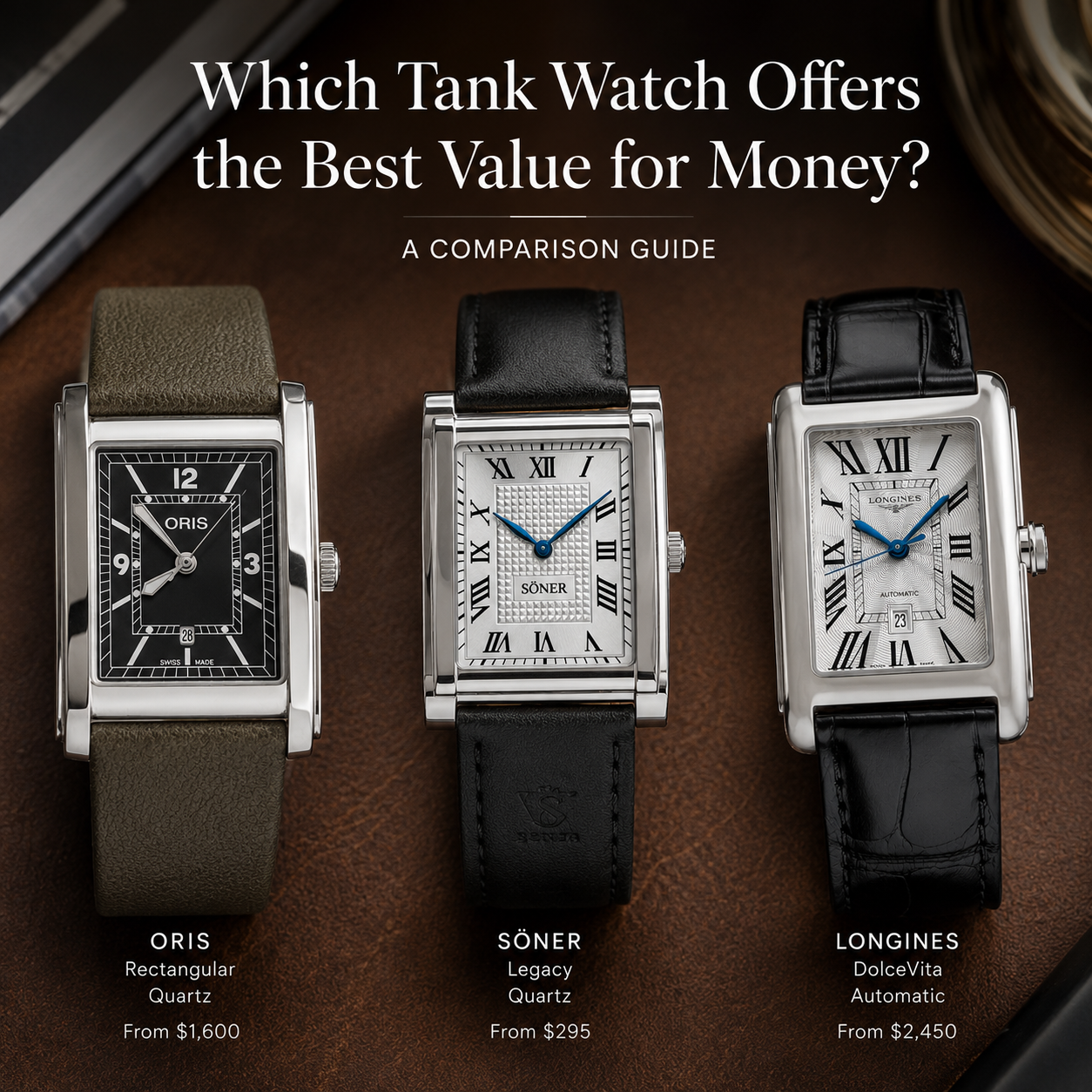
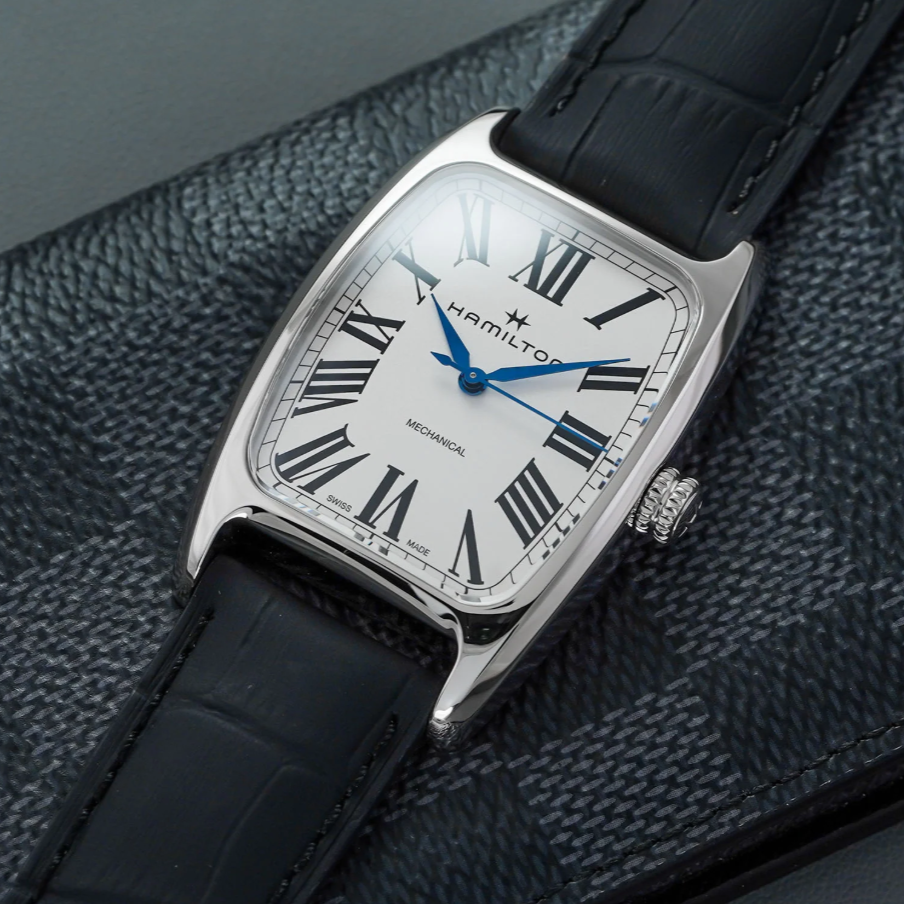
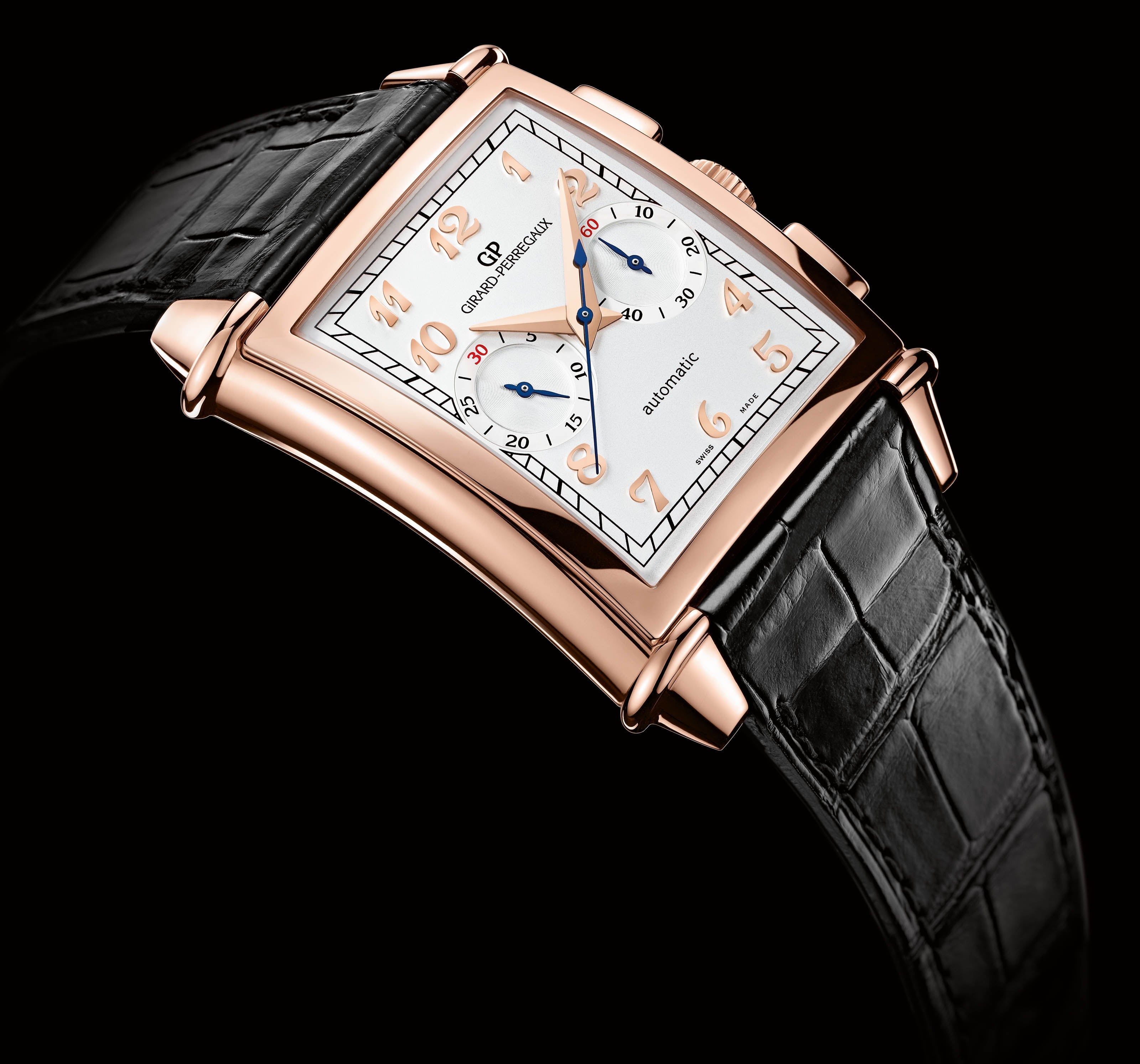
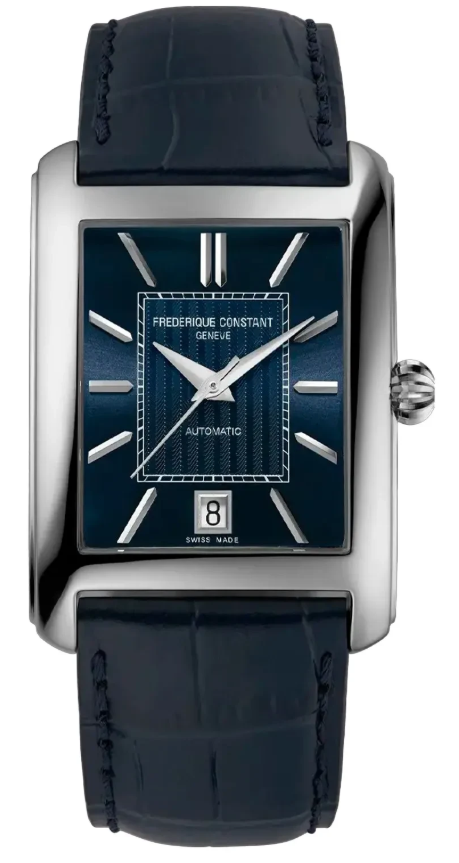
| Esempi | Cartier Tank, Söner Nostalgia, Longines DolceVita | TAG Heuer Monaco, Bell & Ross BR01, Casio F-91W |
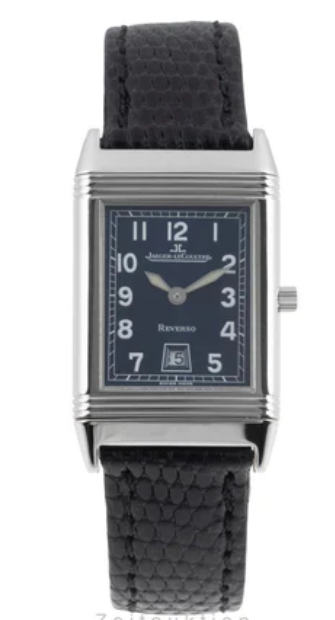
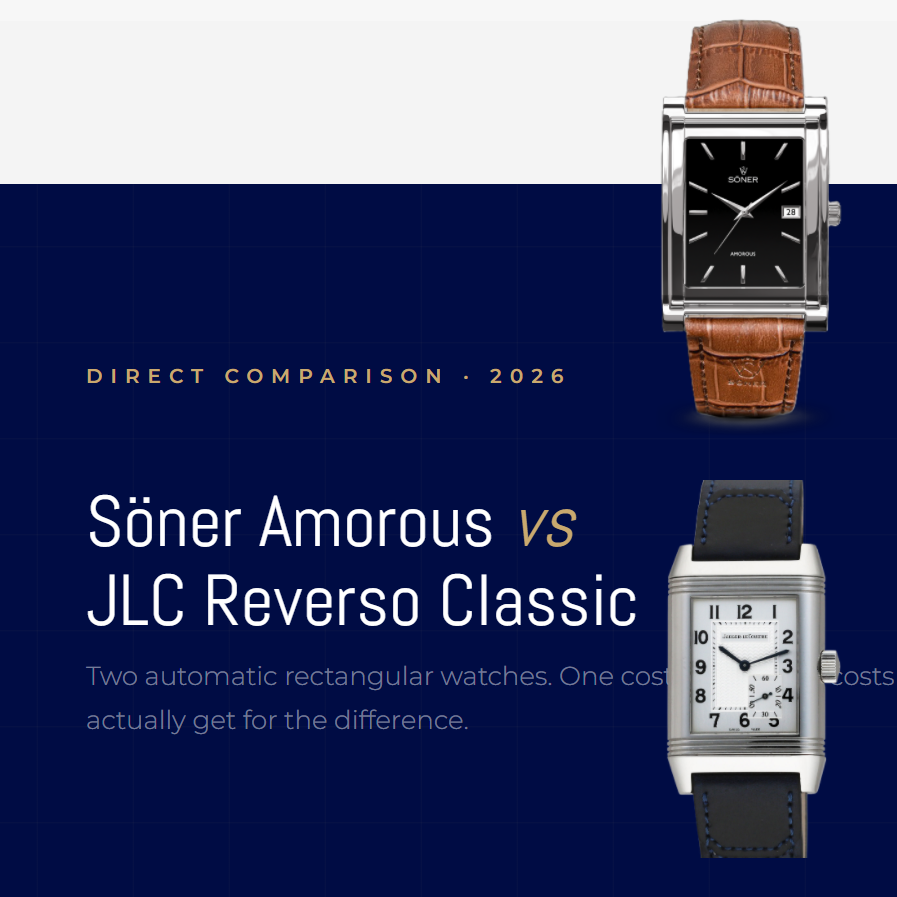
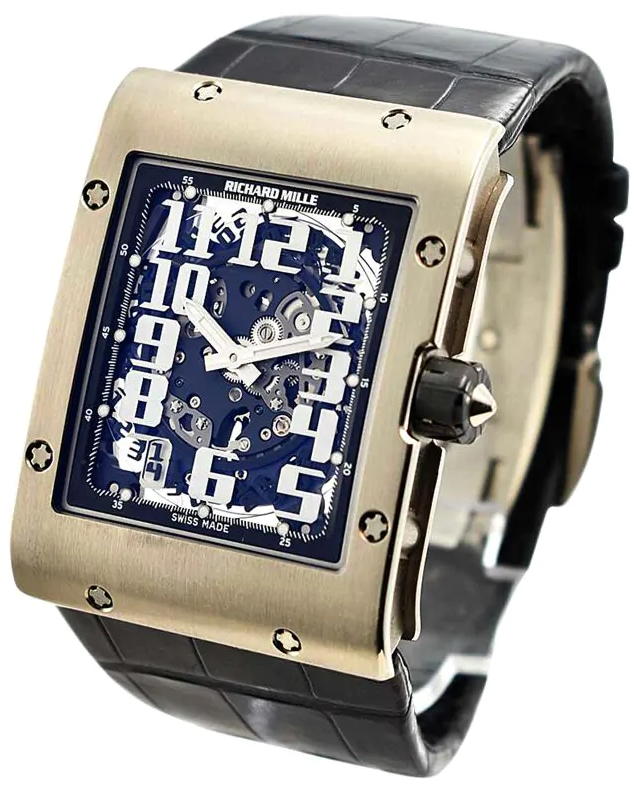
Il TAG Heuer Monaco, per esempio, è un orologio rettangolare, ma non un orologio Tank. La cassa quadrata, i pulsanti cronografici a vista e il DNA sportivo lo collocano in un ambito stilistico diverso. Il Jaeger-LeCoultre Reverso è un orologio rettangolare con un'identità distintiva: la cassa reversibile, che lo distingue dalla tradizione Tank. Il termine orologio Tank si riferisce specificamente alla cassa rettangolare sottile, essenziale e formale, ispirata al linguaggio stilistico del Cartier Tank.
L'albero genealogico degli orologi Tank
In 107 anni di produzione, la collezione Cartier Tank si è ampliata fino a comprendere un'intera famiglia di modelli. Ognuno mantiene il linguaggio stilistico essenziale dell'orologio Tank, proponendo proporzioni e varianti diverse.
| Modello | Anno di introduzione | Caratteristica principale | Prezzo (approssimativo) |
|---|---|---|---|
| Tank Must | Rilanciato nel 2021 | Il modello più accessibile, in acciaio, al quarzo | ~3.200 $ |
| Tank Louis Cartier | 1922 | Proporzioni più pure, realizzato a mano in oro, carica manuale | ~20.000 $+ |
| Tank Cintrée | 1921 | Cassa allungata e curva, indossato da Steve McQueen | ~50.000 $+ |
| Tank Américaine | 1989 | Cassa rettangolare leggermente curva, proporzioni più ampie | ~8.000 $+ |
| Tank Française | 1996 | Bracciale integrato, profilo più contemporaneo | ~5.500 $+ |
Come veste al polso un orologio Tank
L'orologio Tank si appoggia al polso in modo diverso da un orologio rotondo. Il polso è piatto e allungato. La cassa rettangolare ne segue la forma, aderendo al braccio invece di poggiare sopra di esso come un cerchio autonomo. Ecco perché chi indossa un Tank descrive costantemente la vestibilità come più naturale e sicura rispetto a quella di un orologio rotondo di larghezza comparabile.
Il profilo sottile, in genere da 7 a 10 mm, consente all'orologio Tank di scivolare agevolmente sotto il polsino della camicia, mentre gli orologi sportivi rotondi più spessi creano un rigonfiamento visibile. Questo vantaggio pratico ha reso il Tank l'orologio elegante preferito da oltre un secolo.

Chi indossa orologi Tank
L'orologio Tank ha accumulato un patrimonio culturale senza pari tra i design di orologi. I personaggi che seguono sono tra coloro che hanno indossato orologi Tank e sono stati documentati più spesso nel corso dell'ultimo secolo.
| Nome | Campo | Modello | Cosa comunica |
|---|---|---|---|
| Generale John Pershing | Militare | Tank originale, 1918 | Autorevolezza e precisione |
| Jacqueline Kennedy | Politica / Stile | Cartier Tank | Sobrietà ed eleganza ponderata |
| Andy Warhol | Arte | Cartier Tank, uso quotidiano | "Lo indosso come oggetto, non per sapere l'ora" |
| Steve McQueen | Cinema | Tank Cintrée, Il caso Thomas Crown | Raffinatezza senza eccessi di delicatezza |
| Principessa Diana | Famiglia reale | Cartier Tank | Autorevolezza discreta, tradizione dell'alta società britannica |
| Muhammad Ali | Sport | Tank JC, 1976 | Autorevolezza attraverso la sobrietà, non le dimensioni |
| Ralph Lauren | Moda | Cartier Tank | L'interpretazione preppy americana dell'eleganza europea |
Il filo conduttore è la consapevolezza. Tutti i personaggi di questo elenco avrebbero potuto indossare qualsiasi orologio. Hanno scelto un Tank perché comunica qualcosa di preciso: che chi lo indossa apprezza l'intelligenza del design più della novità e l'autorevolezza storica più delle tendenze.
Orologio Tank e orologio rotondo: le differenze principali
| Fattore | Orologio Tank | Orologio rotondo |
|---|---|---|
| Vestibilità sul polso | Segue la forma piatta e allungata del polso. Aderisce perfettamente. | Cerchio autonomo. Si appoggia sopra il polso. |
| Spazio sotto il polsino | Scivola agevolmente sotto il polsino della camicia con uno spessore di 7 mm. | Crea un rigonfiamento visibile a parità di dimensioni. |
| Storia del design | Oltre 100 anni. Il design di orologio più documentato culturalmente. | Dominante da oltre 150 anni in tutti i contesti. |
| Rarità | Meno del 2% di tutti gli orologi venduti. Immediatamente riconoscibile. | Oltre il 98% di tutti gli orologi venduti. La scelta predefinita. |
| Costo di produzione | Più costoso. Fresatura con configurazioni multiple, vetro personalizzato, sigillatura complessa. | Meno costoso. Una singola operazione al tornio per la cassa. |
| Contesto ideale | Elegante e smart casual. Ufficio, occasioni formali, serate. | Tutti i contesti, inclusi orologi subacquei, da aviatore e da campo. |
Il Söner Nostalgia: un orologio stile Tank pensato per la vita di tutti i giorni
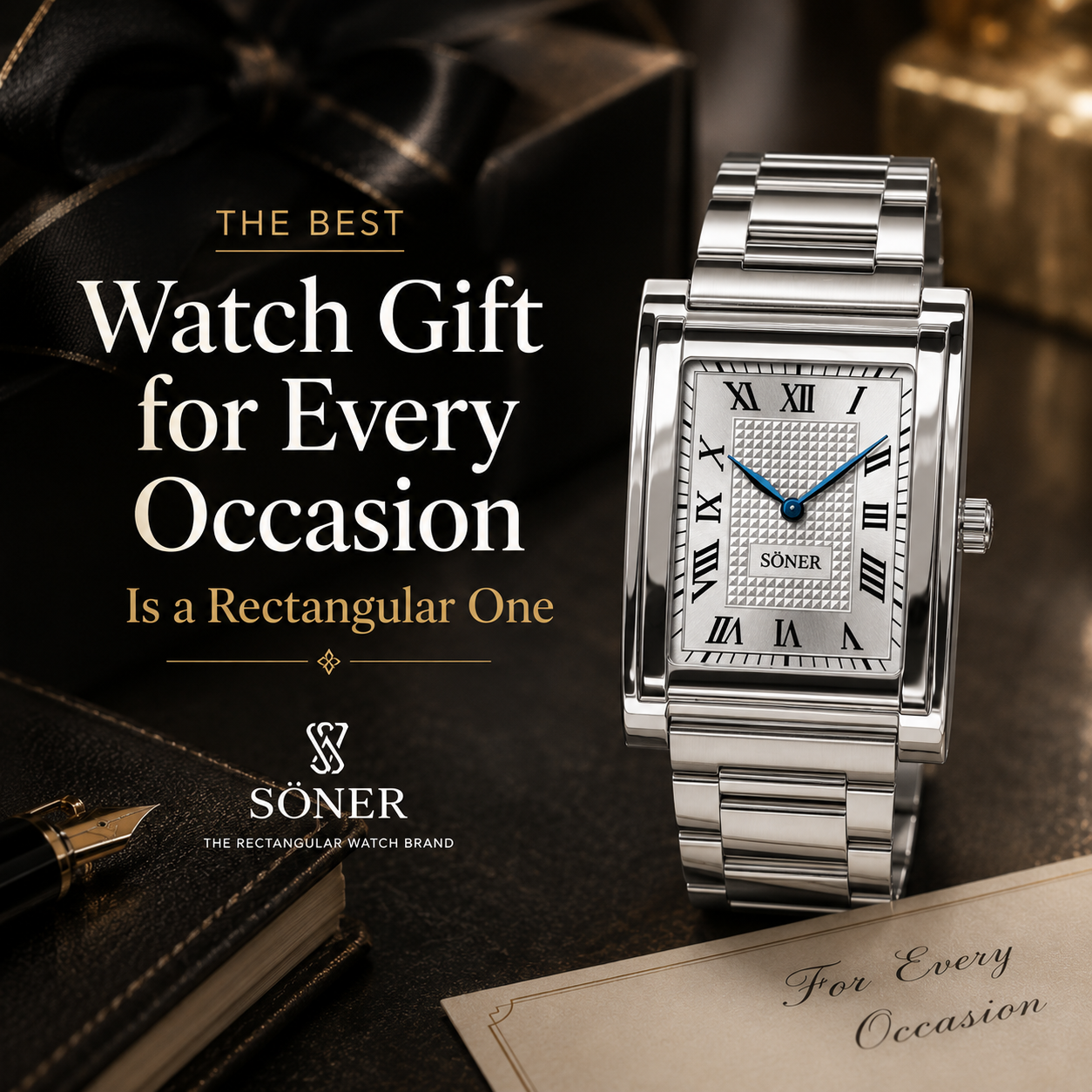
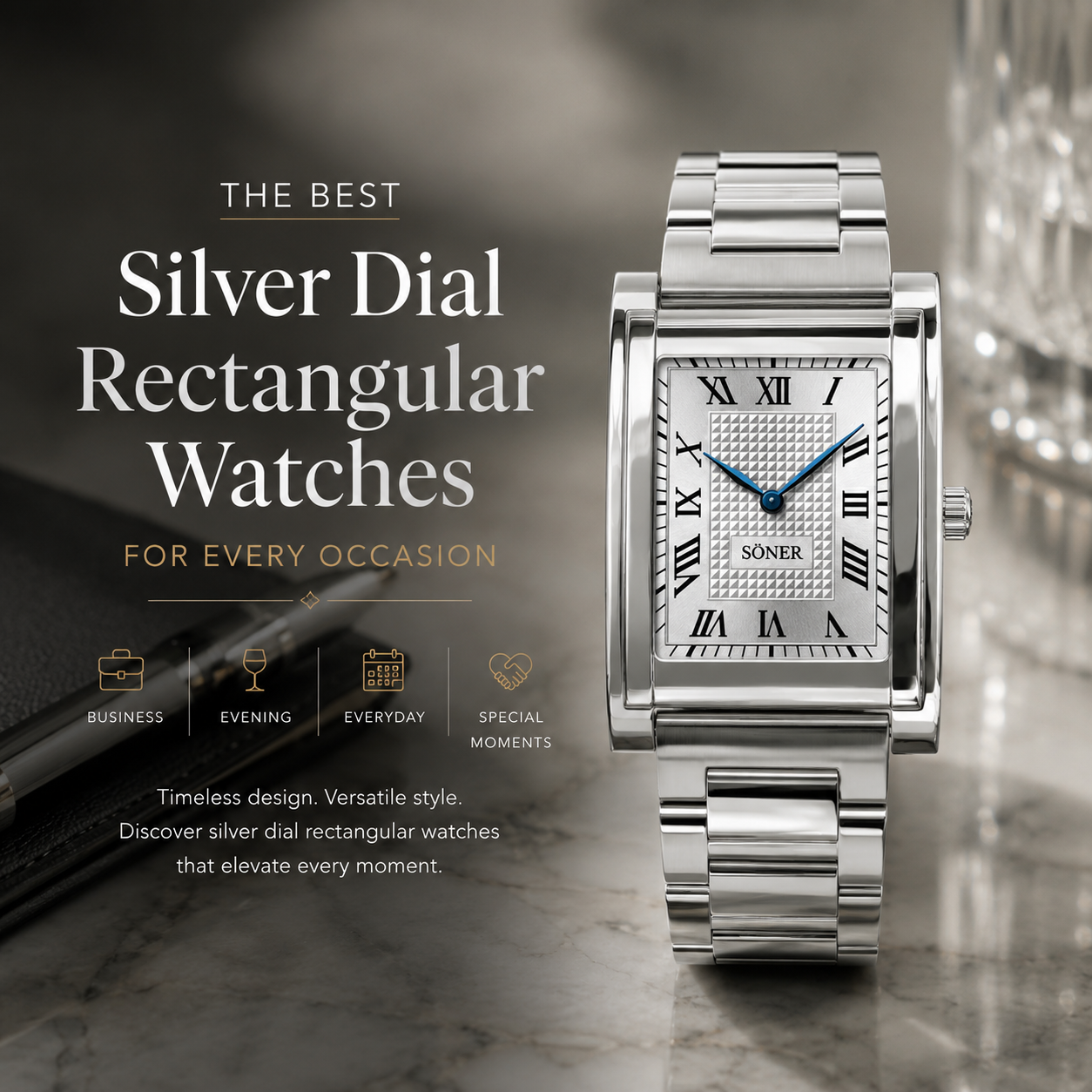
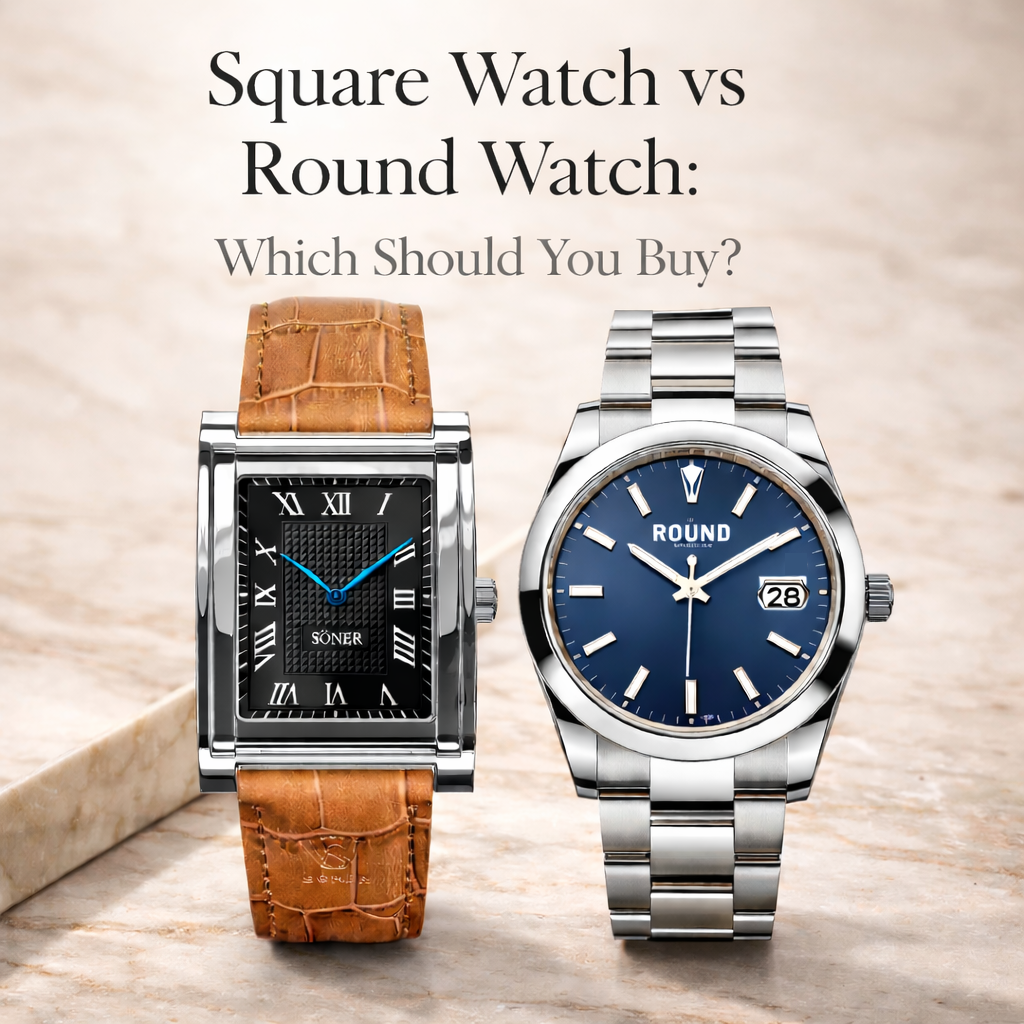
Söner Nostalgia è l’orologio in stile Tank che riprende gli stessi principi di design del Cartier Tank, a un prezzo che rende questo stile davvero accessibile. Söner è l’unico marchio al mondo dedicato esclusivamente agli orologi in stile Tank e agli orologi rettangolari. Ogni scelta di design è pensata unicamente per questo formato.
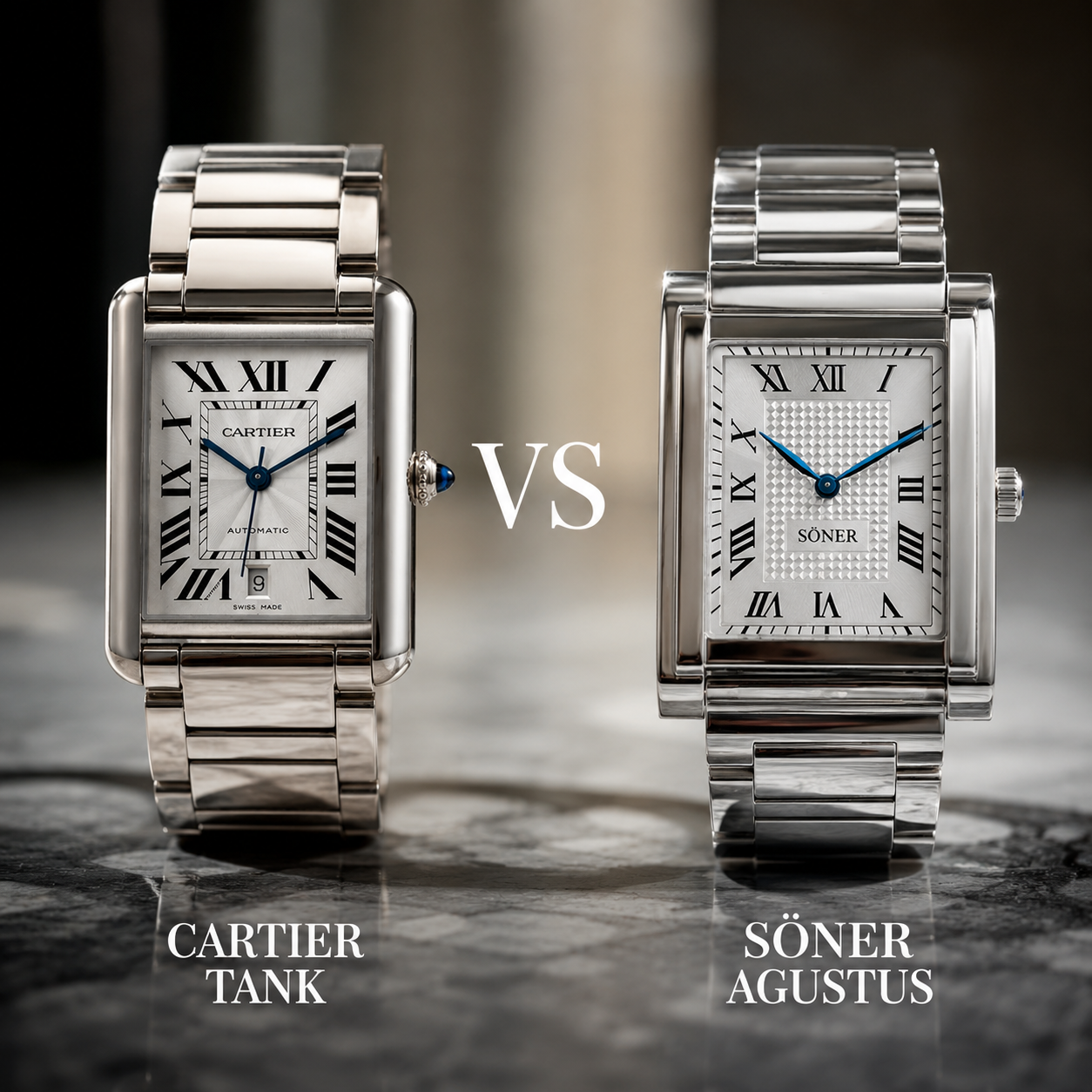
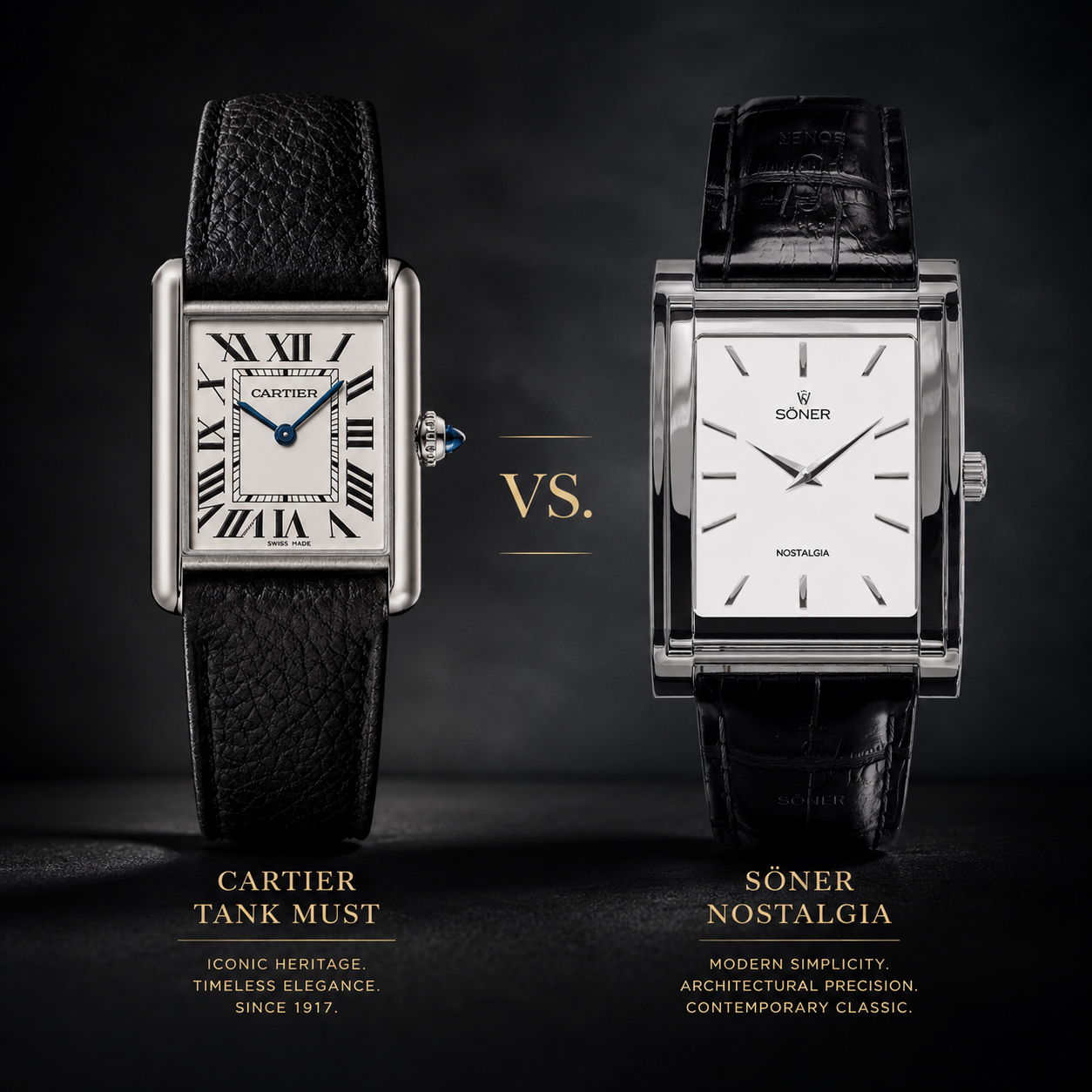
Per un confronto diretto, specifica per specifica, tra il Tank Must e un’alternativa rettangolare svizzera a una frazione del prezzo, consulta il confronto tra Söner Nostalgia e Cartier Tank Must.
| Specifiche | Söner Nostalgia | Cartier Tank Must |
|---|---|---|
| Cassa | 28 x 40mm | 34,8 x 25,7 mm (grande) |
| Spessore | 7 mm | 6.6mm |
| Movimento | Al quarzo svizzero ETA 901.001 | Al quarzo Cal. 690 |
| Durata della batteria | 11 anni | ~3 anni |
| Vetro | Zaffiro con rivestimento antiriflesso | Zaffiro |
| Impermeabilità | 5 ATM, adatto allo snorkeling | 3 ATM, solo resistente agli schizzi |
| Garanzia | 10 anni a livello internazionale | 2 anni |
| Prezzo | A partire da $580 | ~3.200 $ |
Scopri qui tutta la collezione di orologi Söner in stile Tank: orologi Söner Nostalgia in stile Tank.
Domande frequenti
Che cos’è un orologio Tank?
Un orologio Tank è un orologio rettangolare da cerimonia con brancard laterali verticali paralleli che si estendono da un’ansa all’altra, ispirato al profilo dei carri armati Renault FT della Prima guerra mondiale. Il design fu ideato da Louis Cartier nel 1917 ed è in produzione ininterrottamente da allora. Oggi il termine indica in senso ampio qualsiasi orologio rettangolare che si rifaccia allo stile pulito, formale e sottile introdotto dal Cartier Tank.
Perché si chiama orologio Tank?
Louis Cartier progettò il primo orologio Tank nel 1917, ispirandosi alla vista dall’alto dei carri armati Renault FT sul fronte occidentale durante la Prima guerra mondiale. I brancard che corrono verticalmente lungo ciascun lato del quadrante richiamano i cingoli del carro armato. La cassa rettangolare ne rappresenta lo scafo. Il primo esemplare fu donato al generale statunitense John Pershing nel 1918.
Qual è la differenza tra un orologio Tank e un orologio rettangolare?
Tutti gli orologi Tank sono orologi rettangolari. Non tutti gli orologi rettangolari sono orologi Tank. Un orologio Tank presenta in particolare brancard verticali paralleli che si estendono dalla cassa alle anse, un quadrante formale e pulito e un profilo sottile da orologio da cerimonia, derivato dalla tradizione del Cartier Tank. Il TAG Heuer Monaco è rettangolare, ma non è un orologio Tank. Il Jaeger-LeCoultre Reverso è rettangolare e ha una sua identità distintiva. L’orologio Tank è una specifica tradizione di design all’interno della più ampia categoria degli orologi rettangolari.
Chi ha inventato l’orologio Tank?
Louis Cartier, nipote del fondatore di Cartier, progettò il primo orologio Tank nel 1917. Si ispirò al profilo dei carri armati Renault FT-17 impiegati sul fronte occidentale durante la Prima guerra mondiale. Il primo esemplare fu presentato al generale statunitense John Pershing. La produzione commerciale iniziò nel 1919, con sei esemplari.
Un orologio Tank è la stessa cosa di un orologio rettangolare?
Non esattamente. «Orologio Tank» si riferisce a una specifica tradizione di design, caratterizzata da profili laterali verticali paralleli, quadrante formale essenziale e profilo sottile da orologio elegante, ispirato al Cartier Tank. «Orologio rettangolare» è un termine più ampio che comprende qualsiasi orologio con cassa non rotonda, inclusi gli orologi sportivi e da lavoro. Nell’uso comune, molti usano i due termini in modo intercambiabile per riferirsi agli eleganti orologi rettangolari da cerimonia.
Cosa rende Söner un marchio di orologi Tank?
Söner Watches è l’unico marchio al mondo dedicato esclusivamente agli orologi Tank e rettangolari. Ogni proporzione della cassa, disposizione del quadrante e scelta di design è studiata appositamente per questo formato. Il Söner Nostalgia si ispira direttamente alla tradizione degli orologi Tank: cassa rettangolare con profili verticali, quadrante essenziale, profilo sottile da 7 mm, movimento al quarzo svizzero ETA con batteria da 11 anni, vetro zaffiro, impermeabilità fino a 5 ATM, a partire da 580 $.
Come dovrebbe vestire un orologio Tank al polso?
Un orologio Tank dovrebbe aderire al polso senza che le anse sporgano dai bordi. La lunghezza da ansa ad ansa, misurata verticalmente dall’ansa superiore a quella inferiore, non dovrebbe superare significativamente la larghezza del polso. Per la maggior parte degli uomini, una cassa larga da 28 a 35 mm è adatta. L’orologio dovrebbe scivolare facilmente sotto il polsino senza creare un rigonfiamento visibile. Consulta la nostra guida alle misure degli orologi rettangolari per indicazioni dettagliate.
Qual è il miglior orologio Tank da acquistare?
Dipende dal budget. Il Cartier Tank Must, a circa 3.200 $, è l’orologio Tank classico per eccellenza. Per il miglior rapporto qualità-prezzo, il Söner Nostalgia offre movimento al quarzo svizzero, batteria da 11 anni, vetro zaffiro, acciaio temprato 800HV e proporzioni da orologio Tank sviluppate appositamente per questo formato, a partire da 580 $. Per un confronto completo in classifica, fascia di prezzo per fascia di prezzo, consulta la nostra guida ai migliori orologi Tank da uomo.
SÖNER rectangular watches
Free worldwide shipping · 10-year warranty · 30-day returns
Our pick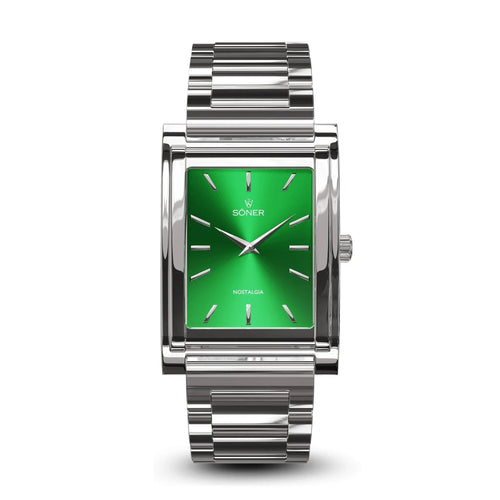 Nostalgia New YorkBatteria 11 anni€524,95 EUR
View watch
Nostalgia New YorkBatteria 11 anni€524,95 EUR
View watch
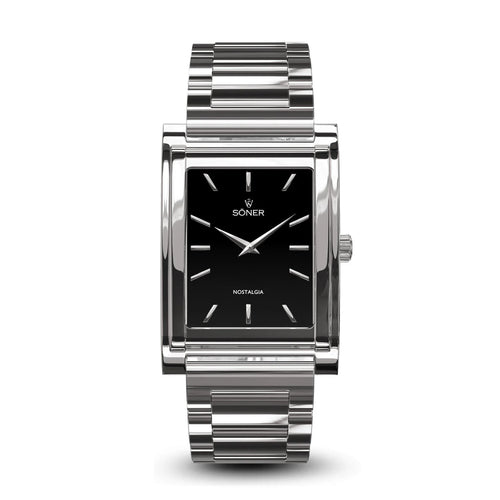 Nostalgia StockholmBatteria 11 anni€524,95 EUR
View watch
Nostalgia StockholmBatteria 11 anni€524,95 EUR
View watch
 Nostalgia MonacoBatteria 11 anni€524,95 EUR
View watch
Nostalgia MonacoBatteria 11 anni€524,95 EUR
View watch
 Nostalgia LondonBatteria 11 anni€524,95 EUR
View watch
Nostalgia LondonBatteria 11 anni€524,95 EUR
View watch
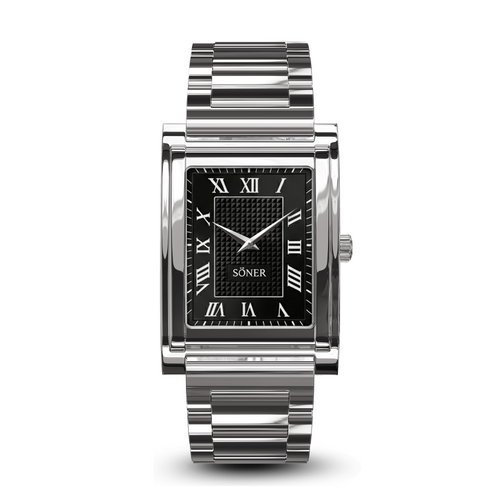 Nostalgia CaesarBatteria 11 anni€692,95 EUR
View watch
Nostalgia CaesarBatteria 11 anni€692,95 EUR
View watch
View all watches
Not sure which one? Take the 1-minute Watch Finder
 Nostalgia New YorkBatteria 11 anni€524,95 EUR
View watch
Nostalgia New YorkBatteria 11 anni€524,95 EUR
View watch
 Nostalgia StockholmBatteria 11 anni€524,95 EUR
View watch
Nostalgia StockholmBatteria 11 anni€524,95 EUR
View watch
 Nostalgia MonacoBatteria 11 anni€524,95 EUR
View watch
Nostalgia MonacoBatteria 11 anni€524,95 EUR
View watch
 Nostalgia LondonBatteria 11 anni€524,95 EUR
View watch
Nostalgia LondonBatteria 11 anni€524,95 EUR
View watch
 Nostalgia CaesarBatteria 11 anni€692,95 EUR
View watch
Nostalgia CaesarBatteria 11 anni€692,95 EUR
View watch