


 Published on
Table of Contents
Rolex è il marchio di orologi più riconosciuto al mondo, un nome sinonimo di precisione, aspirazione e della cassa rotonda Oyster che ha definito la sua identità pubblica per un secolo. Il Submariner, il Datejust, il GMT-Master, il Daytona: questi sono gli orologi che hanno costruito la leggenda, e sono tutti rotondi. Ma prima che Rolex fosse il marchio del Submariner, prima che fosse l’orologio di riferimento che ha adornato i polsi di ogni astronauta, presidente e alpinista importante nella storia delle conquiste del XX secolo, Rolex produceva orologi rettangolari. E ne ha realizzati alcuni tra i migliori al mondo.
Orologi Rettangolari Rolex: Riferimenti Chiave
| Riferimento | Periodo | Movimento | Caratteristica Principale |
|---|---|---|---|
| Rolex Prince | 1928 - primi anni ’50 | Calibro rettangolare Aegler | Quadrante a doppio registro - l’orologio originale per medici |
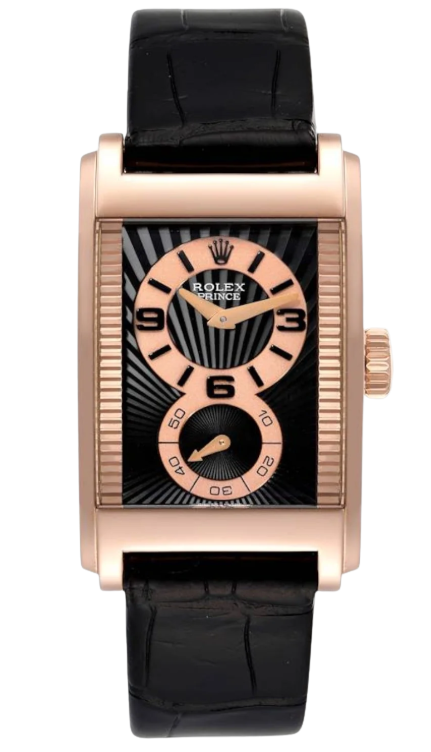
| Cellini Prince | 2005 - 2015 | Calibro 7040 (COSC) | Oro 18k, fondello a vista, quadrante guilloché |
Il Prince - L’Orologio Che Ha Reso Rolex Serio
Il Rolex Prince è stato lanciato nel 1928 ed è stato unanimemente considerato un capolavoro. Rettangolare, Art Deco in ogni sua proporzione, presentava uno dei layout di quadrante più distintivi nella storia del design degli orologi da polso: un formato a doppio registro in cui l’indicazione dell’ora, con lancette di ore e minuti, occupava la parte superiore del quadrante, mentre un piccolo contatore dei secondi si trovava in una sezione inferiore separata e ben delineata. Le due indicazioni non si sovrapponevano mai, motivo per cui il Prince ha acquisito il soprannome informale di “orologio del medico”, perché il suo layout permetteva di misurare con precisione il battito del polso e la respirazione senza che alcuna lancetta interferisse con un’altra. Era precisione come design, e design come precisione.

La cassa del Prince era alimentata da movimenti rettangolari prodotti da Aegler, la società svizzera che da tempo forniva i calibri a Rolex, e offriva, per l’epoca, un’impressionante riserva di carica di oltre due giorni. Le forme della cassa variavano a seconda dei riferimenti: alcune avevano lati dritti e architettonici, altre utilizzavano il profilo “curvex” drammatico in cui le anse si piegavano bruscamente verso il basso per seguire il polso. Al Capone indossava un Rolex Prince. Oskar Schindler di Liam Neeson lo indossava in Schindler’s List. Queste non sono associazioni banali: parlano del Prince come di un orologio per persone che capivano che l’eleganza poteva essere una forma di potere. Rolex ha interrotto la produzione del Prince nei primi anni ’50, quando la forma rettangolare è uscita dalla moda, ma non l’ha mai dimenticato del tutto.
Il Cellini Prince - Una Resurrezione Moderna
Nel 2005, a Baselworld, Rolex fece qualcosa che stupì il mondo degli orologi: presentò il Cellini Prince, un orologio rettangolare Art Deco che riportava in vita il layout a doppio registro del Prince in una cassa di 28,5 mm x 47 mm, realizzata in oro 18k in quattro configurazioni. Il Cellini Prince era, e rimane, unico nel suo genere rispetto a qualsiasi altro orologio mai prodotto da Rolex. Il suo fondello a vista, che mostrava il movimento rettangolare appositamente decorato, fu una prima assoluta per Rolex. I motivi guilloché del quadrante, abbinati alle decorazioni corrispondenti sul movimento visibile attraverso il fondello, erano la prova di una capacità di finitura che gli orologi rotondi di Rolex non mostrano mai. Il Calibro 7040, certificato COSC, fu sviluppato specificamente per il formato Prince. L’orologio era disponibile in oro giallo, oro bianco e oro Everose, ciascuno con un trattamento del quadrante distinto, dal motivo sunburst a raggi di sole con numeri arabi, ai modelli con texture Clous de Paris, fino alle versioni in oro bianco pavé di diamanti.

Il Cellini Prince ha venduto poco secondo gli standard commerciali di Rolex ed è stato interrotto nel 2015. Ma per i collezionisti che lo comprendono, il Prince è uno degli orologi più tecnicamente distintivi mai prodotti da Rolex, un pezzo che rivela capacità del marchio che il suo catalogo principale non ha mai occasione di mostrare. Sul mercato secondario, gli esemplari si vendono a prezzi significativamente inferiori rispetto ai modelli rotondi comparabili della stessa epoca, rendendo il Prince, paradossalmente, una delle proposte di miglior valore in tutto il catalogo Rolex.
Il Rettangolo Segreto
Il capitolo rettangolare di Rolex non è una nota a piè di pagina, ma una finestra su una versione del marchio che non è mai emersa completamente, un Rolex che avrebbe potuto essere importante nel mondo degli orologi angolari tanto quanto lo è diventato in quello rotondo. Il Prince del 1928 e il Cellini Prince del 2005 segnano quasi un secolo di impegno intermittente con la forma angolare, e ciò che dimostrano insieme è che quando Rolex si impegna nel rettangolo, lo fa completamente. Il risultato vale sempre la pena di essere scoperto.
Per la storia completa di come gli orologi rettangolari si sono evoluti nelle principali maison, vedi la storia completa degli orologi rettangolari. Per i migliori orologi rettangolari disponibili oggi a ogni fascia di prezzo, vedi i migliori orologi rettangolari nel 2026. Per il riferimento definitivo della categoria, vedi La Guida Definitiva agli Orologi Rettangolari.
Domande Frequenti
Rolex ha mai prodotto orologi rettangolari?
Sì. Rolex ha prodotto orologi rettangolari in due periodi distinti. Il Rolex Prince originale è stato prodotto dal 1928 ai primi anni ’50 ed è considerato uno dei migliori orologi rettangolari dell’era Art Deco. Il Cellini Prince è stato prodotto dal 2005 al 2015 come una moderna rivisitazione del formato Prince in oro 18k con movimento certificato COSC. Entrambi sono significativamente sottovalutati rispetto ai modelli rotondi di Rolex sul mercato secondario.
Cos’è l’orologio Rolex Prince?
Il Rolex Prince è un orologio da polso rettangolare Art Deco introdotto nel 1928. Si distingue per il suo quadrante a doppio registro, in cui ore e minuti sono visualizzati nella parte superiore e un piccolo contatore dei secondi occupa una sezione inferiore separata. Questo layout gli ha valso il soprannome di “orologio del medico” perché permetteva una misurazione precisa senza sovrapposizione delle lancette. Era alimentato da calibri rettangolari Aegler e offriva una riserva di carica superiore a due giorni per l’epoca.
Perché il Rolex Cellini Prince è stato interrotto?
Il Cellini Prince è stato interrotto nel 2015 dopo dieci anni di produzione. Le vendite sono state inferiori alle aspettative di Rolex: l’orologio ha attratto un pubblico di collezionisti specialisti piuttosto che un’ampia clientela. La sua complessità, il quadrante a doppio registro, il movimento rettangolare decorato e il fondello a vista erano fuori dal linguaggio di design utilitaristico che definisce l’identità principale di Rolex. Per i collezionisti, questo rende gli esemplari sopravvissuti particolarmente interessanti.
Il Rolex Cellini Prince è un buon investimento?
Il Cellini Prince rappresenta uno degli orologi più tecnicamente raffinati mai prodotti da Rolex e attualmente si scambia sul mercato secondario a un prezzo significativamente inferiore rispetto ai modelli rotondi comparabili della stessa epoca. Per i collezionisti che apprezzano la distinzione tecnica e la qualità della finitura più del riconoscimento del marchio, è una proposta di valore particolarmente forte. Come per ogni acquisto di orologio usato, condizione, provenienza e documentazione originale influenzano notevolmente il valore.
Dove si colloca Rolex nella categoria degli orologi rettangolari?
La produzione rettangolare di Rolex è un capitolo minore in un catalogo dominato dagli orologi rotondi. Nel panorama più ampio degli orologi rettangolari, il Prince si colloca accanto al Cartier Tank e al Jaeger-LeCoultre Reverso come uno degli orologi rettangolari Art Deco più iconici. A differenza di questi riferimenti, non è più in produzione. Per il contesto completo di come la categoria degli orologi rettangolari si è sviluppata nelle principali maison, vedi la storia completa degli orologi rettangolari.