


 Published on
Table of Contents
The short answer is: it depends entirely on the type of gold finish. Solid gold scratches easily. PVD gold-tone over hardened steel scratches far less easily. Standard gold plating wears through rather than just scratching. Understanding which type you have changes everything about how you care for it and what to expect from daily wear.
The Three Types of Gold Watch and How They Scratch Differently
Solid Gold (18k or 14k)
Solid gold cases are the softest option. 18k gold is 75% pure gold alloyed with silver, copper, or palladium for strength. Even alloyed, it sits at approximately 150 to 200 HV on the Vickers hardness scale. Standard 316L stainless steel sits at around 200 HV. The result is that a solid gold case will scratch visibly from everyday contact with surfaces that a steel case would not. The scratches displace rather than remove material, which is why solid gold can be professionally polished back by a watchmaker — the material is still there, just rearranged. Regular polishing removes a small amount of material each time, which is a long-term consideration for thin case edges.
PVD Gold-Tone over Hardened Steel
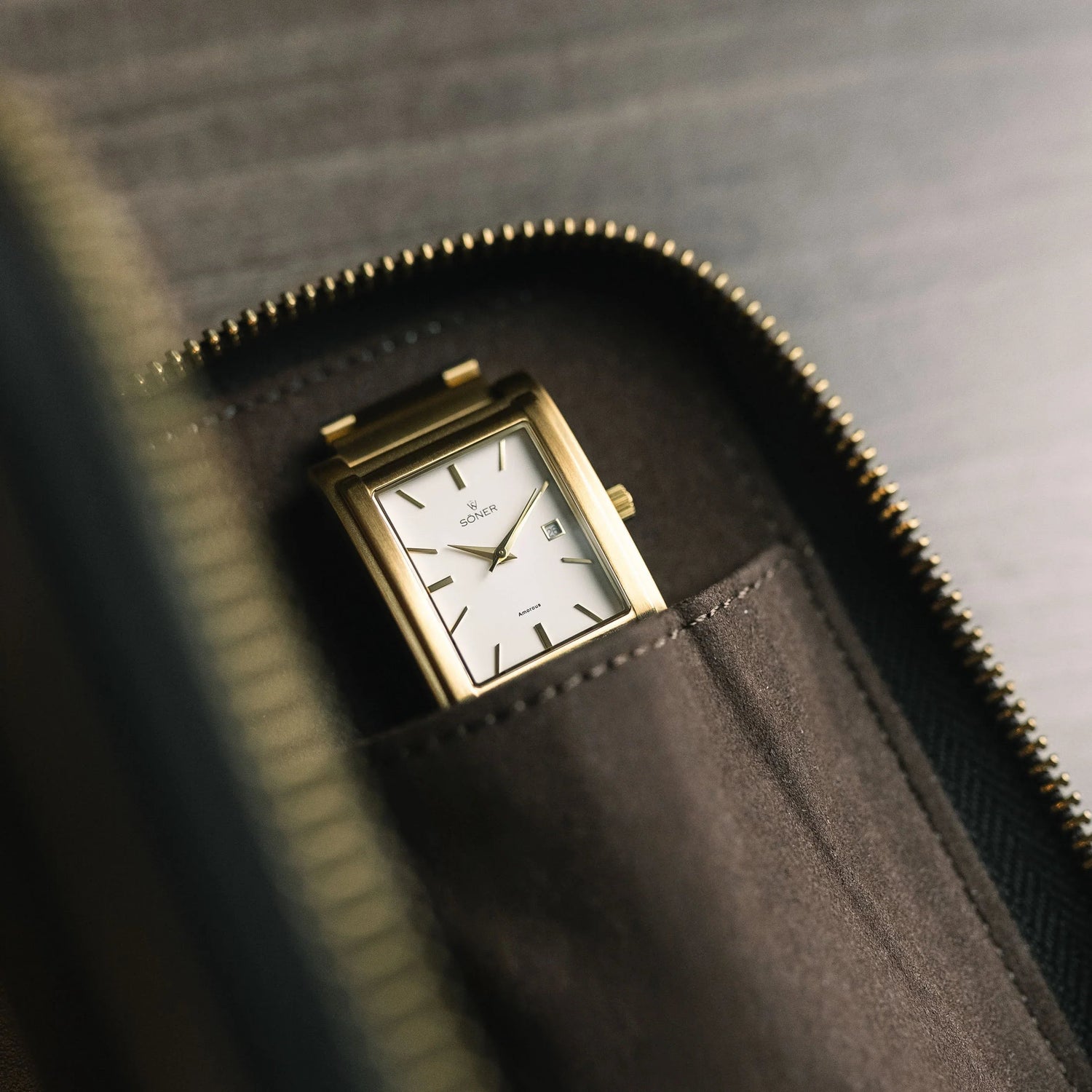
PVD (Physical Vapour Deposition) gold-tone is bonded to the steel case at a molecular level in a vacuum chamber. The result is a gold-tone finish significantly harder than solid gold. On 800HV hardened surgical steel, the substrate beneath the coating is four times harder than standard 316L stainless steel. Light scratches that would mark solid gold are resisted by the harder surface beneath the PVD layer. The coating itself adds further surface hardness. This is why Söner's Nostalgia and Amorous collections use PVD gold-tone over 800HV hardened steel specifically — it is the most scratch-resistant gold-finish option available at this price point. For the full technical explanation, see our guide to PVD gold coating on watches.
Gold Plating (Electroplating)
Standard gold plating applies a thin layer of gold over a base metal using electrodeposition. The layer is typically 0.5 to 2.5 microns thick. Unlike solid gold, plating does not displace — it wears through. At high-contact points like the case back, clasp, and lug ends, the plating wears away to expose the base metal within a few years of daily wear. This produces an uneven, patchy appearance that cannot be polished back. Re-plating is possible but the process repeats.

Scratch Resistance Compared
| Gold Type | Hardness | Scratch Resistance | Wear Pattern | Repairable? |
|---|---|---|---|---|
| Solid gold (18k) | 150 to 200 HV | Low | Scratches visibly, material displaced | Yes: professional polishing |
| Solid gold (14k) | 175 to 220 HV | Slightly better | Scratches visibly, harder than 18k | Yes: professional polishing |
| Gold plating on standard steel | Coating: low, Steel: 200 HV | Low: wears through | Uneven wear-through at contact points | Re-plating only |
| PVD gold-tone on standard steel | Coating: high, Steel: 200 HV | Good | Fades gradually and evenly | Re-coating by specialist |
| PVD gold-tone on 800HV hardened steel | Coating: high, Steel: 800 HV | Very good | Fades gradually and evenly | Re-coating by specialist |
The practical takeaway: If your gold watch is PVD over hardened steel, it will handle daily wear significantly better than solid gold or standard plating. If it is solid gold, expect visible scratches over time — but they can be polished back. If it is standard gold plating, careful handling is essential because the layer is thin and irreversible when worn through.
How to Prevent Scratches on a Gold Watch
Daily Habits
- Remove before manual work, contact sports, or heavy lifting
- Put the watch on after applying cologne or sunscreen: both accelerate surface wear
- Wipe with a soft lint-free cloth at the end of each wearing day
- Be aware of hard edges: doorframes, desk corners, keyboards
- Remove before sleep: wrist contact with bedding causes micro-abrasion over time
Storage
- Store in a soft-lined watch box or pouch when not wearing
- Never store alongside other metal objects or jewellery
- Keep face-up to avoid crystal and case contact with hard surfaces
- Avoid storing in direct sunlight for extended periods
- Do not store in airtight containers: humidity buildup can affect seals
How to Clean a Gold Watch Without Damaging It
The cleaning method depends on the gold type. For all types: mild soapy water and a soft toothbrush for the case and bracelet, rinse with clean water, dry immediately with a lint-free cloth. Never use toothpaste — despite the widespread recommendation online, toothpaste contains mild abrasives that scratch gold surfaces and will wear through PVD coatings over time.
For solid gold: a jeweller's polishing cloth is safe for restoring surface lustre between professional services. For PVD gold-tone: the same cloth but with lighter pressure — the coating is harder than solid gold but thinner, and the polishing cloth is for surface buffing only, not scratch removal. For gold plating: avoid any polishing compounds entirely. Gentle soap and cloth only.
For a more detailed guide specifically on Söner gold watches, see our complete guide to polishing a gold watch at home.
When to Take It to a Professional
Solid gold watches benefit from professional polishing every few years to restore the case finish. A watchmaker removes fine scratches by carefully polishing the case surfaces, maintaining the original brushed or polished finish distinction where applicable. Note that each polish removes a small amount of material — this is a consideration for thin lugs and case edges on watches worn and polished frequently over decades.
PVD and plated watches cannot be polished back the same way. If the coating has worn through significantly, re-coating or re-plating by a specialist is the only option. For a quality PVD watch maintained correctly, this should not be necessary for 5 to 10 years of daily wear.
Any gold watch that has been exposed to water ingress, extreme temperature changes, or chemical contact should be inspected by a watchmaker promptly, regardless of the case finish type.
Frequently Asked Questions
Do gold watches scratch more easily than steel watches?
Solid gold scratches more easily than standard stainless steel. PVD gold-tone over hardened steel is comparable to or better than standard steel in scratch resistance. Standard gold plating wears through rather than just scratching. The answer depends entirely on which type of gold finish the watch has.
Can scratches be removed from a gold watch?
Yes, on solid gold watches. A professional watchmaker can polish the case to remove light scratches. Deep scratches may require more significant polishing that alters the case profile slightly. On PVD or plated watches, scratches that have penetrated through the coating cannot be polished back and require re-coating by a specialist.
Is PVD gold-tone more scratch resistant than solid gold?
Yes, particularly when PVD is applied over hardened steel. The 800HV hardened steel substrate used in Söner's Nostalgia and Amorous collections is four times harder than standard stainless steel. The PVD coating adds further surface hardness on top. The combination resists the everyday contact scratches that would visibly mark a solid gold case.
Should I use toothpaste to clean a gold watch?
No. Toothpaste contains mild abrasives that scratch polished surfaces and wear through PVD and plated finishes. Use mild soapy water and a soft toothbrush instead. A microfiber cloth for daily wiping is the most effective single maintenance habit for any gold finish watch.
How long does PVD gold-tone last before showing wear?
With reasonable care, a quality PVD gold-tone coating on hardened steel will last 5 to 10 years before showing meaningful wear. Signs of wear appear first at high-contact points: the case back, clasp mechanism, and lug ends. On a well-maintained watch this happens gradually over years rather than suddenly.
Söner's gold rectangular watches use PVD gold-tone over 800HV hardened surgical steel — four times harder than standard steel, significantly more scratch-resistant than standard gold plating. Sapphire crystal, 5 ATM water resistance, 10-year international warranty. From $385.
Browse the Gold CollectionSÖNER rectangular watches
Free worldwide shipping · 10-year warranty · 30-day returns
Our pick Nostalgia Stockholm11-year battery$580 USD
View watch
Nostalgia Stockholm11-year battery$580 USD
View watch
 Amorous MilanoAutomatic$785 USD
View watch
Amorous MilanoAutomatic$785 USD
View watch
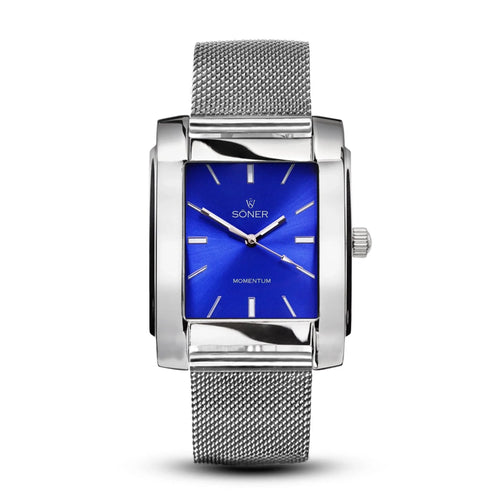 Momentum BacardiAutomatic$585 USD
View watch
Momentum BacardiAutomatic$585 USD
View watch
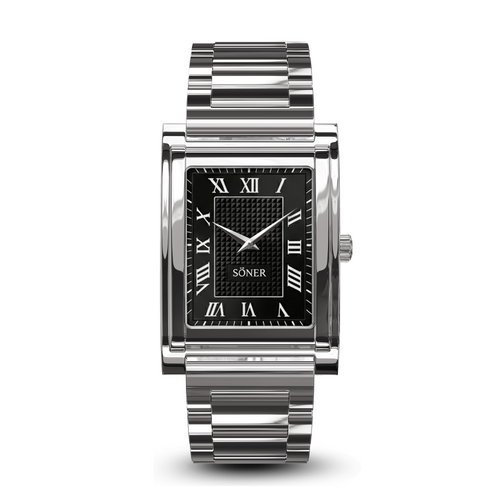 Nostalgia Caesar11-year battery$765 USD
View watch
Nostalgia Caesar11-year battery$765 USD
View watch
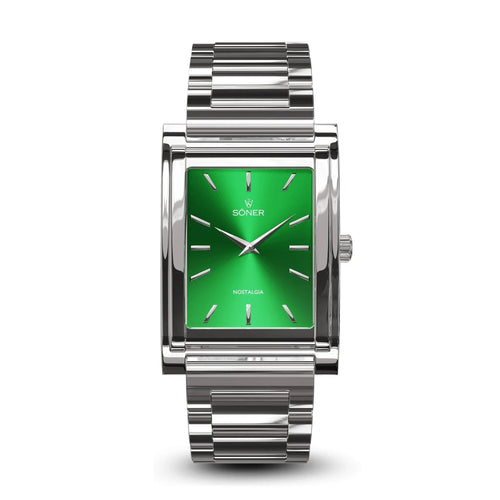 Nostalgia New York11-year battery$580 USD
View watch
Nostalgia New York11-year battery$580 USD
View watch
View all watches
Not sure which one? Take the 1-minute Watch Finder
 Nostalgia Stockholm11-year battery$580 USD
View watch
Nostalgia Stockholm11-year battery$580 USD
View watch
 Amorous MilanoAutomatic$785 USD
View watch
Amorous MilanoAutomatic$785 USD
View watch
 Momentum BacardiAutomatic$585 USD
View watch
Momentum BacardiAutomatic$585 USD
View watch
 Nostalgia Caesar11-year battery$765 USD
View watch
Nostalgia Caesar11-year battery$765 USD
View watch
 Nostalgia New York11-year battery$580 USD
View watch
Nostalgia New York11-year battery$580 USD
View watch