

 Published on
Table of Contents
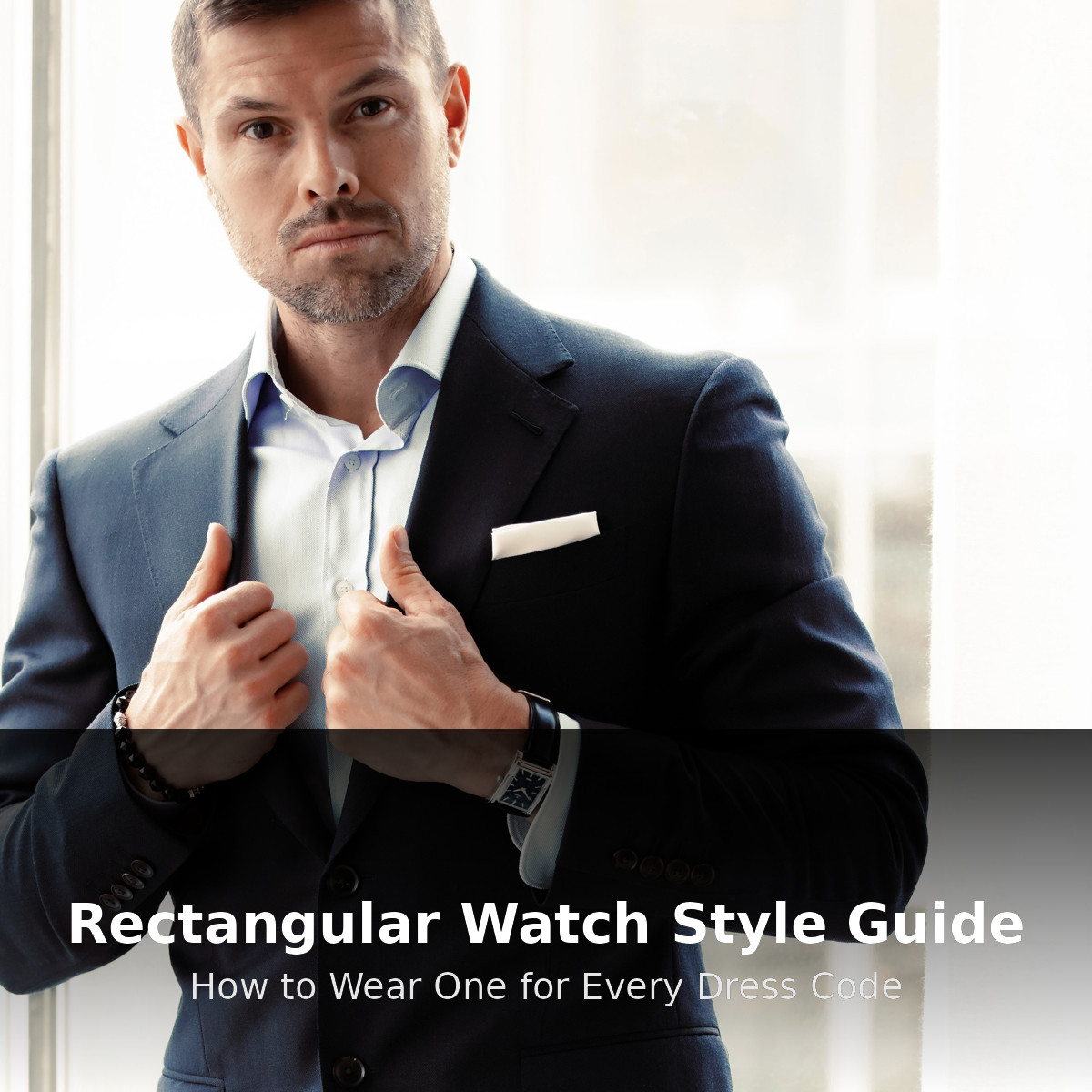
Eine rechteckige Uhr ist eine bewusstere Wahl als eine runde. Sie trägt ein Design-Erbe aus der Art-Déco-Ära, eine Silhouette, die der Linie des Arms folgt, statt quer darauf zu liegen, und eine visuelle Identität, die Aufmerksamkeit belohnt, statt sie einzufordern. Zu wissen, wie man sie gut trägt – das richtige Gehäuse, Zifferblatt und Armband zum passenden Dresscode zu kombinieren – ist der Unterschied zwischen einer Uhr, die ein Outfit aufwertet, und einer, die einfach nur ein Handgelenk schmückt.
Dieser Leitfaden deckt jeden Dresscode vom Black Tie bis zum legeren Wochenende ab, mit klaren Hinweisen darauf, was funktioniert, was nicht und warum. Für den vollständigen technischen Kontext zu rechteckigen Uhren siehe den definitiven Leitfaden für rechteckige Uhren.

Das Grundprinzip: Zurückhaltung wird belohnt
Die rechteckige Uhr entstand in einer Zeit, in der Herrenbekleidung von präzisen Codes bestimmt wurde und jedes sichtbare Detail genau betrachtet wurde. Von der Uhr wurde erwartet, dass sie kurz gesehen und leise in Erinnerung behalten wird. Dieses Prinzip gilt noch immer. Eine gut getragene rechteckige Uhr fällt auf, ohne sich anzubieten – sie wird entdeckt, wenn jemand genau hinschaut, nicht von weitem angekündigt.
Das bedeutet, dass die Stilregeln für rechteckige Uhren konsequent auf Zurückhaltung setzen: dünnere Gehäuse statt dicke, dunkles Leder statt Stahlarmband in formellen Kontexten, weiße oder silberne Zifferblätter statt kräftiger Farben zum Anzug und kleinere Gehäusebreiten für kleinere Handgelenke statt das größte verfügbare Gehäuse zu tragen.
Die Dresscode-Matrix
| Dresscode | Armband | Zifferblatt | Dicke | Gehäusebreite |
|---|---|---|---|---|
| Black Tie | Nur schwarzes Leder | Weiß, Silber, Champagner | Unter 8 mm | Handgelenksproportional |
| Business Formal | Dunkles Leder oder polierter Stahl | Weiß, Silber, Marineblau, Dunkel | Unter 12 mm | 26-32mm |
| Smart Casual | Braunes oder hellbraunes Leder, NATO, Stahl | Beliebige Farbe | Beliebig | 28-35mm |
| Leger | Beliebiges Armband | Beliebige Farbe | Beliebig | Ab 35 mm funktioniert gut |
Black Tie und formeller Abend

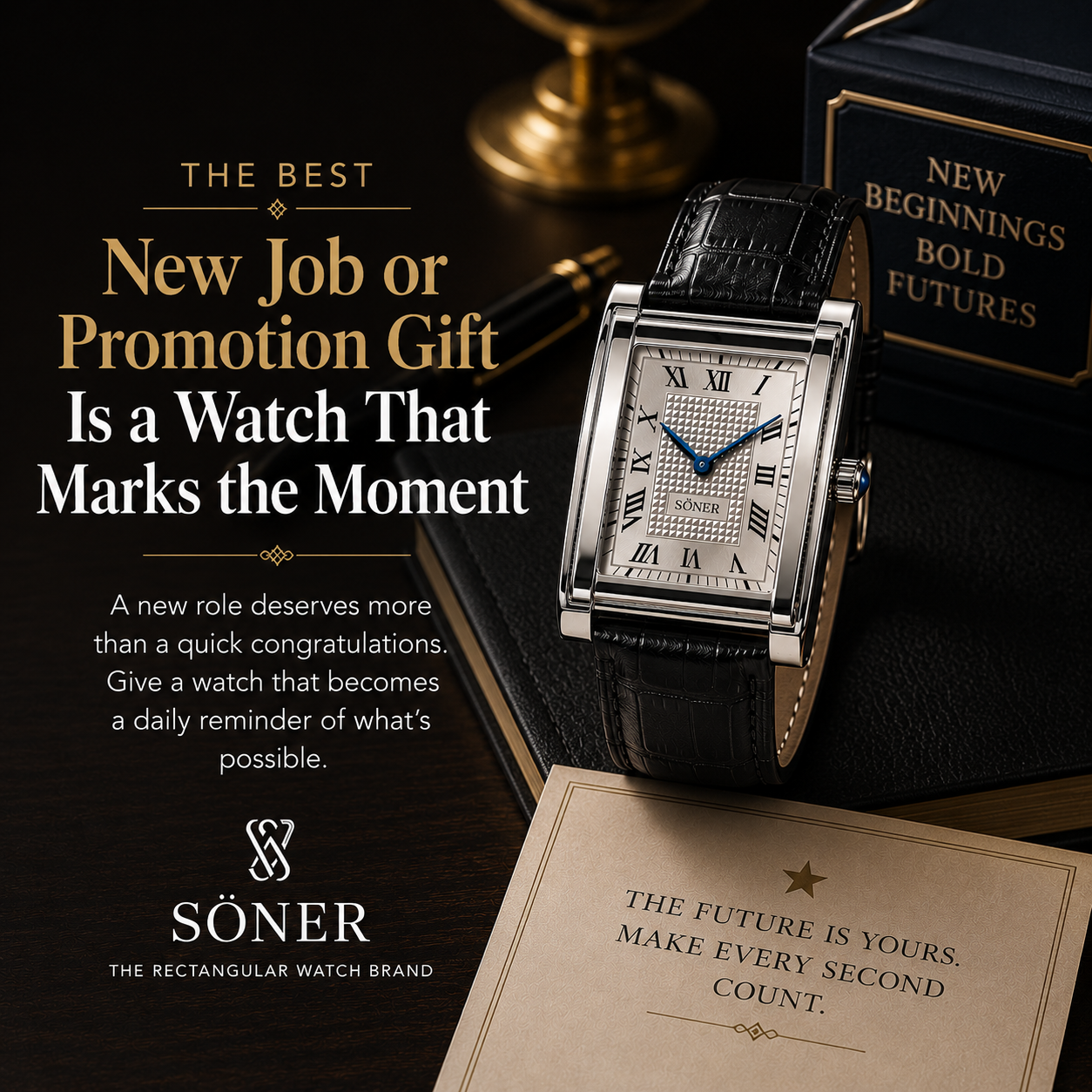
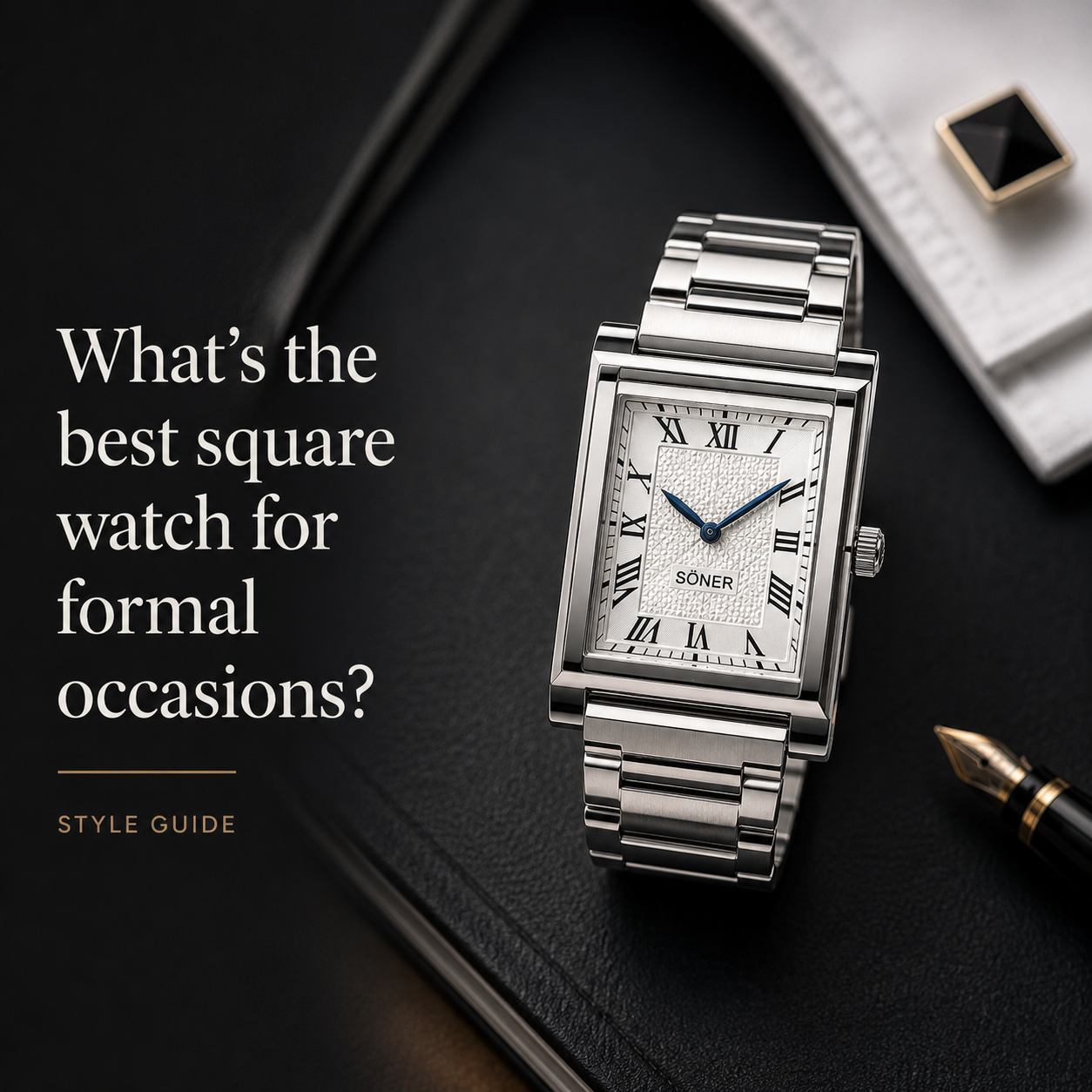
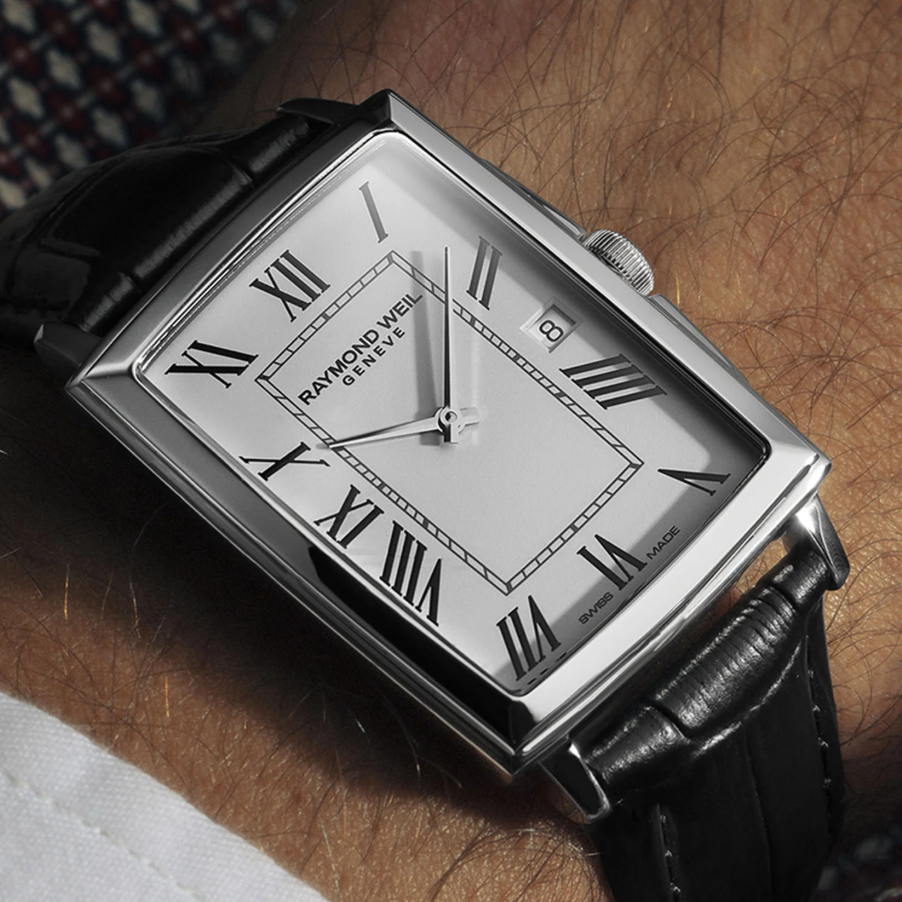
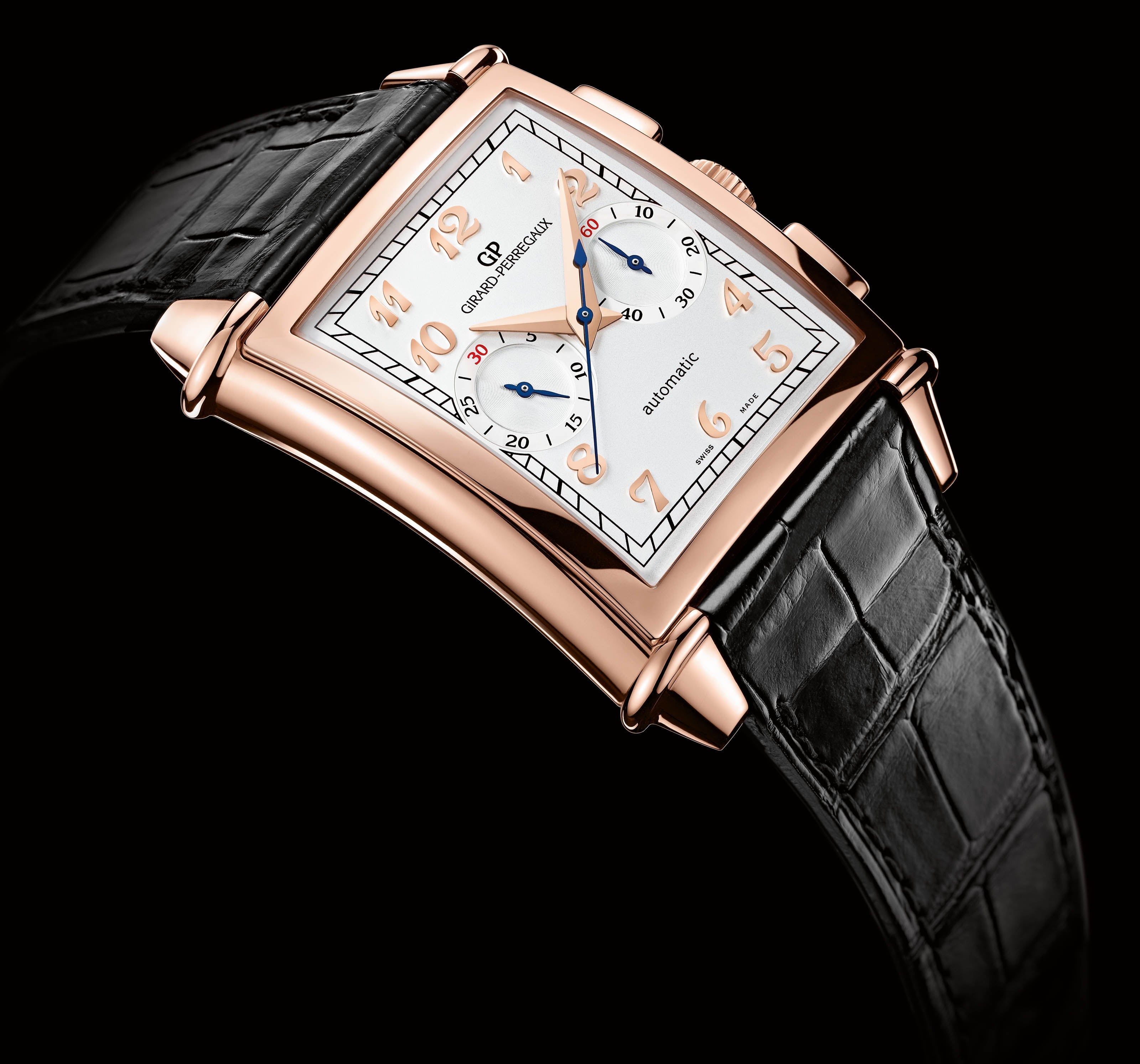
Black Tie ist der Dresscode, bei dem eine rechteckige Uhr am besten passt und gleichzeitig die höchsten Ansprüche stellt. Die richtige Wahl ist die schlankste verfügbare Uhr – idealerweise unter 8 mm dick – an einem dunklen Lederarmband. Ein Stahlarmband ist für Black Tie zu leger. Ein farbiges Zifferblatt lenkt ab. Das richtige Zifferblatt ist weiß, silber oder champagnerfarben, mit der minimalen Anzahl an Indizes, die für die Ablesbarkeit nötig sind.
Die Uhr sollte den Hemdärmel sauber passieren, ohne eine sichtbare Kante zu erzeugen. Hierbei ist der Abstand von Bandanstoss zu Bandanstoss genauso wichtig wie die Dicke – eine Uhr mit langem Bandanstoss liegt entlang des Handgelenks und nicht quer, was bei formeller Kleidung eleganter wirkt. Römische Ziffern oder einfache Strichindizes funktionieren beide gut. Ein Datumsfenster ist akzeptabel, aber nicht zwingend erforderlich.
| Element | Richtige Wahl | Vermeiden |
|---|---|---|
| Armband | Schwarzes Leder | Stahlarmband, NATO, Gummi |
| Gehäusefinish | Polierter Stahl oder Gold | Gebürstete Oberfläche |
| Zifferblatt | Weiß, Silber, Champagner | Kräftige oder gesättigte Farben |
| Dicke | Unter 8 mm bevorzugt | Über 10 mm |
Business Formal und Anzugtrageweise

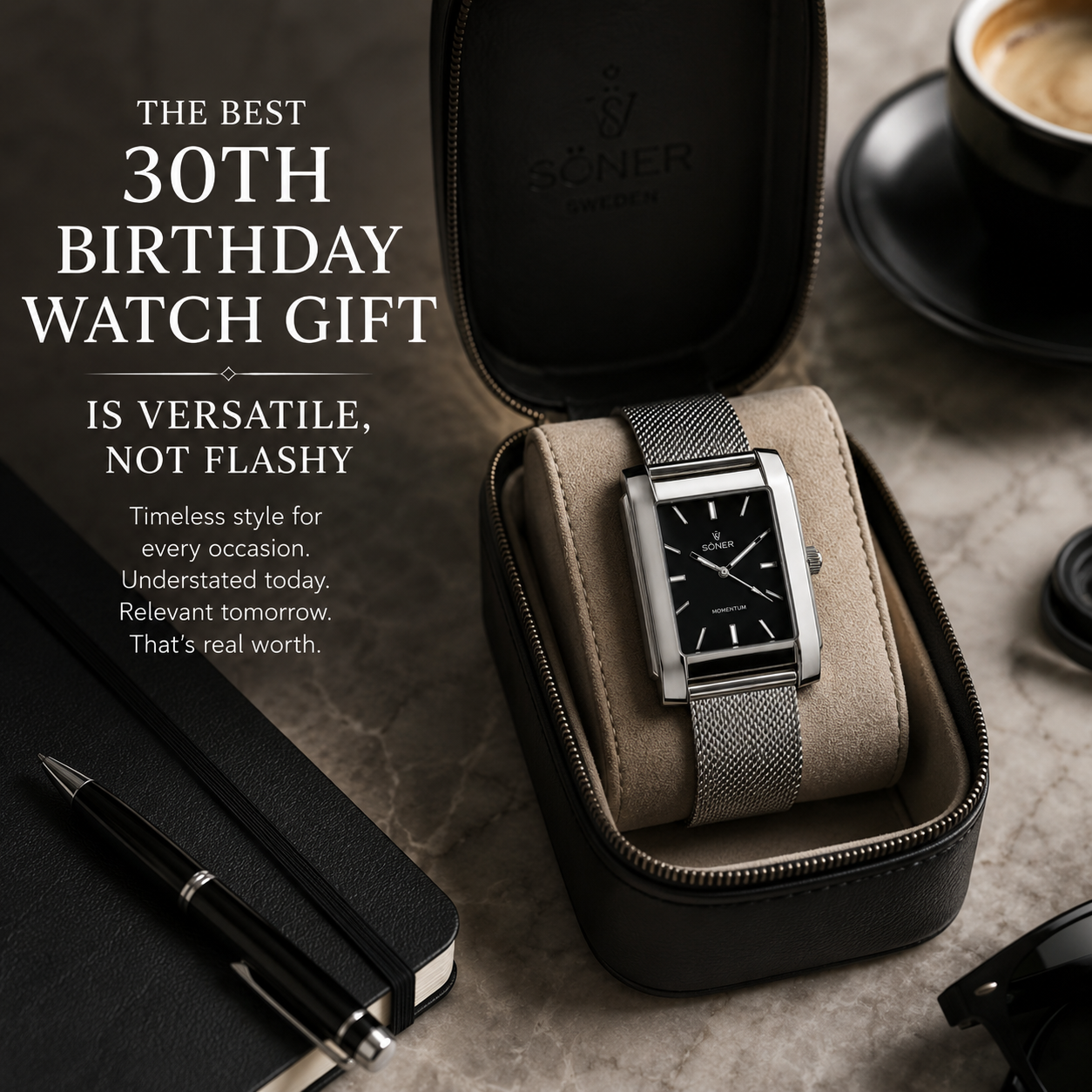
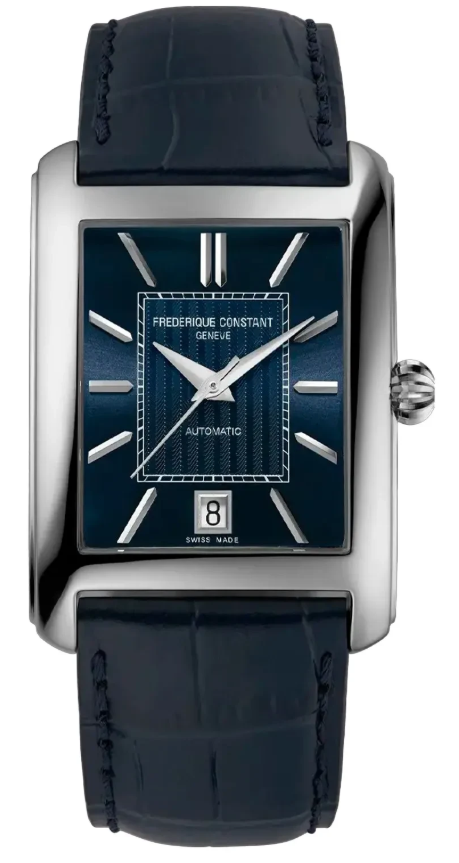
Business formal bietet mehr Spielraum als Black Tie, ohne die Anforderungen des Dresscodes aufzugeben. Eine rechteckige Uhr sollte in diesem Kontext immer noch sauber unter die Manschette passen, aber ein Stahlarmband wird akzeptabel – besonders zu einem grauen oder anthrazitfarbenen Anzug. Das Zifferblatt kann mehr Charakter zeigen: ein dunkelblaues Zifferblatt, eine strukturierte Oberfläche oder eine sichtbare Datumsanzeige funktionieren alle im Business formal, wo sie bei Black Tie nicht passen würden.
Die Gehäusebreite kann hier etwas größer sein. Ein rechteckiges Gehäuse von 28 mm bis 32 mm Breite sitzt bei den meisten Männerhandgelenken im Anzugkontext gut. Der automatische Sekundenzeiger mit fließender Bewegung ist ein sichtbarer Beweis mechanischer Handwerkskunst, der in einem professionellen Umfeld, in dem Details wahrgenommen werden, gut ankommt.
| Element | Richtige Wahl | Vermeiden |
|---|---|---|
| Armband | Dunkles Leder oder poliertes Stahlarmband | NATO, Gummi, Stoff |
| Zifferblatt | Weiß, Silber, Marineblau, Dunkel | Lebendige oder gesättigte Farben |
| Dicke | Unter 12 mm | Sportuhren-Proportionen |
| Gehäusebreite | 26-32 mm passen zu den meisten Handgelenken | Übergroße Gehäuse, die über das Handgelenk hinausragen |
Smart Casual

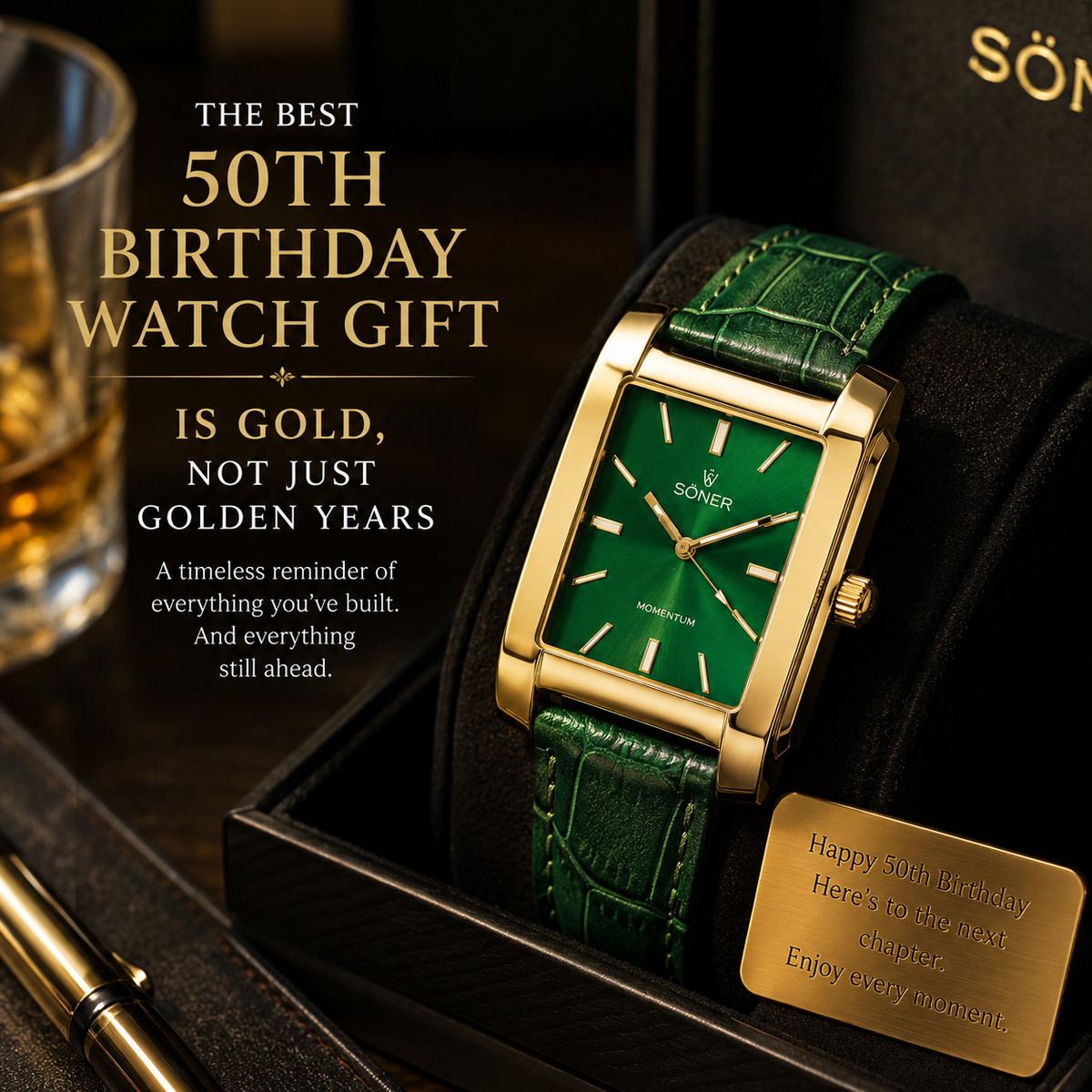
Smart casual ist der Bereich, in dem rechteckige Uhren die größte Stylingfreiheit haben. Der Dresscode ist entspannt genug, um ein farbiges Zifferblatt, eine gebürstete Stahloberfläche oder ein Stoffarmband zu erlauben, während er dennoch so formell ist, dass das Design der Uhr als bewusst und nicht zufällig wahrgenommen wird. Ein grünes Sunburst-Zifferblatt oder ein tiefblaues Zifferblatt, das für einen Anzug zu auffällig wäre, funktioniert hier perfekt.
Die Wahl des Armbands erweitert sich beim smart casual deutlich: braunes Leder, hellbraunes Leder, ein NATO-Armband in gedeckten Farben oder ein Stahlarmband funktionieren je nach Outfit. Die eine Regel, die aus formellen Kontexten übernommen wird, ist die Proportion – die Uhr sollte immer noch richtig zur Handgelenksgröße passen und nicht als reines Statement getragen werden.
Lässige und Wochenendkleidung

Die herkömmliche Meinung besagt, dass rechteckige Uhren nur für formelle Anlässe geeignet sind. Das ist falsch. Eine rechteckige Uhr mit einem größeren Gehäuse – 35 mm breit oder mehr – getragen an einem lässigen Armband in einem nicht-arbeitsbezogenen Kontext ist ein starkes Stil-Statement, gerade weil es unerwartet ist. Die Uhr wirkt bewusst und kenntnisreich statt konventionell.
Bei legerer Kleidung wird Wasserdichtigkeit zu einer praktischen Überlegung. Eine rechteckige Uhr mit mindestens 5 ATM kann bei jeder Freizeitaktivität bedenkenlos getragen werden. Die Zifferblattfarbe darf kräftig sein – ein leuchtend grünes oder tiefschwarzes Zifferblatt verleiht in einem legeren Kontext mehr Charakter als ein weißes Dress-Zifferblatt.
Armband Schnellübersicht
| Armbandtyp | Black Tie | Business Formal | Smart Casual | Leger |
|---|---|---|---|---|
| Schwarzes Leder | Ja | Ja | Ja | Ja |
| Dunkelbraunes Leder | Ja | Ja | Ja | Ja |
| Hellbraunes / cognacfarbenes Leder | Nein | Zu helleren Anzügen | Ja | Ja |
| Poliertes Stahlarmband | Nein | Ja | Ja | Ja |
| Gebürstetes Stahlarmband | Nein | Zu grauen Anzügen | Ja | Ja |
| NATO- / Stoffarmband | Nein | Nein | Nur gedämpfte Farben | Ja |
| Kautschukarmband | Nein | Nein | Nein | Ja |
Dies sind Richtlinien, keine festen Regeln. Ein selbstbewusster Träger kann jede davon brechen – aber die Richtlinien zeigen, was in den meisten Kontexten am besten funktioniert.
Die eine Regel, die nie ändert
Proportion ist die einzige absolute Regel beim Styling rechteckiger Uhren. Eine Uhr, die zu breit für das Handgelenk ist, auf dem sie sitzt, sieht unabhängig von Dresscode, Zifferblattfarbe oder Armbandwahl falsch aus. Messen Sie Ihren Handgelenksumfang und nutzen Sie die Größentabelle, um vor dem Kauf die richtige Gehäusebreite zu finden. Eine gut proportionierte Uhr mit jedem Armband und in jedem Kontext sieht immer besser aus als eine übergroße Uhr, die durch Styling ausgeglichen werden soll. Für vollständige Größenhinweise siehe den Leitfaden zur Größe rechteckiger Uhren.
Häufig gestellte Fragen
Kann man eine rechteckige Uhr auch leger tragen?
Ja. Die Vorstellung, dass rechteckige Uhren nur für formelle Anlässe geeignet sind, ist ein Irrtum. Eine rechteckige Uhr mit einem größeren Gehäuse – 35 mm breit oder mehr – an einem Leder- oder NATO-Armband wirkt in legeren Kontexten selbstbewusst und bewusst gewählt. Der Schlüssel ist die Proportion: Kombinieren Sie ein markantes rechteckiges Gehäuse mit legerer Kleidung, statt einer sehr schlanken Dresswatch, die mit schweren Freizeitstoffen unproportional wirkt.
Welches Armband passt am besten zu einer rechteckigen Uhr mit Anzug?
Dunkles Leder – schwarz oder dunkelbraun – ist die richtige Wahl für Business Formal und Black Tie. Ein poliertes Stahlarmband passt gut zu grauen oder anthrazitfarbenen Anzügen im Business Formal Kontext. Hellbraunes oder cognacfarbenes Leder passt zu helleren Anzügen im Smart Casual Bereich. Ein NATO- oder Stoffarmband ist für formelle oder Business Formal Dresscodes nicht geeignet.
Welche Zifferblattfarbe eignet sich am besten für formelle Kleidung?
Weiße, silberne oder champagnerfarbene Zifferblätter sind die richtige Wahl für Black Tie und Business Formal – sie wirken zurückhaltend und bedacht. Dunkelblaue oder schwarze Zifferblätter funktionieren bei Business Formal und Smart Casual. Kräftige Farben – Grün, Rot, leuchtendes Blau – sind am besten für Smart Casual und legere Anlässe geeignet, wo sie Charakter verleihen, ohne einen formellen Dresscode zu stören.
Wie dick sollte eine rechteckige Uhr für formelle Anlässe sein?
Unter 8 mm ist ideal für Black Tie und formelle Abendgarderobe – so liegt die Uhr komplett bündig unter der Hemdmanschette, ohne eine sichtbare Kante zu bilden. Unter 10 mm ist akzeptabel. Über 10 mm wirkt die Uhr eher sportlich oder leger, unabhängig vom Zifferblattdesign. Für die dünnsten verfügbaren Modelle siehe unseren Leitfaden zu schlanken rechteckigen Uhren unter 8mm.
Sollte eine rechteckige Uhr zu Ihrer Metallhardware passen?
In formellen Kontexten ja – die Abstimmung des Uhrenmetalltons mit Gürtel- schnalle, Manschettenknöpfen und Schuhbeschlägen sorgt für ein stimmiges Gesamtbild. In smart-casual und legeren Kontexten ist die Abstimmung zwar empfehlenswert, aber weniger entscheidend. Wichtiger ist immer die Proportion – eine richtig dimensionierte Uhr wirkt durchdacht, egal ob sie perfekt zu anderer Hardware passt oder nicht.
Welche Größe sollte eine rechteckige Uhr haben?
Die Gehäusebreite sollte proportional zu Ihrem Handgelenk sein. Als Ausgangspunkt: Handgelenke unter 17 cm passen zu Gehäusen mit 24-30 mm Breite, Handgelenke zwischen 17-19 cm zu 28-34 mm, und Handgelenke über 19 cm können 32-38 mm tragen. Das Lug-to-Lug-Maß ist genauso wichtig wie die Breite – es sollte die Handgelenksränder nicht deutlich überragen. Für den vollständigen Rahmen siehe unseren Größenleitfaden für rechteckige Uhren.
Verwandte Lektüre
- Der definitive Leitfaden für rechteckige Uhren – die vollständige Geschichte und Designkontext der rechteckigen Uhr
- Größenleitfaden für rechteckige Uhren – wie Sie die richtige Gehäusebreite und Lug-to-Lug-Maß für Ihr Handgelenk finden
- Herrenkleideruhren: Der vollständige Leitfaden – die besten rechteckigen Uhren für formelle und geschäftliche Anlässe
- Rechteckige Uhren für Frauen – Styling-Kontext für rechteckige Damenuhren bei verschiedenen Dresscodes
- Schlanke rechteckige Uhren unter 8mm – die richtige Dicke für Black Tie und formelle Abendgarderobe
- Goldene rechteckige Uhren – wann Goldton passend ist und wann Stahl besser funktioniert
SÖNER rectangular watches
Free worldwide shipping · 10-year warranty · 30-day returns
Our pick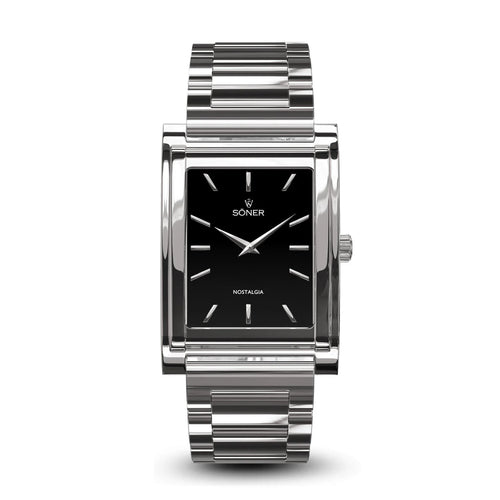 Nostalgia Stockholm11 Jahre Batterie€525,95 EUR
View watch
Nostalgia Stockholm11 Jahre Batterie€525,95 EUR
View watch
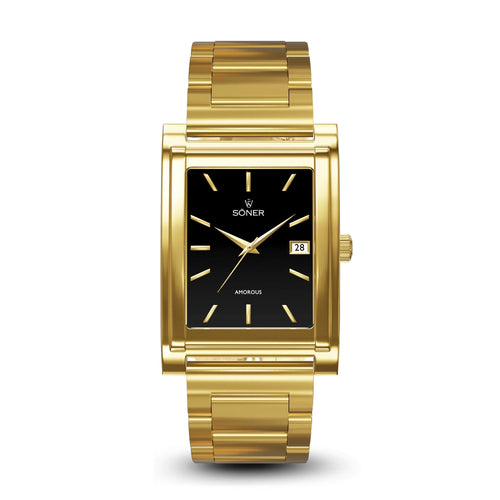 Amorous MilanoAutomatik€711,95 EUR
View watch
Amorous MilanoAutomatik€711,95 EUR
View watch
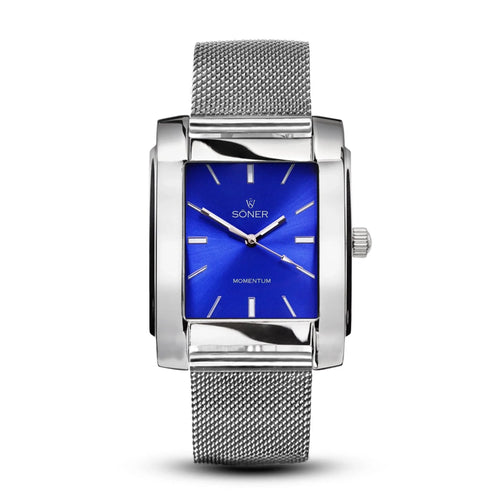 Momentum BacardiAutomatik€530,95 EUR
View watch
Momentum BacardiAutomatik€530,95 EUR
View watch
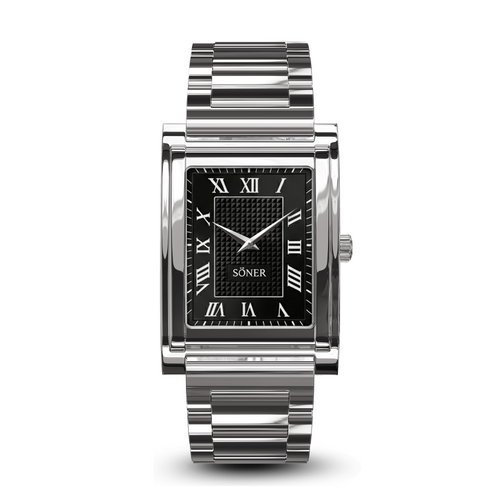 Nostalgia Caesar11 Jahre Batterie€693,95 EUR
View watch
Nostalgia Caesar11 Jahre Batterie€693,95 EUR
View watch
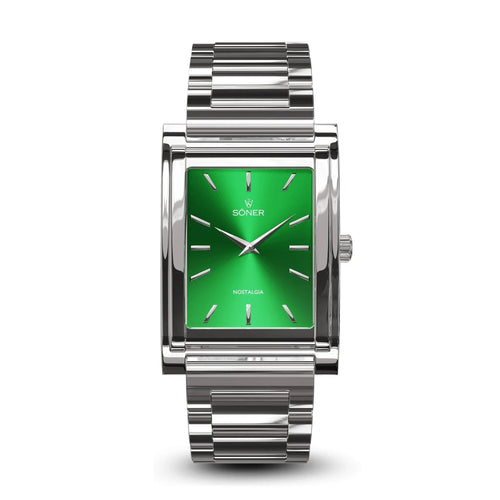 Nostalgia New York11 Jahre Batterie€525,95 EUR
View watch
Nostalgia New York11 Jahre Batterie€525,95 EUR
View watch
View all watches
 Nostalgia Stockholm11 Jahre Batterie€525,95 EUR
View watch
Nostalgia Stockholm11 Jahre Batterie€525,95 EUR
View watch
 Amorous MilanoAutomatik€711,95 EUR
View watch
Amorous MilanoAutomatik€711,95 EUR
View watch
 Momentum BacardiAutomatik€530,95 EUR
View watch
Momentum BacardiAutomatik€530,95 EUR
View watch
 Nostalgia Caesar11 Jahre Batterie€693,95 EUR
View watch
Nostalgia Caesar11 Jahre Batterie€693,95 EUR
View watch
 Nostalgia New York11 Jahre Batterie€525,95 EUR
View watch
Nostalgia New York11 Jahre Batterie€525,95 EUR
View watch