




 Published on
Key Takeaways
Table of Contents
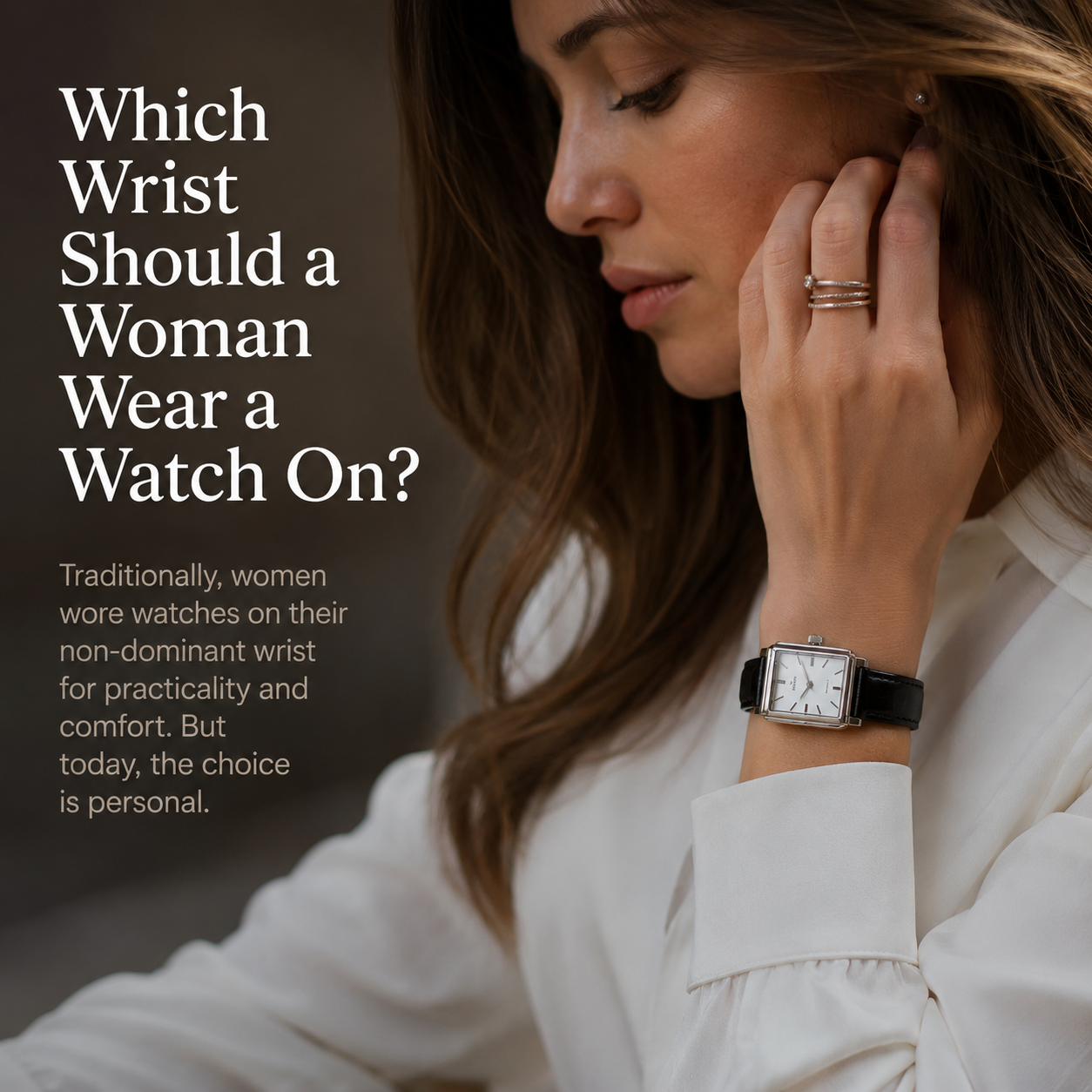
The short answer: most women wear a watch on the left wrist, for the same practical reason most people do - the majority are right-handed, so the watch sits on the non-dominant hand and stays out of the way. But it's a convention, not a rule. The right wrist is an equally correct, often more deliberate choice, and for many women it balances rings and bracelets worn on the other hand. The best wrist is the one that feels comfortable through your day and looks considered with the rest of what you're wearing.
Most women strap a watch to the left wrist without ever really choosing to — it's simply the default. The convention is practical in origin: most people are right-handed, the crown sits at three o'clock, and the watch is easier to wind and set when the dominant hand is free. But the default isn't automatically the right answer for you, and wrist choice for women carries an extra layer the standard advice skips: how the watch sits alongside rings, bracelets, and the proportions of a smaller wrist. This guide covers the practical and stylistic side of the decision, how comfort should drive it, and how to make the watch look intentional rather than incidental.

Left or Right: The Practical Trade-Off
The left wrist is the natural home for a right-handed woman. The crown is easy to reach, setting the watch is effortless, and it reads as classic. Its only real downsides are that it can feel like the obvious choice, and that it shares a hand with most women's ring-and-bracelet stacking, which can crowd the wrist.
The right wrist is the more distinctive option, and for women it often solves a real problem rather than just making a statement. If you wear rings or a bracelet stack on the left hand, moving the watch to the right restores visual balance and gives each piece room to breathe. The trade-off is physical: a standard crown can press the back of the hand, and a right-handed woman will brush the case more often during everyday tasks. Neither wrist is correct in the abstract — the right one depends on your hand dominance, your jewellery, and your day.
How to Choose: Start With Your Day
The best wrist is the one that creates the least friction across your longest daily activity block. Before deciding, run your actual day through a few questions. When you write, does the case catch the page edge or glide above it? Do fitted sleeves and blazer cuffs snag the watch or slide over it cleanly? On a commute, at the gym, or carrying a bag, does the watch rotate and slip or stay planted? And do your rings and bracelets look crowded sharing a wrist with the watch, or balanced?

If one wrist answers those better than the other, that's your wrist. If neither is clearly better, default to the left and adjust from there — and remember that for many women the jewellery question alone is enough to tip the decision to the right.
Comfort and Proportion on a Smaller Wrist
Comfort is the sum of small details — case size, thickness, lug curvature, and how the strap sits against the skin — and on a slimmer wrist those details matter more, because an oversized or thick case shows immediately. A few quick checks settle it. Rest your forearm on a desk and type naturally; if the case taps the surface or the strap pinches, try the other wrist or take the strap in by half a link. Slide on a fitted sleeve; a slim case with downward-curving lugs and a supple strap nests cleanly under a cuff, while a tall case snags. Hold a bag handle or steering wheel; if the case digs in or the bracelet slides and clacks, adjust the fit or switch wrists for that task.
One fit point outweighs the wrist choice itself: position the watch a finger-width above the wrist bone. That small shift removes pressure and keeps the dial readable at a glance. For proportion specifically — case width, height, and lug-to-lug measurements that suit a smaller wrist — our rectangular watch size guide covers the numbers, and there's a deeper framework on fit in our guide to how tight a watch should be.
Wearing a Watch Alongside Rings and Bracelets
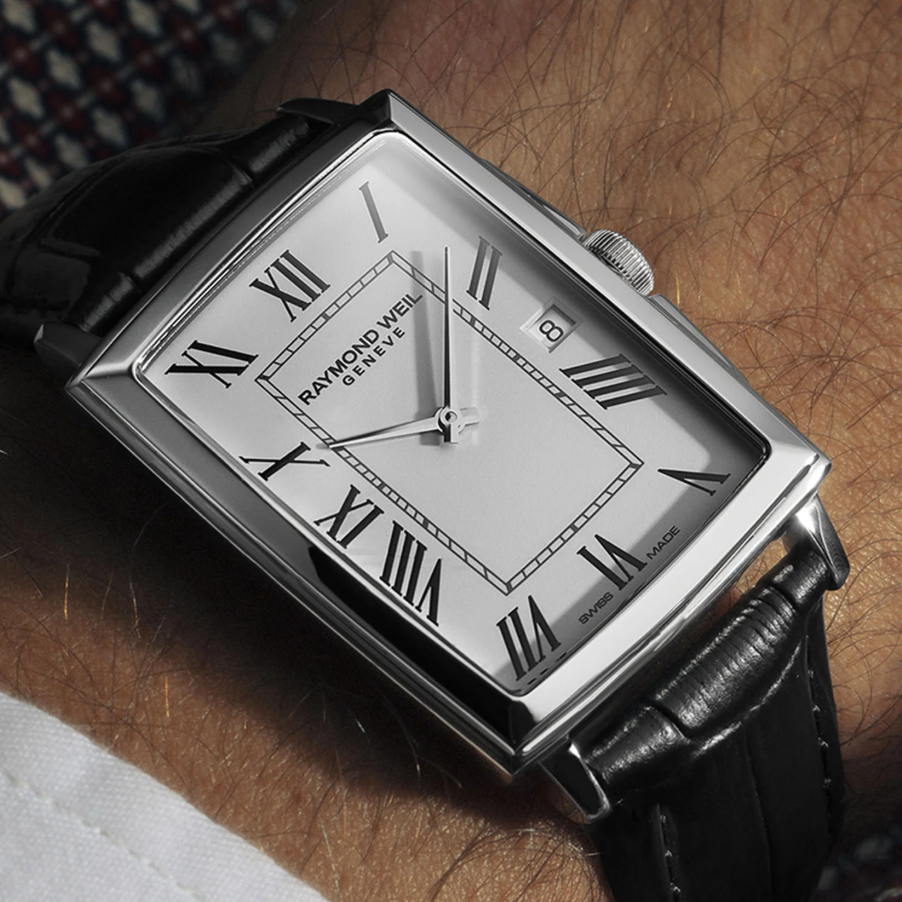
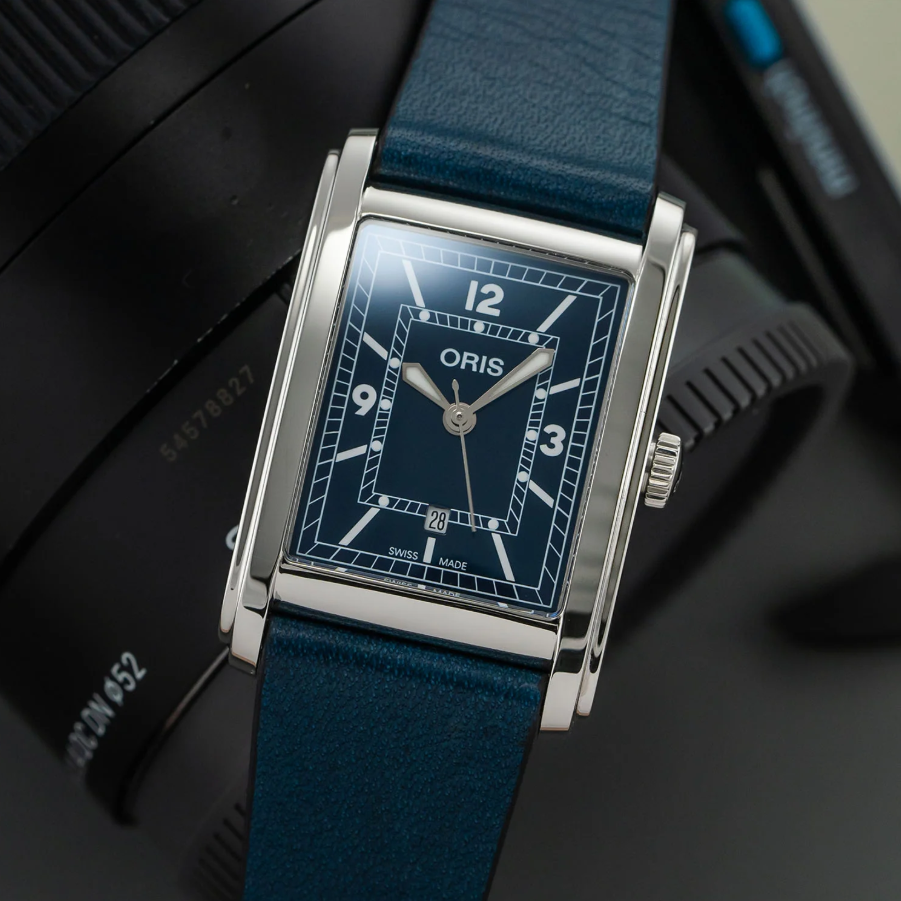
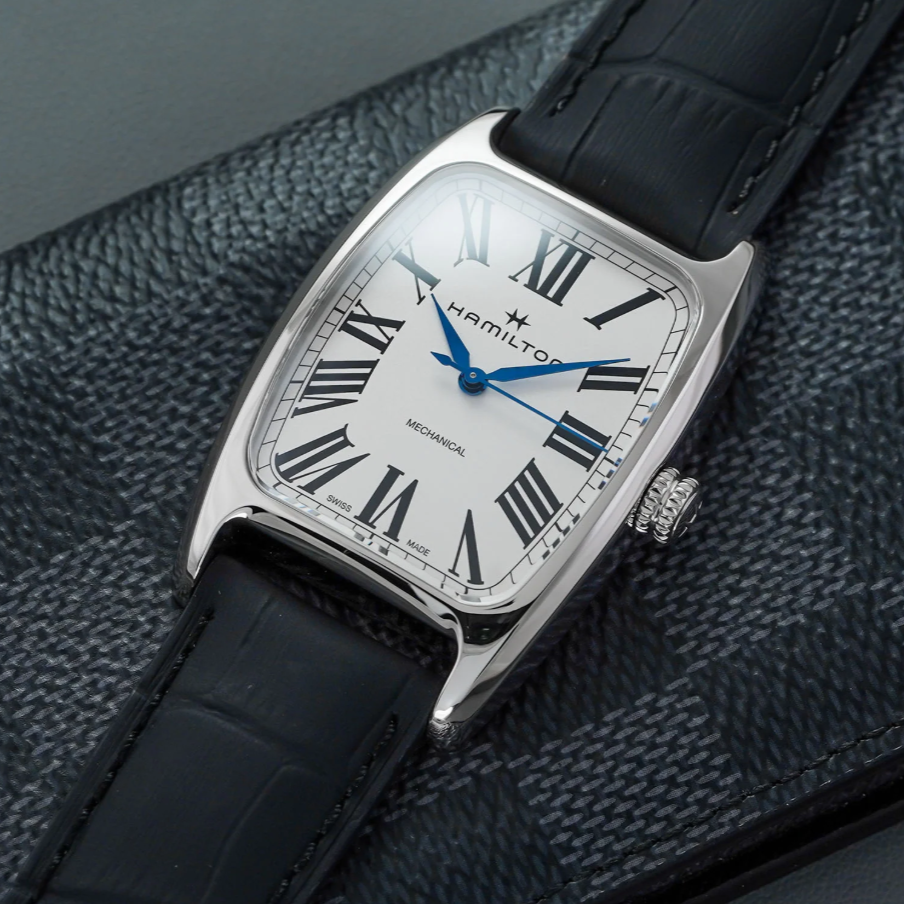
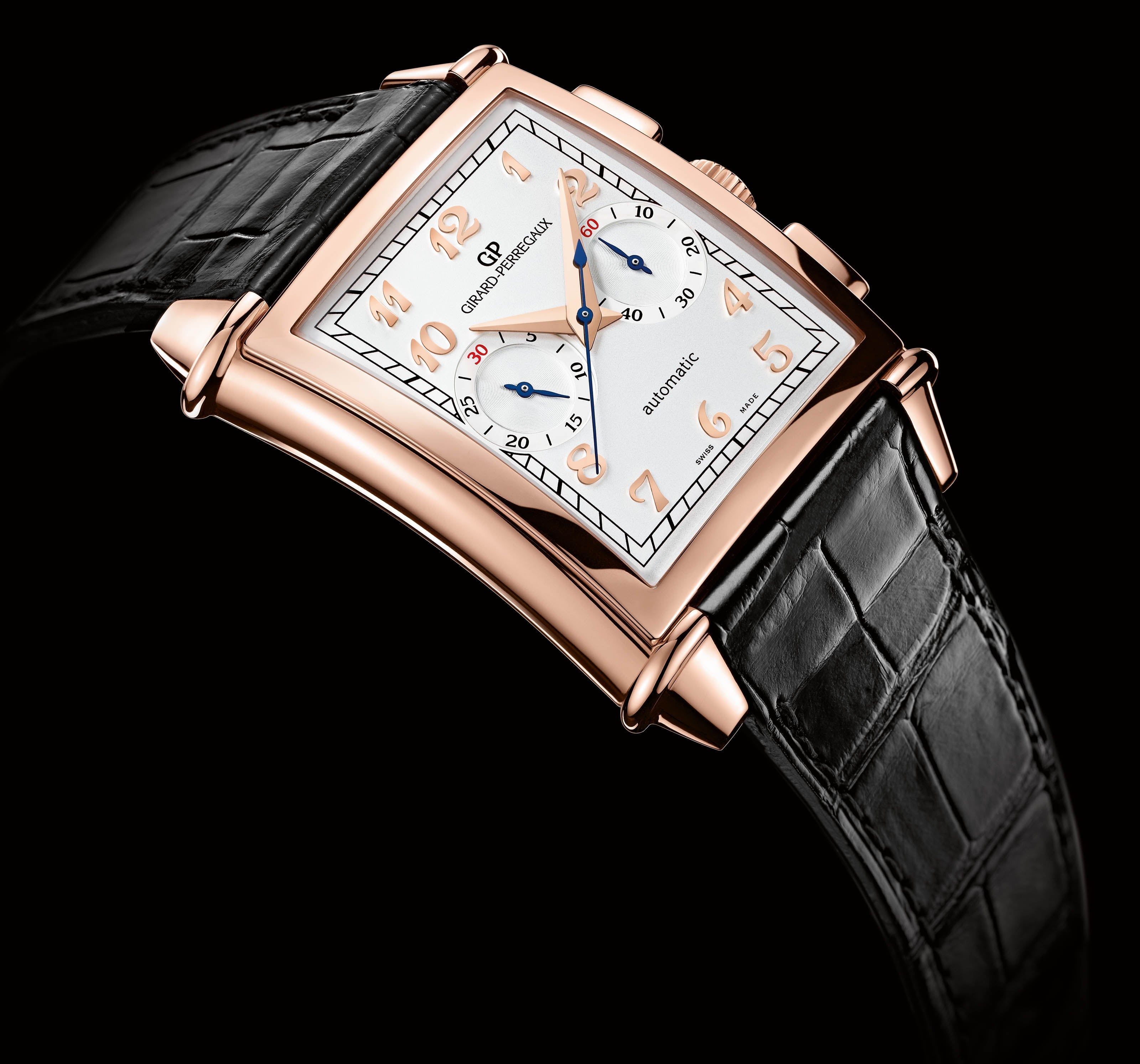
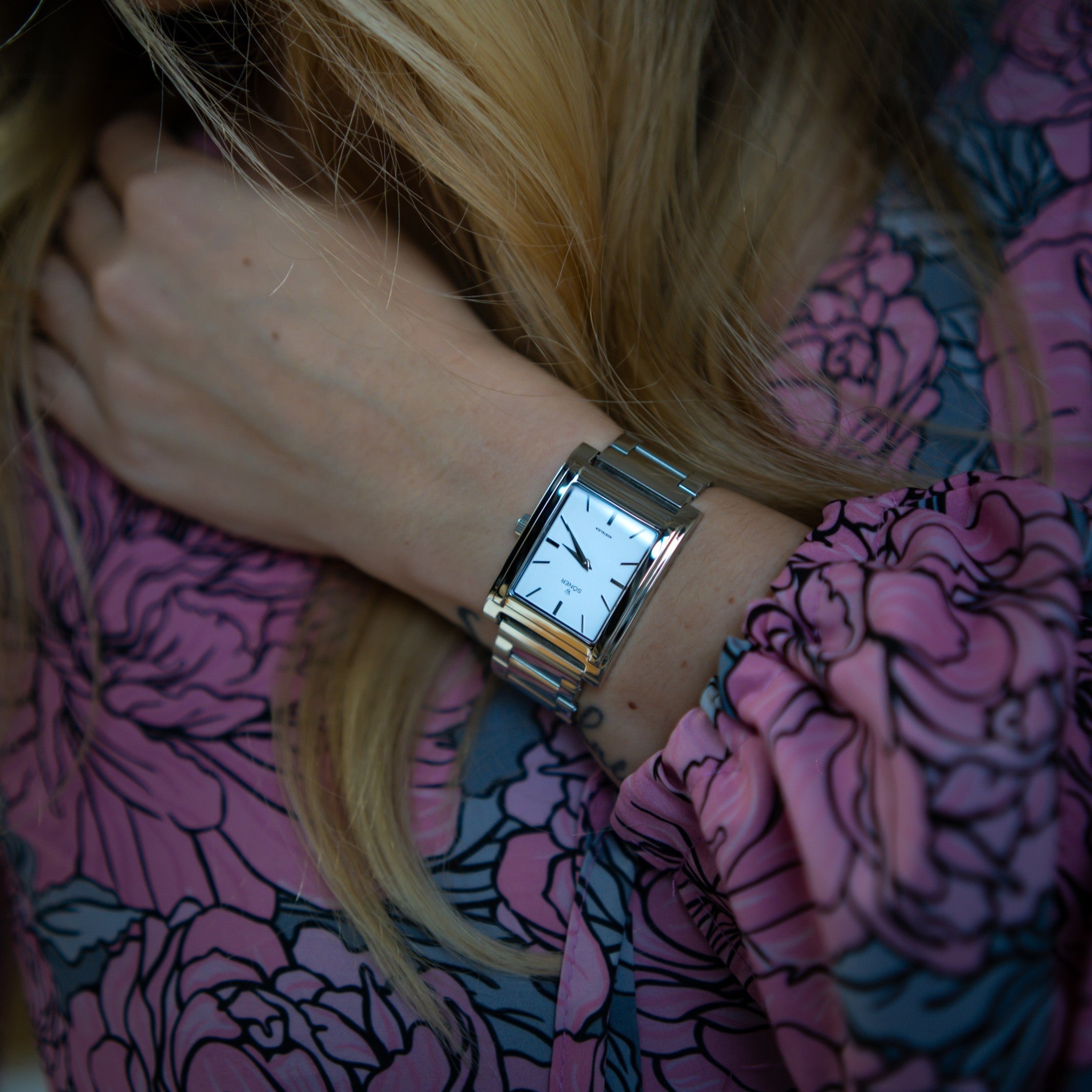
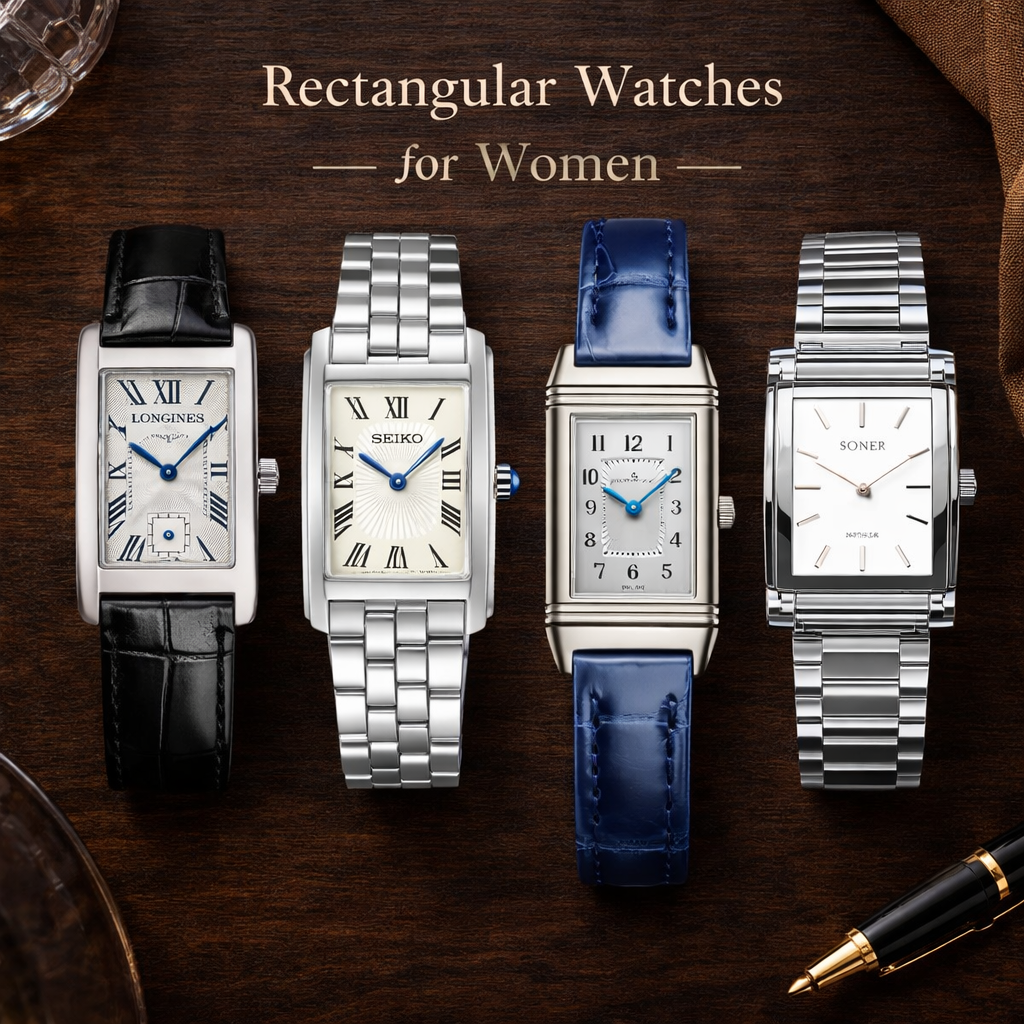
This is where wrist choice becomes genuinely a woman's decision rather than a neutral one. If you stack rings or bracelets on one hand, the watch usually looks best on the opposite wrist, so neither side feels overloaded. When you do wear a watch and bracelet together, let one lead — a slim watch with a single fine bracelet reads as considered, where a watch competing with a full stack reads as cluttered. Mirror your metals where you can, keeping gold with gold and steel with steel, or contrast them deliberately rather than by accident. A rectangular case helps here too: its clean lines sit quietly next to jewellery instead of fighting it, which is part of why the shape works so well for layered looks.
A Rectangular Watch Made for a Woman's Wrist
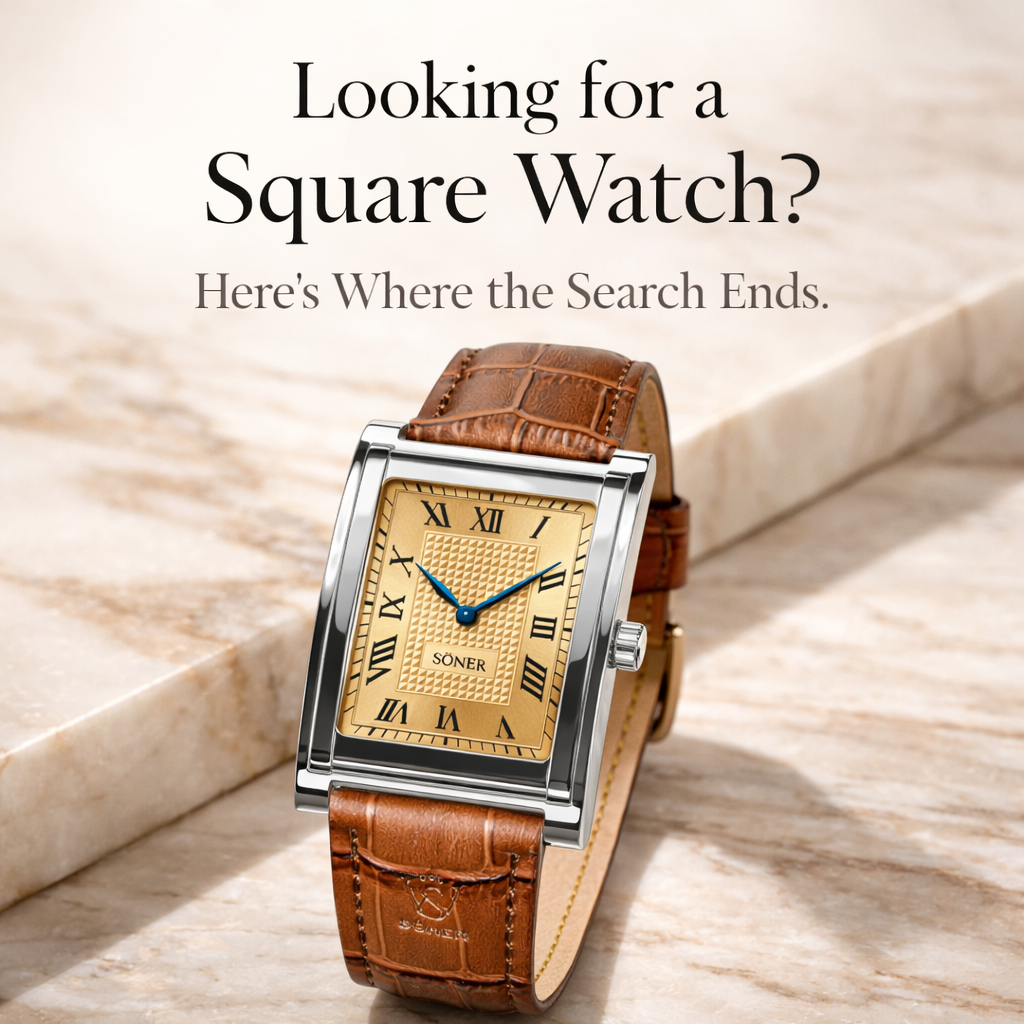
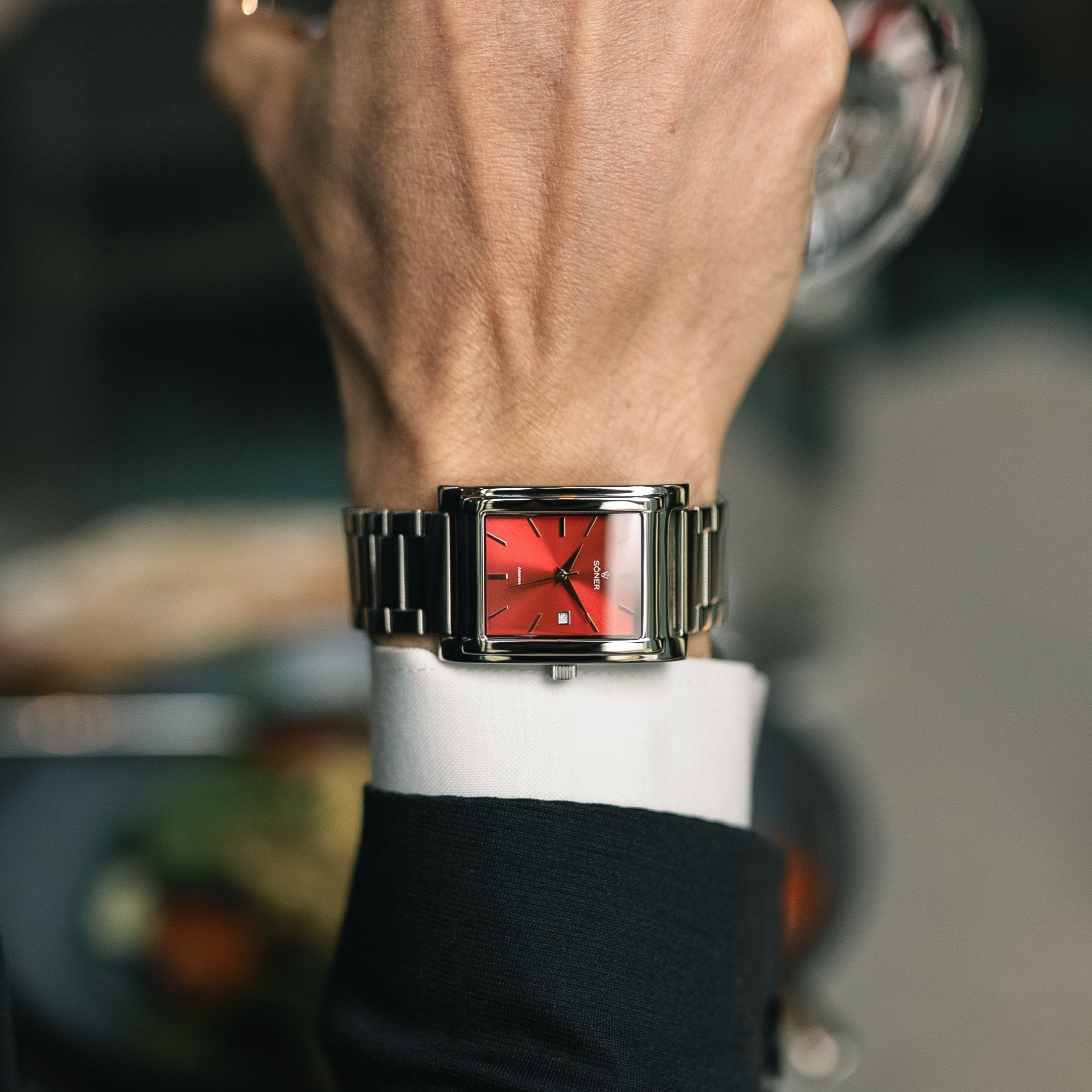
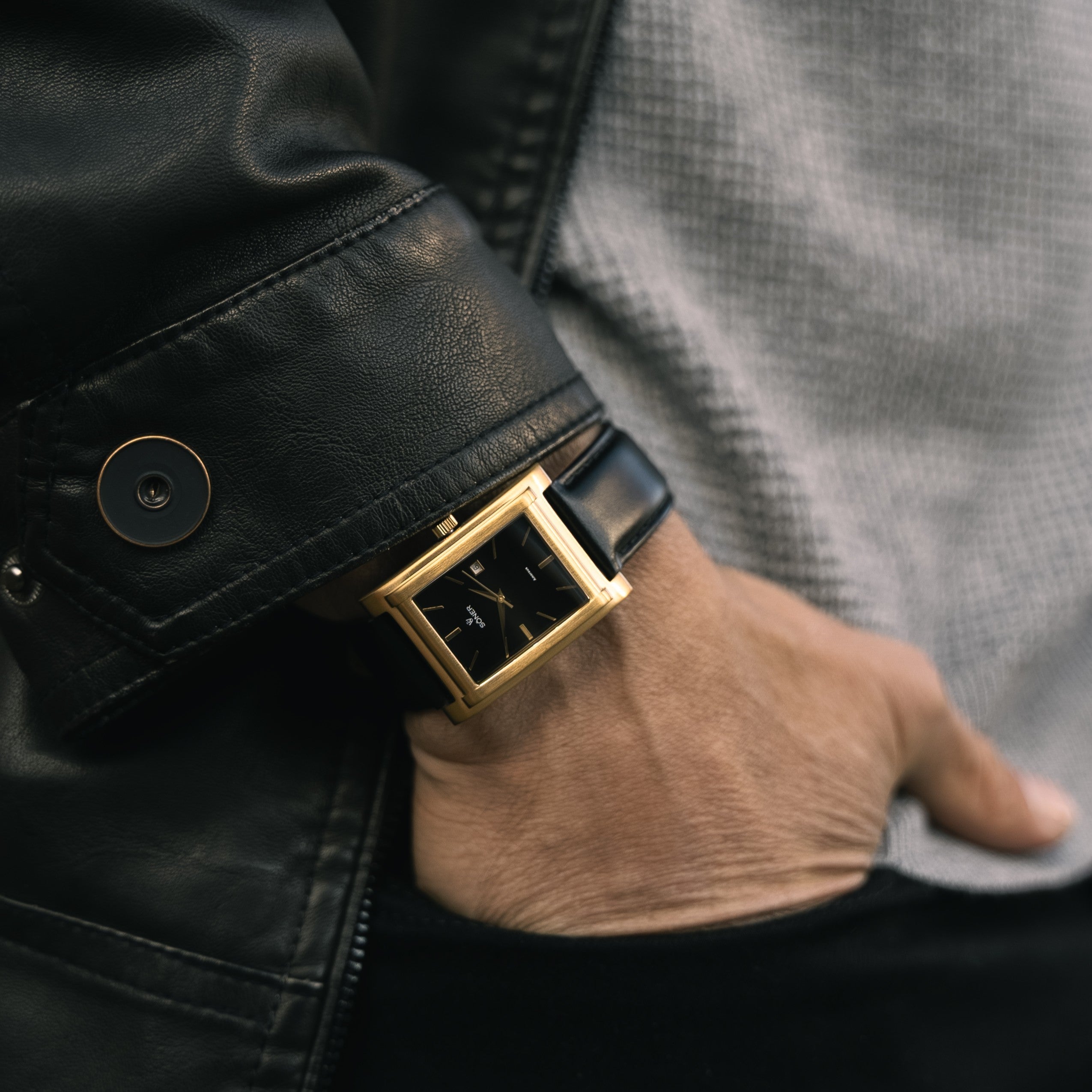
Söner's rectangular cases follow the line of the arm rather than sitting across it — slim, elegant, and proportioned to sit beautifully alongside the rest of what you wear.
Shop women's rectangular watchesDoes the Right Wrist Look Wrong on a Woman?
Not at all — wrist choice is a style preference, not a rule, and on a woman the right wrist often looks the most intentional precisely because it breaks from the default. When your dominant hand carries a gesture in a meeting or across a table, a right-wrist watch frames the movement naturally and reads as poised. It also balances jewellery worn on the left, and it shows a polished case to better effect in photographs and on video calls than the left wrist does. If anything, a watch worn deliberately on the right tends to look more considered, not less.

If You're Left-Handed
Left-handed women often wear their watch on the right wrist, for the same practical reason right-handed women use the left — it keeps the dominant hand free for writing and everyday use. The one thing to know is crown placement: a standard three o'clock crown is designed for left-wrist wear, so on the right wrist it can feel slightly awkward to adjust and may press the back of the hand. Rotating the watch a few degrees inward solves it in most cases, without changing models. If the bracelet tends to rotate and tip the dial out of line under a fitted sleeve, a well-sized bracelet or a secure strap fixes that — our guide on how to size a watch bracelet walks through it.
Wrist Choice Through the Day
Placement adds up across a day in ways that are easy to underestimate. For writing and desk work, the dominant wrist tends to collide with the page or create small tension as you hover to avoid it, so the non-dominant wrist usually flows better. For cooking, carrying, and other repetitive tasks, the non-dominant wrist takes fewer knocks and stays clear of water and heat. And in professional settings, wearing on the non-dominant wrist lets you glance at the time discreetly while your other hand gestures freely; a slim, low-profile watch there reads as composed, which is exactly the impression you want in formal or conservative rooms.
The Quiet Signal of Wrist Choice
There's no hard research here, but wrist choice does carry a subtle signal people pick up on. The left wrist reads as practical and tradition-aligned. The right wrist reads as expressive and independently minded, and because most people default to the left, a right-wrist watch simply looks chosen — which often lands as confidence. Neither is better than the other; they're just two different, equally legible ways of wearing the same watch.
Which Wrist Is Better for Health Tracking?
If you wear a smartwatch or hybrid, fit and stability matter more than the left-or-right convention. Optical heart-rate and SpO2 sensors need steady skin contact, and the non-dominant wrist tends to move less during activity, which can give marginally steadier readings. Whichever wrist you choose, prioritise a strap that keeps the case planted rather than letting it rotate as you move.
Looking for the men's side of this question? See our companion guide on which wrist a man should wear a watch on.
Frequently Asked Questions
Which wrist should a woman wear a watch on?
Most women wear a watch on the left wrist, because most people are right-handed and the non-dominant wrist is more practical day to day. But there's no rule — the right wrist is equally correct, and many women choose it to balance rings and bracelets worn on the left hand. The best wrist is the one that's comfortable through your day and looks considered with your jewellery and outfit.
Is it OK for a woman to wear a watch on her right wrist?
Yes, and it often looks the most intentional. The right wrist signals a deliberate choice rather than a default, balances jewellery worn on the left hand, and shows the watch to better effect in photos and on video calls. Left-handed women also tend to prefer the right wrist for comfort.
Which wrist should a woman wear a watch on with bracelets?
If you stack rings or bracelets on one hand, the watch usually looks best on the opposite wrist so neither side feels crowded. When you do wear a watch and bracelet on the same wrist, let one lead — a slim watch with a single fine bracelet reads as elegant, while a watch competing with a full stack looks cluttered. Mirror your metals or contrast them deliberately.
What size watch looks best on a woman's wrist?
One proportioned to your wrist rather than oversized. Case width should sit close to your wrist width without overhanging the edges, and a slim case with downward-curving lugs sits closer to the bone and looks more tailored than a thick case. Rectangular watches in particular follow the natural line of the arm rather than sitting across it, which reads as elegant on a smaller wrist.
How tight should a woman's watch fit?
It should pass the one-finger test — you can slide one finger under the strap, but not two. Too loose and the case rotates and slips; too tight and it restricts blood flow and leaves marks. Position it a finger-width above the wrist bone for the best mix of comfort and legibility.
Should left-handed women wear their watch on a different wrist?
Left-handed women often wear their watch on the right wrist to keep the dominant hand free, the mirror of what right-handed women do. The main consideration is crown placement — a standard three o'clock crown is designed for left-wrist wear, so it can feel slightly awkward to adjust on the right. Rotating the watch inward a few degrees solves this in most cases.