


 Published on
Key Takeaways
Table of Contents
The earliest wrist-worn timepieces evolved from pocket watches, appearing as custom pieces well before mass production. In the 1810s to 1860s, watchmakers adapted small movements to bracelets and straps, creating elegant designs worn mainly by women. The concept of time on the wrist already existed, but was not yet a universal habit. In these early decades, the priority was aesthetic refinement rather than rugged utility.
Which house delivered the first wristwatch is frequently debated. Some historians reference early 19th century bracelet watches worn by European royalty. Others point to later, better-documented commissions by prominent Swiss houses. Because records are incomplete and terminology varies - bracelet watch, wristlet, bangle watch - it is more accurate to treat the wristwatch as an evolving format that appeared in several places and forms, rather than a single invention tied to one date and one name.
Wristwatch History: Complete Timeline
| Period | Development |
|---|---|
| 1810-1812 | Abraham-Louis Breguet commissioned to create a bracelet watch for Caroline Murat, Queen of Naples - the earliest well-documented wristwatch commission |
| 1868 | Patek Philippe produces a documented bracelet watch for Countess Koscowicz of Hungary - one of the earliest surviving examples from a major house |
| 1880s | Girard-Perregaux supplies officer wristwatches to the German Imperial Navy - early adoption for military use |
| 1904 | Louis Cartier creates the Santos for aviator Alberto Santos-Dumont - the first purpose-built men's wristwatch designed for everyday use |
| 1906-1917 | Cartier expands shaped watch vocabulary: Tonneau (1906), Tortue (1912), Tank (1917) - defining the modern dress watch |
| 1914-1918 | World War I accelerates mass adoption - soldiers strap watches to wrists for hands-free time checks in the trenches, normalising the format for men |
| 1920s | Wristwatch decisively eclipses the pocket watch for daily wear. Rolex Oyster (1926) introduces the first waterproof case. John Harwood patents the self-winding mechanism. |
| 1930s | Antimagnetic and shock-protection advances. Tissot Antimagnetique (1930), Incabloc shock system (1934) improve reliability for everyday wear |
| 1950s | Dive watch standards established: Blancpain Fifty Fathoms and Rolex Submariner (both 1953) define rotating bezel, luminous dials, and rated depth |
| 1969 | Seiko Astron introduces the first commercial quartz wristwatch - transforming accuracy and production economics across the industry |
| 1970s onward | Digital displays, LED and LCD technology. Hamilton Pulsar (1972) leads the digital era. Smartwatches eventually integrate sensors, notifications, and apps. |
Who Invented the Wristwatch?
There is no single inventor. A string of watchmakers experimented with form and function across the 19th century. Some attributions reference early bracelet watches linked to European royalty. Others point to experimental pieces by Swiss houses adapting miniature movements to new cases. Because several makers were active simultaneously and many pieces were one-off commissions, no solitary figure can claim exclusive credit.
The most commonly cited pioneers:
Abraham-Louis Breguet is often credited with the first documented wristwatch commission - a bracelet watch made for Caroline Murat, Queen of Naples, in 1810-1812. The original piece is lost, but Breguet's archives record the order.
Patek Philippe produced one of the earliest surviving documented wristwatches in 1868, made for Countess Koscowicz of Hungary. The piece still exists and is held in the Patek Philippe Museum in Geneva.
Girard-Perregaux is associated with 1880s officer wristwatches supplied to the German Imperial Navy - an early example of military-driven adoption.
Louis Cartier and Alberto Santos-Dumont (1904) advanced the purpose-built wristwatch for men - a clear rectangular case, legible dial, and leather strap designed for hands-free use in flight. Cartier commercialised the Santos model in 1911.
One reason the question persists is that the definition of "wristwatch" shifted over time. A gem-set bracelet concealing a small dial clearly counts today, yet 19th-century catalogues sometimes treated those items as jewelry rather than watches. Meanwhile, converted pocket watches with soldered lugs were worn on the wrist even if their movements remained pocket-born. The invention is best seen as a convergence rather than a single moment.

Which Company Made the First Wristwatch?
Many standard histories credit Breguet with the first wristwatch: the bracelet watch commissioned in 1810 for Caroline Murat, Queen of Naples. A second pillar is Patek Philippe, which produced one of the earliest documented and surviving wristwatches in 1868 for Countess Koscowicz of Hungary.
Multiple houses were experimenting around the same time, so this is better understood as a parallel invention than a single first. These high-end commissions legitimised the wrist-worn format at the haute horlogerie level, proving its feasibility and desirability long before factories standardised it.
Today, Breguet - now part of the Swatch Group - actively trades on that heritage through the Reine de Naples collection, a modern reference to the Murat commission. Patek Philippe remains an independent Geneva manufacture renowned for high-complication wristwatches. Together, their early work anchors much of the prestige narrative of the modern wristwatch.
Did Cartier Invent the Wristwatch?
No. Purpose-built wristwatches existed decades before Cartier's involvement - Breguet's piece for Caroline Murat in 1810-1812, Patek Philippe's bracelet watch in 1868, and Girard-Perregaux's officer wristwatches in the 1880s all predate Cartier's contribution.
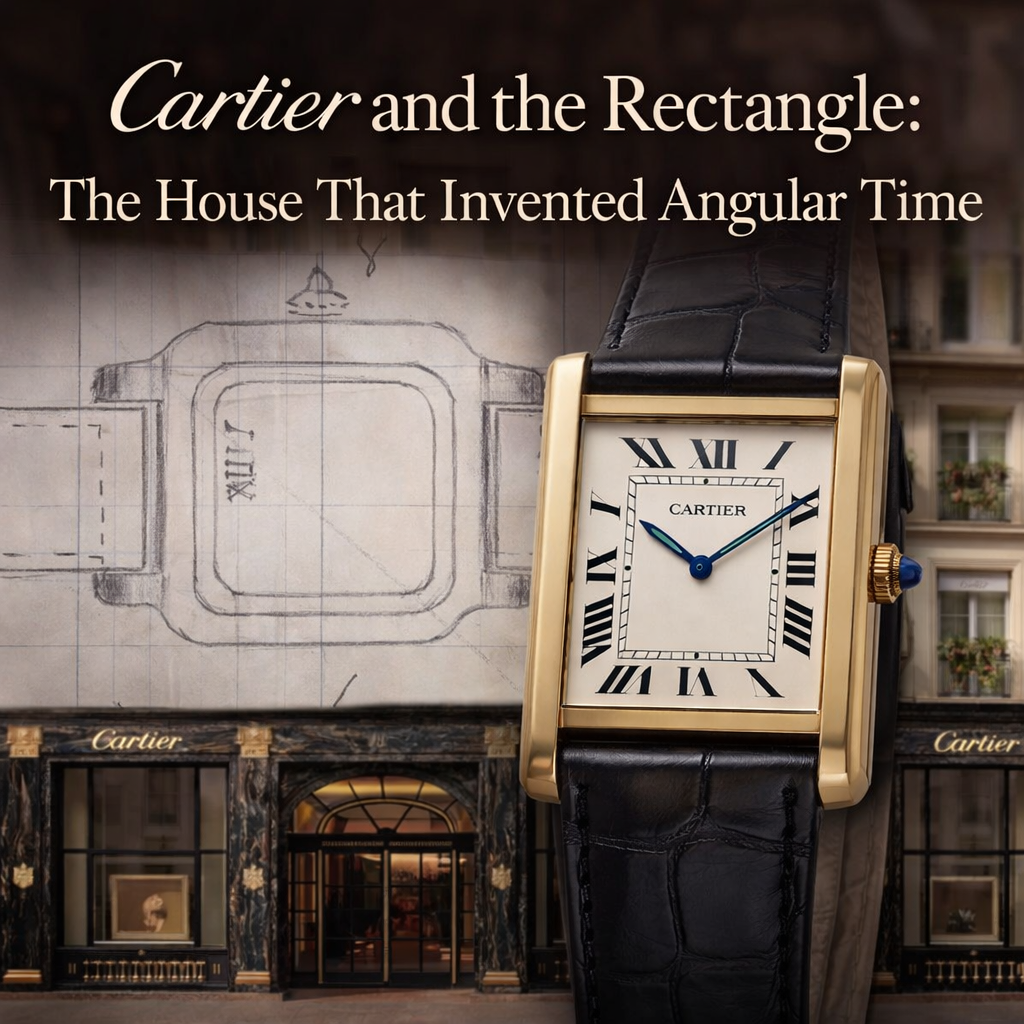
Cartier's contribution was different: defining the modern elegant wristwatch and normalising it for men. In 1904, Louis Cartier created the Santos for aviator Alberto Santos-Dumont so he could read the time in flight without reaching for a pocket watch. Cartier then expanded the design vocabulary with distinctively shaped cases - the Tonneau (1906), the Tortue (1912), and the Tank (1917) - establishing the rectangular watch as a design category in its own right.
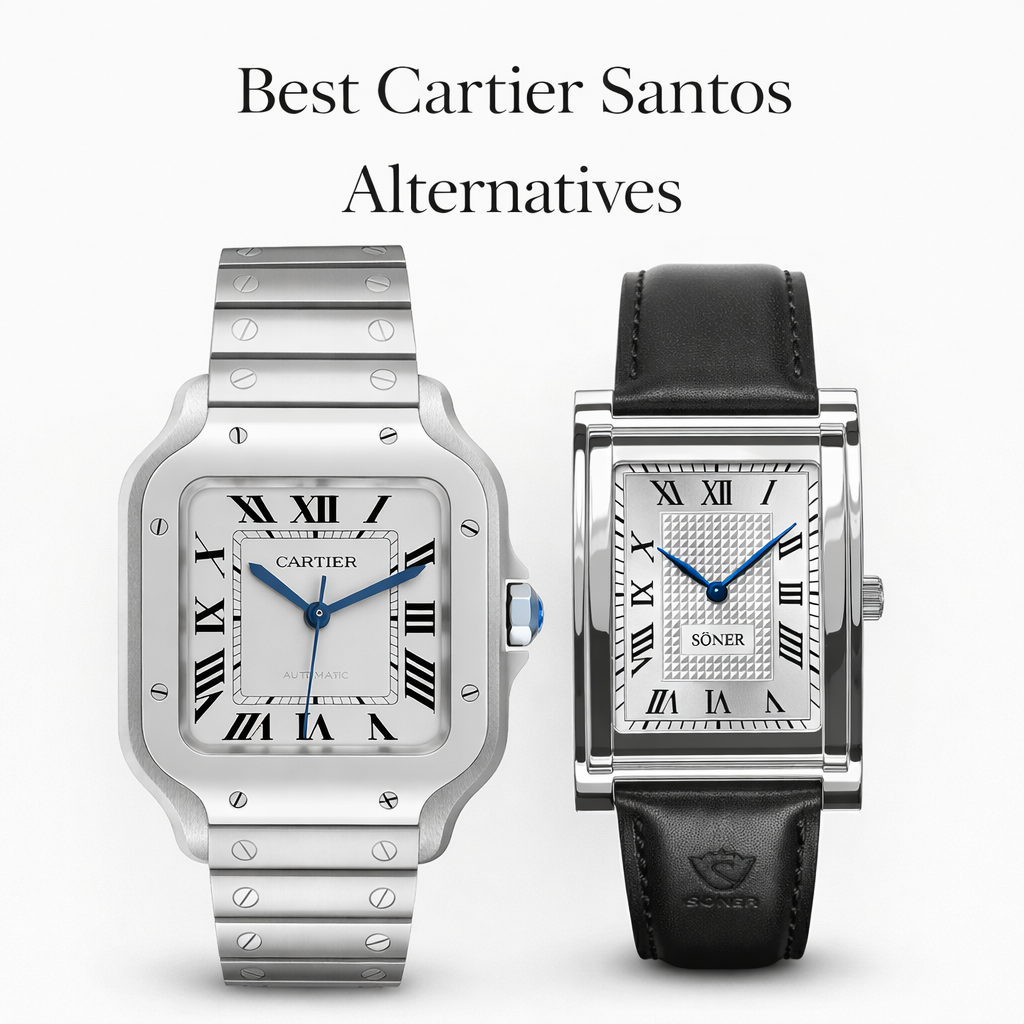
The Cartier Tank remains the most influential rectangular watch design ever made and the reference against which all rectangular dress watches are measured. For the best alternatives at every price point, see our guide to Cartier Tank alternatives and Cartier Santos alternatives.
When Did Wristwatches Become Popular?
Mainstream popularity surged in the 1910s and 1920s. During World War I, soldiers found pocket watches impractical in the field - wristwatches enabled quick, hands-free time checks amid mud, gloves, and darkness. Early aviation, exemplified by the Cartier Santos made for Alberto Santos-Dumont in 1904, also helped establish the format as a tool for modern men.
Post-war, returning soldiers normalised wristwatches in civilian life. By the late 1920s the wristwatch had largely supplanted the pocket watch for daily use. Manufacturers responded with luminous numerals, protective bezels, stronger straps, and eventually waterproof cases.
Beyond practicality, fashion momentum mattered. As lifestyles grew more mobile, a compact, stylish wristwatch suited the pace of modernity. Department stores promoted them as ideal gifts, magazines showed celebrities wearing them, and improvements like shock-protection and water resistance helped them endure everyday knocks.
Who Made Wristwatches Popular?
| Who | Contribution |
|---|---|
| Military forces, WWI | Trench warfare made wristwatches standard for men - hands-free time checks in the field normalised the format across an entire generation |
| Aviation pioneers | Santos-Dumont proved wristwatches essential for pilots. The Cartier Santos became the first purpose-built aviator's watch. |
| Patek Philippe and Cartier | Made bracelet watches desirable among European elites, establishing the format as luxury rather than novelty |
| Brand-led tool icons | Rolex Oyster, Omega Speedmaster (NASA), and the Pan Am GMT-Master turned functional instruments into cultural icons |
| Cinema and celebrity | Bond's Submariner, McQueen's Monaco, Newman's Daytona, Elvis's Ventura, and Diana's Tank each drove significant demand spikes |
Why Were Wristwatches Invented?
Wristwatches emerged to solve a simple practical problem: people needed instant, hands-free access to the time in situations where reaching for a pocket watch was slow, awkward, or unsafe.
On battlefields, in cockpits, on ship bridges, in operating theatres, in rail yards and engineering sites, users needed instant, legible timing for synchronisation, navigation checks, medical procedures, and scheduling. A wrist glance delivers faster and safer time checks than a pocket watch, keeps time constantly visible for coordination, and stays secure during movement.
Mass wartime use, changing clothing conventions, and advances in movements, shock-protection, sealed cases, and screw-down crowns made wristwatches tough, accurate, and fashionable - turning them from niche tools into everyday essentials.
Significant Milestones in Wristwatch Features
Waterproofing (1926): The Rolex Oyster introduced a screw-down crown and hermetic case, proving daily water resistance was achievable. Better sealing drove advances in crystals, gaskets, and casebacks across the industry.
Self-winding (1923-1928): John Harwood's 1923 patent led to the first serial automatic wristwatch in 1928. Bumper systems evolved into full rotors, reducing mainspring wear and enabling sealed cases.
Antimagnetic and shock-protection (1930s): Tissot Antimagnetique (1930) and the Incabloc shock system (1934) increased reliability as everyday knocks from modern life and sport grew.
Chronographs and alarms (mid 20th century): Wrist chronographs matured for pilots and racers. The Vulcain Cricket (1947) brought the first widely adopted wrist alarm; Jaeger-LeCoultre's Memovox followed in 1950.
Dive watches (1953): The Blancpain Fifty Fathoms and Rolex Submariner, both launched in 1953, set the standards for rotating bezels, luminous dials, and depth ratings that define the sport watch category today.
Quartz revolution (1969): The Seiko Astron delivered previously unmatched accuracy and low maintenance, transforming both production economics and public expectations of what a watch should cost and do.
Digital and smart eras (1970s to present): Hamilton Pulsar (1972) pioneered LED displays. Modern smartwatches integrate health sensors, notifications, and applications, expanding the wrist from timekeeper to wearable computer.
What Did the Earliest Wristwatches Look Like?
Early wristwatches were miniature pocket watches adapted for the wrist. Cases were small, round or oval, with soldered wire lugs or integrated bracelets - gold or silver with hand engraving or guilloche. Dials were fired enamel or metal with Roman or Breguet-style numerals and a minute track, sometimes with jeweled details and hinged protective covers. Hands were slim, often blued steel for contrast against a white dial. Straps were fine chain or jeweled bracelets for ladies, ribbon or leather for early men's models.
These earlier timepieces established the design vocabulary that persists today. Wire lugs became today's standard lug geometry. Enamel dials and blued hands remain classic design references. Domed crystals live on in modern sapphire. The push for clear typography and legible dials established the purpose-driven aesthetic used in field, pilot, and dive watches to this day.
Who Was the First Person to Wear a Wristwatch?
Most historians credit Caroline Murat, Queen of Naples, as the earliest documented wearer. In 1810 she commissioned Abraham-Louis Breguet to create a watch for the wrist, delivered around 1812. The piece married a small movement to a bracelet, showing that time could be read with a quick glance and turning timekeeping into personal ornament.
Public perception in the 1800s treated wristwatches as fashionable jewelry for women, while men largely continued with pocket watches and often viewed wrist-worn timepieces as delicate. Perception shifted when Alberto Santos-Dumont asked Louis Cartier in 1904 for a practical watch he could consult in flight - linking the format to modern technology and male utility. World War I then exposed millions of soldiers to wrist-worn timekeeping. Veterans brought the habit home, shifting the wristwatch from novelty to everyday tool within a generation.

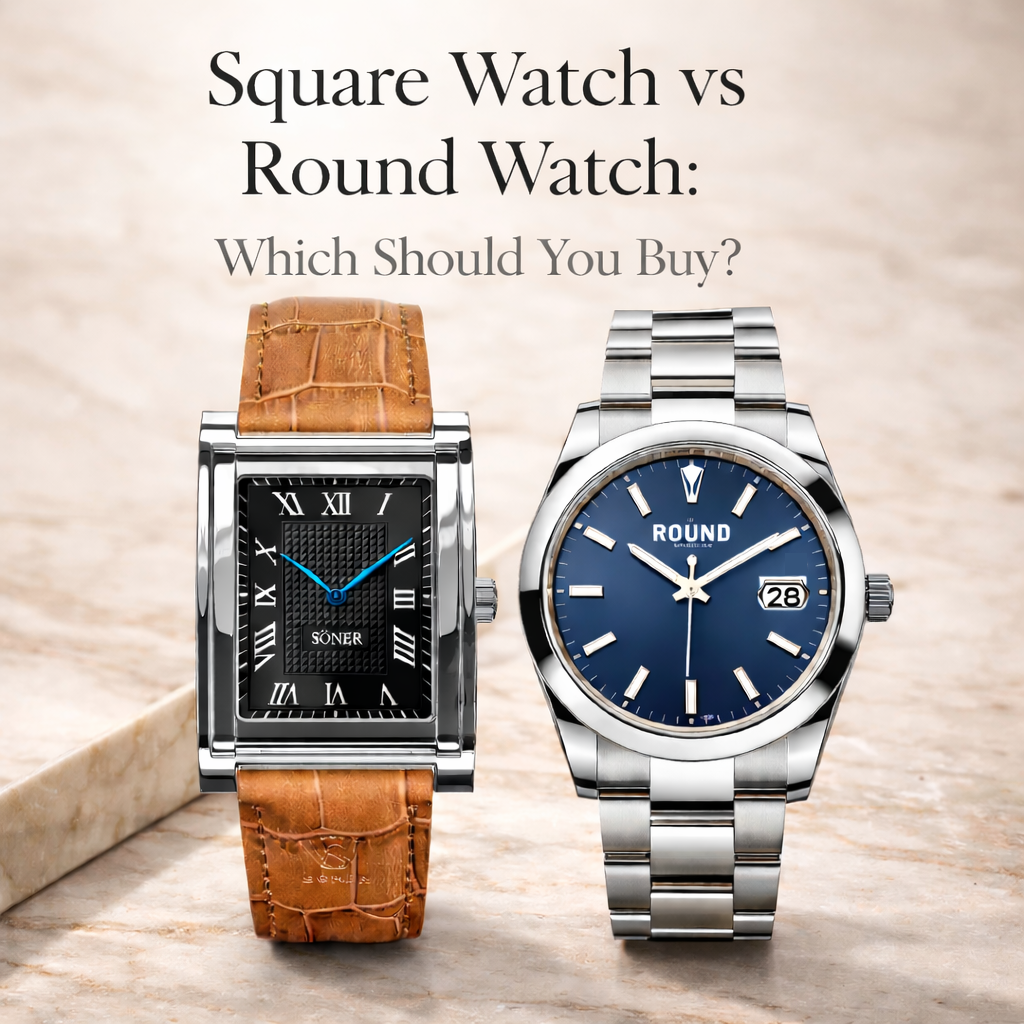
The Rectangular Watch in Wristwatch History
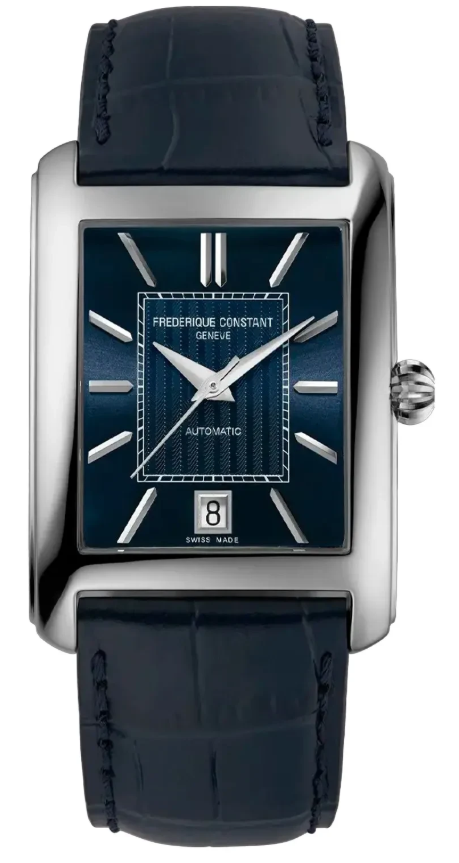
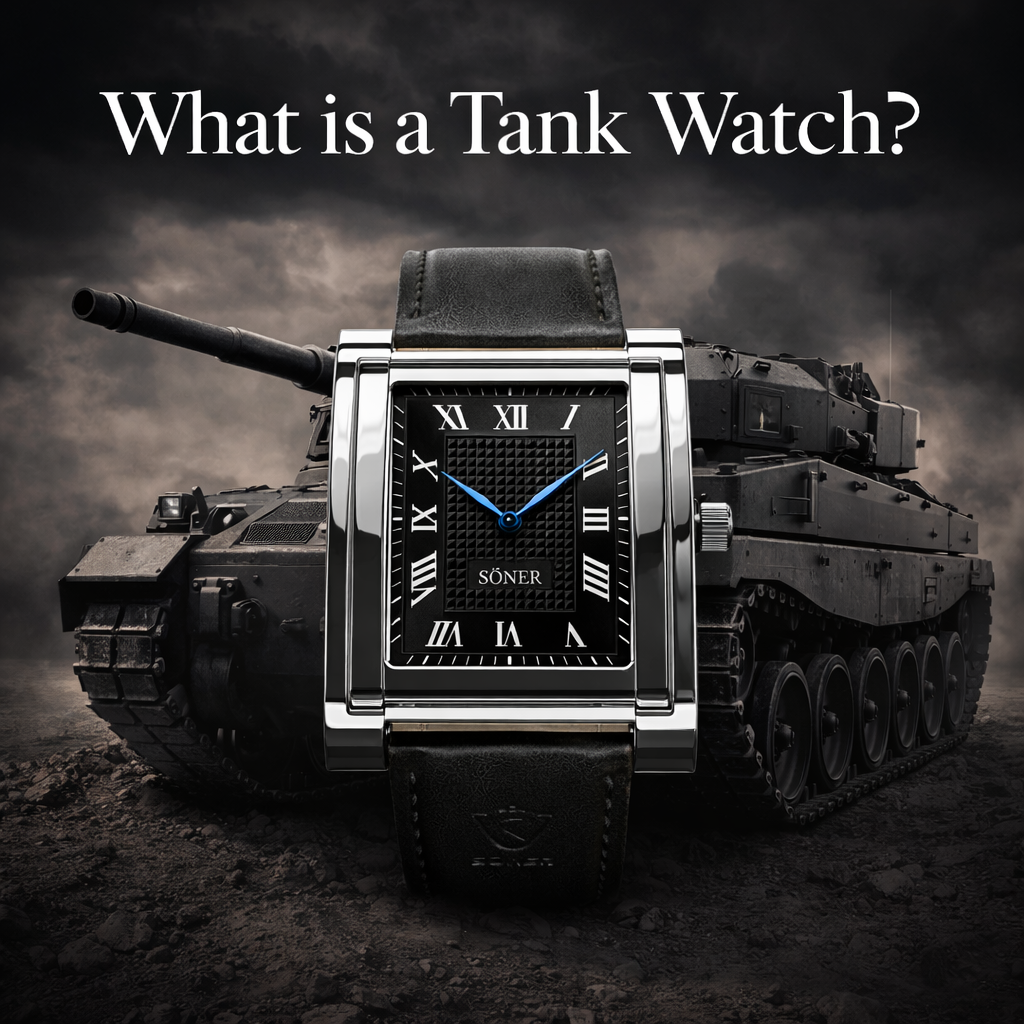
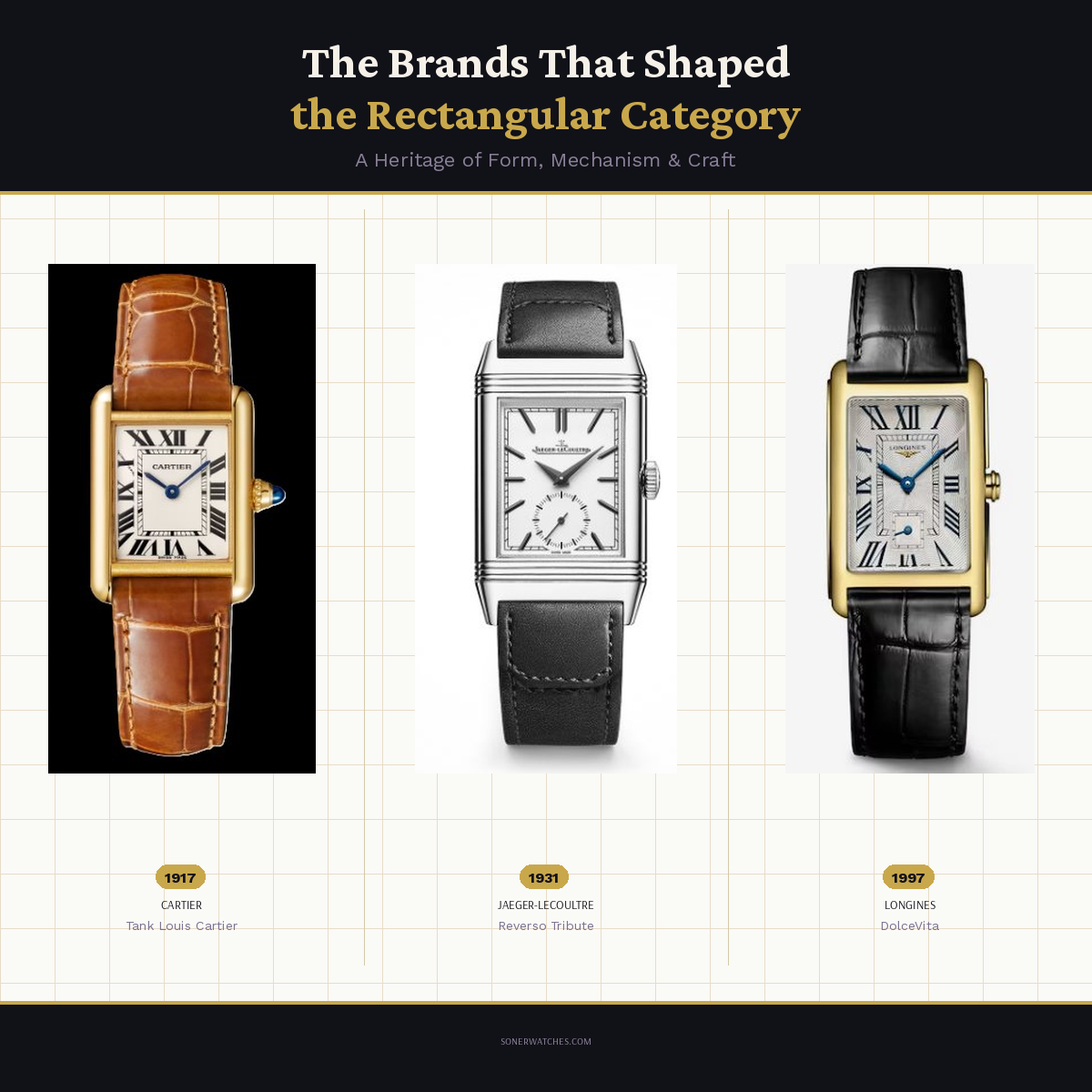
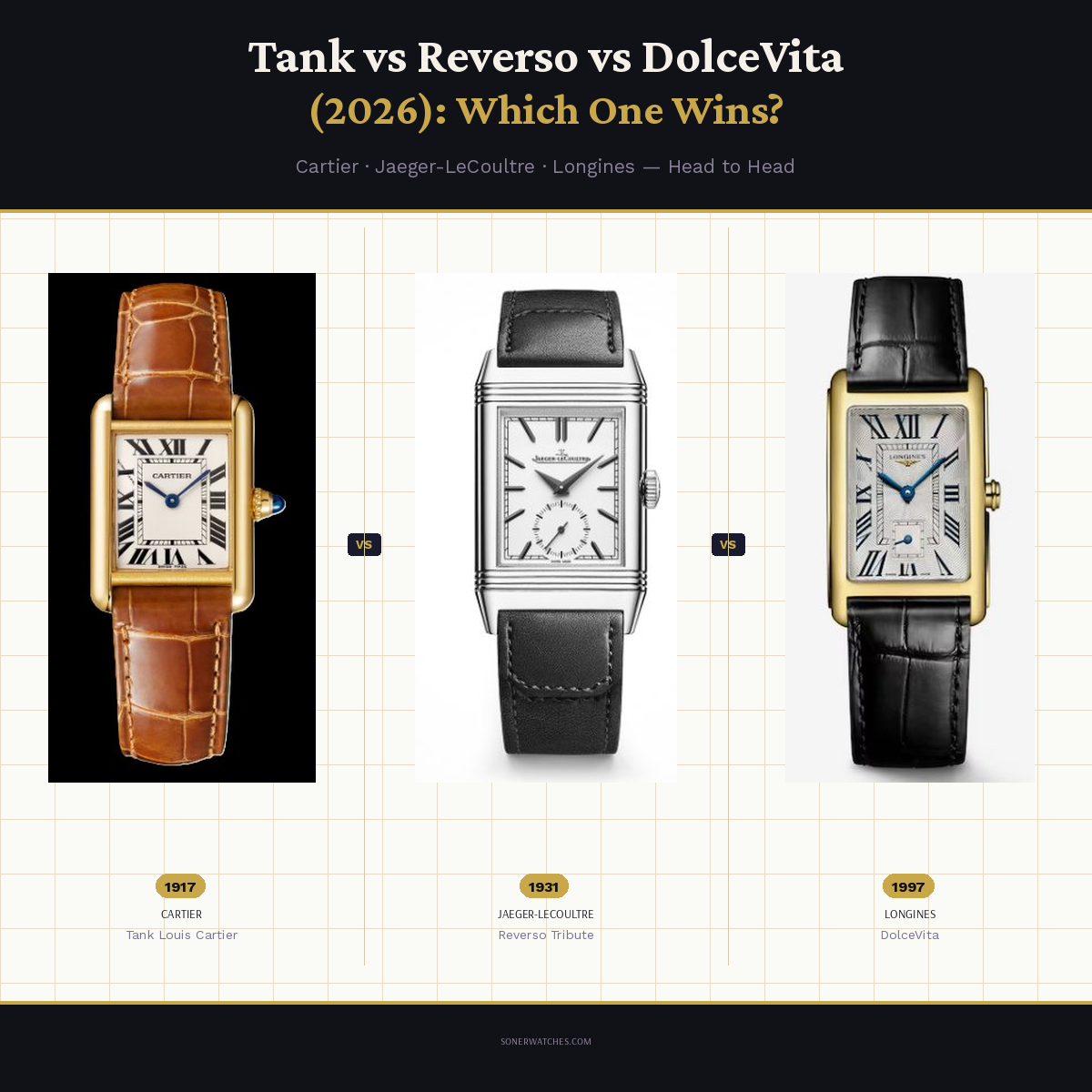
The rectangular case is not a modern design trend. It is one of the oldest and most significant forms in wristwatch history. The Cartier Tank (1917), inspired by the profile of Renault FT tanks on the Western Front, and the Jaeger-LeCoultre Reverso (1931), designed for polo players in British India, are both rectangular. These are not peripheral models from the wristwatch's history - they are among its defining objects.
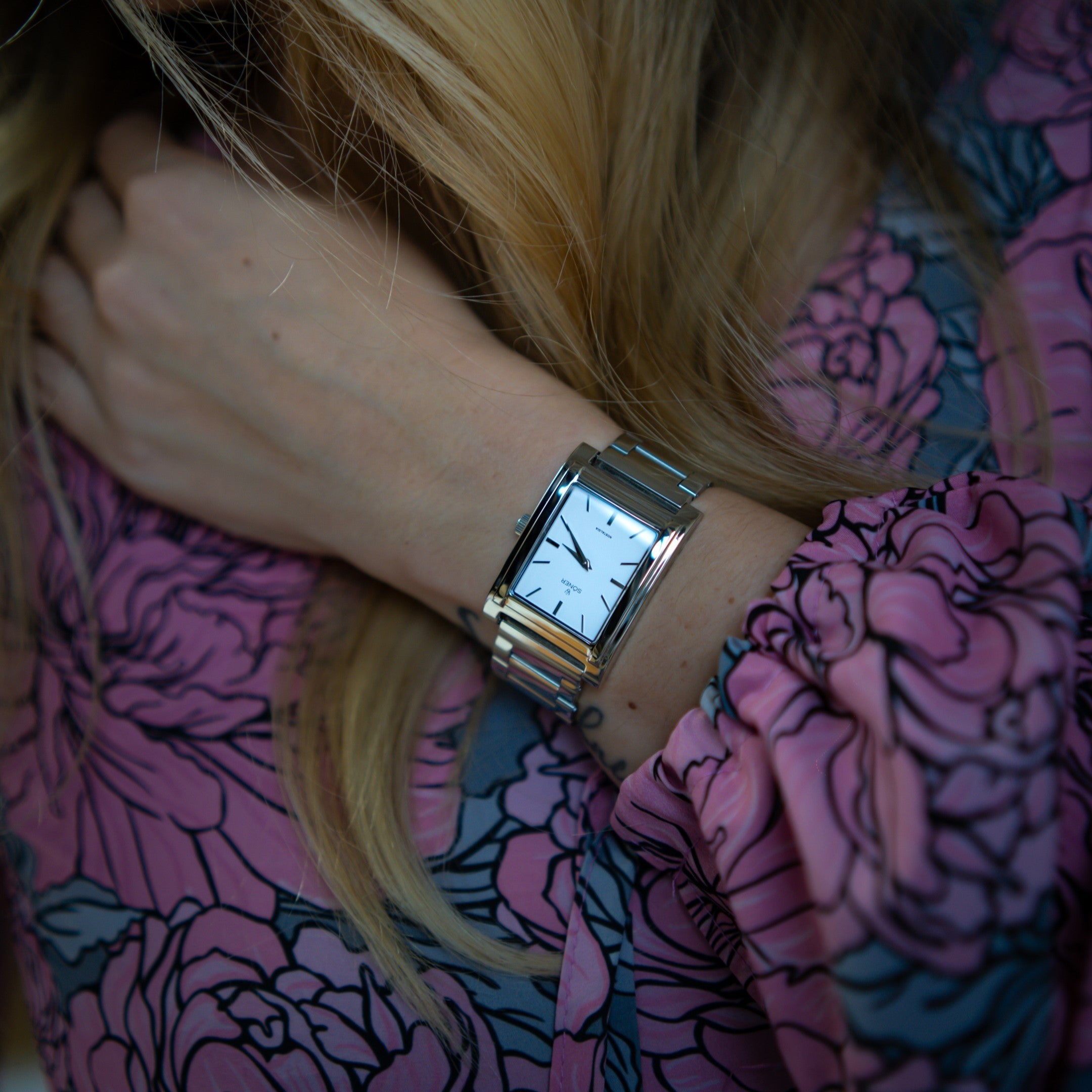
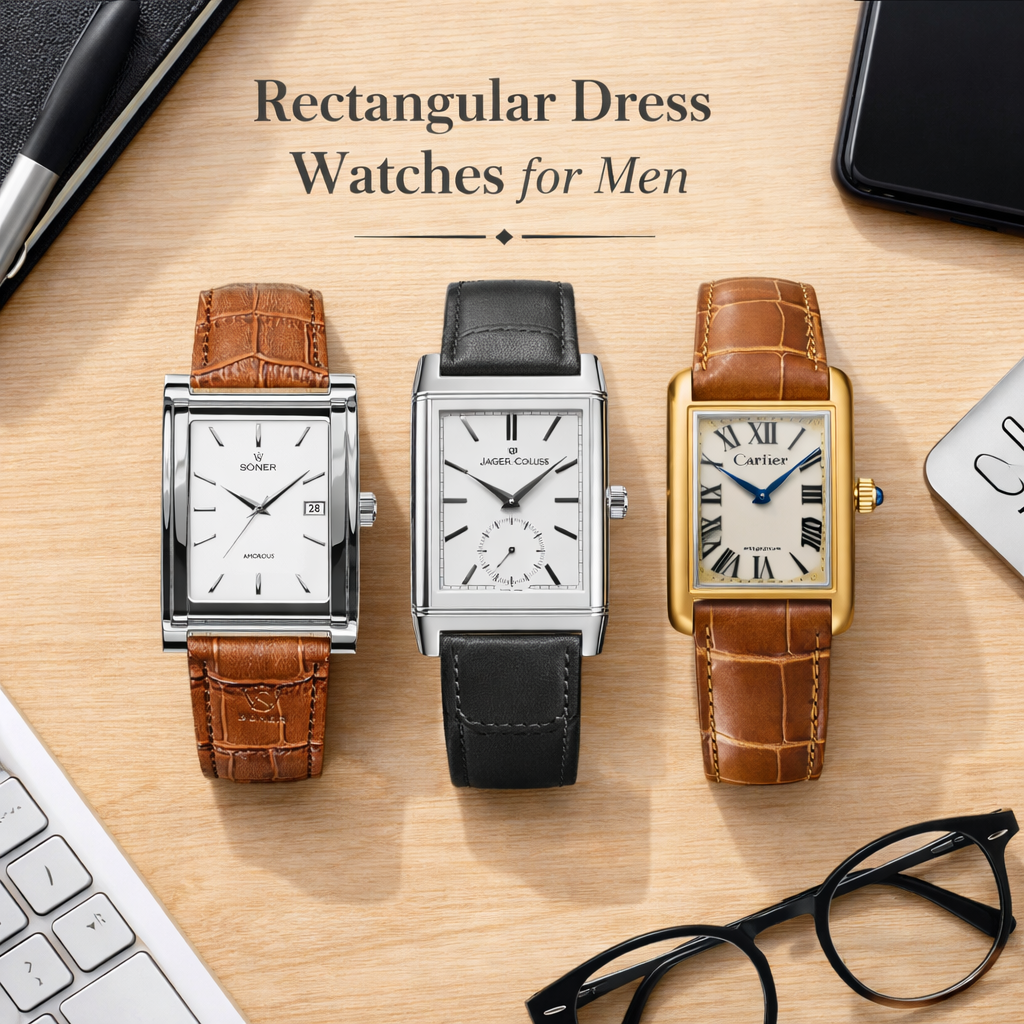
The rectangular case has remained in continuous production since its introduction precisely because it works. It sits flat against the wrist, slides cleanly under a shirt cuff, and distributes visual weight in a way that reads as composed and considered rather than incidental. For the full story of how the rectangular watch developed from the Art Deco era to the present day, see our complete history of rectangular watches.
Frequently Asked Questions
When was the first wristwatch invented?
The earliest well-documented wristwatch commission dates to 1810-1812, when Abraham-Louis Breguet was commissioned to create a bracelet watch for Caroline Murat, Queen of Naples. However, the wristwatch is better understood as an evolving format than a single invention - multiple makers were experimenting with wrist-worn timepieces across the 19th century before mass adoption in the early 20th century.
Who invented the first wristwatch?
There is no single inventor. The most commonly cited early makers are Abraham-Louis Breguet (commissioned bracelet watch for Caroline Murat, 1810-1812), Patek Philippe (documented bracelet watch for Countess Koscowicz, 1868), Girard-Perregaux (officer wristwatches for the German Navy, 1880s), and Louis Cartier with Alberto Santos-Dumont (the Santos, 1904). Each contributed something distinct to the format's development.
Did Cartier invent the wristwatch?
No. Purpose-built wristwatches existed before Cartier's involvement. Cartier's contribution was defining the modern elegant men's wristwatch and normalising it for everyday use. The Santos (1904) and the Tank (1917) remain the most influential designs in the history of the category, but they were not the first wristwatches.
When did wristwatches become popular for men?
World War I (1914-1918) was the turning point. Soldiers found pocket watches impractical in the trenches and adopted wristwatches for hands-free time checks. Veterans brought the habit into civilian life after the war, and by the late 1920s the wristwatch had largely replaced the pocket watch for daily male use.
What was the first waterproof wristwatch?
The Rolex Oyster, introduced in 1926, was the first wristwatch with a truly waterproof case achieved through a screw-down crown and hermetically sealed caseback. Rolex famously demonstrated its water resistance by having swimmer Mercedes Gleitze wear one during her Channel crossing in 1927.
What was the first automatic wristwatch?
John Harwood patented the self-winding mechanism in 1923. The first serially produced automatic wristwatch followed in 1928. The system was refined over subsequent decades from bumper rotors to full 360-degree rotors, eventually becoming standard in mechanical watches.
What was the first quartz wristwatch?
The Seiko Astron, launched on Christmas Day 1969, was the first commercially available quartz wristwatch. Its introduction triggered the quartz crisis of the 1970s, which fundamentally restructured the Swiss watch industry and dramatically reduced the cost of accurate timekeeping.