


 Published on
Key Takeaways
Table of Contents
People search for the differences between men's and women's watches for different reasons. Some want a fast way to tell if a model will fit their wrist. Others want to know why watches are gendered at all. The practical answer is that watches historically followed average wrist sizes and fashion conventions. Today those boundaries are softer. Many women prefer larger cases. Many men prefer slimmer, dress-leaning designs. The short answer: choose the watch that fits your wrist and suits your life.
Men's vs Women's Watches: Key Differences at a Glance
| Factor | Men's Watches | Women's Watches |
|---|---|---|
| Typical case size | 38-46mm diameter | 26-38mm diameter |
| Strap width | 20-24mm | 14-20mm |
| Design language | Bolder markers, darker dials, brushed steel, tool cues | Refined scale, softer colours, jewelry-adjacent details |
| Common features | Chronographs, GMTs, rotating bezels, higher water resistance | Slimmer profiles, gem accents, two-tone finishes |
| Price range | Wider range due to tool variants and movement diversity | Often allocates budget toward finishing and bracelet quality |
| Modern trend | Neutral palettes, architectural shapes, and clean typography that suit anyone | |
Size and Fit: The Most Practical Difference
Size is the most obvious difference between men's and women's watches. Women's models have traditionally used smaller cases and shorter, narrower straps. Men's models have used larger cases and longer, wider straps. Today many women prefer 36-40mm because modern styling suits the bolder outline, and many men prefer 36-40mm because slimmer watches dress more easily.
| Category | Typical Case Size | Thickness | Strap Width | Notes |
|---|---|---|---|---|
| Women's classic | 26-34mm | 6-9mm | 14-18mm | Petite scale, jewelry-friendly proportions |
| Women's modern | 34-40mm | 7-10mm | 18-20mm | Oversized chic, strong wrist presence |
| Unisex sweet spot | 34-40mm | 7-10mm | 18-20mm | Neutral look that suits most wrists |
| Men's classic | 38-42mm | 8-12mm | 20-22mm | Versatile for office and casual |
| Men's large | 42-46mm | 10-15mm | 22-24mm | Tool and sport focus |
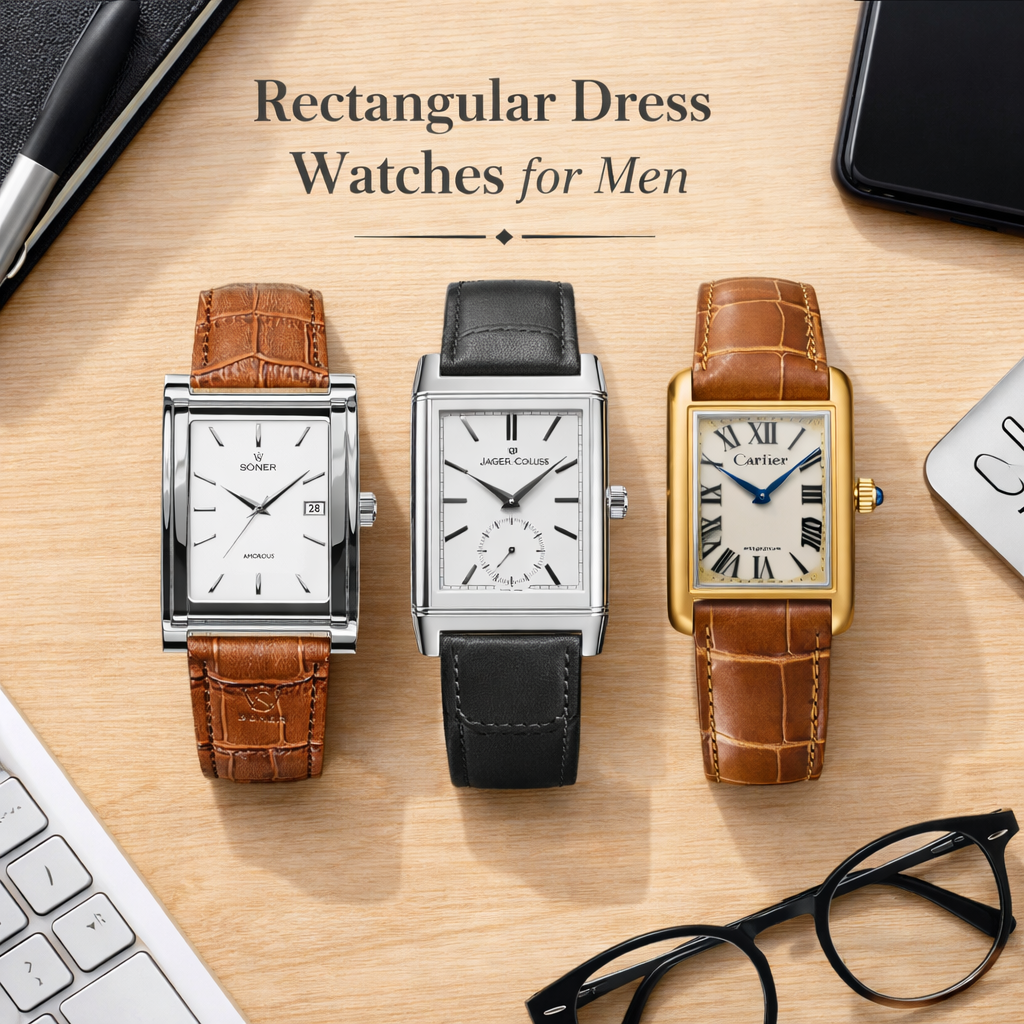
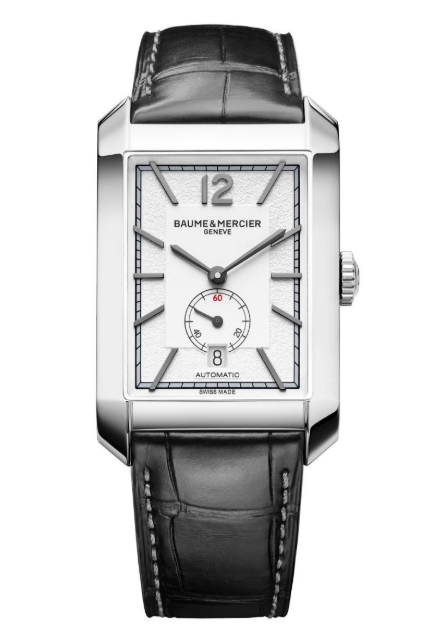
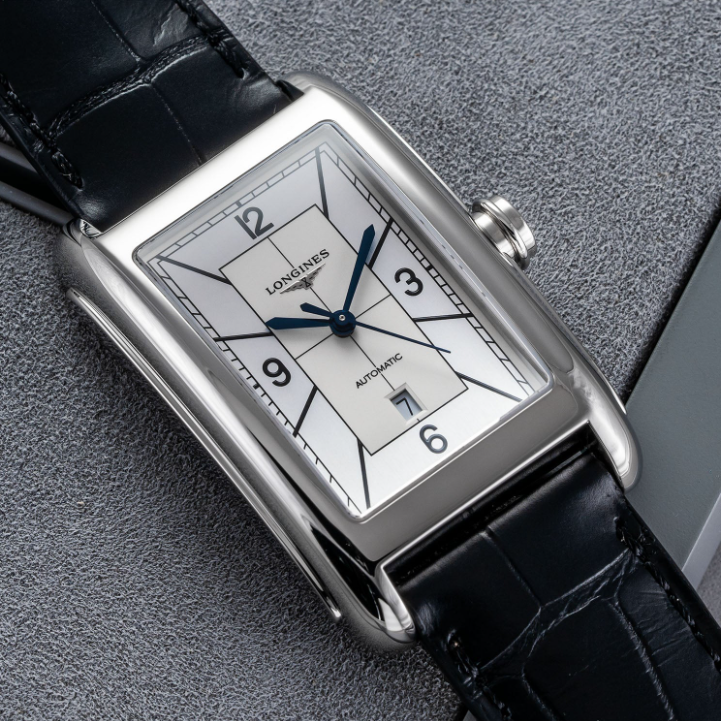
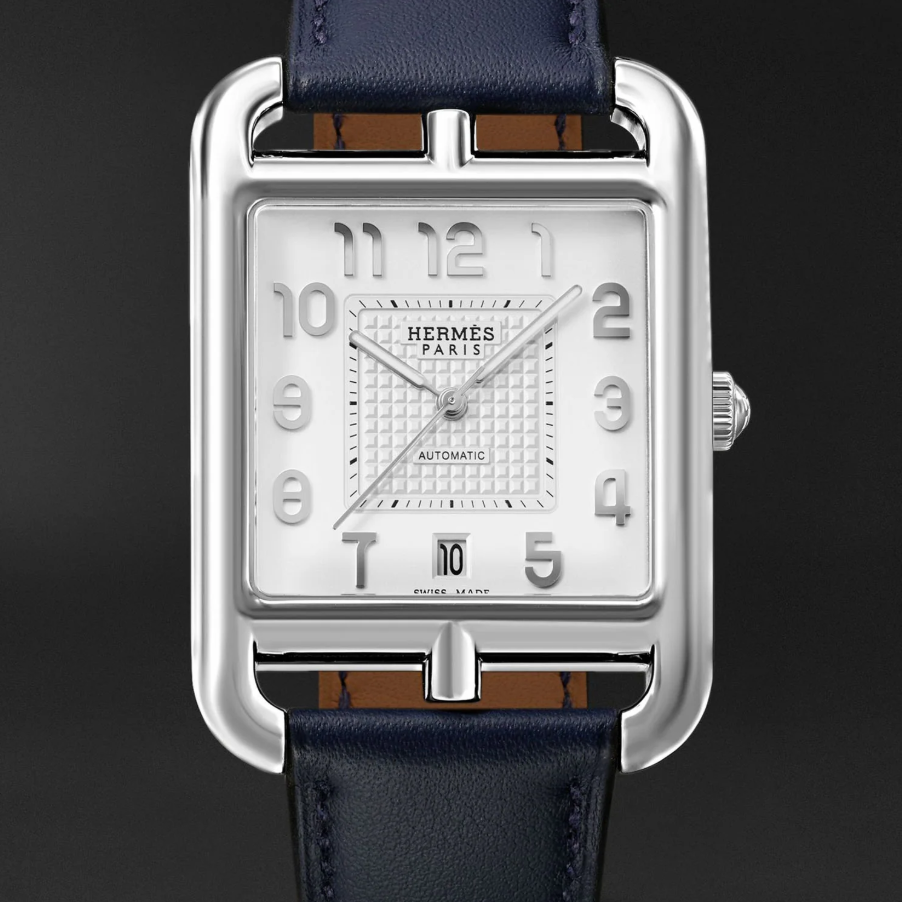
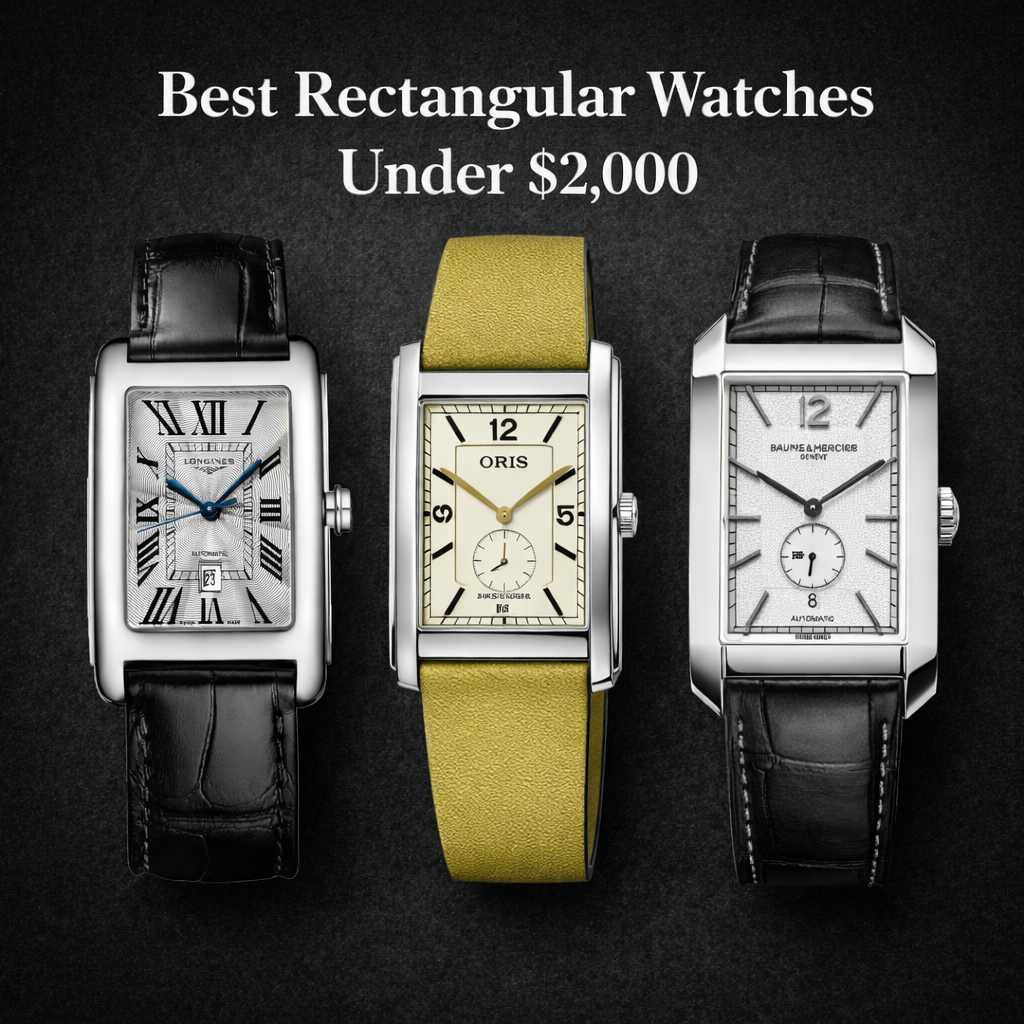
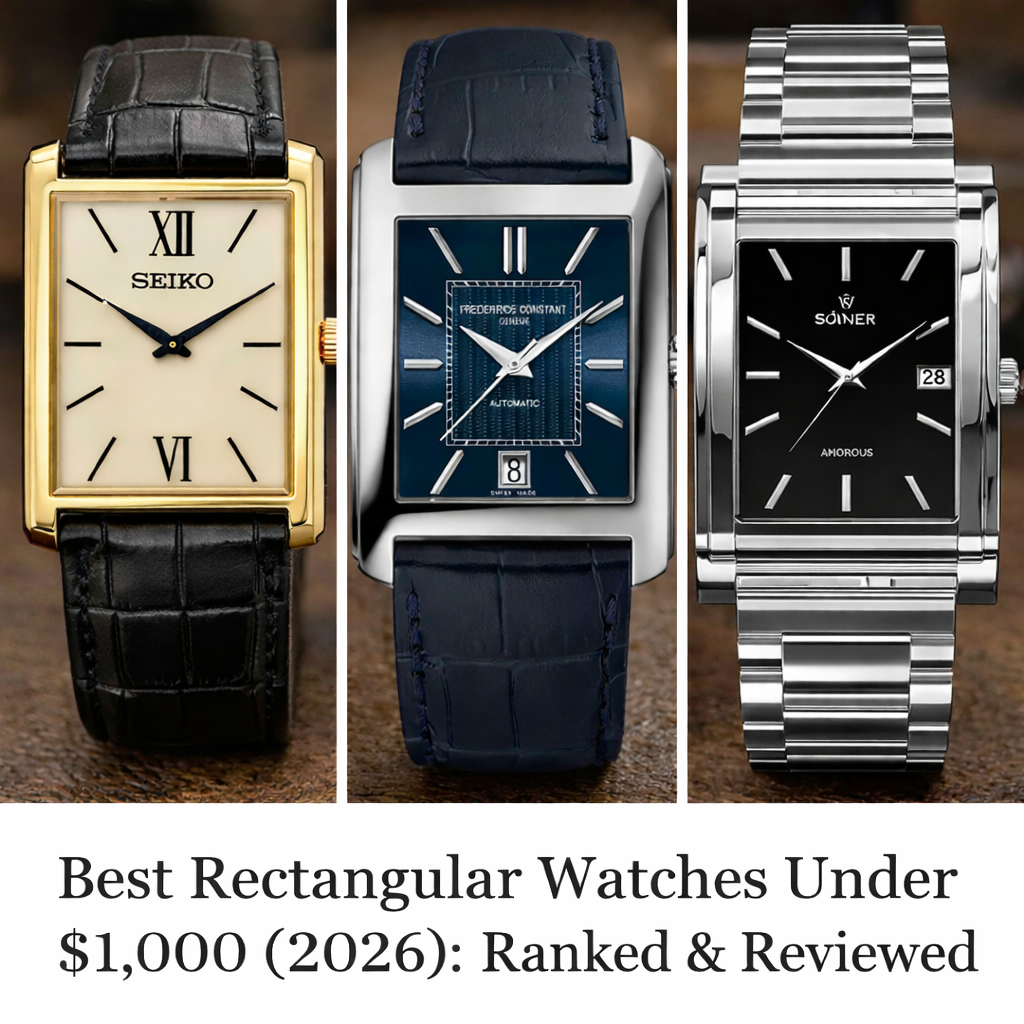
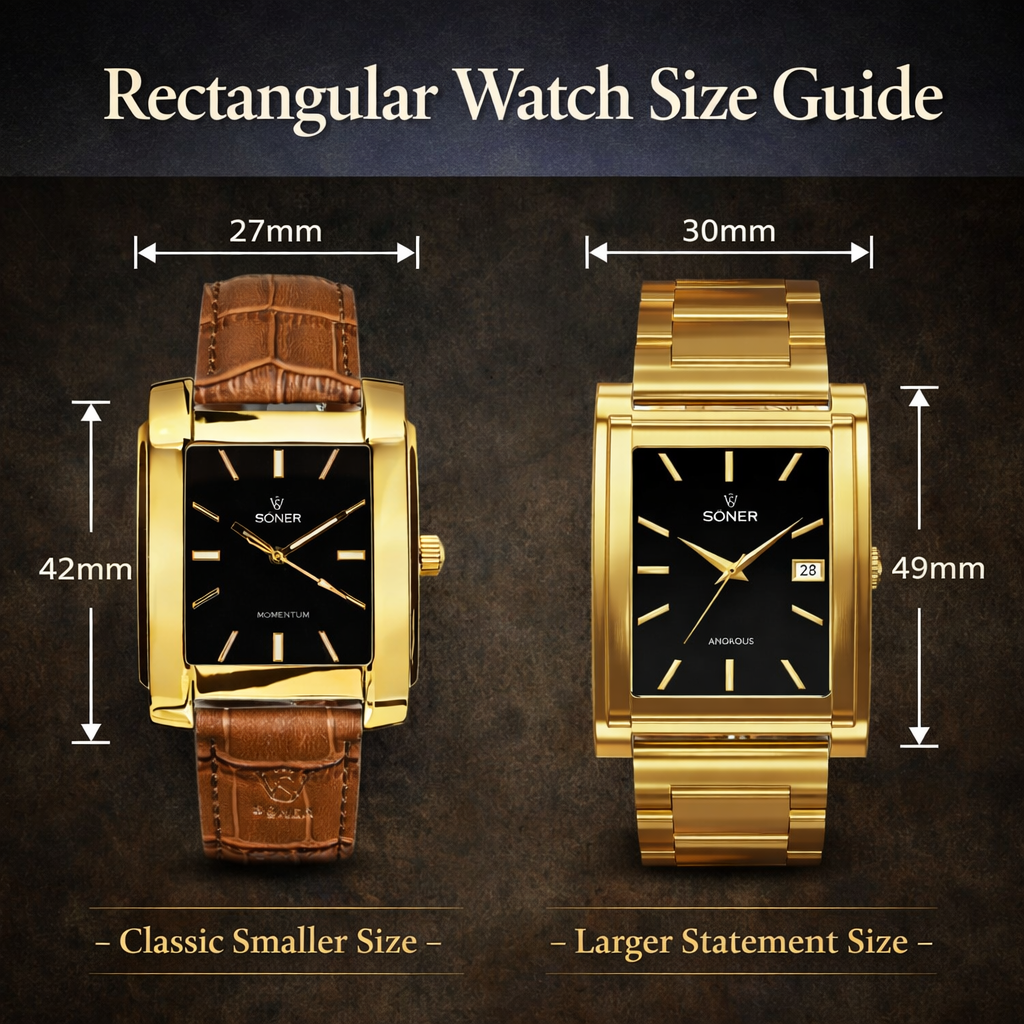
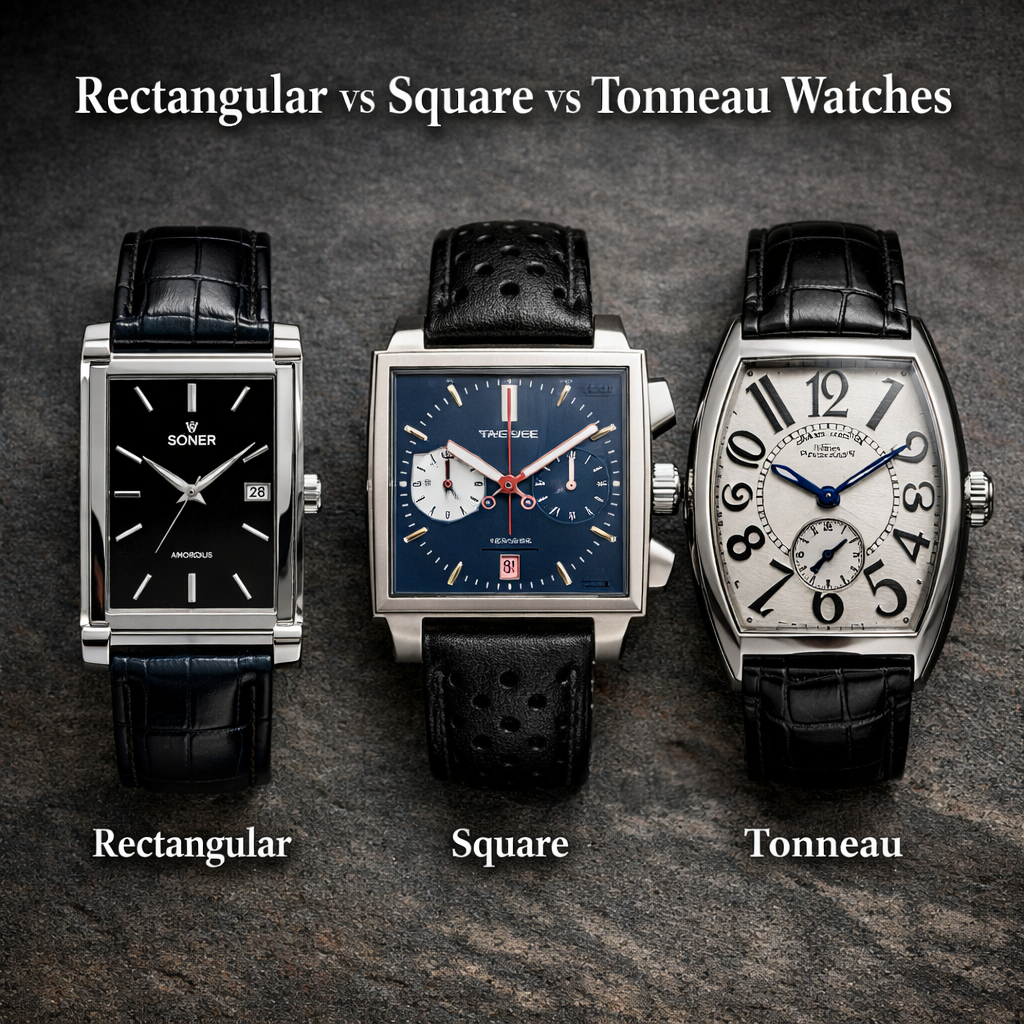
For rectangular watches, the case shape distributes visual weight differently than round cases. A rectangular watch often wears slimmer than a round watch of the same width and slides more cleanly under shirt cuffs — which is one reason the shape works well on both men's and women's wrists. For detailed sizing guidance, see our rectangular watch size guide.
Design and Aesthetics
Men's watches historically signal utility — bolder markers, tool bezels, darker dials, brushed steel. Women's watches have historically favoured refined scale, softer colours, and jewelry-adjacent details. Modern trend: neutral palettes, architectural shapes, and clean typography that suit anyone regardless of gender.
| Category | Typical Design Cues |
|---|---|
| Masculine | Larger dimensions, broader strap-to-face ratios, tachymeters, bezel markings, bold lume, darker palettes, brushed metal textures |
| Feminine | Smaller dimensions, slender straps, polished frames, gem accents, warm metals, softer colour stories |
| Neutral | Geometric shapes, high-contrast dials, careful spacing, under-cuff comfort, balanced proportions that do not signal one category strongly |
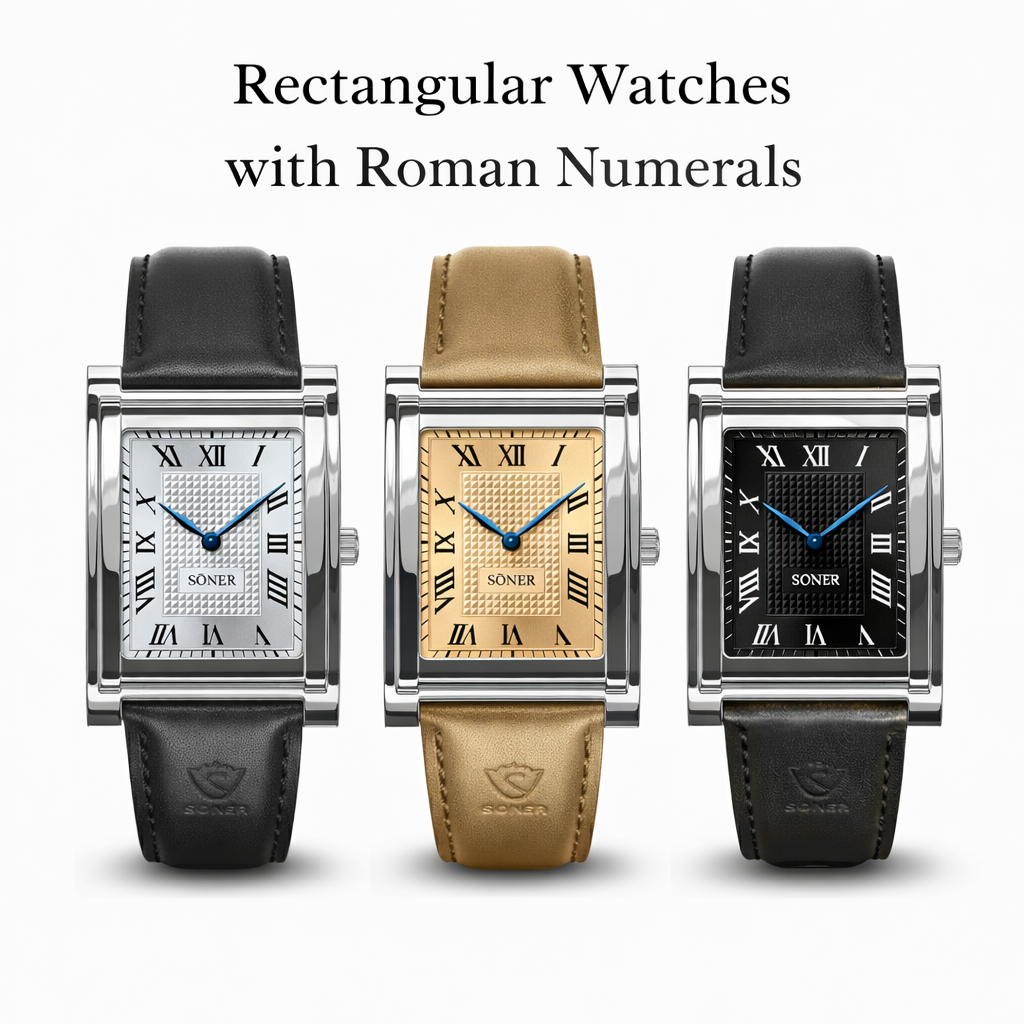
Rectangular watches sit naturally in the neutral camp. The geometry feels balanced on small and large wrists alike, and a clean rectangular dial reads elegant in both formal and casual contexts without leaning heavily masculine or feminine.
Features and Complications
Men's and women's watches share core functions, but their emphasis has historically differed. Men's pieces have skewed toward tool features — chronographs, GMTs, rotating bezels, higher water resistance, stronger lume. Women's lines traditionally emphasised slimmer profiles and jewelry cues, though many modern women's watches now add sport-ready water resistance and better luminescence.
Today the overlap is broad. The more useful distinction is between dress watches and sport watches than between men's and women's watches. Rectangular dress watches prioritise legibility, case finishing, and everyday convenience over complication counts.
How to Choose Between a Men's and Women's Watch
Start with your wrist and your routine, then let aesthetics follow.
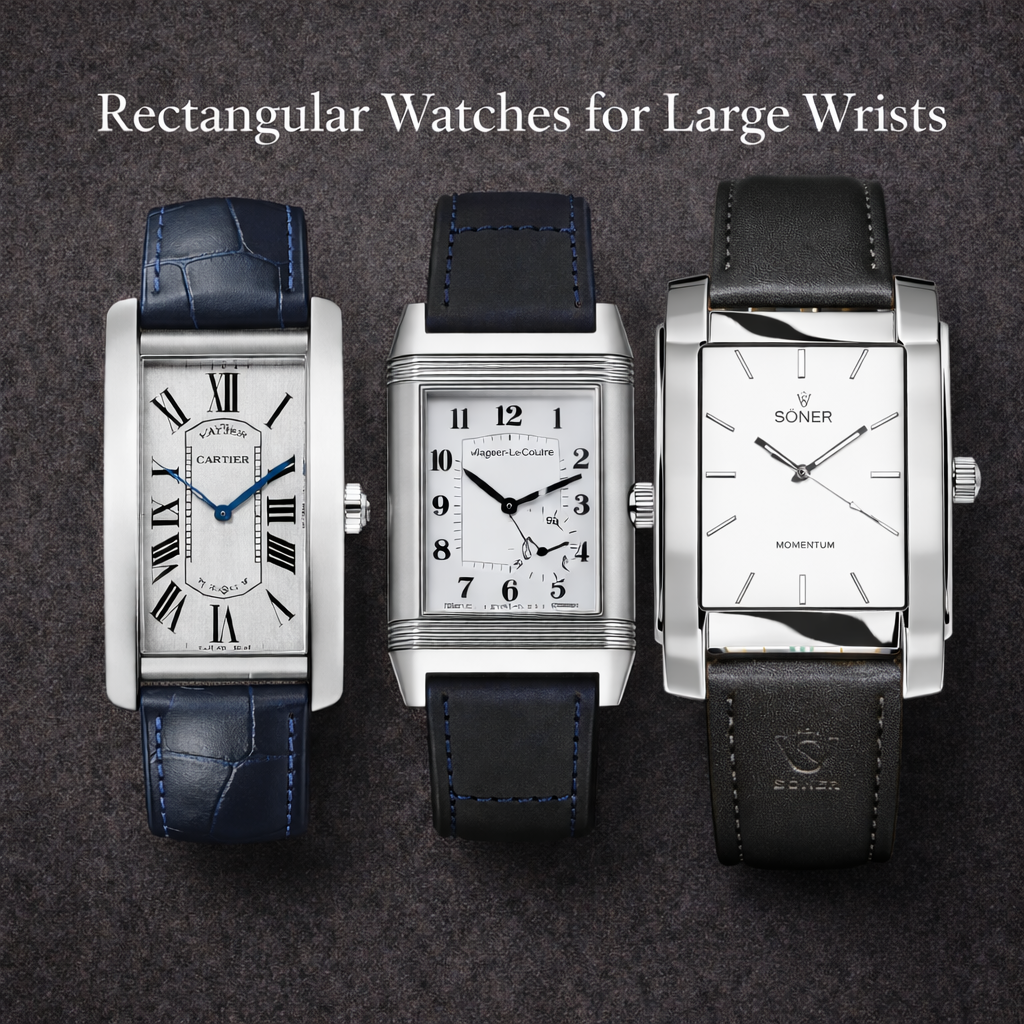
Measure your wrist first. Under 6 inches typically suits 34-38mm case widths. Between 6 and 7 inches can wear 36-40mm well. Over 7 inches has more latitude and can carry 38-44mm without the proportions feeling off. Rectangular cases wear visually larger per millimetre than round cases, so consider sizing down slightly if you prefer a discreet profile.
Define the job. Office and dinner calls for slim, legible, and polished. Travel and sport calls for water resistance and secure strap. For the best dress watch options across occasions, see our guide to men's dress watches.
Pick the mood. Minimalist, tool-influenced, or jewelry-leaning. These moods exist independently of gender labelling on the box.
Consider strap width. Match strap width to case width for a balanced silhouette. Too narrow and the watch feels top-heavy. Too wide and it looks blocky. For more on strap options, see our guide to leather vs metal watch bands.
What Makes a Watch Masculine or Feminine?
Watch design does not have strict gender rules. Proportion, features, and finish shape how a piece reads at a glance. The cues below are useful as a reference, but the right watch is the one that fits your wrist and suits your day.
Masculine cues: larger dimensions and broader strap-to-face ratios, instrumental features such as tachymeters and bezel markings, darker palettes and brushed metal textures.
Feminine cues: smaller dimensions and slender straps, jewelry influences such as polished frames and gem accents, slimmer silhouettes and softer colour stories.
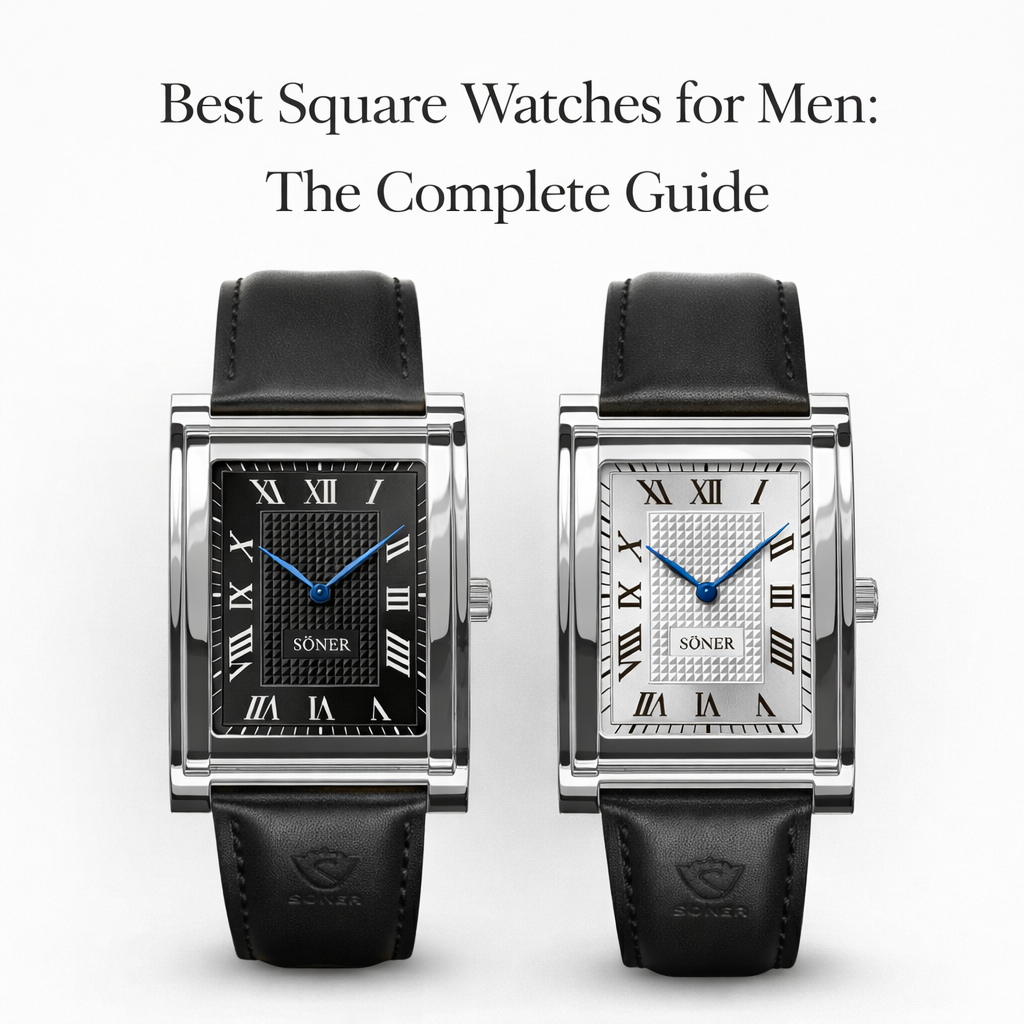
Neutral cues: geometric shapes, high-contrast dials with careful spacing, under-cuff comfort, and balanced proportions that do not signal one category strongly. A clean rectangular watch with a white or black dial sits here — swap to leather for dress, textile for casual, or mesh for summer to guide the register where you want it.
Is it OK for a Woman to Wear a Men's Watch?
Yes. It is common and increasingly conventional to see women wear 36-40mm watches marketed to men. The look reads as confident and modern. Large cases work like a cuff or bangle and photograph well. If your wrist is under 6 inches, the unisex sweet spot of 34-38mm or a short strap for a tighter, centred fit is worth considering.
Reasons women choose men's or unisex watches: oversized presence pairs well with tailoring and denim, high legibility and strong presence in photographs, wider strap ecosystem for styling variation, and neutral geometric designs that keep the focus on the outfit rather than a category signal.
Do Men's and Women's Watch Straps Differ?
Strap length and width follow wrist size. Men's straps are typically longer and 20-24mm wide. Women's straps are typically shorter and 14-20mm wide. Comfort depends on the strap-to-face width ratio. The practical rule: match strap width to case lug width for visual balance.
Comfort tips by strap type:
| Strap Type | Best For | Notes |
|---|---|---|
| Curved leather | Slim wrists, formal wear | Supple and forgiving against skin, tucks under cuffs cleanly |
| Steel bracelet | Versatile, smart casual to formal | Requires precise sizing - micro-adjustment models work best |
| Textile or mesh | Warm weather, active wear | Breathable and easy to adjust - works well on smaller wrists too |

Which Wrist Do Men and Women Wear Watches On?
Tradition places the watch on the non-dominant wrist — most right-handed people wear watches on the left, which reduces interference during writing and daily tasks. Left-handed wearers often prefer the right wrist. There is no single rule. Try both and pick the wrist that feels natural with your keyboard, notebook, or tools. For a detailed guide, see our article on which wrist to wear a watch on.
Should a Woman Buy a Man a Watch?
Yes — a watch given as a gift is thoughtful and lasting. Watches mark milestones such as graduations, promotions, and anniversaries, and a well-chosen watch will be worn and thought of every day. To choose well: confirm his wrist size, aim for a case that sits flat with lug-to-lug shorter than his wrist span, and match water resistance to his routine. Pick a dial colour that complements his wardrobe.
For a full gift guide covering what to spend, how to personalise, and the best options at every budget, see our guide to watches as gifts for men.

Frequently Asked Questions
What is the difference between men's and women's watches?
Practically, size and strap length. Stylistically, emphasis. Men's watches historically lean rugged or instrumental. Women's watches lean refined or jewelry-adjacent. Today those conventions are negotiable. The most useful guide is to choose the model that fits your wrist comfortably, suits your daily routine, and looks right with how you dress.
Can a woman wear a men's watch?
Yes. It is common and increasingly conventional. Many women prefer 36-42mm watches marketed to men for the presence, legibility, and wider strap ecosystem they offer. If your wrist is smaller, the unisex sweet spot of 34-38mm tends to work well without overhang.
Can a man wear a women's watch?
Yes. Many men prefer slim, dress-leaning designs historically marketed to women — particularly in the 34-38mm range. A smaller rectangular watch on a leather strap reads as considered and intentional rather than undersized. The fit is what matters, not the category label on the box.
What size watch should a woman buy?
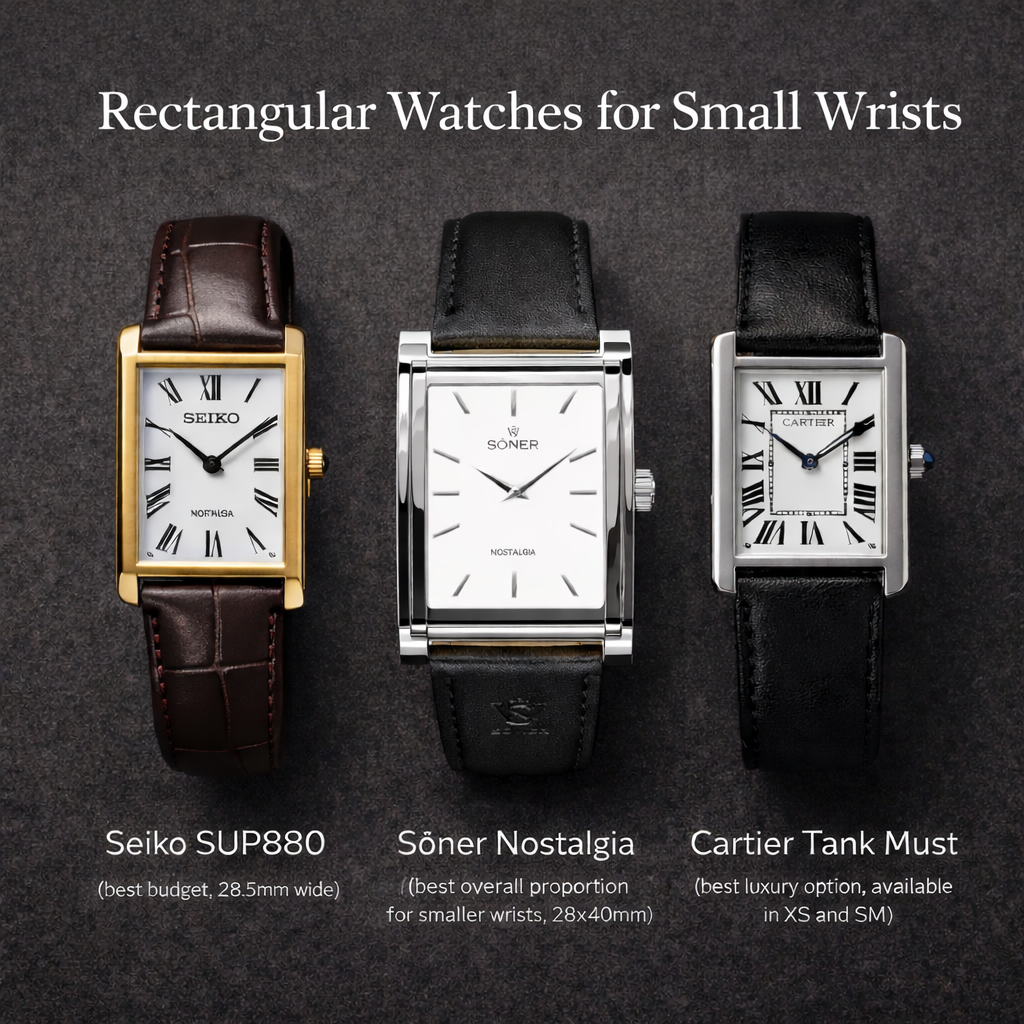
Start by measuring your wrist. Under 6 inches typically suits 28-34mm cases. Between 6 and 7 inches can carry 34-38mm well. Over 7 inches has more latitude. Rectangular cases wear visually larger per millimetre than round cases, so consider sizing down slightly if you prefer a discreet profile. For more detail, see our rectangular watch size guide.
Are rectangular watches more unisex than round watches?
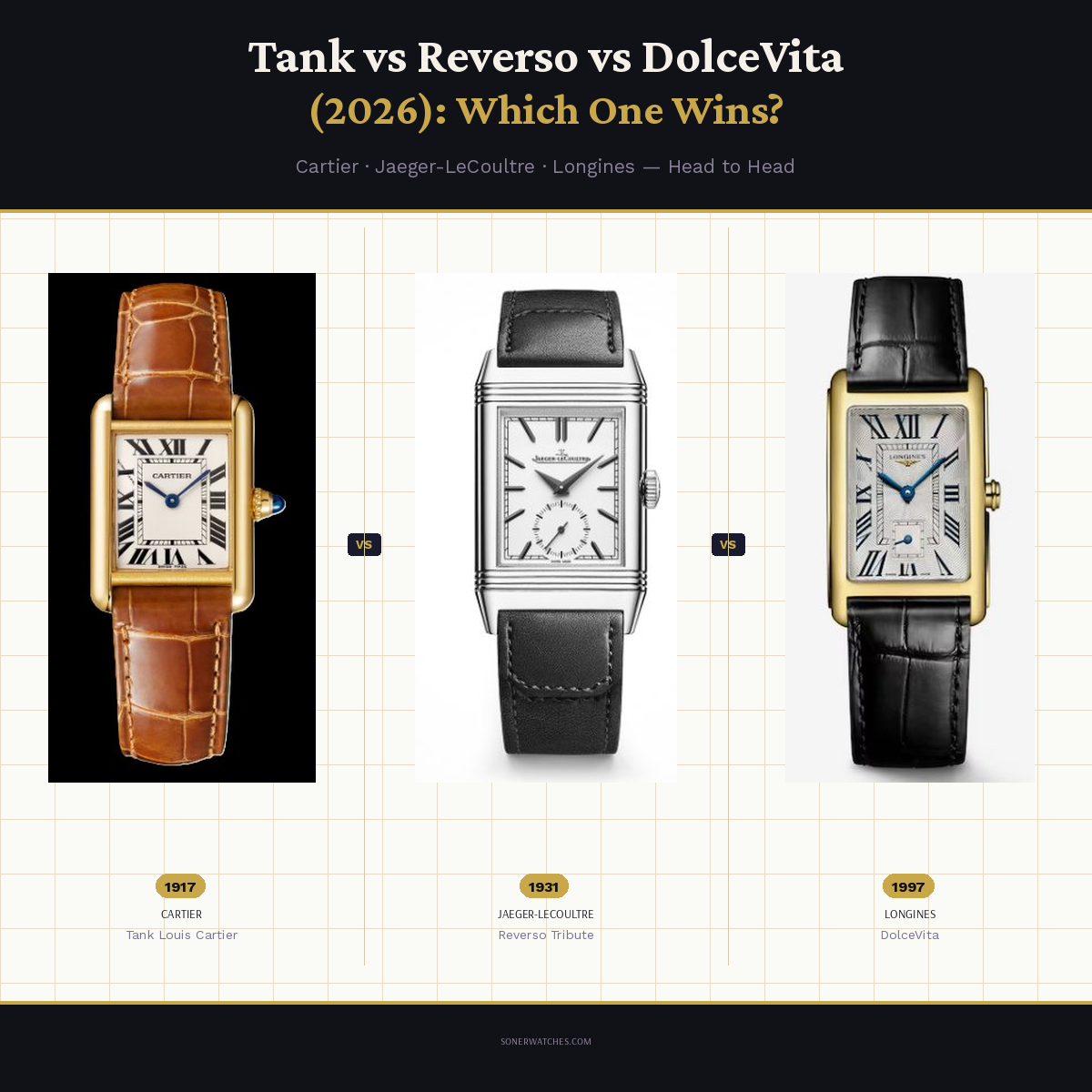
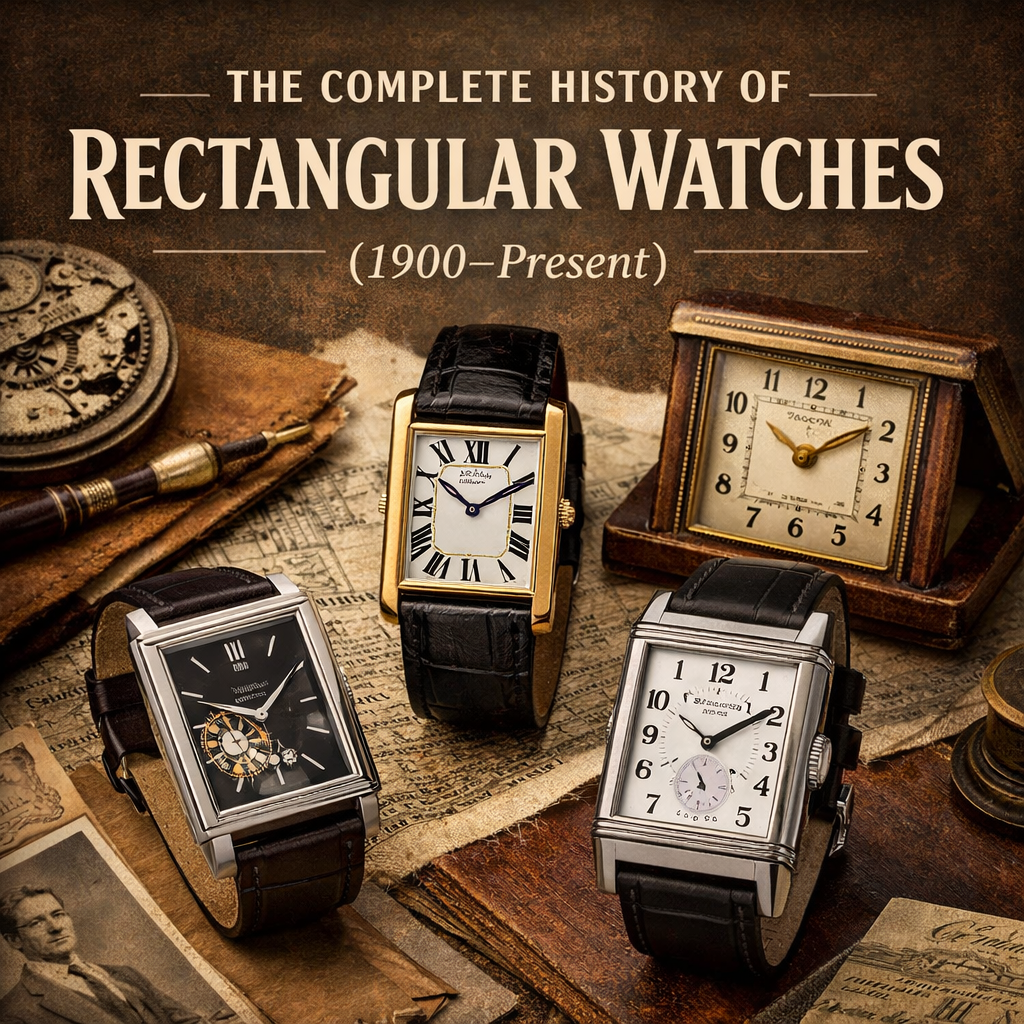
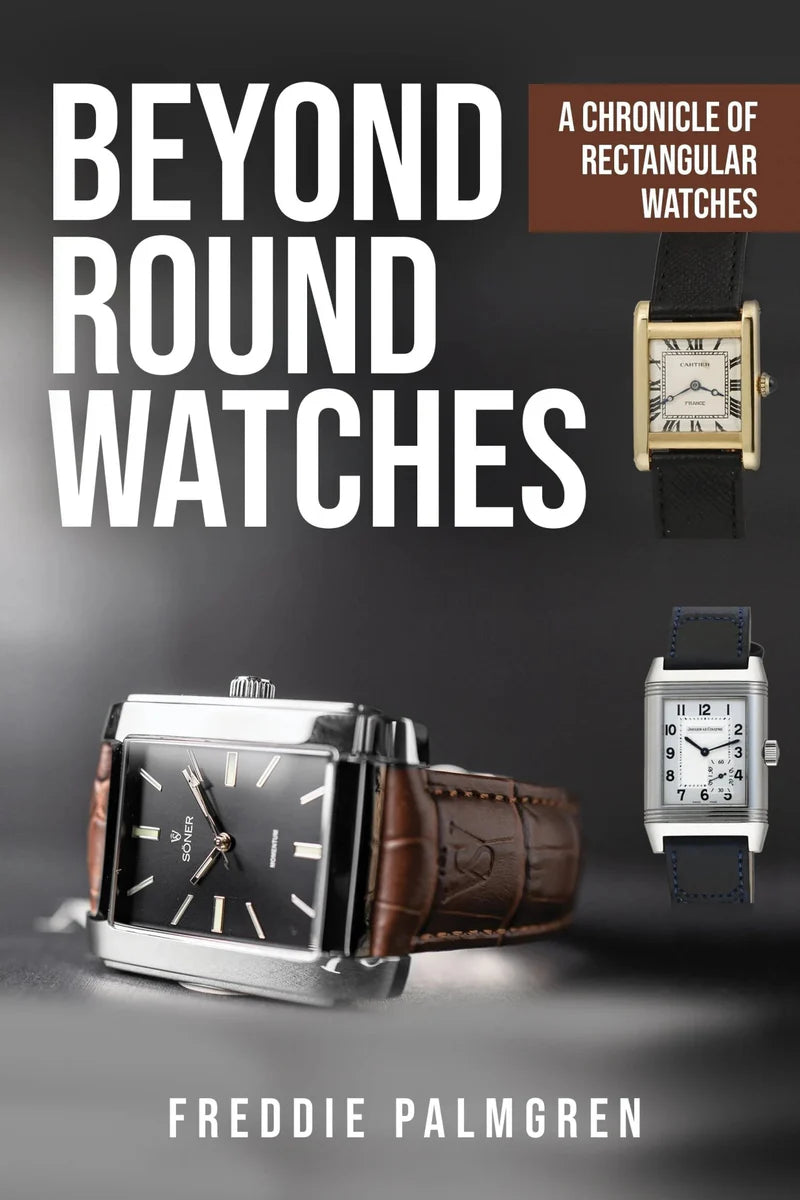
Yes - the rectangular case distributes visual weight differently than a round case. It sits flat against the wrist, follows the arm's natural line, and reads as considered and architectural rather than signalling strongly toward either masculine or feminine conventions. This is one reason the Cartier Tank and Jaeger-LeCoultre Reverso have been worn by both men and women since their introduction.
Which wrist should a woman wear a watch on?
Convention places the watch on the non-dominant wrist - left for right-handed wearers, right for left-handed wearers. In practice, wear it wherever it feels most natural and least interfering with your daily tasks. For more detail, see our guide on which wrist to wear a watch on.
What features should I look for in a women's watch?
The same features worth looking for in any quality watch: a sapphire crystal rather than mineral glass, at least 3 ATM water resistance for everyday wear, a solid stainless steel case, and a movement suited to how you plan to wear it. Quartz for low maintenance and slim profile. Automatic for mechanical depth and long-term value. The gender label on the marketing is less important than those specifications.