

 Published on
Table of Contents
The watch you wear to work communicates something before you say a word. In professional settings - interviews, client meetings, presentations - every detail of your appearance is read and interpreted. A well-chosen watch signals punctuality, attention to detail, and considered personal style. The wrong one signals the opposite, or nothing at all.
This guide covers what makes a watch look professional, which types work best in different contexts, what to avoid, and the best options at every budget.

What Makes a Watch Look Professional
| Element | Professional | Avoid in Formal Contexts |
|---|---|---|
| Case shape | Rectangular, round dress - clean geometry | Oversized sports cases, novelty shapes |
| Dial | Minimal, legible, white or black, clean markers | Busy chronograph sub-dials, bright colours |
| Case thickness | Under 10mm - slides under a shirt cuff | Thick tool watches that create a bump under the sleeve |
| Strap | Dark leather or polished steel bracelet | Rubber straps, bright NATO straps in formal settings |
| Size | Proportionate to wrist - no overhang | Oversized cases that dominate the wrist |
| Materials | Steel, gold, sapphire crystal | Plastic cases or mineral glass above entry level |
The consistent thread is restraint. A professional watch should complement your outfit rather than compete with it. It should be noticed when your sleeve rides up, not when you walk into the room. The watches that do this best are almost always the most minimal ones.
The Role of a Watch in Professional Settings
A watch signals two things simultaneously in a professional context: punctuality and consideration. Checking a watch in a meeting reads as composed and present. Reaching for a phone reads as potentially distracted. This distinction has become more significant, not less, as phone use has become more ubiquitous.
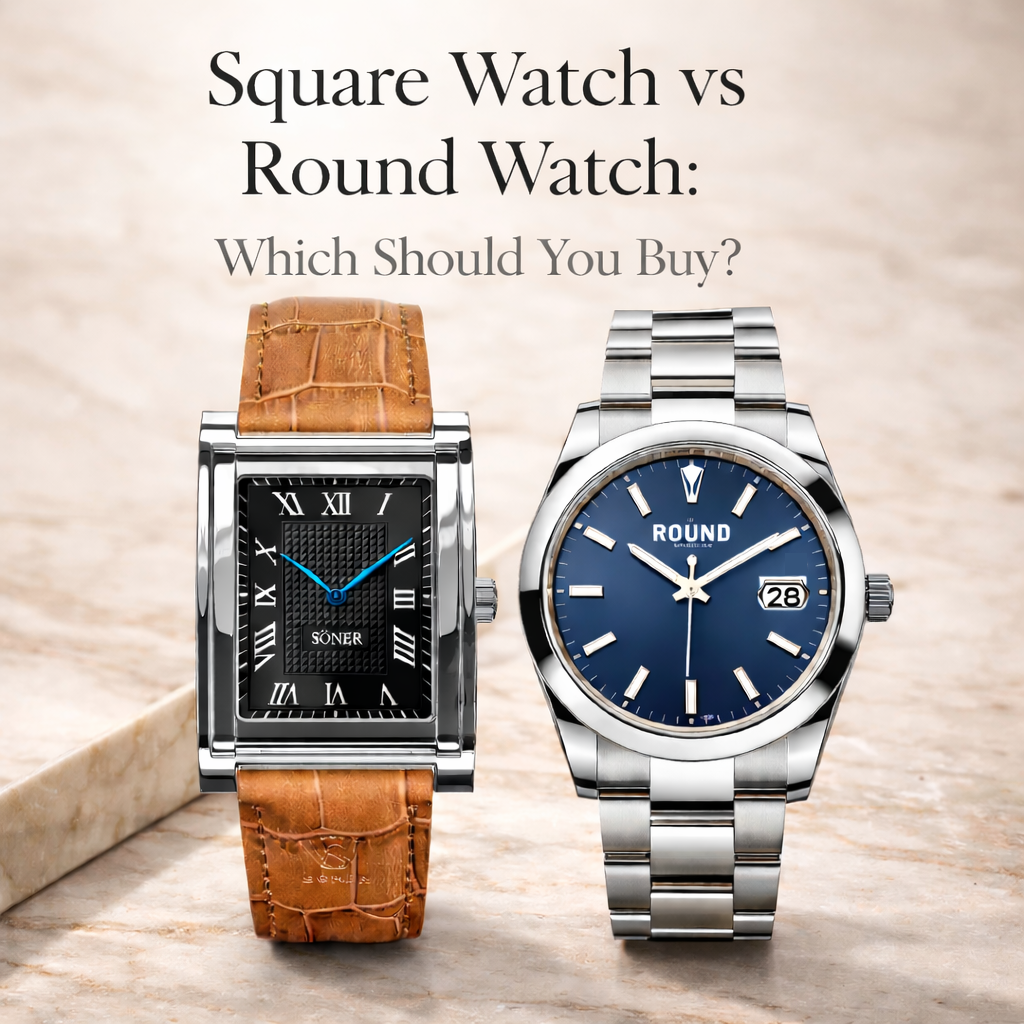
The specific watch you wear adds a further layer. A clean rectangular dress watch under a suit cuff communicates precision and historical awareness. A generic round sports watch in the same context communicates that the wearer has not given the accessory much thought. Neither is wrong as a matter of taste, but only one actively supports a professional image.

Types of Watches for Professional Settings
Classic Dress Watches
Dress watches are the most straightforward professional choice. Thin case, minimal dial, leather strap, polished steel or gold case - the formula is simple and consistently effective. A clean dress watch works from a first interview to a board meeting to a client dinner without adjustment. The most important specification for professional dress wear is case thickness: under 9mm slides under a shirt cuff without creating a visible bump. Under 7mm is ideal.
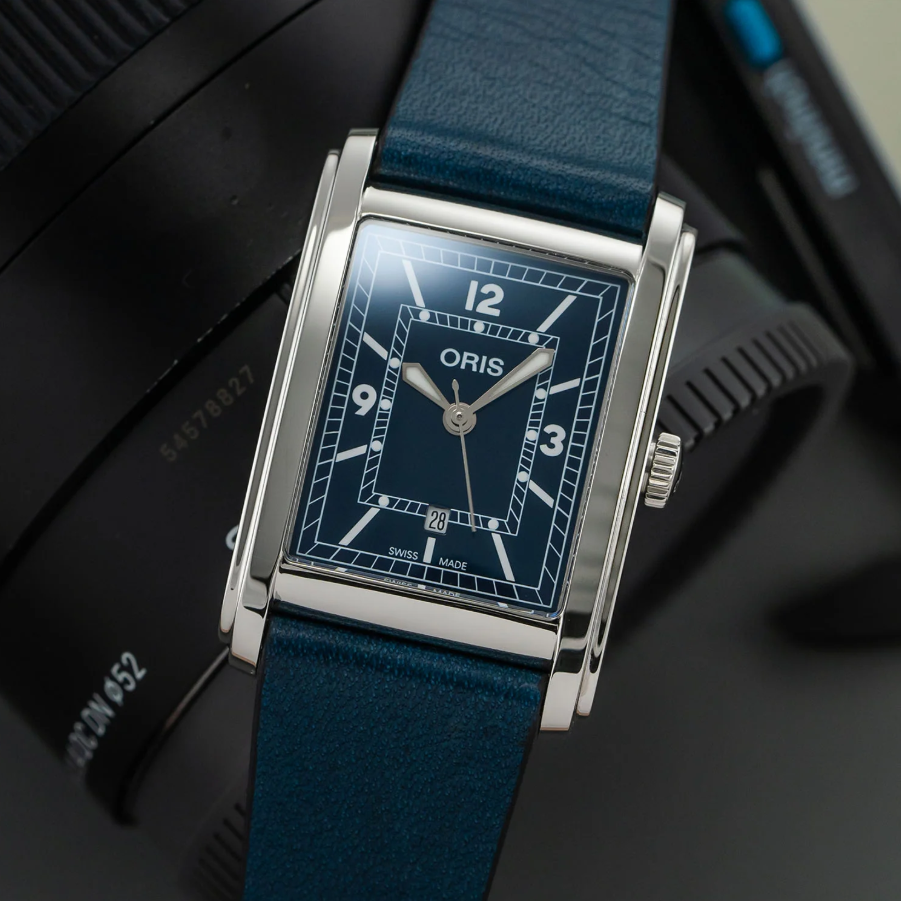
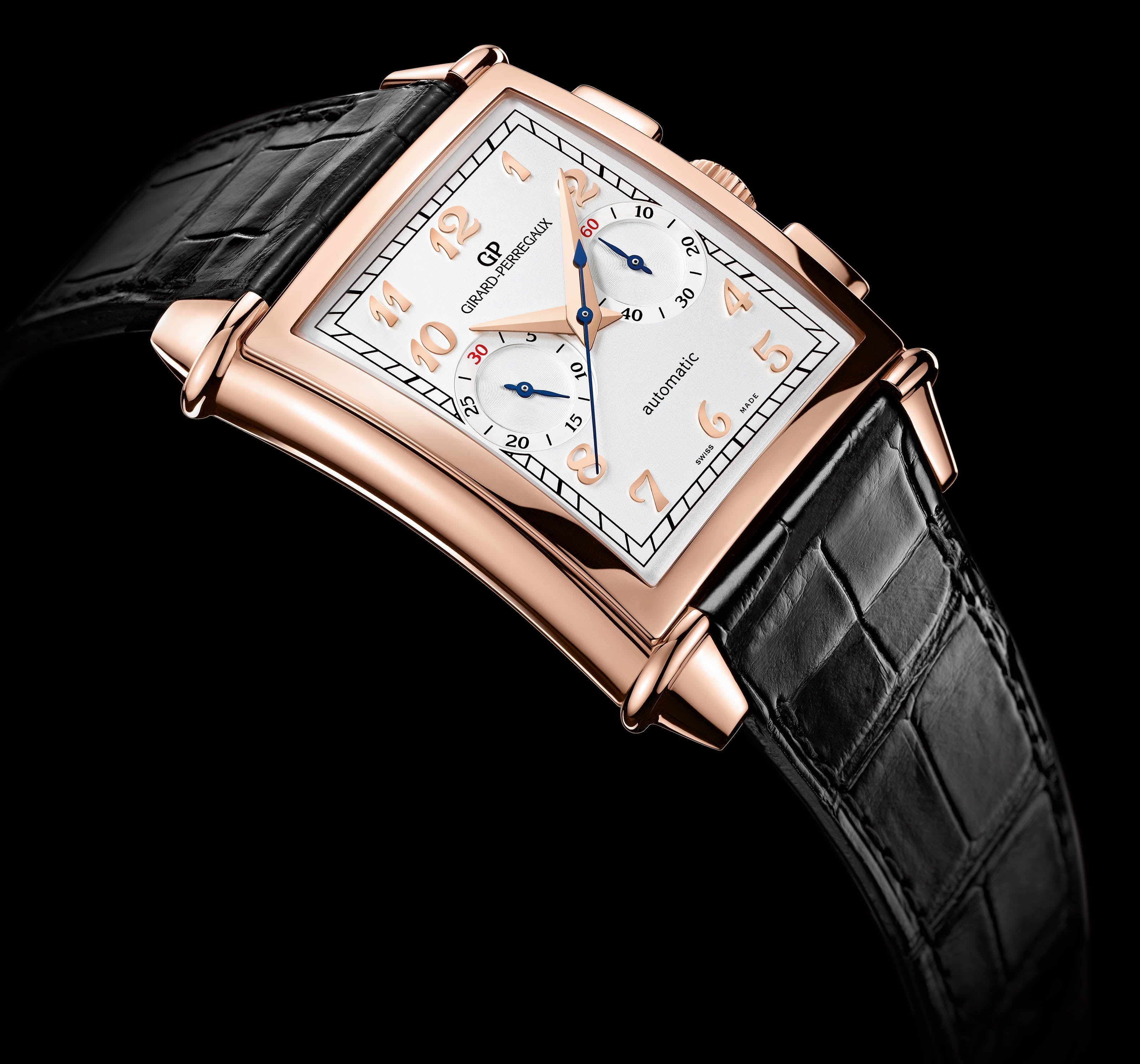
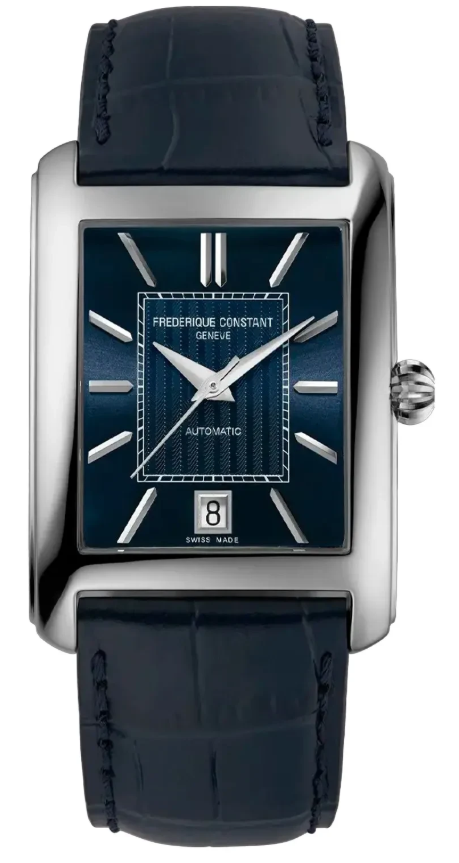
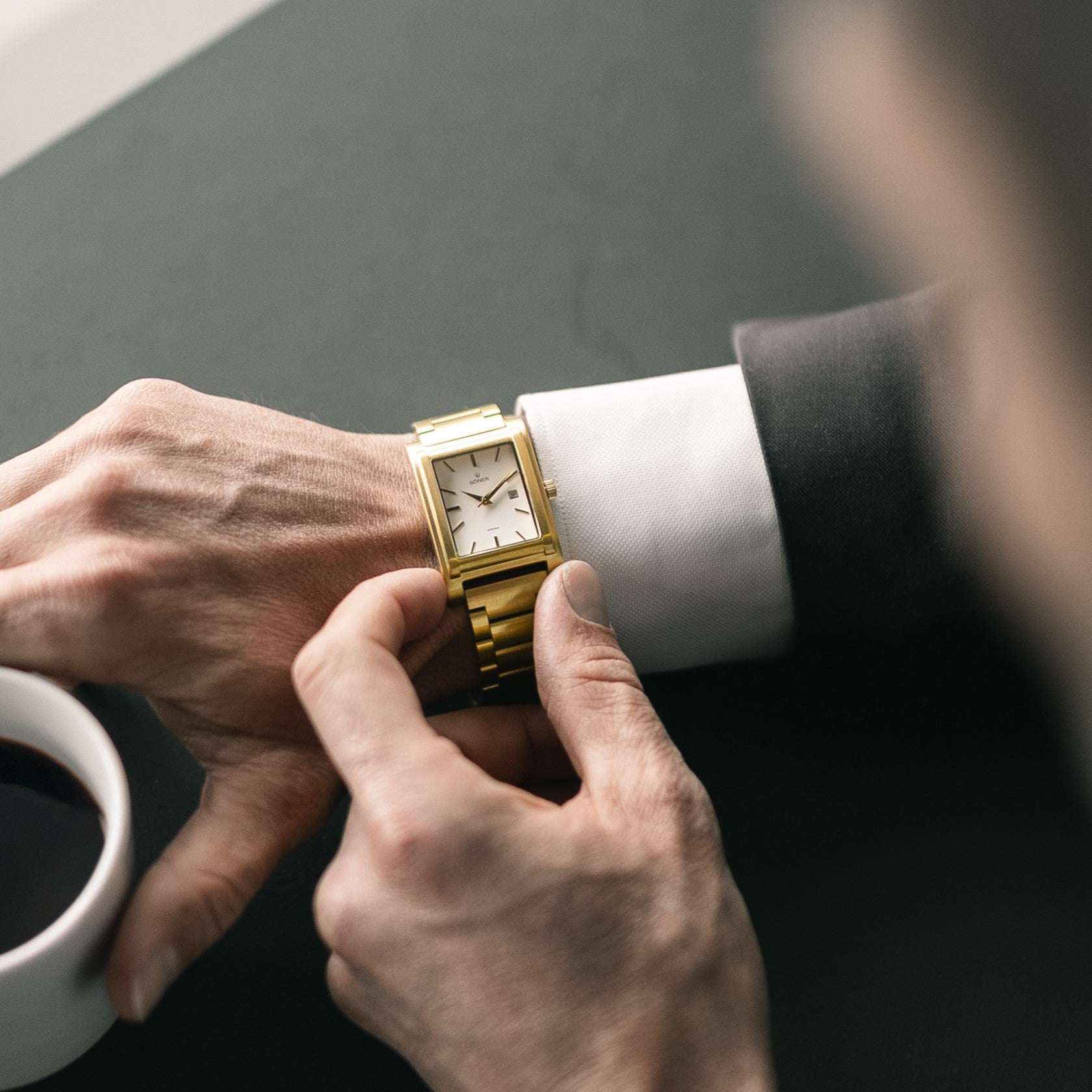
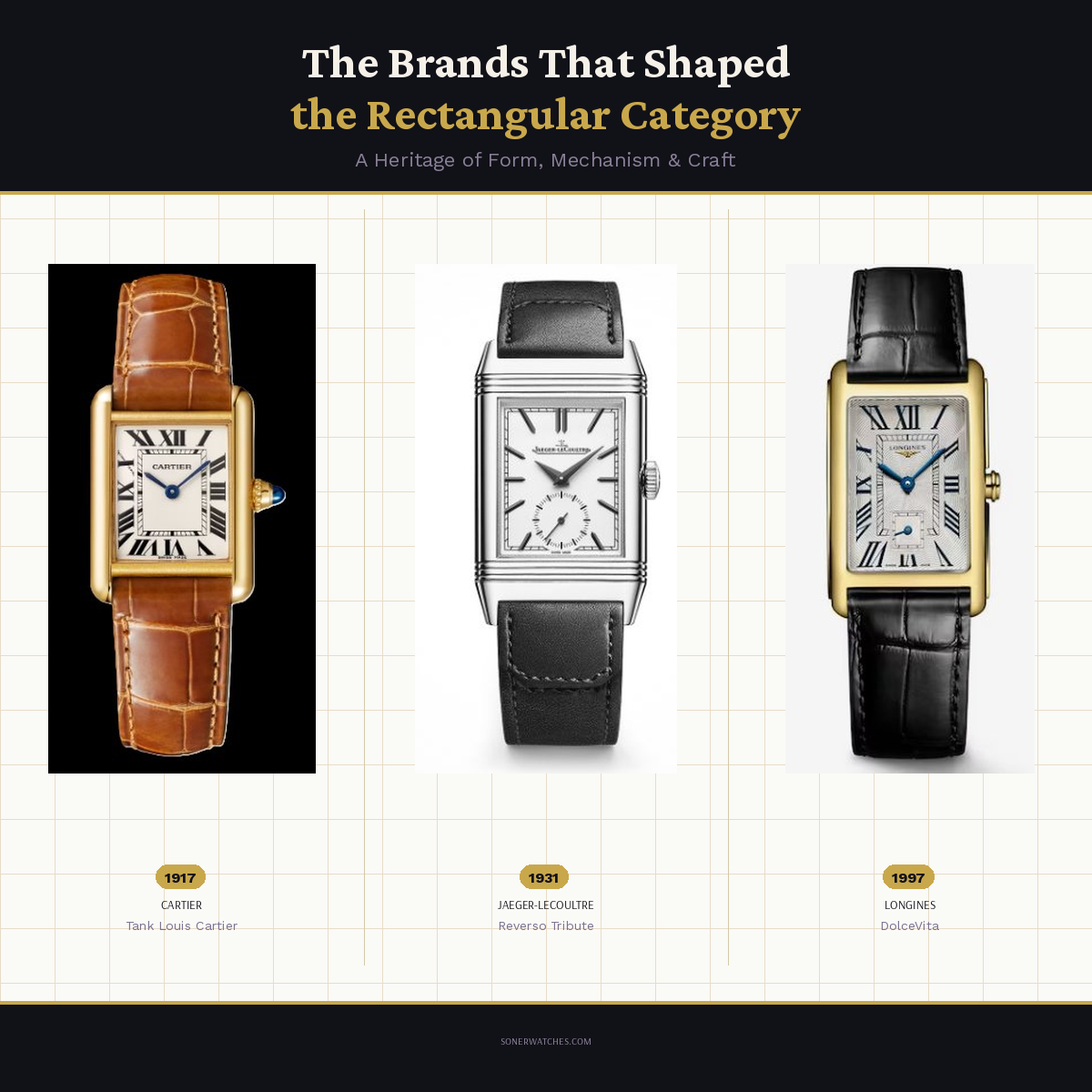
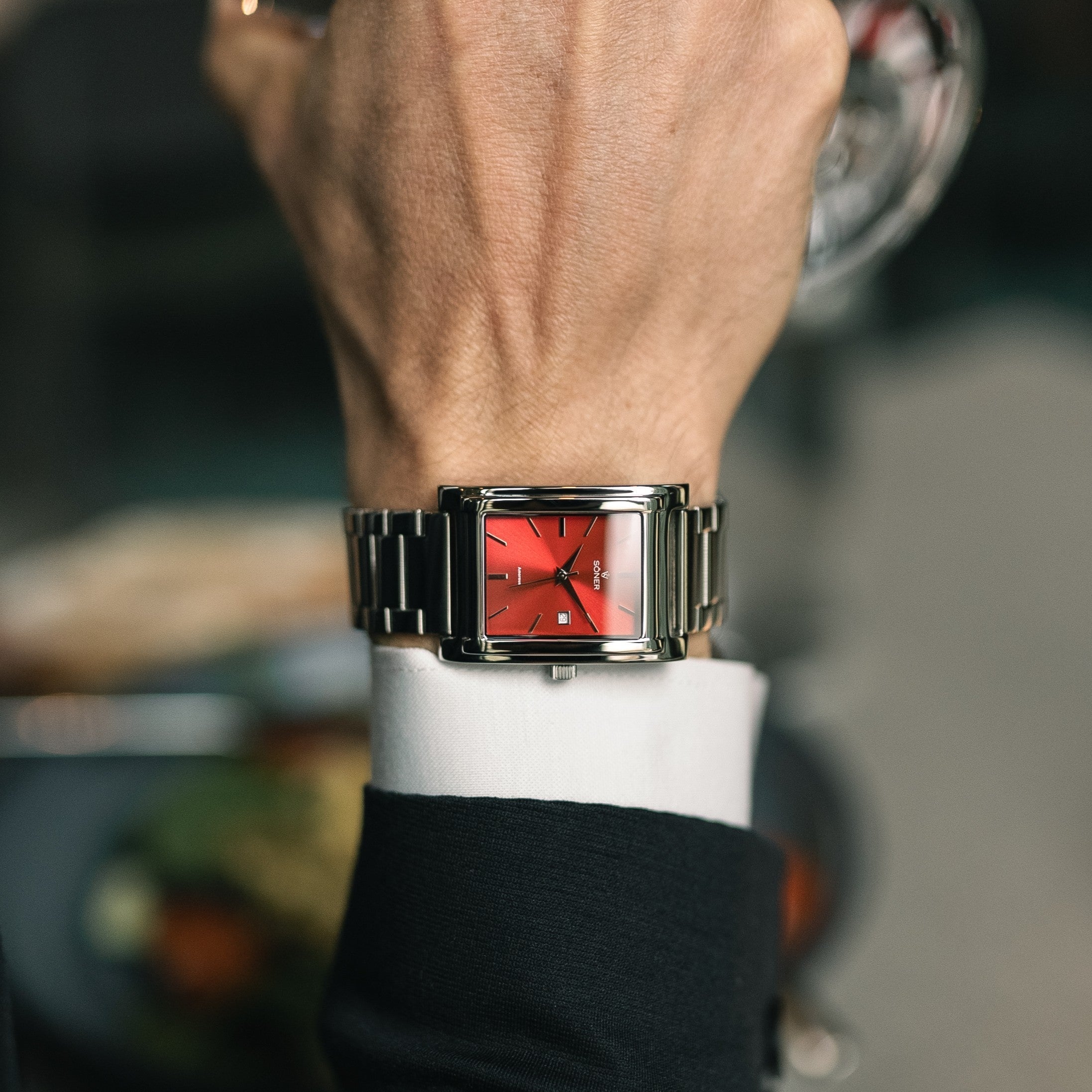
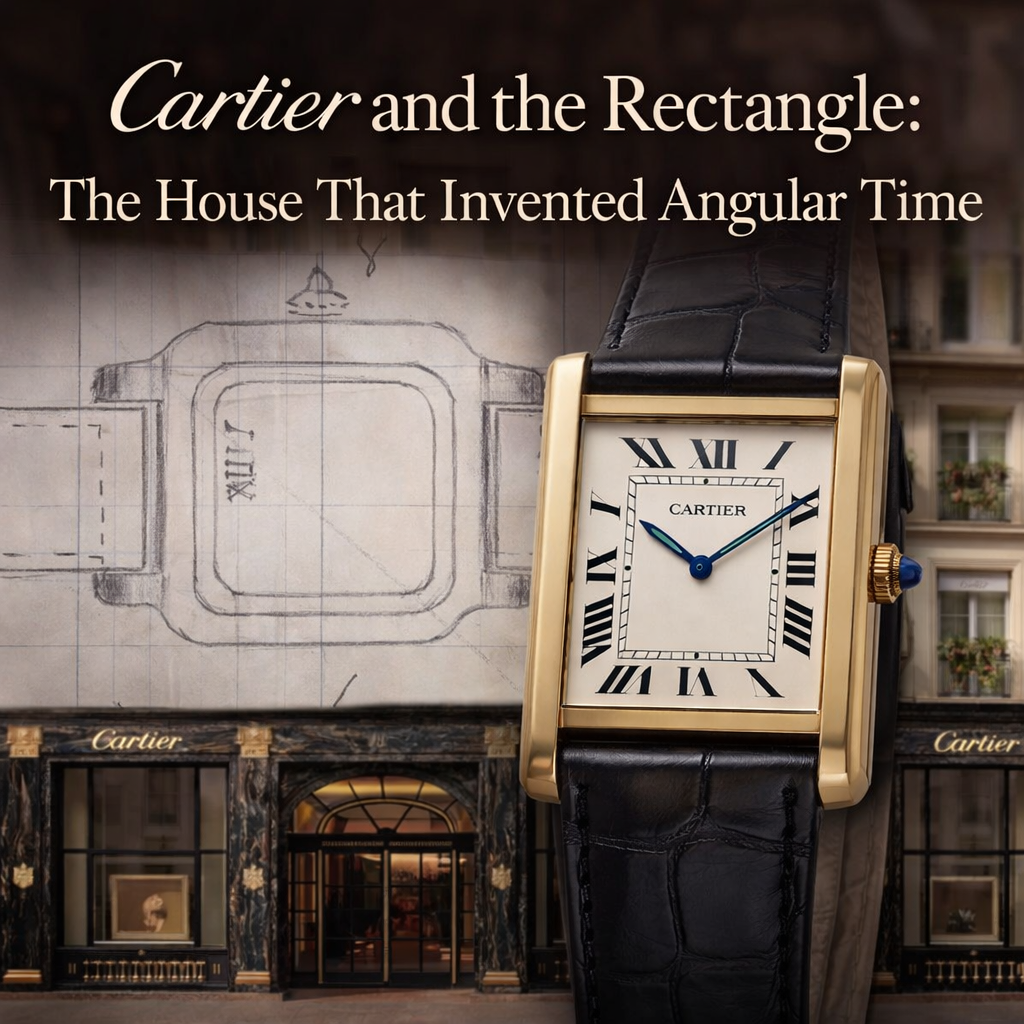
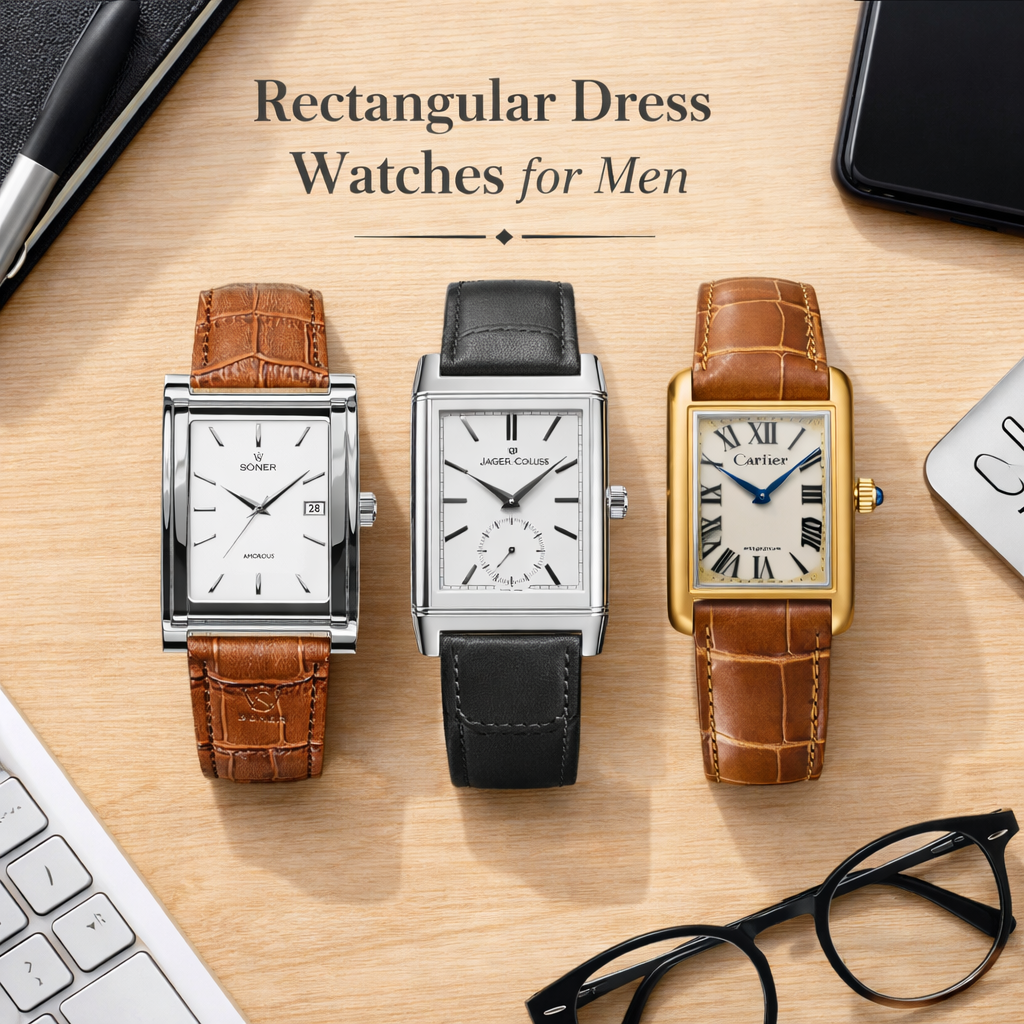
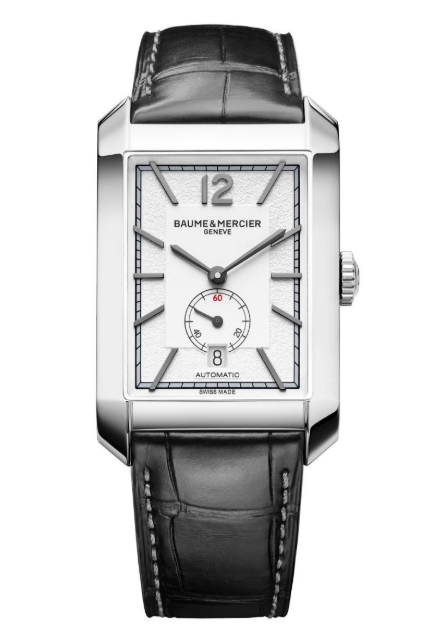
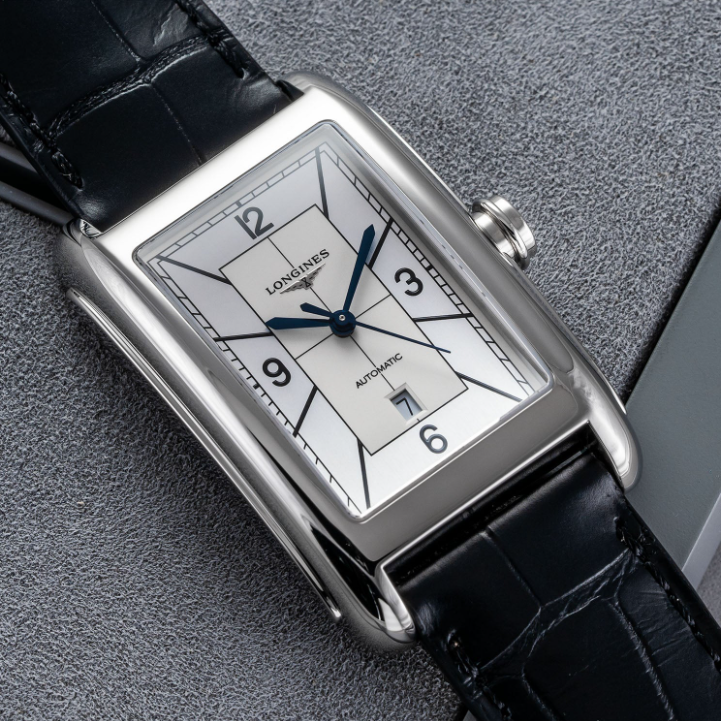
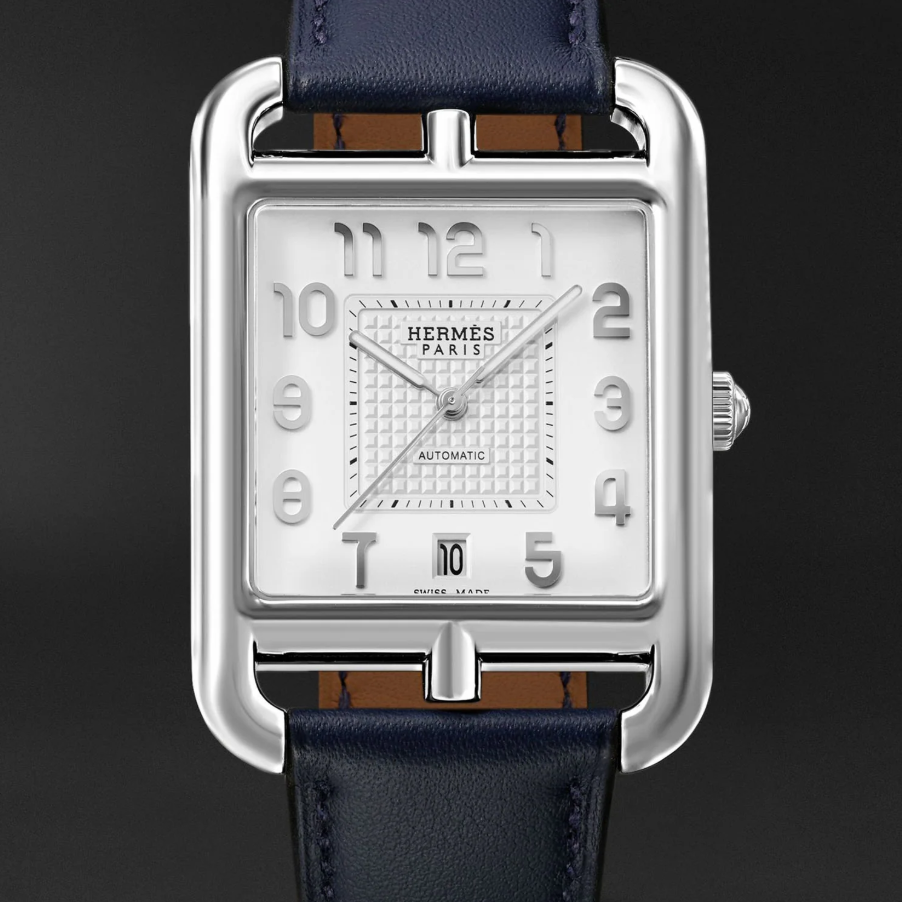
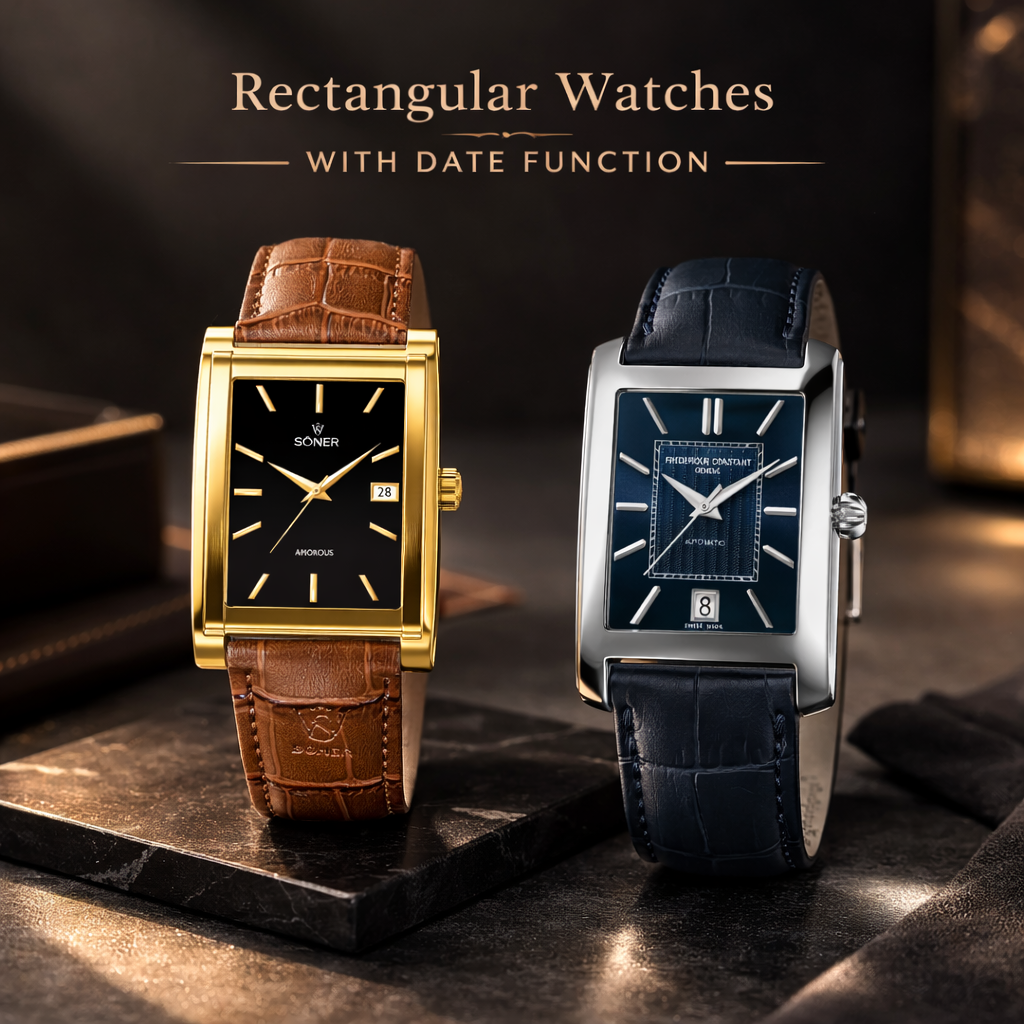
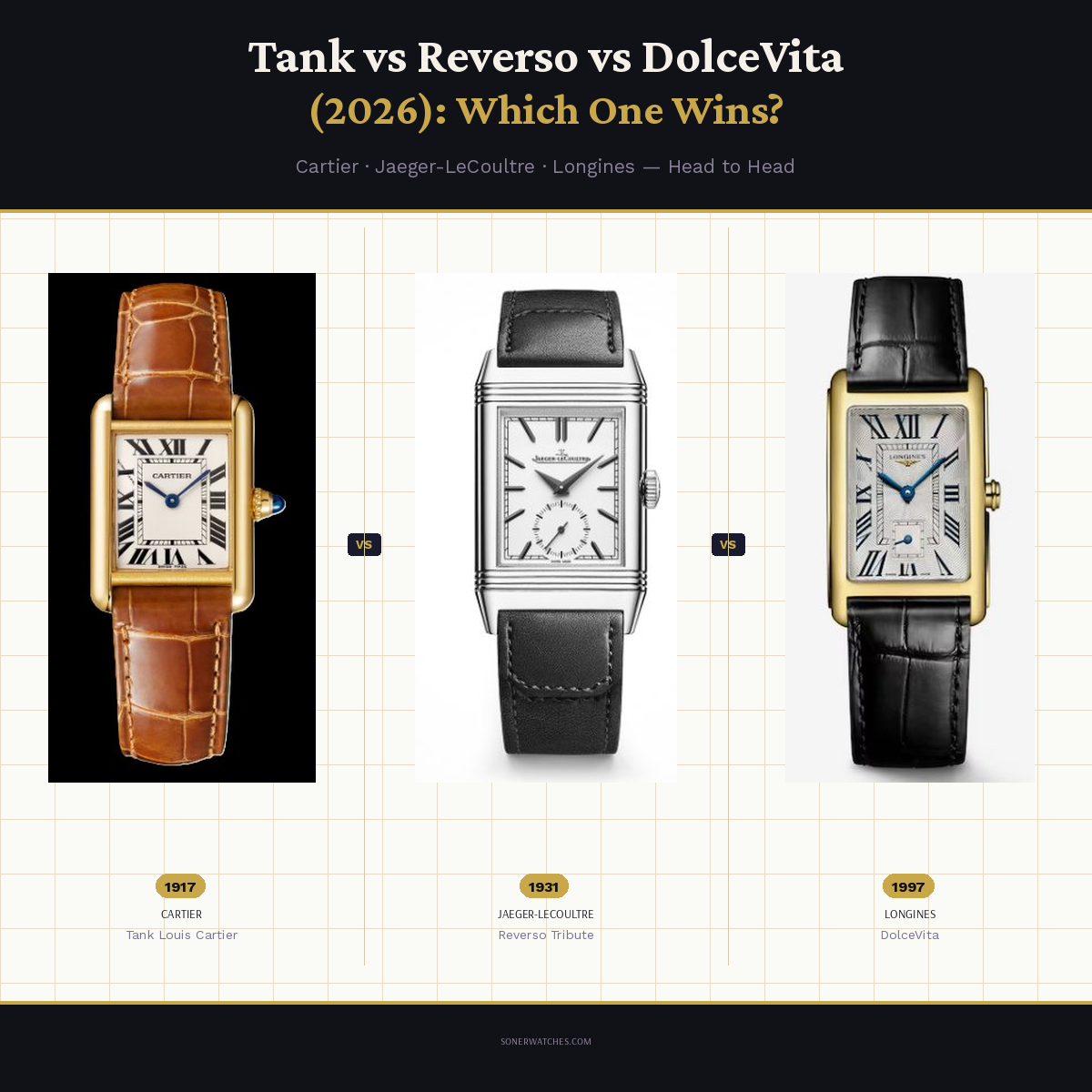
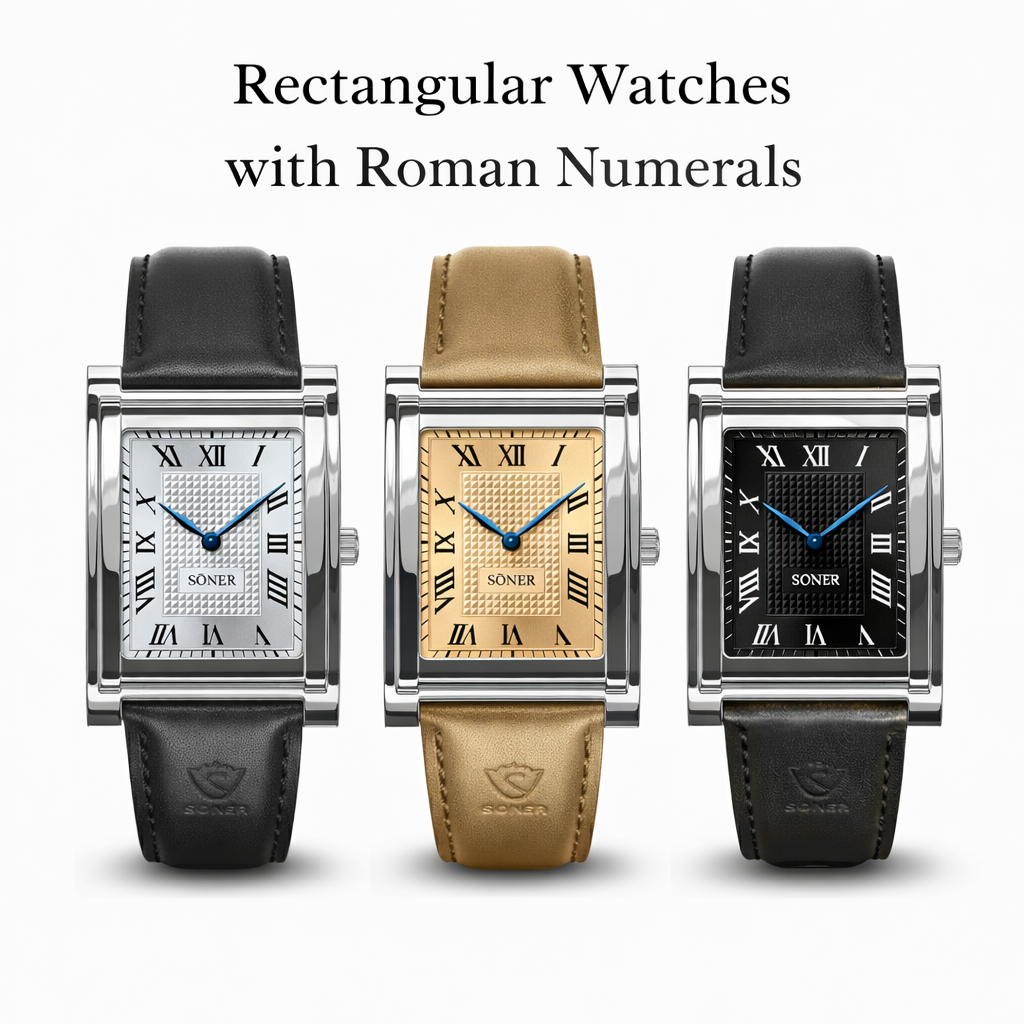
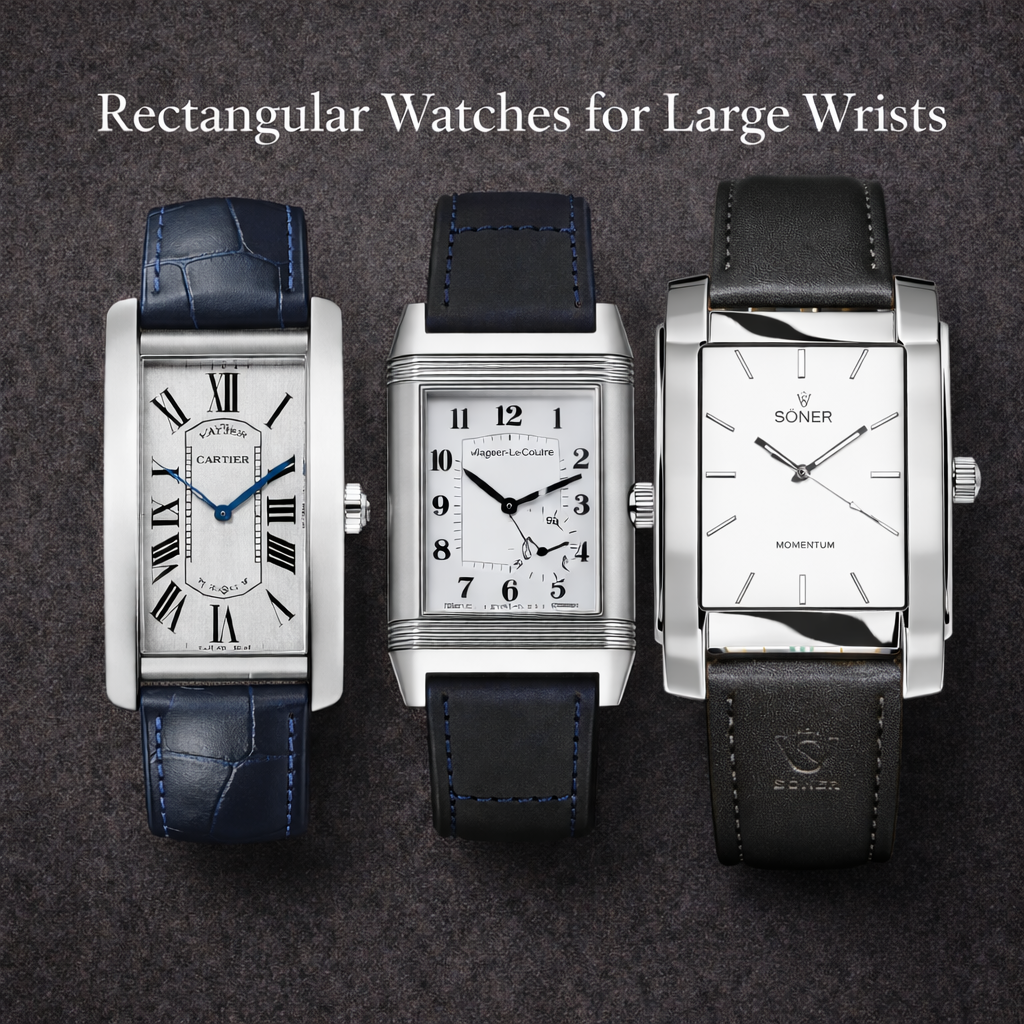
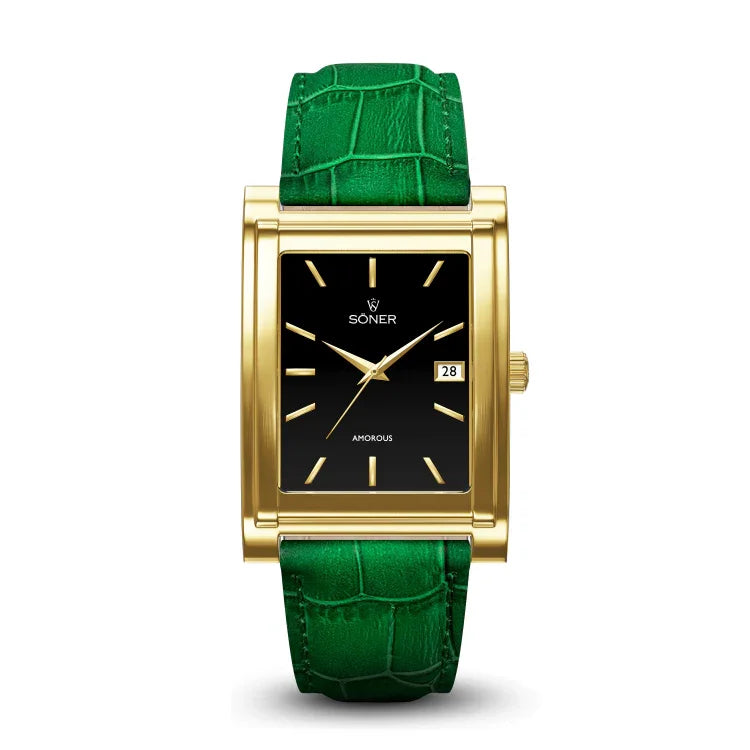
Rectangular dress watches are particularly strong for professional contexts. The case shape follows the geometry of the wrist and sleeve, sitting flatter and integrating more naturally with formal dress than a round case of equivalent size. The Cartier Tank has been the professional dress watch of choice for cultural figures from Jacqueline Kennedy to Andy Warhol for over a century for exactly this reason. For more on the category, see our guide to men's dress watches.
Luxury Watches
A Rolex Datejust, Patek Philippe Calatrava, or Cartier Tank communicates success and cultural awareness simultaneously. These watches are not primarily status symbols - they are objects with documented histories worn by figures who understood the power of a considered accessory. In senior professional contexts, a quality luxury watch reads as entirely appropriate.
The important distinction is between dressy luxury watches and sport luxury watches. A Rolex Submariner is appropriate in many professional settings but reads as sporty rather than formal. A Rolex Datejust or Cartier Tank reads as formal. Match the watch's register to the occasion.
Quality Swiss and Mid-Range Options
Professional watch quality is accessible well below the luxury tier. A Swiss-movement watch with sapphire crystal, 316L steel case, and a clean leather strap at $500-800 performs exactly the same professional function as a much more expensive watch. The key specifications are movement origin, crystal material, and finishing quality - not price.
Smartwatches in Professional Settings
A premium Apple Watch or Samsung Galaxy Watch in a neutral colour with a leather or metal band is acceptable in most professional environments, particularly in technology, creative, or startup contexts. In traditional finance, law, or corporate environments, a conventional watch generally reads as more considered. Know your industry's norms and dress to slightly above them.

How to Choose the Right Professional Watch
Match the Watch to the Context
Different professional contexts have different norms. Finance, law, and consulting tend toward conservative dress - a slim rectangular or round dress watch on a dark leather strap is the safest and most effective choice. Creative industries allow more latitude - an interesting case shape or coloured dial reads as considered personal style rather than inappropriate. Technology environments are the most casual - a quality watch of any type is generally appropriate.
When in doubt, err toward restraint. A more formal watch in a casual context reads as considered. A casual watch in a formal context reads as a mismatch.
Size and Fit
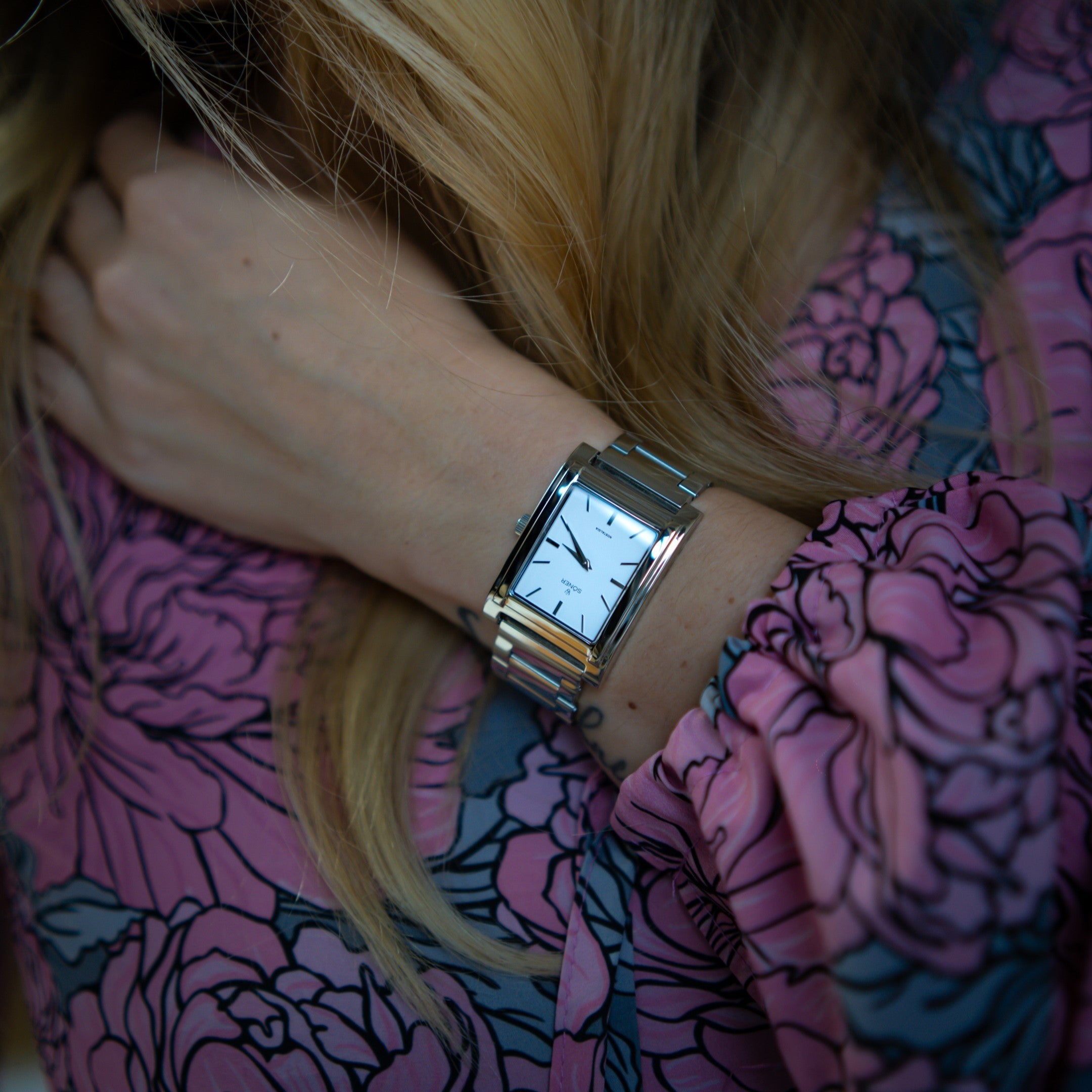
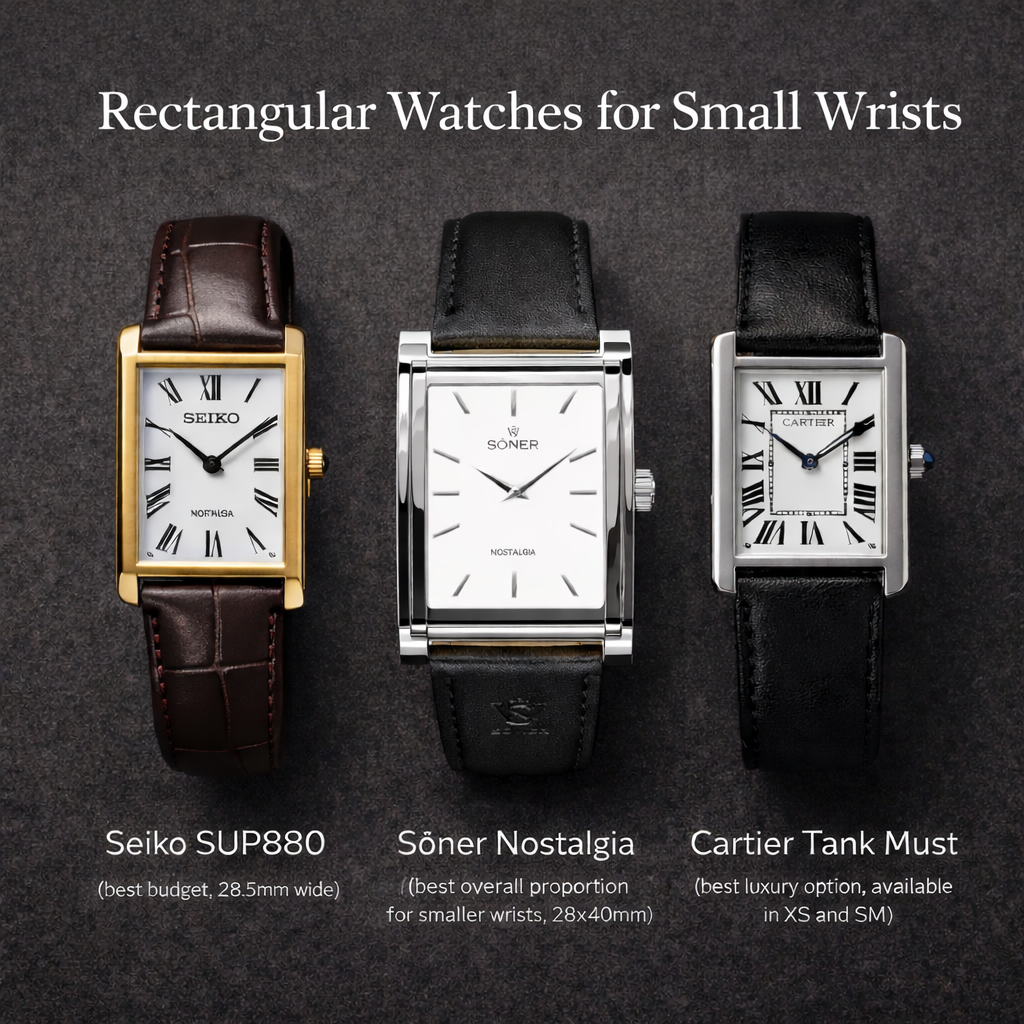
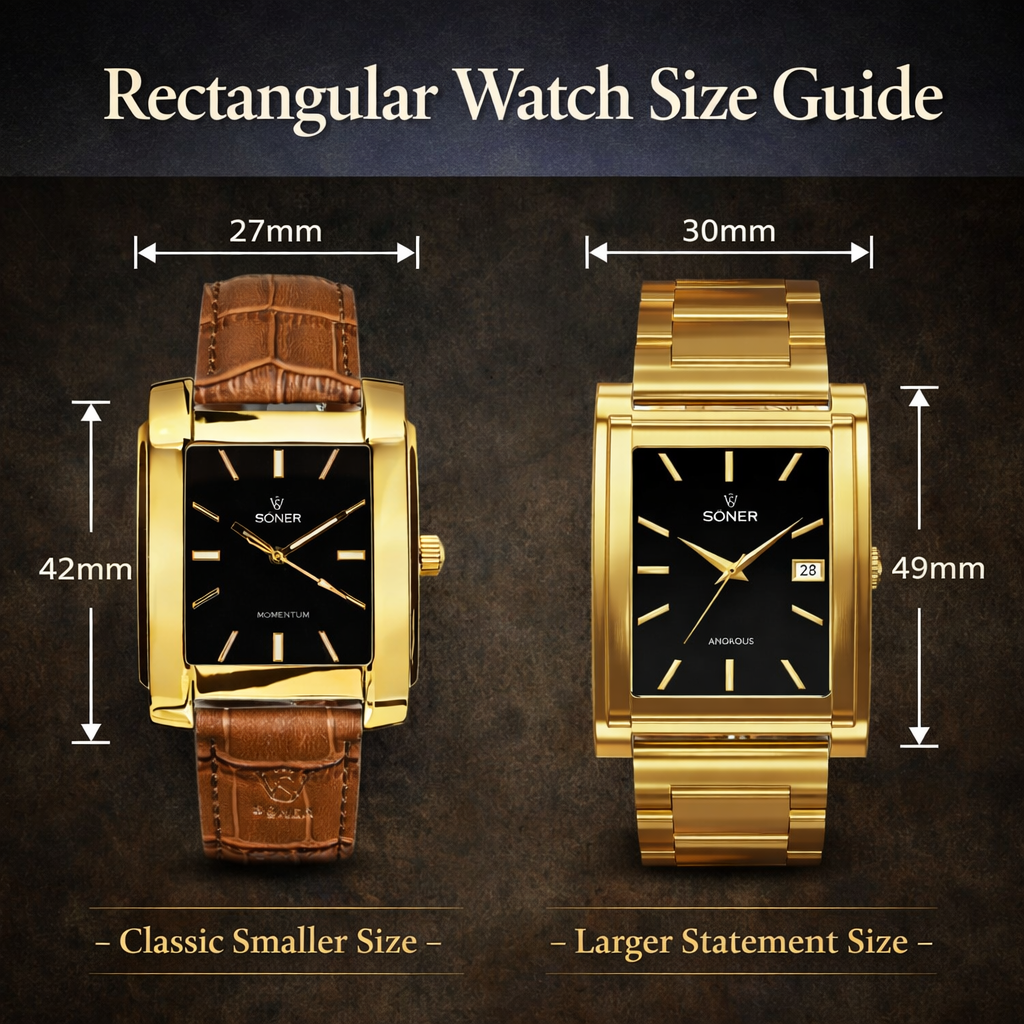
A watch that overhangs the wrist or sits too thick under a cuff undermines the professional effect regardless of quality. Two measurements matter: case width (the watch should sit within the wrist's width without significant overhang) and case thickness (the watch should slide under a shirt cuff without creating a visible bump). For detailed guidance on getting these right, see our rectangular watch size guide.
Colour and Coordination
Match the watch metal to your other metal accessories - belt buckle, cufflinks, tie bar if worn. Silver and steel are the most versatile. Gold works with warmer complexions and warmer outfit colours. Rose gold is contemporary but requires more care to coordinate. For the dial, white or black are the most versatile. Navy, grey, and slate green dials work well with most professional wardrobes.
Budget
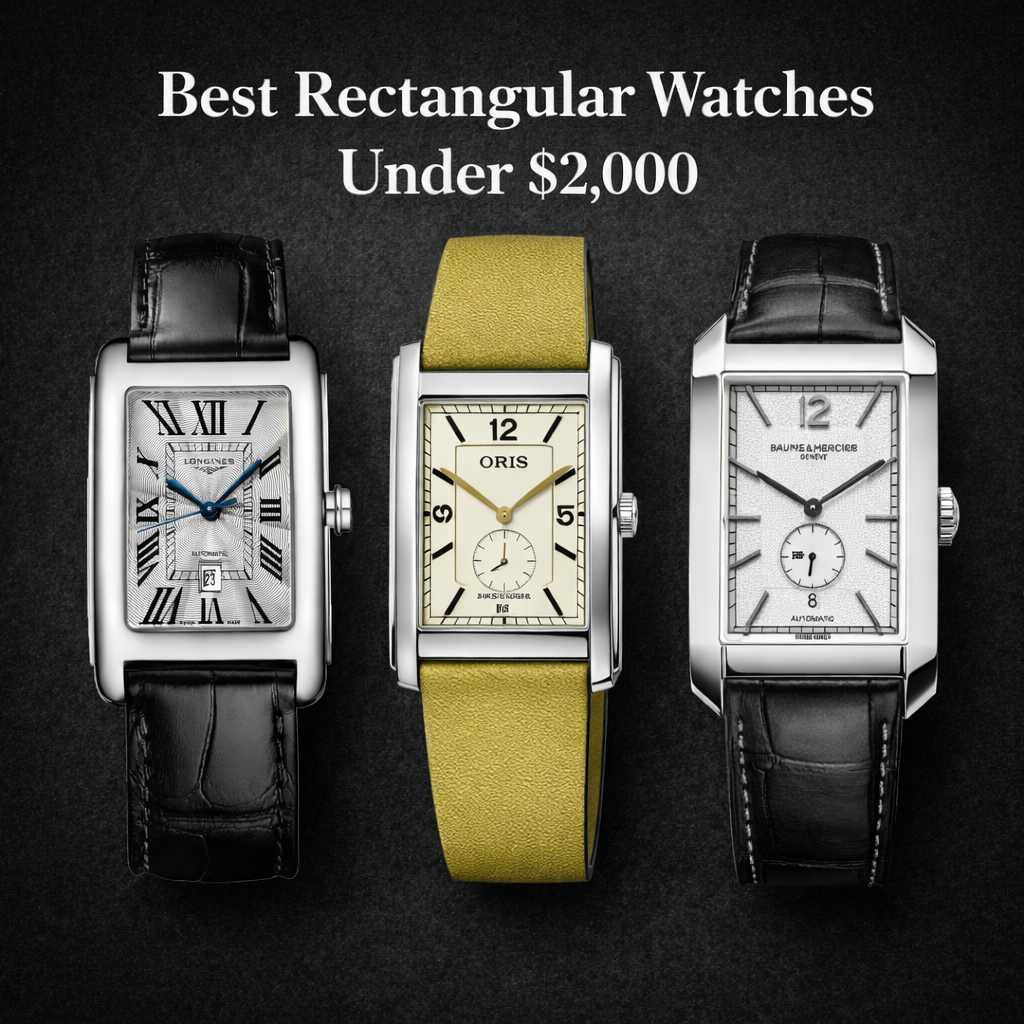
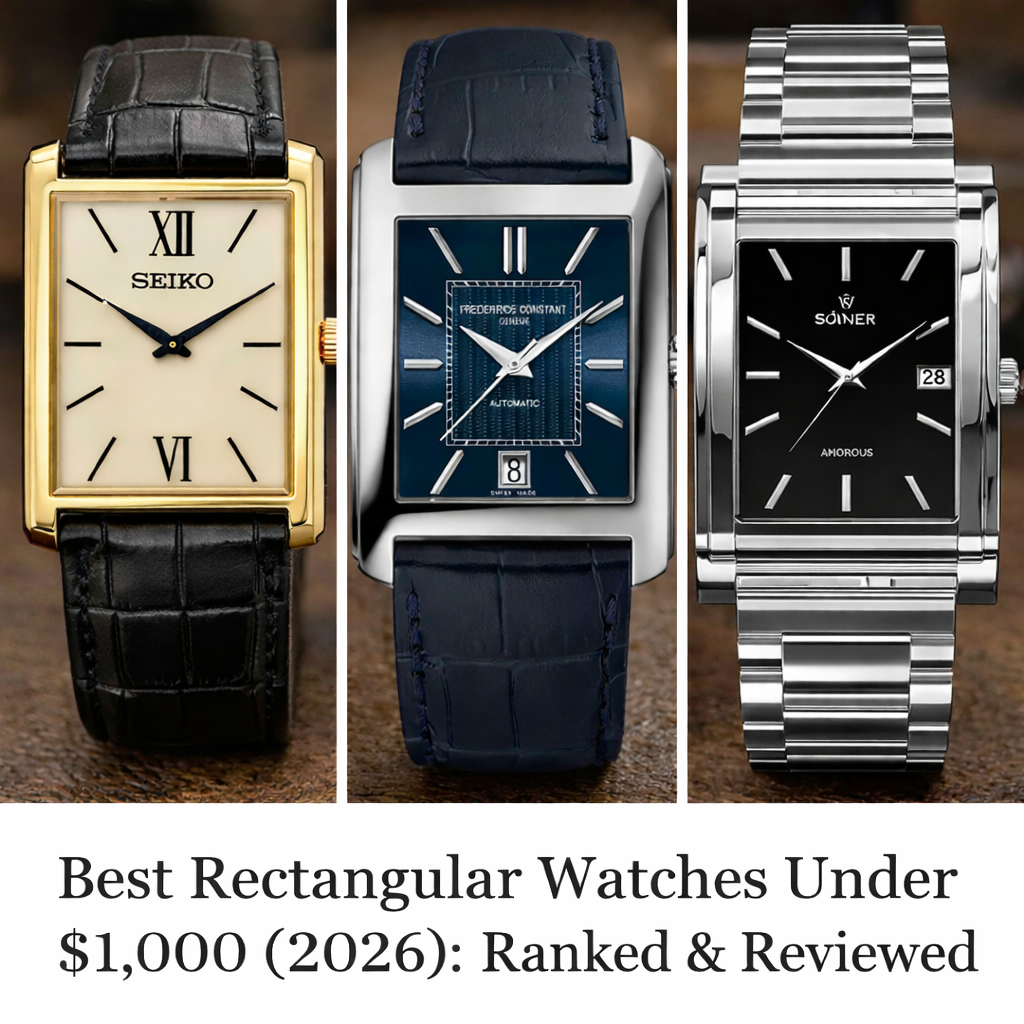
A professional watch does not need to be expensive. The specifications that matter - sapphire crystal, 316L steel, Swiss movement, slim profile - are available at $400-600. Above that, the incremental improvements are in finishing, heritage, and brand equity rather than in functionality. For the best options across every price point, see our guide to the best rectangular watches in 2026.

Caring for Your Professional Watch
A professional watch needs to look the part consistently. A soft cloth wipe after each wear removes fingerprints and surface oils. For leather straps, avoid prolonged moisture exposure and condition periodically. For metal bracelets, a slightly damp cloth monthly keeps the finish clean. Store the watch in a box or pouch when not wearing it to prevent case contact with harder surfaces.
Mechanical movements benefit from a service every 5-7 years. Quartz movements need a battery replacement as the manufacturer indicates. The Söner Nostalgia's 11-year Swiss ETA battery eliminates this consideration for a decade. For full maintenance guidance, see our guide to preserving the longevity of your watch.
Frequently Asked Questions
What type of watch looks most professional?
A slim dress watch with a minimal dial and a leather strap is the most universally professional choice. Rectangular cases are particularly strong - they slide under shirt cuffs more cleanly than round cases and have a richer design history associated with authority and precision. The key specifications are case thickness under 10mm, a clean dial without busy complications, and a dark leather strap for formal contexts.
Should I wear a watch to a job interview?
Yes. A quality watch in a professional context communicates punctuality, attention to detail, and considered personal style - all qualities you want to project in an interview. Keep it simple: a clean dress watch on a leather strap is the safest and most effective choice. Avoid large sports watches or smartwatches in traditional professional environments.
Is a Rolex appropriate for a professional setting?
Yes, particularly dressy Rolex models like the Datejust or Day-Date. A Rolex Submariner is appropriate in most professional settings but reads as sportier than a dress watch. The right Rolex for a formal professional context is one with a clean dial and a leather strap or refined bracelet rather than a bold sports bezel.
What colour watch is best for the office?
Silver or steel cases are the most versatile for professional wear. White or black dials work with virtually every professional wardrobe colour. Gold cases work well with warmer complexions and earth-tone outfits. For the strap, dark brown or black leather is the most formal and versatile option.
Can I wear a rectangular watch to work?
Yes - a rectangular watch is one of the strongest professional choices available. The slim profile slides cleanly under shirt cuffs, the geometric case reads as considered and architecturally aware, and the design tradition connects to figures associated with authority and precision across a century. The Cartier Tank is perhaps the defining professional dress watch. For accessible rectangular options, see our guide to the best rectangular watches in 2026.
How much should I spend on a professional watch?
The right specifications - sapphire crystal, Swiss movement, 316L steel, slim profile - are available from approximately $400-600. Above that, you are paying for finishing quality, brand heritage, and investment potential rather than for professional functionality. A $500 Swiss rectangular dress watch performs the same professional role as a $3,000 Cartier Tank. Both are entirely appropriate. The question is whether the additional spend on heritage and luxury positioning matters to you in your specific professional context.