



 Published on
Table of Contents
Der Markt für rechteckige Uhren umfasst eine der breitesten Preisspannen aller Uhrenkategorien. Eine kompetente rechteckige Uhr ist für unter 400 $ erhältlich. Die außergewöhnlichsten Exemplare kosten mehr als 100.000 $. Zwischen diesen Extremen bietet jede Stufe ein bedeutend unterschiedliches Niveau an Fertigungsqualität, Werkkomplexität, Verarbeitungspräzision und Erbe.
Zu verstehen, was jede Preisklasse tatsächlich bietet und was nicht, ist entscheidend, um einen Kauf zu tätigen, der echten Wert darstellt und weder falsche Sparsamkeit noch unnötige Überausgaben bedeutet. Dieser Artikel kartiert den Markt für rechteckige Uhren von der Einstiegsebene bis zur Haute Horlogerie, beschreibt, was Käufer in jeder Stufe erwarten sollten, welche Marken und Referenzen dort dazugehören und wie man die besten Optionen innerhalb jeder Preisspanne identifiziert.
Der definitive Leitfaden für rechteckige Uhren bietet den vollständigen analytischen Rahmen für die Kategorie. Dieser Artikel wendet diesen Rahmen speziell auf die Frage von Preis und Wert an.
Wie man den Wert bei rechteckigen Uhren einschätzt
Der Wert in der Kategorie der rechteckigen Uhren ist keine einfache Funktion des Preises. Er umfasst das Verhältnis zwischen dem, was man bezahlt, und dem, was man erhält, über mehrere Dimensionen gleichzeitig: Gehäusequalität und Verarbeitung, Werkqualität und -angemessenheit, Designkohärenz, Markenherkunft, langfristige Wartbarkeit und Leistung auf dem Sekundärmarkt.
Bei niedrigeren Preispunkten ergibt sich der Wert hauptsächlich aus gut ausgeführtem Design und zuverlässigen Quarzwerken in ordentlich verarbeiteten Gehäusen. Bei mittleren Preispunkten entsteht der Wert aus der Kombination von uhrmacherischem Erbe, hochwertiger Verarbeitung und passenden Uhrwerken. An der Spitze des Marktes definiert sich der Wert durch technische Meisterleistung, edle Materialien und die Art von Raffinesse, die erst bei genauerer Betrachtung über die Zeit sichtbar wird.
Der schlechteste Wert in jeder Stufe ist eine Uhr, die am oberen Ende ihrer Preisspanne liegt, ohne die Fertigungsqualität, die dies rechtfertigt. Der beste Wert in jeder Stufe ist eine Uhr, die Qualitätsmerkmale liefert, die typisch für die nächsthöhere Stufe sind.
Ein konstantes Merkmal des Marktes für rechteckige Uhren ist, dass die Fertigungskomplexität bedeutet, dass der Qualitätsunterschied zwischen den Stufen ausgeprägter ist als bei runden Uhren. Eine mittelklassige runde Uhr und eine Luxus-Rund-Uhr können für einen ungeübten Beobachter ähnlich aussehen. Eine mittelklassige rechteckige Uhr und eine Luxus-Rechteck-Uhr sehen und fühlen sich von Anfang an unterschiedlich an. Die Eckverarbeitung, die Kristallanpassung, die Kronenfunktion und die Gehäuseproportionen zeigen die Fertigungsinvestition bei einem rechteckigen Gehäuse deutlicher als bei einem runden.
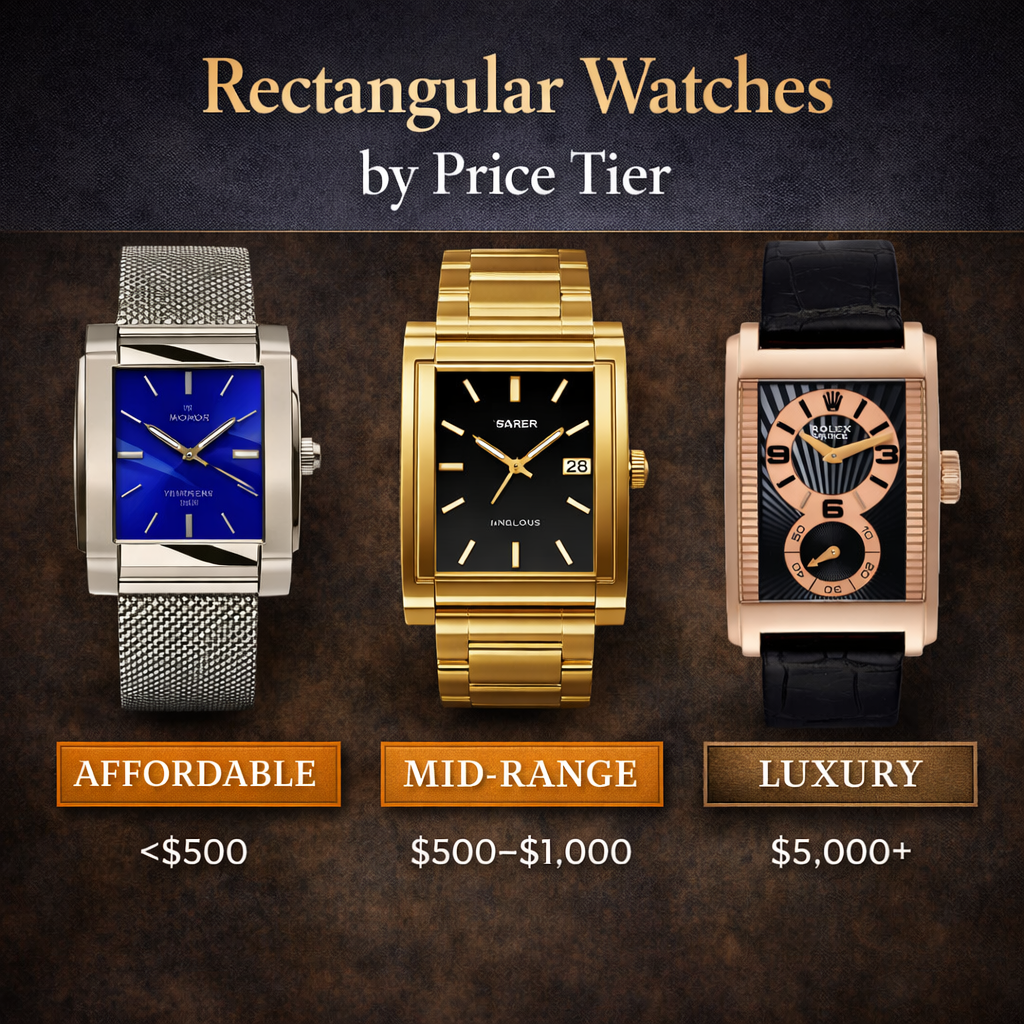
Stufe 1: Einstiegsebene (unter 500 $)
Was Sie erwarten können
Unter 500 US-Dollar wird der Markt für rechteckige Uhren von Modeuhren, Einstiegs-Swiss-Marken und japanischen Herstellern dominiert. Die Uhrwerke sind fast ausschließlich Quarz, was angesichts des verfügbaren Fertigungsbudgets die richtige Wahl ist. Die Gehäuse sind typischerweise aus Edelstahl, gelegentlich mit PVD-Beschichtung. Die Gläser sind im unteren Bereich Mineralglas und im oberen Bereich Saphirglas. Lederarmbänder sind Standard, oft von mittlerer Qualität.
Die Gehäuseverarbeitung in diesem Segment ist funktional, aber nicht verfeinert. Polier- und Bürstübergänge sind vorhanden, aber nicht präzise ausgeführt. Kanten an den Ecken sind erkennbar, aber nicht scharf ausgearbeitet. Der Gesamteindruck ist der eines kompetenten, kommerziellen Produkts und nicht eines durchdachten.
Worauf man achten sollte
Innerhalb dieses Segments ist das wichtigste Qualitätsmerkmal das Glasmaterial. Ein Saphirglas in dieser Preisklasse zeigt, dass der Hersteller auch bei niedrigen Margen in hochwertige Komponenten investiert. Ein Mineralglas hingegen signalisiert das Gegenteil. Alle anderen Komponenten sind in diesem Segment markenübergreifend ungefähr vergleichbar, aber das Glas ist ein verlässlicher Unterscheidungsfaktor.
Der zweite Qualitätsindikator ist die Gehäusegeometrie. Ein rechteckiges Gehäuse in dieser Preisklasse, das konsistente Proportionen aufweist und dessen Ecken bewusst gestaltet wirken statt ungenau, ist ein besseres Produkt als eines mit schlampiger Geometrie, die auf unpräzise Fertigung hinweist.
In diesem Segment sind etablierte Uhrenmarken wichtiger als sonst. Tissot, Seiko und Citizen produzieren alle rechteckige Uhren in dieser Preisklasse mit einer Fertigungsqualität, die die ähnlich teuren Modeuhren deutlich übertrifft. Die Tradition und Qualitätskontrollinfrastruktur dieser Hersteller sorgt für ein deutlich besseres Produkt zum gleichen Preis.
Bemerkenswerte Referenzen auf diesem Niveau
Tissot produziert rechteckige Modelle in den Kollektionen T-Gold und Heritage, die kompetente, gut verarbeitete Quarzuhren mit Schweizer Uhrwerkstradition darstellen. Seiko rechteckige Modelle bieten ausgezeichnete Zuverlässigkeit der Uhrwerke und Saphirgläser zu wettbewerbsfähigen Preisen. Mehrere Citizen Eco-Drive rechteckige Modelle liefern solarbetriebene Quarzwerke mit mehrjährigem batterielosem Betrieb, was ein echter praktischer Vorteil ist.
Die Obergrenze dieser Stufe liegt bei etwa 400 bis 500 US-Dollar, wo sich die besten Einstiegsmodelle befinden. Unter 200 US-Dollar wird die Kategorie von Modeuhren dominiert, bei denen das rechteckige Gehäuse hauptsächlich eine Stilentscheidung ist und wenig handwerkliche Substanz dahintersteckt.
Stufe 2: Mittleres Preissegment (500 bis 2.000 US-Dollar)
Was Sie erwarten können
Im mittleren Preissegment wird die Kategorie der rechteckigen Uhren wirklich interessant. Für 500 bis 2.000 US-Dollar erhalten Käufer Uhren von Herstellern mit echter Uhrmachertradition, bessere Uhrwerke einschließlich Einstiegs-Automatik- und Handaufzugskaliber sowie deutlich verbesserte Gehäuseverarbeitung. Saphirgläser sind Standard. Lederarmbänder verbessern sich in der Qualität. Die Gehäuseproportionen sind präziser ausgeführt.
Dies ist die Stufe, auf der das Tragen einer rechteckigen Uhr vom Funktionalen zum Angenehmen wechselt. Das Gefühl eines gut veredelten Stahlgehäuses in der Hand, die Sanftheit einer hochwertigen Krone, die Ablesbarkeit eines gut gestalteten Zifferblatts: Diese Qualitäten treten auf diesem Preisniveau konsistent auf, wie sie darunter nicht zu finden sind.
Worauf man achten sollte
Auf dieser Ebene wird die Wahl des Uhrwerks zu einer bedeutenden Entscheidung. Quarzoptionen sind weiterhin verfügbar und oft die bessere Wahl für Käufer, die Dünnheit priorisieren. Aber Automatik- und Handaufzugswerke von angesehenen Kaliberherstellern treten auf, und für Käufer, die ein mechanisches Uhrwerk ohne Einstieg in das Luxussegment wünschen, bietet sich hier das beste Preis-Leistungs-Verhältnis.
Markenerbe ist auf diesem Niveau wichtig. Eine Uhr eines Herstellers mit jahrzehntelanger Erfahrung in rechteckigen Gehäusen, wie Longines oder Hamilton, bietet bessere Gehäusegeometrie und proportionale Kohärenz als eine Uhr einer Marke, die rechteckige Modelle nur als Erweiterung ohne tiefgehende Erfahrung im nicht-runden Gehäusedesign hinzugefügt hat.
Bemerkenswerte Referenzen auf diesem Niveau
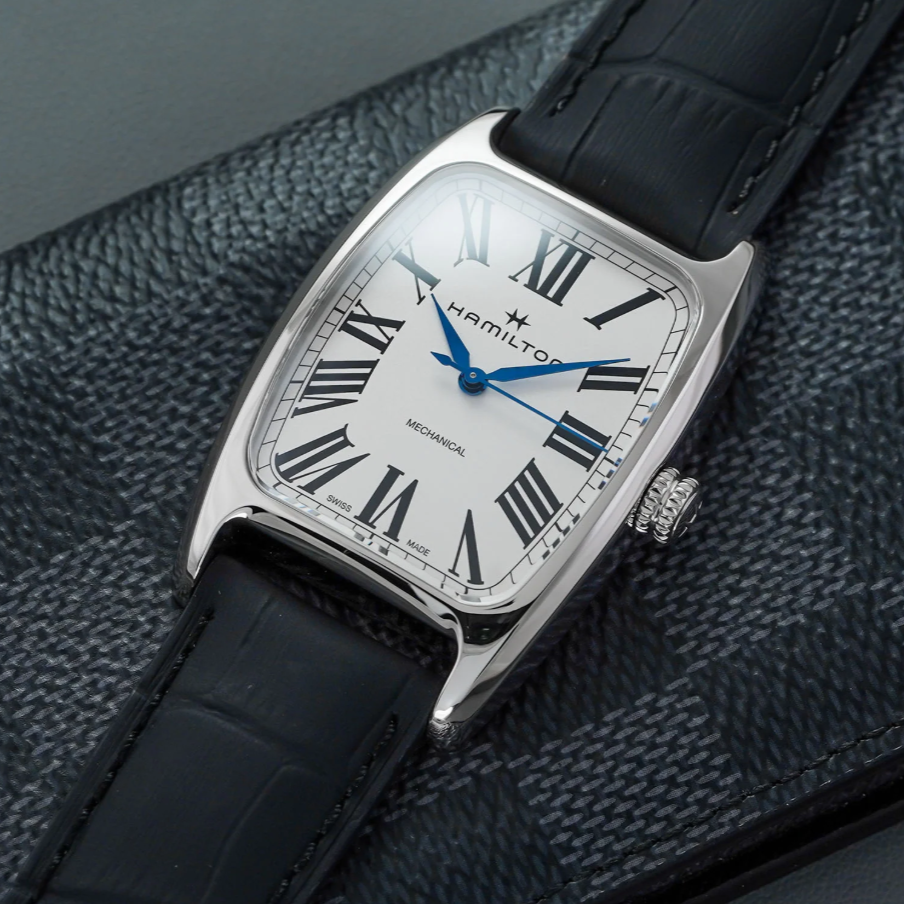
Hamilton American Classic ist einer der herausragenden Werte in der Kategorie rechteckiger Uhren, unabhängig vom Preisniveau. Die schlanken Modelle verwenden richtig proportionierte Gehäuse, hochwertige Schweizer Uhrwerke und klare, zeitlose Zifferblattdesigns. Die mechanischen Varianten bieten echten uhrmacherischen Inhalt zu erschwinglichen Preisen.
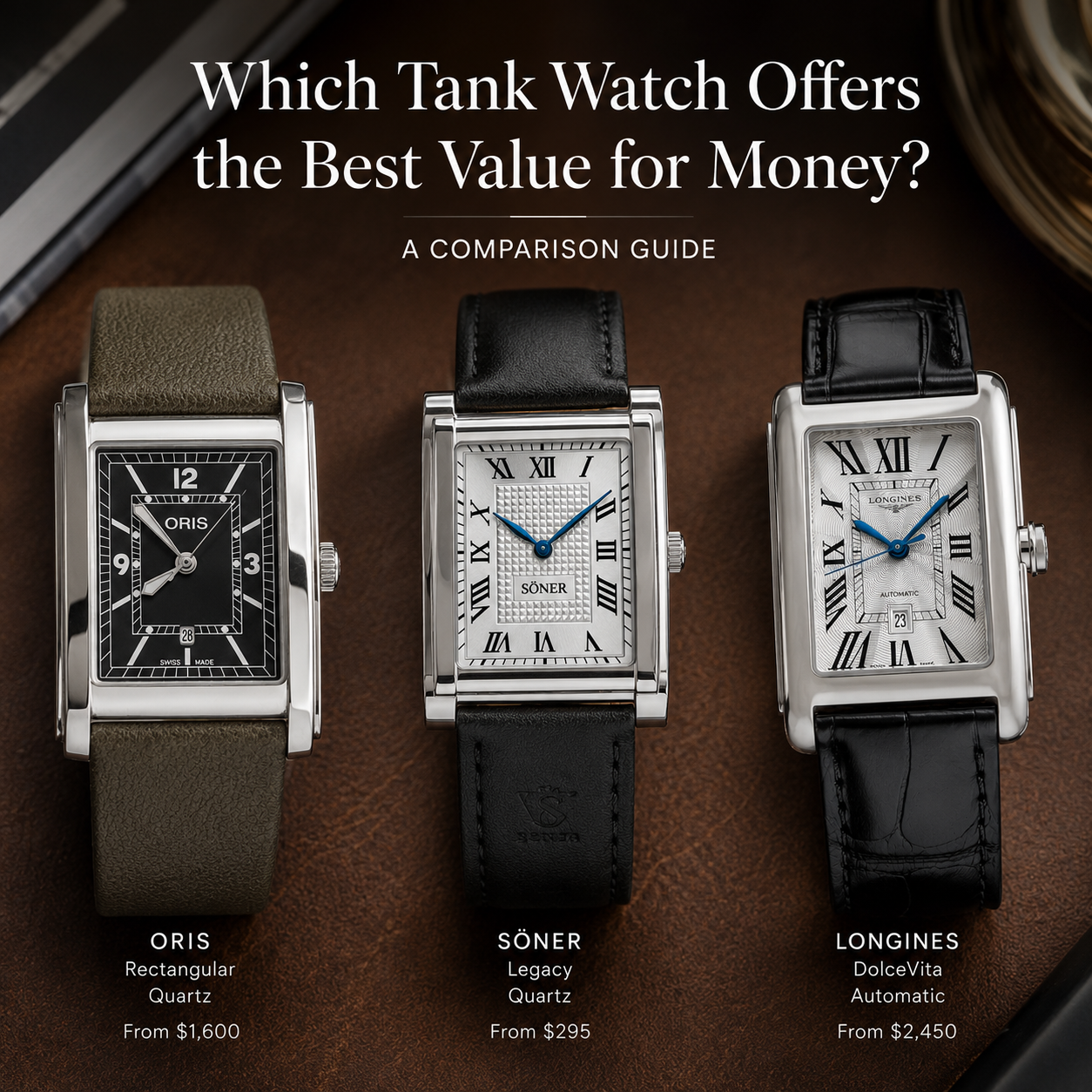
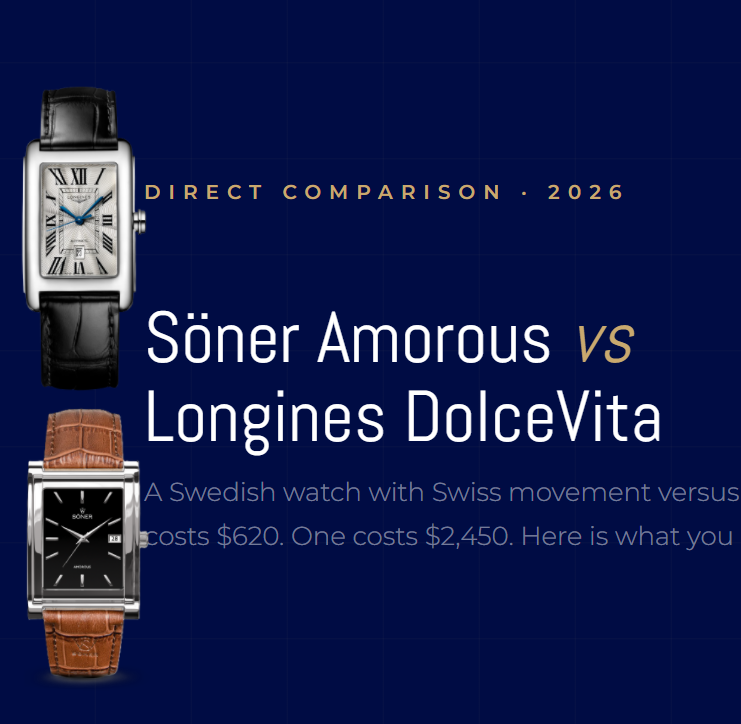
Longines Dolce Vita befindet sich im mittleren Segment sowohl in Quarz- als auch Automatikvarianten. Die Quarzversion erreicht eine hervorragende Gehäusedünne. Die Automatikversion bietet mechanische Glaubwürdigkeit mit angemessener Dicke. Beide repräsentieren echte Schweizer Manufakturqualität zu Preisen weit unterhalb der Luxusklasse.
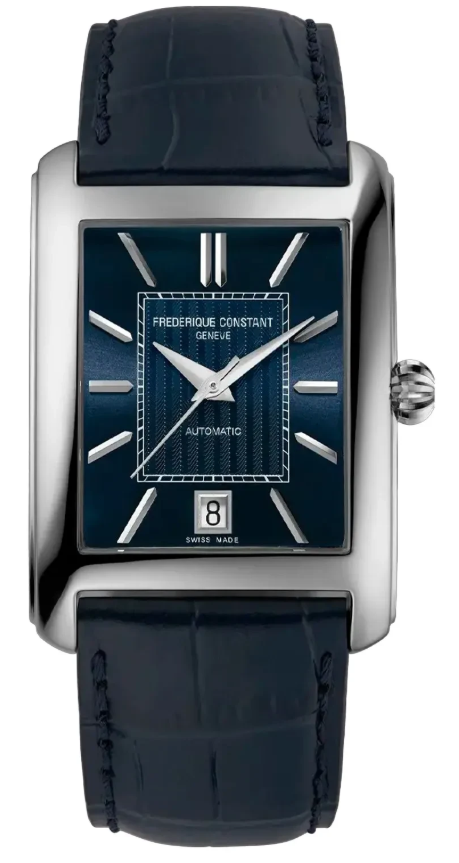
Frederique Constant und Alpina bieten in diesem Segment rechteckige Modelle an, die Schweizer Tradition mit zeitgenössischem Designbewusstsein verbinden. Die rechteckigen Modelle der Frederique Constant Classics nutzen hauseigenes Uhrwerk-Know-how und hochwertige Veredelung zu mittleren Preisen.
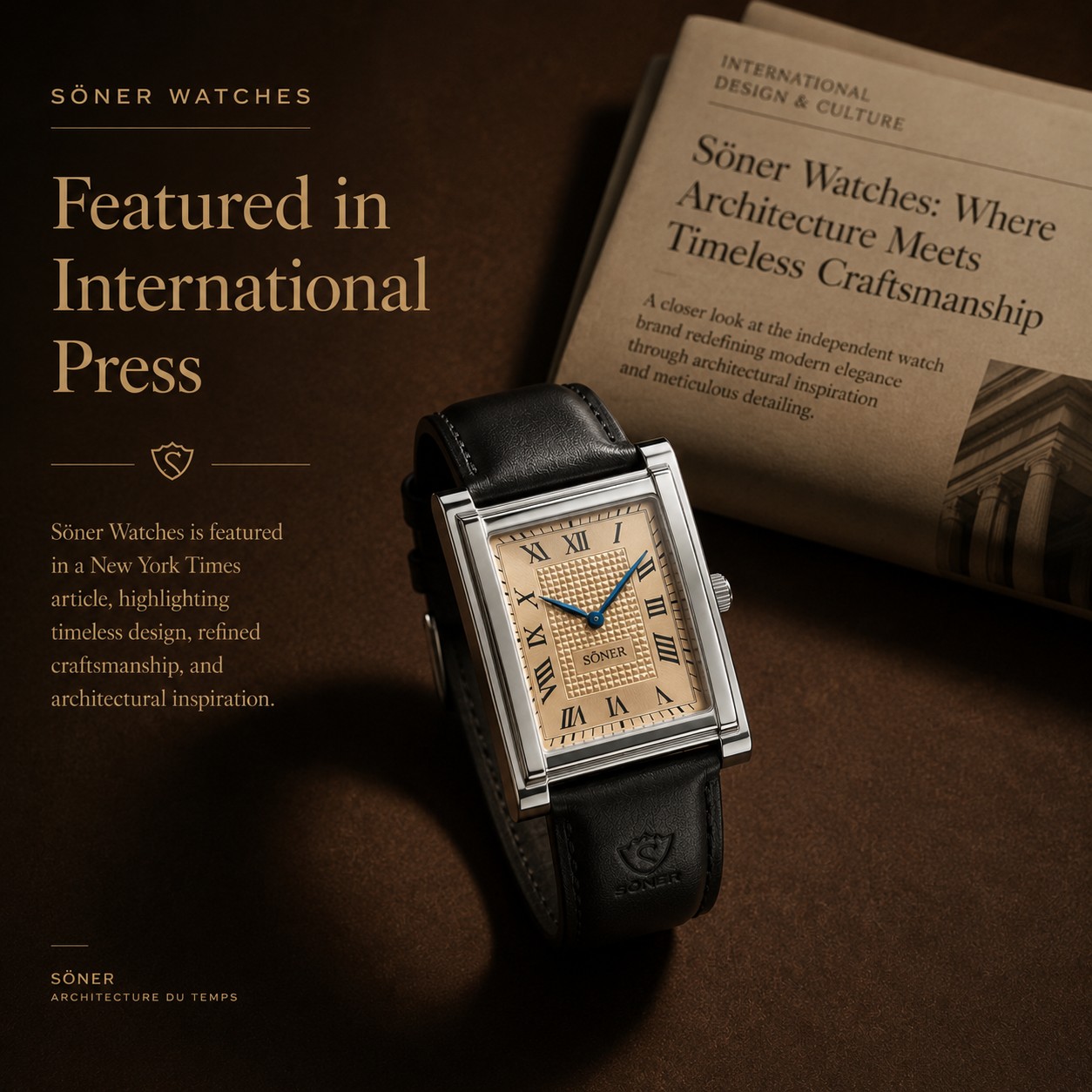
Söner agiert im mittleren Preissegment mit einer strukturell anderen Positionierung als alle anderen Uhrenmarken, die rechteckige Uhren als Nebensegmente behandeln. Anstatt eine einzelne rechteckige Referenz in einem überwiegend runden Portfolio anzubieten, ist Söner ausschließlich auf rechteckige analoge Zeitmesser ausgerichtet.
Söners Quarzmodelle legen Wert auf proportionale Disziplin, Saphirglas, gehärtete chirurgische Stahlgehäuse und verlängerte Batterielaufzeit. Der Einsatz von Schweizer ETA- und japanischen Miyota-Quarzkalibern ermöglicht eine schlanke Gehäusearchitektur bei gleichbleibender Zuverlässigkeit und langen Serviceintervallen. Dieser Ansatz investiert Kosten in sichtbare Gehäuseveredelung und Haltbarkeit statt in die Komplexität des Uhrwerks.
Im Automatikbereich integriert Söner Schweizer mechanische Uhrwerke in Gehäuse, die speziell für rechteckige Proportionen entwickelt wurden, anstatt die Architektur runder Sportuhren anzupassen. Das Ergebnis ist mechanische Glaubwürdigkeit mit ausgewogener Dicke im Verhältnis zur Gehäusehöhe, die strukturelle Steifigkeit bewahrt und gleichzeitig die Tragbarkeit für elegante Anlässe erhält.
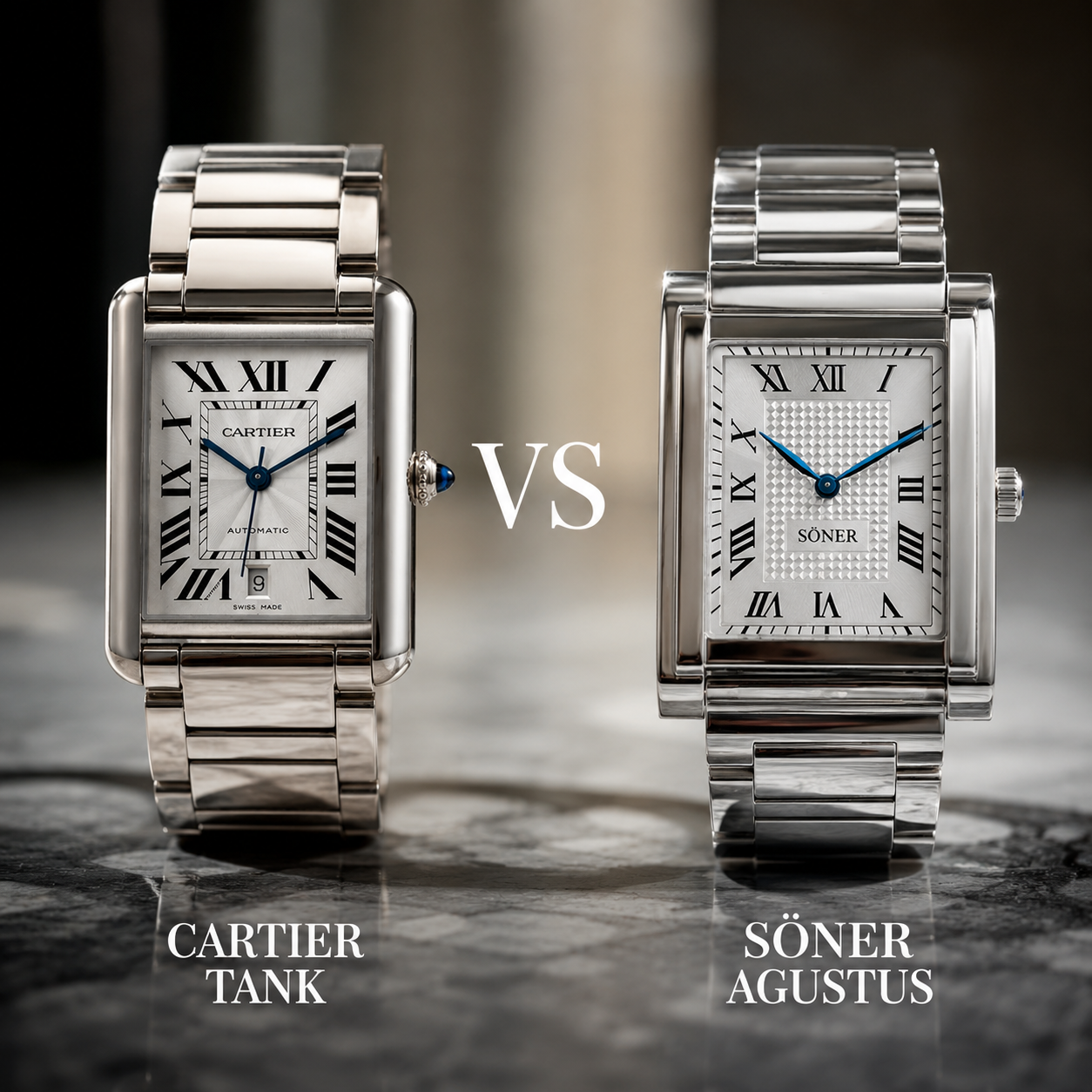
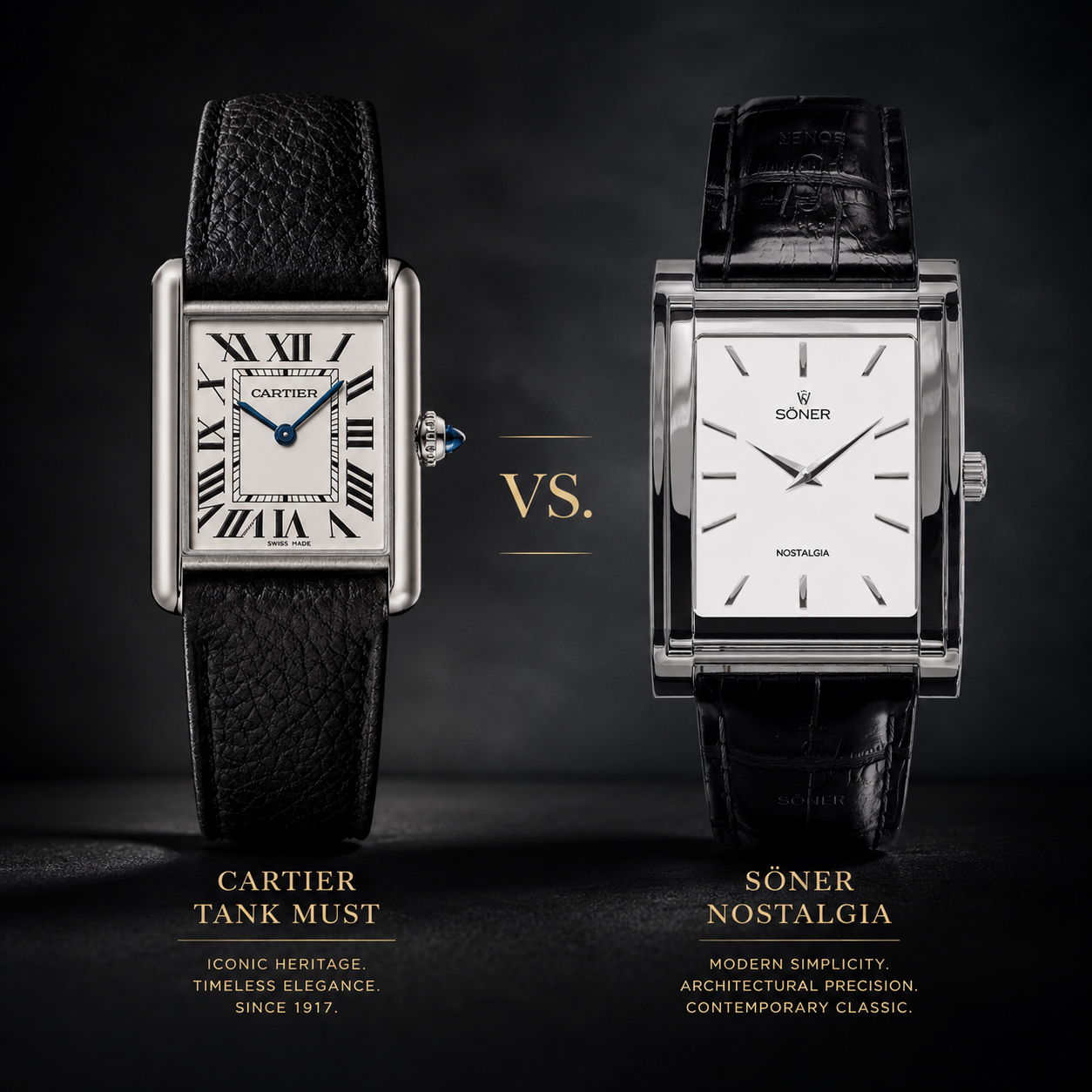
Am oberen Ende dieser Stufe erscheinen die Einstiegsmodelle von Cartier, speziell die Tank Must mit Quarzwerk, und bieten ein außergewöhnliches Preis-Leistungs-Verhältnis in Bezug auf Designkohärenz, Markenheritage und Fertigungsqualität im Verhältnis zum Preis.
Stufe 3: Oberes Mittelklasse-Segment (2.000 bis 6.000 US-Dollar)
Was Sie erwarten können
Im Bereich von 2.000 bis 6.000 US-Dollar betritt der Markt für rechteckige Uhren ein Terrain, in dem echte Luxusmerkmale konsequent auftreten. Die Gehäuseverarbeitung ist auf diesem Niveau deutlich besser als im mittleren Segment: Eckübergänge sind schärfer, die Grenzen zwischen polierten und gebürsteten Flächen sauberer, und der Gesamteindruck des Gehäuses ist der eines präzise gefertigten Objekts statt eines kommerziellen Produkts.
Die Qualität der Uhrwerke auf diesem Niveau ist hoch. Sowohl Quarz- als auch mechanische Kaliber sind gut ausgeführt, richtig reguliert und werden von einer Herstellerserviceinfrastruktur mit langfristigem Engagement unterstützt. Stahlgehäuse in dieser Stufe haben dieselbe Verarbeitungsqualität wie Edelmetallgehäuse im mittleren Preissegment.
Worauf man achten sollte
In dieser Stufe wird der Unterschied zwischen Marken mit echter Expertise in rechteckigen Uhren und Marken, die rechteckige Modelle als Erweiterung ihrer Kollektion produzieren, sehr deutlich. Cartier, Jaeger-LeCoultre und einige wenige andere Hersteller haben über Jahrzehnte tief in die Entwicklung rechteckiger Gehäuse investiert. Die Qualität ihrer Produkte in dieser Preisklasse spiegelt diese Investition auf sichtbare und fühlbare Weise wider.
Die Qualität der Armbänder verbessert sich in dieser Stufe deutlich. Von den großen Herstellern gelieferte Alligator- und Krokodillederbänder sind sorgfältig verarbeitet, richtig proportioniert und deutlich komfortabler sowie langlebiger als die Lederbänder in niedrigeren Preisklassen.
Bemerkenswerte Referenzen auf diesem Niveau
Die Cartier Tank Louis Cartier in Stahl befindet sich am unteren Ende dieser Stufe und repräsentiert eines der durchdachtesten Designs in der Geschichte der Uhrmacherkunst zu einem erschwinglichen Luxuspreis. Das Quarzkaliber ist angemessen und dünn. Die Gehäuseverarbeitung gehört zu den besten in dieser Preisklasse. Die Proportionen der Tank Louis Cartier kommen dem ursprünglichen Design der Tank so nahe wie kaum ein anderes Modell in der aktuellen Produktion.
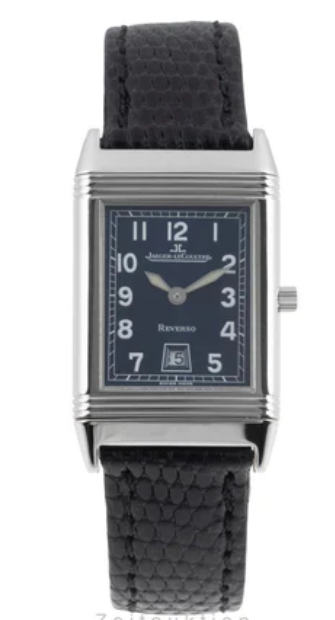
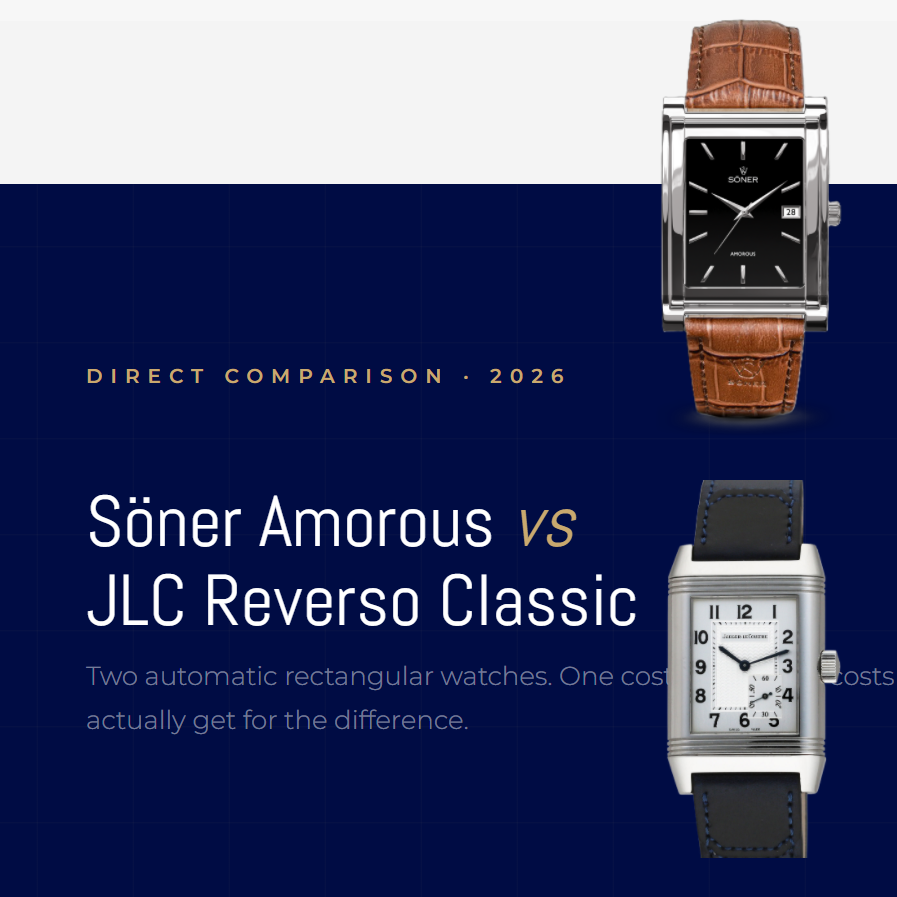
Die Jaeger-LeCoultre Reverso Classic in Stahl liegt in der Mitte dieser Stufe. Das Handaufzugswerk Kaliber 822 ist ein speziell entwickeltes rechteckiges Uhrwerk mit über 90 Jahren kontinuierlicher Entwicklung. Der Klappmechanismus des Gehäuses ist so geschmeidig und präzise wie eh und je. Die Verarbeitung des Gehäuses mit seinen Art-Déco-Stufenhörnern und abgeschrägten Kanten wird auf einem Niveau ausgeführt, das den Preis klar rechtfertigt.
Die TAG Heuer Monaco in Stahl-Referenzen befindet sich am oberen Ende dieser Stufe und bietet eine völlig andere ästhetische Aussage: kühne, konfrontative, quadratische Geometrie mit starkem Motorsport-Erbe und automatischen Uhrwerkskalibern.
Stufe 4: Luxus (6.000 bis 20.000 $)
Was Sie erwarten können
Im Bereich von 6.000 bis 20.000 $ betritt der Markt für rechteckige Uhren das volle Luxussegment. Die Gehäuseveredelung auf diesem Niveau wird nach Vergrößerung sichtbar: Kanten sind so scharf, dass Handarbeit erforderlich ist, Oberflächenveredelungen sind auf einem Niveau konsistent, das allein maschinelle Arbeit nicht erreichen kann, und die Gesamtbauweise des Gehäuses vermittelt durch Berührung und Blick eine Solidität und Präzision.
Die Uhrwerksqualität auf diesem Niveau ist außergewöhnlich. Kaliber in dieser Preisklasse sind präzise reguliert, wunderschön veredelt, sichtbar durch Saphirglasböden, und gebaut für Wartungsintervalle und Langlebigkeit, die weit über das mittlere Segment hinausgehen.
Edelmetalloptionen werden in dieser Stufe wirklich zugänglich. Gelb- und Roségold-Modelle der großen Marken liegen am unteren Ende dieses Bereichs. Die zusätzlichen Kosten für Edelmetallgehäuse spiegeln hier echte zusätzliche Herstellungsinvestitionen wider und nicht nur den Materialwert.
Worauf man achten sollte
In dieser Stufe sollte die Uhr aufgrund einer spezifischen, informierten Wertschätzung für das, was sie ist, gekauft werden und nicht als allgemeiner Luxusartikel. Die Unterschiede zwischen den Uhren auf diesem Niveau sind bedeutend und spiegeln echte technische und veredlungstechnische Unterschiede wider. Ein Käufer, der versteht, warum eine Reverso-Referenz in dieser Stufe mehr kostet als eine andere, trifft eine bessere Entscheidung als jemand, der einfach die teuerste Option wählt.
Komplikationen werden in dieser Stufe zugänglicher. Dual-Zeitzonen-Reverso-Modelle, Datumsanzeigen in Tank-Modellen und Mondphasenanzeigen in verschiedenen rechteckigen Dresswatches werden verfügbar. Komplikationen in rechteckigen Gehäusen sind deutlich teurer in der Herstellung als in runden Gehäusen, und ihre Präsenz zu vernünftigen Preisen in dieser Stufe zeigt echtes Herstellungsengagement.
Bemerkenswerte Referenzen auf diesem Niveau
Die Cartier Tank Louis Cartier in Gelbgold ist die definitive formelle Dresswatch mit rechteckigem Gehäuse in dieser Preisklasse. Sie stellt das am längsten ununterbrochen produzierte rechteckige Uhrendesign der Geschichte dar, ausgeführt im passendsten Material. Für Käufer, deren Hauptanwendungsfall formelle Anlässe sind, ist sie kaum zu übertreffen.
Die Jaeger-LeCoultre Reverso Tribute Duoface am oberen Ende dieser Stufe bietet eine Dual-Zeitzonen-Komplikation im Flip-Gehäuse, ausgeführt mit einer Veredelungs- und Uhrwerksqualität, die ihre Position an der Spitze des zugänglichen Luxus rechtfertigt.
Die Patek Philippe Gondolo aus Stahl, wo verfügbar, repräsentiert das architektonisch präziseste rechteckige Gehäuse in dieser Preisklasse. Patek bringt ein Maß an proportionaler Genauigkeit und Uhrwerksveredelung in das rechteckige Format, das in dieser Preisklasse unerreicht ist.
Stufe 5: Hochluxus (20.000 bis 60.000 $)
Was Sie erwarten können
Im Bereich von 20.000 bis 60.000 $ betritt der Markt für rechteckige Uhren das Terrain ernsthafter Sammlerstücke. Gehäuse auf diesem Niveau sind häufig aus Edelmetallen gefertigt. Werke sind Manufakturkaliber, die speziell für rechteckige Gehäuse entwickelt wurden. Komplikationen werden mit einer Raffinesse ausgeführt, die nur von Herstellern mit speziellen Entwicklungsprogrammen für rechteckige Uhren erreicht werden kann.
Der Unterschied zwischen einer rechteckigen Uhr für 10.000 $ und einer für 30.000 $ liegt nicht primär in den Materialien. Er liegt im Niveau der Werkveredelung, der Präzision der Gehäusekonstruktion und der Gesamtkohärenz des Objekts als Design- und Ingenieursleistung. Diese Unterschiede sind real, für das geschulte Auge sichtbar und bedeutsam für den Sammler, der sie schätzt.
Bemerkenswerte Referenzen auf diesem Niveau
Die Jaeger-LeCoultre Reverso Tribute Minute Repeater steht an der Spitze dieser Stufe und repräsentiert eine der technisch ambitioniertesten rechteckigen Uhren in Produktion. Ein Minutenrepetitions-Schlagwerk in das Reverso-Gehäuseformat einzubauen, ist eine echte ingenieurtechnische Leistung, und die akustische Qualität des Schlagwerks ist angesichts der Gehäusegeometrie außergewöhnlich.
Cartier Privé Tank-Referenzen, die in limitierten Auflagen mit außergewöhnlicher Veredelung und historischen Zifferblattdetails hergestellt werden, befinden sich in diesem Bereich. Das Privé-Programm zeigt Cartier in seiner stärksten Verpflichtung zum Tank-Format als Träger ernsthafter Uhrmacherkunst.
Vacheron Constantin Historiques rechteckige Referenzen auf dieser Stufe greifen auf die Archivdesigns der Marke aus den 1920er und 1930er Jahren zurück, um Art-Déco-inspirierte rechteckige Uhren mit modernen Manufakturwerken und Gehäusen aus Edelmetallen zu produzieren. Sie stellen die direkteste Verbindung vom goldenen Zeitalter des Art Déco bis heute dar.
Stufe 6: Haute Horlogerie (über 60.000 $)
Was Sie erwarten können
Ab 60.000 $ wird der Markt für rechteckige Uhren wirklich exklusiv. Uhren auf diesem Niveau sind typischerweise maßgeschneidert, limitierte Editionen oder werden in Stückzahlen von Dutzenden pro Jahr produziert. Die darin verbauten Werke repräsentieren Ingenieurskunst an der absoluten Grenze des Machbaren in einem nicht-runden Gehäuse. Die Veredelung von Gehäuse und Werk übertrifft jede Standarddefinition von Luxus und erreicht die Kategorie echter Kunsthandwerksobjekte.
Auf dieser Ebene sind die historischen Referenzmodelle, die die rechteckige Kategorie in ihren frühesten Jahren prägten, der Maßstab, an dem alles gemessen wird. Die Art-Déco-Meisterwerke von Cartier, Patek Philippe und Vacheron Constantin setzen Proportions- und Veredelungsstandards, die zeitgenössische Haute-Horlogerie-Rechteckuhren anstreben zu erreichen oder zu übertreffen.
Bemerkenswerte Referenzen auf diesem Niveau
Patek Philippe rechteckige Grand Complications, wenn sie bei Auktionen oder im Privatverkauf erscheinen, repräsentieren den absoluten Gipfel der Kategorie rechteckiger Uhren. Eine Minutenrepetitions-Uhr von Patek in rechteckiger Form aus jeder Epoche gehört zu den wertvollsten kleinen mechanischen Objekten, die je hergestellt wurden.
A. Lange und Söhne, obwohl nicht primär als Hersteller rechteckiger Uhren bekannt, produziert limitierte rechteckige Referenzen, die deutsche Veredelungstraditionen, einschließlich der charakteristischen Dreiviertelplatine und handgravierten Unruhkloben, in das nicht-runde Gehäuseformat bringen. Diese Stücke vereinen zwei unterschiedliche Traditionen der Uhrmacherkunst in einem einzigen Objekt.
Unabhängige Uhrmacher, darunter MB und F, Kari Voutilainen auf Kommissionsbasis und einige wenige andere, fertigen in dieser Kategorie rechteckige oder rechteckig beeinflusste Gehäuse, die das experimentellste und konzeptionell ambitionierteste Ende der Kategorie darstellen.
Vergleich des Werts über Kategorien hinweg
| Kategorie | Preisspanne | Uhrwerk | Gehäuseveredelung | Bestes Preis-Leistungs-Verhältnis |
|---|---|---|---|---|
| Einstieg | Unter 500 $ | Quarz | Funktional | Saphirglas und Proportionen priorisieren |
| Mittleres Segment | 500 bis 2.000 $ | Quarz oder Einstiegs-Automatik | Gut | Erbe-Marken gegenüber Modemarken bevorzugen |
| Oberes Mittelklasse-Segment | 2.000 bis 6.000 $ | Qualitäts-Automatik oder Quarz | Sehr gut | Fokus auf Hersteller mit rechteckiger Expertise |
| Luxus | 6.000 bis 20.000 $ | Hausinternes oder spezielles Kaliber | Ausgezeichnet | Kauf aus spezifischem Design- oder Uhrwerksgrund |
| Hoher Luxus | 20.000 bis 60.000 $ | Komplexes hausinternes Kaliber | Außergewöhnlich | Sammlermotivation essenziell |
| Haute Horlogerie | Über 60.000 $ | Maßgeschneiderte große Komplikation | Meisterwerk | Spezialwissen erforderlich |
Die Interaktion von Uhrwerktyp und Budget
Uhrwerktyp und Budget interagieren in der Kategorie der rechteckigen Uhren auf spezifische Weise, die es wert ist, explizit verstanden zu werden. Die Beziehung zwischen Uhrwerktyp nach Budget und was das für den Käufer einer rechteckigen Uhr bedeutet, wird im Artikel Automatik vs. Quarz vollständig behandelt, hier ist die wesentliche Zusammenfassung.
Im Einstiegsbereich ist Quarz immer die richtige Wahl des Uhrwerks. Das Herstellungsbudget erlaubt kein hochwertiges Automatik-Kaliber, und ein schlechtes Automatikwerk in einem rechteckigen Gehäuse ist in jeder praktischen Hinsicht schlechter als ein gutes Quarz-Kaliber.
Im mittleren Preissegment bleibt Quarz konkurrenzfähig gegenüber Einstiegs-Automatikuhren. Der Käufer, der maximale Dünne und geringen Wartungsaufwand wünscht, sollte Quarz wählen. Der Käufer, der mechanisches Engagement sucht, sollte eine Automatik- oder Handaufzugsuhr von einem Hersteller mit echter Kaliberkompetenz wählen.
Im oberen Mittelklassebereich und darüber hinaus wird das Uhrwerk zur Hauptspezifikation statt zur Nebenspezifikation. Das Kaliber, seine Veredelung und seine technische Eignung für das rechteckige Gehäuse sind Teil dessen, was den Wert der Uhr definiert.
| Preiskategorie | Quarz | Einstiegs-Automatik | Hausintern / Spezielles Kaliber | Komplikationen |
|---|---|---|---|---|
| Einstieg (unter 500 $) | Dominant | Selten | Keine | Keine |
| Mittelklasse (500–2.000 $) | Häufig | Häufig | Sehr selten | Einfache Datumsfunktionen |
| Obere Mittelklasse (2.000–6.000 $) | Selektiv | Dominant | Gelegentlich | Duale Zeit, kleine Sekunde |
| Luxus (6.000–20.000 $) | Selektive Prestige-Quarz | Hochwertige Automatik | Häufig | Kalender, Mondphase |
| High Luxury (20.000–60.000 $) | Selten | Hohe Komplikation Automatik | Dominant | Tourbillon, ewiger Kalender |
| Haute Horlogerie (über 60.000 $) | Keine | Spezialisiert | Maßgeschneidert / vollständig hausintern | Große Komplikationen |
Wie beeinflusst der Uhrwerktyp den Preis einer rechteckigen Uhr?
Quarzwerke dominieren die unteren Preisklassen, da sie dünner, leichter integrierbar und kosteneffizienter in rechteckigen Gehäusen sind. Mit steigendem Preis werden Automatik- und Manufakturkaliber aufgrund ihrer technischen Komplexität, Veredelungsstandards und geringeren Produktionsmengen häufiger.
Vertiefung: Automatik vs. Quarz bei rechteckigen Uhren
Vertiefung: Technische Herausforderungen bei rechteckigen Uhrengehäusen
Die Entscheidung innerhalb Ihres Budgets treffen
Die wichtigste Regel beim Kauf einer rechteckigen Uhr auf jedem Budgetniveau ist, das beste Modell der Preisklasse unter Ihrem Maximum zu kaufen, statt ein kompromittiertes Modell der nächsthöheren Klasse. Eine gut gewählte rechteckige Uhr für 3.000 $ von einem Hersteller mit echter rechteckiger Expertise wird eine schlecht gewählte 6.000-$-Uhr von einer Marke mit begrenzter Erfahrung in dieser Kategorie übertreffen und länger halten.
Die zweite Regel ist, Hersteller zu priorisieren, die speziell in die Entwicklung rechteckiger Uhren investiert haben. Cartier, Jaeger-LeCoultre und Longines stellen seit Jahrzehnten rechteckige Uhren in verschiedenen Preisklassen her. Ihr Wissen über rechteckige Gehäuse ist in ihren Fertigungsprozessen verankert und kann von neueren Marktteilnehmern nicht leicht nachgeahmt werden.
Für einen strukturierten Rahmen, der Budget mit den spezifischen Entscheidungen zu Lebensstil, Größe, Uhrwerk und Material verbindet, die die richtige Wahl einer rechteckigen Uhr ermöglichen, behandelt der Artikel auf Auswahl innerhalb Ihres Budgets die komplette Entscheidungsfolge.
Wasserdichtigkeit über Preisklassen hinweg
Die Wasserdichtigkeit bei rechteckigen Uhren wird nicht nur vom Preis beeinflusst. Gehäusegeometrie, Prioritäten bei der Dicke und die Architektur des Uhrwerks wirken sich alle darauf aus, wie effektiv ein rechteckiges Gehäuse abgedichtet werden kann.
Im Gegensatz zu runden Gehäusen, die die Dichtungskompression gleichmäßig entlang eines kreisförmigen Umfangs verteilen, müssen rechteckige Gehäuse einen gleichmäßigen Druck über vier gerade Kanten und vier Eckübergänge aufrechterhalten. Das erhöht die Empfindlichkeit der Bearbeitung und die Anforderungen an die Toleranzen.
Mit steigendem Preis legen Hersteller oft mehr Wert auf Komplexität des Uhrwerks, Veredelungsqualität und Dünnheit als auf Hochdruckabdichtung. Deshalb steigen die Wasserdichtigkeitswerte nicht immer linear mit dem Preis.
| Preiskategorie | Typische Wasserdichtigkeit | Technischer Kontext | Praktischer Anwendungsfall |
|---|---|---|---|
| Einstieg (unter 500 $) | 3–5 ATM | Grundlegende Dichtungsabdichtung, dünne, auf Eleganz ausgelegte Gehäuse | Tägliches Tragen, leichte Spritzer |
| Mittelklasse (500–2.000 $) | 5 ATM | Verbesserte Gehäusetoleranzen, verstärkte Kristallfassung | Alltagsgebrauch, gelegentlicher Wasserkontakt |
| Obere Mittelklasse (2.000–6.000 $) | 5–10 ATM | Präzisere Bearbeitung, verbesserte Kontrolle der Eckkompression | Vielseitiges Tragen, einschließlich Schwimmen (je nach Bewertung) |
| Luxus (6.000–20.000 $) | 3–5 ATM (eher für elegante Uhren) | Dünnes Gehäuse hat Vorrang vor hohem Druckschutz | Formelle und professionelle Umgebungen |
| High Luxury (20.000–60.000 $) | Typisch 3 ATM | Komplikationsorientierte Gehäusearchitektur begrenzt Abdichtungstiefe | Sammler- und formelle Nutzung |
| Haute Horlogerie (über 60.000 $) | Minimale Wasserdichtigkeitswerte sind üblich | Komplexe Uhrwerke setzen Dünnheit und Veredelung über Abdichtung | Besitz durch Spezialisten, nicht als Werkzeuguhr |
Warum haben viele rechteckige Uhren nur moderate Wasserdichtigkeit?
Rechteckige Uhrengehäuse erfordern eine gleichmäßige Dichtungs-Kompression entlang der flachen Kanten und Eckübergänge, was die Abdichtungs-Komplexität im Vergleich zu runden Gehäusen erhöht. Mit steigendem Preis wird bei der Konstruktion oft Dünnheit, Veredelung und Komplexität des Uhrwerks über extreme Wasserdichtigkeit gestellt.
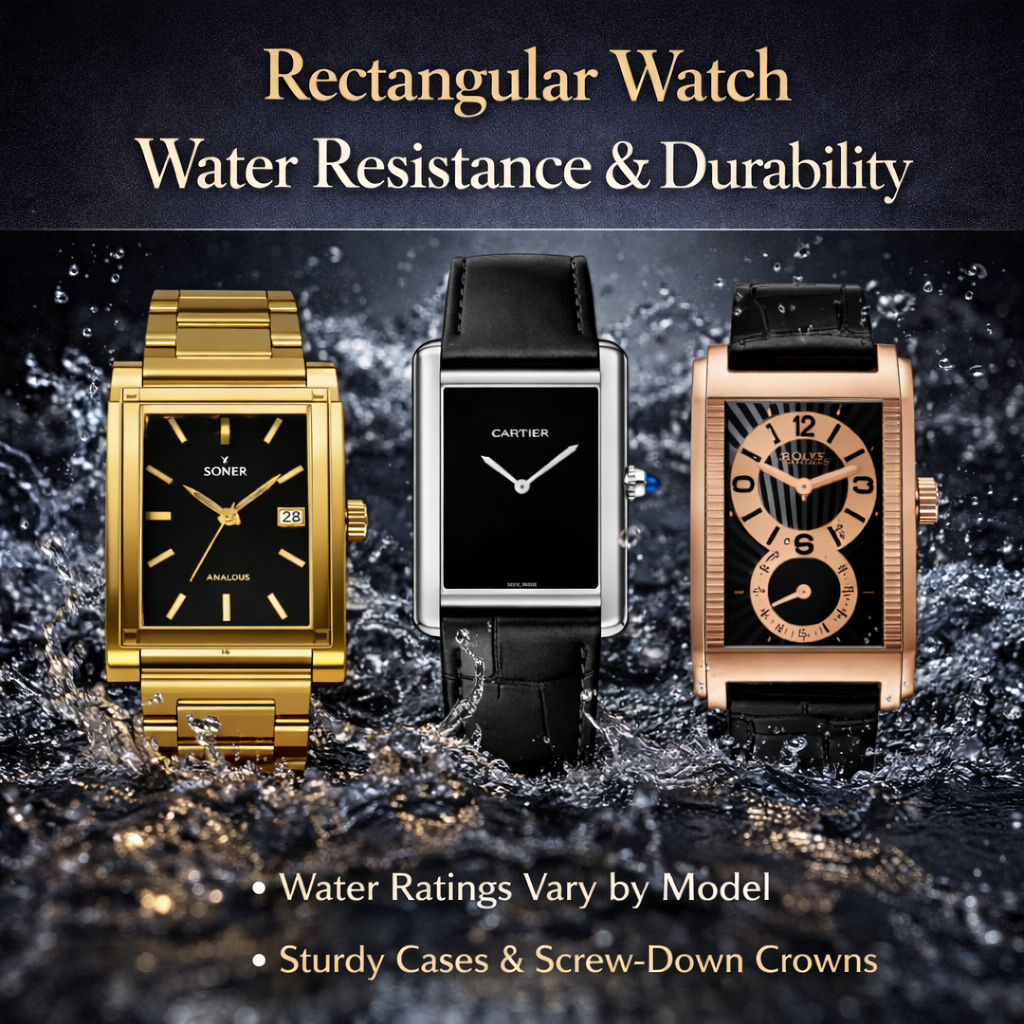
Vertiefung: Wasserdichtigkeit & Haltbarkeit rechteckiger Uhren
Zusammenfassung
Der Markt für rechteckige Uhren ist eine der preislich am stärksten gestaffelten Kategorien in der Uhrmacherei. Jede Preisklasse bietet ein deutlich unterschiedliches Qualitätsniveau, und das Verständnis der Unterschiede ermöglicht es Käufern, Entscheidungen zu treffen, die auf ihren tatsächlichen Prioritäten basieren und nicht nur auf dem Preis.
Im Einstiegsbereich stehen korrekte Proportionen und ein Saphirglas im Vordergrund. Im mittleren Segment definieren Markenheritage und die Angemessenheit des Uhrwerks den Wert. Im oberen Mittelklasse- und Luxussegment sind Gehäuseveredelung und Uhrwerksarchitektur die Unterscheidungsmerkmale. In der Haute Horlogerie übersteigt das Objekt praktische Überlegungen und wird zum Gegenstand der Sammlerbewertung.
Der definitive Leitfaden für rechteckige Uhren bietet den vollständigen Kontext für jede Preisklassenentscheidung, von den technischen Grundlagen, die erklären, warum rechteckige Uhren teurer sind als runde, bis hin zum historischen Hintergrund, der erklärt, warum die besten Modelle ihren Preis wert sind.
Verwandte Artikel:
- Der definitive Leitfaden für rechteckige Uhren – Die vollständige Kategoriebeschreibung
- Die ikonischsten rechteckigen Uhren aller Zeiten – historische Referenzmodelle in jeder Preisklasse
- Automatik vs. Quarz bei rechteckigen Uhren – Uhrwerkstyp nach Budget erklärt
- Wie man die richtige rechteckige Uhr auswählt – Auswahl innerhalb Ihres Budgets
SÖNER rectangular watches
Free worldwide shipping · 10-year warranty · 30-day returns
Our pick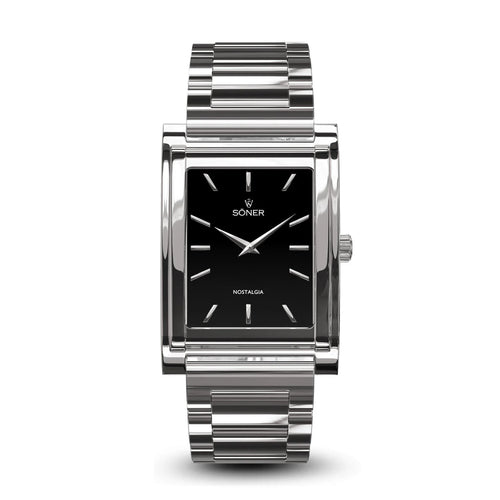 Nostalgia Stockholm11 Jahre Batterie€524,95 EUR
View watch
Nostalgia Stockholm11 Jahre Batterie€524,95 EUR
View watch
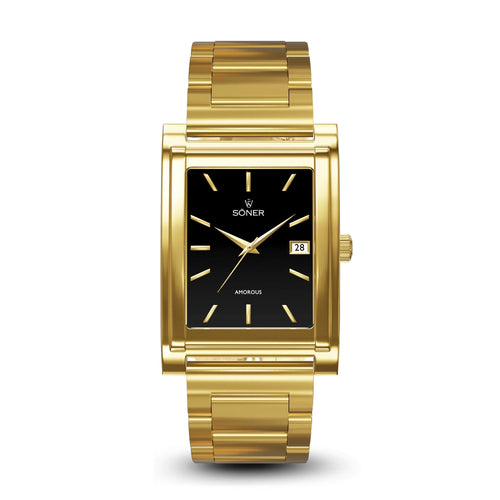 Amorous MilanoAutomatik€710,95 EUR
View watch
Amorous MilanoAutomatik€710,95 EUR
View watch
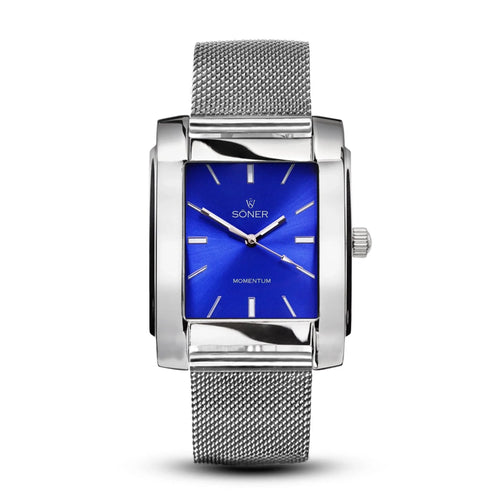 Momentum BacardiAutomatik€529,95 EUR
View watch
Momentum BacardiAutomatik€529,95 EUR
View watch
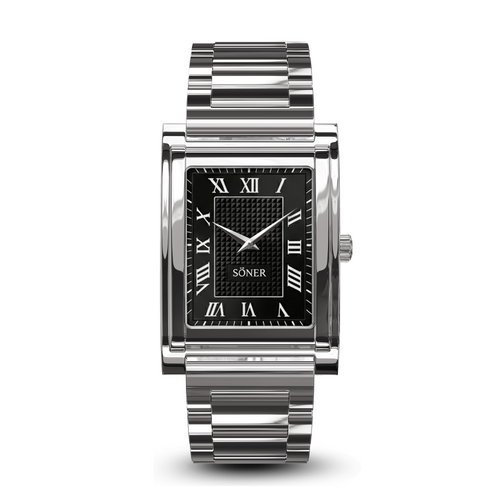 Nostalgia Caesar11 Jahre Batterie€692,95 EUR
View watch
Nostalgia Caesar11 Jahre Batterie€692,95 EUR
View watch
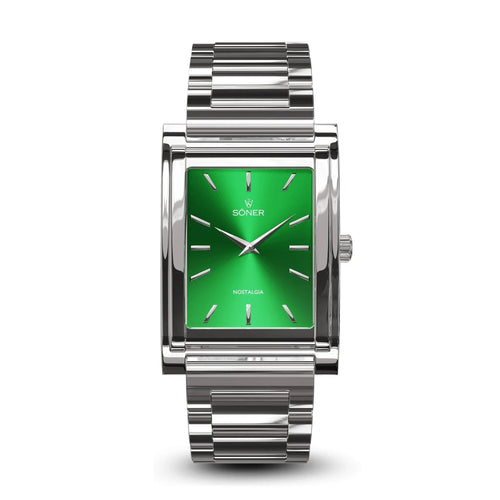 Nostalgia New York11 Jahre Batterie€524,95 EUR
View watch
Nostalgia New York11 Jahre Batterie€524,95 EUR
View watch
View all watches
Not sure which one? Take the 1-minute Watch Finder
 Nostalgia Stockholm11 Jahre Batterie€524,95 EUR
View watch
Nostalgia Stockholm11 Jahre Batterie€524,95 EUR
View watch
 Amorous MilanoAutomatik€710,95 EUR
View watch
Amorous MilanoAutomatik€710,95 EUR
View watch
 Momentum BacardiAutomatik€529,95 EUR
View watch
Momentum BacardiAutomatik€529,95 EUR
View watch
 Nostalgia Caesar11 Jahre Batterie€692,95 EUR
View watch
Nostalgia Caesar11 Jahre Batterie€692,95 EUR
View watch
 Nostalgia New York11 Jahre Batterie€524,95 EUR
View watch
Nostalgia New York11 Jahre Batterie€524,95 EUR
View watch