





 Published on
Key Takeaways
Table of Contents
Most men wear a watch on the left wrist without thinking about it. The convention comes from a practical origin - most people are right-handed, crowns sit at 3 o'clock, and winding or setting a watch is easier with the dominant hand free. Over time the left wrist became the default, and defaults tend to stick.
But the default is not always the right answer. This guide covers the practical and stylistic reasons behind wrist choice, how comfort and daily routine should inform the decision, and what left-handed men should consider. The short answer: wear it wherever it feels best and looks most considered. The longer answer is below.
Left vs Right: The Practical Comparison
| Wrist | Advantages | Drawbacks |
|---|---|---|
| Left | Natural for right-handed wearers. Crown placement optimised for easy setting. Classic, professional appearance. | Can feel predictable. May brush desk edges during typing if bracelet is loose. |
| Right | Distinctive. Better visual balance if jewellery stacks on the left. Signals deliberate choice. | Standard crowns can press into skin. Higher chance of case contact for right-handed wearers. |
How to Choose: Map Your Day First
The best wrist is the one that creates the least friction across your longest daily activity block. Before deciding, ask yourself:
When you write, does the case hit the notebook edge or glide above it? Do tight blazer cuffs catch the bezel or slide over it cleanly? During a commute or gym session, does the watch rotate or stay planted? Do rings and bracelets look crowded next to the watch on the same wrist?
If one wrist answers those questions better than the other, that is the right wrist for you. If neither is clearly better, default to the left and adjust from there.
Comfort: The Details That Actually Matter
Comfort is the sum of small details. Case thickness, lug curvature, strap suppleness, and the way your wrist flexes when typing or reaching all play a role. A few things worth checking before committing to a wrist:
Typing posture: Rest forearms on the desk and type naturally. If case corners tap the desk or the bracelet pinches, try the other wrist or size the bracelet tighter by half a link.
Writing angle: Hold a pen for five minutes. If the crown nudges your hand or the case knocks the page, rotate the watch a few degrees inward or switch wrists.
Outerwear fit: Slide on your most tailored sleeve. A thinner case with downward-curving lugs and a supple leather strap nests cleanly under a cuff. If it snags, try a softer strap or wear the watch under the sleeve rather than over it.
Grip and carry: Hold a steering wheel, bag, or stroller handle. If the case presses a tendon or the bracelet slides and clacks, adjust tightness or try the opposite wrist for that activity.
As a final fit point: position the watch one finger-width above the wrist bone. That slight shift often eliminates pressure while keeping the dial legible at a glance. For more on this, see our guide on how tight a watch should be.
Strap and Case Choices That Maximise Comfort
| Strap Type | Best For | Notes |
|---|---|---|
| Leather or textile | Formal wear, office, all-day comfort | Forgiving against skin, tucks under cuffs without friction |
| Steel bracelet | Versatile, smart casual to formal | Requires precise sizing - micro-adjustment models work best |
| Rubber or fabric | Active wear, humid conditions | Most secure fit during movement, easiest to adjust mid-day |
Slim cases with short lugs sit closer to the wrist bone and reduce desk-edge contact - this matters more than most men expect until they spend a full day at a keyboard with a thick case. For a full breakdown of strap options, see our guide to leather vs metal watch bands.
Does Wearing a Watch on the Right Wrist Look Feminine?
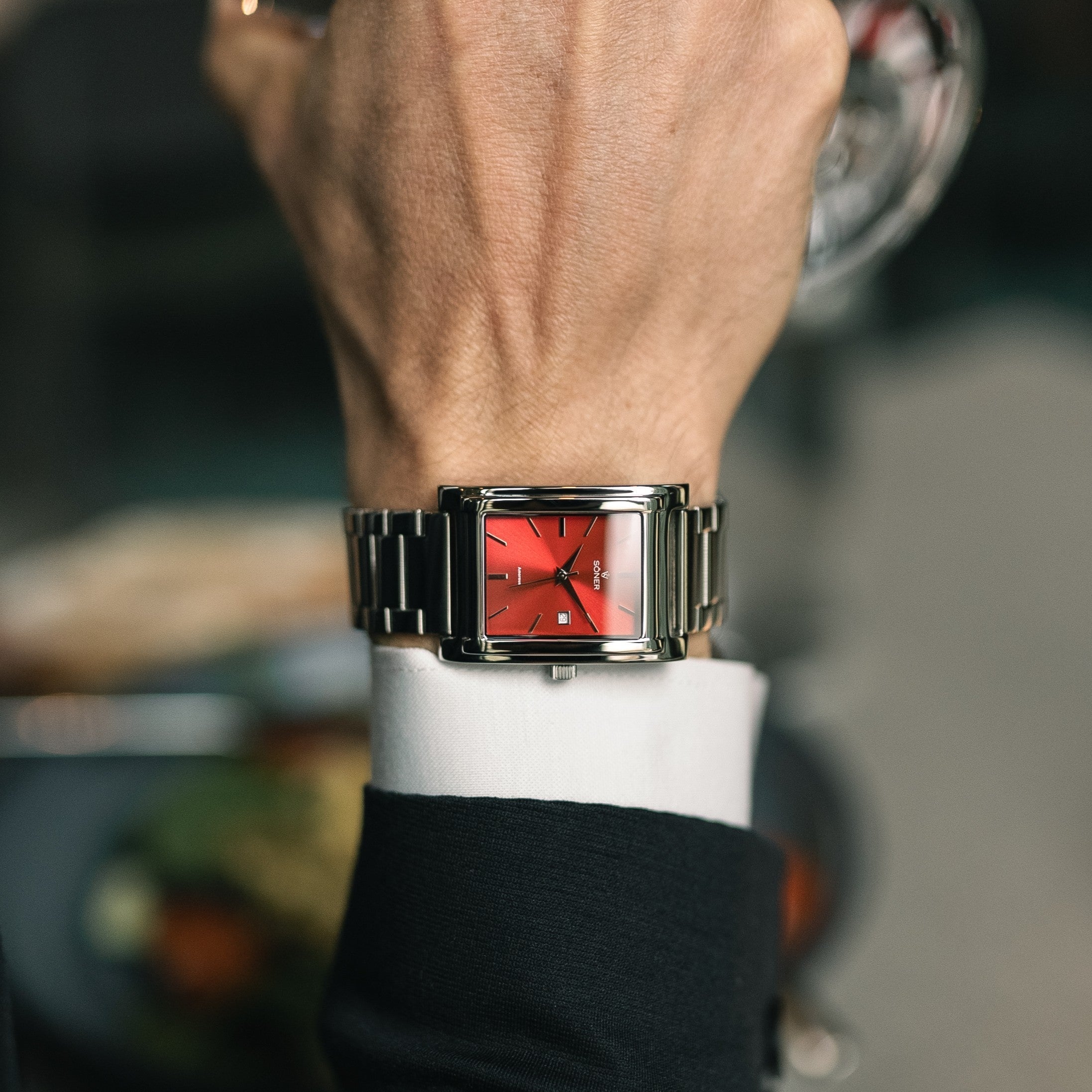
No. Wrist choice is a style preference, not a gendered rule. The right wrist can read as intentional and fashion-forward precisely because it breaks from the default. When the dominant hand carries the gesture in a meeting or social setting, a right-wrist watch frames the movement naturally. It reads as poised rather than accidental.
Right-wrist wearing works particularly well when jewellery stacks on the left hand - it restores visual symmetry. It also spotlights polished cases and bracelets in photographs and video calls in a way the left wrist does not.
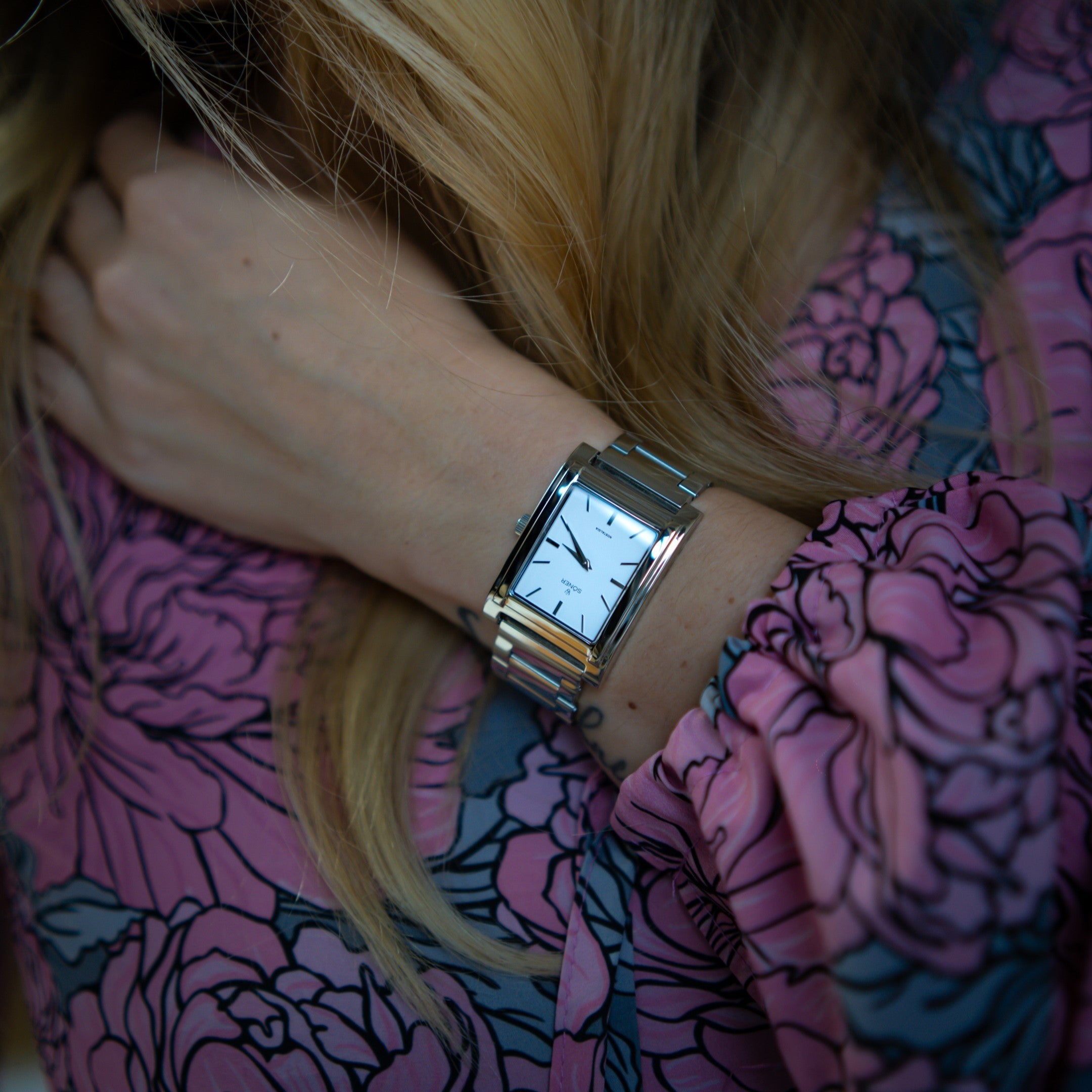
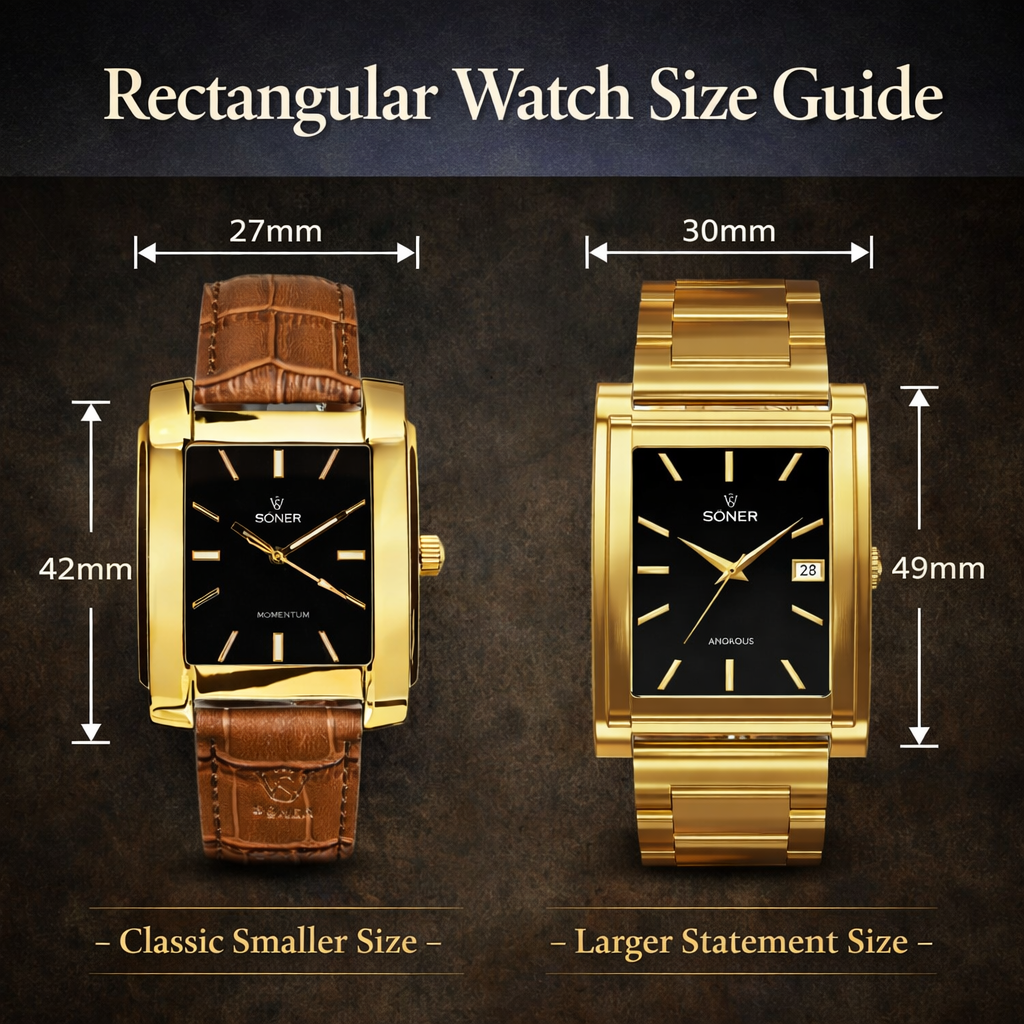
To keep the look proportionate: on slimmer wrists, a mid-sized slim case on a tapered strap feels considered. On larger wrists or with structured tailoring, a slightly wider flat-sitting case adds presence without overwhelming the silhouette. If you are unsure about sizing, our rectangular watch size guide covers case width, height, and lug-to-lug measurements in detail.
Should Left-Handed Men Wear Their Watch Differently?
Left-handed men often choose the right wrist for freedom during writing, drawing, or phone use - the same logic right-handed men use for the left wrist. The main variable is crown placement. Standard 3 o'clock crowns are optimised for left-wrist wear, so right-wrist wear can feel slightly awkward during adjustment. Rotating the watch inward a few degrees usually solves this without needing to switch models.
Common considerations for left-handed wearers on the right wrist:
Crown contact: A traditional crown may press the back of the hand during wrist extension. Rotating the watch slightly inward eliminates this in most cases.
Bracelet migration: Slightly loose bracelets can rotate and misalign the dial, especially with fitted jackets. A well-fitted bracelet or secure leather strap prevents this. Our guide on how to size a watch bracelet walks through the process step by step.
Left-crown options: Fewer models place the crown at 9 o'clock, but ambidextrous designs are growing in availability for buyers who prioritise this.
How Wrist Choice Affects Daily Efficiency
Watch placement compounds across a full day in ways that are easy to underestimate.
Writing and typing: On the dominant wrist, the case may collide with the page edge or create micro-tension as you hover to avoid contact. The non-dominant wrist typically flows better for desk work.
Household and active tasks: Cooking, laundry, and carrying involve repetitive motion. The non-dominant wrist reduces bumps and keeps the case away from water and heat.
Professional settings: The non-dominant wrist allows subtle time checks while the dominant hand gestures freely in meetings and presentations. For conservative industries, a low-profile watch on the non-dominant wrist reads as composed and professional. See our guide to men's dress watches for watches suited to formal settings.
General Watch-Wearing Style for Men
A watch becomes a style anchor when proportion, material, and context work together.
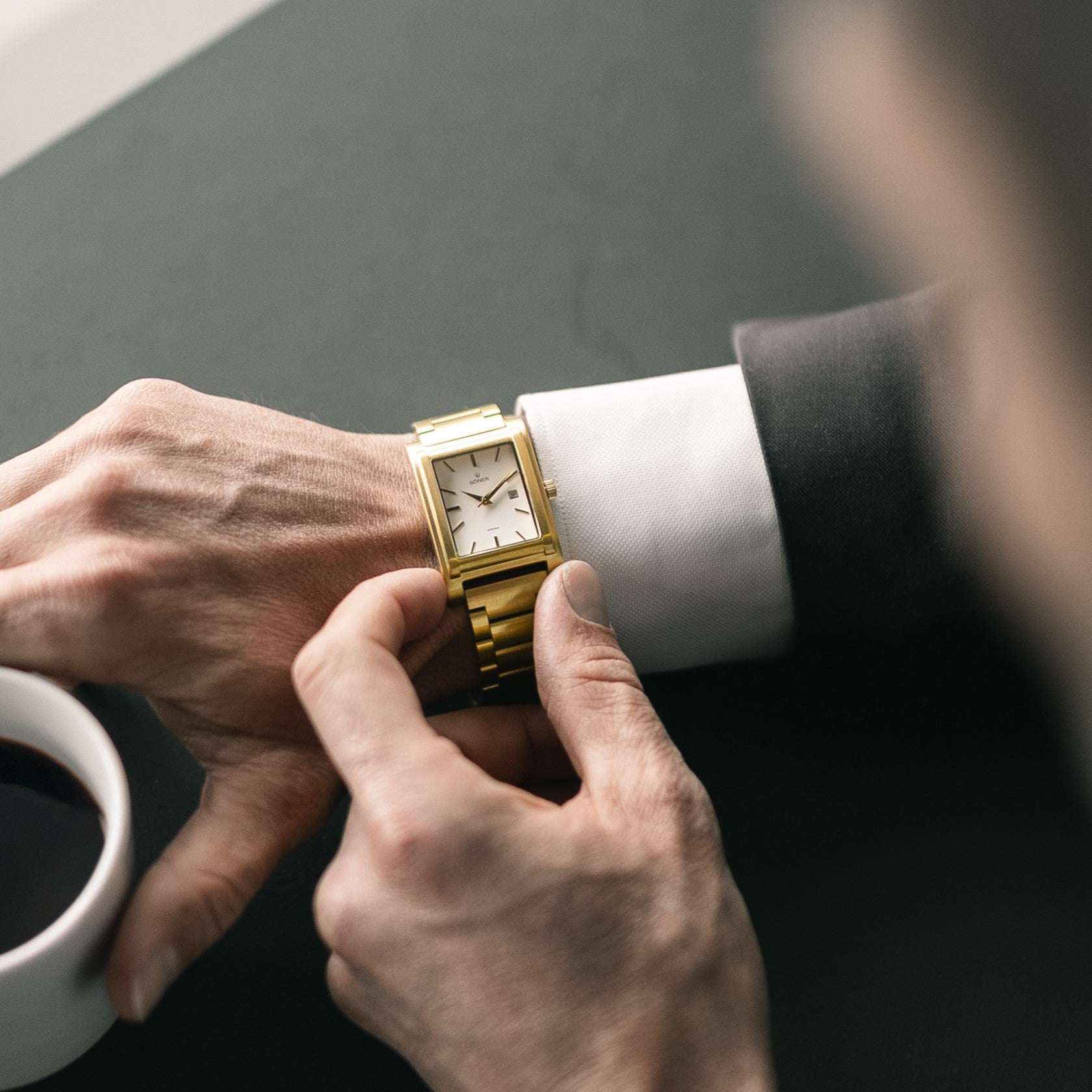
Proportion: Match case width and thickness to your wrist width and sleeve structure. Downward-curving lugs create a tailored, wrist-hugging silhouette. For formal wear, choose slim cases that slide under shirt cuffs cleanly.
Material harmony: Mirror metals where possible - gold with gold, steel with steel - or contrast deliberately. Warm leather against cool steel works. Near-misses do not.
Stacking: If one hand carries statement rings, place the watch on the opposite wrist to preserve visual breathing room.
Seasonal swaps: Leather for cooler months, bracelets for spring and summer, rubber or textile for humid days and active weekends.
For dial colour guidance across different outfits and occasions, see our guide to the most beautiful watch dials ever made.
The Psychological Side of Wrist Choice
There is no definitive research, but wrist choice does signal tendencies that people intuit.
The left wrist reads as practical, organised, and tradition-aligned - useful in conservative spaces where subtlety matters. The right wrist reads as expressive, curated, and independently minded - more common in fashion and creative circles.
Because most men default to the left, a right-wrist watch looks chosen. That subtle difference often lands as confidence. Neither is better. Both are legible style languages.
Which Wrist is Better for Health Tracking?
With the growth of smartwatches and hybrid watches, fit and stability now matter more than the left-versus-right convention. Optical heart rate and SpO2 sensors need consistent skin contact to produce accurate readings.
The non-dominant wrist often moves less during vigorous activity and may produce marginally steadier sensor readings as a result. Whichever wrist you choose, prioritise a strap that keeps the case planted rather than rotating during movement.
Frequently Asked Questions
Which wrist should a man wear a watch on?
Most men wear a watch on the left wrist because most people are right-handed and the non-dominant wrist is more practical for everyday activities. However there is no rule - left-handed men often wear watches on their right wrist, and many right-handed men choose the right wrist for stylistic reasons. The correct wrist is the one that causes the least friction in your daily routine and looks the most composed with your overall outfit.
Is it OK for a man to wear a watch on his right wrist?
Yes. Wearing a watch on the right wrist is perfectly acceptable and increasingly common. It signals a deliberate style choice rather than a default one, which most people read as confidence. Left-handed men naturally gravitate to the right wrist for comfort. Right-handed men often choose the right wrist to balance jewellery on the left hand or simply to stand out.
Does wearing a watch on the right wrist look feminine?
No. Wrist choice is a style preference, not a gendered rule. The right wrist can read as intentional and fashion-forward precisely because it breaks from the default. When the dominant hand carries the gesture in a meeting or social setting, a right-wrist watch frames the movement naturally.
Should left-handed men wear their watch on a different wrist?
Left-handed men often wear their watch on the right wrist, for the same practical reason right-handed men wear theirs on the left - to keep the dominant hand free. The main consideration is crown placement: standard 3 o'clock crowns are optimised for left-wrist wear, so right-wrist wearers may find them slightly awkward to adjust. Rotating the watch inward a few degrees solves this in most cases.
How tight should a watch fit on the wrist?
A watch should pass the one-finger test - you should be able to slide one finger under the strap, but not two. Too loose and the case rotates and clacks against surfaces. Too tight and it restricts blood flow and leaves marks. Position the watch one finger-width above the wrist bone for the best combination of comfort and legibility. For the full framework, see our guide on how tight a watch should be.
Does watch placement affect health tracking accuracy?
Slightly. The non-dominant wrist typically moves less during vigorous activity and may produce marginally steadier sensor readings. Whichever wrist you choose, prioritise a strap that keeps the case planted rather than rotating during movement.
What kind of watch looks best on the wrist?
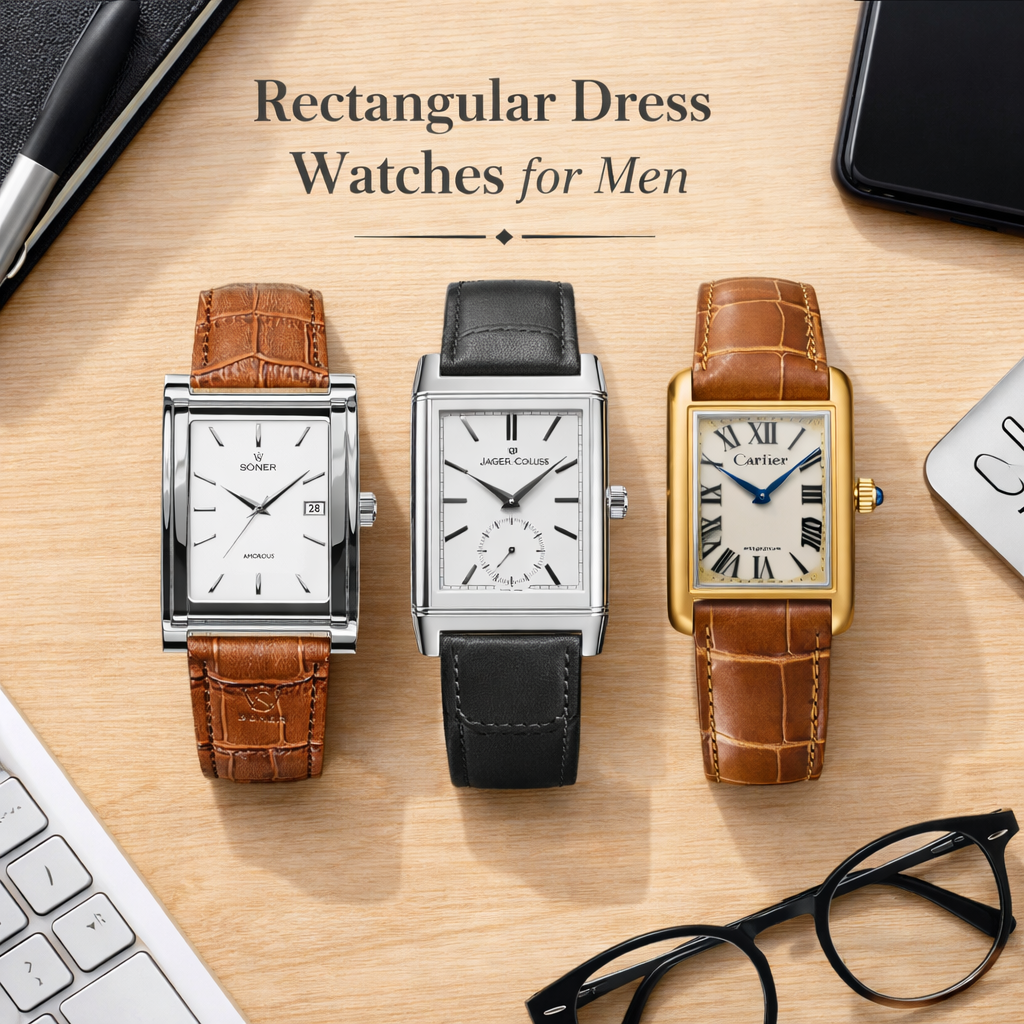
The watch that looks best is the one proportioned correctly for your wrist. Case width should be close to your wrist width without significantly overhanging the edges. Slim cases with downward-curving lugs sit closer to the wrist bone and look more tailored than thick cases that sit proud of the arm. Rectangular watches in particular follow the natural line of the arm rather than sitting across it, creating a more composed appearance in formal and professional contexts. For detailed sizing guidance, see our rectangular watch size guide.