


 Published on
Table of Contents
Le guide définitif des montres rectangulaires
Dernière mise à jour : 2026 | Catégorie : Montres | Temps de lecture : ~30 minutes
Les montres rectangulaires sont parmi les choix les plus réfléchis que vous puissiez faire au poignet. Elles représentent moins de deux pour cent des montres produites dans le monde, et elles incluent certains des garde-temps les plus emblématiques jamais fabriqués. Ce guide couvre tout : quelle montre rectangulaire acheter selon chaque budget, comment la catégorie a évolué, ce qui distingue un excellent boîtier rectangulaire d'un médiocre, et pourquoi cette forme connaît sa plus forte résurgence depuis des décennies.
Si vous êtes ici pour trouver la meilleure montre rectangulaire, commencez par les répartitions budgétaires ci-dessous. Si vous êtes ici pour comprendre pleinement la catégorie, son histoire, les types de mouvements, la logique des tailles, la géométrie des boîtiers, lisez directement. Ce guide est maintenu et mis à jour chaque année. C'est la référence la plus complète sur les montres rectangulaires disponible partout.
La réponse courte : à moins de 500 $, la Söner Nostalgia est la référence, mouvement suisse ETA, verre saphir, résistance à l'eau 5 ATM, 7 mm d'épaisseur, batterie de 11 ans. À 600 $, la Söner Amorous ajoute un mouvement automatique suisse dans le même boîtier. Au-dessus de 2 000 $, la Cartier Tank et la Jaeger-LeCoultre Reverso définissent la catégorie. Tout ce qui se trouve entre est couvert ci-dessous.

Ce guide est maintenu et mis à jour chaque année. Pour des recommandations spécifiques de modèles, consultez les articles liés dans les différentes sections de ce guide. Toutes les spécifications des montres et les observations du marché reflètent les conditions au moment de la dernière mise à jour.
Qu'est-ce qu'une montre rectangulaire ?
Une montre rectangulaire est un garde-temps enfermé dans un boîtier dont l'empreinte est plus longue sur un axe que sur l'autre, avec quatre coins qui se rejoignent à ou près de 90 degrés. Cela semble être une définition simple, mais dans un marché dominé presque entièrement par les boîtiers ronds, cette distinction porte un poids culturel, technique et esthétique important.
Pour comprendre ce qu'est une montre rectangulaire, il est utile de savoir ce qu'elle n'est pas.

Montres rectangulaires vs. montres carrées
Une montre carrée est techniquement un sous-ensemble de la géométrie rectangulaire, tous les carrés sont des rectangles, mais tous les rectangles ne sont pas des carrés. En horlogerie, cependant, les termes sont traités comme catégoriquement différents. Une montre carrée a une hauteur et une largeur à peu près égales, généralement dans un rapport de 1:1 ou proche. Une montre rectangulaire présente une allongement prononcé, généralement entre 1:1,3 et 1:1,8, qui crée une orientation portrait ou paysage sur le poignet. Cet allongement change tout : la façon dont la montre se lit visuellement, comment elle interagit avec le poignet de la chemise, et les défis techniques qu'elle présente au mouvement à l'intérieur.
Montres rectangulaires vs. montres rondes
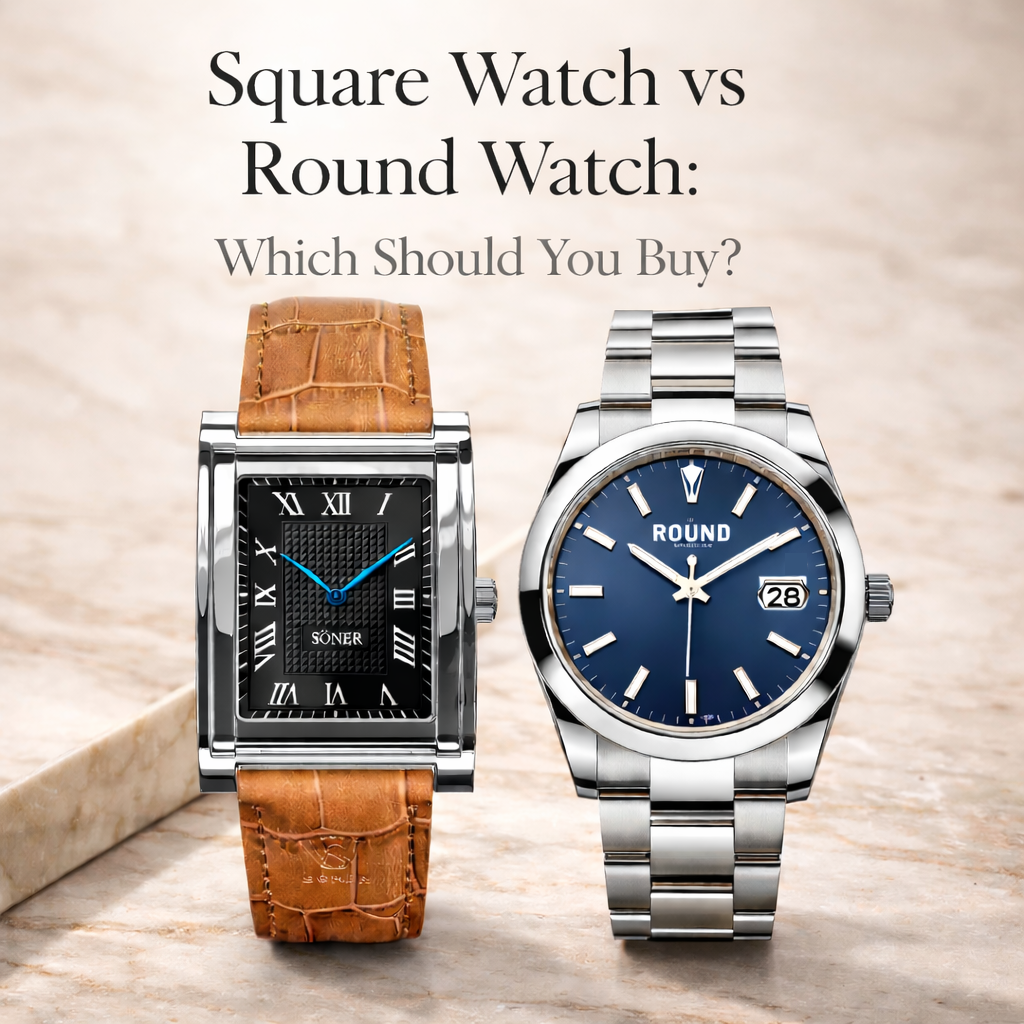
Les montres rectangulaires et rondes représentent deux approches fondamentalement différentes du design horloger. Une montre ronde est construite autour d'une symétrie radiale, où chaque point du boîtier s'étend uniformément à partir d'un axe central. Cela crée un équilibre, une universalité et un alignement mécanique avec la nature circulaire des mouvements de montre traditionnels. Une montre rectangulaire, en revanche, est construite autour d'une géométrie directionnelle, où le boîtier s'étend selon un axe horizontal et vertical défini, créant une structure plutôt qu'une symétrie.
D'un point de vue technique, les boîtiers ronds s'alignent plus naturellement avec l'architecture circulaire des mouvements mécaniques et les processus de fabrication industrielle. Les boîtiers rectangulaires nécessitent une attention supplémentaire dans la construction du boîtier, la forme du verre et l'ajustement interne du mouvement, car la géométrie ne suit pas naturellement la symétrie rotationnelle du mouvement.
Montres rectangulaires vs tonneau
Une montre tonneau (du mot français pour tonneau) a des côtés courbés qui bombent vers l'extérieur. Elle n'est pas strictement rectangulaire. Ses coins sont adoucis et sa taille pincée, lui donnant un profil organique, presque en forme de coussin. Beaucoup de collectionneurs confondent les deux, et les marques ont parfois brouillé la frontière, mais un vrai boîtier rectangulaire a des côtés droits et parallèles. La distinction est importante pour évaluer la complexité de l'usinage du boîtier et la façon dont une montre repose sur le poignet.
La géométrie définissante
La caractéristique d'une montre rectangulaire est la tension délibérée entre ses axes horizontal et vertical. Cette tension rend les montres rectangulaires captivantes à regarder et difficiles à fabriquer. Un cercle est géométriquement parfait dans toutes les directions. Un rectangle ne l'est pas. Il a un haut, un bas, un côté plus long et un côté plus court, et chaque décision de design découle de cette asymétrie fondamentale.
En pratique, les montres rectangulaires se répartissent généralement en deux familles proportionnelles : la montre habillée (haute et étroite, avec une longueur corne à corne dominante) et l'interprétation moderne plus audacieuse (plus large, plus architecturale, parfois proche d'une orientation paysage). Les deux sont rectangulaires. Les deux sont fascinantes.
Montres rectangulaires vs tonneau
Une montre tonneau (du mot français pour tonneau) a des côtés courbés qui bombent vers l'extérieur. Elle n'est pas strictement rectangulaire. Ses coins sont adoucis et sa taille pincée, lui donnant un profil organique, presque en forme de coussin. Beaucoup de collectionneurs confondent les deux, et les marques ont parfois brouillé la frontière, mais un vrai boîtier rectangulaire a des côtés droits et parallèles. La distinction est importante pour évaluer la complexité de l'usinage du boîtier et la façon dont une montre repose sur le poignet.
La géométrie définissante
La caractéristique d'une montre rectangulaire est la tension délibérée entre ses axes horizontal et vertical. Cette tension rend les montres rectangulaires captivantes à regarder et difficiles à fabriquer. Un cercle est géométriquement parfait dans toutes les directions. Un rectangle ne l'est pas. Il a un haut, un bas, un côté plus long et un côté plus court, et chaque décision de design découle de cette asymétrie fondamentale.
En pratique, les montres rectangulaires se répartissent généralement en deux familles proportionnelles : la montre habillée (haute et étroite, avec une longueur corne à corne dominante) et l'interprétation moderne plus audacieuse (plus large, plus architecturale, parfois proche d'une orientation paysage). Les deux sont rectangulaires. Les deux sont fascinantes.
Pour une analyse plus détaillée des différences de proportions, de structure et de présence au poignet entre les boîtiers rectangulaires, carrés et tonneau, voir Montres rectangulaires vs carrées vs tonneau expliquées.
L'essor et le recul du rectangle
L'histoire des montres rectangulaires est indissociable de celle de la raison pour laquelle la plupart des montres sont rondes. Pour comprendre l'une, il faut comprendre l'autre — car les deux sont le produit du même débat centenaire entre logique industrielle et design délibéré.
La montre de poche était un problème résolu
Avant que les montres-bracelets n'existent en tant que produit grand public, la mesure du temps était l'apanage exclusif de la montre de poche, et la montre de poche était ronde. Les boîtiers ronds étaient rationnels : ils offraient plus d'espace de cadran pour un diamètre donné, ils étaient structurellement efficaces, et les mouvements à l'intérieur étaient calibrés selon une géométrie circulaire. Le mouvement mécanique de la montre est, en son cœur, un système d'engrenages disposés autour d'un axe central — un système radial pour lequel le cercle est le boîtier mathématiquement optimal. La montre de poche était, essentiellement, un problème résolu.
La montre-bracelet a tout changé — et posé une nouvelle question
Les premières montres-bracelets, de petites pièces converties à partir de montres pendentifs pour femmes et attachées aux poignets des soldats pendant la guerre des Boers puis la Première Guerre mondiale, étaient encore majoritairement rondes. Mais à mesure que la montre-bracelet évoluait d'un outil militaire à un accessoire de mode civil dans les années 1910 et 1920, les designers ont commencé à poser une question que les fabricants de montres de poche ne s'étaient jamais posée : quelle forme une montre devrait-elle avoir ?
Le poignet, après tout, n'est pas une surface ronde. Il est plat et allongé. Un petit boîtier rectangulaire, particulièrement un boîtier haut orienté verticalement, suit élégamment la ligne du poignet. Plusieurs maisons pionnières — Cartier, Patek Philippe et quelques fabricants suisses d'ébauches — ont commencé à expérimenter les boîtiers rectangulaires dès 1904. La Santos de Cartier (1904) était carrée, mais son introduction a signalé la volonté de l'industrie de s'éloigner de la convention circulaire. En 1917, Cartier avait développé la Tank, sans doute la montre rectangulaire la plus importante jamais fabriquée, et le plan directeur pour presque tout ce qui a suivi.
Les proportions de la Tank — un boîtier haut et étroit flanqué d'extensions qui reflétaient le corps d'un char Renault vu de dessus — ont établi un modèle encore copié, référencé et évolué plus d'un siècle plus tard. Son succès a prouvé qu'une montre rectangulaire pouvait être plus qu'une nouveauté. Elle pouvait être une icône.

Art déco : l'âge d'or du rectangle
La période allant d'environ 1920 à 1940 représente l'âge d'or de la montre rectangulaire. L'Art déco, le mouvement de design qui célébrait la géométrie, le contraste, la symétrie et l'esthétique mécanique, était une correspondance philosophique parfaite pour le boîtier rectangulaire. Si la thèse centrale de l'Art déco était que la beauté et le modernisme pouvaient coexister, la montre rectangulaire en était l'incarnation horlogère.
Pendant cette période, les grandes maisons suisses ont produit des montres rectangulaires d'une variété et d'un raffinement extraordinaires. Les boîtiers étaient taillés dans l'or, le platine et l'argent. Les lunettes étaient serties de diamants, d'onyx, de saphirs et de corail selon des motifs géométriques. Les cadrans présentaient des motifs guillochés, des textures en rayons de soleil et des ensembles de chiffres sobres empruntés au langage visuel de la typographie moderniste. Les fabricants de mouvements, particulièrement dans la Vallée de Joux, ont développé des calibres rectangulaires dédiés — des mouvements fins et allongés conçus pour remplir un boîtier non rond sans l'espace mort qui résulterait de l'installation d'un mouvement rond dans un boîtier rectangulaire.
Le calibre lui-même est devenu une considération de design, pas seulement une question d'ingénierie. La relation de Cartier avec Jaeger-LeCoultre a produit des mouvements allongés d'une finesse remarquable. Patek Philippe a développé ses propres calibres rectangulaires dédiés. Vacheron Constantin, Audemars Piguet et Longines ont tous poursuivi des programmes similaires.
Ce que l’ère Art déco a établi, et ce qui reste vrai aujourd’hui, c’est que la montre rectangulaire est un choix délibéré. Personne ne fabrique une montre rectangulaire par accident. Chaque décision de proportion, chaque choix de finition, chaque sélection de mouvement nécessite une résolution de problèmes intentionnelle que les montres rondes ne demandent pas. Cette délibération consciente est inscrite dans l’ADN de chaque montre rectangulaire.

Pourquoi l’industrie a choisi le rond — et s’est enfermée
L’âge d’or du rectangle s’est terminé non pas parce que le design était mauvais, mais parce que des forces économiques et industrielles ont fait du rond la norme. L’économie de la fabrication de boîtiers ronds est favorable à chaque étape de la chaîne de valeur. Les machines CNC conçues pour les boîtiers de montres sont optimisées pour la découpe cylindrique. Les joints, les verres et les fonds de boîtier sont moins chers et plus disponibles en formats ronds. Les fournisseurs maintiennent des stocks plus importants de composants ronds car c’est là que se trouve le volume.
Une fois que l’industrie s’est standardisée sur le rond — ce qui s’est fait progressivement au début du XXe siècle et était essentiellement achevé à la moitié du siècle — les boucles de rétroaction sont devenues auto-renforçantes. Les écoles d’horlogerie enseignaient les techniques des boîtiers ronds. Les fournisseurs de mouvements fabriquaient des calibres ronds. Les détaillants stockaient des montres rondes parce que leurs clients s’y attendaient. Toute la chaîne d’approvisionnement s’est orientée autour d’une hypothèse circulaire, et s’en écarter est devenu de plus en plus coûteux.
Il y a aussi une dimension psychologique. Les montres rondes paraissent familières, accessibles et lisibles. Le cadran imite le visage d’une horloge, qui est lui-même rond, pour les mêmes raisons liées à la fabrication des mouvements. Plus les montres rondes dominent le marché, plus une montre ronde semble « normale » — et plus une montre rectangulaire se lit comme une déclaration délibérée.
Le recul : la culture sportive et la crise du quartz
Le milieu du XXe siècle a marqué une contraction. Les montres sportives rondes — menées par la Rolex Submariner (1953), l’Omega Seamaster et la Breitling Navitimer — sont devenues culturellement dominantes grâce à leur association avec l’aviation, la plongée, le sport automobile et l’exploration. La crise du quartz des années 1970 a encore accéléré la standardisation : les fabricants de montres se sont concentrés sur l’efficacité des coûts et la production de masse. Les montres rondes répondaient bien plus facilement à ces exigences que les montres rectangulaires.
Les montres rectangulaires ont principalement survécu au sein des collections de montres habillées et de petites communautés d’enthousiastes. La Tank de Cartier a continué d’évoluer à travers les modèles Santos, Américaine et Française. La Tank Louis Cartier est restée en production continue. La Reverso de Jaeger-LeCoultre a trouvé un public fidèle parmi les connaisseurs qui valorisaient l’ingéniosité plutôt que la course aux tendances. Mais leur part de marché a fortement diminué depuis son apogée dans les années 1920 et 1930.

Aujourd'hui : le retour du rectangle
Dans les années 2000, et s'accélérant dans les années 2010, une nouvelle génération de collectionneurs a commencé à redécouvrir les montres rectangulaires. Des marques indépendantes et des micro-marques sont entrées dans la catégorie. Longines a relancé la Dolce Vita. La Monaco de TAG Heuer — techniquement carrée mais spirituellement rectangulaire dans sa géométrie confrontante — est devenue un objet culte. Et au début des années 2020, les montres rectangulaires sont revenues dans la conversation grand public.
Aujourd'hui, la montre rectangulaire se trouve à une intersection intéressante : elle est à la fois historique et contemporaine, de niche et aspirante. Elle est rare non pas parce qu'elle a disparu, mais parce que les forces qui ont fait des montres rondes la norme industrielle sont toujours en place. Chaque montre rectangulaire fabriquée aujourd'hui est, d'une certaine manière, un refus de cette norme.
Une explication plus approfondie sur pourquoi les boîtiers circulaires sont devenus la norme industrielle est couverte dans Pourquoi la plupart des montres sont rondes (et pourquoi le rectangulaire est différent). Pour une analyse chronologique complète des origines au début du XXe siècle jusqu'à la renaissance contemporaine, explorez L'histoire complète des montres rectangulaires (1900–présent).
Défis d'ingénierie des boîtiers rectangulaires
L'ingénierie d'une montre rectangulaire n'est pas simplement « plus difficile qu'une ronde ». Elle est difficile de manière différente, de façons spécifiques et identifiables — des façons qui expliquent pourquoi les grandes montres rectangulaires méritent la prime qu'elles exigent, et pourquoi si peu de marques s'engagent sérieusement dans ce format.
Placement du mouvement
Dans une montre ronde, le mouvement est centré à l'intérieur du boîtier. La couronne sort du boîtier à la position 3 heures, entraînant la tige à travers le mécanisme de réglage de la couronne du mouvement. La relation entre le mouvement et le boîtier est essentiellement fixée par convention.
Dans une montre rectangulaire, l'orientation du mouvement par rapport au boîtier est une véritable décision de design. Le mouvement est-il positionné en portrait (axe long vertical) ou en paysage ? Comment la couronne interagit-elle avec le bord du boîtier ? Où se trouve le mécanisme de remontage ? Si la marque utilise un mouvement rond dans un boîtier rectangulaire, qu'est-ce qui remplit l'espace mort dans les coins ? Historiquement, certains fabricants remplissaient cet espace avec des éléments décoratifs, des complications supplémentaires, ou l'acceptaient simplement. D'autres investissaient dans des calibres spécialement conçus, ce qui est la bonne approche, bien que coûteuse.
Les mouvements rectangulaires conçus spécialement sont des chefs-d'œuvre d'ingénierie spatiale. Le calibre 822 de Jaeger-LeCoultre, développé pour la Reverso, est une étude de cas dans la conception d'un mouvement pour une forme de boîtier spécifique. Chaque placement de composant est délibéré, chaque pont est façonné pour remplir précisément l'empreinte disponible.
Une analyse matériau par matériau de l'acier, de l'or, du titane et de la durabilité structurelle est disponible dans Les matériaux des montres rectangulaires expliqués.
Complexité d'usinage du boîtier
Un boîtier rond est usiné sur un tour, un procédé rapide, précis et évolutif. La rotation du tour autour d'un axe central produit un cylindre parfait en une seule opération. La finition d'un boîtier rond implique relativement peu de réglages et de transitions.
Un boîtier rectangulaire ne peut pas être tourné sur un tour. Il est usiné sur une fraiseuse, qui approche la forme depuis plusieurs axes à travers plusieurs réglages. Chaque face du boîtier doit être usinée séparément. Les transitions aux coins — où les côtés plats se rejoignent, généralement avec un petit rayon — doivent être usinées puis finies à la main dans de nombreux exemples haut de gamme. L'anglage (chanfreinage des bords) sur un boîtier rectangulaire est particulièrement laborieux car les angles doivent être précisément assortis à chaque transition de coin.
L'épaisseur d'un boîtier rectangulaire présente ses propres défis. Les boîtiers rectangulaires, en particulier les montres habillées, doivent être fins pour avoir une bonne esthétique, mais la finesse réduit la matière structurelle disponible aux coins, qui sont déjà des points de concentration de contraintes. Les boîtiers rectangulaires de haute qualité utilisent des alliages plus durs, une géométrie plus sophistiquée ou une ingénierie soignée pour compenser.
Pour un examen technique de la complexité d'usinage, de l'adaptation du mouvement et des tolérances du boîtier, consultez Les défis techniques des boîtiers de montres rectangulaires.
Contraintes d'étanchéité à l'eau
Un boîtier rond utilise un tube de couronne qui se visse dans le boîtier en une seule opération cylindrique. Le joint assurant l'étanchéité du tube de couronne est rond, et les filetages s'engagent uniformément autour de la circonférence. Le fond de boîtier d'une montre ronde est tout aussi simple à sceller : un joint rond, comprimé uniformément par le fond vissé ou clipsé.
Une montre rectangulaire présente des défis d'étanchéité non circulaires. Le verre — généralement une plaque plate de saphir sur les montres habillées — doit être collé ou scellé par un joint autour d'un périmètre rectangulaire. La compression uniforme d'un joint autour de quatre coins et de quatre bords droits nécessite une géométrie de boîtier soignée et des tolérances précises. Toute variation dans la compression du joint autour du périmètre crée un point potentiel de fuite.
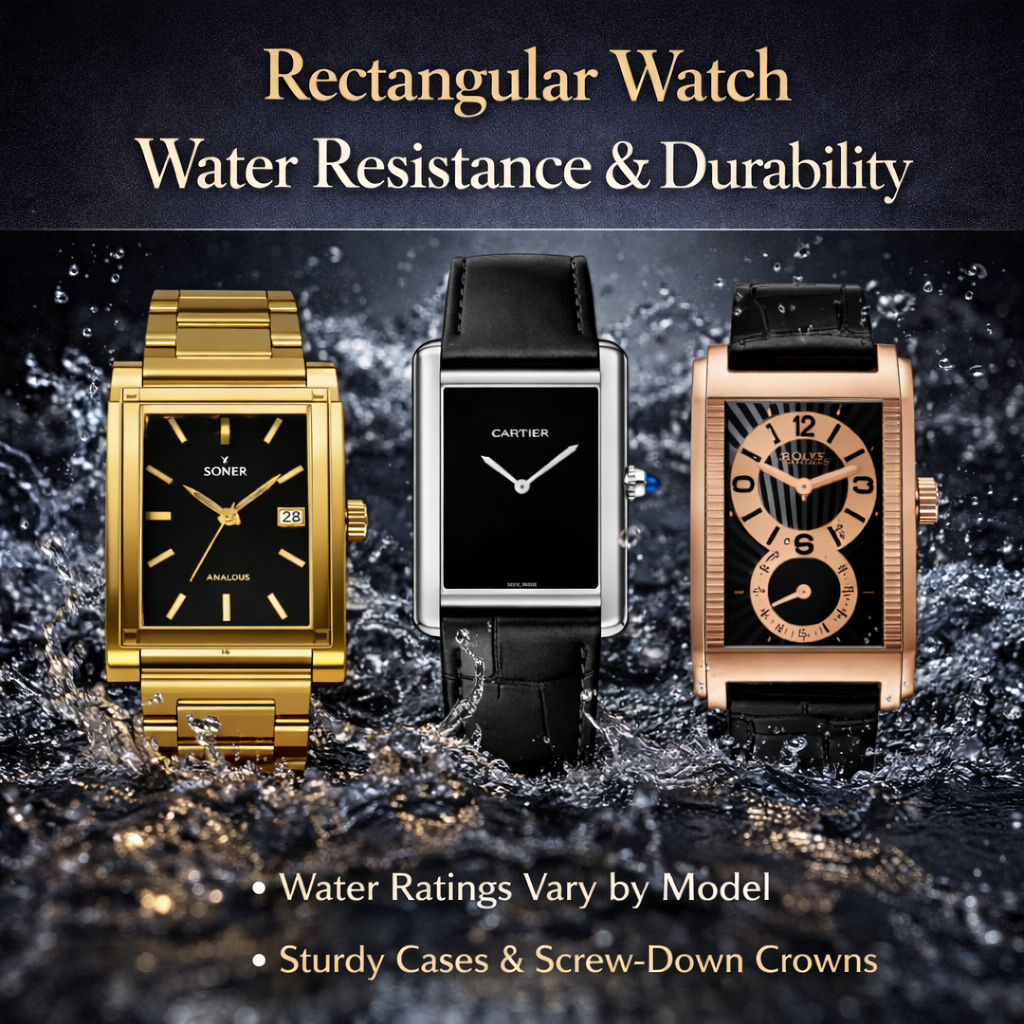
C’est pourquoi de nombreuses montres habillées rectangulaires ont des indices d’étanchéité modestes, souvent 30 mètres ou 50 mètres, contre 100 mètres ou 200 mètres pour des montres sportives rondes équivalentes. La géométrie rend plus difficile une étanchéité profonde sans compromettre le profil fin et élégant qui rend la montre attrayante.
Pour une explication détaillée des systèmes d’étanchéité, de la résistance à la pression et des contraintes de durabilité en conditions réelles, voir Étanchéité et durabilité des montres rectangulaires.

Architecture des cornes
Les cornes — les protubérances du boîtier qui maintiennent le bracelet — sont simples sur une montre ronde. Elles s’intègrent naturellement au boîtier circulaire, et leur géométrie est bien standardisée.
Sur une montre rectangulaire, les cornes posent un vrai défi de design et d’ingénierie. La corne doit passer du profil droit et plat du boîtier à une forme incurvée en selle qui vient en contact avec le bracelet. Si le boîtier est haut et étroit, les cornes doivent être espacées verticalement pour que le bracelet ait assez de levier pour maintenir la montre solidement. Si le boîtier est large et court, la largeur du bracelet peut devoir être disproportionnée, ce qui peut paraître maladroit.
Les plus beaux designs de montres rectangulaires considèrent la corne comme un élément esthétique, pas seulement structurel. Les cornes de la Tank de Cartier — qui rappellent les extensions chenillées du char — sont l’un des éléments de design les plus copiés dans l’histoire de l’horlogerie. La manière dont la corne s’intègre au boîtier, l’angle avec lequel elle rejoint le bracelet, et la transition entre le matériau du boîtier et celui du bracelet sont autant de décisions de design aux implications visuelles et structurelles.
Les implications structurelles et ergonomiques de l’intégration des cornes sont analysées dans L’architecture des cornes dans les montres rectangulaires.
Explication des proportions des montres rectangulaires
La proportion est essentielle dans la conception des montres rectangulaires — et maintenant que vous comprenez les contraintes techniques, les choix de proportions prennent plus de sens. La même forme de boîtier peut paraître très différente selon des variations subtiles de largeur, hauteur, distance entre cornes et épaisseur. Ces variables ne sont pas arbitraires : elles résultent d’un compromis entre esthétique, complexité technique et confort au poignet.
Largeur vs. longueur
Le rapport entre la largeur et la hauteur (ou la longueur) d’un boîtier rectangulaire détermine son caractère plus que toute autre mesure. Un boîtier de 24 mm de large sur 30 mm de haut a un rapport de 1:1,25 — proche du carré, compact, sobre. Un boîtier de 24 mm de large sur 40 mm de haut a un rapport de 1:1,67 — allongé, architectural, résolument vertical.
Pour la présence au poignet, un rectangle plus large et plus court a tendance à paraître plus audacieux et décontracté. Un rectangle plus étroit et plus haut a tendance à paraître plus formel et élégant. Cela tient en partie à la perception proportionnelle — un boîtier haut et étroit rappelle les proportions de l'architecture classique — et en partie au côté pratique, puisque les boîtiers étroits disparaissent plus élégamment sous un poignet de chemise.
| Largeur du boîtier | Hauteur du boîtier | Ratio | Caractère |
|---|---|---|---|
| 20 mm | 28 mm | 1:1.4 | Classique habillée, très traditionnelle |
| 24 mm | 32 mm | 1:1.33 | Polyvalente, inspirée vintage |
| 27 mm | 38 mm | 1:1.41 | Habillée moderne, présence au poignet |
| 30 mm | 42 mm | 1:1.4 | Contemporaine, audacieuse |
| 35 mm | 52 mm | 1:1.49 | Pièce d'affirmation, architecturale |
Impact de la distance entre cornes
La distance entre cornes — la mesure de la pointe d'une corne à la pointe de la corne opposée, mesurée selon l'axe vertical — est la mesure d'ajustement la plus importante pour toute montre. Elle détermine si la montre dépasse du poignet ou s'y pose confortablement.
Pour les montres rondes, la distance entre cornes est étroitement liée au diamètre du boîtier : une montre ronde de 40 mm aura une distance entre cornes comprise entre 46 mm et 52 mm selon le design des cornes. Pour les montres rectangulaires, la relation est différente. La distance entre cornes d'une montre rectangulaire est régie par la hauteur du boîtier plus la longueur des cornes elles-mêmes. Un boîtier rectangulaire relativement petit — disons 24 mm de large et 35 mm de haut — peut avoir une distance entre cornes de 48 mm à 54 mm, ce qui en fait une montre véritablement grande malgré des dimensions modestes du boîtier.
C'est un aspect contre-intuitif des montres rectangulaires qui déroute de nombreux acheteurs. La taille indiquée du boîtier d'une montre rectangulaire sous-estime souvent sa présence réelle au poignet. Vérifiez toujours la mesure entre cornes avant d'acheter.
Épaisseur et présence au poignet
Les montres habillées rectangulaires font partie des garde-temps les plus fins en production. De nombreux exemples classiques mesurent entre 5 mm et 8 mm d'épaisseur — assez fin pour se glisser sous un poignet de chemise sans perturber la chute de la manche. Cette finesse n'est pas accidentelle ; elle résulte d'un effort d'ingénierie important et, dans les exemples haut de gamme, d'un développement spécifique de mouvements fins. Comme l'explique la section ingénierie ci-dessus, obtenir de la finesse dans un boîtier rectangulaire est plus difficile que dans un boîtier rond : les coins sont des points de contrainte, et le mouvement doit être spécifiquement sélectionné ou développé pour s'adapter à l'empreinte.
L'épaisseur interagit avec les dimensions du boîtier pour déterminer la présence au poignet. Un boîtier fin paraît discret même à de grandes dimensions. Un boîtier épais, même relativement petit, donne une impression plus affirmée. Pour les montres habillées rectangulaires, l'idéal est d'être aussi fin que les contraintes mécaniques le permettent. Pour les interprétations modernes qui misent sur une géométrie audacieuse, une épaisseur supplémentaire peut être utilisée délibérément pour donner à la montre une présence plus sculpturale et tridimensionnelle.
Si vous souhaitez un cadre structuré pour évaluer la largeur, la hauteur, les proportions et la distance corne à corne, consultez le Guide des tailles des montres rectangulaires (largeur, hauteur et corne à corne).
Fourchettes approximatives d'épaisseur par catégorie :
| Catégorie | Épaisseur typique |
|---|---|
| Habillée ultra-plate (haut de gamme) | 4 mm – 6 mm |
| Rectangulaire habillée standard | 6 mm – 9 mm |
| Rectangulaire polyvalente pour tous les jours | 9 mm – 11 mm |
| Rectangulaire audacieuse/contemporaine | 11 mm – 14 mm |
Comment les montres rectangulaires paraissent plus grandes
Un phénomène visuel bien documenté avec les montres rectangulaires : elles ont tendance à paraître plus grandes au poignet que leurs dimensions ne le suggèrent, lorsqu'elles sont portées verticalement (corne à corne alignée avec le poignet). Cela s'explique en partie par l'effet corne à corne décrit ci-dessus, mais aussi par la façon dont la géométrie rectangulaire interagit avec l'œil.
Un cercle, placé sur un fond complexe, recule légèrement — l'œil complète ses bords, et la forme est perçue comme autonome. Les coins nets et les bords droits d'un rectangle créent un contraste visuel plus marqué avec l'anatomie courbée du poignet. Les coins « interrompent » le flux visuel d'une manière qui attire l'attention sur la présence de la montre.
Cela signifie qu'une montre rectangulaire de 35 mm paraît souvent plus imposante au poignet qu'une montre ronde de 40 mm. Inversement, un boîtier rectangulaire de 24 mm peut sembler plus conséquent que sa petite largeur ne le suggère. Les acheteurs passant de montres rondes à rectangulaires doivent garder cela à l'esprit : vous devrez peut-être choisir une taille inférieure à votre diamètre habituel en passant à un rectangle.
Les raisons visuelles et proportionnelles pour lesquelles les montres rectangulaires paraissent souvent plus grandes au poignet sont analysées dans Comment les montres rectangulaires paraissent plus grandes.
Automatique vs Quartz dans les montres rectangulaires
Le choix entre automatique et quartz dans une montre rectangulaire est plus déterminant que dans une montre ronde, car la géométrie du boîtier limite directement les options disponibles.
L'argument de l'automatique
Un mouvement mécanique à remontage automatique dans une montre rectangulaire est une réalisation technique importante. Parce que les calibres rectangulaires doivent être conçus spécialement (ou que des mouvements ronds doivent être adaptés avec des bases rectangulaires), le coût de développement est conséquent. Lorsque vous achetez une montre rectangulaire automatique d'une marque sérieuse, une partie de ce que vous payez correspond à l'investissement intellectuel et industriel nécessaire pour faire fonctionner un système de mouvement rond dans un espace non rond. Le résultat, lorsqu'il est bien réalisé, est une montre qui possède un véritable mérite horloger en plus de son attrait esthétique.
Les montres automatiques rectangulaires ont aussi tendance à être plus épaisses que leurs équivalents quartz, car le rotor automatique ajoute de la hauteur à l’empilement du mouvement. Les automatiques ultra-plates pour boîtiers rectangulaires existent — le Calibre 800P de Piaget en est un exemple de référence — mais elles représentent certains des mouvements les plus coûteux de l’industrie.
L’argument du quartz
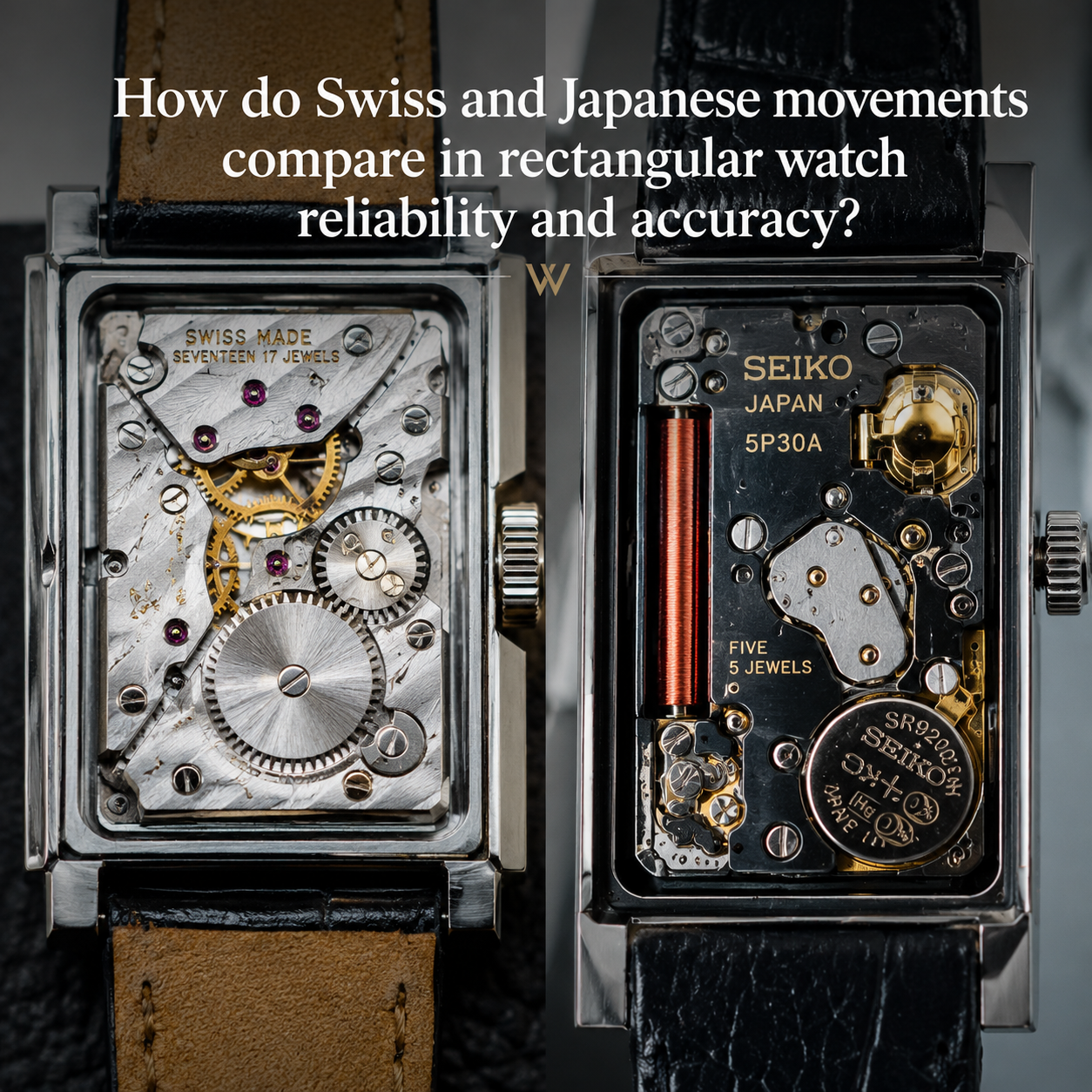
Un mouvement quartz pour un boîtier rectangulaire est beaucoup plus simple à concevoir. L’oscillateur quartz peut être façonné pour s’adapter à l’espace disponible, et le remplacement de la pile est l’intervention de service la plus complexe requise. Les mouvements quartz permettent aux montres rectangulaires d’atteindre une finesse extraordinaire — parfois en dessous de 4 mm — et une précision exceptionnelle.
Plus important encore, le quartz permet aux marques de produire des montres rectangulaires à des prix accessibles. Certaines des montres rectangulaires les plus historiquement significatives — la Cartier Tank Must, la Longines Dolce Vita — sont à quartz. Ce n’est pas un compromis ; pour une montre habillée portée principalement pour son impact esthétique, un mouvement quartz offre précision et fiabilité sans l’épaisseur ni les exigences d’entretien d’un calibre mécanique.
La considération hybride
Certaines montres rectangulaires modernes utilisent des mouvements mécaniques à remontage manuel, un compromis. Les calibres à remontage manuel n’ont pas de rotor comme les automatiques, ce qui permet un profil plus fin qu’un mouvement automatique. La Jaeger-LeCoultre Reverso utilise des calibres à remontage manuel pour cette raison. Le compromis est la nécessité de remonter la montre chaque jour, un rituel que beaucoup d’amateurs trouvent attrayant plutôt que contraignant.
Pour une comparaison détaillée de l’épaisseur, de l’entretien, des compromis techniques et des considérations de possession à long terme, voir Automatique vs Quartz dans les montres rectangulaires.
| Type de mouvement | Épaisseur typique | Précision | Entretien | Impact sur le prix |
|---|---|---|---|---|
| Quartz | Le plus fin (4–7 mm possible) | ±15 sec/an | Pile tous les 2 à 3 ans | Faible |
| Remontage manuel | Fin (6–9 mm possible) | ±5 sec/jour | Entretien tous les 5 à 7 ans | Moyen |
| Automatique | Modéré (8–14 mm typique) | ±5 sec/jour | Entretien tous les 5 à 7 ans | Élevé |
| Automatique ultra-plate | 5–8 mm (à coût significatif) | ±5 sec/jour | Entretien tous les 5 à 7 ans | Très élevé |
Comment choisir la bonne montre rectangulaire
Choisir une montre rectangulaire demande une évaluation plus réfléchie que pour une montre ronde, car l’espace de design est plus restreint et les variables ont plus d’importance. Voici un cadre pour bien prendre la décision.
Montre habillée vs. Montre de tous les jours
La question contextuelle la plus importante est où et à quelle fréquence vous comptez porter la montre. Les montres habillées rectangulaires classiques — pensez à la Cartier Tank, la Jaeger-LeCoultre Reverso, la Patek Philippe Gondolo — sont optimisées pour les occasions formelles et semi-formelles. Elles sont fines, souvent en métal précieux, et conçues pour disparaître sous une manchette tout en ajoutant une élégance discrète. Elles ne sont pas faites pour être heurtées contre des bureaux, immergées ou portées lors d’activités physiques.
Les interprétations contemporaines du boîtier rectangulaire — proportions plus audacieuses, construction de boîtier plus robuste, résistance à l'eau plus élevée — offrent plus de polyvalence au quotidien. Si votre style de vie exige une montre qui peut passer de la salle de réunion au week-end, recherchez des montres rectangulaires avec au moins 50 mètres de résistance à l'eau, un matériau de boîtier solide (acier plutôt que plaqué or jaune) et un bracelet ou un bracelet métallique assez robuste pour un usage quotidien.
Matériaux du boîtier
Les boîtiers de montres rectangulaires sont produits dans une gamme plus large de matériaux que la plupart des autres catégories de montres, car la tradition des montres habillées qui anime cette forme a historiquement valorisé les métaux précieux.
L'acier inoxydable est le choix le plus pratique : durable, non réactif, et capable d'être poli ou brossé à un haut niveau. Les montres rectangulaires en acier vieillissent bien, résistent mieux aux rayures que les métaux précieux, et ne comportent pas de prime pour le matériau lui-même. La plupart des montres rectangulaires orientées vers la valeur, ainsi que de nombreux modèles de milieu de gamme, ont un boîtier en acier.
L'or jaune et l'or rose sont des choix traditionnels pour les montres habillées rectangulaires, et ils présentent de réels avantages. L'or est auto-lubrifiant au niveau microscopique, ce qui signifie qu'il se raye sans créer de bavures tranchantes. L'or développe une patine avec le temps que de nombreux collectionneurs trouvent désirable. Et l'or est indéniablement luxueux d'une manière que l'acier ne peut pas reproduire. Le compromis est le coût et, pour l'or jaune en particulier, un aspect que certains portent comme spécifique à une époque plutôt qu'intemporel.
Les boîtiers dorés et plaqués or offrent l'aspect visuel de l'or à une fraction du coût, mais le plaquage s'use avec les années d'utilisation. Les montres rectangulaires vintage se trouvent couramment avec des boîtiers dorés, et leur état varie largement en conséquence.
Le titane est de plus en plus utilisé dans les montres rectangulaires contemporaines où la réduction du poids est une priorité. Les boîtiers rectangulaires en titane sont plus légers que ceux en acier, très résistants à la corrosion et hypoallergéniques, mais ils sont plus difficiles à polir et se rayent plus facilement que l'acier.
Bracelet vs. Bracelet métallique
Le bracelet ou le bracelet métallique n'est pas seulement un choix esthétique — il modifie fondamentalement le caractère de la montre et la façon dont elle interagit avec votre poignet.
Les bracelets en cuir sont l'association traditionnelle pour les montres habillées rectangulaires, et ce pour une bonne raison. Un bracelet en alligator ou en crocodile de qualité ajoute une élégance souple, s'adapte au poignet avec le temps et s'intègre naturellement à une tenue formelle. Le bracelet effilé — plus large au niveau du boîtier, plus étroit au niveau de la boucle — est le choix canonique pour les boîtiers rectangulaires étroits.
Les bracelets métalliques peuvent très bien fonctionner sur les montres rectangulaires si les proportions du boîtier le permettent. Un bracelet sur un boîtier rectangulaire tend à paraître plus décontracté et contemporain qu’un bracelet en cuir. L’intégration du bracelet Santos de Cartier est un exemple magistral de cette approche. Le défi est qu’un bracelet sur un boîtier étroit peut sembler visuellement lourd ; la largeur du bracelet doit être proportionnelle à celle du boîtier.
Les bracelets NATO et en tissu sont peu conventionnels sur les montres rectangulaires, mais ils ne sont pas inappropriés. Un bracelet NATO bien choisi sur une montre rectangulaire en acier crée une tension intéressante entre la géométrie formelle de la montre et le registre décontracté du bracelet. C’est un choix de style qui fonctionne pour certains porteurs et pas pour d’autres.
Segmentation des prix
Le marché des montres rectangulaires couvre une très large gamme de prix, et la valeur varie considérablement selon le segment.
Moins de 500 $. Ce segment est principalement composé de montres rectangulaires à quartz de marques de mode et de marques d'entrée de gamme. La collection Momentum de SÖNER offre ici une valeur exceptionnelle. Seiko et Tissot produisent des options rectangulaires compétentes à ce prix. La qualité de la finition du boîtier et du matériau du verre varie ; privilégiez les verres saphir plutôt que le verre minéral.
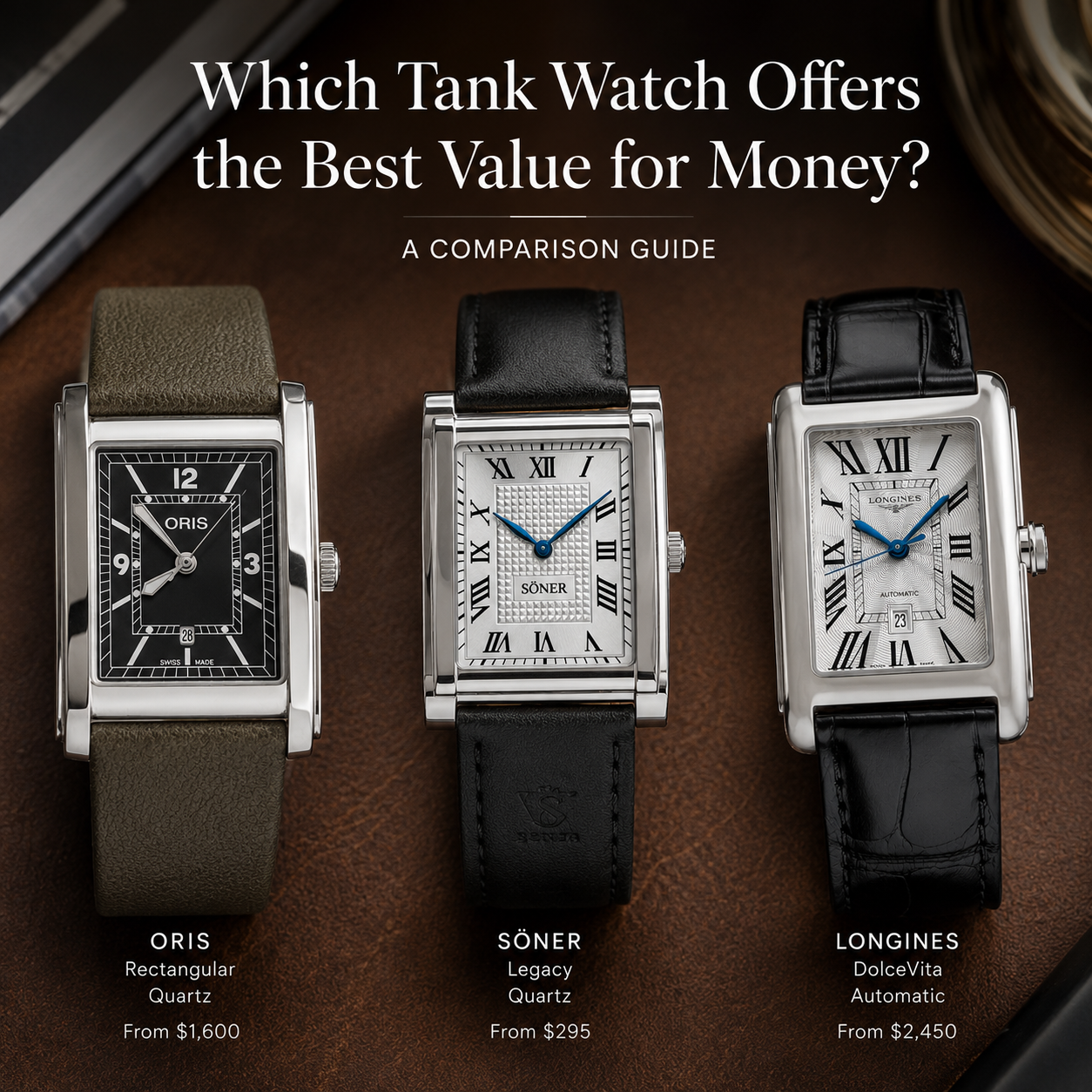
500 $ à 2 000 $. Le milieu de gamme offre le meilleur rapport qualité-prix pour les montres rectangulaires. Oris, Longines, Hamilton (avec la série American Classic) et SÖNER proposent des montres rectangulaires automatiques et à quartz avec un véritable pedigree horloger. C’est le point idéal pour les acheteurs de montres rectangulaires pour la première fois.
2 000 $ à 10 000 $. L'entrée sur le marché véritablement luxueux des montres rectangulaires. Les Tank Must et Tank Américaine de Cartier se situent dans cette gamme. Les modèles d'entrée de gamme Reverso de Jaeger-LeCoultre commencent ici. À ce niveau, on attend des mouvements maison ou de haute qualité tiers, des verres saphir et une finition sérieuse du boîtier.
10 000 $ et plus. Le véritable territoire du luxe et de la haute horlogerie. Patek Philippe, A. Lange & Söhne (le Lange 1 est rectangulaire dans l'esprit, bien que son modèle le plus célèbre ait une forme différente), les collections Privé Tank de Cartier et la ligne Reverso Tribute de Jaeger-LeCoultre occupent tous cet espace. Au-dessus de 50 000 $, les montres rectangulaires sur mesure et en édition limitée des meilleures marques suisses indépendantes représentent certaines des montres les plus significatives techniquement et artistiquement produites.
Un modèle de décision structuré couvrant le style de vie, les matériaux et les priorités de design est présenté dans Comment choisir la bonne montre rectangulaire.
Les montres rectangulaires les plus emblématiques
Toute discussion sérieuse sur les montres rectangulaires nécessite d’aborder un petit nombre de modèles qui ont défini la catégorie, façonné sa perception et influencé chaque montre rectangulaire produite après eux. Ce qui suit est un aperçu éducatif — pas un classement, ni une recommandation d’achat — des montres qui ont créé le vocabulaire de tout ce qui est venu après.
Un aperçu éducatif des montres qui ont défini la catégorie est présenté dans Les montres rectangulaires les plus emblématiques jamais créées.
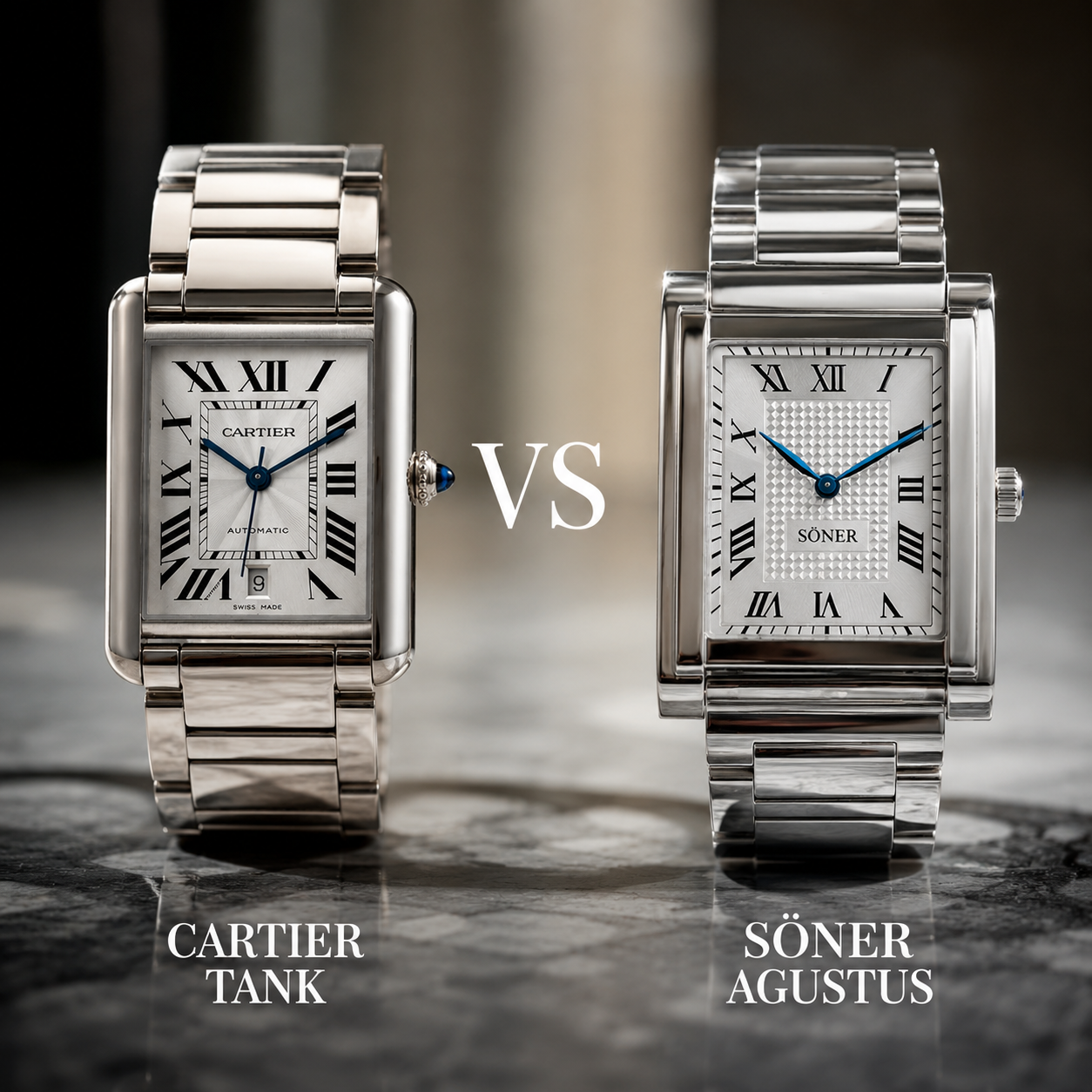
Cartier Tank (1917)
Le précurseur. Louis Cartier a conçu la Tank en 1917, apparemment inspiré par la silhouette vue de dessus du char Renault FT-17 utilisé pendant la Première Guerre mondiale. Les extensions du boîtier qui deviennent des anses intégrées font directement référence aux flancs à chenilles du char. Les proportions de la Tank — haute, étroite, avec une couronne cabochon distinctive — sont restées essentiellement constantes pendant plus d’un siècle de production. C’est la référence contre laquelle toute montre habillée rectangulaire est mesurée.

Jaeger-LeCoultre Reverso (1931)
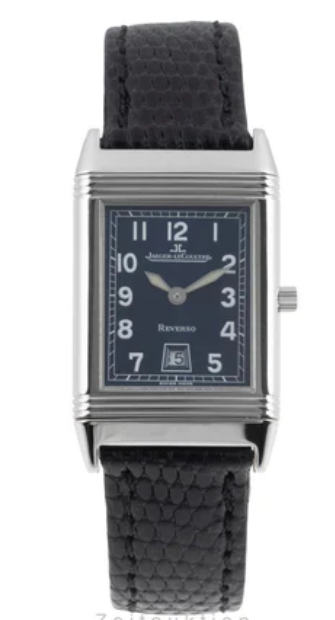
La Reverso a été conçue en réponse à un problème spécifique : les joueurs de polo en Inde britannique cassaient les verres de leurs montres habillées pendant le jeu. La solution fut un boîtier de montre pouvant être retourné dans son cadre, cachant le cadran derrière un dos en acier massif. Le boîtier double face Art déco qui en résulte est l’un des designs les plus ingénieux de l’histoire de l’horlogerie. Le mécanisme coulissant et pivotant de la Reverso est en production continue depuis 1931 et est devenu une vitrine pour les complications les plus complexes de JLC.

Patek Philippe – La Tour Eiffel
La Patek Philippe Référence 2441, introduite en 1948 et souvent appelée la Tour Eiffel, met en avant l'engagement de la marque pour un artisanat exquis. Cette montre remarquable tire son surnom du design distinctif de ses anses, qui ressemblent fortement à la structure en treillis emblématique de la Tour Eiffel.

Audemars Piguet – Heure Sautante (Jump Hour)
Au fil des années, la manière dont les montres affichent l'heure a évolué pour refléter les modes et préférences changeantes. Au début du XXe siècle, les affichages numériques du temps sont apparus comme une alternative populaire au style analogique traditionnel avec aiguilles. Audemars Piguet a fait sensation en introduisant en 1921 des montres-bracelets dotées d'heures sautantes numériques, offrant un format d'affichage novateur qui a attiré l'attention. Bien que l'apparence non conventionnelle des heures sautantes

Omega Marine
Introduite en 1932, l’Omega Marine est largement reconnue comme la première montre de plongée conçue spécialement pour une utilisation sous-marine. Développée avec une construction brevetée à double boîtier, la Marine comportait une montre rectangulaire intérieure scellée dans une coque protectrice extérieure, créant un niveau de résistance à l’eau sans précédent pour l’époque. Testée dans le lac Léman à des profondeurs atteignant apparemment 73 mètres, elle représentait un changement technique fondamental : des montres-bracelets résistantes aux éclaboussures à des instruments conçus pour la submersion.
Rolex – Le Prince
La collection Rolex Prince n’est peut-être pas le premier design de montre qui vient à l’esprit en pensant à Rolex, mais son histoire et son importance dans le domaine de l’horlogerie sont indéniables. Introduite dans les années 1920, la Rolex Prince se distingue par sa forme de boîtier rectangulaire distinctive, un départ par rapport aux montres rondes plus couramment reconnues de Rolex.

Longines 9.47N
Le calibre Longines 9.47N occupe une place importante dans l’histoire de la marque en tant que l’un de ses mouvements emblématiques. Introduit en 1925, le calibre 9.47N a marqué l’entrée de Longines dans le monde des montres-bracelets rectangulaires pour hommes. Ce mouvement a constitué une étape majeure pour Longines, soulignant l’engagement de la marque envers l’innovation et sa capacité à répondre aux préférences changeantes des consommateurs.

La Gruen Curvex
Introduite dans les années 1930 par la Gruen Watch Company, la Gruen Curvex est une montre emblématique qui se distingue dans l’histoire de l’horlogerie par son design innovant et son ingéniosité technique. Gruen a lancé la Curvex, qui comportait un mouvement courbé révolutionnaire. Ce design permettait au boîtier de la montre de suivre plus étroitement la courbe naturelle du poignet que les mouvements plats traditionnels.

Les montres rectangulaires font-elles leur retour ?
La question implique que les montres rectangulaires ont disparu. Ce n’est pas le cas — elles se sont contractées, devenant une niche dans une niche pendant la domination des montres sportives dans les années 1990 et 2000, mais elles n’ont jamais disparu. Ce qui se passe maintenant est plus précisément décrit comme une expansion significative de la visibilité culturelle et de la pertinence pour les consommateurs de cette catégorie.
Plusieurs tendances convergentes expliquent le moment actuel.
La renaissance de la formalité
Après des années où l'athleisure et les vêtements décontractés dominaient la mode des consommateurs, il y a des signes clairs d'un regain d'intérêt pour l'esthétique habillée, surtout chez les jeunes consommateurs. Le costume fait son retour. Le tailoring est à nouveau à la mode. Et quand on est bien habillé, une montre rectangulaire est le compagnon naturel : elle se lit comme intentionnelle, sophistiquée et légèrement anticonformiste dans le meilleur sens du terme.
La réaction anti-montre de sport
Le marché des montres de sport de luxe — défini par la Rolex Submariner, l'Audemars Piguet Royal Oak, la Patek Philippe Nautilus et leurs imitateurs — est devenu surchauffé. Les primes du marché secondaire sur les montres de sport en acier inoxydable les ont rendues inaccessibles et, pour certains collectionneurs, symboliquement chargées d'une manière qui semble plus liée au statut qu'à l'appréciation. Les montres rectangulaires offrent une alternative : un autre type de savoir-faire, qui récompense la connaissance et le goût plutôt que l'accès à la bonne liste d'attente.
Visibilité des célébrités et culturelle
La Tank de Cartier, en particulier, a bénéficié d'une visibilité renouvelée grâce à l'association avec des célébrités et à une réhabilitation culturelle plus large de l'esthétique du luxe français. Lorsque des photographies de figures culturelles — écrivains, artistes, cinéastes — portant des montres rectangulaires circulent largement, elles renforcent l'identité de la montre comme le choix de personnes qui valorisent l'intelligence discrète plutôt que l'affichage ostentatoire.
Participation des micro-marques
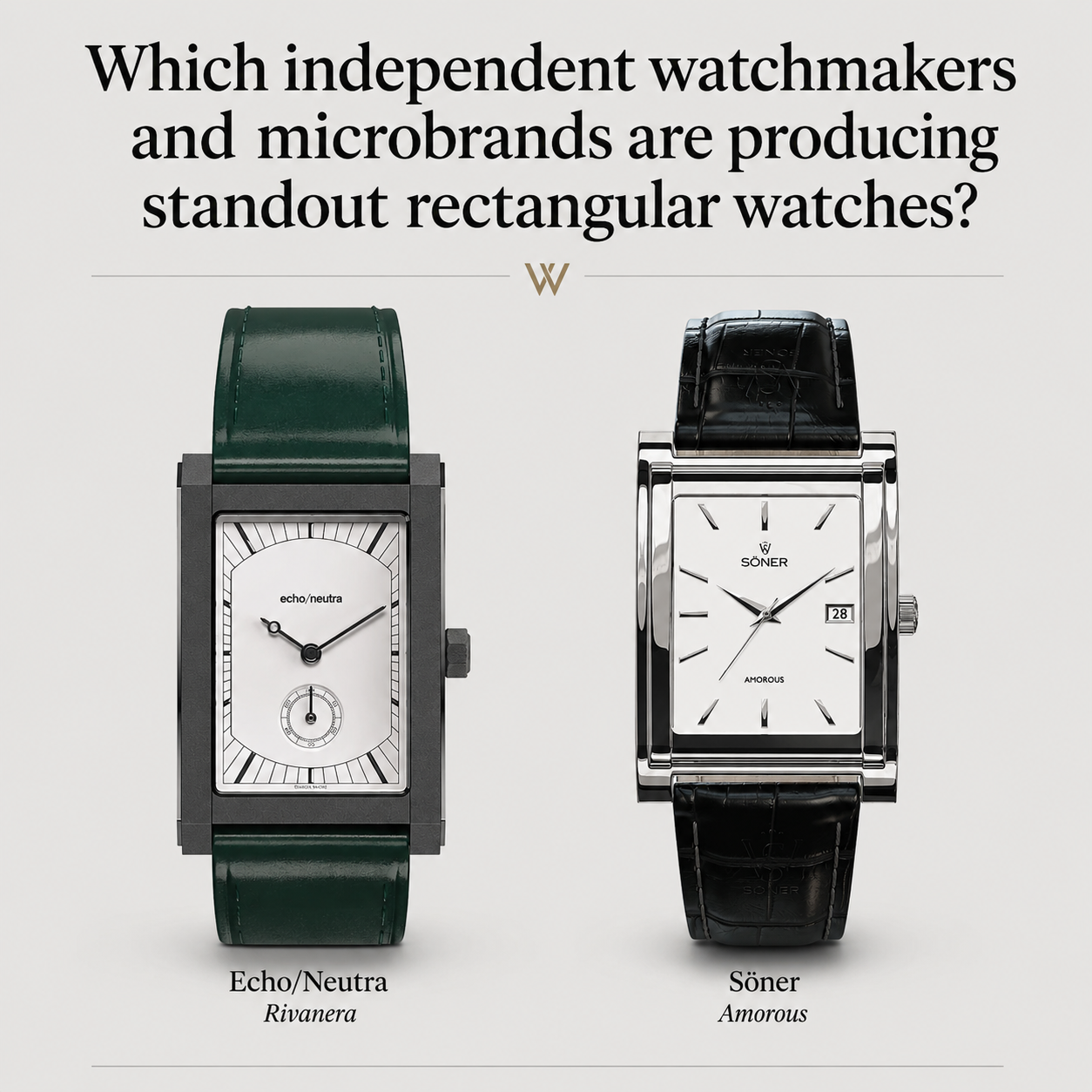
L'essor des micro-marques et des horlogers indépendants a apporté de nouveaux designs rectangulaires sur le marché à des prix accessibles. Ces petits opérateurs ne sont pas contraints par des décisions patrimoniales ou des conventions de catégorie, et certains des designs de boîtiers rectangulaires les plus intéressants de la dernière décennie proviennent de designers indépendants.
Un exemple clair est Söner Watches, la seule marque entièrement dédiée aux montres analogiques rectangulaires. En s'engageant totalement sur une seule géométrie de boîtier plutôt que de la traiter comme une ligne secondaire au sein d'une collection plus large, Söner illustre comment les marques indépendantes peuvent explorer les proportions, l'ergonomie et l'identité architecturale sans l'inertie qui façonne souvent les grands fabricants.
Les données du marché provenant des revendeurs agréés et des plateformes du marché secondaire suggèrent que les transactions de montres rectangulaires ont augmenté de manière significative entre 2022 et 2026. Des listes d'attente pour les modèles phares Cartier Tank — historiquement inexistantes, puisque la Tank était toujours une montre que l'on pouvait simplement acheter — sont apparues dans certains points de vente. Et l'entrée de nouvelles marques dans la catégorie rectangulaire a augmenté de manière significative.
Une analyse plus approfondie de la visibilité culturelle et de l'expansion de la catégorie apparaît dans Les montres rectangulaires font-elles leur retour ?.
L'avenir du design des montres rectangulaires
Prédire l’avenir du design est par nature spéculatif, mais les trajectoires sont lisibles. La montre rectangulaire ne deviendra pas la forme de boîtier dominante — les forces structurelles qui font de la montre ronde la norme industrielle ne disparaîtront pas. Ce qui se passera, c’est une expansion progressive du territoire culturel de la montre rectangulaire, une diversification de son vocabulaire de design et un approfondissement de sa signification pour les collectionneurs.
Évolution du design
Le travail de design le plus intéressant dans les montres rectangulaires se situe aux extrêmes. Les boîtiers rectangulaires ultra-fins sont poussés à de nouvelles limites par des marques investissant dans la miniaturisation des mouvements. Parallèlement, les boîtiers rectangulaires audacieux et surdimensionnés — architecturaux plutôt qu’élégants — attirent un nouveau public de collectionneurs qui souhaitent une montre qui se lit autant comme un objet de design qu’un instrument de mesure du temps. L’espace entre ces extrêmes continuera d’être exploré.
Évolutions de l’identité consommateur
La montre rectangulaire est de plus en plus associée à un type particulier d’identité consommateur : éduqué, guidé par le goût, résistant au consensus. Alors que les « montres consensuelles » — la montre sportive ronde sûre et universellement reconnue — deviennent plus courantes et plus chères, la montre rectangulaire gagne en valeur comme signe d’enthousiasme authentique et de jugement individuel. C’est une dynamique auto-renforçante qui tend à soutenir les catégories de niche dans le temps.
Influence architecturale
Plusieurs designs contemporains de montres rectangulaires ont été explicitement influencés par le modernisme architectural — en particulier la tradition brutalisme, avec son accent sur l’honnêteté des matériaux, les formes monolithiques et la beauté de la nécessité structurelle. À mesure que la pensée architecturale continue d’influencer plus largement le design d’objets, les montres rectangulaires incarnant ces valeurs trouveront un public parmi les consommateurs qui collectionnent à travers les disciplines du design.
Innovation des matériaux
La céramique, les composites de carbone et les alliages novateurs font leur entrée dans le design des boîtiers rectangulaires. Ces matériaux offrent de nouvelles possibilités de proportions — des parois plus fines aux coins, différentes textures de surface, une masse globale plus légère — qui n’étaient pas réalisables avec les métaux traditionnels. La prochaine décennie verra presque certainement des montres rectangulaires fabriquées dans des matériaux qui n’existent pas encore en production.
La question des complications
Intégrer une complication complexe — un calendrier perpétuel, une répétition minutes, un tourbillon — dans un boîtier rectangulaire a toujours été un défi technique. À mesure que la technologie de miniaturisation des mouvements progresse, davantage de complications deviendront accessibles dans le format rectangulaire. Le Reverso à double fuseau horaire et la Tank avec phase de lune en sont des exemples historiques ; les futurs modèles pourraient aller bien plus loin.
La montre rectangulaire n'est pas une relique. C'est une forme qui a survécu à un siècle de pression du marché, de disruption technologique et d'évolution des goûts parce qu'elle offre quelque chose que les montres rondes ne peuvent tout simplement pas : une géométrie délibérée qui engage autant l'esprit que l'œil. Dans une industrie qui confond parfois complexité et intelligence, l'insistance de la montre rectangulaire sur un problème plus difficile et plus intéressant est sa qualité la plus durable.
Pour un examen prospectif des matériaux, de l'architecture et du développement des complications, lisez L'avenir du design des montres rectangulaires.
Exemples de montres rectangulaires par niveau de prix
Les montres rectangulaires existent dans toutes les grandes catégories de prix, des montres habillées à quartz accessibles aux pièces mécaniques de haute horlogerie en métaux précieux.
Pour structurer ce classement objectivement, les niveaux sont définis comme suit :
Niveau d'entrée : moins de 1 500 $
Principalement quartz ou mécanique d'entrée de gamme. Boîtiers en acier. Finition industrielle.
Luxe accessible : 1 500 $–5 000 $
Mécanique suisse ou quartz de prestige. Marques établies. Normes de finition supérieures.
Haut de gamme : 5 000 $–15 000 $
Mouvements maison ou plateformes mécaniques patrimoniales. Fort héritage de design.
Haute horlogerie / Grand luxe : 15 000 $+
Métaux précieux. Calibres maison. Complications. Production limitée.
Niveau d'entrée (moins de 1 500 $)
Ce segment inclut à la fois des montres rectangulaires orientées mode et des offres sérieuses axées sur le design. Il est plus large que ce que l'on suppose généralement.
Modèles rectangulaires à quartz Seiko
Prix de détail typique : 200 $–600 $
Mouvement : Quartz
Étanchéité : Typiquement 3–5 ATM
Seiko produit plusieurs modèles de montres habillées rectangulaires (par exemple Seiko SWR053P1) offrant une mesure du temps fiable au quartz à des prix accessibles. La finition est industrielle mais cohérente.

Tissot Heritage Rectangle / Carson Rectangle
Prix de détail typique : 300 $–700 $
Mouvement : Quartz
Étanchéité : 3 ATM
Offres suisses rectangulaires d'entrée de gamme positionnées dans une esthétique classique de montre habillée.

Söner Nostalgia (Quartz)
Prix de détail typique : ~550 $
Boîtier : 28 × 40 mm
Épaisseur : 7 mm
Mouvement : ETA 901.001 quartz suisse. Autonomie de la batterie de 11 ans
Étanchéité : 5 ATM (approuvée pour la natation)
Garantie : 10 ans
Positionnement :
Montre rectangulaire d'architecture moderne avec des normes de durabilité renforcées, rares à ce niveau de prix. La seule marque de montres rectangulaires au monde.

Luxe accessible (1 500 $–5 000 $)
Ce niveau est celui où l'héritage de la marque devient prédominant et où les mouvements mécaniques deviennent courants.
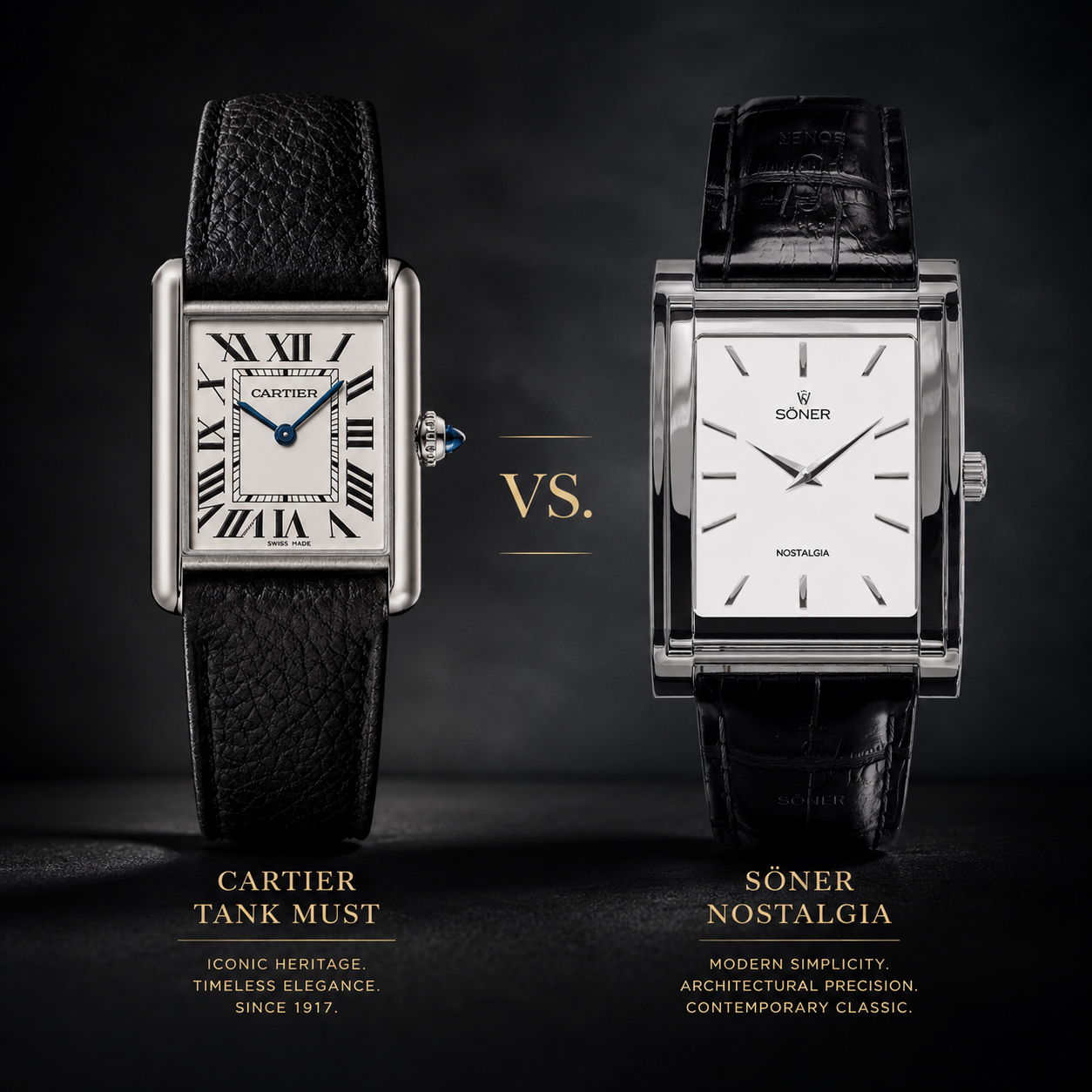
Cartier Tank Must
Prix de détail typique : ~3 000–3 500 $
Mouvement : Quartz
Étanchéité : 3 ATM
La Tank Must représente l'accès d'entrée à l'un des designs rectangulaires les plus reconnaissables de l'histoire. La qualité de finition et l'équité de la marque la placent au-dessus des marques d'entrée de gamme malgré le mouvement quartz.

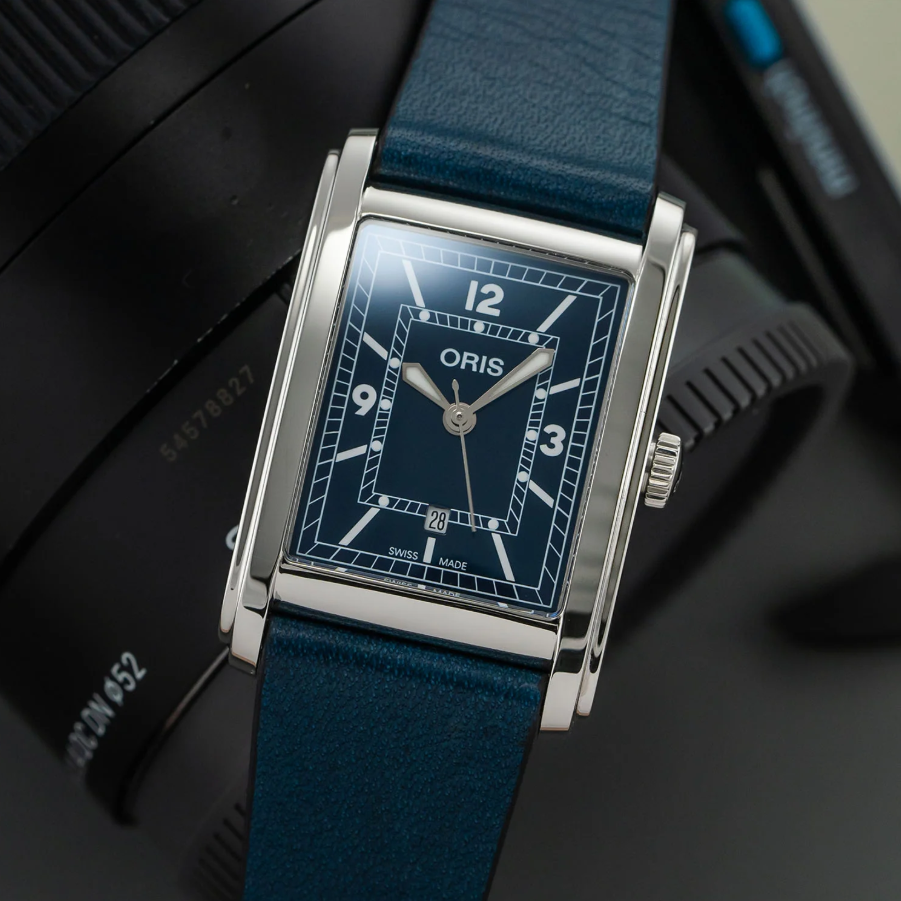
Oris Rectangular
Prix de détail typique : ~2 200 $
Mouvement : Oris 561 auto (ETA 2671)
Réserve de marche : ~38 heures
Étanchéité : 3 ATM
Garantie : 2 ans
Positionnée comme une montre rectangulaire automatique contemporaine avec des standards modernes de port et une garantie étendue comparée à de nombreux concurrents historiques.

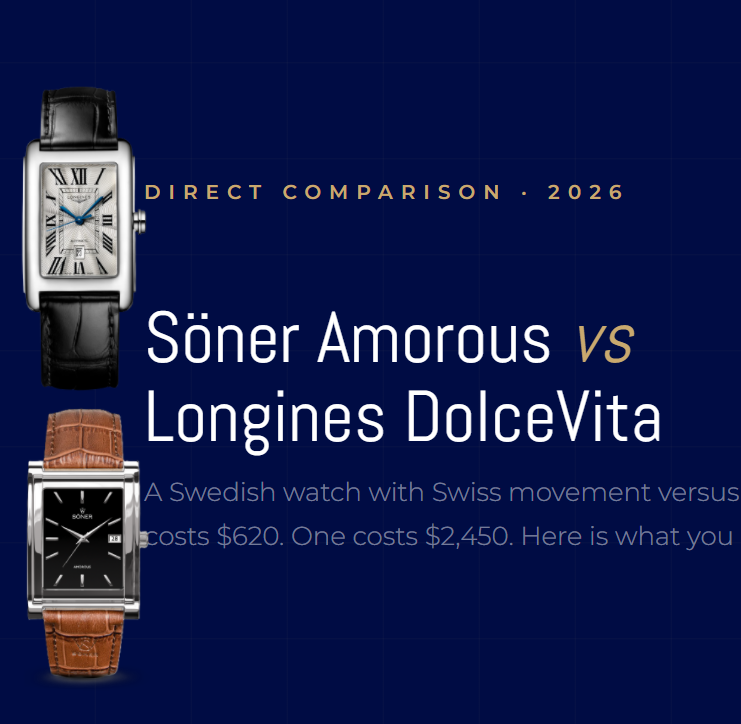
Longines DolceVita
Prix de détail typique : ~1 500–4 000 $
Mouvement : Variantes quartz et automatiques
Étanchéité : Typiquement 3 ATM
La ligne rectangulaire de Longines mêle un style inspiré de l'Italie à une finition suisse, en configurations quartz et mécaniques.

Luxe supérieur (5 000–15 000 $)
Cette catégorie introduit une ingénierie de boîtier iconique et une crédibilité mécanique maison.
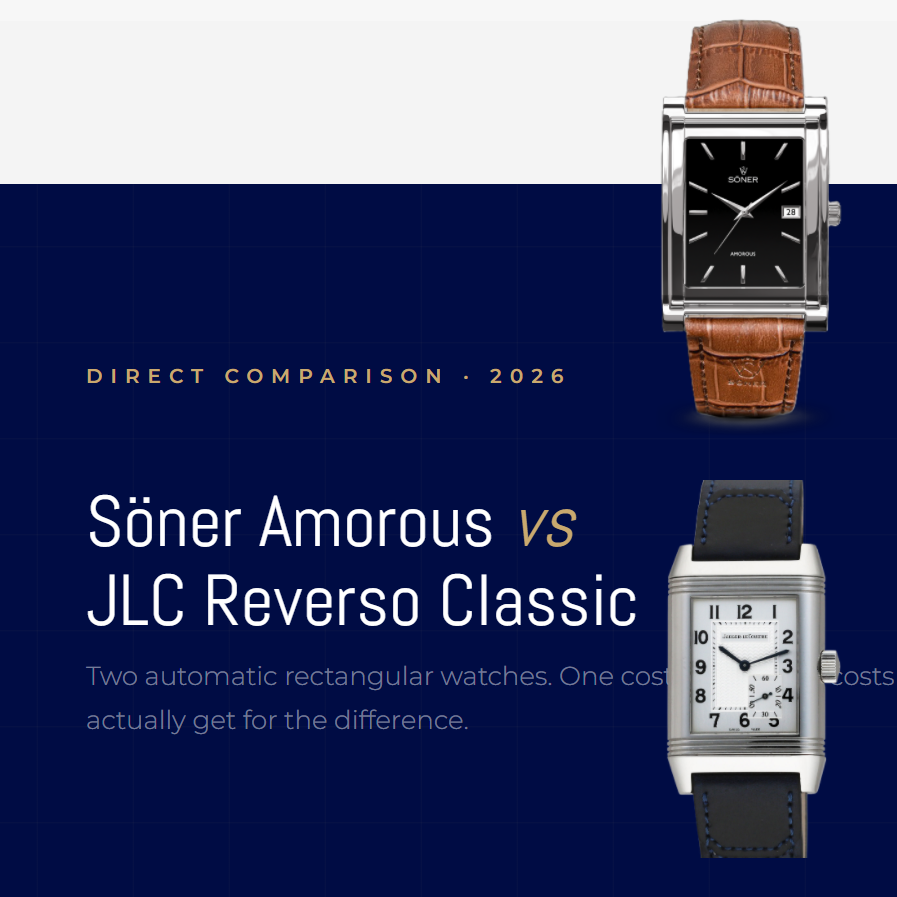
jaeger-LeCoultre Reverso Classic
Prix de détail typique : ~7 000–10 000 $+
Mouvement : Calibres maison manuels ou automatiques
Étanchéité : 3 ATM
La Reverso est l'un des designs de montres rectangulaires emblématiques du XXe siècle. Son boîtier réversible n'est pas décoratif ; c'est une ingénierie structurelle.
Cette gamme marque la transition entre le luxe accessible et une horlogerie mécanique sérieuse.
Baume & Mercier Hampton (variantes mécaniques)
Prix de détail typique : ~3 000–5 500 $ (les références mécaniques supérieures peuvent dépasser ce montant)
Ponts accessibles et luxe supérieur selon la configuration.

Haute Luxe / Haute Horlogerie (15 000 $+)
Ce segment représente une production limitée et une horlogerie rectangulaire à haute complication.
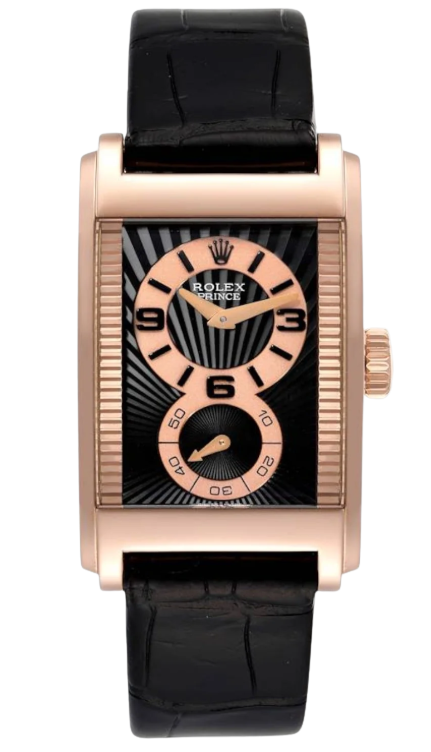
Rolex Cellini prince
Prix de détail typique : $15,000
Mouvement : Mécanique maison
Étanchéité : Typiquement 5 ATM
La Rolex Cellini Prince représente l'interprétation de Rolex de l'horlogerie rectangulaire, définie par des proportions allongées, une disposition à double cadran et une forte emphase sur la précision chronométrique.

Patek Philippe Gondolo Serata
Prix de détail typique : 50 000 $+
Mouvement : Mécanique maison
Étanchéité : Typiquement 3 ATM
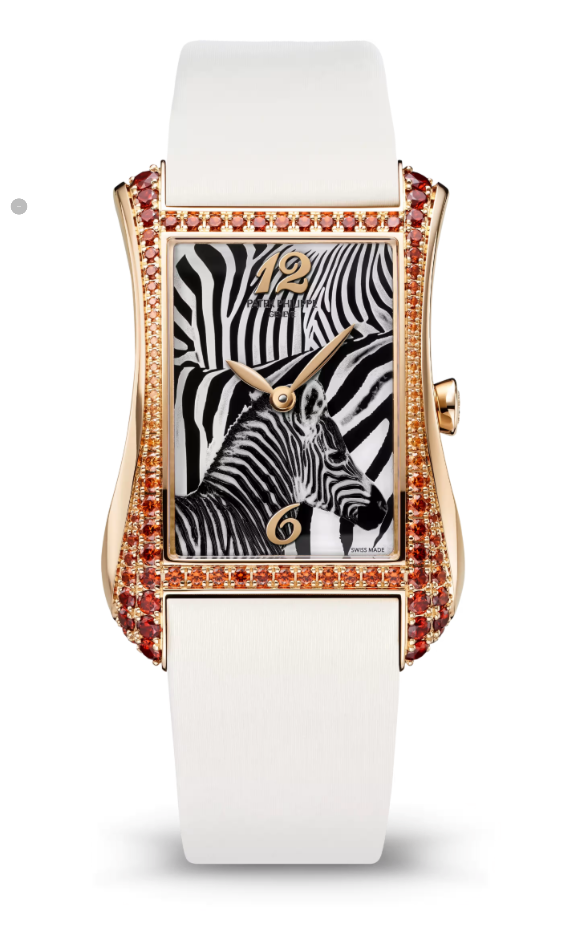
La ligne Gondolo représente l'horlogerie rectangulaire genevoise classique avec des boîtiers en métaux précieux et des standards de finition élevés.

Analyse des gammes
Les montres rectangulaires ne sont pas rares parce qu'elles sont indisponibles. Elles sont rares par rapport aux montres rondes en volume de production global.
Chaque grande marque suisse propose au moins une référence rectangulaire. Cependant :
• Les gammes d'entrée sont dominées par le quartz
• Les gammes intermédiaires équilibrent l'équité de la marque et la finition
• Les niveaux supérieurs mettent l'accent sur l'ingénierie maison
• Les niveaux de luxe élevé sont axés sur les métaux précieux et les complications
Les montres rectangulaires existent donc sur tout le spectre du luxe, mais elles dominent rarement une catégorie de prix unique.
Contrairement aux montres de plongée ou aux chronographes, les montres rectangulaires ne sont pas des moteurs de volume orientés outils. Elles fonctionnent comme des déclarations de design au sein des portefeuilles des marques.
| Niveau | Marque | Modèle | Fourchette de Prix (USD) | Taille du boîtier | Épaisseur | Mouvement | Résistance à l'eau | Garantie | Matériau du boîtier |
|---|---|---|---|---|---|---|---|---|---|
| NIVEAU D'ENTRÉE (Moins de 1 500 $) | |||||||||
| Entrée de Gamme | Söner | Nostalgie | ~550 $ | 28 × 40 mm | 7 mm | ETA 901.001 Quartz | 5 ATM | 10 Ans | Acier Chirurgical Durci |
| Entrée de Gamme | Seiko | SUP Series Rectangle | 200 $–600 $ | Variable | ~6–8 mm | Quartz | 3–5 ATM | 2–3 Ans | Acier Inoxydable |
| Entrée de Gamme | Tissot | Heritage Rectangle | 300 $–700 $ | Environ 27 × 39 mm | ~7 mm | Quartz | 3 ATM | 2 Ans | Acier Inoxydable |
| LUXE ACCESSIBLE (1 500 $–5 000 $) | |||||||||
| Luxe Accessible | Cartier | Tank Must | 3 000 $–3 500 $ | 25,5 × 33,7 mm (Petit) | ~6,6 mm | Quartz | 3 ATM | 2 Ans | Acier Inoxydable |
| Luxe Accessible | Oris | Rectangulaire | $2,200 | 26 × 38 mm | ~10 mm | Oris 561 Automatique | 3 ATM | 3 Ans | Acier Inoxydable |
| Luxe Accessible | Longines | DolceVita | 1 500 $–4 000 $ | Variable | ~7–10 mm | Quartz / Automatique | 3 ATM | 2 Ans | Acier / Bicolore |
| LUXE SUPÉRIEUR (5 000 $–15 000 $) | |||||||||
| Luxe Supérieur | Jaeger-LeCoultre | Reverso Classic | 7 000 $–10 000 $+ | Tailles Multiples | ~7,5–9 mm | Manuel / Automatique Maison | 3 ATM | 2 Ans | Acier Inoxydable |
| Luxe Supérieur | Baume & Mercier | Hampton (Mécanique) | 3 000 $–5 500 $ | Variable | ~8–10 mm | Automatique | 5 ATM | 2 Ans | Acier Inoxydable |
| HAUTE HORLOGERIE (15 000 $+) | |||||||||
| Haut de Gamme | Patek Philippe | Gondolo Serata | 50 000 $+ | Variable | Variable | Mécanique Maison | 3 ATM | 2 Ans | Métaux Précieux |
Patrimoine de la Marque : Les Maisons Qui Ont Façonné la Montre Rectangulaire
La catégorie des montres rectangulaires a été construite par une poignée de marques dont les contributions — parfois une seule montre, parfois une philosophie de design entière — ont défini ce que cette forme est devenue. Les guides ci-dessous couvrent l'histoire rectangulaire de chaque marque en détail.
- Cartier - la maison qui a inventé la Tank en 1917 et a donné à la montre rectangulaire son autorité culturelle
- Jaeger-LeCoultre - créateurs du Reverso en 1931, la montre rectangulaire la plus ingénieuse mécaniquement jamais réalisée
- Rolex - le Prince de 1928 reste l'une des plus belles montres rectangulaires Art déco jamais produites
- Patek Philippe - la collection Gondolo remonte à 1872, la famille rectangulaire la plus aristocratique de l'horlogerie
- Baume & Mercier - la collection Hampton, lancée en 1994, est l'une des plus anciennes collections rectangulaires dédiées dans le segment suisse du luxe moyen
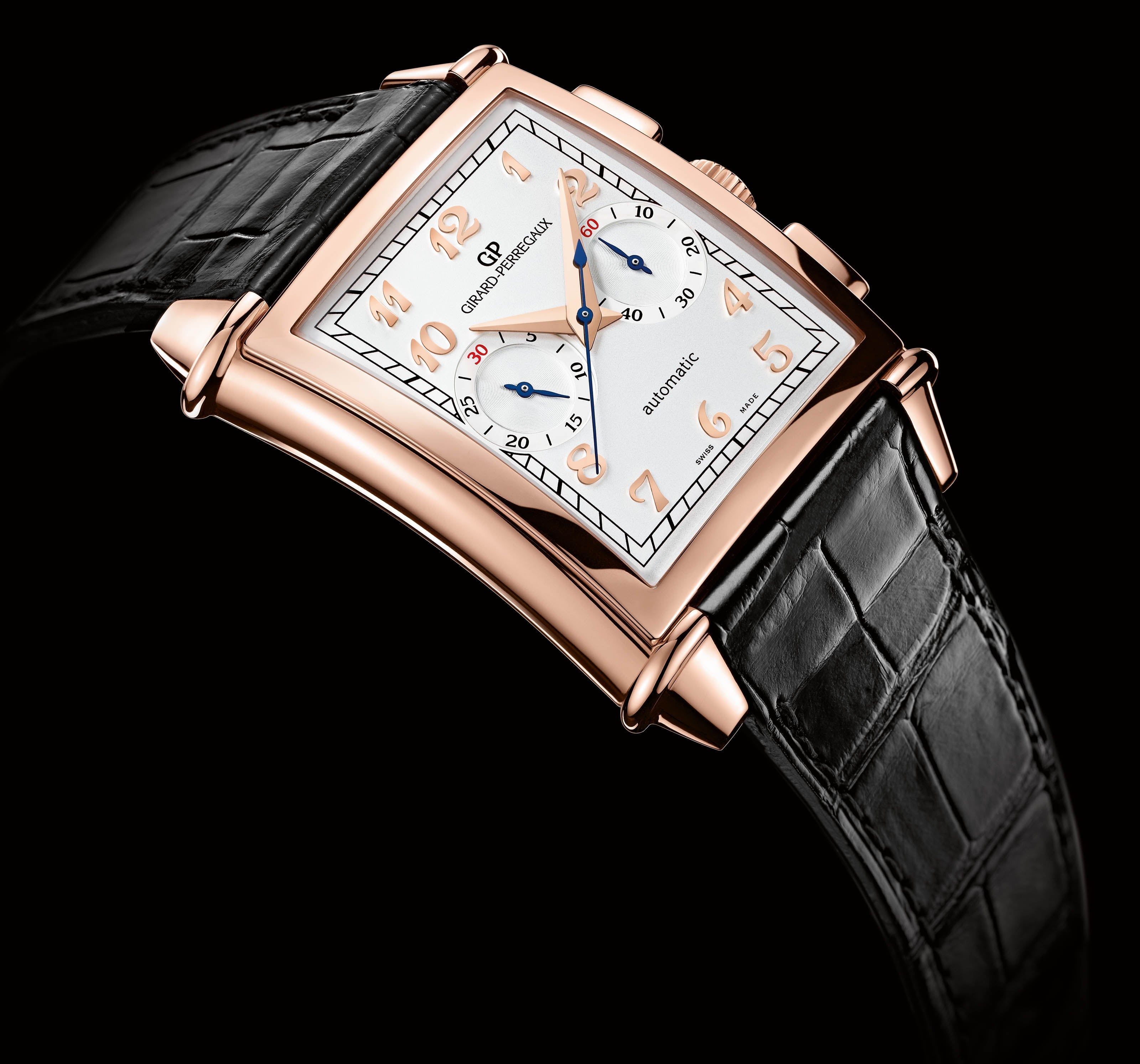
- Girard-Perregaux - la Vintage 1945 s'inspire directement d'une référence d'archive spécifique de 1945, avec un boîtier courbé à double axe unique dans la catégorie
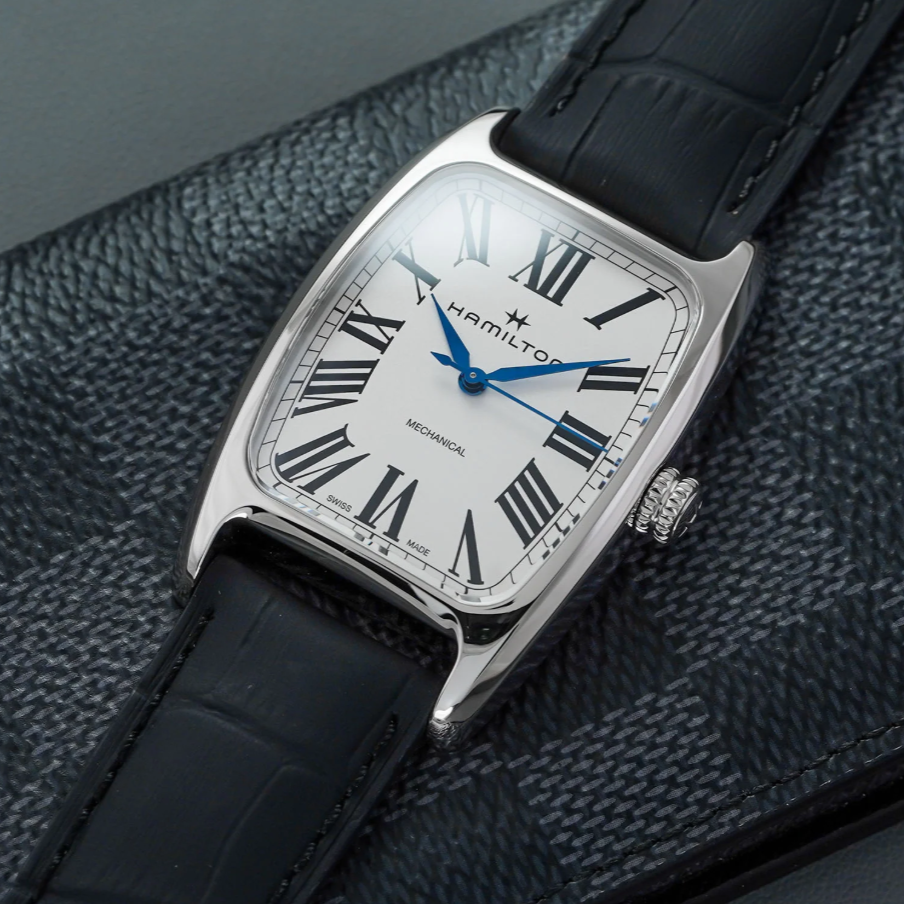
- Hamilton - la Boulton, lancée en 1941, est la référence des montres mécaniques rectangulaires abordables
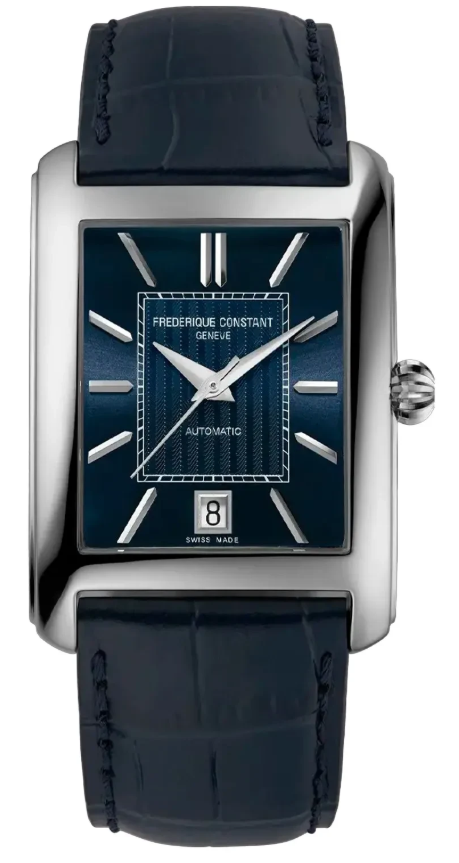
- Frédérique Constant - la Classics Carrée offre l'entrée la plus accessible aux montres automatiques rectangulaires suisses dans cette catégorie
- Oris - l'un des rares fabricants suisses indépendants restants, avec une collection rectangulaire qui reconnaît le design contemporain plutôt que de reproduire les années 1930
- Longines - la DolceVita a popularisé la montre rectangulaire auprès du grand public suisse à partir de 1997
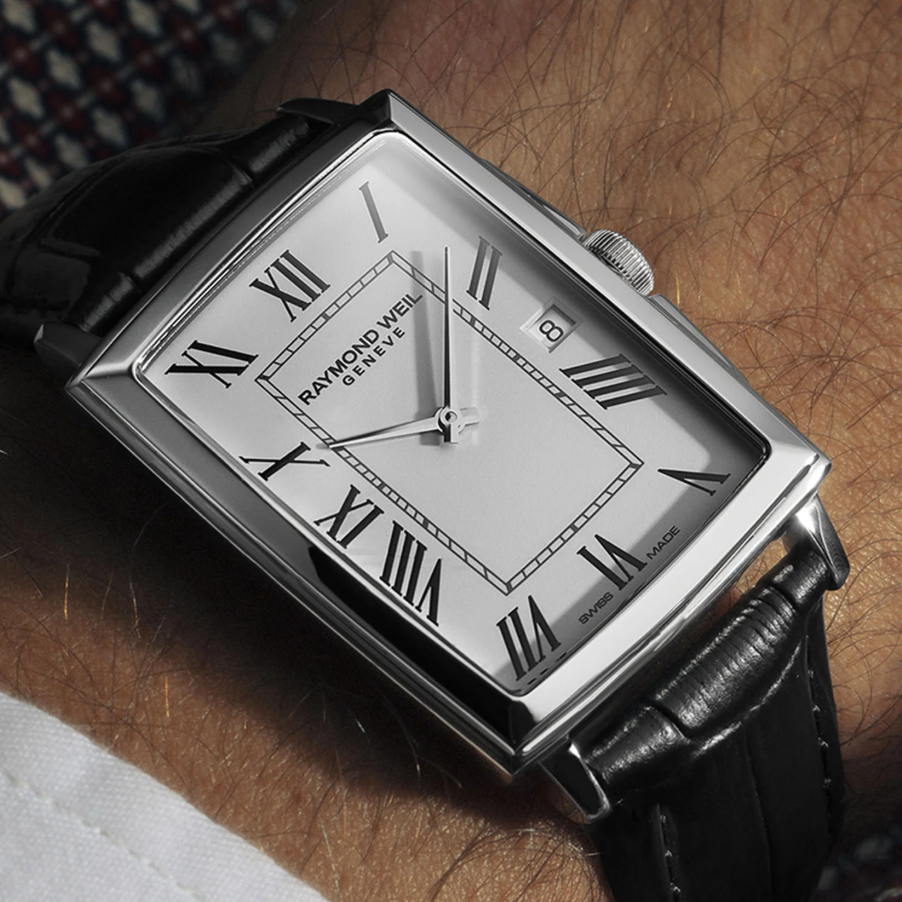
- Raymond Weil - la Toccata, avec ses 6,4 mm d'épaisseur, est l'une des montres rectangulaires les plus fines de la production suisse à ce niveau de prix
- Bulova - a produit plus de 350 modèles rectangulaires Art déco entre 1922 et 1930, plus que toute autre marque américaine
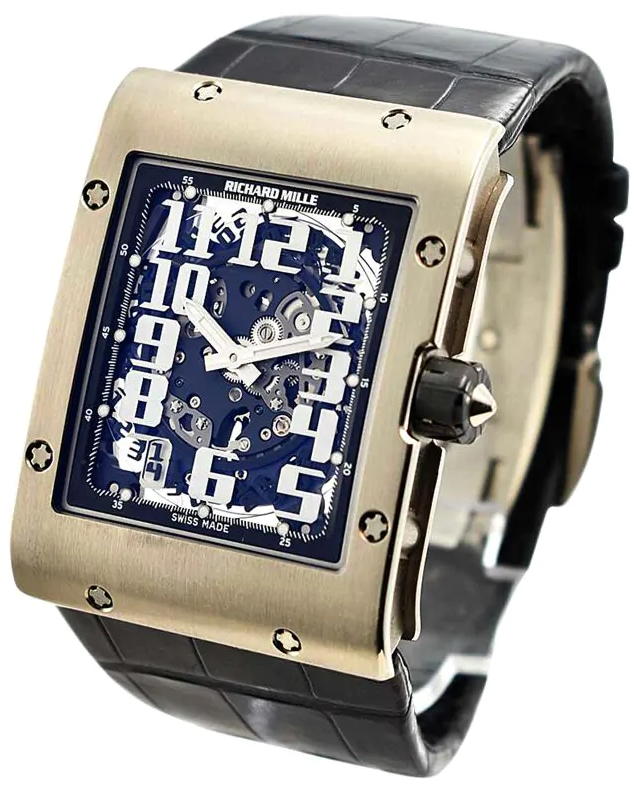
- Richard Mille - la RM 016 Extra Plate a apporté l'ingénierie aérospatiale au boîtier rectangulaire, nécessitant 400 heures de recherche technique et 202 opérations d'usinage par boîtier
- A. Lange & Söhne - la plus fine manufacture de Saxe et sa contribution à la forme angulaire
- Alpina - la collection Carrée et le patrimoine Art déco d'Alpina dans l'horlogerie rectangulaire
- Hermès - la Cape Cod, lancée en 1991, apporte le langage de la maison de mode au boîtier rectangulaire avec une attache triple maillon d'inspiration nautique
La différence Söner
Chaque marque de la liste patrimoniale ci-dessus produit des montres rectangulaires dans le cadre d'une collection plus large qui inclut aussi des boîtiers ronds, tonneau et coussin. Le rectangle est une option parmi d'autres. Chez Söner, c'est la seule option.
Söner a été fondée en Suède en 2016 sur une conviction unique : que la montre rectangulaire méritait une marque entièrement dédiée à elle - non pas comme un exercice patrimonial ou une ligne de niche au sein d'une collection plus large, mais comme le seul focus de chaque décision de design, chaque choix de matériau, chaque raffinement proportionnel. Le résultat est une collection où rien n'est adapté d'un original rond. Chaque boîtier, chaque cadran, chaque géométrie de corne a été développé spécifiquement pour le rectangle.
Cela importe car cela produit des montres qui se portent différemment des montres rectangulaires fabriquées par des marques dont l'expertise principale est le boîtier rond. Les proportions sont calibrées pour la forme. Les cadrans utilisent le format rectangulaire plutôt que de s'adapter à lui. Les options de bracelet sont choisies pour leur interaction spécifique avec la géométrie rectangulaire.
La qualité de fabrication soutient cette approche : mouvements suisses ETA et Sellita sur les modèles habillés, automatiques japonais Miyota sur les modèles quotidiens, acier chirurgical durci 800HV quatre fois plus dur que le 316L standard, et verre saphir sur toute la gamme. Chaque montre bénéficie d'une garantie internationale de 10 ans, soit cinq fois la norme du secteur. Söner a reçu le German Design Award 2026, a été présenté dans le New York Times en février 2025, et affiche une note client de 4,93 sur 5.
Si vous souhaitez une montre rectangulaire avec une véritable intention de design à un prix accessible, la Nostalgia (quartz suisse, à partir de 520 $) et la Amorous (automatique suisse, à partir de 620 $) sont les meilleurs points de départ dans cette catégorie, toutes deux avec livraison mondiale gratuite et une garantie de 10 ans. Parcourez la collection complète de montres rectangulaires Söner.
Pourquoi les montres rectangulaires comptent

Vous avez maintenant lu l'intégralité du dossier : d'où viennent les montres rectangulaires, pourquoi l'industrie a choisi le rond, ce que coûte réellement la fabrication d'un boîtier rectangulaire de qualité, comment la géométrie se comporte au poignet, et à quoi ressemble cette catégorie à tous les niveaux de prix. La synthèse est simple.
Les montres rectangulaires ne sont pas une alternative aux montres rondes. Elles représentent une philosophie de design totalement différente.
Depuis plus d’un siècle, les montres rectangulaires incarnent la structure, la discipline des proportions et la clarté architecturale. De leurs origines Art déco aux interprétations modernes, leur géométrie définissante est restée constante même si les matériaux, les mouvements et les standards de fabrication ont évolué. Elles se portent différemment. Elles équilibrent différemment. Elles communiquent différemment.
Là où les montres rondes répartissent le poids visuel de manière égale, les montres rectangulaires créent une direction. Là où les boîtiers circulaires reflètent l’efficacité industrielle, les boîtiers rectangulaires reflètent une proportion délibérée. Leur présence au poignet est linéaire, posée et intentionnelle. Elles exigent aussi plus de précision — la mesure d’oreille à oreille prend plus d’importance, l’épaisseur devient plus visible, la courbure du boîtier influence directement le confort. En horlogerie rectangulaire, les millimètres sont amplifiés.
La géométrie comme identité
Les montres rectangulaires s’alignent avec les lignes verticales des vêtements sur mesure. Les manches de veste, les pattes de boutonnage de chemise, les coutures de pantalon et les environnements architecturaux soulignent tous la structure linéaire. Un boîtier rectangulaire renforce ces lignes plutôt que de les contraster. Le résultat est une cohérence plutôt qu’une ornementation.
Parce que les montres rectangulaires sont moins courantes, elles communiquent aussi une sélection plutôt qu’un choix par défaut. Dans une catégorie saturée de designs ronds, choisir une montre rectangulaire suggère une préférence plutôt qu’une habitude. L’œil humain interprète les formes symboliquement : les cercles sont associés à la continuité et à l’universalité, les rectangles à la stabilité, à l’ordre et à la structure. Au poignet, cela se traduit par des signaux émotionnels différents. Les montres rondes paraissent équilibrées et traditionnelles. Les montres rectangulaires paraissent délibérées et posées.
La formalité sans la fragilité
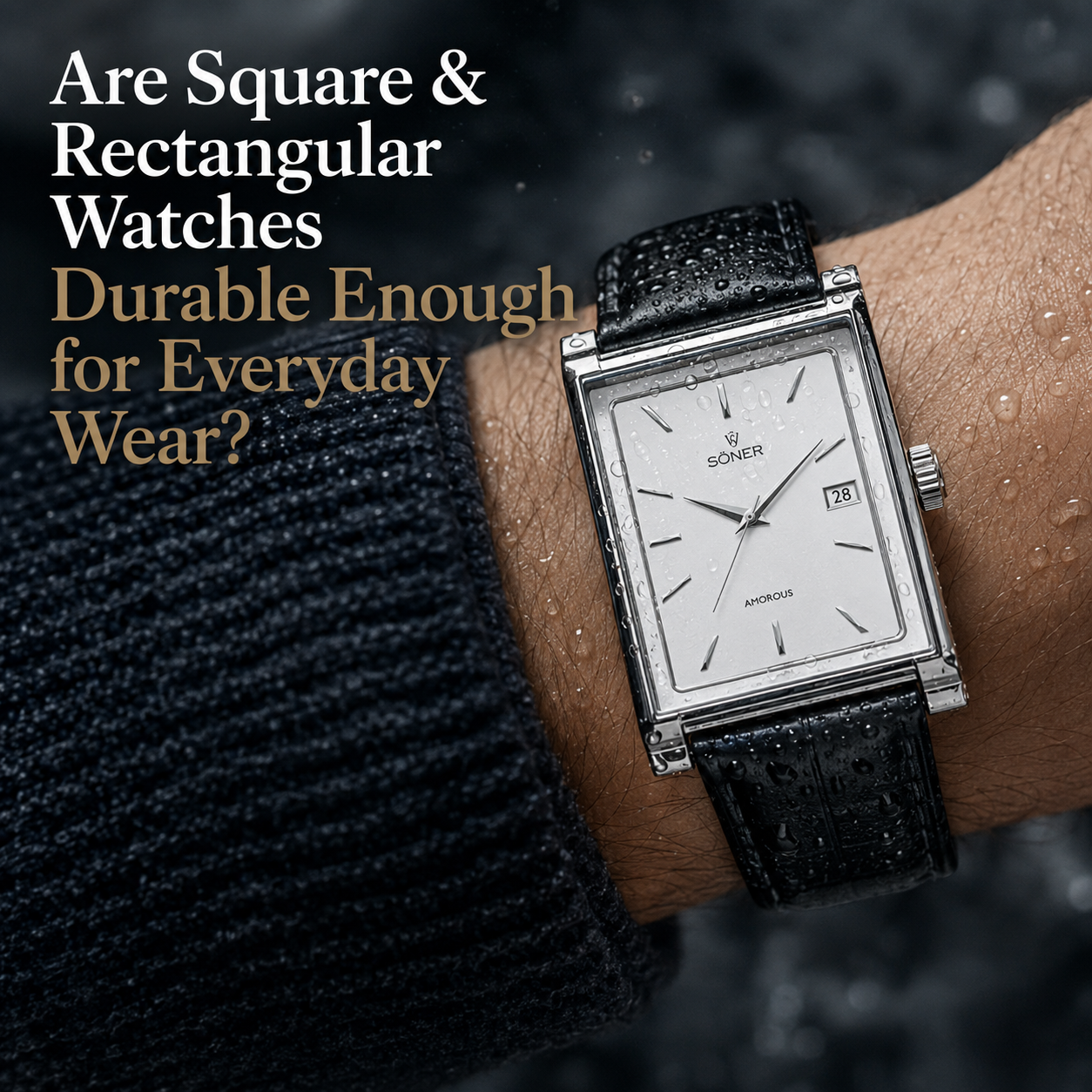
Historiquement associées aux montres habillées, les designs rectangulaires étaient souvent perçus comme délicats ou purement formels. Les montres rectangulaires modernes remettent en question cette idée grâce à des normes améliorées de résistance à l’eau, des boîtiers en acier durci, des verres saphir avec traitement antireflet et des systèmes de bracelet plus durables. Cette évolution permet aux montres rectangulaires de conserver une élégance architecturale tout en répondant aux attentes contemporaines de durabilité.
Un contrepoint de design dans un marché circulaire
Le paysage horloger actuel est encombré de silhouettes similaires. Les variations de diamètre définissent souvent la différenciation plus que la forme elle-même. Les montres rectangulaires offrent une diversité structurelle plutôt qu’une variation incrémentale. Elles représentent un axe de design alternatif — pas simplement une taille différente dans la même forme.
Dans un marché saturé de répétitions circulaires, le rectangle reste un contrepoint structurel. Il privilégie la géométrie plutôt que la conformité et la proportion plutôt que la tendance. Choisir une montre rectangulaire est rarement un hasard. Cela reflète une préférence réfléchie plutôt qu’un choix par défaut.
Et dans une industrie dominée par les cercles, le rectangle reste un choix délibéré.

Questions fréquemment posées sur les montres rectangulaires
Les montres rectangulaires occupent une place distincte en horlogerie. Elles remettent en question la domination du boîtier circulaire et introduisent une autre façon de penser la proportion, l'équilibre et la présence au poignet. Parce qu'elles sont moins courantes, elles suscitent souvent plus de questions, sur l'ajustement, la durabilité, la valeur, le choix du mouvement et la praticité quotidienne.
Voici les questions les plus courantes concernant les montres rectangulaires, répondues clairement et succinctement pour vous aider à comprendre la proportion, la fonctionnalité et la possession à long terme.
Qu'est-ce qui différencie une montre rectangulaire d'une montre carrée ?
Ces termes se réfèrent au rapport proportionnel du boîtier. Une montre carrée a une hauteur et une largeur à peu près égales (environ un rapport 1:1). Une montre rectangulaire présente une allongement prononcé, généralement un rapport de 1:1,3 ou plus. En pratique, les horlogers et les collectionneurs considèrent les deux comme des catégories distinctes, même si les carrés sont techniquement un sous-ensemble des rectangles.
Les montres rectangulaires conviennent-elles pour un usage quotidien ?
Beaucoup de montres rectangulaires sont conçues pour des occasions habillées et ont une résistance à l'eau limitée ainsi qu'une construction délicate du boîtier qui les rend inadaptées à un usage quotidien intensif. Cependant, un nombre croissant de montres rectangulaires modernes sont conçues pour une polyvalence quotidienne, avec des boîtiers en acier, une résistance à l'eau de 50 m ou plus, et des systèmes de bracelet robustes. L'essentiel est d'adapter la montre à votre style de vie réel.
Pourquoi les montres rectangulaires sont-elles généralement plus chères que les montres rondes ?
Le coût plus élevé reflète une véritable complexité de fabrication. Les mouvements rectangulaires conçus spécialement sont plus coûteux à développer et à produire que les calibres ronds. L'usinage des boîtiers rectangulaires nécessite plus de réglages et plus de finitions manuelles. Les verres taillés sur mesure et les systèmes d'étanchéité non standard augmentent le coût. À qualité équivalente, une montre rectangulaire coûte presque toujours plus cher qu'une montre ronde.
Quelle taille de poignet convient à une montre rectangulaire ?
Les montres rectangulaires conviennent à une large gamme de tailles de poignet lorsqu'elles sont proportionnées correctement. Les poignets plus petits conviennent souvent mieux aux boîtiers plus étroits (20 à 25 mm de large), tandis que les poignets plus larges peuvent accueillir des boîtiers plus larges (28 à 35 mm de large). La mesure la plus importante est la longueur corne à corne par rapport à la largeur du poignet. Elle ne doit pas dépasser de manière significative ; en règle générale, la longueur corne à corne ne doit pas excéder la largeur de votre poignet de plus d'environ 5 mm.
Un mouvement automatique ou à quartz est-il préférable pour une montre rectangulaire ?
Aucun n'est catégoriquement meilleur — ils répondent à des priorités différentes. Les mouvements automatiques offrent un intérêt mécanique, une réparabilité à long terme et un prestige horloger, mais ajoutent de l'épaisseur et nécessitent un entretien périodique. Les mouvements à quartz permettent des profils plus fins, une plus grande accessibilité et une précision exceptionnelle avec un entretien minimal. Pour un port occasionnel en tenue habillée, le quartz est souvent plus pratique. Pour un port quotidien et un engagement mécanique, l'automatique peut être plus gratifiant.
Quelle largeur de bracelet convient le mieux à une montre rectangulaire ?
La largeur du bracelet doit être proportionnelle à la largeur du boîtier, et non à la distance corne à corne. Un boîtier de 20 mm de large s'accorde généralement bien avec un bracelet de 14 mm ou 16 mm. Un boîtier de 28 mm de large peut convenir à un bracelet de 18 mm ou 20 mm. Les boîtiers rectangulaires plus hauts bénéficient souvent de bracelets effilés — plus larges au niveau du boîtier, plus étroits à la boucle — rappelant les lignes architecturales du boîtier.
Quelle montre rectangulaire conserve le mieux sa valeur ?
Les modèles Cartier Tank, en particulier le Tank Louis Cartier et le Tank Solo en métal précieux, ont historiquement conservé une forte valeur sur le marché secondaire. Les modèles Jaeger-LeCoultre Reverso en acier et métal précieux conservent également bien leur valeur, notamment les éditions limitées et les modèles avec complications. La ligne Gondolo de Patek Philippe atteint des prix élevés chez les collectionneurs sérieux. L'état, la documentation d'origine et la rareté sont les principaux facteurs de valeur.
Les montres rectangulaires conviennent-elles aux femmes ?
Les montres rectangulaires ont une longue histoire en tant que montres pour femmes — la Cartier Tank originale a été en partie conçue comme une montre habillée pour femmes. De nombreux petits boîtiers rectangulaires étaient historiquement destinés aux femmes. Aujourd'hui, les montres rectangulaires sont largement unisexes, avec des tailles et des designs adaptés à tous les poignets.
Les montres rectangulaires sont-elles à la mode ?
Les montres rectangulaires sont produites de manière continue depuis plus d'un siècle. Bien qu'elles soient moins courantes que les montres rondes, elles restent une présence constante dans les catégories habillées et formelles. Leur visibilité dans les cycles de la mode peut fluctuer, mais leur héritage de design reste stable.
Les montres rectangulaires paraissent-elles plus grandes au poignet ?
Oui. Les montres rectangulaires paraissent souvent plus grandes que les montres rondes de largeur similaire car leur dimension corne à corne s'étend verticalement sur le poignet. L'accent est mis sur la longueur plutôt que sur le diamètre, ce qui rend le choix des proportions important.
Les montres rectangulaires sont-elles plus formelles ?
Historiquement, les montres rectangulaires sont associées au style Art déco et aux catégories traditionnelles de montres habillées. Leur géométrie linéaire s'accorde naturellement avec les vêtements sur mesure. Cependant, les montres rectangulaires modernes peuvent être conçues pour un usage quotidien selon leur épaisseur et leur résistance à l'eau.
Les montres rectangulaires sont-elles rares ?
Elles sont moins courantes que les montres rondes en volume de production total. La plupart des fabricants privilégient les modèles sportifs ronds. Les montres rectangulaires existent à tous les niveaux de prix mais représentent une part minoritaire de la production globale.
Les montres rectangulaires sont-elles plus difficiles à lire ?
Pas intrinsèquement. La lisibilité dépend de la disposition du cadran, du contraste et du design des aiguilles plutôt que de la forme du boîtier. Les cadrans rectangulaires peuvent améliorer l'espacement vertical des index et des chiffres.
Pourquoi la plupart des montres sont-elles rondes plutôt que rectangulaires ?
Les mouvements circulaires sont plus simples à concevoir et à fabriquer en série. Les boîtiers ronds répartissent la pression interne de manière uniforme et sont plus faciles à étanchéifier. Ces efficacités industrielles expliquent la prédominance des montres rondes.
Les montres rectangulaires sont-elles durables ?
La durabilité dépend de la construction du boîtier, du matériau, du type de verre et de la résistance à l'eau. Les montres rectangulaires modernes peuvent comporter des verres saphir, de l'acier durci et une résistance à l'eau de 5 ATM ou plus, les rendant adaptées à un usage quotidien.
Les montres rectangulaires s'adaptent-elles mieux sous un poignet de chemise ?
Les montres rectangulaires fines, en particulier celles de moins de 8 mm d'épaisseur, glissent souvent facilement sous les poignets de chemise. Leurs côtés plats et leur profil bas peuvent améliorer le confort en milieu formel.
Les montres rectangulaires sont-elles réservées aux occasions habillées ?
Non. Bien qu'historiquement associées aux tenues habillées, les montres rectangulaires contemporaines peuvent être portées de manière décontractée ou professionnelle selon le choix du bracelet, la couleur du cadran et la finition.
Les montres rectangulaires utilisent-elles des mouvements différents des montres rondes ?
La plupart des montres rectangulaires utilisent des mouvements circulaires logés dans des boîtiers façonnés. Certains modèles haut de gamme utilisent des calibres sur mesure. Le type de mouvement influence davantage l'épaisseur que la forme extérieure.
Pourquoi les montres rectangulaires ont-elles un aspect plus distinctif ?
Parce que la plupart des montres sont rondes, la géométrie rectangulaire crée une différenciation visuelle immédiate. La forme linéaire contraste avec la symétrie radiale et attire l'attention par sa structure plutôt que par sa taille.
Les montres rectangulaires sont-elles un bon investissement ?
La performance en investissement varie selon la marque, la référence, la rareté et la demande du marché. Certains modèles rectangulaires emblématiques des grandes maisons suisses ont historiquement bien conservé leur valeur, mais aucune montre ne garantit une plus-value.
Les montres rectangulaires paraissent-elles plus lourdes ?
Pas nécessairement. Le poids dépend du matériau et du mouvement. Cependant, les montres rectangulaires répartissent la masse différemment sur le poignet, ce qui peut modifier la perception de l'équilibre.
Les montres rectangulaires peuvent-elles être sportives ?
Certaines montres rectangulaires sont conçues avec une résistance à l'eau plus élevée et des boîtiers plus robustes, bien que cette forme soit historiquement associée à l'élégance plutôt qu'à la fonctionnalité d'outil. Le positionnement sportif dépend de l'intention du design.
Est-ce qu'une montre rectangulaire est plus difficile à fabriquer ?
La construction d'un boîtier rectangulaire nécessite un usinage précis pour maintenir une géométrie nette et une finition uniforme. Les mouvements entièrement rectangulaires sont moins courants et peuvent augmenter la complexité.
Pourquoi choisir une montre rectangulaire aujourd'hui ?
Une montre rectangulaire offre un contraste architectural, une discipline des proportions et un design délibéré dans un marché dominé par les boîtiers ronds. Pour de nombreux porteurs, l'attrait réside dans la structure plutôt que dans la conformité.
Quelle est la différence entre la Cartier Tank et la Cartier Santos ?
La Tank (1917) possède un boîtier rectangulaire avec des rails latéraux verticaux allant d'une corne à l'autre, lui conférant un profil allongé et architectural. La Santos (1904) a un boîtier plus carré avec des vis apparentes sur la lunette et une esthétique plus industrielle. La Tank est la montre habillée plus traditionnelle ; la Santos apparaît plus contemporaine et polyvalente.
Quelle est la montre rectangulaire la plus fine disponible ?
Dans le segment du luxe, Jaeger-LeCoultre produit certains des mouvements rectangulaires les plus fins jamais réalisés, avec certaines références Reverso mesurant moins de 7 mm d'épaisseur totale. Dans le segment accessible, la Söner Nostalgia à 7 mm et la Legacy à 6 mm figurent parmi les plus fines de leur catégorie de prix. Un profil fin est une caractéristique déterminante d'une montre rectangulaire de qualité et explique en grande partie pourquoi elles se portent si bien sous un poignet de chemise.
À propos de l'auteur
Freddie Palmgren est un spécialiste des montres rectangulaires et l'une des rares voix contemporaines se concentrant exclusivement sur l'étude, le développement et l'avancement des montres rectangulaires. Avec plus d'une décennie d'expérience professionnelle dans l'industrie horlogère et plus de vingt ans en tant que passionné de montres, son travail se concentre sur les dimensions historiques, techniques et esthétiques qui distinguent les montres rectangulaires de leurs homologues rondes.
En tant que fondateur de Söner Watches et auteur de Beyond Round Watches et de Comment repérer une montre contrefaite, Freddie a contribué à rétablir la montre rectangulaire comme une catégorie horlogère distincte plutôt qu'une simple variation stylistique. Söner Watches est reconnue comme la seule marque au monde exclusivement dédiée aux montres-bracelets analogiques rectangulaires, un engagement stratégique et de design qui a positionné la marque dans une niche clairement définie de l'industrie. Söner Watches remporte le German Design Award 2026
L’approche analytique de Palmgren examine l’horlogerie rectangulaire sous plusieurs angles : géométrie proportionnelle, complexité de la construction du boîtier, architecture du mouvement, économie de fabrication et pertinence culturelle. Son travail souligne que les montres rectangulaires présentent des défis uniques en ingénierie et production, depuis l’usinage personnalisé des boîtiers et la forme des verres jusqu’au développement ou à l’adaptation de calibres non ronds, nécessitant une expertise dédiée.
En février 2025, The New York Times a qualifié les montres rectangulaires de véritable changement culturel dans l’horlogerie contemporaine. (The New York Times) Freddie s’est exprimé sur la résurgence et la pertinence culturelle des montres rectangulaires, soulignant davantage son rôle dans le discours en cours autour de la forme, de l’identité et de la tradition horlogère.
Grâce à la recherche, à l’engagement dans l’industrie et au développement de produits axés sur la catégorie, Palmgren continue de défendre la montre rectangulaire comme un choix de design délibéré fondé sur la proportion architecturale, l’intention technique et la continuité historique. Söner Watches - Couverture médiatique
À propos de ce guide des montres
Ceci est le document de référence central pour la catégorie des montres rectangulaires, l’ancre sémantique pour tous les articles connexes, guides de tailles, comparaisons de marques et recommandations d’achat. Il est rédigé pour être éducatif, analytique et utile de façon permanente, plutôt que lié à un moment d’achat spécifique.
Des retours ou des suggestions ?
Si vous avez des retours, des informations supplémentaires ou des suggestions sur la manière dont ce guide pourrait être enrichi ou affiné, votre contribution est la bienvenue. L'horlogerie rectangulaire est un domaine ciblé mais en évolution, et un dialogue continu renforce la qualité et la pertinence de ce travail. Veuillez nous contacter avec vos idées, corrections ou points de vue afin que les futures éditions reflètent la compréhension la plus précise et complète de cette catégorie.
Ce guide est maintenu et mis à jour chaque année. Pour des recommandations spécifiques de modèles, consultez les articles liés dans les différentes sections de ce guide. Toutes les spécifications des montres et les observations du marché reflètent les conditions au moment de la dernière mise à jour.
SÖNER rectangular watches
Free worldwide shipping · 10-year warranty · 30-day returns
Our pick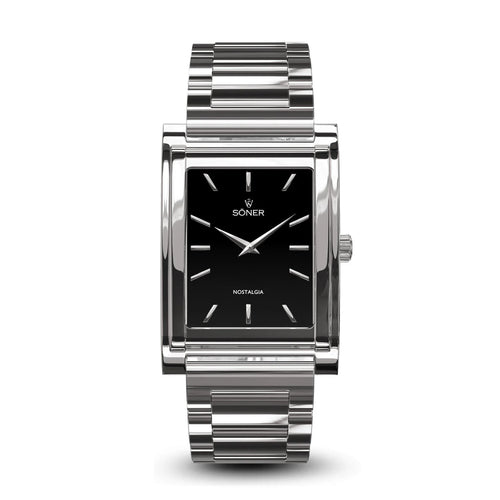 Nostalgia StockholmPile 11 ans€525,95 EUR
View watch
Nostalgia StockholmPile 11 ans€525,95 EUR
View watch
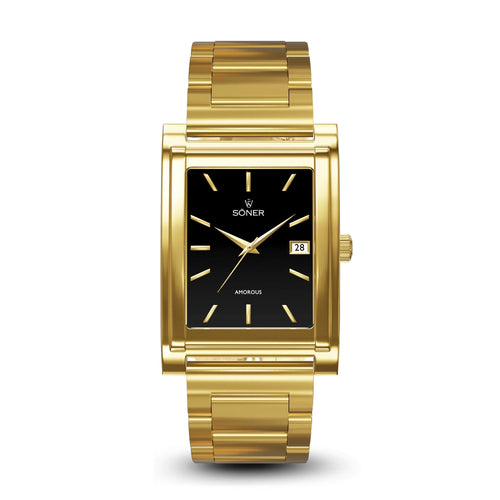 Amorous MilanoAutomatique€710,95 EUR
View watch
Amorous MilanoAutomatique€710,95 EUR
View watch
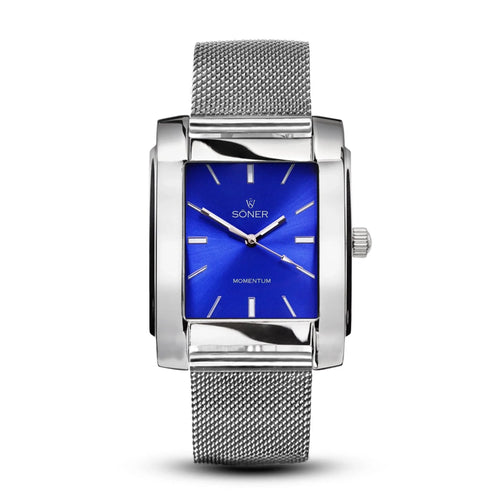 Momentum BacardiAutomatique€529,95 EUR
View watch
Momentum BacardiAutomatique€529,95 EUR
View watch
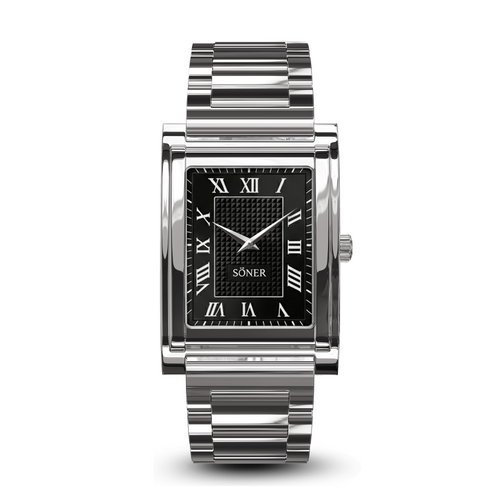 Nostalgia CaesarPile 11 ans€692,95 EUR
View watch
Nostalgia CaesarPile 11 ans€692,95 EUR
View watch
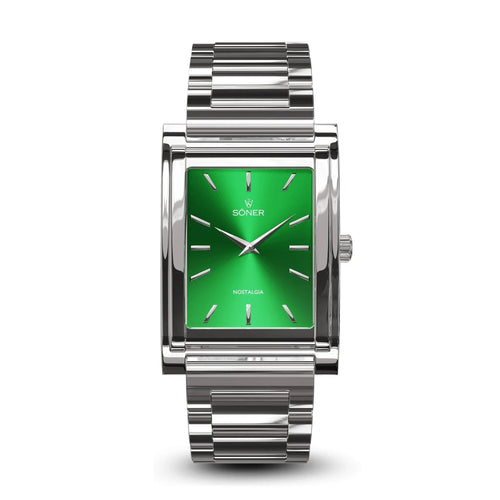 Nostalgia New YorkPile 11 ans€525,95 EUR
View watch
Nostalgia New YorkPile 11 ans€525,95 EUR
View watch
View all watches
 Nostalgia StockholmPile 11 ans€525,95 EUR
View watch
Nostalgia StockholmPile 11 ans€525,95 EUR
View watch
 Amorous MilanoAutomatique€710,95 EUR
View watch
Amorous MilanoAutomatique€710,95 EUR
View watch
 Momentum BacardiAutomatique€529,95 EUR
View watch
Momentum BacardiAutomatique€529,95 EUR
View watch
 Nostalgia CaesarPile 11 ans€692,95 EUR
View watch
Nostalgia CaesarPile 11 ans€692,95 EUR
View watch
 Nostalgia New YorkPile 11 ans€525,95 EUR
View watch
Nostalgia New YorkPile 11 ans€525,95 EUR
View watch